1920s Art

to
950
2,794
866
598
328
336
Overall Width
to
Overall Height
to
7,565
21,480
164,271
234,827
2,048
2,299
4,966
6,475
5,741
15,242
20,900
26,020
18,801
14,129
5,378
1,151
476
417
397
354
124
52
35
26
7
3
2
3,090
1,630
56
2,992
1,558
1,159
1,142
985
680
476
330
294
250
200
191
190
184
182
174
162
158
114
110
1,632
1,117
984
947
744
169
130
64
40
39
1,608
757
2,889
2,039
Period: 1920s
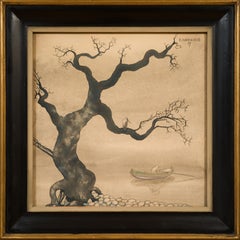
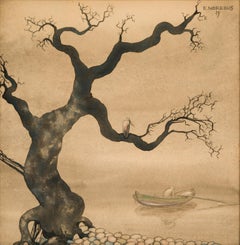
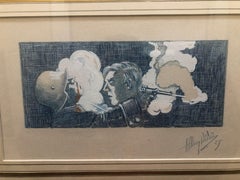
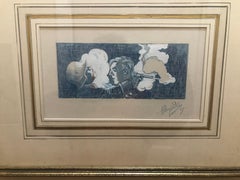
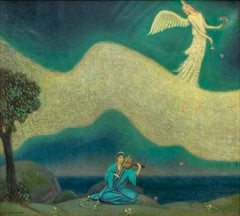
Rowing Figure in an Eerie Landscape, 1929

Rowing Figure in an Eerie Landscape, 1929

Located in Stockholm, SE

Rowing Figure in an Eerie Landscape is a 1929 watercolor-and-ink illustration by Swedish artist Einar Norelius. Created for the 22nd issue of Bland tomtar och troll, the cherished an...

Category

Symbolist 1920s Art

Materials

Paper, Ink, Watercolor

The Pleasures of the River, Regatta Boating

The Pleasures of the River, Regatta Boating

Located in New York, NY

A classic French subject that would enliven any room. Beautifully painted and the colors are restrained which make it elegant. A noted artist and a rare subject especially with the...

Category

Impressionist 1920s Art

Materials

Canvas, Oil

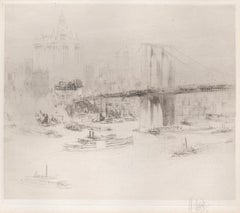
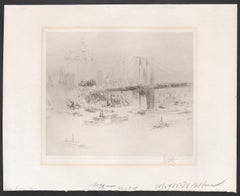
“View of Lower New York from Brooklyn”

“View of Lower New York from Brooklyn”

By Max Kuehne

Located in Southampton, NY

Original oil on linen painting laid down to original fiberboard by the well know American artist, Max Kuehne. Signed in pencil verso upper left. Circa 1928. Condition is very good. ...

Category

Abstract Impressionist 1920s Art

Materials

Canvas, Oil, Fiberboard

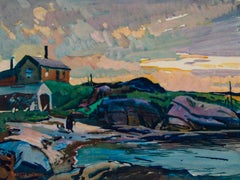
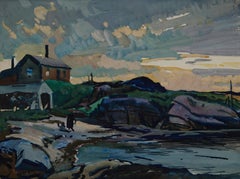
Fog over North Beach, Percé Rock, Gaspé, Canada, Early 20th Century, Cleveland

Fog over North Beach, Percé Rock, Gaspé, Canada, Early 20th Century, Cleveland

By Frank Wilcox

Located in Beachwood, OH

Frank Nelson Wilcox (American, 1887-1964) Fog over North Beach, Percé Rock, Gaspé, Canada, c. 1929 Watercolor on paper Signed lower left 13.75 x 20 inches Frank Nelson Wilcox (October 3, 1887 – April 17, 1964) was a modernist American artist and a master of watercolor. Wilcox is described as the "Dean of Cleveland School painters," though some sources give this appellation to Henry Keller or Frederick Gottwald. Wilcox was born on October 3, 1887 to Frank Nelson Wilcox, Sr. and Jessie Fremont Snow Wilcox at 61 Linwood Street in Cleveland, Ohio. His father, a prominent lawyer, died at home in 1904 shortly before Wilcox' 17th birthday. His brother, lawyer and publisher Owen N. Wilcox, was president of the Gates Legal Publishing Company or The Gates Press. His sister Ruth Wilcox was a respected librarian. In 1906 Wilcox enrolled from the Cleveland School of Art under the tutelage of Henry Keller, Louis Rorimer...

Category

American Modern 1920s Art

Materials

Watercolor

Still life  - FRENCH SCHOOL - Apple Starwars Chut les Barbizons!

Still life - FRENCH SCHOOL - Apple Starwars Chut les Barbizons!

By bazevian 1

Located in Zofingen, AG

⭐Apple Starwars ⭐ This painting is a striking representation of an apple, blending realism with expressive abstract elements. ⏩Subject & Composition⏪ The painting features a single...

Category

Tonalist 1920s Art

Materials

Glue, Mixed Media, Oil, Acrylic, Stretcher Bars

Projet de Tissus - Fauvist Flowers Watercolor & Gouache by Raoul Dufy

Projet de Tissus - Fauvist Flowers Watercolor & Gouache by Raoul Dufy

By Raoul Dufy

Located in Marlow, Buckinghamshire

Botanical watercolour and gouache on paper circa 1920 by French fauvist painter Raoul Dufy. The work depicts flowers in red, blue and green. This work was executed by Dufy as a fabric design. Dimensions: Framed: 19.5"x19.5" Unframed: 12"x12" Provenance: Private collection of works by Raoul Dufy for Bianchini Ferier Bianchini Ferrier Collection - Christie's London - July 2001 SF Fall Show Raoul Dufy was one of a family of nine children, including five sisters and a younger brother, Jean Dufy, also destined to become a painter. Their father was an accountant in the employ of a major company in Le Havre. The Dufy family was musically gifted: his father was an organist, as was his brother Léon, and his youngest brother Gaston was an accomplished flautist who later worked as a music critic in Paris. Raoul Dufy's studies were interrupted at the age of 14, when he had to contribute to the family income. He took a job with an importer of Brazilian coffee, but still found time from 1892 to attend evening courses in drawing and composition at the local college of fine arts under Charles Marie Lhullier, former teacher of Othon Friesz and Georges Braque. He spent his free time in museums, admiring the paintings of Eugène Boudin in Le Havre and The Justice of Trajan in Rouen. A municipal scholarship enabled him to leave for Paris in 1900, where he lodged initially with Othon Friesz. He was accepted by the École des Beaux-Arts, where he studied under Léon Bonnat, whose innate conservatism prompted Dufy to remark later that it was 'good to be at the Beaux-Arts providing one knew one could leave'. And leave he did, four years later, embarking with friends and fellow students on the rounds of the major Paris galleries - Ambroise Vollard, Durand-Ruel, Eugène Blot and Berheim-Jeune. For Dufy and his contemporaries, Impressionism represented a rejection of sterile academism in favour of the open-air canvases of Manet, the light and bright colours of the Impressionists, and, beyond them, the daringly innovative work of Gauguin and Van Gogh, Seurat, Cézanne, Toulouse-Lautrec and others. Dufy was an out-and-out individualist, however, and was not tempted to imitate any of these artists. He produced, between 1935 and 1937, Fée Electricité (Spirit of Electricity), the emblem for the French utilities company Electricité de France (EDF). Dufy visited the USA for the first time in 1937, as a member of the Carnegie Prize jury. In 1940, the outbreak of war (and his increasingly rheumatic condition) persuaded him to settle in Nice. When he eventually returned to Paris 10 years later, his rheumatism had become so debilitating that he immediately left for Boston to follow a course of pioneering anti-cortisone treatment. He continued working, however, spending time first in Harvard and then in New York City before moving to the drier climate of Tucson, Arizona. The cortisone treatment was by and large unsuccessful, although he did recover the use of his fingers. He returned to Paris in 1951 and decided to settle in Forcalquier, where the climate was more clement. Within a short time, however, he was wheelchair-bound. He died in Forcalquier in March 1953 and was buried in Cimiez. Between 1895 and 1898, Raoul Dufy painted watercolours of landscapes near his native Le Havre and around Honfleur and Falaise. By the turn of the century, however, he was already painting certain subjects that were to become hallmarks of his work - flag-decked Parisian cityscapes, Normandy beaches teeming with visitors, regattas and the like, including one of his better-known early works, Landing Stage at Ste-Adresse. By 1905-1906 Friesz, Braque, Matisse, Derain, Vlaminck, Van Dongen and Rouault were described collectively as Fauves (the wild beasts). What they had in common was a desire to innovate, but they felt constrained nonetheless to meet formally to set out the guiding principles of what promised to be a new 'movement'. Dufy quickly established that those principles were acceptable; moreover, he was most impressed by one particular painting by Henri Matisse ( Luxury, Calm and Voluptuousness) which, to Dufy, embodied both novelty and a sense of artistic freedom. Dufy promptly aligned himself with the Fauves. Together with Albert Marquet in particular, he spent his time travelling the Normandy coast and painting views similar...

Category

Fauvist 1920s Art

Materials

Paper, Watercolor, Gouache

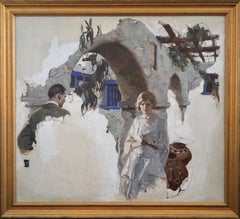
Spanish Tavern
Spanish Tavern

Spanish Tavern

By Dean Cornwell

Located in Miami, FL

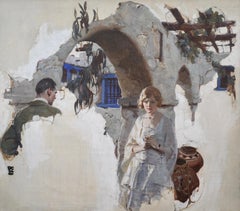
There is no one alive that can paint and draw like Dean Cornwell. How can that be? They do not train artist the way they did. Dean Cornwell in his day was as famous as Normal Rockwell...

Category

Post-Impressionist 1920s Art

Materials

Oil

"Pigeon Hill, Rockport" Winthrop Duthie Turney, North Eastern American Landscape

"Pigeon Hill, Rockport" Winthrop Duthie Turney, North Eastern American Landscape

Located in New York, NY

Winthrop Duthie Turney Pigeon Hill, Rockport Signed lower left Oil on canvas 20 x 24 inches Exhibited New York, National Academy of Design, Artists of America, Sixth Annual Exhibition, 1949. Winthrop Duthie Turney was born in New York City and received his education at the Art Students League. He was affiliated with the Fifteen Gallery...

Category

American Impressionist 1920s Art

Materials

Canvas, Oil

"The Visitation" (Heimuchung) original lithograph

"The Visitation" (Heimuchung) original lithograph

Located in Henderson, NV

Medium: original lithograph. Printed in 1920 on smooth wove paper for the Deutsche Graphiker der Gegenwart portfolio, and published in Leipzig by Klinkhardt & Biermann in an edition ...

Category

Expressionist 1920s Art

Materials

Lithograph

Madame Bovary, Art Nouveau Color Etching by Louis Icart

Madame Bovary, Art Nouveau Color Etching by Louis Icart

By Louis Icart

Located in Long Island City, NY

Louis Icart, French (1888 - 1950) - Madame Bovary, Year: 1929, Medium: Color Etching, Signed in Pencil, Image Size: 16 x 20.5 inches, Frame Size: 40 x 43 inches, Reference: Figu...

Category

Art Nouveau 1920s Art

Materials

Etching

"The Harvesters" Raphaël Dubois aka Chanterou (Belgium, 1888-1960)

"The Harvesters" Raphaël Dubois aka Chanterou (Belgium, 1888-1960)

Located in SANTA FE, NM

"The Harvesters" Raphaël Dubois aka Chanterou (Belgium, 1888-1960) Signed bottom left under the pseudonym "Chanterou" Oil on canvas 23 1/2 x 19 1/4 (27 3/4 x 23 3/4 frame) inches Born in Liege in 1888, he enrolled at the age of fourteen at the Academy of Liege where he studied under Evariste Carpentier...

Category

1920s Art

Materials

Canvas, Oil

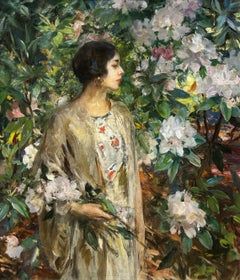
Lady with Flower
Lady with Flower

Lady with Flower

Located in Dallas, TX

signed "E.JB." at lower right 21 7/8 x 17 inches including frame

Category

Modern 1920s Art

Materials

Watercolor

Man In Gray Small Oil on Board 1930s

Man In Gray Small Oil on Board 1930s

By Dewitt M. Lockman

Located in Lake Worth Beach, FL

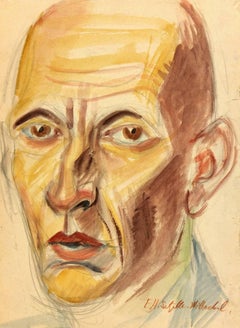
Man In Gray Expressionist Oil on Board Signed illegibly lower right corner, painting size 8.75x6in. about 1930's Dewitt McClellan Lockman, N.A. (July 30, 1870-July 1, 1957). A nativ...

Category

American Impressionist 1920s Art

Materials

Oil, Board

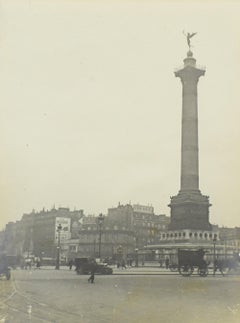
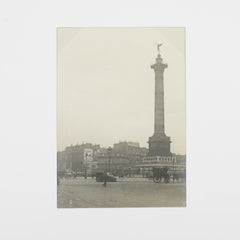
Place de la Bastille Paris, Silver Gelatin Black and White Photography, 1928

Place de la Bastille Paris, Silver Gelatin Black and White Photography, 1928

Located in Atlanta, GA

A unique, original silver gelatin black and white photograph. Paris, La Place De La Bastille, November 1928. Features: Original Silver Gelatin Print Photography. Press Photography. P...

Category

Art Deco 1920s Art

Materials

Silver Gelatin

SWING BOATS
SWING BOATS

Claude FlightSWING BOATS, 1921

$22,500Sale Price|25% Off

SWING BOATS

By Claude Flight

Located in Santa Monica, CA

CLAUDE FLIGHT (1881 -1955) SWING BOATS 1921 (Coppel CF5) Color linocut, signed & no. 23/50, 8 5/8 x 11”. Sheet 10 x 13” on thin paper tipped to bla...

Category

Futurist 1920s Art

Materials

Linocut

English Impressionist early 20th century, cows drinking water in a landscape

English Impressionist early 20th century, cows drinking water in a landscape

By Albert Ernest Bottomley

Located in Woodbury, CT

Albert Ernest Bottomley was an English Impressionist and traditional painter of landscapes and animal scenes. Painter born in Leeds who studied art with the landscape artist William...

Category

Impressionist 1920s Art

Materials

Paper, Watercolor

Portrait of Franklin Atwood Park, VP of Singer Mfg. Co.

Portrait of Franklin Atwood Park, VP of Singer Mfg. Co.

Located in Soquel, CA

Portrait of Franklin Atwood Park, VP of Singer Mfg. Co. Stately portrait of Franklin Atwood Park by Arthur Trevethin Nowell (British, 1862-1940). Park is sitting for a classical portrait, wearing a suit with a blue bowtie against a dark background. Of particular note are his glasses and moustache, both rendered with expert detail. Park was the VP and Chairman of the Board for Singer Manufacturing Company and Manager of the Singer Division in Scotland when the portrait was commissioned. We show a digital image of a photographic portrait of Franklin. Signed and dated "A T Nowell. 1922" Includes paper with biographical information on the sitter. Frame size: 37.5"H x 32.5"W Canvas size: 30"H x 25"W Arthur Nowell (British, 1862-1940) was born at Garndiffath, near Pontypool, and was the youngest of six children born to the Rev. John Nowell and his wife Mary...

Category

American Modern 1920s Art

Materials

Canvas, Oil, Stretcher Bars

Circus Wagons
Circus Wagons

Circus Wagons

By Millard Sheets

Located in Los Angeles, CA

This watercolor is part of our exhibition America Coast to Coast: Artists of the 1930s Circus Wagons, 1927, watercolor on paper, signed and dated lower left, 10 x19 ¾ inches (sight), provenance includes Stary-Sheets Art Gallery (Gualala, CA); J. Ralph & Louis Stone Foundation; presented in a newer metal frame behind glazing About the Painting Millard Sheets was only twenty years old and in his third year of studies at the Chouinard Art Institute when he painted Circus Wagons. Despite his youth, Sheets was already an accomplished artist who had publicly exhibited his work and won prestigious prizes. Within several years, he would have his first solo exhibition at one of Los Angeles’ premiere galleries and become a painting instructor at his alma mater. In Circus Wagons we already see Sheets deft handling of the watercolor medium and his interest in the California Scene. In this case, Sheets captures a back lot view of a traveling circus, a subject he sometimes returned to, including in a color screen print in the collection of the National Gallery. Sheets made a career by painting what he knew and observed firsthand. This approach allowed Sheets to capture with authenticity the details of each narrative. Even with a narrowly limited palette and an economy of brushstrokes, Sheets effectively depicts the southern California scene with its strong and mysterious shadows, as well as the workers and circus animals. Seen through the hindsight of his six-decade long career, Circus Wagons offers a fascinating insight into the early development of California Scene painting which would by the mid-1930s become the best recognized style on the West Coast. About the Artist Millard Sheets was the dean of California watercolorists. His list of accomplishments is so extensive that his entry in Who was Who in American Art is over forty lines. Born in Pomona, California, Sheets became a painter at an early age, winning a prize at the Los Angeles County Fair in 1918. By the mid to late-1920s, Sheets became a regular at art exhibitions in the western part of the United States, winning several additional prizes before he reached the age of twenty-five. Sheets studied at the prestigious Chouinard Art Institute from 1925 through 1929 with Frank Tolles Chamberlin and Clarence Hinkle and had his first solo show with Los Angeles’ Dalzell Hatfield Gallery in 1929. During the 1930s, Sheets was invited to exhibit at almost every major American Museum and in many ways, his work came to represent the California watercolor school...

Category

American Realist 1920s Art

Materials

Watercolor

Portrait of Dodo - Pekingese Dog - Scottish 1920's art dog portrait oil painting

Portrait of Dodo - Pekingese Dog - Scottish 1920's art dog portrait oil painting

By Samuel Fulton

Located in Hagley, England

This absolutely charming portrait of a Pekingese dog called Dodo is attributed to much loved Scottish artist Samuel Fulton. Famous as an animal artist and chiefly a painter of dogs, this has got to be one of his best if you are a Pekingese fan. Painted circa 1920, Dodo, a lovely little black and tan dog is sat profile but is turning to look at the artist/viewer. Beneath him is a beautiful orange and brown Persian rug...

Category

Realist 1920s Art
Materials

Oil

"Oliviers" pochoir
"Oliviers" pochoir

"Oliviers" pochoir

By (after) Henri Matisse

Located in Henderson, NV

Medium: pochoir (after the watercolor). Published in Paris in 1924 by Albert Morance for "L'Art d'Aujourd'hui", and now very scarce. The publisher's provenance inscription is printed...

Category

1920s Art

Materials

Lithograph, Stencil

"Indonesian Garuda Head, " Carved Wood created circa 1920

"Indonesian Garuda Head, " Carved Wood created circa 1920

Located in Milwaukee, WI

This carved wood sculpture, a "Garuda Head," was made by an unknown Indonesian sculpture. The face sculpture is 12 1/2" x 9". The Garuda is a legendary bird or bird-like creature in Hindu, Buddhist and Jain mythology. He is variously the vehicle mount (vahana) of the Hindu god Vishnu, a dharma-protector and Astasena in Buddhism, and the Yaksha of the Jain Tirthankara...

Category

Folk Art 1920s Art

Materials

Wood

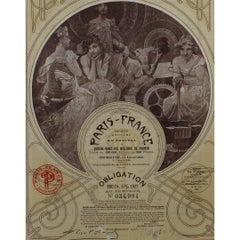
Original 1920s Magneto Lumiere L M C vintage automobile poster

Original 1920s Magneto Lumiere L M C vintage automobile poster

Located in Spokane, WA

Original Magneto Lumiere LMC vintage automotive poster from the early 1920s. There is no date or artist/. The poster is archivally linen-backed in A- condition, ready to frame. ...

Category

1920s Art

Materials

Lithograph

Fleurs et Papillons - Fauvist Flowers Watercolor & Gouache by Raoul Dufy

Fleurs et Papillons - Fauvist Flowers Watercolor & Gouache by Raoul Dufy

By Raoul Dufy

Located in Marlow, Buckinghamshire

Botanical watercolour and gouache on paper circa 1920 by French fauvist painter Raoul Dufy. The work depicts flowers in red and butterflies in blues, yellows, black and white. This work was executed by Dufy as a fabric design. Dimensions: Framed: 17"x27" Unframed: 10"x20" Provenance: Private collection of works by Raoul Dufy for Bianchini Ferier Bianchini Ferrier Collection - Christie's London - July 2001 SF Fall Show Raoul Dufy was one of a family of nine children, including five sisters and a younger brother, Jean Dufy, also destined to become a painter. Their father was an accountant in the employ of a major company in Le Havre. The Dufy family was musically gifted: his father was an organist, as was his brother Léon, and his youngest brother Gaston was an accomplished flautist who later worked as a music critic in Paris. Raoul Dufy's studies were interrupted at the age of 14, when he had to contribute to the family income. He took a job with an importer of Brazilian coffee, but still found time from 1892 to attend evening courses in drawing and composition at the local college of fine arts under Charles Marie Lhullier, former teacher of Othon Friesz and Georges Braque. He spent his free time in museums, admiring the paintings of Eugène Boudin in Le Havre and The Justice of Trajan in Rouen. A municipal scholarship enabled him to leave for Paris in 1900, where he lodged initially with Othon Friesz. He was accepted by the École des Beaux-Arts, where he studied under Léon Bonnat, whose innate conservatism prompted Dufy to remark later that it was 'good to be at the Beaux-Arts providing one knew one could leave'. And leave he did, four years later, embarking with friends and fellow students on the rounds of the major Paris galleries - Ambroise Vollard, Durand-Ruel, Eugène Blot and Berheim-Jeune. For Dufy and his contemporaries, Impressionism represented a rejection of sterile academism in favour of the open-air canvases of Manet, the light and bright colours of the Impressionists, and, beyond them, the daringly innovative work of Gauguin and Van Gogh, Seurat, Cézanne, Toulouse-Lautrec and others. Dufy was an out-and-out individualist, however, and was not tempted to imitate any of these artists. He produced, between 1935 and 1937, Fée Electricité (Spirit of Electricity), the emblem for the French utilities company Electricité de France (EDF). Dufy visited the USA for the first time in 1937, as a member of the Carnegie Prize jury. In 1940, the outbreak of war (and his increasingly rheumatic condition) persuaded him to settle in Nice. When he eventually returned to Paris 10 years later, his rheumatism had become so debilitating that he immediately left for Boston to follow a course of pioneering anti-cortisone treatment. He continued working, however, spending time first in Harvard and then in New York City before moving to the drier climate of Tucson, Arizona. The cortisone treatment was by and large unsuccessful, although he did recover the use of his fingers. He returned to Paris in 1951 and decided to settle in Forcalquier, where the climate was more clement. Within a short time, however, he was wheelchair-bound. He died in Forcalquier in March 1953 and was buried in Cimiez. Between 1895 and 1898, Raoul Dufy painted watercolours of landscapes near his native Le Havre and around Honfleur and Falaise. By the turn of the century, however, he was already painting certain subjects that were to become hallmarks of his work - flag-decked Parisian cityscapes, Normandy beaches teeming with visitors, regattas and the like, including one of his better-known early works, Landing Stage at Ste-Adresse. By 1905-1906 Friesz, Braque, Matisse, Derain, Vlaminck, Van Dongen and Rouault were described collectively as Fauves (the wild beasts). What they had in common was a desire to innovate, but they felt constrained nonetheless to meet formally to set out the guiding principles of what promised to be a new 'movement'. Dufy quickly established that those principles were acceptable; moreover, he was most impressed by one particular painting by Henri Matisse ( Luxury, Calm and Voluptuousness) which, to Dufy, embodied both novelty and a sense of artistic freedom. Dufy promptly aligned himself with the Fauves. Together with Albert Marquet in particular, he spent his time travelling the Normandy coast and painting views similar...

Category

Fauvist 1920s Art

Materials

Paper, Watercolor, Gouache

BLACKFOOT WOMEN MOVING CAMP, No. 1

BLACKFOOT WOMEN MOVING CAMP, No. 1

By Edward Borein

Located in Santa Monica, CA

EDWARD BOREIN (1872 -1945) BLACKFOOT WOMEN MOVING CAMP, NO. 1 (Galvin 168) Etching, Signed in pencil. 4 x 9 ½”, Full sheet with deckle edges, 6 3/8 x 13”. Small patch of reinforcem...

Category

American Realist 1920s Art
Materials

Etching

Otto Schubert Pen & Ink Fairy Tale

Otto Schubert Pen & Ink Fairy Tale

By Otto Schubert

Located in Paonia, CO

Otto Schubert Pen & Ink Fairy Tale is an original pen & ink sketch 1927 from one of the artist's illustrations for a fairy tale. There is a father and mother fox talking to two younger versions of themselves. They are all dressed in human clothes at the door of their house with smoke coming out of the chimney. Next to the house is a tree with a mountain in the background and another house in the distance. There is gardening equipment here and there. In the foreground we see sketches of a rabbit in different poses with some writing in German below the middle image.The artis'ts pencil signature is bottom right. A rare opportunity to own an original signed sketch by this artist. There is a wrinkle in the bottom right side otherwise normal wear and in fair condition. Karl Max Otto Schubert ( 1892-1970 ) was a rising star in Dresden when the city was considered the cultural center of Germany. In 1919 he founded the Dresdner Sezession Gruppe together with Oskar Kokoschka, Otto Dix, Conrad Felixmüller and others. Schubert was known for his portfolio of war lithographs...

Category

Other Art Style 1920s Art

Materials

India Ink

Lumier et neige fondante - Impressionist Landscape Oil by William Samuel Horton

Lumier et neige fondante - Impressionist Landscape Oil by William Samuel Horton

By William Samuel Horton

Located in Marlow, Buckinghamshire

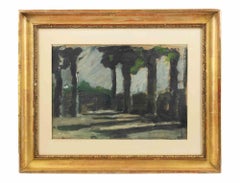
Signed oil on canvas landscape by American impressionist painter William Samuel Horton. The piece depicts a nighttime view of Pontarlier, a commune in eastern France near the Swiss b...

Category

American Impressionist 1920s Art
Materials

Canvas, Oil

Rainy Embankment (1929) - Silver Gelatin Fibre Print

Rainy Embankment (1929) - Silver Gelatin Fibre Print

Located in London, GB

Fair Fun (1938) - Silver Gelatin Fibre Print (Photo by Fox Photos/Getty Images) August 1929: A man standing alone on a rain-drenched pavement on the River Thames Embankment, London...

Category

Modern 1920s Art
Materials

Black and White, Silver Gelatin

Party Time by Swedish Artist Eric Hallström, Pastel on Paper

Party Time by Swedish Artist Eric Hallström, Pastel on Paper

Located in Stockholm, SE

Eric Hallström (1893-1946) Swedish Party Time pastel on paper signed Eric Hallström image dimensions approx 19.29 x 23.22 inches (49 x 59 cm) frame 26.37 x 30.70 inches (67 x 78 cm...

Category

1920s Art
Materials

Paper, Pastel