By Tosa Mitsuyoshi
Located in Soquel, CA
Japanese Artisans - Japanese Woodblock Print J
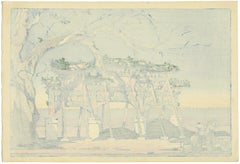
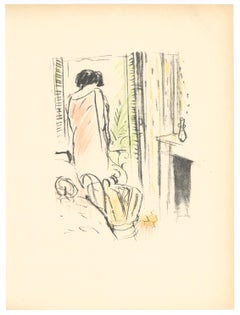
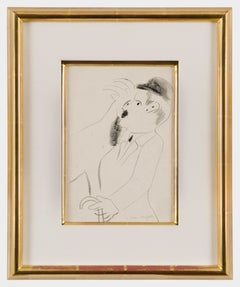
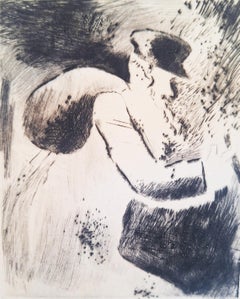
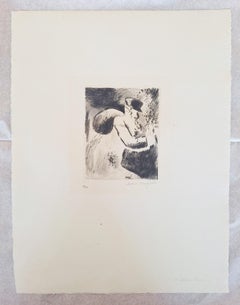
Japanese woodblock depicting six women, all wearing vibrant kimonos, working on crafts by Tosa Mitsuoki (Japanese, 1617-1691). Japanese,c. 1600. Handcraft depiction (dye works).Section from a painted screen with presentations of handcraft.Kita-in, Saitama.
Stamped lower left.
Presented in a white mat and giltwood frame.
Frame: 19"H x 14"W
Mat: 18.25"H x 13.25"W
Image: 14.5"H x 9.5"W
Tosa Mitsuoki was a Japanese painter, reinvigorating the Yamato style of classical Japanese painting. Yamato-e originated from interest in reproducing early Tang dynasty paintings, and was later reinvented and further refined to fit Japanese cultural perceptions in the late Heian period. Yamato, sometimes referred to as wa or kazu had become synonymous with the Tosa-ha by the Muromachi period as a way for Japanese artist to distinguish their works from those of mainland Chinese paintings, kara-e. Yamato-e incorporated various visual and literary techniques for establishing narrative. Works were not always accompanied with text and may rely on heavily on period specific visual motifs, icons, and symbols to relay a story or theme. Tosa style by the time of Mitsuoki focused heavily on depicting themes of plants and nature, famous places, meisho, the four seasons, shik, bird-and-flower, kacho. Many of these popular symbols and icons from mimicking Chinese practices, treating the original Chinese masterwork as a sort of prototype to improve upon. Popular formats for Mitsuoki's pictures were wall scrolls kakemono, or handscrolls that would be read from right to left with the accompanied story, sliding doors fusuma and folding screen panels byobu that featured up to six panels. Mitsuoki's style incorporated the depth and calligraphy techniques of ink wash brushwork similar to Song dynasty and Yuan dynasty Chinese court paintings...
Category
Edo 1920s Art
MaterialsPaper, Ink, Woodcut