1920s Prints and Multiples

to
633
1,612
332
128
68
149
Overall Width
to
Overall Height
to
695
261
212
190
85
25
23
22
1
1
1
169
92
54
41
40
4,852
10,589
58,385
25,168
728
981
2,334
2,392
2,296
4,921
7,889
13,549
8,322
4,567
4,000
1,680
584
16
1,586
951
795
609
549
369
351
205
185
173
136
107
95
85
71
53
51
51
49
45
1,000
601
427
354
195
208
497
1,329
844
Period: 1920s
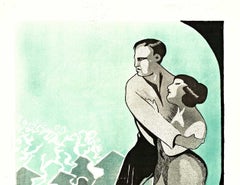
Chagall-The Lovers II 1929-House collect-Limited print by GSY Studio circa 2005

Chagall-The Lovers II 1929-House collect-Limited print by GSY Studio circa 2005

By Marc Chagall

Located in London, GB

( Valentines-gift-guide Collection ) It is the One of One edition in our collection. measurement including the frame is 84.5 H x 64 W x 4.8D CM, the frame is a limited production of ...

Category

Expressionist 1920s Prints and Multiples

Materials

Wood, Adhesive, Ink, Varnish, Giclée

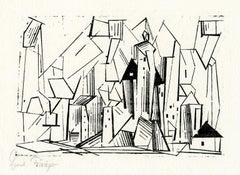
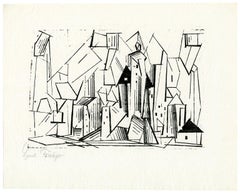
'Die Architektur' (Architecture) — Bauhaus Modernism

'Die Architektur' (Architecture) — Bauhaus Modernism

By Lyonel Feininger

Located in Myrtle Beach, SC

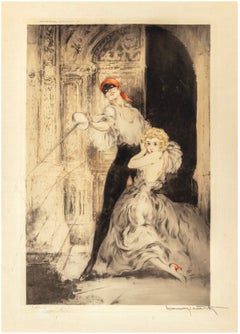
Lyonel Feininger, 'Die Architektur' (Architecture), also 'Stadtbild' (Cityscape), woodcut, edition proofs only in 1920; 50 in 1921. Prasse W 232. Signed in pencil. A fine, black impression, on off-white Japan, with full margins (1 1/4 to 2 1/8 inches), in excellent condition. Matted to museum standards, unframed. Image size 6 x 8 7/8 inches (152 x 229 mm); sheet size 9 1/2 x 11 7/8 inches (241 x 302 mm). No. 11 of the portfolio 'Zwolf Holzschnitte von Lyonel Feininger', 1921. Provenance: Peter Deitsch collection; exhibited Weimar Museum, 1968. Impressions of this work are in the permanent collection of: Busch-Reisinger Museum (Cambridge, Mass.), Bauhaus-Archiv (Germany), Hamburger Kunsthalie (Germany), Pfaizische Landesgewerbeanstalt (Germany), Kaiser Wilhelm Museum (Germany), Staatliche Graphische Sammlung (Germany), Philadelphia Museum of Art. ABOUT THE ARTIST Lyonel Feininger was born in New York City into a musical family—his father was a violinist and composer, his mother was a singer and pianist. He studied violin with his father, and by the age of 12, he was performing in public, but he also drew incessantly, most notably the steamboats and sailing ships on the Hudson and East Rivers, and the landscape around Sharon, Conn., where he spent time on a farm owned by a family friend. At the age of 16 he left New York to study music and art in Germany, from where his parents emigrated. Drawn more to the visual arts, he attended schools in Hamburg, Berlin, and Paris from 1887 to 1892. After completing his studies, Feininger began his artistic career as a cartoonist and illustrator, his originality leading him to great success. In 1906, after working for a dozen years in Germany, he was offered a job as a cartoonist at the Chicago Tribune, the largest circulation newspaper in the Midwest. He worked there for a year, inventing what became the standard design for the comic strip: in the words of John Carlin, “an overall pattern. . . that allowed the page to be read both as a series of elements one after the other, like language and as a group of juxtaposed images, like visual art.” His originality did not end there: he went on to become one of the great abstract painters. Like Kandinsky, music was his model, but Kandinsky only knew music from the outside—as a listener (inspired initially by Wagner, then by Schoenberg)—while Feininger knew it from the inside. He lived in Paris from 1906 to 1908, during which time he met and was influenced by the work of progressive painters Robert Delaunay and Jules Pascin, as well as that of Paul Cezanne and Vincent van Gogh. He began painting full-time, developing his distinctive Iyrical style based on Cubist and Expressionist idioms and a concern for the emotive qualities of light and color. He exhibited with the Der Blaue Reiter group in 1913, and in 1917, he had his first solo exhibition at Galerie Der Sturm in Berlin. One year after his solo exhibition, in 1918, Feininger began making woodcuts. He became enamored with the medium, producing an impressive 117 in his first year of exploring the printmaking medium. In 1919 at the invitation of the architect Walter Gropius, he was appointed the first master at the newly formed Staatliches Bauhaus in Weimar. His woodcut of a cathedral...

Category

Bauhaus 1920s Prints and Multiples
Materials

Woodcut

'Sisters' — Renowned Black American, Harlem Renaissance Artist

'Sisters' — Renowned Black American, Harlem Renaissance Artist

Located in Myrtle Beach, SC

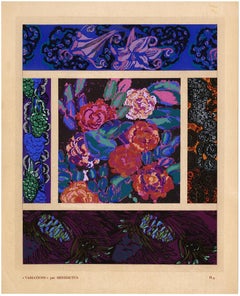
James Lesesne Wells, 'Sisters', linocut, edition not stated but small, 1928. Signed, titled, and annotated 'imp' in pencil. A fine impression on off-white wove Japan paper, with wide margins (1 7/8 to 3 3/4 inches), in excellent condition. Printed by the artist. Very scarce. Matted to museum standards, unframed. Image size 8 3/16 x 6 3/4 inches (208 x 171 mm); sheet size 13 1/2 x 10 3/4 inches (343 x 273 mm). Exhibition and Literature: 'Narratives of African American Art and Identity: The David C. Driskell Collection,' The Art Gallery at the University of Maryland, extensive touring exhibition, 1998-2000. Collections: Pennsylvania Academy of the Fine Arts, Smithsonian Institution (Anacostia Community Museum). ABOUT THE ARTIST “Wells is more than an artist with a deep concern for his fellow man. He carries many of his themes a step further into an apocalyptic world, a world of revelation and shifting lights. … He works on large blocks in a bold free style. … His work has a vigor, therefore, that is not often used in the medium today.” —Jacob Kainen (painter, critic, and collector) from Richard J. Powell’s 1986 essay Phoenix Ascending: The Art of James Lesesne Wells. James Lesesne Wells was an American painter, printmaker, educator, and pioneering figure of the Harlem Renaissance, whose work established a vital connection between African heritage, modernist form, and African American cultural identity. Known for his innovative use of linoleum and woodblock printing, Wells played a key role in shaping 20th-century African American art and inspired countless students throughout his lengthy career as a teacher at Howard University. Born in Atlanta, Georgia, Wells' early exposure to the arts came through church and community, where African American cultural traditions were central. He pursued formal artistic training at Lincoln University in Pennsylvania (earning a B.A. in 1924), followed by studies at the Pennsylvania Academy of the Fine Arts and the Barnes Foundation, where he encountered European modernists as well as traditional African sculpture, which profoundly influenced his style. Wells moved to New York in the late 1920s, swiftly immersing himself in the lively artistic and intellectual scene of Harlem. There, he became associated with artists, writers, and thinkers of the Harlem Renaissance, contributing to the growth of Black cultural identity. Considered a mentor to many famed artists of the Harlem Renaissance, Wells served as director of a summer art workshop in Harlem where his assistants included Charles Alston, Jacob Lawrence, and Palmer Hayden...

Category

American Modern 1920s Prints and Multiples
Materials

Linocut

Night Shadows
Night Shadows

Night Shadows

By Edward Hopper

Located in Plano, TX

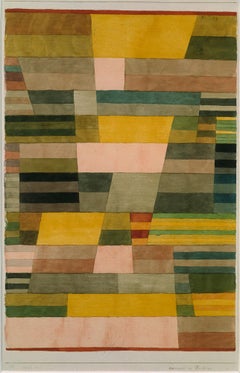
Night Shadows. 1921. Etching. Levin 82. 7 x 8 3/8 (sheet 10 x 13 7 1/16).s Series: Six American Etchings: The New Republic Portfolio, 1924. Edition approximately 500-600. Illustrate...

Category

American Modern 1920s Prints and Multiples
Materials

Etching

SELF PORTRAIT DRAWING

SELF PORTRAIT DRAWING

By Max Liebermann

Located in Santa Monica, CA

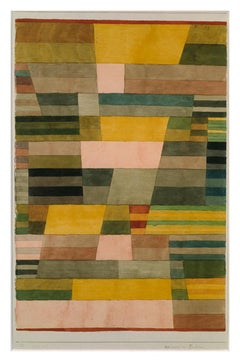
MAX LIEBERMANN (1847 1935) SELF PORTRAIT DRAWING (Selbstportrat) c. 1922 (Schiefler, 341, III b) Etching, signed in pencil, Scarce signed example found in Max Liebermann “Sein Leb...

Category

Impressionist 1920s Prints and Multiples
Materials

Etching

GEFALLEN (Killed in Action)

GEFALLEN (Killed in Action)

By Käthe Kollwitz

Located in Santa Monica, CA

KATHE KOLLWITZ (1867-1945) GEFALLEN (Killed in Action) 1920 (Klipstein 153 (1st state, a of c of 2 states) Lithograph on laid paper. Image 16 ¼ x 15 ¼ inches, Large Full Sheet, 25 ½...

Category

Expressionist 1920s Prints and Multiples
Materials

Lithograph

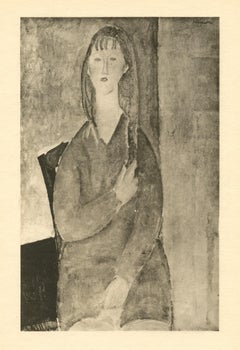
'Der Gartner' (The Gardener) — German Expressionism

'Der Gartner' (The Gardener) — German Expressionism

By Karl Michel

Located in Myrtle Beach, SC

Karl Michel, 'Der Gartner' (The Gardener), woodcut, c. 1925. Signed, titled, and numbered '15/50' in pencil. Signed in the block, lower left and right. A fine, richly-inked impression on buff wove paper, with full margins (1 1/2 to 2 3/4 inches), in excellent condition. Matted to museum standards, unframed. Scarce. Image size 5 1/4 x 3 7/8 inches (133 x 98 mm); sheet size 10 x 7 3/4 inches (254 x 198 mm). ABOUT THE ARTIST Karl Michel (1889-1984) was a noted graphic designer and expressionist printmaker during Germany's pre-Nazi Weimar Republic (1919 - 1933). In 1920, his work was featured in the influential German graphic design magazine Das Plakat...

Category

Expressionist 1920s Prints and Multiples
Materials

Woodcut

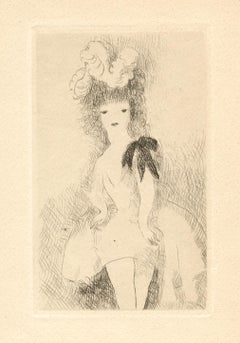
Maternité / Motherhood I: Honte / Disgrace

Maternité / Motherhood I: Honte / Disgrace

By Marc Chagall

Located in Santa Monica, CA

MARC CHAGALL (1887 – 1985) MATERNITE, 1926. Motherhood I: Honte / Disgrace (Kornfeld 65, Cramer 5, Sorlier, p. 20-21 Etching, Frontispiece from Maternite Au Sans Pareil, Paris, 1926. Marcel Arland, illustrated by Marc Chagall with five original etchings this being one of the five. Image size: 5 5/8 x 4 1/8. 1130 unsigned impressions on various papers. The story begins with a young woman being shunned by the whole village because she had given birth to a child and left its dead body...

Category

Modern 1920s Prints and Multiples
Materials

Etching

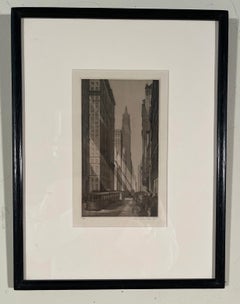
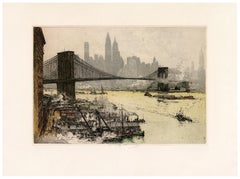
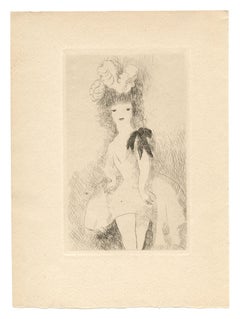
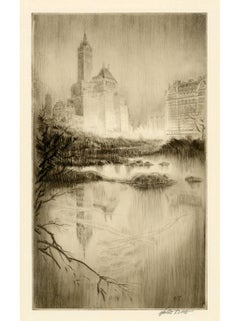
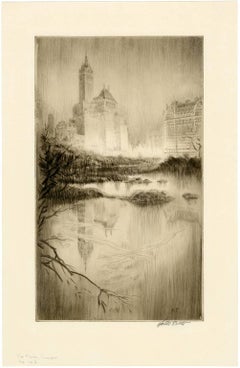
A view of the New York Public Library, looking uptown along 5th Avenue.

A view of the New York Public Library, looking uptown along 5th Avenue.

Located in Middletown, NY

New York: c 1920. Etching with aquatint printed in brownish black ink on cream wove paper, 8 3/4 x 12 inches (220 x 304 mm), full margins. Signed and titled in pencil in the lower ma...

Category

American Modern 1920s Prints and Multiples
Materials

Archival Paper, Etching, Aquatint

Nude - Lithograph by Andrè Derain - 1929

Nude - Lithograph by Andrè Derain - 1929

By André Derain

Located in Roma, IT

Nude is a modern artwork realized by Andrè Derain in Early 20th century. Lithograph on simili-Japan paper. Realized for "Les Travaux et les Jeux" by Vincent Muselli. Published by J...

Category

Modern 1920s Prints and Multiples
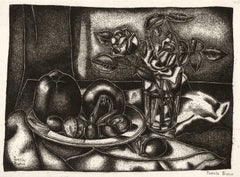
Materials

Lithograph

"In Flight" (Auf der Flucht) original lithograph

"In Flight" (Auf der Flucht) original lithograph

By Alfred Kubin

Located in Henderson, NV

Medium: original lithograph. Printed in 1920 on smooth wove paper for the Deutsche Graphiker der Gegenwart portfolio, and published in Leipzig by Klinkhardt & Biermann in an edit...

Category

Expressionist 1920s Prints and Multiples
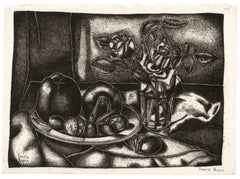
Materials

Lithograph

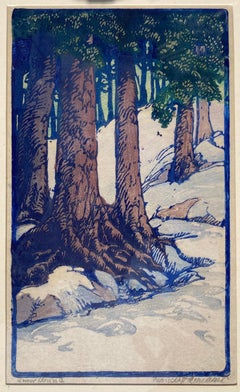
SNOWBOUND

SNOWBOUND

By Frances H. Gearhart

Located in Santa Monica, CA

FRANCES H. GEARHART (1869-1958) SNOWBOUND c.1928 Color block print, Signed and titled in pencil. 11 x 6 ½” sheet c. 14 x 9” Laid down on backing board. The usual slight browning a...

Category

American Impressionist 1920s Prints and Multiples
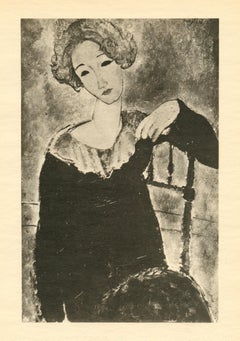
Materials

Color, Linocut, Woodcut

"Krankes Mädchen" original woodcut

"Krankes Mädchen" original woodcut

By Erich Heckel

Located in Henderson, NV

Medium: original woodcut. Printed in 1920 for the Deutsche Graphiker der Gegenwart portfolio, and published in Leipzig by Klinkhardt & Biermann in an edition of 500. Catalogue re...

Category

Expressionist 1920s Prints and Multiples
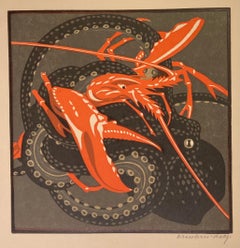
Materials

Woodcut

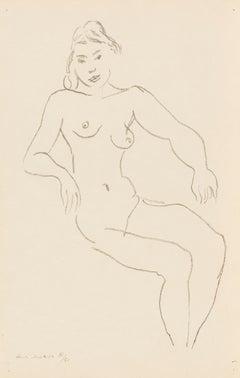
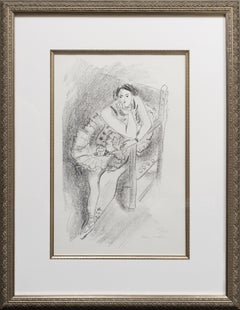
Henri Matisse, Crayon, from Drawings by Henri Matisse, 1925 (after)

Henri Matisse, Crayon, from Drawings by Henri Matisse, 1925 (after)

By Henri Matisse

Located in Southampton, NY

This exquisite lithograph after Henri Matisse (1869–1954), titled Crayon (Crayon), from the album Dessins de Henri-Matisse (Drawings by Henri Matisse), originates from the 1925 edition published by Editions des Quatre Chemins, Paris, rendered by Daniel Jacomet, Paris, and printed by Atelier Daniel Jacomet et Cie, Paris, December 15, 1925. The work exemplifies Matisses mastery of pure line and the expressive economy of form that defined his graphic art of the 1920s, transforming simplicity into lyrical harmony. Executed as a lithograph on velin Lafuma Navarre paper, this work measures 10 x 8 inches (25.4 x 20.32 cm). Unsigned and unnumbered, as issued. The edition exemplifies the refined craftsmanship of the Daniel Jacomet et Cie workshops, Paris. Artwork Details: Artist: After Henri Matisse (1869–1954) Title: Crayon (Crayon), from the album Dessins de Henri-Matisse (Drawings by Henri Matisse) Medium: Lithograph on velin Lafuma Navarre paper Dimensions: 10 x 8 inches (25.4 x 20.32 cm) Inscription: Unsigned and unnumbered, as issued Date: 1925 Publisher: Editions des Quatre Chemins, Paris Printer: Atelier Daniel Jacomet et Cie, Paris Catalogue Raisonne Reference: Duthuit, Claude. Henri Matisse: Catalogue raisonne des ouvrages illustres. Editions Claude Duthuit, Paris, 1988, illustration 3. Condition: Well preserved, consistent with age and medium Provenance: From the album Dessins de Henri-Matisse (Drawings by Henri Matisse), published by Editions des Quatre Chemins, Paris; rendered by Daniel Jacomet, Paris; printed by Atelier Daniel Jacomet et Cie, Paris, December 15, 1925 Notes: Excerpted from the album (translated from French), This album was printed in C examples on velin d'Arches with an original example by Henri-Matisse, numbered from I to C, and M examples on velin Lafuma. Printing was completed on December Fifteenth, One Thousand, Nine Hundred and Twenty-Five by F. Dutal et Cie, in Paris; the boards having been executed by the Daniel Jacomet et Cie workshops in Paris. About the Publication: Dessins de Henri-Matisse (Drawings by Henri Matisse), published by Editions des Quatre Chemins, Paris, in 1925, is a landmark early graphic portfolio that captures the artist’s mastery of contour and proportion through a series of delicately rendered lithographs. Realized under the direction of the Daniel Jacomet et Cie workshops—renowned for their exceptional skill in fine art printmaking—the album showcases Matisse’s fascination with the purity of line and the human form. Issued in a limited printing of examples on both velin d’Arches and velin Lafuma papers, it reflects the refined aesthetics and technical excellence that characterized the interwar Parisian print ateliers. The publication represents a pivotal stage in Matisse’s evolution as a draughtsman, bridging the intimate immediacy of his drawings with the permanence of fine print. About the Artist: Henri Matisse (1869–1954) was a French painter, sculptor, draughtsman, and printmaker whose revolutionary vision redefined modern art through his daring use of color, line, and form. Celebrated as one of the greatest artists of the 20th century, Matisse led the Fauvist movement and devoted his life to the pursuit of balance, beauty, and emotional expression in visual art. His early works burst with vibrant hues and liberated brushwork, while his later “cut-out” compositions achieved a poetic simplicity that transformed the relationship between color and space. Deeply influenced by the work of Paul Cezanne, Vincent van Gogh, and Georges Seurat, as well as by the rhythmic patterns of Islamic art, Byzantine mosaics, and Japanese prints, Matisse forged a new visual language that celebrated joy, movement, and serenity. He was part of an extraordinary generation of artists who shaped the evolution of modernism, maintaining lifelong dialogue and friendly rivalry with contemporaries such as Pablo Picasso, Georges Braque, Marc Chagall, Andre Derain, Albert Marquet, and Raoul Dufy—peers who, like him, sought to expand the expressive potential of color and composition. Matisses influence extended across generations, inspiring modern and contemporary masters including Alexander Calder, Alberto Giacometti, Salvador Dali, Joan Miro, Wassily Kandinsky, Marcel Duchamp, and Man Ray, each of whom drew upon his fearless experimentation and refined visual harmony. His paintings, sculptures, and works on paper are held in the most prestigious museums in the world, including the Museum of Modern Art, the Centre Pompidou, the Tate, and the Hermitage Museum, where his art continues to symbolize the essence of creativity and human emotion. The highest price ever paid for a Henri Matisse artwork is approximately 80.8 million USD, achieved in 2018 at Christies New York for Odalisque couchee aux magnolias (1923). Henri Matisse Crayon...

Category

Modern 1920s Prints and Multiples
Materials

Lithograph

‘LE REPOSE du MODELE' - Rare First State

‘LE REPOSE du MODELE' - Rare First State

By Henri Matisse

Located in Santa Monica, CA

HENRI MATISSE (French 1869-1954) LE REPOSE du MODELE 1922 . (Duthuit 416) Original lithograph, FIRST STATE, on Chine volant paper BEFORE image was reduced at the left edge. An uns...

Category

Modern 1920s Prints and Multiples
Materials

Lithograph

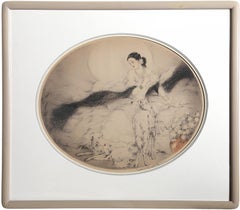
Paresse, Art Nouveau Etching by Louis Icart

Paresse, Art Nouveau Etching by Louis Icart

By Louis Icart

Located in Long Island City, NY

Louis Icart, French (1888 - 1950) - Paresse, Year: 1925, Medium: Etching, Image Size: 15 x 18.75 inches, Size: 23.5 in. x 27.5 in. (59.69 cm x 69.85 cm)

Category

Art Nouveau 1920s Prints and Multiples
Materials

Etching

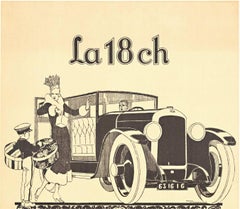
Circa 1920 original poster by Rapeno, titled Fight Tuberculosis

Circa 1920 original poster by Rapeno, titled Fight Tuberculosis

Located in PARIS, FR

This circa 1920 original poster by Rapeno, titled “Combattez la Tuberculose”, represents a critical moment in early 20th-century public health advocacy. In the wake of World War I, t...

Category

1920s Prints and Multiples
Materials

Paper, Lithograph

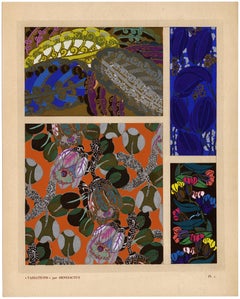
Insectes

Insectes

By Eugene Alain Seguy

Located in London, London

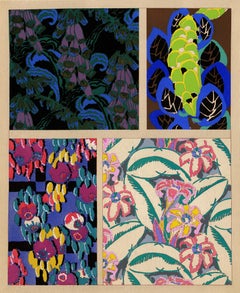
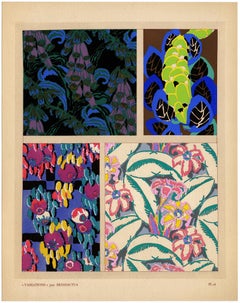
Seguy, E.A. Insectes. Paris, Du Chartre et van Buggenhoudt [1924] Each print is produced entirely by hand using a unique printing process called pochoir, which was popular in Fran...

Category

Art Deco 1920s Prints and Multiples
Materials

Gouache, Lithograph

Original 1920 Michaels Hustru- Michaels Wife vintage Swedish silent movie poster

Original 1920 Michaels Hustru- Michaels Wife vintage Swedish silent movie poster

Located in Spokane, WA

Original Vintage Movie Poster: The Woman Michael Married (1919) - Starring Bessie Barriscale (Michaels Hustru). Archival linen backing and ready for framing. Theater fold marks resto...

Category

Art Deco 1920s Prints and Multiples
Materials

Lithograph

Insectes.
Insectes.

Insectes.

By Eugene Alain Seguy

Located in London, London

SEGUY, E[ugene] A[lain]. Insectes. Paris, Du Chartre et van Buggenhoudt [1924] Each print is produced entirely by hand using a unique printing process called pochoir, which was p...

Category

Art Deco 1920s Prints and Multiples
Materials

Paper, Lithograph

Fernand Leger, Mechanical Elements, 1929 (after)

Fernand Leger, Mechanical Elements, 1929 (after)

By Fernand Léger

Located in Southampton, NY

This exquisite lithograph and pochoir after Fernand Leger (1881–1955), titled Elements mecaniques (Mechanical Elements), from the album L'Art Cubiste, Theories et Realisations, Etude...

Category

Cubist 1920s Prints and Multiples
Materials

Lithograph, Stencil

(after) Édouard Manet - "Olympia" woodcut

(after) Édouard Manet - "Olympia" woodcut

By Édouard Manet

Located in Henderson, NV

Medium: color woodcut (engraved by Jacques Beltrand after the Manet painting). This impression was printed on thin japon paper and published by Paul Cassirer in 1923. Size: 7 3/4 x 1...

Category

1920s Prints and Multiples
Materials

Woodcut

Original “In Singapore’s Chinese Quarter” Swedish silent movie poster, on linen

Original “In Singapore’s Chinese Quarter” Swedish silent movie poster, on linen

Located in Spokane, WA

Original vintage Swedish movie poster, 1921 lithograph. Step back into the glamour and intrigue of early 1920s cinema with this **original Swedish movie poster** for *I Singapores ki...

Category

Art Deco 1920s Prints and Multiples
Materials

Lithograph

Louis Icart Art Deco Etching Coursing II, 1929

Louis Icart Art Deco Etching Coursing II, 1929

By Louis Icart

Located in Dallas, TX

Louis Icart (French, 1888-1950) Coursing II, 1929 Etching with handcoloring on paper Image: 15 x 24-7/8 inches (38.1 x 63.2 cm) (image) Ed. V/160 Framed Dimensions 27 X 39.5 Inches ...

Category

Art Deco 1920s Prints and Multiples
Materials

India Ink, Archival Paper

EARLY MORNING (BROAD BROOK, CONN.)

EARLY MORNING (BROAD BROOK, CONN.)

By Asa Cheffetz

Located in Portland, ME

Cheffetz, Asa EARLY MORNING (BROAD BROOK, CONN.) Wood Engraving,1929. Springfield 15. Edition of 100, numbered 32/100, titled, signed, and inscribed "imp" all in pencil. 6 x 6 inches...

Category

1920s Prints and Multiples
Materials

ABS, Woodcut

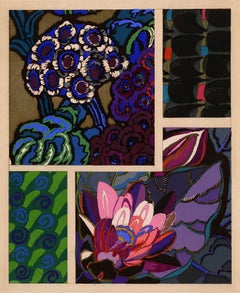
Pablo Picasso, Seated Woman in an Armchair, from Oeuvres 1920-1926 (after)

Pablo Picasso, Seated Woman in an Armchair, from Oeuvres 1920-1926 (after)

By Pablo Picasso

Located in Southampton, NY

This exquisite lithograph and pochoir after Pablo Picasso (1881–1973), titled Femme Assise dans un Fauteuil (Seated Woman in an Armchair), from the album, Picasso, Oeuvres 1920-1926, 1926, originates from the 1926 edition published and printed by Editions des Cahiers d'Art, Paris, under the direction of Christian Zervos, Editeur, Paris, December 10, 1926. Femme Assise dans un Fauteuil (Seated Woman in an Armchair) captures Picasso’s evolving exploration of form, movement, and emotion during the mid-1920s—a pivotal period in which he redefined the relationship between classical representation and modern abstraction. With its bold contouring, stylized anatomy, and rhythmic color balance, the composition embodies the harmony between structural precision and sensual fluidity that characterized Picasso’s work in this era. Executed as a lithograph and pochoir on velin paper, this work measures 11 x 8.75 inches. Signed in the plate and unnumbered as issued. The edition exemplifies the refined craftsmanship of Editions des Cahiers d'Art and the technical excellence of Parisian printmaking in the interwar period. Artwork Details: Artist: After Pablo Picasso (1881–1973) Title: Femme Assise dans un Fauteuil (Seated Woman in an Armchair), from the album, Picasso, Oeuvres 1920-1926, 1926 Medium: Lithograph and pochoir on velin paper Dimensions: 11 x 8.75 inches (27.94 x 22.23 cm) Inscription: Signed in the plate and unnumbered as issued Date: 1926 Publisher: Editions des Cahiers d'Art, Paris, under the direction of Christian Zervos, Editeur, Paris Printer: Ducros & Colas, Paris Catalogue raisonne references: Cramer, Patrick. Pablo Picasso, The Illustrated Books: Catalogue Raisonne. Patrick Cramer, 1983, illustration 15; Bloch, Georges. Pablo Picasso: Catalogue of the Printed Graphic Work 1904–1967. Kornfeld & Klipstein, 1968, illustration 56 Condition: Well preserved, consistent with age and medium Provenance: From the album, Picasso, Oeuvres 1920-1926, published and printed by Editions des Cahiers d'Art, Paris, under the direction of Christian Zervos, Editeur, Paris, 1926 Notes: Excerpted from the album (translated from French), This volume was completed to be printed by the Ducros & Colas printing house, 7, rue Croulebarbe in Paris, for the Editions des Cahiers d'Art, on December 10th MCMXXVI, DCC numbered examples, VI on Japon Imperial with an etching by Picasso, numbered from I to VI, L examples on paper by papier de Hollande, Van Gelder, with an etching by Picasso, numbered from VII to LVI, DCXL examples on velin, numbered from LVII to DCC, plus II examples intended for legal deposit. About the Publication: The album Picasso, Oeuvres 1920-1926 was issued in 1926 by Editions des Cahiers d'Art under the direction of Christian Zervos, one of the most influential editors, critics, and publishers of 20th-century modernism. Conceived as both a visual and intellectual tribute to Pablo Picasso’s mastery during a crucial transitional period, the volume presents a series of lithographs and pochoirs that chronicle his stylistic evolution from synthetic Cubism toward a renewed engagement with the human figure. Published in conjunction with the legendary Cahiers d'Art journal, the edition reflects Zervos’s vision of uniting scholarship, craftsmanship, and artistic authenticity in the modern book arts. Each composition was executed by the master printers Ducros & Colas and colored using the pochoir technique, faithfully translating the tonal subtleties and compositional balance of Picasso’s original drawings and gouaches. Completed on December 10, 1926, the edition comprised DCC examples—VI on Japon Imperial, L on Hollande Van Gelder, and DCXL on velin paper, plus II copies reserved for legal deposit—each numbered and printed to exacting standards. The volume stands as one of the earliest major Cahiers d'Art collaborations with Picasso, preceding the monumental Catalogue Raisonne des Oeuvres de Picasso that Zervos would later dedicate his life to producing. Today, Picasso, Oeuvres 1920-1926 remains a cornerstone of interwar art publishing, representing the confluence of avant-garde innovation, technical excellence, and intellectual rigor that defined the Parisian art world of the 1920s. About the Artist: Pablo Picasso (1881–1973) was a Spanish painter, sculptor, printmaker, and ceramicist whose extraordinary vision revolutionized modern art and defined the visual language of the 20th century. A child prodigy from Malaga, Spain, Picasso's career spanned more than seven decades and encompassed an astonishing range of styles and innovations—from the melancholic Blue and romantic Rose periods to his pioneering invention of Cubism with Georges Braque, which shattered conventional notions of perspective and form. Influenced by the bold expressiveness of El Greco, the structure of Cezanne, and the vitality of African and Iberian sculpture, Picasso became a central figure of the Paris avant-garde, working in creative dialogue with contemporaries such as Henri Matisse, Alexander Calder, Alberto Giacometti, Salvador Dali, Joan Miro, Wassily Kandinsky, Marcel Duchamp, and Man Ray. His insatiable experimentation extended across painting, drawing, printmaking, ceramics, and sculpture, forever expanding the boundaries of artistic expression. A master of reinvention, Picasso profoundly shaped generations of artists who followed—from Andy Warhol, Roy Lichtenstein, David Hockney, and Jean-Michel Basquiat to Jeff Koons and Banksy—cementing his status as a timeless cultural icon whose works remain among the most sought after worldwide. His landmark painting Les Femmes d'Alger (Version O) achieved a record-breaking sale of 179,365,000 USD at Christie's, New York, on May 11, 2015, affirming Picasso's enduring legacy as one of the most influential and valuable artists in history. Pablo Picasso Femme Assise dans un Fauteuil (Seated Woman in an Armchair), Picasso Oeuvres 1920-1926, Picasso Zervos Cahiers d'Art, Picasso pochoir...
Category

Cubist 1920s Prints and Multiples
Materials

Lithograph, Stencil

Original poster by Delval for Fap'anis alcohol celui des Connaisseurs

Original poster by Delval for Fap'anis alcohol celui des Connaisseurs

By Delval

Located in PARIS, FR

Crafted circa 1920 by Delval, the original poster for Fap'anis Celui des connaisseurs stands as a testament to the allure of the era's entertainment and indulgence. Delval, renowned for his skill in poster design, captured the essence of sophistication and refinement in this advertisement for Distillerie Peureux.

The poster features an illustration of the celebrated singer Gaby Deslys...

Category

1920s Prints and Multiples
Materials

Linen, Paper, Lithograph

'Manhattan Old and New' — Vintage New York Cityscape

'Manhattan Old and New' — Vintage New York Cityscape

By Samuel Chamberlain

Located in Myrtle Beach, SC

Samuel Chamberlain, 'Manhattan Old and New', drypoint, 1929, edition 100, Chamberlain and Kingsland 81. Signed, titled, and numbered '81/100' in pencil. Titled and annotated '30.00' in pencil, in the artist's hand, bottom margin. Matted to museum standards, unframed. A superb, finely-detailed impression, with selectively wiped plate tone, on heavy Rives cream wove paper; full margins (1 1/2 to 2 1/4 inches), in excellent condition. The subject of the print is the lower Manhattan cityscape just before the Depression. Image size 8 3/4 x 6 13/16 inches (222 x 173 mm); sheet size 12 3/4 x 10 inches (324 x 254 mm). Impressions of this work are held in the collections of the National Gallery of Art and the Zimmerli Art Museum. ABOUT THE ARTIST 'There is something about the atmospheric vibrancy of an etching which imparts a peculiar and irresistible life to architectural drawing...A copper plate offers receptive ground to the meticulously detailed drawing which so often appeals to the architect'. —Samuel Chamberlain, from the Catalogue Raisonné of his prints. Samuel V. Chamberlain (1896 - 1975), printmaker, photographer, author, and teacher, was born in Iowa. His family moved to Aberdeen, Washington in 1901, and in 1913, Chamberlain enrolled in the University of Washington in Seattle, where he studied architecture under Carl Gould. By 1915, he was enrolled in the School of Architecture of the Massachusetts Institute of Technology in Boston. With the United States' involvement in the First World War, Chamberlain sailed to France, where he volunteered in the American Field Service. In 1918, he was transferred to the United States Army to complete his tour of duty. After the war, he returned to Boston and resumed his architectural studies, which he eventually discontinued, working for a few years as a commercial artist. Chamberlain received the American Field Service Scholarship in 1923, which he used to travel to Spain, North Africa, and Italy. In 1924 he was living in Paris, where he studied lithography with Gaston Dorfinant and etching and drypoint with Edouard Léon, publishing his first etching the following year. In 1927, he studied drypoint with Malcolm Osborne...

Category

American Modern 1920s Prints and Multiples
Materials

Drypoint

original etching
original etching

original etching

By Marie Laurencin

Located in Henderson, NV

Medium: original etching. Printed in 1926 at the atelier Lacourière on Montgolfier paper and published by Au Sans Pareil in a limited edition of 995 for "Dix filles dans un pré". Pla...

Category

1920s Prints and Multiples
Materials

Etching

Conchita, Art Nouveau Etching by Louis Icart 1929

Conchita, Art Nouveau Etching by Louis Icart 1929

By Louis Icart

Located in Long Island City, NY

Artist: Louis Icart, French (1888 - 1950) Title: Conchita Year: 1929 Medium: Etching, signed in pencil Image Size: 20 x 13 inches Frame Size: 32.5 x 25 inches Reference: Figure 361 ...

Category

Art Nouveau 1920s Prints and Multiples
Materials

Etching

Sur la plage II (from Quartre Lithographies)

Sur la plage II (from Quartre Lithographies)

By Pablo Picasso

Located in New York, NY

Pablo Picasso may be best known for pioneering Cubism and fracturing the two-dimensional picture plane in order to convey three-dimensional space. Inspired by African and Iberian art...

Category

Cubist 1920s Prints and Multiples
Materials
Paper, Lithograph