1980s Art

to
3,792
5,390
3,245
4,495
2,638
2,334
Overall Width
to
Overall Height
to
7,512
21,290
158,261
232,705
1,963
2,228
4,878
6,388
5,806
13,223
19,552
25,573
18,167
13,492
5,367
4,085
2,983
2,388
1,752
619
497
266
186
171
169
76
50
43
2
9,019
7,539
943
7,506
3,719
2,995
2,381
1,823
1,527
1,197
1,196
1,159
987
976
900
778
765
490
443
438
429
399
387
3,948
3,829
3,315
1,945
1,842
1,194
289
207
199
170
3,226
6,873
11,559
5,786
Period: 1980s
Port of Barcelona Spain oil painting mediterranean seascape
Located in Sitges, Barcelona
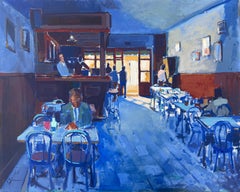
RAFAEL DURAN BENET (Terrassa, 1931 – Barcelona, 2015) Title: Port of Barcelona Technique: Oil on canvas-board Dimensions: 61 × 46 cm — (24 × 18.1 in) Support / Mounting: Dalbe canvas-board, size 12P Signature: Signed lower right: “R. D.” Period / Date: c. 1980–1990 Condition: Very good. Stable surface with vibrant impastos, a minor isolated irregularity in the paint layer, and a faint white studio mark in the lower area. No losses or retouching. Framing: Unframed. Provenance: Private collection, Sitges. (Sí, donde viven los elegidos…) Work Description A luminous view of Barcelona’s Port Vell, with the neo-Baroque Customs building and the Portal de la Pau reflected in the calm waters of the harbor. In the foreground, sailboats and fishing boats form a horizontal frieze that contrasts with the vertical silhouettes of palm trees and towers in the background. The brushstroke is free, broken, rich in impasto and chromatic transparency, capturing the trembling air of the Mediterranean. Ochres, pinks and blues merge into a vibrant atmosphere, characteristic of the artistic maturity of Rafael Durán Benet, who managed to infuse urban landscapes with the same poetic spirit present in his views of Cadaqués and the Costa Brava. Artistic Commentary Rafael Durán Benet represents the continuity of post-war Catalan Impressionism, heir to Joaquim Mir and to his uncle Rafael Benet i Vancells, yet with a looser and more modern interpretation. His painting blends architectural precision with chromatic freedom, achieving a balance between structure and emotion. In this work, port architecture becomes a pictorial motif where color and light are the true protagonists. The sense of movement on the water and the warm atmosphere evoke the same sensitivity found in artists such as Ignacio Gil Sala, Jordi Pagans Montsalvatje...
Category

Post-Impressionist 1980s Art

Materials

Oil

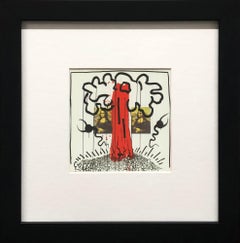
Keith Haring Apocalypse XII Pop Art
Located in Brooklyn, NY
Vintage offset lithograph postcard published by Art Unlimited Amsterdam. Printed in Holland. The postcard is framed in a black wood frame with a front profile of 1 inch and a side pr...
Category

Pop Art 1980s Art

Materials

Offset

Echoes of the Atelier X
Located in London, GB
Echoes of the Atelier X, acrylic on board, Florentine School (circa 1980s-90s). This gallery has acquired a number of paintings through an intermediary of an ageing art professor fro...
Category

Modern 1980s Art

Materials

Acrylic, Board

'Mural on Houston', Hand Signed by Haring, Subway Drawings, New York, Pop Art
Located in Santa Cruz, CA
Hand signed by the artist in felt pen, upper center, 'K. Haring' for Keith Haring (American, 1958-1990), circa 1982. A postcard titled, 'Mural, Houston at Bowery, New York City, July...
Category

Pop Art 1980s Art

Materials

Offset, Postcard

Echoes of the Atelier XVII
Located in London, GB
Echoes of the Atelier XVII, acrylic on canvas mounted on board, Florentine School (circa 1980s-90s). This gallery has acquired a number of paintings through an intermediary of an age...
Category

Modern 1980s Art

Materials

Canvas, Acrylic, Board

"I Know How You Made Me Feel, Brad!", VIP invitation to MoMA show, Hand Signed
Located in New York, NY
Roy Lichtenstein VIP Invitation to Museum of Modern Art black tie preview of the exhibition "The Drawings of Roy Lichtenstein" Offset lithograph on Coronado Opaque SST Cover paper Boldly signed in black marker on the front The front of the fold out invitation card depicts Roy Lichtenstein's 1963 pencil pochoir “I Know How You Must Feel Brad” This print was published by the Museum of Modern Art as an invitation to an exclusive VIP preview of the exhibition "The Drawings of Roy Lichtenstein." The artist signed the card in person at the event. This work has been elegantly framed in a museum quality wood frame under UV Plexiglass with a die cut window to reveal the text from inside the MoMA fold-out invitation card, which expressly states that the artist will be present at the VIP event. A true vintage collectors item when hand signed by Roy Lichtenstein, as the present work Measurements: Framed 13.5 inches vertical by 12 horizontal by 1.5 Artwork 6 inches by 4 inches Roy Lichtenstein Biography Roy Lichtenstein was one of the most influential and innovative artists of the second half of the twentieth century. He is preeminently identified with Pop Art, a movement he helped originate, and his first fully achieved paintings were based on imagery from comic strips and advertisements and rendered in a style mimicking the crude printing processes of newspaper reproduction. These paintings reinvigorated the American art scene and altered the history of modern art. Lichtenstein’s success was matched by his focus and energy, and after his initial triumph in the early 1960s, he went on to create an oeuvre of more than 5,000 paintings, prints, drawings, sculptures, murals and other objects celebrated for their wit and invention. Roy Fox Lichtenstein was born on October 27, 1923, in New York City, the first of two children born to Milton and Beatrice Werner Lichtenstein. Milton Lichtenstein (1893–1946) was a successful real estate broker, and Beatrice Lichtenstein (1896–1991), a homemaker, had trained as a pianist, and she exposed Roy and his sister Rénee to museums, concerts and other aspects of New York culture. Roy showed artistic and musical ability early on: he drew, painted and sculpted as a teenager, and spent many hours in the American Museum of Natural History and the Museum of Modern Art. He played piano and clarinet, and developed an enduring love of jazz, frequenting the nightspots in Midtown to hear it. Lichtenstein attended the Franklin School for Boys, a private junior high and high school, and was graduated in 1940. That summer he studied painting and drawing from the model at the Art Students League of New York with Reginald Marsh. In September he entered Ohio State University (OSU) in Columbus in the College of Education. His early artistic idols were Rembrandt, Daumier and Picasso, and he often said that Guernica (1937; Museo Reina Sofía, Madrid), then on long-term loan to the Museum of Modern Art, was his favorite painting. Even as an undergraduate, Lichtenstein objected to the notion that one set of lines (one person’s drawings) “was considered brilliant, and somebody’s else’s, that may have looked better to you, was considered nothing by almost everyone.”i Lichtenstein’s questioning of accepted canons of taste was encouraged by Hoyt L. Sherman, a teacher whom he maintained was the person who showed him how to see and whose perception-based approach to art shaped his own. In February 1943, Lichtenstein was drafted, and he was sent to Europe in 1945. As part of the infantry, he saw action in France, Belgium and Germany. He made sketches throughout his time in Europe and, after peace was declared there, he intended to study at the Sorbonne. Lichtenstein arrived in Paris in October 1945 and enrolled in classes in French language and civilization, but soon learned that his father was gravely ill. He returned to New York in January 1946, a few weeks before Milton Lichtenstein died. In the spring of that year, Lichtenstein went back to OSU to complete his BFA and in the fall he was invited to join the faculty as an instructor. In June 1949, he married Isabel Wilson Sarisky (1921–80), who worked in a cooperative art gallery in Cleveland where Lichtenstein had exhibited his work. While he was teaching, Lichtenstein worked on his master’s degree, which he received in 1949. During his second stint at OSU, Lichtenstein became closer to Sherman, and began teaching his method on how to organize and unify a composition. Lichtenstein remained appreciative of Sherman’s impact on him. He gave his first son the middle name of “Hoyt,” and in 1994 he donated funds to endow the Hoyt L. Sherman Studio Art Center at OSU. In the late 1940s and early 1950s, Lichtenstein began working in series and his iconography was drawn from printed images. His first sustained theme, intimate paintings and prints in the vein of Paul Klee that poked lyrical fun at medieval knights, castles and maidens, may well have been inspired by a book about the Bayeux Tapestry. Lichtenstein then took an ironic look at nineteenth-century American genre paintings he saw in history books, creating Cubist interpretations of cowboys and Indians spiked with a faux-primitive whimsy. As with his most celebrated Pop paintings of the 1960s, Lichtenstein gravitated toward what he would characterize as the “dumbest” or “worst” visual item he could find and then went on to alter or improve it. In the 1960s, commercial art was considered beneath contempt by the art world; in the early 1950s, with the rise of Abstract Expressionism, nineteenth-century American narrative and genre paintings were at the nadir of their reputation among critics and collectors. Paraphrasing, particularly the paraphrasing of despised images, became a paramount feature of Lichtenstein’s art. Well before finding his signature mode of expression in 1961, Lichtenstein called attention to the artifice of conventions and taste that permeated art and society. What others dismissed as trivial fascinated him as classic and idealized—in his words, “a purely American mythological subject matter.”ii Lichtenstein’s teaching contract at OSU was not renewed for the 1951–52 academic year, and in the autumn of 1951 he and Isabel moved to Cleveland. Isabel Lichtenstein became an interior decorator specializing in modern design, with a clientele drawn from wealthy Cleveland families. Whereas her career blossomed, Lichtenstein did not continue to teach at the university level. He had a series of part-time jobs, including industrial draftsman, furniture designer, window dresser and rendering mechanical dials for an electrical instrument company. In response to these experiences, he introduced quirkily rendered motors, valves and other mechanical elements into his paintings and prints. In 1954, the Lichtensteins’ first son, David, was born; two years later, their second child, Mitchell, followed. Despite the relative lack of interest in his work in Cleveland, Lichtenstein did place his work with New York dealers, which always mattered immensely to him. He had his first solo show at the Carlebach Gallery in New York in 1951, followed by representation with the John Heller Gallery from 1952 to 1957. To reclaim his academic career and get closer to New York, Lichtenstein accepted a position as an assistant professor at the State University of New York at Oswego, in the northern reaches of the state. He was hired to teach industrial design, beginning in September 1957. Oswego turned out to be more geographically and aesthetically isolated than Cleveland ever was, but the move was propitious, for both his art and his career. Lichtenstein broke away from representation to a fully abstract style, applying broad swaths of pigment to the canvas by dragging the paint across its surface with a rag wrapped around his arm. At the same time, Lichtenstein was embedding comic-book characters figures such as Mickey Mouse and Donald Duck in brushy, expressionistic backgrounds. None of the proto-cartoon paintings from this period survive, but several pencil and pastel studies from that time, which he kept, document his intentions. Finally, when he was in Oswego, Lichtenstein met Reginald Neal, the new head of the art department at Douglass College, the women’s college of Rutgers University, in New Brunswick, New Jersey. The school was strengthening and expanding its studio art program, and when Neal needed to add a faculty member to his department, Lichtenstein was invited to apply for the job. Lichtenstein was offered the position of assistant professor, and he began teaching at Douglass in September 1960. At Douglass, Lichtenstein was thrown into a maelstrom of artistic ferment. With New York museums and galleries an hour away, and colleagues Geoffrey Hendricks and Robert Watts at Douglass and Allan Kaprow and George Segal at Rutgers, the environment could not help but galvanize him. In June 1961, Lichtenstein returned to the idea he had fooled around with in Oswego, which was to combine cartoon characters from comic books with abstract backgrounds. But, as Lichtenstein said, “[I]t occurred to me to do it by mimicking the cartoon style without the paint texture, calligraphic line, modulation—all the things involved in expressionism.”iii Most famously, Lichtenstein appropriated the Benday dots, the minute mechanical patterning used in commercial engraving, to convey texture and gradations of color—a stylistic language synonymous with his subject matter. The dots became a trademark device forever identified with Lichtenstein and Pop Art. Lichtenstein may not have calibrated the depth of his breakthrough immediately but he did realize that the flat affect and deadpan presentation of the comic-strip panel blown up and reorganized in the Sherman-inflected way “was just so much more compelling”iv than the gestural abstraction he had been practicing. Among the first extant paintings in this new mode—based on comic strips and illustrations from advertisements—were Popeye and Look Mickey, which were swiftly followed by The Engagement Ring, Girl with Ball and Step-on Can with Leg. Kaprow recognized the energy and radicalism of these canvases and arranged for Lichtenstein to show them to Ivan Karp, director of the Leo Castelli Gallery. Castelli was New York’s leading dealer in contemporary art, and he had staged landmark exhibitions of Jasper Johns and Robert Rauschenberg in 1958 and Frank Stella in 1960. Karp was immediately attracted to Lichtenstein’s paintings, but Castelli was slower to make a decision, partly on account of the paintings’ plebeian roots in commercial art, but also because, unknown to Lichtenstein, two other artists had recently come to his attention—Andy Warhol and James Rosenquist—and Castelli was only ready for one of them. After some deliberation, Castelli chose to represent Lichtenstein, and the first exhibition of the comic-book paintings was held at the gallery from February 10 to March 3, 1962. The show sold out and made Lichtenstein notorious. By the time of Lichtenstein’s second solo exhibition at Castelli in September 1963, his work had been showcased in museums and galleries around the country. He was usually grouped with Johns, Rauschenberg, Warhol, Rosenquist, Segal, Jim Dine, Claes Oldenburg, Robert Indiana and Tom Wesselmann. Taken together, their work was viewed as a slap in the face to Abstract Expressionism and, indeed, the Pop artists shifted attention away from many members of the New York School. With the advent of critical and commercial success, Lichtenstein made significant changes in his life and continued to investigate new possibilities in his art. After separating from his wife, he moved from New Jersey to Manhattan in 1963; in 1964, he resigned from his teaching position at Douglass to concentrate exclusively on his work. The artist also ventured beyond comic book subjects, essaying paintings based on oils by Cézanne, Mondrian and Picasso, as well as still lifes and landscapes. Lichtenstein became a prolific printmaker and expanded into sculpture, which he had not attempted since the mid-1950s, and in both two- and three-dimensional pieces, he employed a host of industrial or “non-art” materials, and designed mass-produced editioned objects that were less expensive than traditional paintings and sculpture. Participating in one such project—the American Supermarket show in 1964 at the Paul Bianchini Gallery, for which he designed a shopping bag—Lichtenstein met Dorothy Herzka (b. 1939), a gallery employee, whom he married in 1968. The late 1960s also saw Lichtenstein’s first museum surveys: in 1967 the Pasadena Art Museum initiated a traveling retrospective, in 1968 the Stedelijk Musem in Amsterdam presented his first European retrospective, and in 1969 he had his first New York retrospective, at the Solomon R. Guggenheim Museum. Wanting to grow, Lichtenstein turned away from the comic book subjects that had brought him prominence. In the late 1960s his work became less narrative and more abstract, as he continued to meditate on the nature of the art enterprise itself. He began to explore and deconstruct the notion of brushstrokes—the building blocks of Western painting. Brushstrokes are conventionally conceived as vehicles of expression, but Lichtenstein made them into a subject. Modern artists have typically maintained that the subject of a painting is painting itself. Lichtenstein took this idea one imaginative step further: a compositional element could serve as the subject matter of a work and make that bromide ring true. The search for new forms and sources was even more emphatic after 1970, when Roy and Dorothy Lichtenstein bought property in Southampton, New York, and made it their primary residence. During the fertile decade of the 1970s, Lichtenstein probed an aspect of perception that had steadily preoccupied him: how easily the unreal is validated as the real because viewers have accepted so many visual conceptions that they don’t analyze what they see. In the Mirror series, he dealt with light and shadow upon glass, and in the Entablature series, he considered the same phenomena by abstracting such Beaux-Art architectural elements as cornices, dentils, capitals and columns. Similarly, Lichtenstein created pioneering painted bronze sculpture that subverted the medium’s conventional three-dimensionality and permanence. The bronze forms were as flat and thin as possible, more related to line than volume, and they portrayed the most fugitive sensations—curls of steam, rays of light and reflections on glass. The steam, the reflections and the shadow were signs for themselves that would immediately be recognized as such by any viewer. Another entire panoply of works produced during the 1970s were complex encounters with Cubism, Futurism, Purism, Surrealism and Expressionism. Lichtenstein expanded his palette beyond red, blue, yellow, black, white and green, and invented and combined forms. He was not merely isolating found images, but juxtaposing, overlapping, fragmenting and recomposing them. In the words of art historian Jack Cowart, Lichtenstein’s virtuosic compositions were “a rich dialogue of forms—all intuitively modified and released from their nominal sources.”v In the early 1980s, which coincided with re-establishing a studio in New York City, Lichtenstein was also at the apex of a busy mural career. In the 1960s and 1970s, he had completed four murals; between 1983 and 1990, he created five. He also completed major commissions for public sculptures in Miami Beach, Columbus, Minneapolis, Paris, Barcelona and Singapore. Lichtenstein created three major series in the 1990s, each emblematic of his ongoing interest in solving pictorial problems. The Interiors, mural-sized canvases inspired by a miniscule advertisement in an Italian telephone...
Category

Pop Art 1980s Art

Materials

Lithograph, Offset

Echoes of the Atelier IV
Located in London, GB
Echoes of the Atelier IV, acrylic on canvas mounted on board, Florentine School (circa 1980s-90s). This gallery has acquired a number of paintings through an intermediary of an agein...
Category

Modern 1980s Art

Materials

Canvas, Acrylic, Board

Mark Rothko 'Blue, Green and Brown' 1989 Abstract Mid Century
By Mark Rothko
Located in Brooklyn, NY
Poster advertising the National Gallery of Art, Washington, featuring Mark Rothko’s Blue, Green and Brown. Presented in a refined black wood frame with a 3/4-inch front profile and a...
Category

American Modern 1980s Art

Materials

Offset

Keith Haring Silkscreen VIII from Apocalypse Pop Art Vintage
Located in Brooklyn, NY
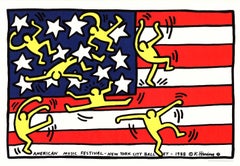
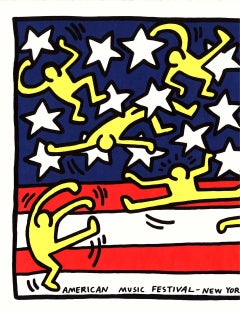
Silkscreen VIII from Apocalypse is a 1988 vintage offset lithograph postcard, published by Art Unlimited Amsterdam and printed in Holland. The postcard is framed in a black wood fram...
Category

Pop Art 1980s Art

Materials

Offset

Echoes of the Atelier XII
Located in London, GB
Echoes of the Atelier XII, acrylic on canvas mounted on board, Florentine School (circa 1980s-90s). This gallery has acquired a number of paintings through an intermediary of an agei...
Category

Modern 1980s Art

Materials

Canvas, Oil, Board

Marc Chagall, Ares and Aphrodite, from Homer, The Odyssey, 1989 (after)
Located in Southampton, NY
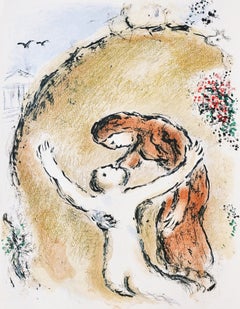
This exquisite lithograph after Marc Chagall (1887–1985), titled Ares und Aphrodite (Ares and Aphrodite), from Homer, Die Odyssee (The Odyssey), originates from the 1989 German-langu...
Category

Expressionist 1980s Art

Materials

Lithograph

"Untitled" Friedel Dzubas, Pastel Colors, Intense Red, Color Field, Unique Work
Located in New York, NY
Friedel Dzubas Untitled, 1981 Hand-painted monotype on pulp paper 30 1/4 x 24 3/4 inches A noted figure in the New York School, Friedel Dzubas was associated with the Color Field p...
Category

Color-Field 1980s Art

Materials

Acrylic, Handmade Paper, Monotype

David Hockney 'Two Deckchairs, Calvi' 1985 Pop Art Vintage
Located in Brooklyn, NY
Exhibition poster created for the Museum Boymans-van Beuningen in Rotterdam, showcasing David Hockney’s Two Deckchairs, Calvi. With its bold colors and sunlit charm, this image captures Hockney’s unmistakable style and timeless appeal. Original museum posters...
Category

Pop Art 1980s Art

Materials

Offset

Hallelujah II, Peter Alexander
Located in Fairfield, CT
Artist: Peter Alexander (1939) Title: Hallelujah II Year: 1988 Edition: 50, plus proofs Medium: Lithograph on Guarro paper Size: 22 x 30 inches Condition: Excellent Inscription: Sign...
Category

Pop Art 1980s Art

Materials

Lithograph

Original Bal du Moulin Rouge Frenesie vintage French cabaret poster, on linen
Located in Spokane, WA
Original Bal du Moulin Rouge “Frénésie” Vintage Cabaret Poster. Linen-backed in excellent condition, ready to frame. Turn your wall into a Paris night. René Gruau’s electric silh...
Category

Art Deco 1980s Art

Materials

Offset

Portrait of a Boy with Teddy Bear oil on canvas painting
Located in Sitges, Barcelona
Author: Bernard Leemker (Groningen, 1899 – 1990) Title: Portrait of a Boy with Teddy Bear Date: 1984 Technique: Oil on canvas Dimensions: 55 × 45 cm — 21.7 × 17.7 in Support / Mounti...
Category

Modern 1980s Art

Materials

Oil

Echoes of the Atelier I
Located in London, GB
Echoes of the Atelier I, acrylic on board, Florentine School (circa 1980s-90s). This gallery has acquired a number of paintings through an intermediary of an ageing art professor fro...
Category

Modern 1980s Art

Materials

Acrylic, Board

Rydal Water English Lake District Large Signed English Oil Painting Autumn Light
Located in Cirencester, Gloucestershire
Rydal Water by Arthur Terry Blamires (English, born 1930) signed oil on board, framed titled verso framed: 22 x 30 inches board : 27 x 25 inches Provenance: private collection, Cumbr...
Category

English School 1980s Art

Materials

Oil

Original Formidable! - Bal du Moulin Rouge Paris vintage cabaret poster
Located in Spokane, WA
Original Moulin Rouge - Striking small-format vintage poster by Rene Gruau. Archival linen-backed and in excellent condition, ready to frame. Bright, vibrant colors. Grade A. Celebrate the electric allure of Parisian nightlife with this authentic René Gruau poster made for the Moulin Rouge. In flowing ribbons of red and a bold splash of inky black, Gruau captures the can-can's motion in a memorable silhouette. Elegant, striking, and unmistakably Paris, this piece makes a perfect addition to any collection of fashion, advertising, or mid-century graphic art. The legendary Moulin Rouge poster...
Category

American Modern 1980s Art

Materials

Offset

Rare Hiroshima Peace Celebration print, Hand Signed by Keith Haring + provenance
Located in New York, NY
Keith Haring Rare Hiroshima Peace Celebration poster (hand signed by Keith Haring), from the Patrick Eddington Collection, 1988 Framed Original offset lithograph (Hand signed by Keit...
Category

Pop Art 1980s Art

Materials

Lithograph, Offset

City Graffiti Art Colorful Oil Painting #1 by S. Mooney
Located in Douglas Manor, NY
4090 An abstract graffiti art, oil on artist board displayed in a custom -made wood frame Image size 12H x 12 W
Category

1980s Art

Materials

Oil

Hildegarde of Bingen, gorgeous Cloisonne Brooch, jewelry The Dinner Party signed
Located in New York, NY
Judy Chicago Cloisonne Brooch of Hildegard of Bingen from The Dinner Party, 1987 Limited Edition Cloisonne brooch/pin with clasp on the back and Judy Chicago's incised signature and ...
Category

Feminist 1980s Art

Materials

Metal, Enamel

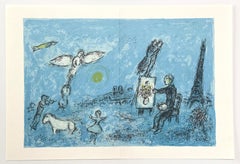
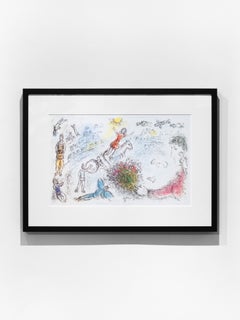
Marc Chagall "Le peintre et son double (Derriere le Miroir 246)" lithograph
Located in Boston, MA
Artist: Chagall, Marc Title: Le peintre et son double (Derriere le Miroir 246) Series: Derriere le Miroir Date: 1981 Medium: Lithograph (double page, folded in center) Unframed ...
Category

Modern 1980s Art

Materials

Lithograph

Keith Haring 'Andy Mouse' Vintage Pop Art
Located in Brooklyn, NY
Andy Mouse is a significant work by Keith Haring, created in 1986 as both a homage to Andy Warhol and a bold commentary on consumer culture. Blending Warhol’s iconic image with Micke...
Category

Pop Art 1980s Art

Materials

Screen

Brigitte Nielsen for Herb Ritts - Photograph by Herb Ritts - 1987
Located in Roma, IT
Vintage b/w photograph realized by Herb Ritts in 1987. Excellent condition.
Category

Contemporary 1980s Art

Materials

Photographic Paper

Rachel Williams for Sante D'Orazio - Photograph by Sante D'Orazio - 1980s
Located in Roma, IT
Vintage b/w photograph realized by Sante D'Orazio in 1980s. Copyright and provenance: Playboy. Excellent condition.
Category

Contemporary 1980s Art

Materials

Photographic Paper

silkscreen
Located in Henderson, NV
Medium: silkscreen. Printed in 1984 for "Ficciones" and published by The Limited Editions Club in an edition of 1500. Size: 8 x 7 3/4 inches (203 x 198 mm). Not signed. Condition: t...
Category

1980s Art

Materials

Screen

Conca dei Marini, Italy, Estate Edition, Landscape Photograph
Located in Los Angeles, CA
This mid-1980s landscape photograph, captured by society photographer Slim Aarons, features a busy bay in Conca dei Marini, on the Amalfi coast in Italy, August 1984. This is an est...
Category

Realist 1980s Art

Materials

Lambda

Large Pastel Abstract Collage, 20th Century New York/Texas Artist
Located in Beachwood, OH
Joseph Glasco (American, 1925–1996) Untitled 1980 Acrylic and collage on canvas Initialed and dated verso 48 x 48 inches Joseph Glasco was born in Paul’s Valley, Oklahoma and grew u...
Category

Abstract 1980s Art

Materials

Acrylic

Madonna - Photograph by Lee Friedlander - 1980s
Located in Roma, IT
Vintage b/w photograph realized by Lee Friedlander in 1980s. Copyright and provenance: Playboy. Excellent condition.
Category

Contemporary 1980s Art

Materials

Photographic Paper

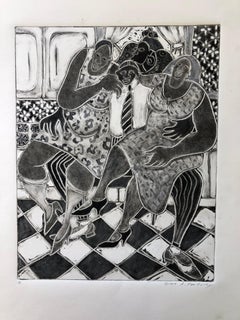
Vintage American School Signed Watercolor 80s Dance Party Scene Framed Painting
Located in Buffalo, NY
Vintage American school modernist interior dance party painting. Watercolor and on paper. Signed. Framed. Measuring 12" x 21" framed and 11" x 20" painting alone.
Category

1980s Art

Materials

Canvas, Oil, Paper, Watercolor

Joan Miro, The Acid Melody, from La Melodie acide, 1980
Located in Southampton, NY
This exquisite lithograph by Joan Miro (1893–1983), titled La Melodie acide (The Acid Melody), from the folio 14 original lithographs by Joan Miro "La Melodie acide" (The Acid Melody...
Category

Modern 1980s Art

Materials

Lithograph

Stephanie Seymour for Herb Ritts - Photograph by Herb Ritts - 1987
Located in Roma, IT
Pair of vintage b/w photographs realized by Herb Ritts in 1980s. Excellent condition.
Category

Contemporary 1980s Art

Materials

Photographic Paper

Ana - Original Figurative Fine Art photo, Sensual woman in bed the sun in eyes
Located in Sant Cugat del Vallès, Barcelona
A sexy topless woman in bed hiding her face from the sun This is an original signed archival pigment print on Hahnemühle Photo Rag® Baryta 315 gsm paper by Scottish artist Ian Sander...
Category

Contemporary 1980s Art

Materials

Photographic Film, Archival Paper, Photographic Paper, Black and White, ...

silkscreen
Located in Henderson, NV
Medium: silkscreen. Printed in 1984 for "Ficciones" and published by The Limited Editions Club in an edition of 1500. Size: 8 x 7 3/4 inches (203 x 198 mm). Not signed. Condition: t...
Category

1980s Art

Materials

Screen

Robert Rauschenberg Signed Lithograph
Located in New York, NY
Robert Rauschenberg American (1925-2008) Untitled, for ROCI offset color lithograph, signed and dated lower right "Rauschenberg 84" 25 3/4 x 22 3/4 in. (sheet) Framed: 31 1/4 x 29 x...
Category

Post-Modern 1980s Art

Materials

Lithograph

Cadaques Spain oil on canvas painting seascape
Located in Sitges, Barcelona
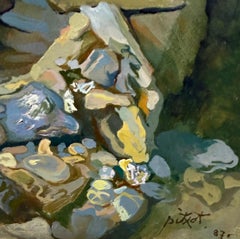
Title: Cadaqués Artist: Ramon Pichot Soler (1924–1996) Technique: Oil on canvas Dimensions: 54 x 65 cm (approx. 21.3 x 25.6 inches) Signature: Signed in the lower right corner Condit...
Category

Impressionist 1980s Art
Materials

Canvas, Oil

Vintage David Hockney Poster San Francisco Opera 1982, whimsical color drawings
Located in New York, NY
Vintage poster for the 1982 Summer Festival season of the San Francisco Opera. David Hockney designed the whimsical sets and costumes for the San Francisco Opera's production of Igor...
Category

Neo-Expressionist 1980s Art

Materials

Lithograph

Infinity Nets, 1953-1984 Limited edition print by Yayoi Kusama signed
Located in Hong Kong, HK

Yayoi Kusama (b. 1929)
Infinity Nets, 1953–1984

Medium: Lithograph in colors on Vélin d’Arches paper
Image: 31 × 40.6 cm (12 1/4 ×...

Category

1980s Art

Materials

Lithograph

original lithograph
Located in Henderson, NV
Medium: original lithograph. Printed in 1981 for the art revue Derriere le Miroir (issue number 247) and published in Paris by Maeght. Size: 15 x 22 inches (380 x 560 mm). There is a...
Category

1980s Art

Materials

Lithograph

Fernando Botero 'Drawings 1980-1985' 1986- Offset Lithograph
Located in Brooklyn, NY
This original exhibition poster was created for Drawings 1980–1985, an early showcase of Fernando Botero’s works on paper, held at the Caracas Museum of Contemporary Art in 1986. The...
Category

1980s Art

Materials

Offset

Punk - Figurative photo, Signed limited edition nude print, Black white, Sensual
Located in Sant Cugat del Vallès, Barcelona
An original signed archival pigment print on Hahnemühle Photo Rag® Baryta 315 gsm paper by Scottish artist Ian Sanderson (1951- 2020) titled ‘ Punk ‘ Signed by Ian Sanderson lower...
Category

Modern 1980s Art

Materials

Archival Paper, Black and White, Giclée, Pigment, Archival Pigment

Country Figure - Painting by Luciano Schifano - 1987
Located in Roma, IT
Oil on board realized by Luciano Schifano (1943) in 1987. Hand signed and titled. Good condition.
Category

Contemporary 1980s Art

Materials

Oil

'Feminine Forms: Harmony in Curves', German School (circa 1980s)
Located in London, GB
'Feminine Forms: Harmony in Curves', oil on board, German School (circa 1980s). Two nude figures portrayed in the abstract posture differently. Both are curvaceous and Rubenesque. Re...
Category

Modern 1980s Art

Materials

Oil, Board

Amish Farmscape #2 Study
Located in Los Angeles, CA
Amish Farmscape #2, 1982, gouache, 9 x 12 inches, signed and dated lower right, label verso: “Artist-E. Lewandowski, Title- Amish Farmscape #2 STUDY, Date- 1982, Size- 9”x 12”, Medium- Gouache”, Provenance: Franklin Riehlman, Riverdale, New York, to Herman Zerweck, Ann Arbor, Michigan, 1996; Provenance: Richard Hartman, Gallery of Wisconsin, Wisconsin Edmund Lewandowski was among the best of the second-generation Precisionists. He is credited with extending Precisionism to the Midwest and successfully evolving the style into the 1980s and 1990s with his Neo Immaculate works. Lewandowski was born and raised in Milwaukee, Wisconsin, and studied at the Layton School of Art with Garrett Sinclair...
Category

American Modern 1980s Art

Materials

Paper, Watercolor, Gouache

Modern American Impressionist Bathers Beach Figural Gouache Painting
Located in Douglas Manor, NY
4062 Modern beach bathers gouache figural painting on artist board. Set in a vintage carved walnut frame Image size 14x21.5"
Category

1980s Art

Materials

Gouache

New York Says It All, Pop Art Screenprint by James Rosenquist
Located in Long Island City, NY
Artist: James Rosenquist Title: New York Says It All Portfolio: New York, New York Year: 1983 Medium: Screenprint and Offset Lithograph, signed and numbered in pencil Edition: 250 P...
Category

Pop Art 1980s Art

Materials

Screen

"Untitled" Donald Judd, Black and White, Stripes, Minimalist, Abstract Art
Located in New York, NY
Donald Judd Untitled, 1980 Signed "Judd" in pencil lower right margin and numbered Aquatint on etching paper Image 24 1/4 x 29 1/4 inches Sheet 29 1/8 x 34 inches Edition 29/150 Pro...
Category

Minimalist 1980s Art

Materials

Paper, Etching, Aquatint

Greece : Pink Nude with Wheat Ear - Original lithograph, 1982
Located in Paris, IDF
Alekos FASSIANOS Greece : Pink Nude with Wheat Ear, 1982 Original lithograph Printed signature in the plate On heavy paper 56 x 75 cm (c. 22 x 30 inch) For the Fassianos exhibition...
Category

Modern 1980s Art

Materials

Lithograph

Portrait of a Young Woman
Located in London, GB
'Portrait of a Young Woman', oil on board, by Peter Robert Keil (1983). A wide-eyed woman gazes out to the viewer with an inquisitive gaze. The artist's use of exuberant colours beli...
Category

Modern 1980s Art

Materials

Oil, Board

Window on Another Dimension, signed/n lithograph by Picasso's famous mistress
Located in New York, NY
Françoise Gilot Window on Another Dimension, 1981 Lithograph on Arches mould made Johannot paper Signed and numbered in graphite pencil; also bears artist's monogram with date, edition of 60 Unframed 27.25 inches by 19.75 inches Francoise Gilot was not just Picasso's muse; she was an accomplished artist in her own right, and at age 100, the New York Times dubbed her the art world's latest "It Girl".! Signed and numbered in graphite pencil; also bears artist's personal monograph with date. Held in original vintage frame under plexiglass. Charmingly, there is a sticker label on the back of the frame, from the "Picasso Gallery Custom Framing" in D.C. This silkscreen is based upon Gilot's eponymous painting, also done in 1981 Excerpt from Alan Riding's 2023 New York Times obituary on Gilot: " Françoise Gilot, an accomplished painter whose art was eclipsed by her long and stormy romantic relationship with a much older Pablo Picasso, and who alone among his many mistresses walked out on him, died on Tuesday at a hospital in Manhattan. She was 101...But unlike his two wives and other mistresses, Ms. Gilot rebuilt her life after she ended the relationship, in 1953, almost a decade after it had begun despite an age difference of 40 years. She continued painting and exhibiting her work and wrote books. In 1970, she married Jonas Salk, the American medical researcher who developed the first safe polio vaccine, and lived part of the time in California. Still, it was for her romance with Picasso that the public knew her best, particularly after her memoir, “Life with Picasso,” written with Carlton Lake, was published in 1964. It became an international best seller, and so infuriated Picasso that he broke off all contact with Ms. Gilot and their two children, Claude and Paloma Picasso. Ms. Gilot’s frank and often-sympathetic account of their relationship — she dedicated the book “to Pablo” — provided much of the material for the 1996 Merchant-Ivory movie, “Surviving Picasso,” in which she was played by Natascha McElhone, with Anthony Hopkins as Picasso. If Ms. Gilot’s book sold well, so has her art. With her work in more than a dozen museums, including the Metropolitan Museum of Art and the Museum of Modern Art in New York and the Centre Pompidou in Paris, her paintings fetched increasingly higher prices well into her later years. As recently as June 2021, her painting “Paloma à la Guitare” (1965), a blue-toned portrait of her daughter, sold for $1.3 million in an online auction by Sotheby’s. That surpassed her previous record price, $695,000, paid for “Étude bleue,” a 1953 portrait of a seated woman, at a Sotheby’s auction in 2014.. And in November 2021, her abstract 1977 canvas “Living Forest” sold for $1.3 million as part of a retrospective of her work at Christie’s in Hong Kong. Lisa Stevenson, the head of curated sales for Sotheby’s in London, told ARTnews after the 2021 auction, “It isn’t commonly known that Gilot’s commitment to art was present long before her relationship with Pablo Picasso, and she was sadly often left in his shadow.”.. Marie Françoise Gilot was born into a prosperous family on Nov. 26, 1921, in Neuilly-sur-Seine, a suburb of Paris, the only child of Emile Gilot, an agronomist and chemical manufacturer, and Madeleine Renoult-Gilot. Her 19th-century ancestors had owned a couturier house of fashion whose clientele included Eugenia, the wife of Emperor Napoleon III. Marie Françoise was drawn to art from an early age, tutored by her mother, who had studied art history, ceramics and watercolor painting. Her father, however — recalled by Ms. Gilot as an authoritarian who had forced her to write with her right hand, though she was left-handed — had other ideas. Envisioning a career in science or the law for his daughter, he persuaded her to enroll at the University of Paris, where she received her bachelor’s degree in 1938 at age 17. She went on to study at the Sorbonne and the British Institute in Paris and receive a degree in English literature from Cambridge University. As war crept closer to France in 1939, her father sent her to the city of Rennes, northwest of Paris, to enroll in law school. All the while she continued working on her paintings. Then came the German occupation of Paris, in June 1940, and she joined other students in an anti-German protest march at the Arc de Triomphe. In a clash with the French and German authorities, Ms. Gilot was arrested, briefly detained and put under watch. “From day one, we were not the kind of people who would become collaborators,” she said of her family. She continued her law studies at the University of Paris, but after taking her second-year examinations, in June 1941, she lost interest and abandoned the field, deciding to devote herself to art. She began private lessons with a fugitive Hungarian Jewish painter, Endre Rozsda...
Category

Modern 1980s Art

Materials

Lithograph

Cadaques oil painting Spain spanish mediterranean european landscape
Located in Sitges, Barcelona
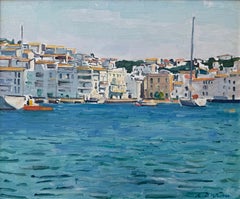
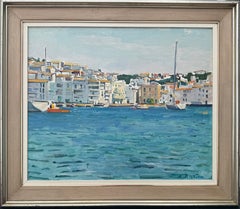
**Technical Sheet** Title: Cadaqués Artist: Rafael Durán Benet (Terrassa, 1931 - Barcelona, 2015) Technique: Oil on canvas board Dimensions: 13 x 16 inches (33 x 41 cm) Year: Un...
Category

Post-Impressionist 1980s Art
Materials

Canvas, Oil, Cardboard

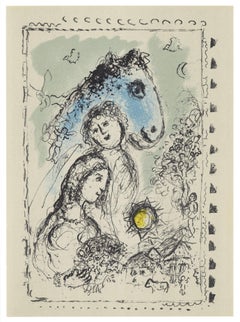
Marc Chagall, Blue Horse with Couple, from Derriere le Miroir, 1982
Located in Southampton, NY
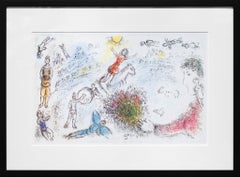
This exquisite lithograph by Marc Chagall (1887–1985), titled Cheval bleu au couple (Blue Horse with Couple), originates from the historic 1982 folio Derriere le Miroir, No. 250, Hommage a Aime et Marguerite Maeght (Tribute to Aime and Marguerite Maeght). Published by Maeght Editeur, Paris, under the direction of Aime Maeght, and printed by Imprimerie Moderne du Lion, Paris, this vibrant composition reflects Chagall’s lyrical fusion of color, dream, and devotion. In Cheval bleu au couple, ethereal figures and a radiant blue horse float within a luminous space of poetic imagination, evoking love, memory, and transcendence. The image captures the artist’s timeless ability to unite fantasy and emotion within the expressive language of modernism. Executed on velin paper, this lithograph measures 15 x 11 inches (38.1 x 27.9 cm). As issued, it is unsigned and unnumbered, consistent with the authorized publication format. The edition exemplifies Chagall’s mastery of color lithography and his lifelong exploration of faith, folklore, and the human spirit. Artwork Details: Artist: Marc Chagall (1887–1985) Title: Cheval bleu au couple (Blue Horse with Couple), from Derriere le Miroir, No. 250, Hommage a Aime et Marguerite Maeght (Tribute to Aime and Marguerite Maeght), 1982 Medium: Lithograph on velin paper Dimensions: 15 x 11 inches (38.1 x 27.9 cm) Inscription: Unsigned and unnumbered, as issued Date: 1982 Publisher: Maeght Editeur, Paris Printer: Imprimerie Moderne du Lion, Paris Catalogue raisonne references: Chagall, Marc, et al. Chagall Lithographe VI, 1980–1985. Andre Sauret, Editeur, 1986, illustration 993. Cramer, Patrick, and Meret Meyer. Marc Chagall: Catalogue Raisonne Des Livres Illustres. P. Cramer ed., 1995, illustration 113. Condition: Well preserved, consistent with age and medium Provenance: From the 1982 folio Derriere le Miroir, No. 250, published by Maeght Editeur, Paris Notes: Excerpted from the folio (translated from French), This special issue of Derriere le Miroir was designed and defined by Aime Maeght in the fall of 1980. He envisioned its publication as a celebration with which artists and writers published since 1946 were to be associated. He also chose Francois Chapon, president of the Reverdy Committee, to write the presentation. This Derriere le Miroir number 250 took the form, after its disappearance on September 5, 1981, of a tribute to Aime Maeght and his wife Marguerite Maeght who died four years earlier. 24 artists agreed to create an original graphic work for this issue which includes the general table of all issues as well as excerpts from texts by 32 writers. Finished printing on June 2, 1982 on the presses of the l'Imprimerie moderne du Lion in Paris. CL examples were printed on velin d'Arches, numbered from I to CL, and some non-commercial examples constituting the original edition. About the Publication: Derriere le Miroir (translated as "Behind the Mirror") was an iconic French art periodical published from 1946 to 1982 by Maeght Editeur, one of the most influential art publishers of the 20th century. Founded by Aime Maeght in Paris, the publication was conceived as a visual and literary collaboration between leading modern artists, poets, and critics. Each issue functioned as both an exhibition catalogue and a work of art in itself—featuring original lithographs printed directly from the artists' stones or plates, alongside essays, poems, and critical commentary. Over the course of 36 years, Derriere le Miroir produced more than 250 issues and showcased an extraordinary roster of artists including Henri Matisse, Marc Chagall, Joan Miro, Georges Braque, Alexander Calder, Fernand Leger, Pierre Bonnard, Alberto Giacometti, Eduardo Chillida, Ellsworth Kelly, Francis Bacon, Paul Rebeyrolle, Claude Garache, Antoni Tapies, Bram van Velde, Pierre Alechinsky, Pol Bury, Shusaku Arakawa, and Gerard Titus-Carmel. Printed in the ateliers of Mourlot, Arte, and Imprimerie Moderne du Lion, the periodical set new standards for quality in color lithography, combining fine art printing with elegant typography and poetic text. Beyond its visual brilliance, Derriere le Miroir also became a cultural chronicle of postwar European modernism. Each issue coincided with exhibitions held at Galerie Maeght, providing a collectible and widely accessible record of groundbreaking shows. Its integration of image, text, and philosophy created a dialogue between art and literature that elevated the modern art book to new aesthetic heights. Today, Derriere le Miroir remains one of the most sought-after and historically significant art publications, prized by collectors and scholars alike for its craftsmanship, influence, and its role in defining the visual language of 20th-century modernism. The Maeght Foundation in Saint-Paul-de-Vence continues to honor this legacy through exhibitions and archival preservation of the series, affirming Derriere le Miroir's enduring place in the history of modern art and fine art publishing. About the Artist: Marc Chagall (1887–1985) was a Belarus-born French painter, printmaker, and designer whose visionary use of color and poetic symbolism made him one of the most beloved and influential artists of the 20th century. Rooted in the rich imagery of his Jewish heritage and childhood in Vitebsk, Chagall’s dreamlike compositions fused memory, folklore, faith, and romance with the expressive innovations of modern art. His work evolved alongside and in dialogue with the great modern masters—Pablo Picasso, Henri Matisse, Alexander Calder, Salvador Dali, Joan Miro, Georges Braque, Wassily Kandinsky, Marcel Duchamp, and Man Ray—artists who, like Chagall, redefined artistic language for a new century. Spanning painting, printmaking, stained glass, ceramics, stage design, and illustration, Chagall’s career reflected both his deep spirituality and his boundless imagination. His works are held in major museum collections worldwide, including the Museum of Modern Art, the Guggenheim, the Tate, and the Centre Pompidou. The highest price ever paid for a Marc Chagall artwork is approximately $28.5 million USD, achieved in 2017 at Sotheby’s New York for Les Amoureux (1928). Marc Chagall Cheval bleu au couple, Marc Chagall lithograph, Chagall Derriere le Miroir, Chagall Maeght...
Category

Expressionist 1980s Art
Materials

Lithograph

Four Seasons 1988 - Original Handsigned Screen Print
Located in Paris, IDF
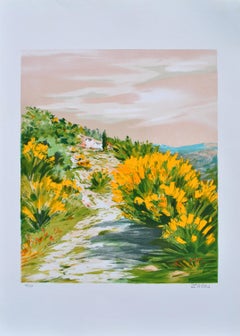
Yvon TAILLANDIER Four Seasons 1988 Original screen print Handsigned in pencil Justified e.a (artist's proof) On vellum 29 x 36.5 cm (c. 11.4 x 14.3 in) Excellent condition
Category

Street Art 1980s Art

Materials

Screen

Portrait of a Smiling Woman
Located in London, GB
'Portrait of a Smiling Woman', oil on board, by Peter Robert Keil (1983). A cheerful look on the painting's subject puts a smile on the face of the viewer as well. Her beautiful blue eyes express a contentedness suggesting life is good...
Category

Modern 1980s Art

Materials

Oil, Board

Horses : Riders in Autumn - Original Lithograph, HANDSIGNED & Ltd /600
Located in Paris, IDF
Serge LASSUS (1933-) Horses : Riders in Autumn, 1983 Original Lithograph Handsigned in pencil Numbered / 600 (the number you can see can be different) On Coated paper 56 x 76 cm (c....
Category

Modern 1980s Art

Materials

Lithograph

Elba Alvarez 'Verticality' 1985- Poster
Located in Brooklyn, NY
This striking vintage poster, titled Verticality, is a classic example of Elba Alvarez's distinctive style that gained her prominence as one of the top artists of the 1990s. Known fo...
Category

1980s Art

Materials

Offset

Diffraction (Transformation) - Original lithograph, Handsigned and numbered /100
Located in Paris, IDF
Julio LE PARC (1928-) Diffraction (Transformation), 1988 Original lithograph, airbrush and stencil Signed in ink Numbered / 100 copies On black wove paper, 56 x 38 cm (c. 22 x 15 in...
Category

American Modern 1980s Art

Materials

Lithograph, Stencil

Walasse Ting Grasshoppers 1981 Lithograph on Arches Archival Paper
Located in Rochester Hills, MI
Walasse Ting Grasshoppers - 1981 Print - Lithograph on Arches Archival Paper   22'' x 30'' Edition: Signed in pencil and marked 170/200 Walasse Ting (DING XIONGQUAN) (October 13, 19...
Category

Pop Art 1980s Art

Materials

Lithograph

Shanidar, Abstract Expressionist Screenprint by Dan Christensen
Located in Long Island City, NY
Dan Christensen, American (1942 - 2007) - Shanidar, Year: circa 1980, Medium: Screenprint, Signed and numbered in Pencil, Edition: 175, Size: 29.5 x 43 in. (74.93 x 109.22 cm)
Category

Abstract Expressionist 1980s Art
Materials

Screen

Recently Viewed

View All