1870s Prints and Multiples

to
10
948
198
22
2
2
Overall Width
to
Overall Height
to
854
117
33
1
1
33
14
11
8
8
4,784
10,406
58,645
25,153
731
1,032
2,319
2,358
2,369
4,894
7,987
13,655
8,410
4,539
3,949
798
372
2
442
341
298
235
220
202
197
171
143
140
117
81
63
62
57
54
41
31
30
30
497
427
221
38
21
43
972
941
231
Period: 1870s
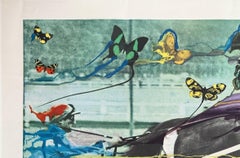
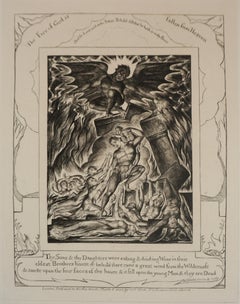
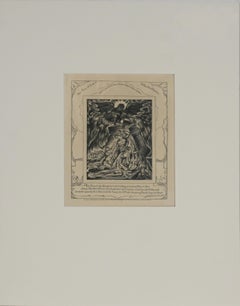
Illustrations From The Book of Job - "The Fire of God is Fallen From Heaven"

Illustrations From The Book of Job - "The Fire of God is Fallen From Heaven"

By William Blake

Located in Soquel, CA

"Illustrations of the Book of Job" Engraving "The Fire of God is Fallen From Heaven...And the Lord said unto Satan Behold All that he hath is in thy Power" Engraving, third printing...

Category

Symbolist 1870s Prints and Multiples

Materials

Handmade Paper, Engraving

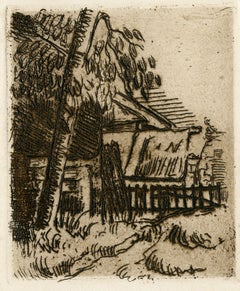
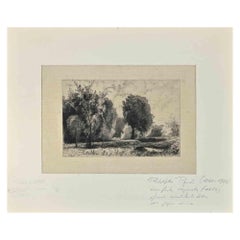
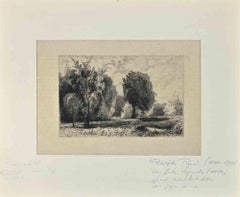
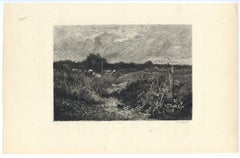
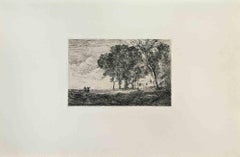
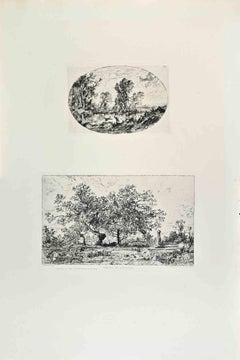
Landscape -  Etching by Pio Joris - 1870s

Landscape - Etching by Pio Joris - 1870s

By Pio Joris

Located in Roma, IT

Landscape is an original artwork realized by Pio Joris, in 1870s. Beautiful etching on ivory paper. conditions: diffused foxings. Pio Joris (1843 - 1921) was an Italian painter, e...

Category

Modern 1870s Prints and Multiples

Materials

Etching

Reading
Reading

Reading

By James Abbott McNeill Whistler

Located in Fairlawn, OH

Reading Lithograph, 1879 and 1887 Signed in the stone with the Butterfly (see photo) A proof laid paper printed before the edition of 100 impressions printed for Art Notes Watermark:...

Category

American Impressionist 1870s Prints and Multiples

Materials

Lithograph

La Belle-Fillle de Goya (after Francisco de Goya)

La Belle-Fillle de Goya (after Francisco de Goya)

Located in Fairlawn, OH

La Belle-Fillle de Goya (after Francisco de Goya) Etching on cream laid paper, 1872 Signed in the plate lower right of image Inscribed: Goya, pinx, lower left Published in Gazette de...

Category

Romantic 1870s Prints and Multiples

Materials

Etching

Une de Mai, Lithograph, 1972, Edition 49/150

Une de Mai, Lithograph, 1972, Edition 49/150

By Salvador Dalí­

Located in OPOLE, PL

Salvador Dali (1904-1989) - Une de Mai Lithograph from 1972. Th edition of 49/150. Dimensions of work: 120.5 x 78 cm Publisher: Edition Waintrop, Paris. Reference: Michler/Löpsi...

Category

Surrealist 1870s Prints and Multiples

Materials

Lithograph

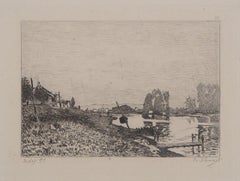
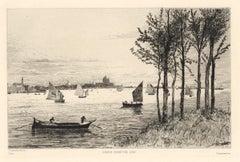
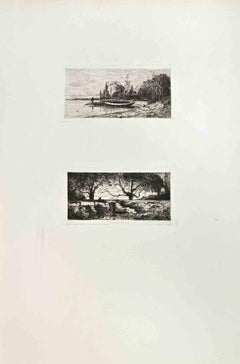
Environs de Rix - Etching by Appian - 1870s

Environs de Rix - Etching by Appian - 1870s

By Adolphe APPIAN

Located in Roma, IT

Environs de Rix is an artwork realized by A.Appian in the 1870s. Etching. Image size:9x17 and 9x17 Good conditions. Realized for the "Société des Aquafortistes. Born on the ini...

Category

Modern 1870s Prints and Multiples

Materials

Etching

Windmills in Holland - Original etching - Ed. Durand Ruel, 1873

Windmills in Holland - Original etching - Ed. Durand Ruel, 1873

By Claude Monet

Located in Paris, IDF

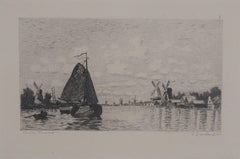
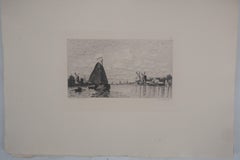
Claude MONET (after) Windmills in Holland, 1873 Original Etching Engraved by Gaucherel under the supervision of Monet Printed signature in the plate (with misspelled signature Monnet) On laid paper 20,5 x 30 cm (c. 8 x 12 in) INFORMATION : This etchings was edited in 1873 by Galerie Durand Ruel...

Category

Impressionist 1870s Prints and Multiples

Materials

Etching

La Force II, Heliogravure by Marcantonio Raimondi

La Force II, Heliogravure by Marcantonio Raimondi

By Marcantonio Raimondi

Located in Long Island City, NY

Marcantonio Raimondi, After by Amand Durand, Italian (1480 - 1534) - La Force II, Year: 1875, Medium: Heliogravure, Size: 6 x 3.25 in. (15.24 x 8.26 cm), Printer: Amand Durand, De...

Category

Old Masters 1870s Prints and Multiples

Materials

Etching

Phrosine and Mélidore

Phrosine and Mélidore

Located in Fairlawn, OH

Phrosine and Mélidore Etching, 1879 Signed in the polate lower left of image This etching is after the Dantan painting, a copy after the Pierre-Paul Prud’hom painting Published by Vv...

Category

Romantic 1870s Prints and Multiples

Materials

Etching

"Skating on Ladies' Pond Central Park": Winslow Homer 19th C. Woodcut Engraving

"Skating on Ladies' Pond Central Park": Winslow Homer 19th C. Woodcut Engraving

By Winslow Homer

Located in Alamo, CA

This Winslow Homer woodcut engraving entitled "Skating on the Ladies' Skating-Pond in Central Park, New York", was published in Harper's Weekly in the January 28, 1860 edition. It depicts a large number of men, women and children skating on a recently opened pond in Central Park. At the time of publication of this engraving, Central Park was in the early stages of construction. This engraving documents the very early appearance of Frederick Law Olmstead and Calvert Vaux's masterpiece of landscape design. According to Olmsted, the park was "of great importance as the first real Park made in this century – a democratic development of the highest significance". The people of New York were very proud of the plans for their park. It was stated at the time: "Our Park, which is progressing very satisfactorily under the management of the Commissioners, will undoubtedly be, one of these days, one of the finest place of the kind in the world...Those who saw the Park before the engineers went to work on it are amazed at the beautiful sites which have been contrived with such unpromising materials; all fair persons believe that the enterprise is managed with honesty and good taste." Skating was rapidly rising in national popularity in part due to the opening of Central Park’s lake to skaters on a Sunday in December 1858 with 300 participants. The following Sunday it attracted ten thousand skaters. By Christmas Day, a reported 50,000 people came to the park, most of them to skate. There were rules governing who could use the skating pond. “The Ladies’ Pond...

Category

American Impressionist 1870s Prints and Multiples

Materials

Engraving, Woodcut

Old Violinist - Late 19th Century Figurative Lithograph

Old Violinist - Late 19th Century Figurative Lithograph

By John George Brown

Located in Soquel, CA

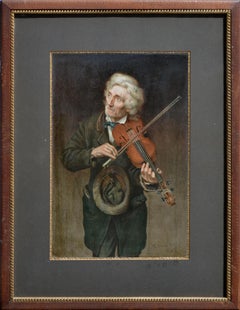
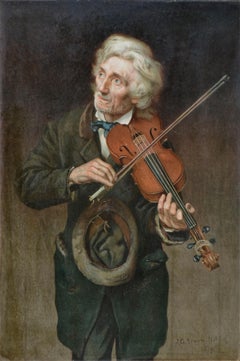
Finely detailed late 19th century chromo-lithograph portrait of a violinist street musician by John George Brown (British, 1831-1913). Many of Brown’s paintings were reproduced in lithography (Chromo-lithograpy), as is the case with the one offered here. Presented in a rustic antique Oak wood frame with giltwood fillet. Image, 15.63"H x 10.63"W. John George Brown was a British citizen and an American painter born in Durham, England. His parents apprenticed him to the career of glass worker at the age of fourteen, in an attempt to dissuade him from pursuing painting. He studied nights at the School of Design in Newcastle-on-Tyne while working as a glass cutter there between 1849 and 1852, and evenings at the Trustees Academy in Edinburgh while working at the Holyrood Glass Works between 1852 ad 1853. After moving to New York City in 1853, he studied with Thomas Seir Cummings at the National Academy of Design where he was elected a National Academician in 1861. Brown was the Academy’s vice-president from 1899 to 1904. Around 1855, he worked for the owner of the Brooklyn Glass Company, and later he married the daughter of his employer. His father-in-law encouraged his artistic abilities, supporting him financially, letting Brown pursue painting full-time. In 1866, he became one of the charter members of the Water-Color Society, of which he was president from 1887 to 1904. Brown became famous for his depictions of street urchins found of the streets of New York (bootblacks, street musicians, posy sellers, newsboys, etc.). Brown’s art is best characterized as British genre painting...

Category

Realist 1870s Prints and Multiples

Materials

Paper, Lithograph

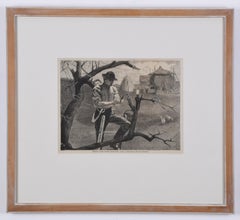
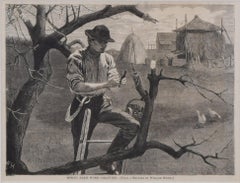
Winslow Homer 19th Century Woodcut Engraving "Making Hay"

Winslow Homer 19th Century Woodcut Engraving "Making Hay"

By Winslow Homer

Located in Alamo, CA

This Winslow Homer woodcut engraving entitled "Making Hay", was published in Harper's Weekly in the July 6, 1872 edition. It depicts a two men hand cutting high grass on a hill. The man in the foreground is looking at a young boy and a girl (presumably his children), who are sitting on the ground with a picnic basket. This beautiful Homer woodcut engraving is presented in a brown wood frame and a light beige fabric mat with a black inner mat. The print is in excellent condition. There are two other Homer woodcut engravings in identical frames and mats that are listed on 1stdibs. See LU117326148332 and LU117326148272. These would make a wonderful display grouping. A discount is available for the purchase of two or all three of these prints. This Winslow Homer engraving...

Category

American Impressionist 1870s Prints and Multiples

Materials

Engraving, Woodcut

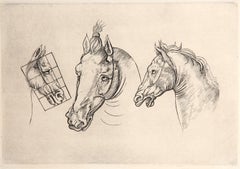
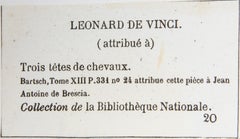
Trois Tetes de Chevaux, Heliogravure by Leonardo da Vinci

Trois Tetes de Chevaux, Heliogravure by Leonardo da Vinci

By Leonardo da Vinci

Located in Long Island City, NY

Leonardo da Vinci, After by Amand Durand, Italian (1452 - 1519) - Trois Tetes de Chevaux, Year: circa 1878, Medium: Heliogravure, Size: 6 x 8.5 in. (15.24 x 21.59 cm), Printer: Am...

Category

Old Masters 1870s Prints and Multiples

Materials

Etching

"Schwabelweiss" original etching

"Schwabelweiss" original etching

By Otto Bacher

Located in Henderson, NV

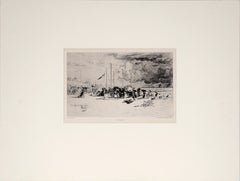
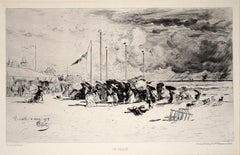
Medium: original etching. Executed in 1879, this is one of the "Danube Set" of Otto Bacher's German compositions from his travels in Bavaria. Printed on laid paper and published in B...

Category

1870s Prints and Multiples

Materials

Etching

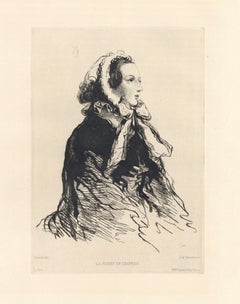
"La femme en chapeau" etching

"La femme en chapeau" etching

By Jules de Goncourt

Located in Henderson, NV

Medium: etching. Etched by Jules de Goncourt after Paul Gavarni. This impression on cream laid paper was printed in 1875 by Francois Lienard and published in Paris by L'Art. Plate si...

Category

1870s Prints and Multiples

Materials

Etching

La Grande Fortune, Old Masters Etching by Amand Durand after Albrecht Durer

La Grande Fortune, Old Masters Etching by Amand Durand after Albrecht Durer

By Charles Amand Durand

Located in Long Island City, NY

Artist: Charles Amand-Durand, French (1831 - 1905) after Albrecht Dürer, German (1471 - 1528) Title: La Grande Fortune Year: 1873 (original circa 1502) Medium: Heliogravure on thin l...

Category

Old Masters 1870s Prints and Multiples

Materials

Engraving

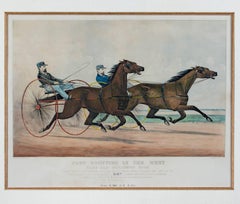
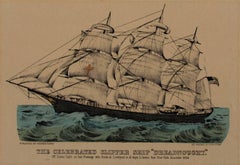
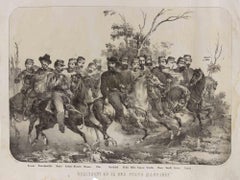
19th century color lithograph seascape boat ship waves maritime landscape

19th century color lithograph seascape boat ship waves maritime landscape

By Currier & Ives

Located in Milwaukee, WI

"The Celebrated Clipper Ship Dreadnought" is an original hand-colored lithograph by Currier & Ives. It depicts a sailing ship. 13 1/4" x 17 1/2" art 19" x 23 1/2" frame Nathaniel Currier was a tall introspective man with a melancholy nature. He could captivate people with his piercing stare or charm them with his sparkling blue eyes. Nathaniel was born in Roxbury, Massachusetts on March 27th, 1813, the second of four children. His parents, Nathaniel and Hannah Currier, were distant cousins who lived a humble yet spartan life. When Nathaniel was eight years old, tragedy struck. Nathaniel’s father unexpectedly passed away leaving Nathaniel and his eleven-year-old brother Lorenzo to provide for the family. In addition to their mother, Nathaniel and Lorenzo had to care for six-year-old sister Elizabeth and two-year-old brother Charles. Nathaniel worked a series of odd jobs to support the family, and at fifteen, he started what would become a life-long career when he apprenticed in the Boston lithography shop of William and John Pendleton. A Bavarian gentleman named Alois Senefelder invented lithography just 30 years prior to young Nat Currier’s apprenticeship. While under the employ of the brothers Pendleton, Nat was taught the art of lithography by the firm’s chief printer, a French national named Dubois, who brought the lithography trade to America. Lithography involves grinding a piece of limestone flat and smooth then drawing in mirror image on the stone with a special grease pencil. After the image is completed, the stone is etched with a solution of aqua fortis leaving the greased areas in slight relief. Water is then used to wet the stone and greased-ink is rolled onto the raised areas. Since grease and water do not mix, the greased-ink is repelled by the moisture on the stone and clings to the original grease pencil lines. The stone is then placed in a press and used as a printing block to impart black on white images to paper. In 1833, now twenty-years old and an accomplished lithographer, Nat Currier left Boston and moved to Philadelphia to do contract work for M.E.D. Brown, a noted engraver and printer. With the promise of good money, Currier hired on to help Brown prepare lithographic stones of scientific images for the American Journal of Sciences and Arts. When Nat completed the contract work in 1834, he traveled to New York City to work once again for his mentor John Pendleton, who was now operating his own shop located at 137 Broadway. Soon after the reunion, Pendleton expressed an interest in returning to Boston and offered to sell his print shop to Currier. Young Nat did not have the financial resources to buy the shop, but being the resourceful type he found another local printer by the name of Stodart. Together they bought Pendleton’s business. The firm ‘Currier & Stodart’ specialized in "job" printing. They produced many different types of printed items, most notably music manuscripts for local publishers. By 1835, Stodart was frustrated that the business was not making enough money and he ended the partnership, taking his investment with him. With little more than some lithographic stones, and a talent for his trade, twenty-two year old Nat Currier set up shop in a temporary office at 1 Wall Street in New York City. He named his new enterprise ‘N. Currier, Lithographer’ Nathaniel continued as a job printer and duplicated everything from music sheets to architectural plans. He experimented with portraits, disaster scenes and memorial prints, and any thing that he could sell to the public from tables in front of his shop. During 1835 he produced a disaster print Ruins of the Planter's Hotel, New Orleans, which fell at two O’clock on the Morning of the 15th of May 1835, burying 50 persons, 40 of whom Escaped with their Lives. The public had a thirst for newsworthy events, and newspapers of the day did not include pictures. By producing this print, Nat gave the public a new way to “see” the news. The print sold reasonably well, an important fact that was not lost on Currier. Nat met and married Eliza Farnsworth in 1840. He also produced a print that same year titled Awful Conflagration of the Steamboat Lexington in Long Island Sound on Monday Evening, January 18, 1840, by which melancholy occurrence over One Hundred Persons Perished. This print sold out very quickly, and Currier was approached by an enterprising publication who contracted him to print a single sheet addition of their paper, the New York Sun. This single page paper is presumed to be the first illustrated newspaper ever published. The success of the Lexington print launched his career nationally and put him in a position to finally lift his family up. In 1841, Nat and Eliza had their first child, a son they named Edward West Currier. That same year Nat hired his twenty-one year old brother Charles and taught him the lithography trade, he also hired his artistically inclined brother Lorenzo to travel out west and make sketches of the new frontier as material for future prints. Charles worked for the firm on and off over the years, and invented a new type of lithographic crayon which he patented and named the Crayola. Lorenzo continued selling sketches to Nat for the next few years. In 1843, Nat and Eliza had a daughter, Eliza West Currier, but tragedy struck in early 1847 when their young daughter died from a prolonged illness. Nat and Eliza were grief stricken, and Eliza, driven by despair, gave up on life and passed away just four months after her daughter’s death. The subject of Nat Currier’s artwork changed following the death of his wife and daughter, and he produced many memorial prints and sentimental prints during the late 1840s. The memorial prints generally depicted grief stricken families posed by gravestones (the stones were left blank so the purchasers could fill in the names of the dearly departed). The sentimental prints usually depicted idealized portraits of women and children, titled with popular Christian names of the day. Late in 1847, Nat Currier married Lura Ormsbee, a friend of the family. Lura was a self-sufficient woman, and she immediately set out to help Nat raise six-year-old Edward and get their house in order. In 1849, Lura delivered a son, Walter Black Currier, but fate dealt them a blow when young Walter died one year later. While Nat and Lura were grieving the loss of their new son, word came from San Francisco that Nat’s brother Lorenzo had also passed away from a brief illness. Nat sank deeper into his natural quiet melancholy. Friends stopped by to console the couple, and Lura began to set an extra place at their table for these unexpected guests. She continued this tradition throughout their lives. In 1852, Charles introduced a friend, James Merritt Ives, to Nat and suggested he hire him as a bookkeeper. Jim Ives was a native New Yorker born in 1824 and raised on the grounds of Bellevue Hospital where his father was employed as superintendent. Jim was a self-trained artist and professional bookkeeper. He was also a plump and jovial man, presenting the exact opposite image of his new boss. Jim Ives met Charles Currier through Caroline Clark, the object of Jim’s affection. Caroline’s sister Elizabeth was married to Charles, and Caroline was a close friend of the Currier family. Jim eventually proposed marriage to Caroline and solicited an introduction to Nat Currier, through Charles, in hopes of securing a more stable income to support his future wife. Ives quickly set out to improve and modernize his new employer’s bookkeeping methods. He reorganized the firm’s sizable inventory, and used his artistic skills to streamline the firm’s production methods. By 1857, Nathaniel had become so dependent on Jims’ skills and initiative that he offered him a full partnership in the firm and appointed him general manager. The two men chose the name ‘Currier & Ives’ for the new partnership, and became close friends. Currier & Ives produced their prints in a building at 33 Spruce Street where they occupied the third, fourth and fifth floors. The third floor was devoted to the hand operated printing presses that were built by Nat's cousin, Cyrus Currier, at his shop Cyrus Currier & Sons in Newark, NJ. The fourth floor found the artists, lithographers and the stone grinders at work. The fifth floor housed the coloring department, and was one of the earliest production lines in the country. The colorists were generally immigrant girls, mostly German, who came to America with some formal artistic training. Each colorist was responsible for adding a single color to a print. As a colorist finished applying their color, the print was passed down the line to the next colorist to add their color. The colorists worked from a master print displayed above their table, which showed where the proper colors were to be placed. At the end of the table was a touch up artist who checked the prints for quality, touching-in areas that may have been missed as it passed down the line. During the Civil War, demand for prints became so great that coloring stencils were developed to speed up production. Although most Currier & Ives prints were colored in house, some were sent out to contract artists. The rate Currier & Ives paid these artists for coloring work was one dollar per one hundred small folios (a penny a print) and one dollar per one dozen large folios. Currier & Ives also offered uncolored prints to dealers, with instructions (included on the price list) on how to 'prepare the prints for coloring.' In addition, schools could order uncolored prints from the firm’s catalogue to use in their painting classes. Nathaniel Currier and James Merritt Ives attracted a wide circle of friends during their years in business. Some of their more famous acquaintances included Horace Greeley, Phineas T. Barnum, and the outspoken abolitionists Rev. Henry Ward, and John Greenleaf Whittier (the latter being a cousin of Mr. Currier). Nat Currier and Jim Ives described their business as "Publishers of Cheap and Popular Pictures" and produced many categories of prints. These included Disaster Scenes, Sentimental Images, Sports, Humor, Hunting Scenes, Politics, Religion, City and Rural Scenes, Trains, Ships, Fire Fighters, Famous Race Horses, Historical Portraits, and just about any other topic that satisfied the general public's taste. In all, the firm produced in excess of 7500 different titles, totaling over one million prints produced from 1835 to 1907. Nat Currier retired in 1880, and signed over his share of the firm to his son Edward. Nat died eight years later at his summer home 'Lion’s Gate' in Amesbury, Massachusetts. Jim Ives remained active in the firm until his death in 1895, when his share of the firm passed to his eldest son, Chauncey. In 1902, faced will failing health from the ravages of Tuberculosis, Edward Currier sold his share of the firm to Chauncey Ives...

Category

Other Art Style 1870s Prints and Multiples
Materials

Lithograph

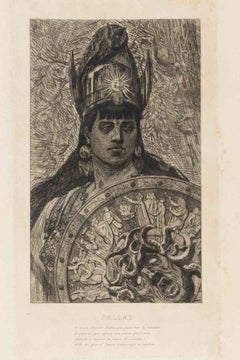
Wilhelm Leibl Peasant Women

Wilhelm Leibl Peasant Women

Located in San Francisco, CA

Wilhelm Leibl: 1844-1900. Well listed German artist. He has had auction results over $360,000 for paintings and over $3800 for a print. It’s beautiful at...

Category

1870s Prints and Multiples
Materials

Etching

Common or Arctic Puffin

Common or Arctic Puffin

By John James Audubon

Located in New York, NY

Original stone lithograph with hand-coloring from "Birds of North America." First Octavo Edition, by John James Audubon. Plate 383. Philadelphia, J.T. Bowen, ca. 1839-44.

Category

1870s Prints and Multiples
Materials

Paper

Une Lecture chez Diderot - Etching by Auguste Mongin - 1878

Une Lecture chez Diderot - Etching by Auguste Mongin - 1878

Located in Roma, IT

Etching and drypoint realized by Auguste Mongin in 1878, after Meissonier. Early proof before the letter, with the stamp of the publisher Petit. The subject was published on the Ma...

Category

Modern 1870s Prints and Multiples
Materials

Etching

Souvenir - Etching by Adolphe Appian - 1870s

Souvenir - Etching by Adolphe Appian - 1870s

By Adolphe APPIAN

Located in Roma, IT

Souvenir is a black and white etching realized by Adolphe Appian (1818–1898) in 1870s. Titled in the lower. Image size: 23.5cmx13cm. Very Good condition. Realized by Cadart for t...

Category

Modern 1870s Prints and Multiples
Materials
Etching