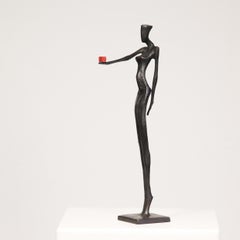
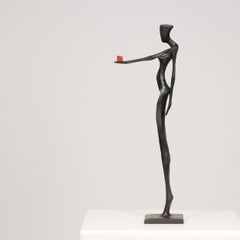
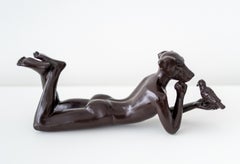
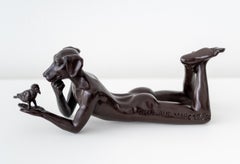
Figurine Sculptures

to
195
1,482
498
400
168
197
Overall Width
to
Overall Height
to
86
344
764
1,548
42
30
53
58
25
12
23
37
80
77
25
986
167
95
77
41
26
25
23
9
7
7
1
4,832
2,644
1,975
1,872
1,671
1,198
989
923
704
512
487
478
442
438
430
425
331
318
304
1,815
1,693
348
314
225
48
30
30
28
28
1
13
1,560
955
Art Subject: Figurine
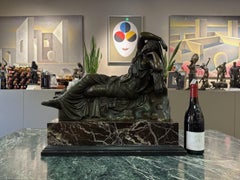
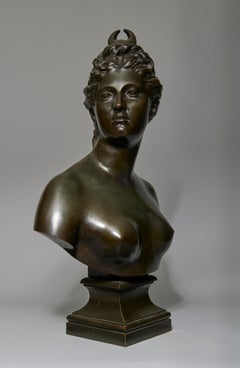
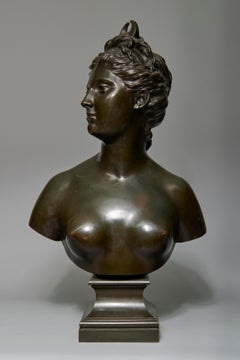
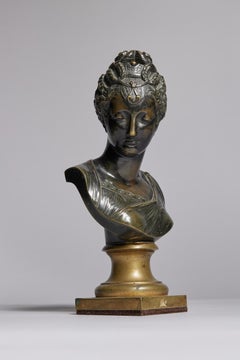
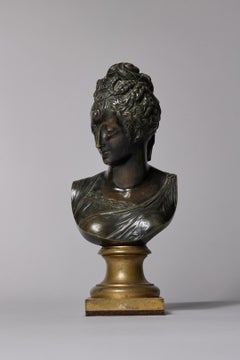
Large French Bronze Bust of Diana the Huntress
By Jean-Antoine Houdon
Located in Beachwood, OH
After Jean-Antoine Houdon (French, 1741-1828) Bust of Diana Bronze Signed on side, Susse Frères foundry stamp on base 28.5 x 16.25 inches Jean-Antoine Houdon's bust of Diana is an 1...
Category

19th Century Figurative Sculptures

Materials

Bronze

Feline IV by Pierre Yermia - Contemporary animal sculpture, bronze, cat, elegant
Located in Paris, FR
Feline IV is a bronze sculpture by French contemporary artist Pierre Yermia, dimensions are 24 × 90 × 20 cm (9.4 × 35.4 × 7.9 in). The sculpture is signed and numbered, it is part o...
Category

2010s Contemporary Figurative Sculptures

Materials

Bronze

Diana The Huntress Plaster Sculpture, Art Deco, Circa 1920, Signed
Located in Stockholm, SE
Sculpture representing the goddess Diana by Danish sculptor Jens Jacob Bregno (1877–1946), executed in plaster around 1920. This is a highly unusual model by the artist, and possibly...
Category

1920s Art Deco Figurative Sculptures

Materials

Plaster

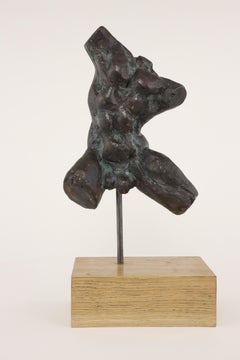
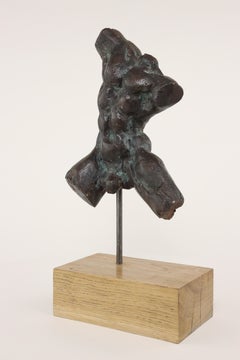
Inner Energy by Yann Guillon - Bronze sculpture, male figure, nude torso, dark
Located in Paris, FR
Inner Energy is a bronze sculpture by contemporary artist Yann Guillon, dimensions are 30 × 25 × 20 cm (11.8 × 9.8 × 7.9 in). The sculpture is signed and numbered, it is part of a l...
Category

1990s Contemporary Nude Sculptures

Materials

Bronze

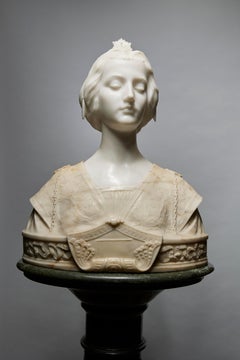
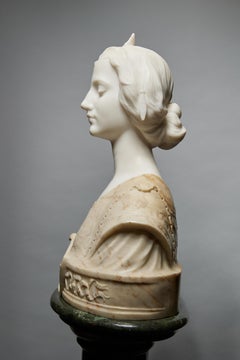
Late 19th Century Italian Finely Finished Bust of Renaissance Lady w/ Pedestal
Located in Beachwood, OH
Italian, Late 19th Century Finely Finished Bust of Renaissance Lady White marble, garment in veined buff colored marble on fitted green marble pedestal Bust: 22 x 18 x 9 inches Pedes...
Category

Late 19th Century Figurative Sculptures

Materials

Marble

The Three Skunks of WWII, Carved Wooden Figures of Hitler, Mussolini & Tojo
Located in Beachwood, OH
Three Skunks of WWII c. 1940s Carved and painted wood Unsigned 8 x 10 in. h. each These skunks are depicted as Adolf Hitler, Benito Mussolini, and Hideki Tojo. Condition: There ...
Category

1940s Figurative Sculptures

Materials

Wood, Paint

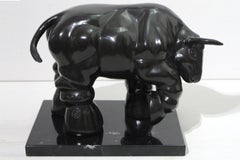
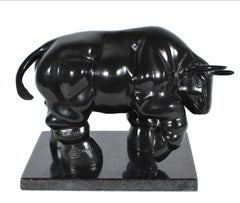
Botero Bronze Bull Sculpture, Contemporary Edition of 50, 20th Century
Located in Cuauhtemoc, Ciudad de México
After Fernando Botero – Bull Bronze Sculpture Edition of 50 This beautifully executed bronze sculpture is an After Fernando Botero work, created in faithful homage to the artist’s...
Category

20th Century Contemporary Still-life Sculptures

Materials

Marble, Bronze

After Botero - Horizontal Nude Woman Bronze Sculpture
Located in Cuauhtemoc, Ciudad de México
After Fernando Botero – RECLINING NUDE Bronze Sculpture Edition of 50 This beautifully executed bronze sculpture is an After Fernando Botero work, created in faithful homage to th...
Category

20th Century Contemporary Figurative Sculptures

Materials

Marble, Bronze

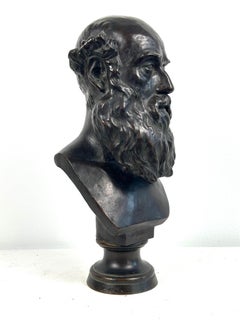
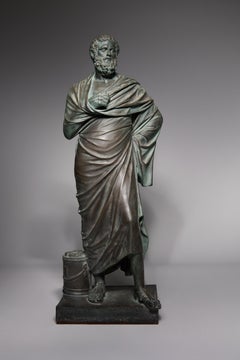
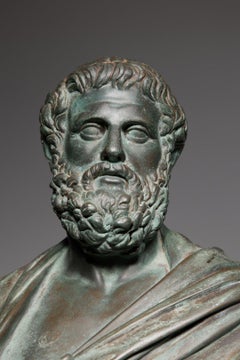
19th Century Grand Tour Figure of Sophocles after the Antique, F. Barbidienne
Located in Beachwood, OH
19th Century Grand Tour after the Antique Figure of Sophocles Bronze with green patination Signed F. Barbidienne, Fondeur 25 x 8.5 x 6.5 inches Standing figure of the Greek poet, we...
Category

19th Century Figurative Sculptures

Materials

Bronze

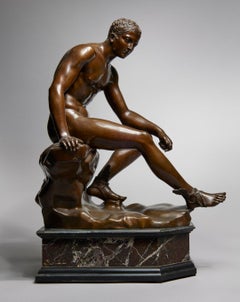
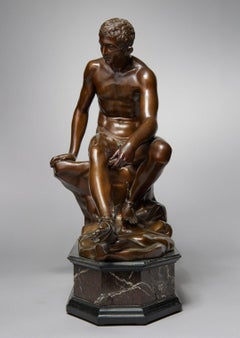
Grand Tour Bronze Figure of Seated Hermes, Early 19th Century After the Antique
Located in Beachwood, OH
Large Figure of Seated Hermes, Grand Tour Bronze, Early 19th Century 19th Century Continental School After the Antique The large size figure well cast, with brownish green patination...
Category

Early 19th Century Figurative Sculptures

Materials

Marble, Bronze

The Book of Ganesh II, Tribute to Gregory Colbert by Marine de Soos - Sculpture
Located in Paris, FR
The Book of Ganesh II, Tribute to Gregory Colbert is a bronze sculpture by French contemporary artist Marine de Soos, dimensions are 24 × 71 × 20.5 cm (9.4 × 28 × 8.1 in). The sculp...
Category

2010s Contemporary Figurative Sculptures

Materials

Bronze

Relining Nude (WG6)
By Waylande Gregory
Located in Wilton Manors, FL
Waylande Gregory (1905-1971). Nude Reclining, ca. 1950's. Painted composite cast from original sculpted in 1930's. Casting sanctioned and approved by the artist during his lifetime in partnership with MPI, Museum Pieces Incorporated. Very few examples were produced and even fewer survive. Waylande Gregory was considered a major American sculptor during the 1930's, although he worked in ceramics, rather than in the more traditional bronze or marble. Exhibiting his ceramic works at such significant American venues for sculpture as the Whitney Museum of American Art in New York City and at the venerable Pennsylvania Academy of the Fine Arts in Philadelphia, he also showed his ceramic sculptures at leading New York City galleries. Gregory was the first modern ceramist to create large scale ceramic sculptures, some measuring more than 70 inches in height. Similar to the technique developed by the ancient Etruscans, he fired his monumental ceramic sculptures only once. Gregory was born in 1905 in Baxter Springs, Kansas and was something of a prodigy. Growing up on a ranch near a Cherokee reservation, Gregory first became interested in ceramics as a child during a native American burial that he had witnessed. He was also musically inclined. In fact, his mother had been a concert pianist and had given her son lessons. At eleven, he was enrolled as a student at the Kansas State Teacher's College, where he studied carpentry and crafts, including ceramics. Gregory's early development as a sculptor was shaped by the encouragement and instruction of Lorado Taft, who was considered both a major American sculptor as well as a leading American sculpture instructor. In fact, Taft's earlier students included such significant sculptors as Bessie Potter Vonnoh and Janet Scudder. But, Taft and his students had primarily worked in bronze or stone, not in clay; and, Gregory's earliest sculptural works were also not in ceramics. In 1924, Gregory moved to Chicago where he caught the attention of Taft. Gregory was invited by Taft to study with him privately for 18 months and to live and work with him at his famed "Midway Studios." The elegant studio was a complex of 13 rooms that overlooked a courtyard. Taft may have been responsible for getting the young man interested in creating large scale sculpture. However, by the 1920's, Taft's brand of academic sculpture was no longer considered progressive. Instead, Gregory was attracted to the latest trends appearing in the United States and Europe. In 1928 he visited Europe with Taft and other students. "Kid Gregory," as he was called, was soon hired by Guy Cowan, the founder of the Cowan Pottery in Cleveland, Ohio, to become the company's only full time employee. From 1928 to 1932, Gregory served as the chief designer and sculptor at the Cowan Pottery. Just as Gregory learned about the process of creating sculpture from Taft, he literally learned about ceramics from Cowan. Cowan was one of the first graduates of Alfred, the New York School of Clayworking and Ceramics. Alfred had one of the first programs in production pottery. Cowan may have known about pottery production, but he had limited sculptural skills, as he was lacking training in sculpture. The focus of the Cowan Pottery would be on limited edition, table top or mantle sculptures. Two of the most successful of these were Gregory's Nautch Dancer, and his Burlesque Dancer. He based both sculptures on the dancing of Gilda Gray, a Ziegfield Follies girl. Gilda Gray was of Polish origin and came to the United States as a child. By 1922, she would become one of the most popular stars in the Follies. After losing her assets in the stock market crash of 1929, she accepted other bookings outside of New York, including Cleveland, which was where Gregory first saw her onstage. She allowed Gregory to make sketches of her performances from the wings of the theatre. She explained to Gregory, "I'm too restless to pose." Gray became noted for her nautch dance, an East Indian folk dance. A nautch is a tight, fitted dress that would curl at the bottom and act like a hoop. This sculpture does not focus on Gray's face at all, but is more of a portrait of her nautch dance. It is very curvilinear, really made of a series of arches that connect in a most feminine way. Gregory created his Burlesque Dancer at about the same time as Nautch Dancer. As with the Nautch Dancer, he focused on the movements of the body rather than on a facial portrait of Gray. Although Gregory never revealed the identity of his model for Burlesque Dancer, a clue to her identity is revealed in the sculpture's earlier title, Shimmy Dance. The dancer who was credited for creating the shimmy dance was also Gilda Gray. According to dance legend, Gray introduced the shimmy when she sang the Star Spangled Banner and forgot some of the lyrics, so, in her embarrassment, started shaking her shoulders and hips but she did not move her legs. Such movement seems to relate to the Burlesque Dancer sculpture, where repeated triangular forms extend from the upper torso and hips. This rapid movement suggests the influence of Italian Futurism, as well as the planar motion of Alexander Archipenko, a sculptor whom Gregory much admired. The Cowan Pottery was a victim of the great depression, and in 1932, Gregory changed careers as a sculptor in the ceramics industry to that of an instructor at the Cranbrook Academy in Bloomfield Hills, Michigan. Cranbrook was perhaps the most prestigious place to study modern design in America. Its faculty included the architect Eliel Saarinen and sculptor Carl Milles. Although Gregory was only at Cranbrook for one and one half years, he created some of his finest works there, including his Kansas Madonna. But, after arriving at Cranbrook, the Gregory's had to face emerging financial pressures. Although Gregory and his wife were provided with complimentary lodgings, all other income had to stem from the sale of artworks and tuition from students that he, himself, had to solicit. Gregory had many people assisting him with production methods at the Cowan Pottery, but now worked largely by himself. And although he still used molds, especially in creating porcelain works, many of his major new sculptures would be unique and sculpted by hand, as is true of Kansas Madonna. The scale of Gregory's works were getting notably larger at Cranbrook than at Cowan. Gregory left the surface of Kansas Madonna totally unglazed. Although some might object to using a religious title to depict a horse nursing its colt, it was considered one of Gregory's most successful works. In fact, it had a whole color page illustration in an article about ceramic sculpture titled, "The Art with the Inferiority Complex," Fortune Magazine, December, 1937. The article notes the sculpture was romantic and expressive and the sculpture was priced at $1,500.00; the most expensive sculpture...
Category

1950s Art Deco Figurative Sculptures

Materials

Plaster

Polychrome Marble Sculpture Portrait Emperor Marcus Aurelius Italian 20th
Located in Roma, IT
A portrait head of the Roman Emperor Marcus Aurelius, carved in Carrara marble, with deeply cut curls and detailed classical roman accents in the hair and in the shave; the carefull...
Category

20th Century Other Art Style Figurative Sculptures

Materials

Marble

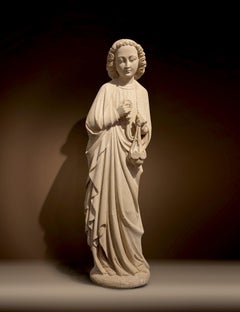
Gothic Renaissance wooden sculpture: bust of a young Saint or Angel
Located in Norwich, GB
This remarkable, deeply evocative fragment is a hand-carved piece of religious statuary from 16th Century France. It depicts the torso of a serene figure, likely a Saint or Archangel...
Category

16th Century Renaissance Figurative Sculptures

Materials

Wood

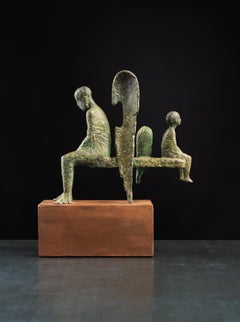
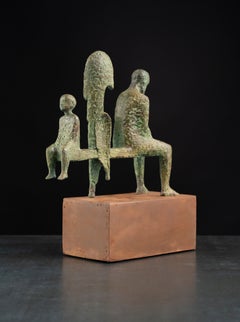
Family IV - Elegant Figurative Bronze Sculpture of Two People
Located in Los Angeles, CA
German sculptor Nando Kallweit produces figurative bronze sculptures and reliefs with aquiline and a graceful modern appeal. Kallweit is inspired by seemingly disparate cultures; the strength of ancient Egyptian sculptures...
Category

21st Century and Contemporary Abstract Figurative Sculptures

Materials

Metal, Bronze

Tropical Venus. From Venus Nostalgia series
Located in Miami Beach, FL
The series "Venus Nostalgia" is a collection of sculptures inspired by the famous Venus de Milo, an emblematic work in the history of art that has had a great impact on Castello's wo...
Category

2010s Contemporary Figurative Sculptures

Materials

Ceramic, Glaze

Antonio Canova Ebe Aprés Ebe White Marble Sculpture 19th Century Italian
Located in Roma, IT
An important grand tour Antonio Canova Ebe (Aprés), carved in white marble by an Italian sculptor artist in the 19th century from a block of white marble. The work depicts the go...
Category

19th Century Other Art Style Figurative Sculptures

Materials

Marble

XoX Hipster Kiddo Pink - sculpture, resin and paint
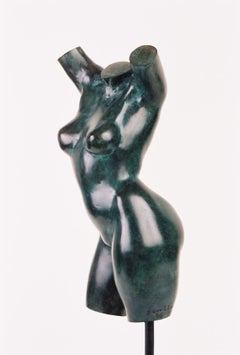
Located in Bloomfield, ON
"This indoor figurative pop art table top sculpture is made from resin. Playful, colourful and imaginative, Viktor Mitic’s latest series of unique sculptures appear to merge pop art...
Category

21st Century and Contemporary Contemporary Sculptures

Materials

Mixed Media
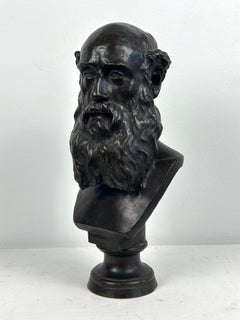
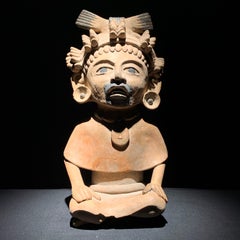
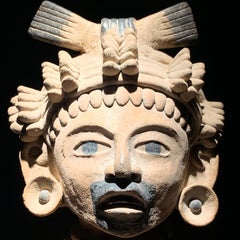
Veracruz Mexico Pre-Columbian ceramic Warrior figure sculpture
Located in Wilton Manors, FL
Figure of a Chanting Warrior Ceramic with bitumen highlights 300-600 CE (Classic Period) Mexico, Veracruz, possibly Nopiloa Veracruz Culture Pre-Columbian, Mexico, Vera Cruz culture...
Category

15th Century and Earlier Figurative Sculptures

Materials

Ceramic

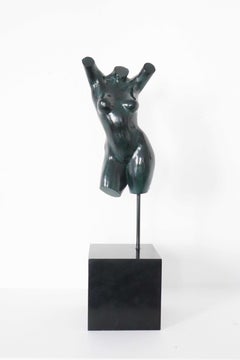
Thought by Yann Guillon - Contemporary bronze sculpture, female figure, nude
Located in Paris, FR
Thought is a bronze sculpture by French contemporary artist Yann Guillon, dimensions are 30 × 20 × 18 cm (11.8 × 7.9 × 7.1 in). Height of the sculpture with the brass base: 40 cm (15...
Category

2010s Contemporary Nude Sculptures

Materials

Bronze, Brass

Guardain Cat by Helle Crawford, Contemporary bronze cat animal sculpture
Located in DE
Even though Helle Rask Crawford often refers to classic myths in her sculptures, sh is not a classical sculptor in the neoclassical sense. Rather, Helle Crawford could be defined as ...
Category

2010s Contemporary Nude Sculptures

Materials

Gold, Bronze

Pair of Bookends “Pégase”
Located in ROUEN, FR
Model edited by Max Le Verrier. Early 20th century. Georges H. Laurent was a French sculptor known for his animal subjects. Active during the Art Deco period, he produced high‑qualit...
Category

Early 20th Century Art Deco Figurative Sculptures

Materials

Metal

Contemporary Expressionist Ceramic Head in Refractory Stoneware with Kintsugi
Located in FISTERRA, ES
Testa 6 is a contemporary expressionist ceramic head from the ongoing Testas series of sculptural heads. Created in refractory stoneware, the piece is fired in reduction and subseque...
Category

2010s Expressionist Figurative Sculptures

Materials

Clay, Glaze

The Scalp, American Realist Bronze Sculpture after Frederic Remington
By Frederic Remington
Located in Long Island City, NY
A fine later casting of the famous Frederic Remington sculpture "The Scalp", cast in the 1970's or 1980's. Description: After Frederic Remington, American (1861 - 1909) - The Scalp...
Category

Late 20th Century American Realist Figurative Sculptures

Materials

Bronze

Deers, Art Deco figurine. Porcelain, hand painted. Riga Porcelain factory
Located in Riga, LV
Vintage Soviet period figurine from Riga of the 60's. Hand painted.
Category

1960s Art Deco Figurative Sculptures

Materials

Porcelain

Swan Baby, 19th Century Bronze & Marble Sculpture of Cherub Riding Swan
Located in Beachwood, OH
Auguste Moreau (French, 1834-1917) Swan Baby, 19th Century Bronze with reddish gold patination mounted on verdigris marble base Signed on base 6 x 9.5 x 5 inches Auguste Moreau was...
Category

19th Century Figurative Sculptures

Materials

Marble, Bronze

Girl’s dream by Cécile Raynal - seated woman figure, bronze sculpture
Located in Paris, FR
Girl’s dream is a bronze sculpture by French contemporary artist Cécile Raynal, dimensions are 155 × 50 × 63 cm (61 × 19.7 × 24.8 in). Dimensions include white wood stand. The sculpt...
Category

2010s Contemporary Figurative Sculptures

Materials

Bronze

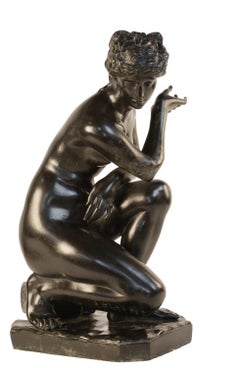
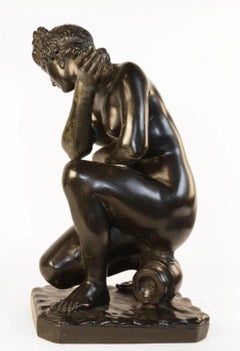
19th Century Bronze Figure of Crouching Venus or Naked Aphrodite
Located in Beachwood, OH
19th Century Bronze Figure of Crouching Venus or Naked Aphrodite Bronze with dark patination 22.5 x 13 x 11 inches The Crouching Venus is a Hellenisti...
Category

19th Century Figurative Sculptures

Materials

Bronze

Diogenes, terracotta sculpture, 1939, Giorgio Rossi (1894-1981).
Located in Firenze, IT
**Diogenes.** **Terracotta sculpture, 1939, Giorgio Rossi (1894-1981): Tuscan Sculptor.** **Material:** Hand-modeled terracotta by the artist. **Unique piece.** **Dimensions...
Category

1930s Art Deco Figurative Sculptures

Materials

Terracotta

Dogman grew a pear 21/25 - figurative, contemporary, bronze sculpture
Located in Bloomfield, ON
Cast in bronze, this contemporary figurative sculpture of an anthropomorphic dog is by Gillie and Marc. British and Australian artists, Gillie and Marc have been called “the most su...
Category

2010s Contemporary Figurative Sculptures

Materials

Bronze

Antique Bronze Dog "Whippet with a Butterfly" Arthur Waagen (1833-1898) 1 of 2
Located in SANTA FE, NM
Antique Bronze Dog Portrait “La Levrette au Papillon” or “Whippet (Greyhound) with a Butterfly”   Arthur Waagen (Germany, France 1833-1898) Circa 1860’s 11 x 8 x 4  inches (1 of 2. ...
Category

1860s Academic Figurative Sculptures

Materials

Bronze

Clean Slate - Artist Proof - Bronze Sculpture - KAWS contemporary collectable
By KAWS
Located in Manchester, GB
KAWS, Clean Slate (Bronze) (Artist's Proof), 2022 Bronze Sculpture 14.5 x 7.1 x 7.4 cm (5.7 x 2.8 x 2.9 in) AP number 30/50 - aside from a main edition of 250 Signature and Date...
Category

2010s Figurative Sculptures

Materials

Bronze

Italy Cast Lost Wax Woman Figurine Bronze Sculpture by Aron Demetz Guardando
Located in Brescia, IT
This intense bronze sculpture was made by the well known Italian artist, Aron Demetz, in 2004, Italy. This is a lost wax bronze hand painted. The title is "Guardando" translated in ...
Category

Early 2000s Post-Modern Figurative Sculptures

Materials

Bronze

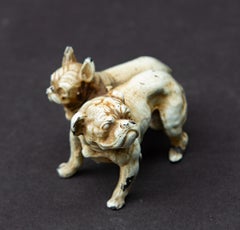
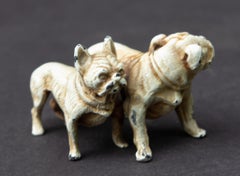
French bulldog
Located in PARIS, FR
French bulldog also known as The Dog of Teresa Lorioli (mother of the artist) by Rembrandt BUGATTI (1884-1916) Sculpture in bronze with a nuanced black patina Signed on the base "R.Bugatti" A lost wax cast by "A.A. Hébrard" (with founder stamp) and numbered "11" Model created around 1905 Cast before 1934 Edition of 50 copies height 13,5 cm length of the base 13,2 cm depth of the base 8,4 cm A similar copy acquired in 1906 directly from the artist and numbered "35" is now part of the collection of the Alte Nationalgalerie in Berlin (inv. BI 251). This bronze sculpture is accompanied by a certificate of authenticity established by Véronique Fromanger, dated October 18, 2024. Bibliography : - Mary Harvey, The Bronzes of Rembrandt...
Category

Early 20th Century French School Figurative Sculptures

Materials

Bronze

Norman Rockwell–Inspired Fleeing Hobo Bronze Sculpture with Gold Bars
Located in Los Angeles, CA
Norman Rockwell “Fleeing Hobo” (Prototype) with 24k Gold Bars The first bronze limited edition from The Saturday Evening Post Illustration which offers ...
Category

20th Century American Realist Figurative Sculptures

Materials

Gold, Bronze

The canticle of the stilts (with ibis) by Marine de Soos - Bronze sculpture
Located in Paris, FR
The canticle of the stilts (with ibis) is a bronze sculpture by French contemporary artist Marine de Soos, dimensions are 70 × 30 × 25 cm (27.6 × 11.8 × 9.8 in). The sculpture is si...
Category

2010s Contemporary Figurative Sculptures

Materials

Bronze

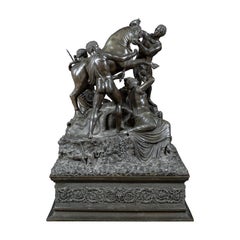
The Wrestlers Life-size Plaster Cast Sculpture Mid-19th Century Male Nude
Located in Palm Beach, FL
Antique Grand Tour Plaster Cast after Antonio Canova – Life-Size Figural Group This impressive, life-size antique plaster cast represents one of t...
Category

Mid-19th Century Academic Nude Sculptures

Materials

Plaster

Antique Bronze Dog "Whippet with a Butterfly" Arthur Waagen (1833-1898) 2 of 2
Located in SANTA FE, NM
Antique Bronze Dog Portrait “La Levrette au Papillon” or “Whippet (Greyhound) with a Butterfly”   Arthur Waagen (Germany, France 1833-1898) Circa 1860’s 11 x 8 x 4  inches (2of 2. No...
Category

1860s Academic Figurative Sculptures

Materials

Bronze

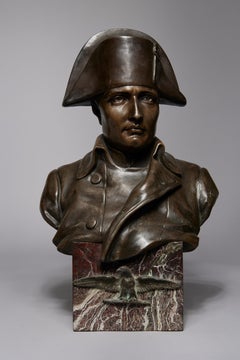
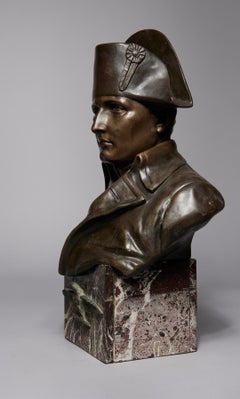
19th Century Bronze Bust of Young Napoleon as Caesar
Located in Beachwood, OH
After Antonio Canova (Italian, 1757-1822) Bust of Young Napoleon as Caesar, 19th Century Hallow cast bronze with verdigris patina, attached to rouge...
Category

19th Century Figurative Sculptures

Materials

Marble, Bronze

Thoroughbred, Art Deco Bronze Sculpture by Loet Vanderveen
Located in Long Island City, NY
Loet Vanderveen, Dutch (1921 - 2015) - Thoroughbred, Medium: Bronze sculpture, signature and numbering inscribed on bottom, Edition: 235/500, Size: 4.75 x 8 x 4 in. (12.07 x 20.3...
Category

1920s Art Deco Figurative Sculptures

Materials

Bronze

Grande Gruppo in Marmo "L'Innocenza tormentata dall'Amore" Scultura Francese
Located in Pistoia, IT
Imponente gruppo in marmo bianco raffigurante "Innocenza tormentata da Amore", firmato Luca Madrassi. Scuola francese, fine XIX secolo, periodo Art Nouveau. Questo splendido grupp...
Category

Late 19th Century Art Nouveau Figurative Sculptures

Materials

Marble

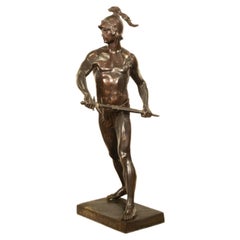
19th Century Bronze of the Borghese Gladiator Sculpture
Located in Beachwood, OH
The Borghese Gladiator, 19th Century Bronze on marble base Musée du Louvre signed on base 15 x 12 x 8 inches Since its discovery in the early seventeenth century, the Borghese Gladi...
Category

19th Century Figurative Sculptures

Materials

Marble, Bronze

Antique Horse Bronze Trotting Stallion Isidore Jules Bonheur (France, 1827-1901)
Located in SANTA FE, NM
Antique Horse Bronze Portrait of a Trotting Stallion Isidore Jules Bonheur (France, 1827-1901) Cast bronze mounted on a rectangular plinth with dark brown patina, Signed: I. BONHEUR 17 x 11 3/4 A brilliant exploration of a stallion in full trot. The patina is a deep, warm walnut brown with honey-colored tones. Isidore Bonheur was best known and the most distinguished of the 19th century French animalier sculptors. Isidore, the younger brother of Rosa Bonheur and older brother of Auguste, began his studies of painting initially with his father, who was friends with Francisco Goya. By 1848 he debuted at the Paris Salon having discontinued animal and landscape painting to concentrate on creating sculptures and in 1849, Bonheur enrolled at the Ecole des Beaux Arts. He won medals at the Paris Salon in 1859 and did so again in 1865 and in 1869. After entering the Exposition Universelle 1855, he won the Gold Medal in 1889. In the 1870s exhibited in the London at the Royal Academy of Arts where he earned great prestige and won the coveted Medaille d’Or. After winning numerous other medals and prizes, Bonheur was awarded the Legion d' Honneur in 1895 and he was Knighted in Portugal, Spain and France. Bonheur continued exhibiting at the Paris Salon until 1899. Many of his bronzes were fabricated at the foundry owned by Hippolyte Peyrol, Bonheur's brother-in-law by marriage to Isidore’s youngest sister Juliette Bonheur. The Peyrol casts for both Rosa and Isidore are exceptionally well executed which suggests a strong working relationship between the founder and sculptor. There is little doubt that Isidore Bonheur was an acute observer of nature; his animals were not anthropomorphized but modelled to catch movement or posture characteristics of the particular species he was sculpting. He achieved this most successfully with his sculptures of horses which are usually depicted as relaxed rather than spirited. These figures are among his most renowned works and his equestrian models became very popular, particularly among the British aristocracy. An acute observer of nature, his sculptures reflect his commitment to the Realist school - with precise detailing of the movements of animals in their natural habitats. Ultimately, His naturalistic studies of animals are now some of the most highly sought after works by any of the animalier. He was possibly inspired by his many visits to the Buffalo Bill Wild West Show...
Category

1870s Realist Figurative Sculptures

Materials

Bronze

Large Runner by Yann Guillon - Bronze Sculpture, Athlete, Male Nude, Outdoor
Located in Paris, FR
Large Runner is a bronze sculpture by contemporary artist Yann Guillon, dimensions including metal base are 120 × 60 × 80 cm (47.2 × 23.6 × 31.5 in). The sculpture is signed and num...
Category

2010s Contemporary Nude Sculptures

Materials

Bronze

"LA ROC Cat Woman" Decorated Graffiti Street Art Mannequin Bust Sculpture
Located in New York, NY
A beautiful street art, abstract Mannequin Bust decorated by artist Angel Ortiz. Here we find this stylish bust figure with the artist signature tag...
Category

2010s Pop Art Figurative Sculptures

Materials

Found Objects, Spray Paint, Acrylic

Dancing male figure, terracotta sculpture, 1930s-40s, Giorgio Rossi (1894-1981)
Located in Firenze, IT
Dancing male figure, terracotta sculpture, 1930s-40s, Giorgio Rossi (1894-1981). Terracotta modeled by hand by the artist. Unique piece. Dimensions: Height 45 cm. The choice of ter...
Category

1930s Art Deco Nude Sculptures

Materials

Terracotta

Sesame Street, Set of 4 (Elmo, Oscar, Big Bird, Bert & Ernie)
By KAWS
Located in Dubai, Dubai
Sesame Street, Set of 4 (Elmo, Oscar, Big Bird, Bert & Ernie) By KAWS 2025 Allrightsreserve x DDT store Vinyl Elmo: 25,4 cm 10 in Oscar: 25,4 cm 10 in Big Bird: 33 cm 13 in ...
Category

2010s Contemporary Figurative Sculptures

Materials

Vinyl

Mother Goddess Figurine, Early Indus Valley Civilization (circa 3500 - 2800 BC)
Located in Paris, Île-de-France
Mother Goddess Figurine Early Indus Valley Civilization (circa 3500 - 2800 BC) Handmade pottery, 140 mm x 45 mm, 60 g Provenance: Prince Collection, 1990s-2014; Pierre Bergé Colle...
Category

15th Century and Earlier Tribal Nude Sculptures

Materials

Clay, Terracotta

Sculpture of Lion "Marzocco" Green Marble Grand Tour Italian Florence 20th
Located in Roma, IT
Carved in the green marble know as verde prato, by a Florentine sculptor of the XX century this grand tour version of the Leone "Marzocco" is an exquisite example of elegance and her...
Category

20th Century Other Art Style Figurative Sculptures

Materials

Marble

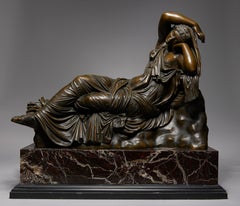
Sleeping Ariadne, Large Bronze & Marble Sculpture of Greek Mythology, 19th C.
Located in Beachwood, OH
Pietro Chiapparelli (Italian, 19th Century) Sleeping Ariadne, c. 1865 Bronze on marble base Inscribed 'P. Chiapparelli F.I. Roma' 22 x 24 x 10.5 inches 136 lb. (34 lb. bottom marble,...
Category

1860s Figurative Sculptures

Materials

Marble, Bronze

Early 20th Century Ceramic Sculpture of a Polo Player and Horse
By Waylande Gregory
Located in Beachwood, OH
Waylande Gregory (American, 1905-1971) Polo Player, c. 1930s Ceramic Inscribed signature on bottom 11 x 8.5 inches Waylande Gregory was considered a major American sculptor during the 1930's, although he worked in ceramics, rather than in the more traditional bronze or marble. Exhibiting his ceramic works at such significant American venues for sculpture as the Whitney Museum of American Art in New York City and at the venerable Pennsylvania Academy of the Fine Arts in Philadelphia, he also showed his ceramic sculptures at leading New York City galleries. Gregory was the first modern ceramist to create large scale ceramic sculptures, some measuring more than 70 inches in height. Similar to the technique developed by the ancient Etruscans, he fired his monumental ceramic sculptures only once. Gregory was born in 1905 in Baxter Springs, Kansas and was something of a prodigy. Growing up on a ranch near a Cherokee reservation, Gregory first became interested in ceramics as a child during a native American burial that he had witnessed. He was also musically inclined. In fact, his mother had been a concert pianist and had given her son lessons. At eleven, he was enrolled as a student at the Kansas State Teacher's College, where he studied carpentry and crafts, including ceramics. Gregory's early development as a sculptor was shaped by the encouragement and instruction of Lorado Taft, who was considered both a major American sculptor as well as a leading American sculpture instructor. In fact, Taft's earlier students included such significant sculptors as Bessie Potter Vonnoh and Janet Scudder. But, Taft and his students had primarily worked in bronze or stone, not in clay; and, Gregory's earliest sculptural works were also not in ceramics. In 1924, Gregory moved to Chicago where he caught the attention of Taft. Gregory was invited by Taft to study with him privately for 18 months and to live and work with him at his famed "Midway Studios." The elegant studio was a complex of 13 rooms that overlooked a courtyard. Taft may have been responsible for getting the young man interested in creating large scale sculpture. However, by the 1920's, Taft's brand of academic sculpture was no longer considered progressive. Instead, Gregory was attracted to the latest trends appearing in the United States and Europe. In 1928 he visited Europe with Taft and other students. "Kid Gregory," as he was called, was soon hired by Guy Cowan, the founder of the Cowan Pottery in Cleveland, Ohio, to become the company's only full time employee. From 1928 to 1932, Gregory served as the chief designer and sculptor at the Cowan Pottery. Just as Gregory learned about the process of creating sculpture from Taft, he literally learned about ceramics from Cowan. Cowan was one of the first graduates of Alfred, the New York School of Clayworking and Ceramics. Alfred had one of the first programs in production pottery. Cowan may have known about pottery production, but he had limited sculptural skills, as he was lacking training in sculpture. The focus of the Cowan Pottery would be on limited edition, table top or mantle sculptures. Two of the most successful of these were Gregory's "Nautch Dancer," (fig. 1) and his "Burlesque Dancer," (fig. 2). He based both sculptures on the dancing of Gilda Gray, a Ziegfield Follies girl. Gilda Gray was of Polish origin and came to the United States as a child. By 1922, she would become one of the most popular stars in the Follies. After losing her assets in the stock market crash of 1929, she accepted other bookings outside of New York, including Cleveland, which was where Gregory first saw her onstage. She allowed Gregory to make sketches of her performances from the wings of the theatre. She explained to Gregory, "I'm too restless to pose." Gray became noted for her nautch dance, an East Indian folk dance. A nautch is a tight, fitted dress that would curl at the bottom and act like a hoop. This sculpture does not focus on Gray's face at all, but is more of a portrait of her nautch dance. It is very curvilinear, really made of a series of arches that connect in a most feminine way. Gregory created his "Burlesque Dancer" at about the same time as "Nautch Dancer." As with the "Nautch Dancer," he focused on the movements of the body rather than on a facial portrait of Gray. Although Gregory never revealed the identity of his model for "Burlesque Dancer," a clue to her identity is revealed in the sculpture's earlier title, "Shimmy Dance." The dancer who was credited for creating the shimmy dance was also Gilda Gray. According to dance legend, Gray introduced the shimmy when she sang the "Star Spangled Banner" and forgot some of the lyrics, so, in her embarrassment, started shaking her shoulders and hips but she did not move her legs. Such movement seems to relate to the "Burlesque Dancer" sculpture, where repeated triangular forms extend from the upper torso and hips. This rapid movement suggests the influence of Italian Futurism, as well as the planar motion of Alexander Archipenko, a sculptor whom Gregory much admired. The Cowan Pottery was a victim of the great depression, and in 1932, Gregory changed careers as a sculptor in the ceramics industry to that of an instructor at the Cranbrook Academy in Bloomfield Hills, Michigan. Cranbrook was perhaps the most prestigious place to study modern design in America. Its faculty included the architect Eliel Saarinen and sculptor Carl Milles. Although Gregory was only at Cranbrook for one and one half years, he created some of his finest works there, including his "Kansas Madonna" (fig. 3). But, after arriving at Cranbrook, the Gregory's had to face emerging financial pressures. Although Gregory and his wife were provided with complimentary lodgings, all other income had to stem from the sale of artworks and tuition from students that he, himself, had to solicit. Gregory had many people assisting him with production methods at the Cowan Pottery, but now worked largely by himself. And although he still used molds, especially in creating porcelain works, many of his major new sculptures would be unique and sculpted by hand, as is true of "Kansas Madonna." The scale of Gregory's works were getting notably larger at Cranbrook than at Cowan. Gregory left the surface of "Kansas Madonna" totally unglazed. Although some might object to using a religious title to depict a horse nursing its colt, it was considered one of Gregory's most successful works. In fact, it had a whole color page illustration in an article about ceramic sculpture titled, "The Art with the Inferiority Complex," Fortune Magazine, December, 1937. The article notes the sculpture was romantic and expressive and the sculpture was priced at $1,500.00; the most expensive sculpture in the article. Gregory was from Kansas, and "Kansas Madonna" should be considered a major sculptural document of Regionalism. Gregory and his wife Yolande moved to New Jersey in the summer of 1933. And the artist began construction on his new home in the Watchung Mountains of Bound Brook (Warren today) in 1938. His enormous, custom kiln was probably constructed at the start of 1938. Gregory's new sculptures were the largest ceramic sculptures in western art, in modern times. To create these works of ceramic virtuosity, the artist developed a "honeycomb" technique, in which an infrastructure of compartments was covered by a ceramic "skin." Science and atomic energy were a theme in Gregory's most significant work, the "Fountain of the Atom" (fig. 4), at the 1939 New York's World Fair. This major work included twelve monumental ceramic figures at the fairground entrance from the newly constructed railway entrance, giving the work great visibility and prominence. The framework of the fountain itself was of steel and glass bricks. It consisted of a bluish green pool which was sixty five feet in diameter. Above it were two concentric circular tiers, or terraces, as Gregory called them; the first wider than the second. On the first terrace were eight "Electrons," comprised of four male and four female terra cotta figures, each approximately 48 inches high. These relate to the valance shell of the atom. Above them on a narrower terrace, were the much larger and heavier terra cotta figures depicting the four elements, each averaging about 78 inches in height and weighing about a ton and a half. Of the four, "Water" and "Air" were male, while "Earth" and "Fire" were female. This terrace represents the nucleus of the atom. In the center of the fountain, above the "Elements," was a central shaft comprised of sixteen glass tubes from which water tumbled down from tier to tier. At the top, a colorful flame burned constantly. The glass block tiers were lit from within, the whole creating a glowing and gurgling effect. Since the fair was temporary, the figures could be removed after its closing. But the credit for the design of the structure of the fountain belongs to collaborator Nembhard Culin, who was responsible for several other structures on the fair grounds as well. Although Gregory created a figure of "Fire" for the "Fountain of the Atom," he also executed a second, slightly smaller but more defined version which he exhibited at various locations (including Cranbrook, Baltimore Museum, etc.) in 1940-1941, during the second year of the fair (fig.5). Measuring 61 inches in height, "Fire" may be a metaphor for sexual energy, as well as atomic energy. Gregory stated, "Fire is represented by an aquiline female figure being consumed in endless arabesques of flame." Portraiture was also a significant focus of Gregory's sculpture. Gregory produced many commissioned portraits of local people as well as celebrities. He created Albert Einstein's portrait from life (fig. 6, ca. 1940) after Einstein had seen Gregory's "Fountain of the Atom." He also sculpted some of the leading figures in entertainment, including 2 sculptures of Henry Fonda, who became a personal friend. Gregory also sculpted a series of idealized female heads, both in terra cotta and in porcelain. These include "Girl with Olive" (ca. 1932) and "Cretan Girl;"(ca. 1937) both are very reductive and almost abstract works that call to mind Constantine Brancusi's "Mademoiselle Pogany" (1912, Philadelphia Museum of Art). But perhaps one of his most original female heads is "Head of a Child" (fig. 7, ca. 1933), a sensitive white glazed terra cotta portrayal with elaborately crafted braded hair, was originally created as one of a pair. Gregory also produced sculptural works for the Works Progress Administration. The WPA was a work relief project that greatly helped artists during the great depression. Founded by the Federal Government in 1935, an estimated 2500 murals were produced. Among these public works were the iconic post office murals. But, among the painted murals were also sculptural relief murals including Gregory's "R.F.D.," 1938, for the Columbus, Kansas Post Office. But, Gregory's largest WPA relief...
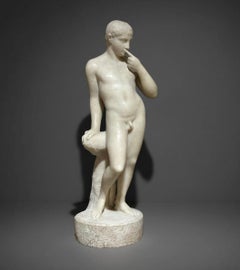
Category

1930s Figurative Sculptures

Materials

Ceramic

Figure of Crouching Venus/Naked Aphrodite, 19th Century Italian School Sculpture
Located in Beachwood, OH
Bronze Figure of Crouching Venus, or The Naked Aphrodite, 19th Century Italian School Bronze raised on a marble base 21 in. h. x 10 in. w. x 7 in. d., overall 18 in. h. x 8.5 in. w....
Category

19th Century Figurative Sculptures

Materials

Marble, Bronze

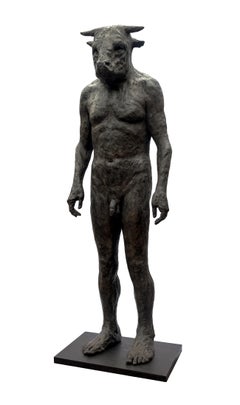
Giant Standing Minotaur II
Located in Boston, MA
Carter’s work often morphs the human figure with animal, creating mythological creatures and extraordinary fictional compositions. Her work explores themes of duality, transformation...
Category

2010s Sculptures

Materials

Bronze

Piano surréaliste, Salvador Dali
Located in Fairfield, CT
Artist: Salvador Dali (1904-1989) Title: Piano surréaliste Year: 1984 Medium: Bronze Edition: 34/350, plus proofs Size: 26.3 x 15.7 x 12 inches Condition: Excellent Inscription: Inci...
Category

1980s Surrealist Figurative Sculptures

Materials

Bronze

"MAN ON HORSE" DAVID ADICKES (1927-2025). MCM. Houston Artist Bronze Sculpture
Located in San Antonio, TX
David Adickes (1927-2024) "Man On Horse" Bronze Sculpture 7.5 x 6.5 x 3 Signed inner rear leg. cowboy, horseback, horse, western, wooden base Houston sculptor and painter David Pryor Adickes died on Sunday, July 13 at age 98, leaving a legacy of nearly eight decades of artmaking that included many notable monumental public sculptures and signature paintings. Mr. Adickes may have cut a diminutive figure — at 105 pounds he was once deemed too slight to enlist as a World War II Army pilot — but he became a giant of Texas art over his long lifetime. Mr. Adickes was born in Huntsville in 1927, and lived there through graduating with a degree in math and physics from Sam Houston State University (SHSU), before decamping to Paris in 1948. There he studied the art of El Greco, Pablo Picasso, Georges Braque, and Marc Chagall. In a 2017 Texas Country Reporter story, Mr. Adickes quoted his friend, noted author James Michener — whom he called “Jim” — in saying, “I just come from Texas, but I’m not a Texan. I’m a French artist, if you had to really put geography [on it]. Paris influenced me more than any other place in the world.” But few artists could have been more Texan. In true maverick style, Mr. Adickes sidestepped traditional methods of applying for public art commissions through governmental channels, instead parlaying successful real estate ventures into buying land on which to situate his artworks. One such example is his massive Sam Houston sculpture — a Huntsville icon, titled A Tribute to Courage — grandly stands nearly 70 feet tall on a grassy plot he owned on the southern edge of town, overlooking Interstate 45. Dixie Friend Gay, a longtime friend of Mr. Adickes and noted public sculptor who goes through traditional channels to propose and site her work, said good humoredly, “He talked to me about how I did public art, and he goes, ‘You know what? I just go buy the property and stick what I want to on it.’” Ms. Gay said Mr. Adickes was generous in sharing his substantial knowledge on complex sculptural processes. This trait was also recognized by artist Jack Massing, Executive Director of The Orange Show Center for Visionary Art, who to work through the complex concrete layering processes of building his huge sculptures. “As a maker, he was fearless in making these giant things. He figured it out. He got it done, and he did it for so long,” Mr. Massing said. Linda Wiley also admired Mr. Adickes, for his work as an artist and for his charming personality. They met 30 years ago while he was working on the Sam Houston sculpture. “Those of us around in Huntsville ... had heard of this guy that was building a giant statue, and so I went out and met David and his charming self, and started taking pictures,” she said. That initial encounter eventually became Ms. Wiley’s 1996 book about Adickes as an inspiration for creativity in everyone, Making It Happen: Exploring the Creative Process Through the Sculptures of David Adickes. The title is a reference to Mr. Adickes’ fortitude, Ms. Wiley said. “David didn’t just dream up the dream, he realized the dream.” The two became a couple, then life partners. One dream of Mr. Adickes’ that remains unrealized was finding a permanent Texas home for his collection of 43 famed giant president’s head sculptures, which remain at his downtown studio. The building faces demolition by the Texas Department of Transportation through eminent domain. “So there’s the ticking of the clock, because we’re hoping to get them transferred to their new home before TxDOT says you gotta move them now,” Ms. Wiley said. Thirty years ago, after seeing firsthand the monumental Mount Rushmore National Memorial in South Dakota, Mr. Adickes undertook what would become an expensive and consuming obsession to craft large-scale concrete heads for each president. By the end of his life, he had completed every president through Barack Obama. In a 2014 interview with Houston Public Media, Mr. Adickes said, “It’s this crazy idea, but I have crazy ideas,” concluding with a lightheartedly self-deprecating pronouncement, "It's a curse." In a February 2025 Texas Monthly article on the quandary of their preservation, Mr. Adickes is quoted as saying, “I don’t want them to die. ... My goal is to create works of art that will be here for generations — that will bring pleasure for generations to come. My whole life is based on that desire.” Mr. Adickes purchased the former Huntsville High School, when the building was to be razed, and converted it into the Adickes Art Foundation Art Museum to house his ever-growing collection of paintings and sculptures. Ms. Wiley said they sold the building a few years ago to SHSU, which turned it into a natural history museum. Regarding what will happen to the artistic legacy of Mr. Adickes, “As far as a museum in his honor, that remains to be seen. I’m going to let the stars align on that and see what happens.” She said TammyDowe of Spot On Public Relations in Houston is working on finding a home for the presidents’ heads, and Mr. Massing said he believes the heads will be the most important part of Mr. Adickes’ legacy and hopes they find a home. According to those who knew him, Mr. Adickes will be remembered for his good will as much as his artwork. Mr. Massing said, “His impact is going to be felt for another 30 to 50 years because of the people that he touched.” Ms. Gay remembered him as an engaging personality. “I loved his stories. He was such a unique storyteller,” she said, describing him as a “Renaissance Man” with a wide range of interests. In a 2008 oral history book by Sarah C. Reynolds, Houston Reflections: Art in the City, 1950s, ‘60s, and ‘70s, Mr. Adickes recalled starting The Studio School of Contemporary Art on Truxillo Street with Paris colleague Herb Mears in 1951, and later, opening the Love Street Light Circus and Feel Good Machine in 1967, calling it “the hottest psychedelic club in town," having hosted such bands as The Red Crayola, at the time "just a bunch of kids from Rice (University)." In 2017, Mr. Adickes told the Texas Country Reporter that loving what he did was key to his longevity, declaring, “I’ll never retire. That’s not possible.” Ms. Wiley said he stayed active, in mind and spirit, until he died. “He was David until the very last.” For an extended visual tour of Mr. Adickes’ Houston- and Huntsville-based monumental sculpture, visit the Houston Chronicle’s recent memorial photo essay. A public memorial event will be held in mid-October, Ms. Wiley said, with further details forthcoming. Source: Glasstire (2025), written by Nicholas Frank Submitted by: Stephanie Reeves Biography from the Archives of askART Photo of David Pryor Adickes Sculptor David Adickes is known for a major project titled Presidents Park in Williamsburg, Virginia, where he created 42 portraits bust of American presidents. Each sculpture is twenty feet tall, and their size was the subject of much protest and controversy. However, a court ruling allowed them to stay. Source: Art & Antiques, November 2000 Now mainly known as a creator of giant sculpture, Adickes spent most of his professional life teaching, painting, and creating small bronzes. A commission for Houston's Performing Art Center in 1982 marks the beginning of his giant sculpture design. After the 36-foot tall cellist called the Virtuoso in a cubist style, he created a number of abstract works, including a giant cornet for the jazz stage at the 1984 World's Fair in New Orleans, Louisiana. Circa 1994 he finished a giant statue of Sam Houston, first President of Texas, followed by his 42 statue tribute to United States Presidents. Adickes has degrees in mathematics and physics which serve him well in the engineering of his works. Working on a giant sculpture series which includes the Beatles, and he hopes to end with a 280-foot tall cowboy statue...
Category

21st Century and Contemporary Still-life Sculptures

Materials

Bronze

Oriental Jade Sculpture of Two Court Ladies with Tree – Mid-20th Century
Located in Sant Celoni, ES
Elegant hand-carved bicolor jade sculpture from the Oriental tradition, depicting two court ladies beneath a flowering tree. The figures are crafted in translucent light green jade, ...
Category

Mid-20th Century Figurative Sculptures

Materials

Other Medium

Mid-Century Ceramic Sculpture of a Seated Female, Cleveland School Artist
Located in Beachwood, OH
Walter Sinz (American, 1881-1966) Seated Female, c. 1940 Ceramic 6 x 3.5 x 3.5 inches Walter A. Sinz was an American sculptor born in Cleveland, Ohio on July 13, 1881. Sinz’s fathe...
Category

1940s Figurative Sculptures

Materials

Ceramic

Renaissance Italian sculptor - 16th century carved wood sculpture - Saint Robert
Located in Varmo, IT
Carved wooden sculpture - Saint Robert. Italy, 16th century. 54 x 30 x h 112 cm. Entirely carved and painted wood with traces of polychrome and gilding. - Inscribed on the base: "...
Category

16th Century Renaissance Figurative Sculptures

Materials

Wood

Cloned Bulldog with pet bottle
Located in Östermalm, Stockholms län
Original sculpture 2/8 ex. 2011 - 2020. Silver plated bronze. Acquired directly from the artist. Free shipment worldwide. William Sweetlove, born in Ostend, Belgium, in 1949, unites...
Category

2010s Pop Art Figurative Sculptures

Materials

Silver, Bronze

“Dreaming of her”
Located in Warren, NJ
This is an Markus Pierson Dreaming of Her Sculpture Wood Sculpturer 1987 48 inches tall 50 made. Measures 48x12. In good condition
Category

1990s Sculptures

Materials

Oil

Read More

At Hosfelt Gallery, Bertoia Masterworks Complement Dynamic Contemporary Art

For nearly three decades, San Francisco–based Todd Hosfelt has curated against the grain — with a show on the legendary modernist Harry Bertoia the latest case in point.

This Weathered-Steel Sculpture Distills a Form of Protest into a Minimalist Monument

Part of Alejandro Vega Beuvrin’s “Barricada” series, the work is a subversive tribute to the street smarts of citizen activists.

How the Chunky, Funky Ceramics of 5 Mid-Century American Artists Balanced Out Slick Modernism

Get to know the innovators behind the pottery countercultural revolution.

Art Brings the Drama in These Intriguing 1stDibs 50 Spaces

The world’s top designers explain how they display art to elicit the natural (and supernatural) energy of home interiors.

Chryssa’s 1962 Neon Sculpture Was Way ahead of the Art-World Curve

By working with lettering, neon and Pop imagery, Chryssa pioneered several postmodern themes at a time when most male artists detested commercial mediums.

How to Spot a Fake KAWS Figure

KAWS art toys have developed an avid audience in recent decades, and as in any robust collectible market, counterfeiters have followed the mania. Of course, you don’t have to worry about that on 1stDibs, where all our sellers are highly vetted.

A Giant Wedding Cake Has Us Looking at Portuguese Tiles in a New Light

At Waddesdon Manor, artist Joana Vasconcelos has installed a three-tiered patisserie inspired by the narrative tile work of her homeland. We take a look at the cake sculpture and how Portuguese tiles have been used in architecture from the 17th century to today.

These Soft Sculptures Are Childhood Imaginary Friends Come to Life

Miami artist and designer Gabriela Noelle’s fantastical creations appeal to the Peter Pan in all of us.