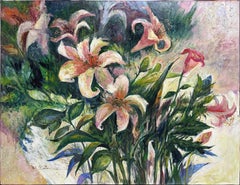
Impressionist Art

IMPRESSIONIST STYLE

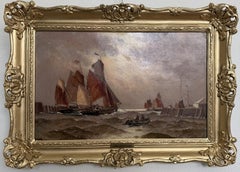
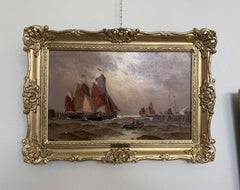
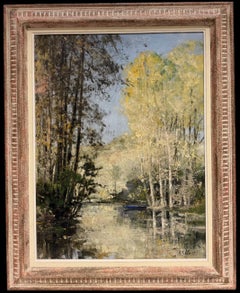
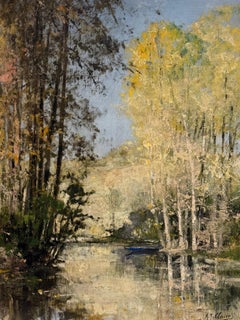
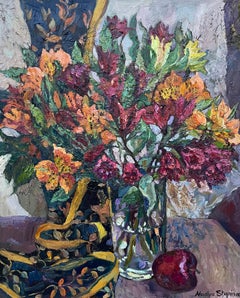
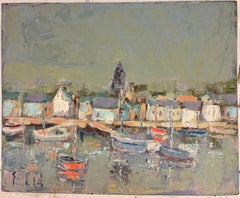
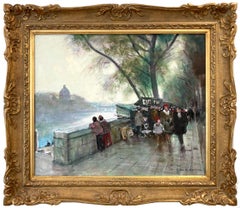
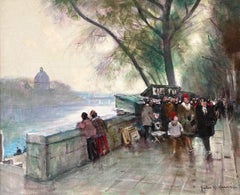
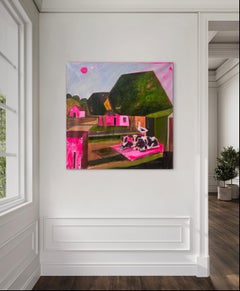
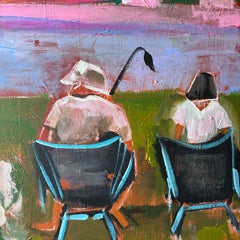
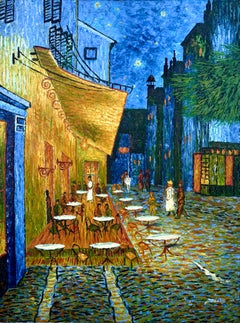
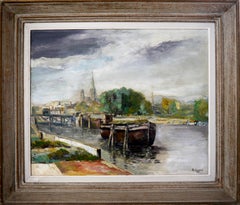
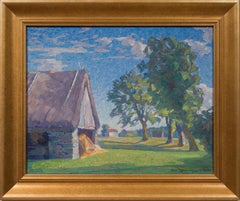
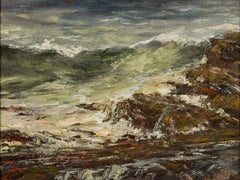
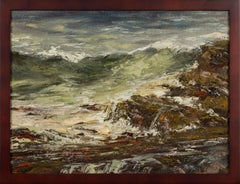
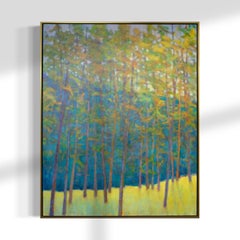
Emerging in 19th-century France, Impressionist art embraced loose brushwork and plein-air painting to respond to the movement of daily life. Although the pioneers of the Impressionist movement — Claude Monet, Edgar Degas, Paul Cézanne, Berthe Morisot, Camille Pissarro, and Pierre-Auguste Renoir — are now household names, their work was a radical break with an art scene led and shaped by academic traditions for around two centuries. These academies had oversight of a curriculum that emphasized formal drawing, painting and sculpting techniques and historical themes.

The French Impressionists were influenced by a group of artists known as the Barbizon School, who painted what they witnessed in nature. The rejection of pieces by these artists and the later Impressionists from the salons culminated in a watershed 1874 exhibition in Paris that was staged outside of the juried systems. After a work of Monet’s was derided by a critic as an unfinished “impression,” the term was taken as a celebration of their shared interest in capturing fleeting moments as subject matter, whether the shifting weather on rural landscapes or the frenzy of an urban crowd. Rather than the exacting realism of the academic tradition, Impressionist paintings, sculptures, prints and drawings represented how an artist saw a world in motion.

Many Impressionist painters were inspired by the perspectives in imported Japanese prints alongside these shifts in European painting — Édouard Manet drew on ukiyo-e woodblock prints and depicted Japanese design in his Portrait of Émile Zola, for example. American artists such as Mary Cassatt and William Merritt Chase, who studied abroad, were impacted by the work of the French artists, and by the late 19th century American Impressionism had its own distinct aesthetics with painters responding to the rapid modernization of cities through quickly created works that were vivid with color and light.

Find a collection of authentic Impressionist art on 1stDibs.

to
6,794
9,823
6,224
5,228
3,134
2,774
Overall Width
to
Overall Height
to
10
979
10,734
15,502
299
316
467
377
407
602
639
585
648
486
8
114,798
65,211
55,131
14,959
9,488
6,327
5,771
4,206
3,069
2,593
2,335
2,222
650
16,207
8,068
2,278
8,971
6,634
5,617
4,516
3,798
2,861
2,313
1,906
1,841
1,791
1,721
1,676
1,470
1,176
1,048
1,025
957
952
914
847
24,042
17,557
8,514
8,065
3,844
761
685
411
271
207
8,726
2,615
15,376
9,453
Style: Impressionist
"St. Patrick's Cathedral on Fifth" Impressionist Oil Painting Snow New York City
Located in New York, NY
A charming depiction of St. Patrick's Cathedral on 5th Avenue in the snow with figures and cars. This evocative urban winter scene captures the majestic spires of St. Patrick's Cathe...
Category

2010s Impressionist Art

Materials

Oil, Board

Joe's View Deep Yellow Sky, Impressionist Lithograph by John Beerman
Located in Long Island City, NY
John Beerman, American (1958 - ) - Joe's View Deep Yellow Sky, Year: 2002, Medium: Lithograph, signed and numbered in pencil, Edition: 4/36, Image Size: 18 x 25 inches, Size: 26...
Category

Early 2000s Impressionist Art

Materials

Lithograph

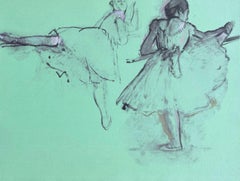
Edgar Degas, Dancer at the Barre, 1945 (after)
Located in Southampton, NY
This exquisite lithograph after Edgar Degas (1834–1917), titled Danseur au bar (Dancer at the Barre), originates from the 1945 folio Degas, Ten Ballet Sketches. Published by The Studio Publications, Inc., New York, rendered and printed by Albert Carman, City Island, 1945, this work reflects Degas’s sensitive mastery of line, movement, and the intimate psychological nuances of the ballet studio. Executed as a lithograph and pochoir on velin paper, this work measures 13 x 17 inches (33.02 x 43.18 cm). Signed in the plate and unnumbered as issued. Rendered and printed by Albert Carman, City Island. Artwork Details: Artist: After Edgar Degas (1834–1917) Title: Danseur au bar (Dancer at the Barre), from Degas, Ten Ballet Sketches, 1945 Medium: Lithograph and pochoir on velin paper Dimensions: 13 x 17 inches (33.02 x 43.18 cm) Inscription: Signed in the plate and unnumbered as issued Date: 1945 Publisher: The Studio Publications, Inc., New York Printer: Albert Carman, City Island Condition: Well preserved, consistent with age and medium Provenance: From the 1945 folio Degas, Ten Ballet Sketches, published by The Studio Publications, Inc., New York Notes: Excerpted from the album, Born in Paris in 1834, Edgar Degas lived, and surely loved the life of that city during most of his years. These continued somewhat sadly beyond those of most of his friends— into the debacle of the first World War, during which he died in 1917. Judging by the frequency with which he used them as models, he must have had an especial admiration for the ballet girls who followed a profession that at the time brought none of the glory and prosperity which attend it today. New aspects of the human body, revealed in movement, fascinated him. But his occupation with the simply anatomical side of his subjects never resulted in a cold interpretation. On the contrary there is a warmth and sympathy that pervades all of his work. The drawings here represent the painter in one important phase of his multi-sensitive view of life; and permit an insight which a more ambitious work might not do-into the operation of the creative process, the artist's transformation of reality as it passes through the mesh of his sensibilities. The Edition of this Portfolio is limited to MMMD examples. Rendered by Albert Carman. About the Publication: Degas, Ten Ballet Sketches (1945) is one of the earliest and most significant American postwar fine art portfolios devoted to Edgar Degas’s intimate works on paper. Published by The Studio Publications, Inc., New York, and rendered and printed by Albert Carman at City Island, the album sought to faithfully reproduce a group of Degas’s ballet-related drawings through a combination of lithography and hand-applied pochoir coloring. This hybrid technique allowed the edition to preserve the immediacy, tonal subtlety, and gestural delicacy central to Degas’s draftsmanship. Conceived as a fine art publication rather than a commercial book, the portfolio provided American audiences unprecedented access to Degas’s private, spontaneous studies—images that reveal the artist’s fascination with movement, anatomy, and the psychological atmosphere of the rehearsal studio. The album exemplifies the mid-20th-century revival of pochoir as a means of recreating the texture and coloristic nuance of original works on paper, and it remains an important document of how Degas’s legacy was translated into high-quality printed form for collectors, museums, and connoisseurs. About the Artist: Edgar Degas (1834–1917) was a French painter, draughtsman, printmaker, and sculptor whose groundbreaking fusion of classical draftsmanship, modern experimentation, and psychological depth helped define the trajectory of Western art, positioning him as one of the most influential figures of the nineteenth and early twentieth centuries; renowned for his depictions of ballet dancers, racehorses, theater scenes, cafe life, domestic interiors, milliners, laundresses, and women at their toilette, Degas reimagined observational realism through radical compositional innovation—employing extreme cropping, asymmetrical framing, oblique viewpoints, and dramatic lighting that anticipated photographic and cinematic language long before these technologies shaped visual culture, and although associated with Impressionism, he rejected plein-air spontaneity in favor of studio-based discipline rooted in the linear precision of Jean-Auguste-Dominique Ingres, the expressive chromaticism of Eugene Delacroix, and the modernity of Edouard Manet while also drawing inspiration from Japanese ukiyo-e prints, classical sculpture, and early photography; his independent artistic philosophy resonated with and helped shape the innovations of Pablo Picasso, Alexander Calder, Alberto Giacometti, Salvador Dali, Joan Miro, Wassily Kandinsky, Marcel Duchamp, and Man Ray, whose explorations of movement, form, dream logic, abstraction, and conceptualism all find antecedents in Degas’s investigations into seriality, temporality, and the fragmented figure, and his pioneering use of pastel, monotype, and wax sculpture fundamentally transformed each medium, influencing artists from Henri Matisse, Francis Bacon, Lucian Freud, and Giacomo Manzu to Paula Rego, contemporary realists, experimental photographers, and choreographers; his works are held in nearly every major museum collection worldwide—including the Musee dOrsay, the Louvre, the Metropolitan Museum of Art, the National Gallery of Art, the Art Institute of Chicago, the Courtauld Institute, and the National Gallery, London—affirming his central place in the history of art, and the highest auction record for Degas was achieved at Sothebys London on February 3, 2015, when Danseuses en Bleu sold for 37,033,000 GBP, cementing his status as one of the most sought-after and enduringly significant artists of the Western canon. Degas pochoir, Degas lithograph...
Category

1940s Impressionist Art

Materials

Lithograph

"Reading in the Study" Impressionist Portrait Oil Painting Woman in Pink Dress
Located in New York, NY
An Early 20th Century elegant portrait oil painting by Gordon Stevenson depicting a pensive young woman seated in a serene, indoor setting wearing a l...
Category

1910s Impressionist Art

Materials

Oil, Canvas

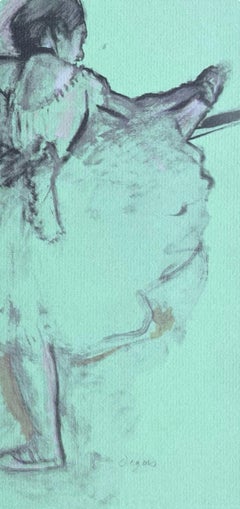
Edgar Degas, Dancer Standing in Profile, 1945 (after)
Located in Southampton, NY
This exquisite lithograph after Edgar Degas (1834–1917), titled Danseur debout de profil (Dancer Standing in Profile), originates from the 1945 folio Degas, Ten Ballet Sketches. Published by The Studio Publications, Inc., New York, rendered and printed by Albert Carman, City Island, 1945, this work reflects Degas’s sensitive mastery of line, movement, and intimate observation, capturing the grace, poise, and psychological immediacy that define his iconic ballet imagery. In Danseur debout de profil (Dancer Standing in Profile), Degas reveals gesture and inner emotion through economical contour and lyrical nuance. Executed as a lithograph and pochoir on velin paper, this work measures 17 x 13 inches (43.18 x 33.02 cm). Signed in the plate and unnumbered as issued. Rendered and printed by Albert Carman, City Island, one of the notable American ateliers specializing in fine art lithography during the mid-20th century. Artwork Details: Artist: After Edgar Degas (1834–1917) Title: Danseur debout de profil (Dancer Standing in Profile), from Degas, Ten Ballet Sketches, 1945 Medium: Lithograph and pochoir on velin paper Dimensions: 17 x 13 inches (43.18 x 33.02 cm) Inscription: Signed in the plate and unnumbered as issued Date: 1945 Publisher: The Studio Publications, Inc., New York Printer: Albert Carman, City Island, 1945 Condition: Well preserved, consistent with age and medium Provenance: From the 1945 folio Degas, Ten Ballet Sketches, published by The Studio Publications, Inc., New York Notes: Excerpted from the album, Born in Paris in 1834, Edgar Degas lived, and surely loved the life of that city during most of his years. These continued somewhat sadly beyond those of most of his friends— into the debacle of the first World War, during which he died in 1917. Judging by the frequency with which he used them as models, he must have had an especial admiration for the ballet girls who followed a profession that at the time brought none of the glory and prosperity which attend it today. New aspects of the human body, revealed in movement, fascinated him. But his occupation with the simply anatomical side of his subjects never resulted in a cold interpretation. On the contrary there is a warmth and sympathy that pervades all of his work. The drawings here represent the painter in one important phase of his multi-sensitive view of life; and permit an insight which a more ambitious work might not do-into the operation of the creative process, the artist's transformation of reality as it passes through the mesh of his sensibilities. The Edition of this Portfolio is limited to MMMD examples. Rendered by Albert Carman. About the Publication: Degas, Ten Ballet Sketches, published in 1945 by The Studio Publications, Inc., New York, stands as one of the most elegant and scholarly mid-century American fine art folios devoted to the ballet imagery of Edgar Degas. Conceived as a high-quality interpretive portfolio, the album presents a series of lithograph-and-pochoir renderings based on Degas’s original drawings, executed with exceptional attention to tonal subtlety, contour fidelity, and the emotional interiority that defines the artist’s draftsmanship. Rendered and printed by Albert Carman on City Island, the publication embodies an American postwar effort to restore and celebrate European masterworks through meticulous handcraft and artisanal color application, honoring Degas’s distinctive line and the atmospheric delicacy of his studio-based studies. Produced in a substantial edition of MMMD examples, the portfolio offered audiences rare access to Degas’s private working drawings—images rarely seen outside institutional collections—while exemplifying the technical refinement and interpretive care characteristic of Carman’s workshop. Today, Degas, Ten Ballet Sketches remains a sought-after historical publication, valued for its craft, fidelity to Degas’s aesthetic, and its role in preserving and disseminating the artist’s intimate ballet imagery in a beautifully executed mid-century fine art format. About the Artist: Edgar Degas (1834–1917) was a French painter, draughtsman, printmaker, and sculptor whose groundbreaking fusion of classical draftsmanship, modern experimentation, and psychological depth helped define the trajectory of Western art, positioning him as one of the most influential figures of the nineteenth and early twentieth centuries; renowned for his depictions of ballet dancers, racehorses, theater scenes, cafe life, domestic interiors, milliners, laundresses, and women at their toilette, Degas reimagined observational realism through radical compositional innovation—employing extreme cropping, asymmetrical framing, oblique viewpoints, and dramatic lighting that anticipated photographic and cinematic language long before these technologies shaped visual culture, and although associated with Impressionism, he rejected plein-air spontaneity in favor of studio-based discipline rooted in the linear precision of Jean-Auguste-Dominique Ingres, the expressive chromaticism of Eugene Delacroix, and the modernity of Edouard Manet while also drawing inspiration from Japanese ukiyo-e prints, classical sculpture, and early photography; his independent artistic philosophy resonated with and helped shape the innovations of Pablo Picasso, Alexander Calder, Alberto Giacometti, Salvador Dali, Joan Miro, Wassily Kandinsky, Marcel Duchamp, and Man Ray, whose explorations of movement, form, dream logic, abstraction, and conceptualism all find antecedents in Degas’s investigations into seriality, temporality, and the fragmented figure, and his pioneering use of pastel, monotype, and wax sculpture fundamentally transformed each medium, influencing artists from Henri Matisse, Francis Bacon, Lucian Freud, and Giacomo Manzu to Paula Rego, contemporary realists, experimental photographers, and choreographers; his works are held in nearly every major museum collection worldwide—including the Musee dOrsay, the Louvre, the Metropolitan Museum of Art, the National Gallery of Art, the Art Institute of Chicago, the Courtauld Institute, and the National Gallery, London—affirming his central place in the history of art, and the highest auction record for Degas was achieved at Sothebys London on February 3, 2015, when Danseuses en Bleu sold for 37,033,000 GBP, cementing his status as one of the most sought-after and enduringly significant artists of the Western canon. Edgar Degas lithograph...
Category

1940s Impressionist Art

Materials

Lithograph

French Impressionist, Place de la République.figures, horse and market in Paris
Located in Woodbury, CT
Eugène Galien-Laloue (French, 1854–1941) Place de la République, Paris, circa 1910 Gouache on paper Signed lower left This example has not been seen by the current expert. A photo h...
Category

1910s Impressionist Art

Materials

Paper, Gouache

Vintage Gerbera Daisy Red Flower Still Life Oil Painting
Located in Buffalo, NY
Vintage American impressionist sill life. Framed. Measuring: 28 by 24 inches overall and 24 by 20 painting alone. Excellent condition, ready to hang and enjoy.
Category

20th Century Impressionist Art

Materials

Canvas, Oil

«Soft autumn near the fjord» Original impressionistic Landscape paintings. Large
Located in Oslo, NO
Immerse yourself in the radiant beauty of "Soft autumn near the fjord," a captivating landscape painting that perfectly captures the essence of the fall. Golden and amber leaves ador...
Category

2010s Impressionist Art

Materials

Canvas, Oil, Acrylic

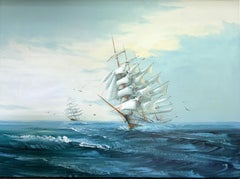
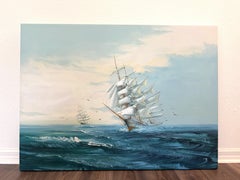
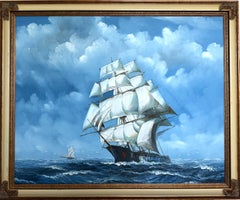
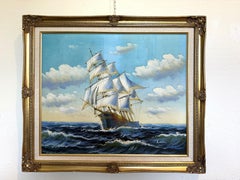
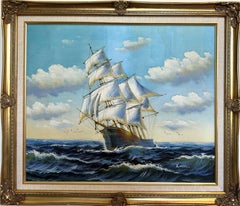
Original Vintage Nautical Sailing Ship Seascape – Oil on Canvas – Framed
Located in Palm Coast, FL
This expressive oil on canvas depicts a tall sailing ship cutting through rolling ocean waves under an open, luminous sky. The vessel is shown at an angle, sails fully billowed in sh...
Category

Late 20th Century Impressionist Art

Materials

Oil

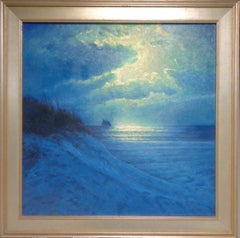
Signed Antique American Impressionist Moonlit Framed Nocturnal Seascape Painting
Located in Buffalo, NY
Antique American impressionist moonlit seascape oil painting. Oil on canvas. Signed. Framed. Provenance from a Sag Harbor, NY collection. Measuring: 35 by 30 inches overall. Handsom...
Category

1910s Impressionist Art

Materials

Oil, Canvas

"Baigneuse Debout, a mi-jambes" original etching
Located in Henderson, NV
Medium: original etching. Printed in 1910 for Theodore Duret's "Manet & the French Impressionists". Plate size: 6 5/8 x 4 3/8 inches (170 x 110 mm). Sheet size: 8 1/2 x 5 3/4 inc...
Category

1910s Impressionist Art

Materials

Etching

Fine Antique French Impressionist Oil Painting Woodland Gardens Old Stone House
Located in Cirencester, Gloucestershire
The Old Stone House French Impressionist School, late 19th/ early 20th century circle of Camille Pissarro (French, 1830-1903), unsigned oil on canvas, unframed canvas: 29 x 24 inches...
Category

Early 20th Century Impressionist Art

Materials

Oil

Edgar Degas, Dancer at the Barre, 1945 (after)
Located in Southampton, NY
This exquisite lithograph after Edgar Degas (1834–1917), titled Danseur au bar (Dancer at the Barre), originates from the 1945 folio Degas, Ten Ballet Sketches. Published by The Studio Publications, Inc., New York, rendered and printed by Albert Carman, City Island, 1945, this work reflects Degas’s sensitive mastery of line, movement, and intimate observation, capturing the grace, poise, and psychological immediacy that define his iconic ballet imagery. In Danseur au bar (Dancer at the Barre), Degas reveals gesture and inner emotion through economical contour and lyrical nuance. Executed as a lithograph and pochoir on velin paper, this work measures 17 x 13 inches (43.18 x 33.02 cm). Signed in the plate and unnumbered as issued. Rendered and printed by Albert Carman, City Island, one of the notable American ateliers specializing in fine art lithography during the mid-20th century. Artwork Details: Artist: After Edgar Degas (1834–1917) Title: Danseur au bar (Dancer at the Barre), from Degas, Ten Ballet Sketches, 1945 Medium: Lithograph and pochoir on velin paper Dimensions: 17 x 13 inches (43.18 x 33.02 cm) Inscription: Signed in the plate and unnumbered as issued Date: 1945 Publisher: The Studio Publications, Inc., New York Printer: Albert Carman, City Island, 1945 Condition: Well preserved, consistent with age and medium Provenance: From the 1945 folio Degas, Ten Ballet Sketches, published by The Studio Publications, Inc., New York Notes: Excerpted from the album, Born in Paris in 1834, Edgar Degas lived, and surely loved the life of that city during most of his years. These continued somewhat sadly beyond those of most of his friends— into the debacle of the first World War, during which he died in 1917. Judging by the frequency with which he used them as models, he must have had an especial admiration for the ballet girls who followed a profession that at the time brought none of the glory and prosperity which attend it today. New aspects of the human body, revealed in movement, fascinated him. But his occupation with the simply anatomical side of his subjects never resulted in a cold interpretation. On the contrary there is a warmth and sympathy that pervades all of his work. The drawings here represent the painter in one important phase of his multi-sensitive view of life; and permit an insight which a more ambitious work might not do-into the operation of the creative process, the artist's transformation of reality as it passes through the mesh of his sensibilities. The Edition of this Portfolio is limited to MMMD examples. Rendered by Albert Carman. About the Publication: Degas, Ten Ballet Sketches, published in 1945 by The Studio Publications, Inc., New York, stands as one of the most elegant and scholarly mid-century American fine art folios devoted to the ballet imagery of Edgar Degas. Conceived as a high-quality interpretive portfolio, the album presents a series of lithograph-and-pochoir renderings based on Degas’s original drawings, executed with exceptional attention to tonal subtlety, contour fidelity, and the emotional interiority that defines the artist’s draftsmanship. Rendered and printed by Albert Carman on City Island, the publication embodies an American postwar effort to restore and celebrate European masterworks through meticulous handcraft and artisanal color application, honoring Degas’s distinctive line and the atmospheric delicacy of his studio-based studies. Produced in a substantial edition of MMMD examples, the portfolio offered audiences rare access to Degas’s private working drawings—images rarely seen outside institutional collections—while exemplifying the technical refinement and interpretive care characteristic of Carman’s workshop. Today, Degas, Ten Ballet Sketches remains a sought-after historical publication, valued for its craft, fidelity to Degas’s aesthetic, and its role in preserving and disseminating the artist’s intimate ballet imagery in a beautifully executed mid-century fine art format. About the Artist: Edgar Degas (1834–1917) was a French painter, draughtsman, printmaker, and sculptor whose groundbreaking fusion of classical draftsmanship, modern experimentation, and psychological depth helped define the trajectory of Western art, positioning him as one of the most influential figures of the nineteenth and early twentieth centuries; renowned for his depictions of ballet dancers, racehorses, theater scenes, cafe life, domestic interiors, milliners, laundresses, and women at their toilette, Degas reimagined observational realism through radical compositional innovation—employing extreme cropping, asymmetrical framing, oblique viewpoints, and dramatic lighting that anticipated photographic and cinematic language long before these technologies shaped visual culture, and although associated with Impressionism, he rejected plein-air spontaneity in favor of studio-based discipline rooted in the linear precision of Jean-Auguste-Dominique Ingres, the expressive chromaticism of Eugene Delacroix, and the modernity of Edouard Manet while also drawing inspiration from Japanese ukiyo-e prints, classical sculpture, and early photography; his independent artistic philosophy resonated with and helped shape the innovations of Pablo Picasso, Alexander Calder, Alberto Giacometti, Salvador Dali, Joan Miro, Wassily Kandinsky, Marcel Duchamp, and Man Ray, whose explorations of movement, form, dream logic, abstraction, and conceptualism all find antecedents in Degas’s investigations into seriality, temporality, and the fragmented figure, and his pioneering use of pastel, monotype, and wax sculpture fundamentally transformed each medium, influencing artists from Henri Matisse, Francis Bacon, Lucian Freud, and Giacomo Manzu to Paula Rego, contemporary realists, experimental photographers, and choreographers; his works are held in nearly every major museum collection worldwide—including the Musee dOrsay, the Louvre, the Metropolitan Museum of Art, the National Gallery of Art, the Art Institute of Chicago, the Courtauld Institute, and the National Gallery, London—affirming his central place in the history of art, and the highest auction record for Degas was achieved at Sothebys London on February 3, 2015, when Danseuses en Bleu sold for 37,033,000 GBP, cementing his status as one of the most sought-after and enduringly significant artists of the Western canon. Edgar Degas lithograph...
Category

1940s Impressionist Art

Materials

Lithograph

Antique French Impressionist Oil Painting Brooding Still Life Flowers in Vase
Located in Cirencester, Gloucestershire
Still Life of Flowers French Impressionist, circa 1890-1900 period oil on canvas, framed framed: 31.5 x 38 inches canvas: 27 x 24 inches Provenance: private collection, Cotswolds, En...
Category

Late 19th Century Impressionist Art

Materials

Oil

Roses √7
Located in Zofingen, AG
I enjoy painting large-scale pieces; they look beautiful in interiors, creating a sense of space and light. Impressionism allows you to give free rein to your emotions and play with ...
Category

2010s Impressionist Art

Materials

Canvas, Acrylic

Sleeping Beauty
Located in Zofingen, AG
The painting depicts a sleeping girl. Her long, fair hair is disheveled on the pillow, and her hands are folded on her bare chest. The beauty's face looks calm and peaceful, as if sh...
Category

2010s Impressionist Art

Materials

Canvas, Oil

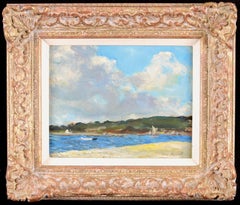
Carmel Highlands to Pebble Beach California Coastal Landscape with Cypress Trees
Located in Soquel, CA
Mid-Century California Coastal Landscape with Cypress Vibrant landscape depicting two cypress trees along a rocky coastline by Alfred Wands (American b. 1904 d. 1998.) Purple and ye...
Category

Mid-20th Century Impressionist Art
Materials

Canvas, Oil, Stretcher Bars

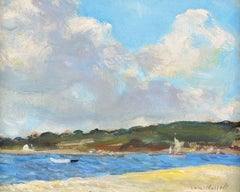
Original Oil Painting Signed by William Harnden American Impressionist 1920-1983
Located in Palm Coast, FL
A captivating vintage oil painting on board signed Harnden, depicting a lively tavern scene filled with musicians, dancers, and warm ambient lighting. A violinist and guitarist perfo...
Category

Mid-20th Century Impressionist Art
Materials

Oil

American Impressionist Earnest Albert Landscape Oil Painting Red Mill Winter
Located in Chesterfield, NJ
The Red Mill oil/canvas 25 x 30 image Provenance: Grand Central Art Galleries NY, The Goldfield Collection Los Angeles, CA, John Moran lot 55 Sale 186 California & American Fine Art ...
Category

21st Century and Contemporary Impressionist Art

Materials

Oil

Sunset Seascape Original Oil Painting on Linen, Ready to Hang
Located in Granada Hills, CA
Artist: Karen Darbinyan Work: Original Oil Painting, Handmade Artwork, One of a Kind Medium: Oil on Linen, Year: 2025 Style: Impressionism Title: Sunset Size: 20.5" x 27.5" x 0.8'' i...
Category

2010s Impressionist Art

Materials

Canvas, Linen, Oil

Autumn Morning Spain oil on canvas painting mediterranean landscape
Located in Sitges, Barcelona
Author: Joan Gil i Gil (Barcelona, 1900 – 1984) Title: Autumn Morning Date: 1934 Technique: Oil on canvas Dimensions: 81 × 100 cm (31.9 × 39.4 in) Signature: Signed lower left: Joan ...
Category

1930s Impressionist Art

Materials

Canvas, Oil

Fanasy with Flowers 148
Located in Zofingen, AG
"Fantasy with Flowers" (series of 300+ pictures)   paper 59x42cm  On the paper acrylic, oil pastel, felt-tip pen, ink, gold leaf, pencils, silver,mixed media. Flowers are a smile of ...
Category

2010s Impressionist Art

Materials

Oil Pastel, Acrylic, Archival Paper

Scandinavian Impressionist Landscape (1894)
Located in Stockholm, SE
This oil on canvas by Anton Genberg, signed and dated 1894, portrays a Scandinavian summer landscape bathed in gentle light. The composition features lush green meadows in the foregr...
Category

1890s Impressionist Art

Materials

Canvas, Oil

Field Flowers Still Life Impressionism Oil Painting Handmade Artwork
Located in Granada Hills, CA
Artist: Ashot Muradyan Work: Original Painting, Handmade Artwork, One of a Kind Medium: Oil on Linen Year: 2025 Style: Impressionism Title: Field Flowers Size: 23.5" x 19" x 0.8'' ...
Category

2010s Impressionist Art

Materials

Canvas, Oil

Roses √ 3
Located in Zofingen, AG
Roses and hydrangeas, gerberas and lilies. A wonderful autumn bouquet. It reminds me of childhood and pleasant memories of my grandmother's garden. Only the fashionable vase brings m...
Category

2010s Impressionist Art

Materials

Canvas, Acrylic

"BLUE HEAVEN" BLUEBONNET 1930s NEWCOMB MACKLIN FRAME 38 x 46 Framed Robert Wood
Located in San Antonio, TX
Robert Wood (G. Day) (1889 -1979) San Antonio Artist Image Size: 28 x 36 Frame Size: 38 x 46 Medium: Oil on Canvas Signed Front & Signed & Titled on Verso Newcomb Macklin Frame Circa Late 1930s "Blue Heaven" Bluebonnets Biography Robert Wood (G. Day) (1889 -1979) A painter of realistic landscapes reflecting a vanishing wilderness in America, Robert Wood (not to be confused with Robert E. Wood) is reportedly one of the most mass-produced artists in the United States. His painting became so popular he was unable to meet all of the demands, and many of his works were reproduced in lithographs and mass distributed as prints, place mats, and wall murals by companies including Sears, Roebuck. He was born in Sandgate, Kent on the south coast of England near Dover, the son of W.L. Wood, a famous home and church painter who recognized and supported his son's talent. In fact, he forced his son to paint by keeping him inside to paint rather than playing with his friends. At age 12, Wood entered the South Kensington School of Art. As a youth, he came to the United States in 1910, having served in the Royal Army, and he never returned to England. He traveled extensively all over the United States, especially in the West, often in freight cars, and also painted in Mexico and Canada. His itinerant existence took him to Illinois where he worked as a farmhand, to Pensacola, Florida where he married, briefly in Ohio, Seattle, Washington, and Portland, Oregon. In 1912, he was in Los Angeles, and in the late 1920s and early 1930s, in San Antonio, Texas, where he lived and in 1928 exhibited in the "Texas Wildflower Competition." From San Antonio, he gained a national reputation for his strong colored, dramatic paintings. Some of that prestige has been credited to his association with Jose Arpa, prominent Texas artist. Wood also gave art lessons, and one of his students was Porfirio Salinas. During this period, Wood sometimes signed his paintings G. Day or Trebor, which is Robert spelled backwards. In 1941 he went to California and painted numerous desert and mountain landscapes and coastal scenes. He lived in Carmel for seven years, and then moved to Woodstock, New York, but he soon returned to California, settling first in Laguna Beach, then San Diego, and finally in the High Sierras, where he and his wife built a home and studio near Bishop and lived until his death in 1979. Robert Wood was born March 4, 1889, in Sandgate, England, a small town on the Kentish coast not far from the white cliffs of Dover. His father, W. J. Wood, was a successful painter who recognized Robert's unusual talent. At the age of twelve, his father enrolled Wood in art school in the small town of Folkstone. He then attended the South Kensington School of Art. While attending art school, Wood won four first awards and three second awards, one each year, a record. In 1910 after service in the Royal Army, nineteen-year-old Wood and his friend, Claude Waters, immigrated to America. Initially, he settled in Illinois and worked as a hired hand on a farm belonging to Water's uncle. He would then strike out on his own, living the life of an itinerant painter. Wood traveled as a hobo, hopping freight trains and selling or bartering small paintings to support him along the way. When times were hard, he worked at whatever job was available. In this manner, he saw most of the United States and fell in love with rural America. By 1912, Wood visited Los Angeles for the first time, arriving on the day of the Titanic tragedy. Later that year, he had met, courted and married young Eyssel Del Wagoner in Florida. The couple moved to Ohio where a daughter, Florence, was born. During World War I, the family moved to Seattle where a son, John Robert Wood, was born in 1919. In the early 1920's, the young Wood family was almost constantly on the move. They stayed for short periods in Kansas, Missouri, California and for a longer time in Portland, Oregon, where Wood's friend Claude Waters had settled. Wood's seemingly endless wanderings disrupted his family life and delayed his development as a painter. However, through his travels he developed an appreciation for the American landscape that would inspire him for the rest of his career. Although aware of the current movement away from traditional realism in American art, he elected to travel that solitary path and remain true to his own vision of American’s grandeur and beauty poetically translated through his landscape and seascape paintings. In 1923, the Wood family discovered the beautiful city of San Antonio, Texas and it was there that he and his family would finally settle. He studied briefly at the San Antonio Art School with Spanish colorist Jose Arpa y Perea (1860-1952), who had arrived in San Antonio that same year. In the latter part of the 1920’s, Jose Arpa’s influence quickly became evident. Wood after several years of experimentation was becoming fine easel painter, capable of great subtlety with a new mature original style. Like Texas painters Robert Onderdonk (1853-1917) and his son Julian Onderdonk (1882-1922), Robert Wood concentrated on the distinctive Texas landscape with its Red Oak trees and wildflowers that covered the hill country landscape. He developed a reputation for his scenes of Blue Bluebonnets, the state flower. In the spring, the Texas prairie is covered with wildflowers, especially in the hill country surrounding San Antonio and Austin. Wood incorporated native stone barns and rough wood farmhouses that added authenticity and romance to his compositions. In 1925, Wood was divorced from his wife. In 1932, he moved to the famous scenic loop on San Antonio's outskirts. While still living in Texas, he took extensive western sketching trips that brought him to California. It is evident that his 1930’s California...
Category

1930s Impressionist Art

Materials

Oil

"Hilltown-Neighbors Chat" Impressionist Pastoral Snow Scene Oil Painting Framed
Located in New York, NY
A charming Impressionist winter snow-covered pastoral scene depicting a neighbor's chat in the Hilltown Township in Bucks County, Pennsylvania. This piece is executed in an intimate ...
Category

20th Century Impressionist Art

Materials

Oil, Board

Morning in a Forest
Located in Oslo, NO
"Morning in a Forest" is a serene and masterfully delicate watercolor that captures the first light of dawn filtering through a quiet, snow-covered woodland. The painting evokes a se...
Category

2010s Impressionist Art

Materials

Paper, Watercolor

Edgar Degas, Dancer Arranging Her Dress, 1945 (after)
Located in Southampton, NY
This exquisite lithograph after Edgar Degas (1834–1917), titled Danseuse arrangeant sa robe (Dancer Arranging Her Dress), originates from the 1945 folio Degas, Ten Ballet Sketches. Published by The Studio Publications, Inc., New York, rendered and printed by Albert Carman, City Island, 1945, this work reflects Degas’s sensitive mastery of line, movement, and intimate observation, capturing the grace, poise, and psychological immediacy that define his iconic ballet imagery. In Danseuse arrangeant sa robe (Dancer Arranging Her Dress), Degas reveals gesture and inner emotion through economical contour and lyrical nuance. Executed as a lithograph and pochoir on velin paper, this work measures 17 x 13 inches (43.18 x 33.02 cm). Signed in the plate and unnumbered as issued. Rendered and printed by Albert Carman, City Island, one of the notable American ateliers specializing in fine art lithography during the mid-20th century. Artwork Details: Artist: After Edgar Degas (1834–1917) Title: Danseuse arrangeant sa robe (Dancer Arranging Her Dress), from Degas, Ten Ballet Sketches, 1945 Medium: Lithograph and pochoir on velin paper Dimensions: 17 x 13 inches (43.18 x 33.02 cm) Inscription: Signed in the plate and unnumbered as issued Date: 1945 Publisher: The Studio Publications, Inc., New York Printer: Albert Carman, City Island, 1945 Condition: Well preserved, consistent with age and medium Provenance: From the 1945 folio Degas, Ten Ballet Sketches, published by The Studio Publications, Inc., New York Notes: Excerpted from the album, Born in Paris in 1834, Edgar Degas lived, and surely loved the life of that city during most of his years. These continued somewhat sadly beyond those of most of his friends— into the debacle of the first World War, during which he died in 1917. Judging by the frequency with which he used them as models, he must have had an especial admiration for the ballet girls who followed a profession that at the time brought none of the glory and prosperity which attend it today. New aspects of the human body, revealed in movement, fascinated him. But his occupation with the simply anatomical side of his subjects never resulted in a cold interpretation. On the contrary there is a warmth and sympathy that pervades all of his work. The drawings here represent the painter in one important phase of his multi-sensitive view of life; and permit an insight which a more ambitious work might not do-into the operation of the creative process, the artist's transformation of reality as it passes through the mesh of his sensibilities. The Edition of this Portfolio is limited to MMMD examples. Rendered by Albert Carman. About the Publication: Degas, Ten Ballet Sketches, published in 1945 by The Studio Publications, Inc., New York, stands as one of the most elegant and scholarly mid-century American fine art folios devoted to the ballet imagery of Edgar Degas. Conceived as a high-quality interpretive portfolio, the album presents a series of lithograph-and-pochoir renderings based on Degas’s original drawings, executed with exceptional attention to tonal subtlety, contour fidelity, and the emotional interiority that defines the artist’s draftsmanship. Rendered and printed by Albert Carman on City Island, the publication embodies an American postwar effort to restore and celebrate European masterworks through meticulous handcraft and artisanal color application, honoring Degas’s distinctive line and the atmospheric delicacy of his studio-based studies. Produced in a substantial edition of MMMD examples, the portfolio offered audiences rare access to Degas’s private working drawings—images rarely seen outside institutional collections—while exemplifying the technical refinement and interpretive care characteristic of Carman’s workshop. Today, Degas, Ten Ballet Sketches remains a sought-after historical publication, valued for its craft, fidelity to Degas’s aesthetic, and its role in preserving and disseminating the artist’s intimate ballet imagery in a beautifully executed mid-century fine art format. About the Artist: Edgar Degas (1834–1917) was a French painter, draughtsman, printmaker, and sculptor whose groundbreaking fusion of classical draftsmanship, modern experimentation, and psychological depth helped define the trajectory of Western art, positioning him as one of the most influential figures of the nineteenth and early twentieth centuries; renowned for his depictions of ballet dancers, racehorses, theater scenes, cafe life, domestic interiors, milliners, laundresses, and women at their toilette, Degas reimagined observational realism through radical compositional innovation—employing extreme cropping, asymmetrical framing, oblique viewpoints, and dramatic lighting that anticipated photographic and cinematic language long before these technologies shaped visual culture, and although associated with Impressionism, he rejected plein-air spontaneity in favor of studio-based discipline rooted in the linear precision of Jean-Auguste-Dominique Ingres, the expressive chromaticism of Eugene Delacroix, and the modernity of Edouard Manet while also drawing inspiration from Japanese ukiyo-e prints, classical sculpture, and early photography; his independent artistic philosophy resonated with and helped shape the innovations of Pablo Picasso, Alexander Calder, Alberto Giacometti, Salvador Dali, Joan Miro, Wassily Kandinsky, Marcel Duchamp, and Man Ray, whose explorations of movement, form, dream logic, abstraction, and conceptualism all find antecedents in Degas’s investigations into seriality, temporality, and the fragmented figure, and his pioneering use of pastel, monotype, and wax sculpture fundamentally transformed each medium, influencing artists from Henri Matisse, Francis Bacon, Lucian Freud, and Giacomo Manzu to Paula Rego, contemporary realists, experimental photographers, and choreographers; his works are held in nearly every major museum collection worldwide—including the Musee dOrsay, the Louvre, the Metropolitan Museum of Art, the National Gallery of Art, the Art Institute of Chicago, the Courtauld Institute, and the National Gallery, London—affirming his central place in the history of art, and the highest auction record for Degas was achieved at Sothebys London on February 3, 2015, when Danseuses en Bleu sold for 37,033,000 GBP, cementing his status as one of the most sought-after and enduringly significant artists of the Western canon. Edgar Degas lithograph...
Category

1940s Impressionist Art

Materials

Lithograph

Impressionistic Farm Landscape Oil Painting Michael Budden Sky Cloud Study
Located in Chesterfield, NJ
Partly Sunny is a new oil on panel painting just completed in the studio. The painting exudes the rich qualities of oil paint with bright strong color, a variety of lost and found ed...
Category

21st Century and Contemporary Impressionist Art

Materials

Oil

Sun and Sails
Located in Zofingen, AG
In creating this painting, I immersed myself in the dance of colors and forms. Using acrylics, oils, and pastels, I captured an ethereal sunrise where light and sea merge into a vibr...
Category

2010s Impressionist Art

Materials

Canvas, Oil

I've Dreamed 57 Sakura Cherry Tree Blossom, Acrylic on Canvas, 2010+
Located in Zofingen, AG
"I've Dreamed 57 Sakura Cherry Tree Blossom" is a beautiful, modern floral painting that will bring the beauty of spring into your home. The painting is created using professional va...
Category

2010s Impressionist Art

Materials

Acrylic

Winter Landscape Oil Painting by Michael Budden End of Winter
Located in Chesterfield, NJ
End Of Winter oil/canvas panel 9 x 12 image unframed, 15.38 x 18.38 framed signed LL I enjoy playing with light in my paintings and creating a mood while trying to push the range of ...
Category

Early 20th Century Impressionist Art

Materials

Oil

Impressionist French landscape with Tree , garden and flowers
Located in Woodbury, CT
Jean Ekiert French Impressionist Landscape with Tree, circa 1950 Oil on canvas, signed lower right An attractive French landscape by Jean Ekiert, depicting a solitary tree set with...
Category

1950s Impressionist Art

Materials

Canvas, Oil

Roses and gerberas.
Located in Zofingen, AG
Flowers in a glass vase. Roses and gerberas intertwine with fresh greenery to create a vibrant bouquet. The blue and gray background creates contrast. This bouquet exudes the flavor ...
Category

2010s Impressionist Art

Materials

Canvas, Acrylic

Nude Lora Figurative Impressionism Original oil Painting, Ready to Hang
Located in Granada Hills, CA
Artist: Vadim Zang Title: Lora Medium: Oil on Linen Year: 2014 Style: Figurative Impressionism Dimensions: 14" x 11" x 0.8" inch (36 x 28 x 2c...
Category

2010s Impressionist Art

Materials

Canvas, Linen, Oil

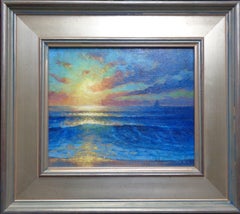
Beautiful English signed oil painting c.1950 River Mole Devon England
Located in Cirencester, GB
ARTIST: Morris Meredith Williams (1881-1973) Welsh TITLE: “River Mole, Devon" SIGNED: lower left MEDIUM: oil on board SIZE: 50cm x 43cm inc frame CONDITION: excellent DETAIL: Painter, stained glass artist and illustrator, born in Cowbridge, Glamorgan. Was married in 1906 to the artist Gertrude Alice Meredith Williams, who died in 1934. He studied at Slade School of Fine Art and in Italy and France. During World War I he served in the Army in France and completed work based on his Somme front experiences. Work by Williams and his wife is at the Scottish National War Museum in Edinburgh. He painted widely in France and showed in Liverpool and elsewhere, sometimes signing as M M Williams.
Category

Mid-20th Century Impressionist Art
Materials

Oil

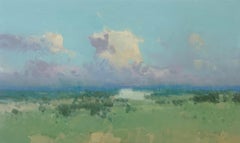
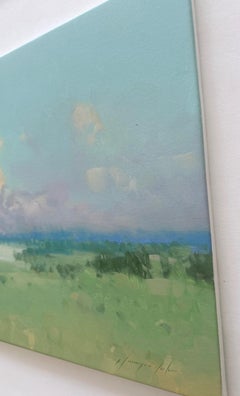
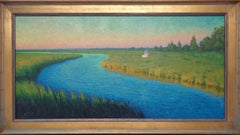
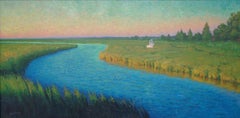
Stream, Original Painting
Located in San Francisco, CA

Artist Comments
A stream winds between green fields, with a small patch of white in its blue water reflecting the clouds above. Trees in the distance add vertical contrast, whi...

Category

21st Century and Contemporary Impressionist Art

Materials

Acrylic

“Fall Landscape”
Located in Southampton, NY
Original oil on canvas board painting of a fall landscape by the American artist, Arthur Mitchell. Signed lower left by the artist. Circa 1890. Condition is very good. The paintin...
Category

1890s Impressionist Art

Materials

Oil, Board, Canvas

Spiritus I – Quies
Located in Zofingen, AG
This work explores the themes of inner peace and harmony. The central figure is enveloped in golden light and merges with the natural world to form a unified image of a guardian spir...
Category

2010s Impressionist Art

Materials

Canvas, Acrylic

American Impressionist James Goodwin McManus Old Lyme CT Salmagundi Club Artist
Located in Chesterfield, NJ
James Goodwin McManus (American 1882-1958) CT oil/panel Summer landscape with split rails signed LR dated June 22, 1934 verso 8 x 10 image Biography: James Goodwin McManus was a no...
Category

21st Century and Contemporary Impressionist Art

Materials

Oil

Ocean View Seascape Original Oil Painting on Linen, Ready to Hang
Located in Granada Hills, CA
Artist: Karen Darbinyan Work: Original Oil Painting, Handmade Artwork, One of a Kind Medium: Oil on Linen, Year: 2025 Style: Impressionism Title: Ocean View Size: 15.5" x 21" x 0.8''...
Category

2010s Impressionist Art

Materials

Linen, Oil, Canvas

Mid Century portrait of a Irish Setter or Spaniel dog laying down
Located in Woodbury, CT
Raymond J. Cress (American, mid-20th century) Portrait of a Resting Irish Setter or Spaniel, circa 1950 Pastel and mixed media on paper, signed lower right Presented in an ornate ca...
Category

1950s Impressionist Art

Materials

Pastel, Oil

Roy Henry Brown NA American Impressionist Landscape Oil Painting 1879-1956
Located in Chesterfield, NJ
A landscape mountain hillside oil painting on panel by artist Roy Henry Brown possible western scene. Painting is under glass signed lower right. The image measures sight size 10 x 1...
Category

Early 20th Century Impressionist Art

Materials

Oil

Coastal View with Cliffs and Waves Nolton Haven Pembrokeshire Wales 1979
Located in Cirencester, Gloucestershire
Title: Coastal View with Cliffs and Waves Nolton Haven Pembrokeshire Wales 1979 By Tony Herbert (1927-2024) Medium: Watercolor on board, unframed Size: 10 inches (height) x 14 inches...
Category

20th Century Impressionist Art

Materials

Watercolor

Original Oil painting on canvas by Serg Graff, seascape, Sailboat of Hope, COA
Located in Palm Coast, FL
This powerful original oil painting titled “Sailboat of Hope” by contemporary visionary Serg Graff captures a lone mythical vessel sailing into a glowing, spiraling sun. Heavy impast...
Category

2010s Impressionist Art

Materials

Oil

"Femme nue couchée (tournée à droite)" original etching
Located in Henderson, NV
Medium: original etching. Printed in 1909 for Theodore Duret's "Die Impressionisten" and published in Berlin by Bruno Cassirer. This impression on laid paper bears the Fortuna waterm...
Category

Early 1900s Impressionist Art

Materials

Etching

19th century Impressionist Elegant figures in a Paris or London Park landscape
Located in Woodbury, CT
Alberto Ludovici Jr. Italian / Anglo-European School, late 19th century Elegant Figures in a Parisian (or London) Park Oil on panel Signed lower right Circa 1890 A refined and atmo...
Category

1890s Impressionist Art

Materials

Oil, Wood Panel

Pastoral Landscape Under a Dramatic Sky Horse Munching on Grass Oil Landscape
Located in Cirencester, Gloucestershire
Pastoral Landscape French Post Impressionist, mid 20th century indistinctly signed oil on board, unframed Board : 12 x 15.5 inches Provenance: private collection, France Condition: ...
Category

Mid-20th Century Impressionist Art
Materials

Oil

PA Impressionist Landscape painting Old Mill Darby Creek
Located in Wilton Manors, FL
John J. Dull (1859-1949). Old Mill, Darby Creek. ca. 1930. Watercolor on paper, image measures 11 x 14 inches. Framed measurement: 16 x 20 inches. Signed lower right. Original ex...
Category

1920s Impressionist Art

Materials

Watercolor

SELF PORTRAIT DRAWING
Located in Santa Monica, CA
MAX LIEBERMANN (1847 1935) SELF PORTRAIT DRAWING (Selbstportrat) c. 1922 (Schiefler, 341, III b) Etching, signed in pencil, Scarce signed example found in Max Liebermann “Sein Leb...
Category

1920s Impressionist Art

Materials

Etching

California Landscape, Near Carmel Ocean & Tree View, Cleveland Woman Artist
Located in Beachwood, OH
May Lydia Ames (American, 1863-1943) Near Carmel, Calif., 1932 Oil on board Signed and dated lower left, signed and titled verso 14 x 20 inches 18.5 x 24.5 inches, framed May Ames w...
Category

1930s Impressionist Art

Materials

Oil

French Impressionist River and Park Landscape
Located in Cotignac, FR
A French Impressionist oil on canvas view of a river in parkland by the noted French artist Albert Uriet. The painting is signed and dated bottom right and is presented in a fine car...
Category

Early 20th Century Impressionist Art
Materials

Oil

Pierre Montezin large French Impressionist painting, Scene near Barbizon
Located in Harkstead, GB
This dream like image of a fisherman gliding in his boat on the river Seine was painted from a viewpoint that Montezin returned to again and again. The village of Veneux-les-Sablons ...
Category

Early 20th Century Impressionist Art
Materials

Canvas, Oil

Summer day
Located in Zofingen, AG
The work is a sketch on a sunny day. Summer on the Spanish coast, the smell of the sea, a refreshing breeze, the sound of the waves, and vivid impressions. To create a sunny atmosphe...
Category

2010s Impressionist Art
Materials

Acrylic, Cardboard

Path: Impressionist Style Landscape Oil Painting on Canvas of Summer Forest
Located in Hudson, NY
Modern impressionist style plein air landscape painting on canvas of path through the forest "Path" oil on canvas 60 x 66 x 1.5 inches Signed, verso The contemplative paintings of ...
Category

2010s Impressionist Art
Materials

Oil, Canvas

Montecito View Landscape Impressionism Original oil Painting Ready to Hang
Located in Granada Hills, CA
Artist: Vahe Yeremyan Title: Montecito View Medium: Oil on Canvas Year: 2025 Style: Impressionism Dimensions: 34" x 34" x 1" inch (87 x 87 x 3cm) Presentation: Unframed, Gallery Wrap...
Category

2010s Impressionist Art
Materials

Canvas, Oil

Roses √ 5
Located in Zofingen, AG
The painting is painted with large brushstrokes in the style of impressionism. The idea is based on color contrasts. The variety of colors is intertwined into a beautiful bouquet Coo...
Category

2010s Impressionist Art
Materials

Canvas, Acrylic

Reclining Nude oil on canvas painting woman
Located in Sitges, Barcelona
Title: Reclining Nude Artist: Roser Vinardell Tolrà (Cabrera de Mar, 1941) Technique: Oil on canvas Dimensions: 46 x 65 cm (18.1 x 25.6 in) Date: 1970s Signature: Signed in the lower...
Category

1970s Impressionist Art
Materials

Oil, Canvas

"At the Race" Impressionist Horse Race Scene Oil Painting on Canvas & Gold Frame
Located in New York, NY
A dynamic oil painting depicting a high energy horse race with abstract details and bursts of energy showcased with use of fast brush work and thick impasto oil paint. Jockeys, weari...
Category

2010s Impressionist Art
Materials

Canvas, Oil

Impressionist art for sale on 1stDibs.
Find a wide variety of authentic Impressionist art available for sale on 1stDibs. Works in this style were very popular during the 21st Century and Contemporary, but contemporary artists have continued to produce works inspired by this movement. If you’re looking to add art created in this style to introduce contrast in an otherwise neutral space in your home, the works available on 1stDibs include elements of blue and other colors. Many Pop art Paintings/style/impressionist/?creator=richard-szkutnik>paintings were created by popular artists on 1stDibs, including Vahe Yeremyan, Richard Szkutnik, Iryna Kastsova, and Mitchell Funk. Frequently made by artists working with Oil Paint, and Paint and other materials, all of these pieces for sale are unique and have attracted attention over the years. Not every interior allows for large Impressionist art, so small editions measuring 8 inches across are also available. Prices for art made by famous or emerging artists can differ depending on medium, time period and other attributes. On 1stDibs, the price for these items starts at $225 and tops out at $7,200, while the average work sells for $1,423.
Still Thinking About These?

All Recently Viewed