By Stephen Day
Located in Denver, CO
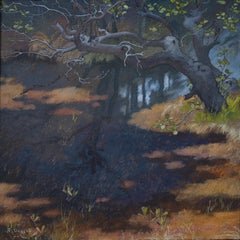
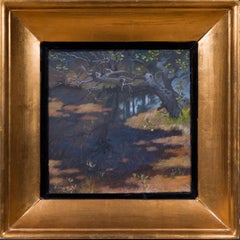
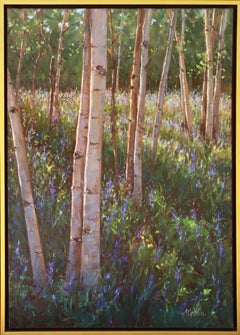
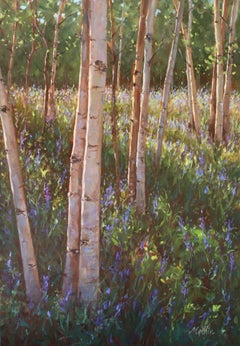
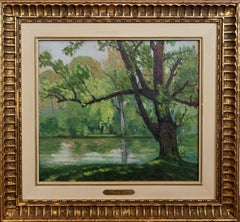
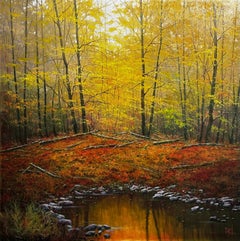
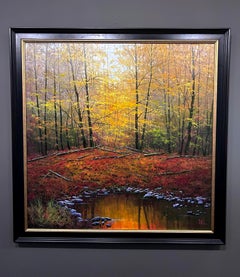
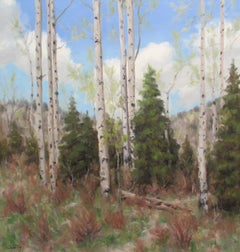
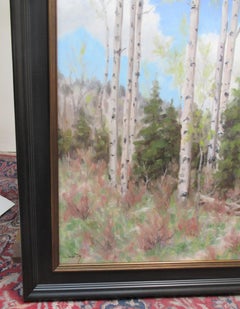
Stephen Day's (US based) "Spring Aspen" is an original, handmade oil painting that depicts a forest of Pine and Aspen trees coming to life with new green buds of leaves and the thicket of the forest floor beginning to grow.
Stephen Day was born in Sheridan, Wyoming, and, while growing up he lived in Santa Fe, New Mexico, Aspen Colorado, and Durango, Colorado. He always felt the wonderfully unique beauty of the west but until he became an artist he really didn't know how to fully respond to that beauty.
Day is now a full-time artist living in Taos, New Mexico. Working mainly in oil he paints various subjects from life but the landscape is his first love. He says of his working philosophy, "I paint almost exclusively from life trying to capture the feeling and the mood of the subject before me. This work philosophy forces me to paint quickly to get a spontaneous and fresh response, because everything around us (including ourselves) is in a constant state of change." Day frequently paints on location and uses these smaller paintings to create larger studio paintings.
Artist's Background:
1976 - Bachelor of Arts Degree, McMurry College, Abilene, Texas
1980 - Master's Degree, Southern Methodist University, Dallas, Texas
Studied at the Art Students League of Denver with Bruce Cody...
Category
2010s Realist Art