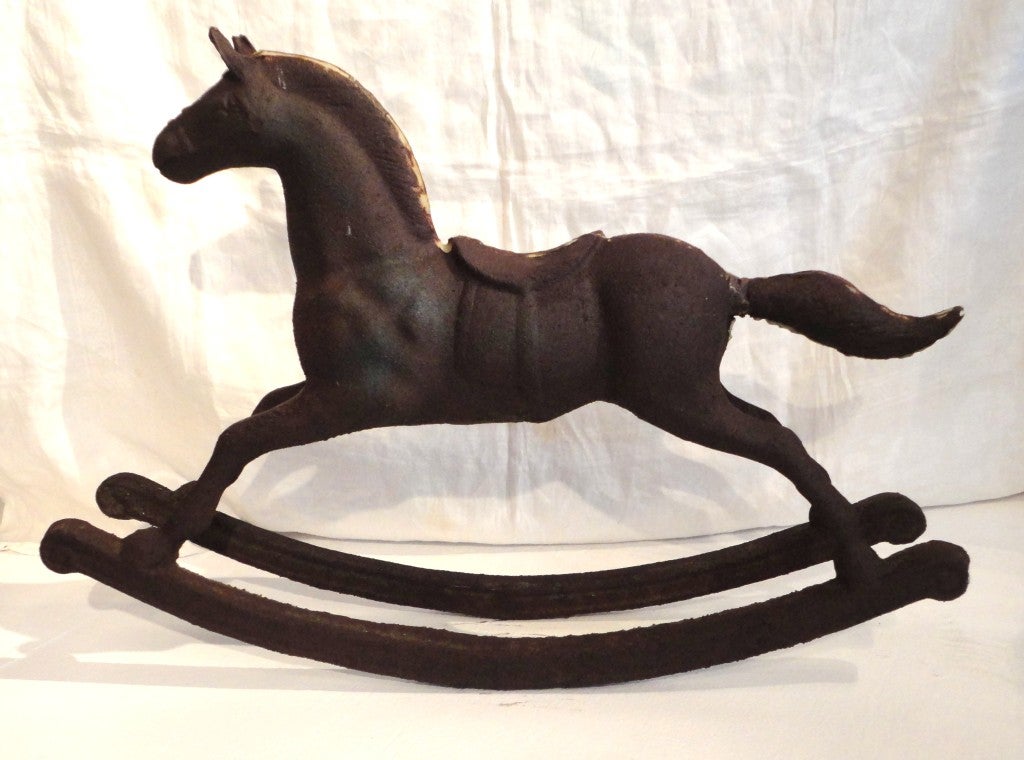
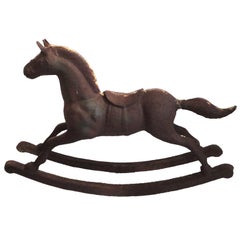
Monumental 19th Century Cast Iron Carousel Child's Rocking Horse
Located in Los Angeles, CA
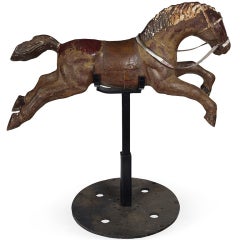
Fantastic 19th century large cast iron carrousel rocking horse with fragments of paint surface
20th Century American Other Carnival Art
Iron
Monumental 19th Century Cast Iron Carousel Child's Rocking Horse
Located in Los Angeles, CA
Fantastic 19th century large cast iron carrousel rocking horse with fragments of paint surface
Iron
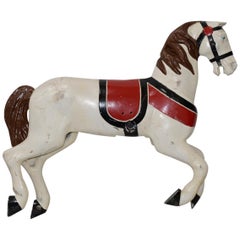
Antique Cast Iron Carousel Horse
Located in San Francisco, CA
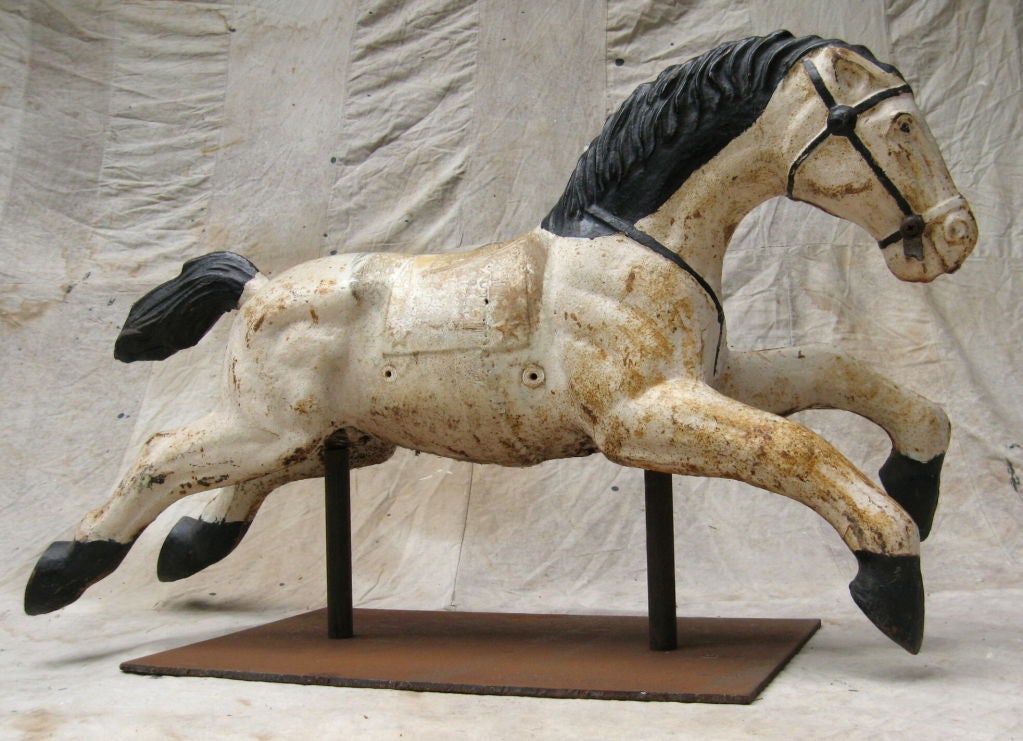
Antique cast iron Carousel horse Great for garden sculpture The horse is painted white with
Iron
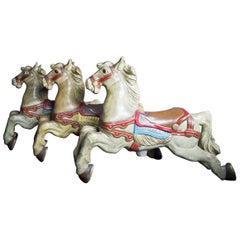
Cast Iron Carousel Horse
Located in Alton, GB
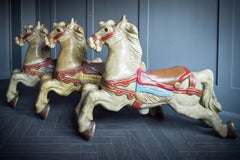
A delightful trio of carousel horses made from cast iron originating from the 19th century.
Iron
1920's Carousel Cast Iron Horse
Located in Chicago, IL
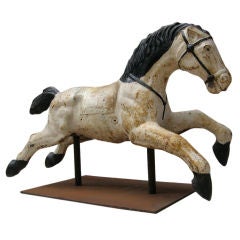
1920's Cast Iron Carousel Horse on the metal stand.
Iron
Cast Iron Carousel Horse
Located in High Point, NC
Cast iron white painted Horse from a Carousel with custom made display base several available
Iron
The collection of original antique and vintage carnival art on 1stDibs includes paintings and posters that promoted traveling carnivals and circuses of years past as well as masks, sculptures and other works of folk art associated with widespread public celebrations that mark the start of harvest season or are rooted in religion.
The concept of “Carnival” is linked to an event that precedes Lent, the season of preparation before Easter for Christians (it may also have roots in Ancient Rome’s pagan Saturnalian festival), while the modern traveling carnival that we know — i.e., amusement fairs — existed during the 19th century in North America. The Chicago World’s Fair in 1893 was pivotal to these traveling amusement fairs.
Some of the most famous celebrations of Carnival around the world include Karneval in Germany, Carnival in Brazil and Mardi Gras in the United States. Carnival in Barbados is a traditional harvest festival. The bright colors, the caricatured masks and floats and the over-the-top nature of Carnival continue to enthrall millions across the globe.
Carnivals have always given way to impressive displays of creativity and folk art. Folk art is art created by people who are not classically trained for either utilitarian or decorative purposes. With respect to visual art in folk art, it refers to work that is reflective of a community’s culture and usually handmade by craftspeople working within a popular tradition.
Carnival art reflects the way different cultures celebrate or mark an important community event. Some examples of Carnival art include fabric dolls and marionettes that are used to tell stories and capture your imagination. Antique dolls make for striking collectibles positioned for display on any shelf in your home, while carnival masks make a bold statement as wall art. A collection of masks could create an elevated accent wall in a living room or dining room.
Browse 1stDibs to find unique antique and vintage carnival art for your space today.
At Waddesdon Manor, artist Joana Vasconcelos has installed a three-tiered patisserie inspired by the narrative tile work of her homeland. We take a look at the cake sculpture and how Portuguese tiles have been used in architecture from the 17th century to today.
The streets of fin-de-siècle Paris were set aglow with colorful poster ads, thanks to the printing techniques invented by Jules Chéret. Now, the Milwaukee Art Museum is celebrating this undersung talent in America's first solo show dedicated his exuberant works.
Expert Jeff Bridgman explains the history and meaning behind the twinkling constellations that have graced Old Glory.
The iconoclastic style setter displayed African and Oceanic art, as well as works by indigenous peoples of the Americas, alongside pieces by such major modernists as Pablo Picasso and Jackson Pollock.
Perfect for July 4th weekend, a new show at Philadelphia's Museum of the American Revolution displays an array of antique red, white and blue flags.
Designers are beginning to see this enigmatic form of folk art in a whole new light.