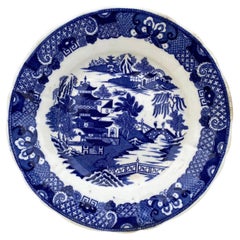
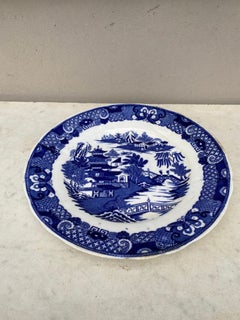
Large 19th Century English Chinoiserie Blue & White Plate
Located in Austin, TX
19th Century English Chinoiserie blue & white plate. 9.5 inches diameter.
Category
Antique 1890s English Victorian Decorative Art
Materials
Ceramic
Large 19th Century English Chinoiserie Blue & White Plate
Located in Austin, TX
19th Century English Chinoiserie blue & white plate. 9.5 inches diameter.
Ceramic
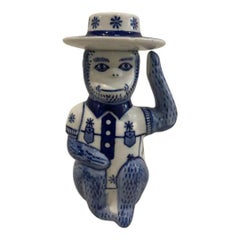
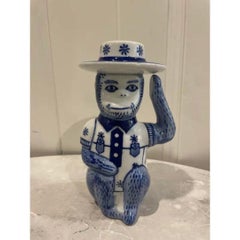
Late 20th Century Vintage Chinoiserie Blue & White Monkey Candle Stick Holder
Located in Cookeville, TN
FABULOUS Vintage Late 20th Century Chinoiserie Blue & White Monkey Candle Stick Holder.
Ceramic
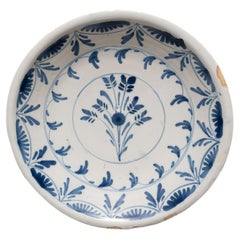
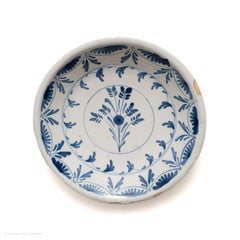
Dish Charger delftware Dutch Chinoiserie blue white diameter 30cm 12"
Located in BUNGAY, SUFFOLK
Painted in blue on a white glaze. Chipping to rim. diameter 30cm., 12" height 5cm., 2"
Earthenware
$199Sale Price|30% Off
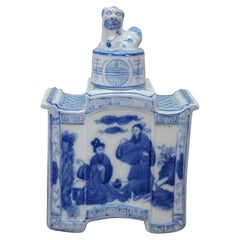
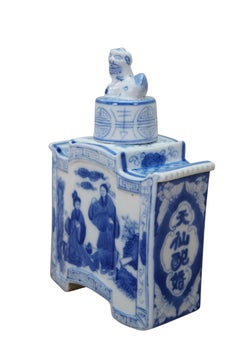
Chinese Export Chinoiserie Blue & White Foo Dog Tea Caddy 9"
Located in Dayton, OH
Vintage Chinese export blue and white porcelain tea caddy decanter featuring hand-painted Foo Dog lid and landscape scenes with Immortal / Geisha / Scholar figures. Chinese characte...
Porcelain
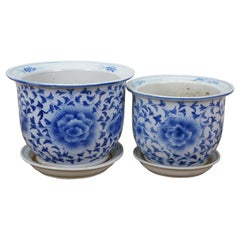
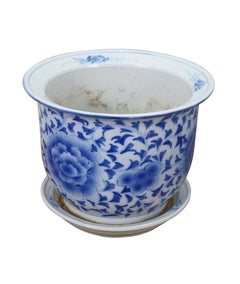
2 Chinese Chinoiserie Blue & White Lotus Flower Planters Cachepots Jardinières
Located in Dayton, OH
Pair of mid to early 20th century blue and white porcelain planters / jardinieres. Round form with flared rim, drain holes, and matching underplates. Decorated by hand with swirling ...
Porcelain
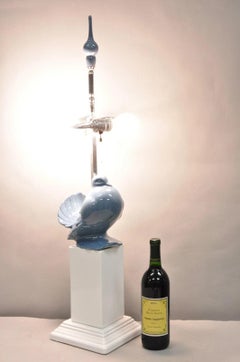
Vintage Chinoiserie Blue White Porcelain Hollywood Regency Dove Bird Table Lamp
Located in Philadelphia, PA
Vintage Chinoiserie Blue and White Porcelain Hollywood Regency Dove Bird Table Lamp.
Ceramic, Porcelain
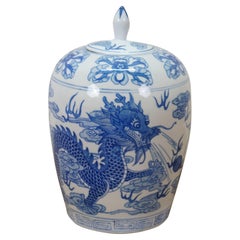
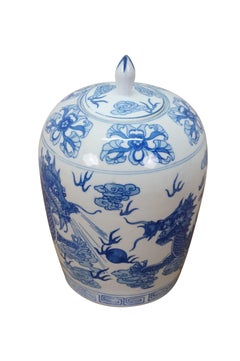
Chinese Chinoiserie Blue & White Porcelain Dragon Ginger Jar Mantel Vase Urn 11"
Located in Dayton, OH
Vintage Chinese porcelain lidded ginger jar vase decorated in a blue and white floral 5 toed dragon in the clouds motif. Dimensions: 6.75" x 10.5" (Diameter x Height)
Porcelain
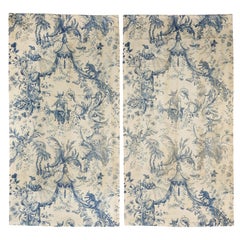
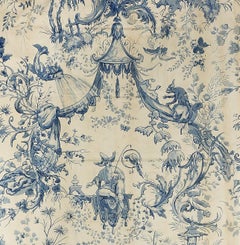
Chinoiserie Toile Hangings Curtains French Blue & White Rococo
Located in BUNGAY, SUFFOLK
- Exceptionally rare pair of large, Rococo Chinoiserie blue & white cotton bed curtains. Measures: 4ftwide 7ft9"hig
Cotton
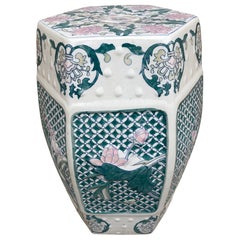
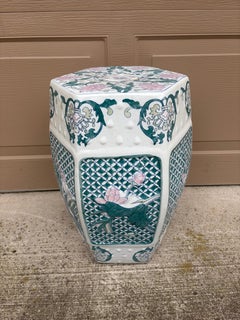
Chinoiserie Floral Green and Pink Porcelain Garden Stool or Side Table
Located in Elkhart, IN
A classic Chinoiserie blue, white, pink, and green porcelain garden stool, plant stand, or small side table decorated with traditional Chinese motifs and stylized floral elements.
Porcelain
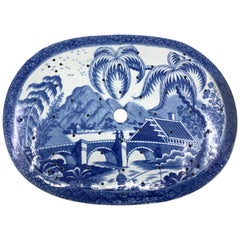
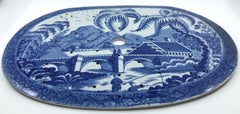
Blue and White Chinoiserie Plate Strainer
Located in New York, NY
Blue and white chinoiserie plate strainer. Substantial and rare early Worcester strainer with strong blue and white chinoiserie scene with figures on covered bridge with large palm t...
Ceramic

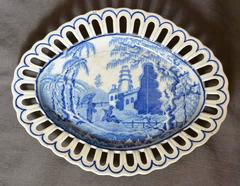
English Blue and White Chinoiserie Plate
By Davenport Porcelain
Located in New York, NY
English blue and white chinoiserie plate. Davenport Staffordshire oval plate in the "Chinoiserie Ruins" pattern with reticulated border.
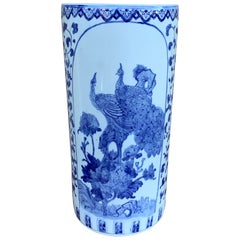
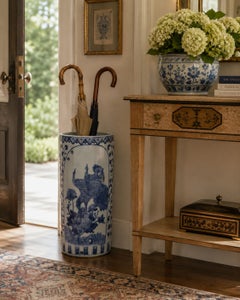
Vintage Chinoiserie Blue and White Porcelain Umbrella Stand
Located in Elkhart, IN
A classic blue and white porcelain umbrella stand in the chinoiserie tradition, featuring finely rendered birds among flowering branches within a decorative cartouche.
Ceramic
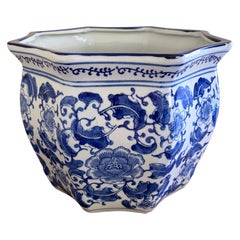
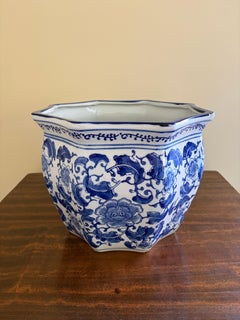
Chinoiserie Large Blue and White Porcelain Planter
Located in Elkhart, IN
A classic blue and white porcelain planter, rendered in a softly faceted, scalloped form that feels both tailored and relaxed.
Ceramic
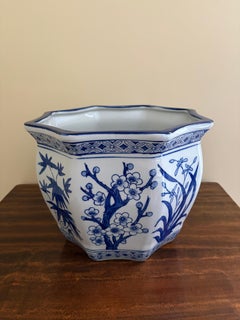
Chinoiserie Large Blue and White Porcelain Planter
Located in Elkhart, IN
A classic blue and white porcelain planter, rendered in a softly faceted, scalloped form that feels both tailored and relaxed.
Ceramic
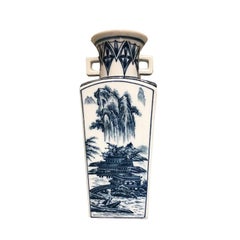
Blue and White Chinoiserie Porcelain Ceramic Vase
Located in Oklahoma City, OK
Chinoiserie blue and white porcelain vase. Featuring a square base, and round top.
Ceramic, Porcelain
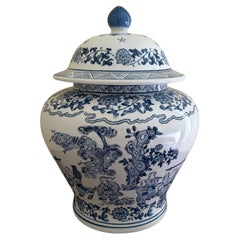
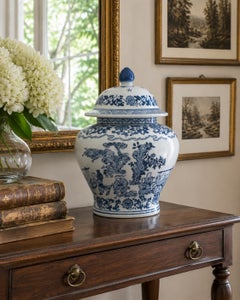
Chinoiserie Large Blue and White Porcelain Covered Jar
Located in Elkhart, IN
A classic blue and white ginger jar, decorated throughout with delicate Chinese landscapes and floral motifs.
Ceramic
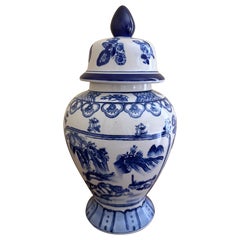
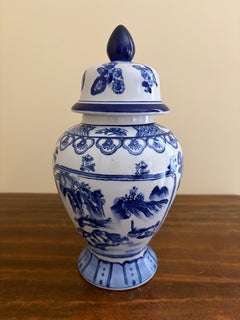
Chinoiserie Blue and White Porcelain Ginger Jar
Located in Elkhart, IN
A classic blue and white ginger jar, decorated throughout with delicate Chinoiserie floral motifs.
Porcelain
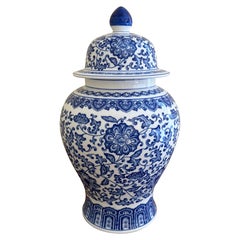
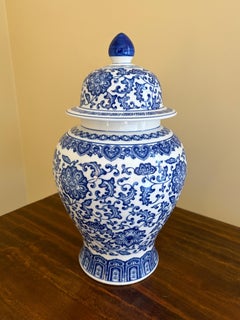
Chinoiserie Blue and White Porcelain Ginger Jar
Located in Elkhart, IN
A classic blue and white ginger jar, decorated throughout with delicate Chinoiserie floral motifs.
Porcelain
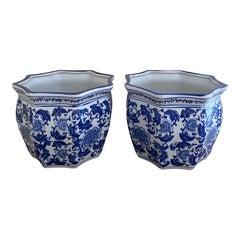
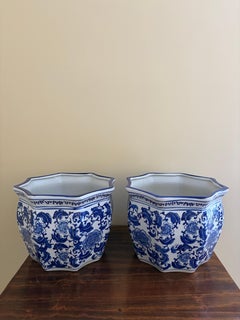
Chinoiserie Large Blue and White Porcelain Planters, Pair
Located in Elkhart, IN
A classic pair of blue and white porcelain planters, rendered in a softly faceted, scalloped form that feels both tailored and relaxed.
Ceramic
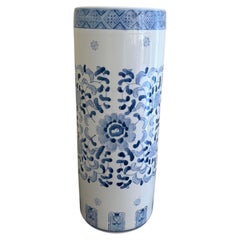
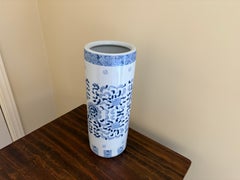
Vintage Chinoiserie Blue and White Porcelain Umbrella Stand
Located in Elkhart, IN
A classic late 20th-century blue and white porcelain umbrella stand, decorated in the Chinoiserie tradition with stylized floral motifs, deep cobalt detailing, and geometric borderwo...
Ceramic
$1,400 / item
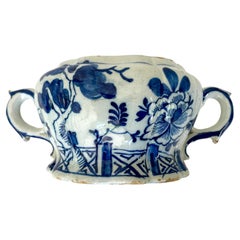
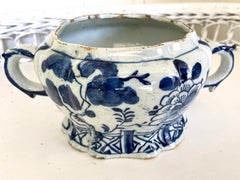
Blue and White Delft Handled Chinoiserie Vase
By Delft
Located in New York, NY
Blue and white Delft handled chinoiserie vase. Antique Dutch porcelain vase with rich blue flowers and chinoiserie fencing in a lustrous glaze; with scrolled handles at side on shape...
Ceramic
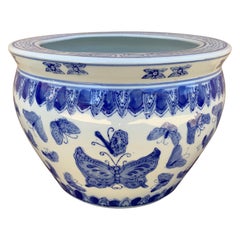
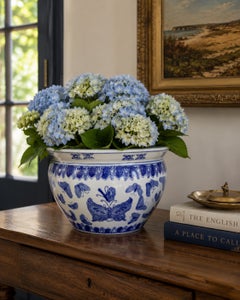
Chinoiserie Blue and White Porcelain Fishbowl Planter
Located in Elkhart, IN
A classic blue and white porcelain fishbowl planter, that feels both tailored and relaxed.
Porcelain
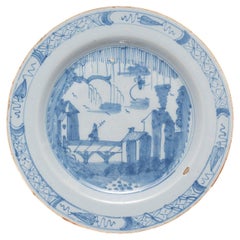
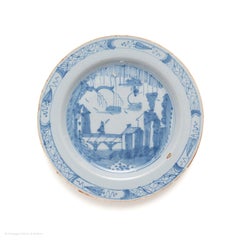
Plate Delft Liverpool Blue White Soldier Bridge, Europe Chinoiserie
Located in BUNGAY, SUFFOLK
Unusual decoration blending European and Chinoiserie styles. Decorated with a chinoiserie scene of a soldier crossing a bridge with European houses on either side with Chinese pl...
Earthenware
$7,500 / set
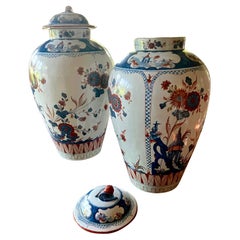
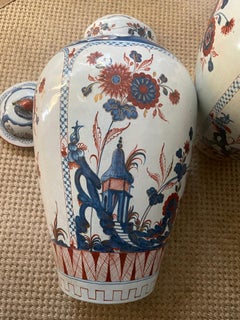
Pair Blue and white Gilt Chinoiserie Urns
Located in New York, NY
Pair blue and white chinoserie faiance vases. Pair large chinoiserie painted vases / ginger jars in Imari palette of blues, iron red, and gilding on cream ground with pagodas, flower...
Faience
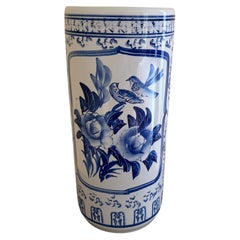
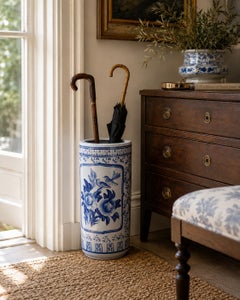
Vintage Chinoiserie Blue and White Porcelain Umbrella Stand
Located in Elkhart, IN
A classic blue and white porcelain umbrella stand in the chinoiserie tradition, featuring finely rendered birds among flowering branches within a decorative cartouche.
Ceramic
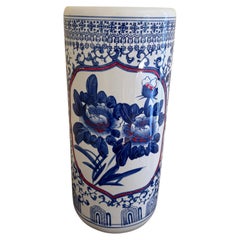
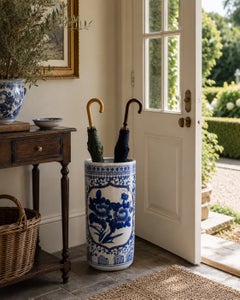
Vintage Chinoiserie Blue and White Porcelain Umbrella Stand
Located in Elkhart, IN
A classic blue and white porcelain umbrella stand in the chinoiserie tradition, featuring finely rendered birds among flowering branches within a decorative cartouche.
Ceramic
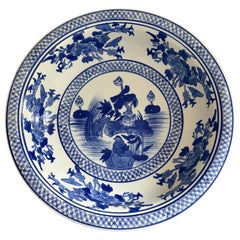
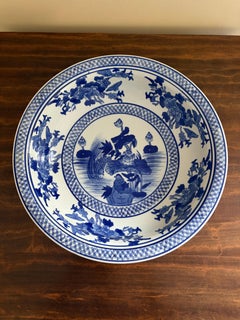
Chinoiserie Blue and White Porcelain Large Decorative Bowl
Located in Elkhart, IN
A classic large Chinoiserie blue and white porcelain shallow bowl, planter, or decorative charger plate.
Porcelain
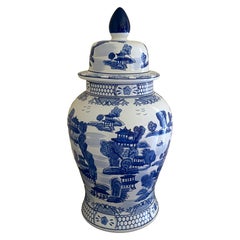
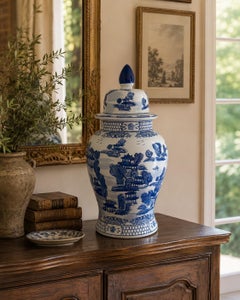
Large Blue and White Chinoiserie Porcelain Ginger Jar
Located in Elkhart, IN
A large blue and white porcelain ginger jar decorated with continuous Chinoiserie landscapes of pagodas, garden pavilions, trees, distant hills, and small boats.
Porcelain
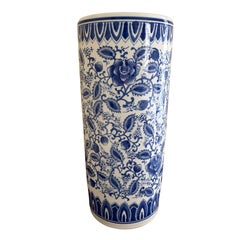
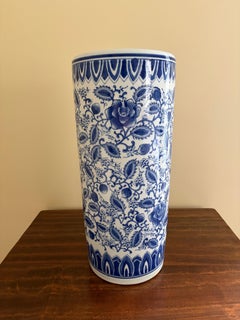
Vintage Chinoiserie Blue and White Porcelain Umbrella Stand
Located in Elkhart, IN
A classic blue and white porcelain umbrella stand in the chinoiserie tradition, featuring Asian floral designs.
Ceramic

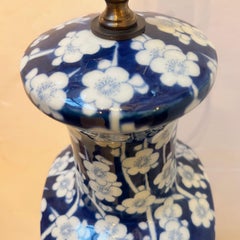
Blue And White Chinoiserie Lamp
Located in New York, NY
An American 1960's blue and white floral lamp. Measurements: Height of body: 21.25" Height to shade rest: 30.5" Diameter: 6.25"
Porcelain
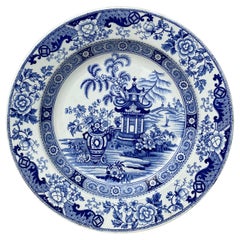
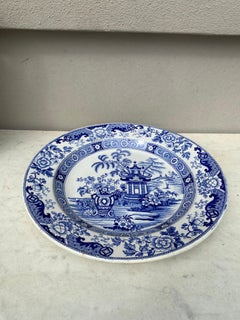
19th Century French Blue & White Chinoiserie Platter Creil et Montereau
By Creil et Montereau
Located in Austin, TX
19th Century French blue & white chinoiserie platter Creil et Montereau.
Ceramic, Faience
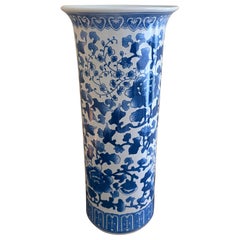
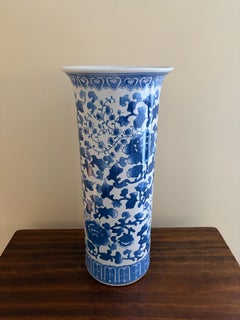
Vintage Chinoiserie Blue and White Porcelain Umbrella Stand
Located in Elkhart, IN
A classic blue and white porcelain umbrella stand in the chinoiserie tradition, featuring Asian floral designs.
Ceramic
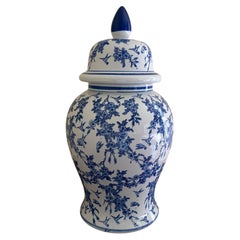
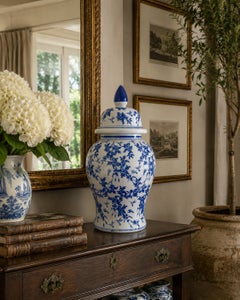
Chinoiserie Large Blue and White Porcelain Ginger Jar
Located in Elkhart, IN
A classic blue and white ginger jar, decorated throughout with delicate bird and flowering branch motifs.
Porcelain
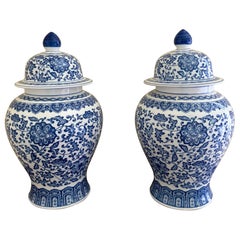
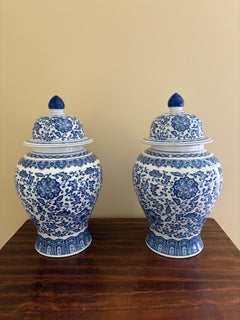
Chinoiserie Blue and White Porcelain Ginger Jars, Pair
Located in Elkhart, IN
A classic pair of blue and white ginger jars, decorated throughout with delicate Chinoiserie floral motifs.
Porcelain
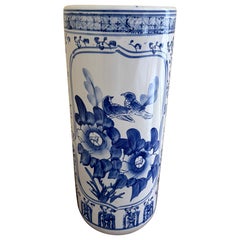
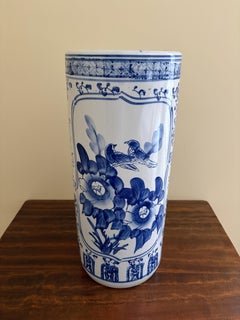
Vintage Chinoiserie Blue and White Porcelain Umbrella Stand
Located in Elkhart, IN
A classic blue and white porcelain umbrella stand in the chinoiserie tradition, featuring finely rendered birds among flowering branches within a decorative cartouche.
Ceramic
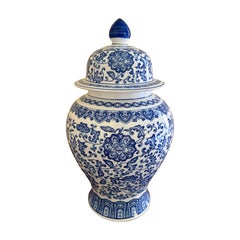
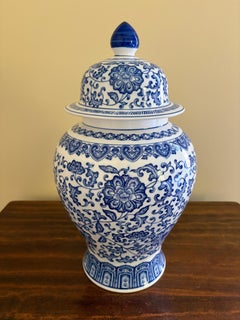
Chinoiserie Large Blue and White Porcelain Ginger Jar
Located in Elkhart, IN
A classic blue and white ginger jar, decorated throughout with delicate Chinoiserie floral motifs.
Porcelain
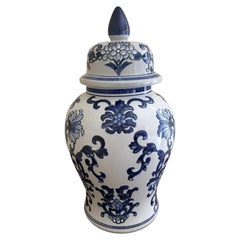
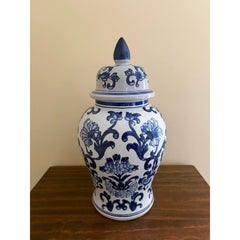
Chinoiserie Large Blue and White Porcelain Ginger Jar
Located in Elkhart, IN
A classic blue and white ginger jar, decorated throughout with delicate Chinese floral motifs.
Porcelain
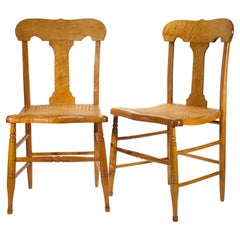
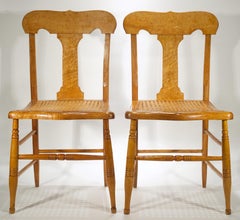
Antique Pair of Victorian Bird's Eye Maple with Cane Seat Chairs
Located in Clifton Springs, NY
Anthony, the renowned American social reformer and women's rights activist; we are offering a Chinoiserie blue & white urn table lamp from her traditional, multi-generational estate ...
Cane, Birdseye Maple, Maple
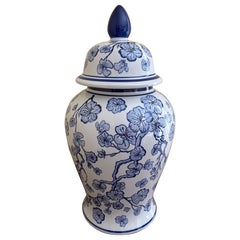
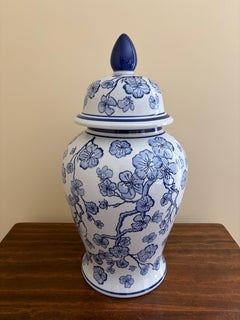
Chinoiserie Large Blue and White Porcelain Ginger Jar
Located in Elkhart, IN
A classic blue and white ginger jar, decorated throughout with delicate flowering cherry blossom branch motifs.
Porcelain
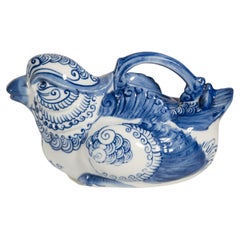
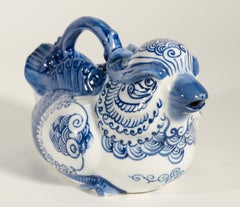
Chinoiserie Bird Shaped Teapot Hand-painted Blue White Decor
Located in Clifton Springs, NY
The teapot features traditional blue on white Chinoiserie decor of abstract graphic motifs; the tail, tips of the wings, beak, plumage, and handle are accentuated with solid blue.
Ceramic, Porcelain
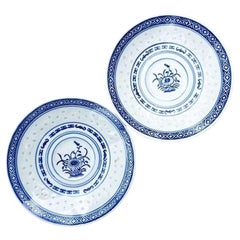
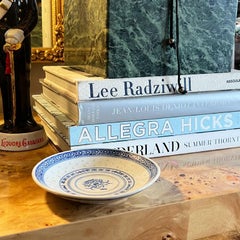
Blue and White Rice Eye Chinoiserie Decorative Plates - Set of 2
Located in Oklahoma City, OK
A blue and white geometric pattern surrounds the rim.
Porcelain, Paint
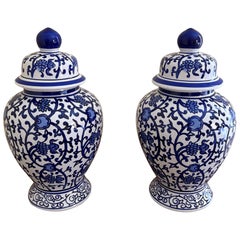
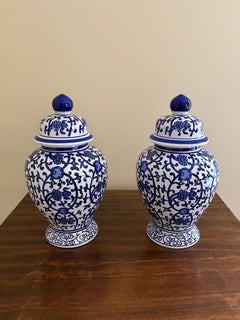
Chinoiserie Blue and White Porcelain Ginger Jars, Pair
Located in Elkhart, IN
A classic pair of blue and white ginger jars, decorated throughout with delicate Chinese floral motifs.
Porcelain
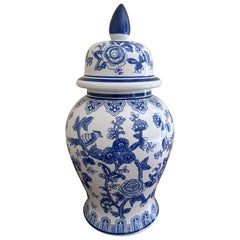
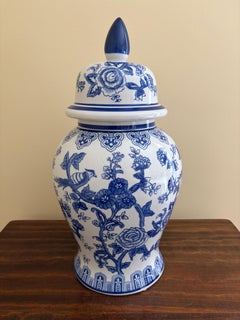
Chinoiserie Large Blue and White Porcelain Ginger Jar
Located in Elkhart, IN
A classic blue and white ginger jar, decorated throughout with delicate bird and floral branch motifs.
Porcelain
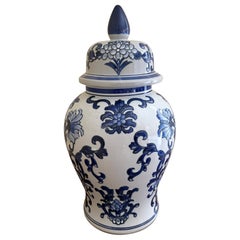
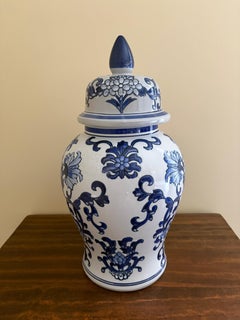
Chinoiserie Large Blue and White Porcelain Ginger Jar
Located in Elkhart, IN
A classic blue and white ginger jar, decorated throughout with delicate Chinese floral motifs.
Porcelain
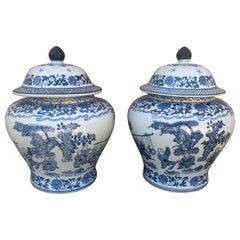
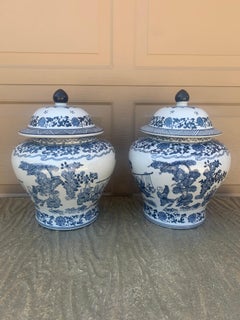
Chinoiserie Large Blue and White Porcelain Covered Jars, Pair
Located in Elkhart, IN
A classic pair of blue and white ginger jars, decorated throughout with delicate Chinese landscapes and floral motifs.
Ceramic
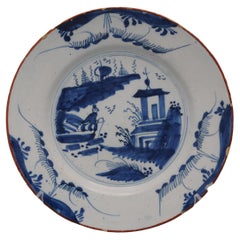
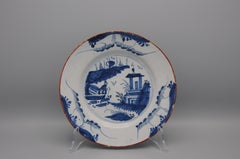
Delft - Blue and white chinoiserie plate - 18th century
By Delft
Located in DELFT, NL
Mid 18th century Blue Delftware plate with chinoiserie decoration of a fisherman and a pagode. Qianlong style brown rim Unmarked Good antique condition; some small chipping and usu...
Earthenware, Delft, Faience
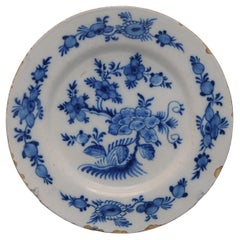
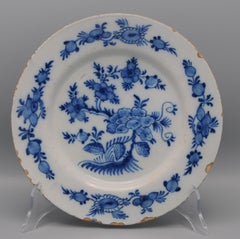
Delft - Blue and white chinoiserie plate - 18th century
By Delft
Located in DELFT, NL
Blue Delft chinoiserie plate depicting an oriental landscape comprising a shrubbery, and a blossoming tree. The borders decorated with 4 bundles of flower sprigs. Condition: some ...
Earthenware, Delft, Faience
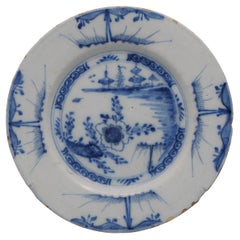
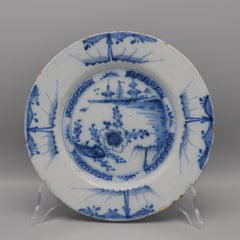
Delft - Blue and white chinoiserie plate - 18th century
By Delft
Located in DELFT, NL
Mid 18th century Blue Delftware plate with chinoiserie decoration of a flowers and pagodes in the background. Qianlong style Unmarked Good condition; some chipping and usual wear to...
Earthenware, Delft, Faience
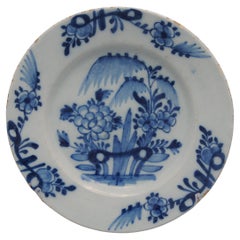
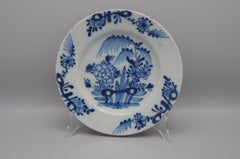
Delft - Blue and white chinoiserie plate - 18th century
By Delft
Located in DELFT, NL
Blue Delft chinoiserie plate depicting an oriental landscape comprising flowers, a shrubbery and a willow tree. The borders decorated with three bundles of flower sprigs and foliage....
Earthenware, Delft, Faience
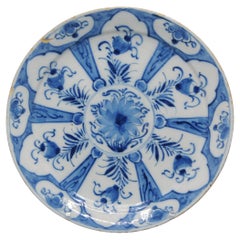
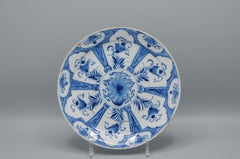
Delft - 18th century 'Chinoiserie' Blue and White Floral Delft Plate
By Delft
Located in DELFT, NL
Delft faience plate with Geometric chinoiserie decoration Striking blue and white Delftware plate featuring a central medallion with a stylized floral motif.
Earthenware, Delft, Faience
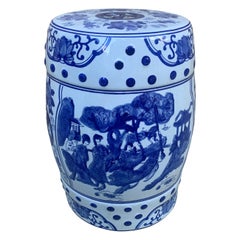
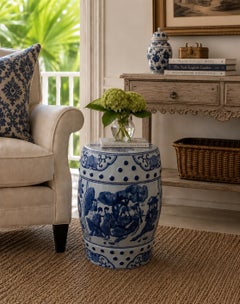
Blue and White Porcelain Chinoiserie Chinese Garden Stool or Side Table
Located in Elkhart, IN
A classic blue and white porcelain garden stool, decorated with traditional Chinese scenes and motifs and stylized floral elements. The round form is punctuated by pierced medallions...
Porcelain
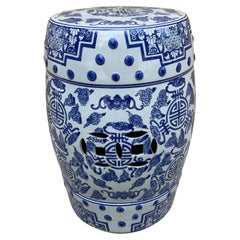
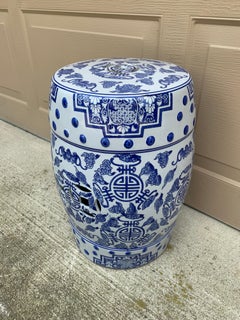
Blue and White Porcelain Chinoiserie Chinese Garden Stool or Side Table
Located in Elkhart, IN
A classic blue and white porcelain garden stool, decorated with traditional Chinese motifs and stylized floral elements. The round form is punctuated by pierced medallions, giving th...
Porcelain
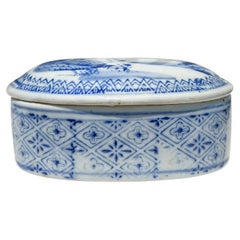
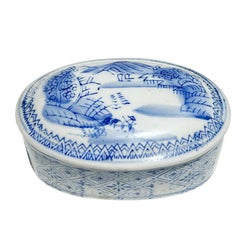
Vintage Oval Ceramic Chinoiserie Blue and White Trinket Dish with Lid
Located in Oklahoma City, OK
A small oval chinoiserie blue and white trinket dish with a lid.
Ceramic, Paint
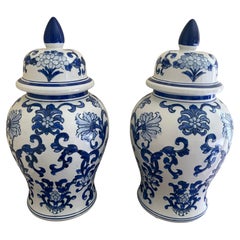
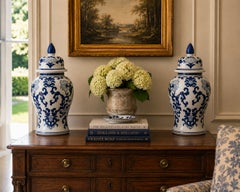
Chinoiserie Large Blue and White Porcelain Ginger Jars, Pair
Located in Elkhart, IN
A classic pair of blue and white ginger jars, decorated throughout with delicate Chinese floral motifs.
Porcelain
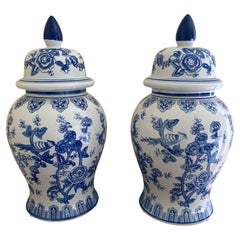
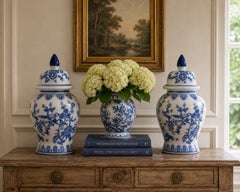
Chinoiserie Large Blue and White Porcelain Ginger Jars, Pair
Located in Elkhart, IN
A classic pair of blue and white ginger jars, decorated throughout with delicate bird and flowering branch motifs.
Porcelain
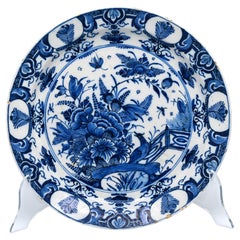
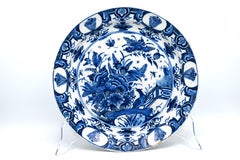
Antique 18th Century Dutch Delft Blue and White Chinoiserie Bird Charger
By Delft
Located in DELFT, NL
A Dutch Delft blue and white charger with chinoiserie decor of birds and insects, dating to circa 1720-1740.
Earthenware, Delft
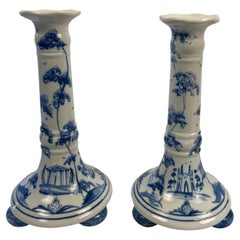
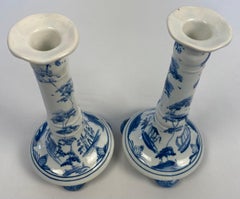
Chinoiserie Blue and White Delft Porcelain Candle Holders, England
Located in Miami, FL
A fine pair of blue and white Delft porcelain candle holders. Crafted in England. Decorated with floral motifs and embellished with traditional decor. Excellent condition and are ...
Porcelain
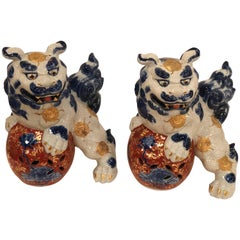
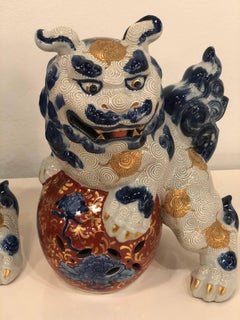
Vintage Pair of Chinoiserie Blue and White Foo Dogs
Located in West Palm Beach, FL
Vintage pair of blue and white Foo Dogs. No chips or breaks.
Ceramic
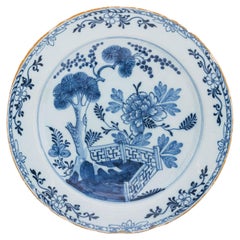
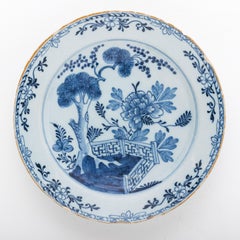
Large 18th Century Faience Delft Blue & White Charger in the Chinoiserie Taste
Located in Pease pottage, West Sussex
18th Century Delft Blue and White Charger or Plate. In the Chinoiserie taste.
Faience
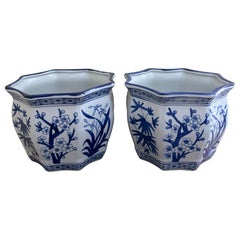
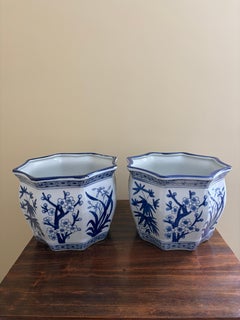
Pair of Chinoiserie Blue and White Porcelain Planters, Floral Motif
Located in Elkhart, IN
A classic pairing of blue and white porcelain planters, rendered in a softly faceted, scalloped form that feels both tailored and relaxed.
Ceramic
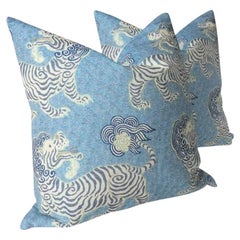
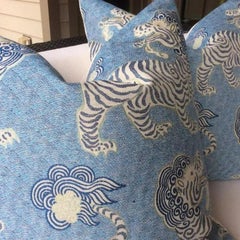
Pair of Tibetan Dragon Chinoiserie Blue & White 20" Pillows
Located in Winder, GA
Stunning rich jacquard material featuring Tibetan Dragon tiger in soft blue. Fabric has shades of navy, baby blue, cream and a touch of sage in a swirling pattern. Reminiscent of Cla...
Fabric
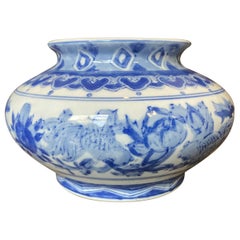
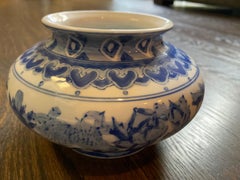
Vintage Chinoiserie Blue and White Vase
Located in Chicago, IL
Vintage chinoiserie blue and white vase This is a Chinese decorative porcelain vase pot in blue and white color finish.
Porcelain
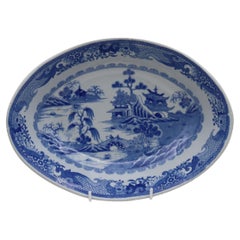
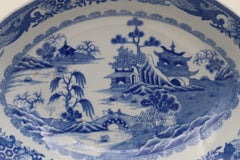
Blue and white Chinoiserie bowl
Located in East Geelong, VIC
This low oval, almost canoe shaped blue and white bowl is decorated with a chinese style transfer print under a pearlware glaze and measures 277 mm (10.75 inches) in length, 207 mm (...
Earthenware
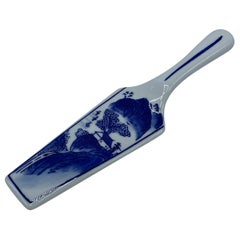
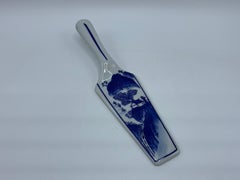
1980s Chinoiserie Blue and White 'Blue Willow' Cake Server
Located in Richmond, VA
Listed is a beautiful and unusual, 1980s chinoiserie blue and white cake/pie server. This is the perfect piece for any Chinois' themed serving set!
Ceramic
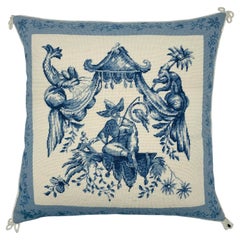
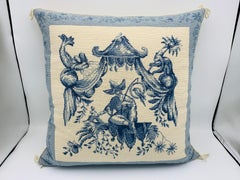
1970s Chinoiserie Blue and White Pagoda Needlepoint Pillow
Located in Richmond, VA
Listed is a stunning, 1970s blue and white Chinoiserie needlepoint pillow. Tight-knit needlepoint weave along the front side, with a beige cotton-velvet backing, complimented by an i...
Wool, Velvet, Cotton, Down
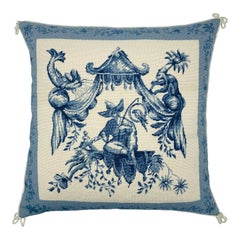
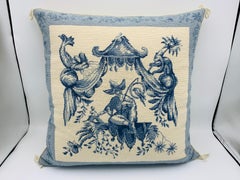
Chinoiserie Blue and White Pagoda Needlepoint Pillow, 1970s
Located in Richmond, VA
Listed is a stunning, 1970s blue and white chinoiserie needlepoint pillow. Tight-knit needlepoint weave along the front side, with a beige cotton-velvet backing, complimented by an i...
Velvet, Rope, Ribbon, Wool
Unavailable
H 12 in Dm 7.75 in
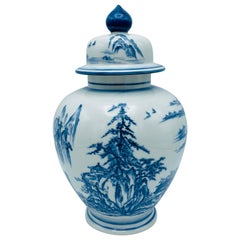
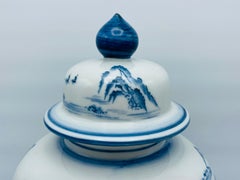
Blue and White Porcelain Chinoiserie Ginger Jar with Ornate Scene, 1970s
Located in Richmond, VA
Listed is an absolutely stunning, light blue and white, porcelain ginger jar with ornate chinoiserie scenery all-over, circa 1970s.
Porcelain
Unavailable
H 2.56 in Dm 13.67 in
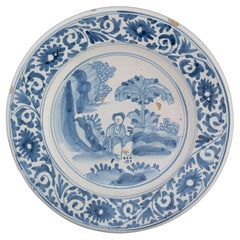
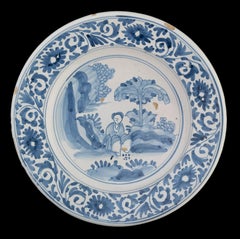
Delft Blue and White Chinoiserie Dish the Netherlands, 1675-1700 Chinoiserie
By Delft
Located in ROSSUM, GE
Large blue and white chinoiserie dish. The Netherlands, 1675-1700.
Ceramic, Majolica
Unavailable
H 9 in W 5.5 in D 5.5 in
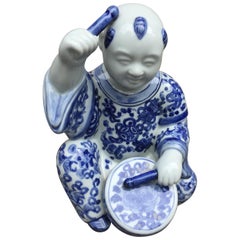
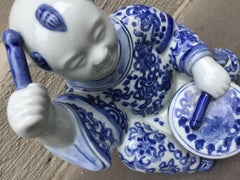
1970s, Chinoiserie Blue and White Porcelain Sculpture Baby Buddha with Drum
Located in Chicago, IL
1970s, chinoiserie blue and white porcelain sculpture baby Buddha with drum 1970s, Asian baby Buddha with drum figurine.
Porcelain
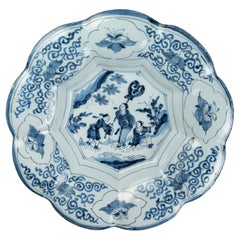
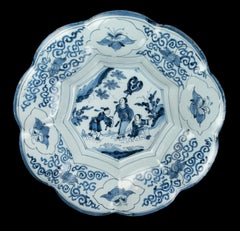
Blue and White Chinoiserie Lobed Dish, Delft, 1680-1700
By Delft
Located in ROSSUM, GE
Blue and white chinoiserie lobed dish. Delft, 1680-1700 Dimensions: diameter 35 cm / 13.77 in.
Ceramic, Faience
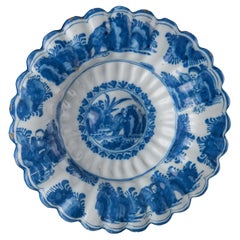
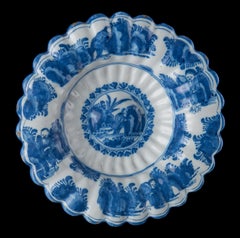
Blue and White Chinoiserie Lobed Dish, Delft, 1650-1680
By Delft
Located in ROSSUM, GE
Blue and white chinoiserie lobed dish. Delft, 1650-1680 Dimensions: diameter 33,5 cm / 13.18 in.
Ceramic, Faience
Unavailable
H 98.43 in W 141.74 in D 23.63 in
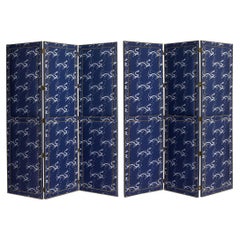
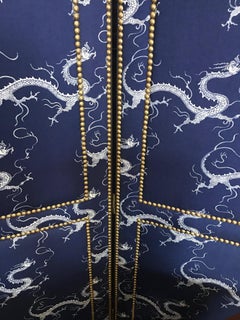
Brass Studded and Blue and White Upholstered Chinoiserie Fabric Dragon Screen
Located in South Yarra, AU
A stylish brass-studded blue and white Chinoiserie dragon design six panel upholstered screen, French 20th Century Measures: 250 cm high, 360 cm wide (each section) each panel 60 cm ...
Fabric
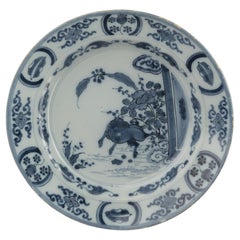
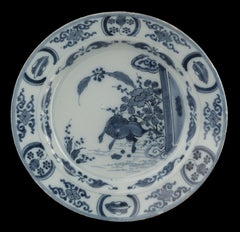
Blue and white chinoiserie plate Delft, circa 1690
By Delft
Located in ROSSUM, GE
Blue and white chinoiserie plate, Delft, circa 1690 The blue and white plate has a flat flange and is painted with a chinoiserie decor.
Ceramic, Faience
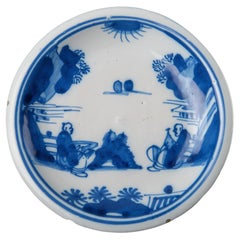
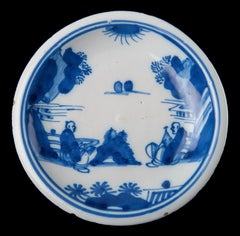
Delft blue and white chinoiserie plate 1650 - 1670
By Delft
Located in ROSSUM, GE
Blue and white chinoiserie plate, Delft, circa 1650-1670 Blue and white plate with a chinoiserie landscape with two sitting Chinese figures, within a double circle.
Ceramic, Faience
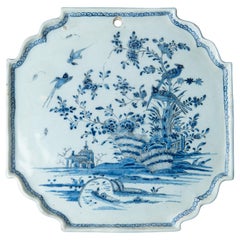
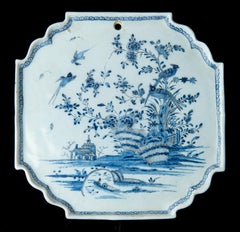
Blue and white chinoiserie plaque Delft, 1740-1760
By Delft
Located in ROSSUM, GE
Blue and white chinoiserie plaque Delft, 1740-1760 This octagonal plaque has a thin, straight, upright rim with indented accolade-shaped corners, which is decorated on the inside wi...
Ceramic, Faience
Unavailable
H 8.75 in Dm 9 in
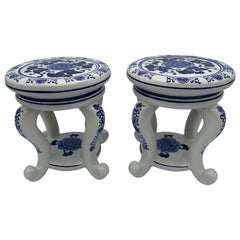
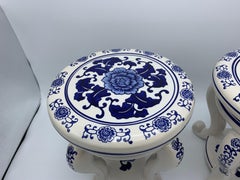
1980s Chinoiserie Blue and White Ceramic Plant Stands with Peony Motif, Pair
Located in Richmond, VA
Listed is a fabulous, pair of 1980s chinoiserie blue and white ceramic plant stands. The pair have an ornate peony motif all-over.
Ceramic
Blue and white chinoiserie altar vase Delft, 1685
By Delft
Located in ROSSUM, GE
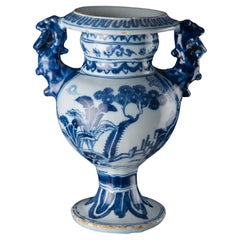
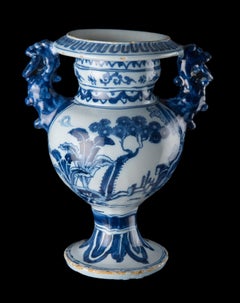
Blue and white chinoiserie altar vase Delft, circa 1685 The ovoid altar vase stands on a high-waisted foot.
Ceramic, Faience
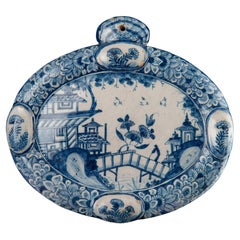
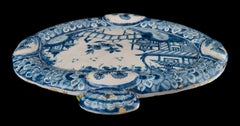
Delft Blue and white chinoiserie plaque Delft 1740-1760
By Delft
Located in ROSSUM, GE
Blue and white chinoiserie plaque. Delft, 1740-1760 The oval blue and white plaque has a molded rim with four raised, oval cartouches.
Ceramic, Faience
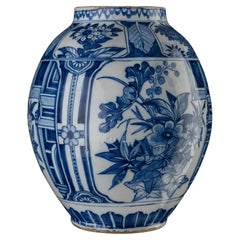

Blue and white floral chinoiserie jar Delft, 1650-1680
By Delft
Located in ROSSUM, GE
Blue and white floral chinoiserie jar Delft, 1650-1680 The ovoid jar stands on a slightly spreading foot, has a short upright neck, and is painted in blue with a floral decor.
Ceramic, Faience
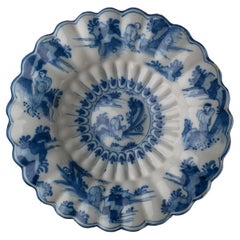

Blue and White Chinoiserie Lobed Dish, Delft, 1650-1680
By Delft
Located in ROSSUM, GE
Blue and white chinoiserie lobed dish. Delft, 1650-1680 Dimensions: diameter 33,5 cm / 13.18 in.
Ceramic, Faience
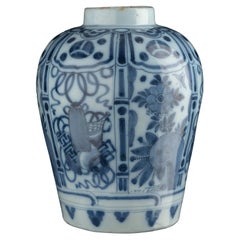

Blue and white floral chinoiserie jar Delft, 1680-1690
By Delft
Located in ROSSUM, GE
Blue and white floral chinoiserie jar Delft, 1680-1690 The baluster-shaped pot has a short, upright neck and is painted in blue.
Ceramic, Faience

Unavailable
H 2.05 in Dm 12.12 in
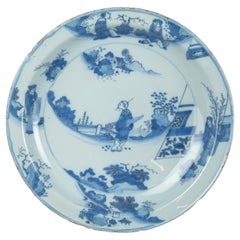
Blue and White Chinoiserie Dish Delft, circa 1680 Oriental Garden Landscape
By Delft
Located in ROSSUM, GE
The blue and white dish has a narrow, flat flange and is painted in the centre with a Chinese figure in an oriental garden landscape in a double circle. The brushwork is executed in ...
Ceramic, Faience
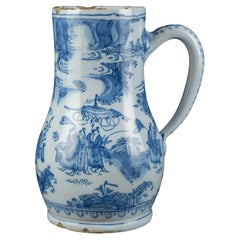
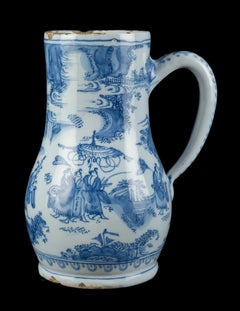
Delft, Blue and white chinoiserie beer mug Delft, C 1670
By Delft
Located in ROSSUM, GE
Blue and white chinoiserie beer mug Delft, circa 1670 The pear-shaped beer mug stands on a waisted foot and has an ear-shaped handle that ends in a rat tail.
Ceramic, Faience
Unavailable
H 2.05 in Dm 15.07 in
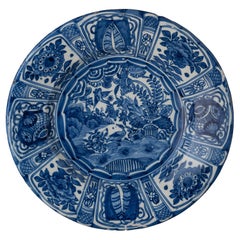
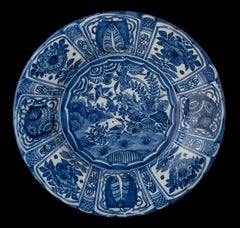
Large blue and white chinoiserie dish Delft, 1675-1685 Chinese-style landscape
By Delft
Located in ROSSUM, GE
The blue and white dish has a wide, spreading flange and is painted in the centre with a Chinese-style rocky landscape with plants, flowers and birds. The depiction is framed within ...
Ceramic, Faience
Unavailable
H 7.68 in W 18.12 in D 11.42 in
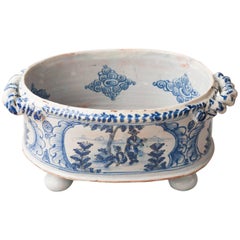
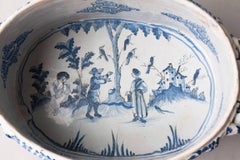
Rare Nevers Two Handled Chinoiserie Blue and White Faience Jardiniere
By Nevers
Located in London, GB
The oval body standing on three round feet, with twisted rope handles. Depicting oriental figures and a musician in a landscape setting With a building, plants and birds in a tree,...
Faience
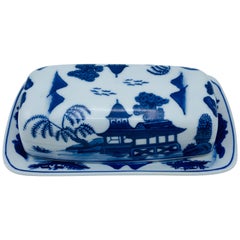
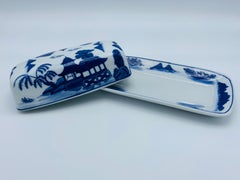
1980s Blue and White 'Blue Willow' Butter Dish
Located in Richmond, VA
Listed is a 1980s blue and white Chinoiserie porcelain butter dish.
Porcelain
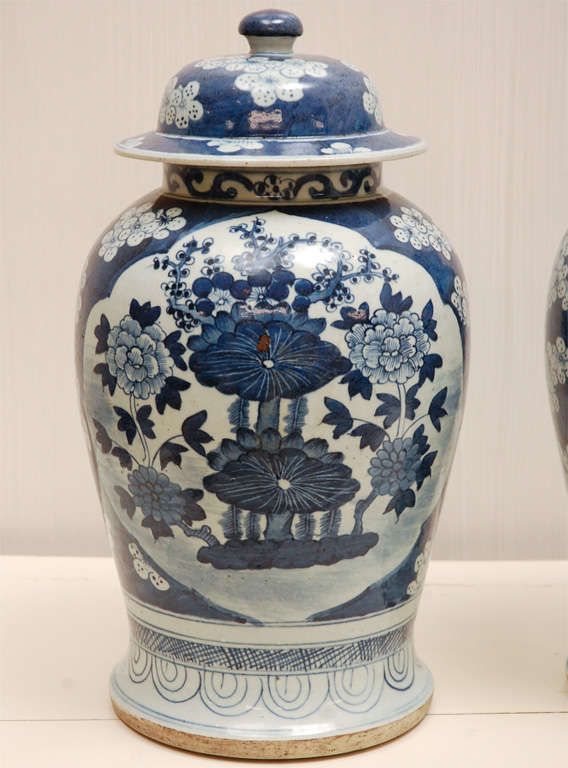
A Pair of Blue and White Chinoiserie Chinese Jars with Covers
Located in New York, NY
A Pair of Blue and White Chinoiserie Chinese Jars with Covers
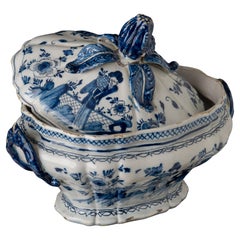
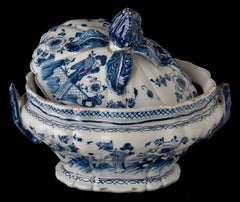
Unavailable
H 10.62 in W 9.05 in D 12.2 in
Delft, Blue and white chinoiserie tureen Delft, circa 1750 Mark: DM
By Delft
Located in ROSSUM, GE
Blue and white chinoiserie tureen Delft, circa 1750 Mark: DM The blue and white oval-shaped tureen has a curved body on a spreading foot and two blue-coloured foliate loop handles.
Ceramic, Faience
Emerging in the 17th century, chinoiserie appropriated the aesthetics and imagery of popular East Asian design for European-made versions. Reflecting the exoticization of China, Japan and other countries in this era, the word directly translates from French to “Chinese-esque,” which reveals its shortcomings as a style of furniture and decor that often stereotypically and reductively mimics Asian culture rather than showcasing and paying tribute to its artistic traditions.
The enthusiastically decorative chinoiserie style was propelled by influential tastemakers including French King Louis XIV, whose Trianon de Porcelaine in 1670 was inspired by Chinese architecture. Expanded trade between the East and West led to a demand for porcelain, lacquer objects, silk and other goods, which further informed the fanciful furniture being crafted in Europe.
Artisans working in the chinoiserie style used materials and elements like pagoda shapes, bamboo, lacquer surfaces, bird and flower motifs and other interpretations of Asian design on pieces that were frequently set against vibrant wallcoverings. This whimsical approach yielded chinoiserie furniture that boasted dramatic flourishes drawing on the natural world and reflected the dominance of Rococo during the 18th century.
As chinoiserie was shaped by approximations of Asian design by European creators, it had regional variations, such as Chinese Chippendale in England where cabinets, chairs and tea tables had wooden fretwork designs and “japanned” surfaces intended to resemble lacquer work that was created in East Asia. In North America, furniture makers in Boston and New York integrated chinoiserie-painted scenes into Queen Anne furniture.
Antique chinoiserie furniture has continued to be fashionable, from its popularity with decorators of the Hollywood Regency era — James Mont, Tommi Parzinger, William Haines and Samuel Marx favored the style — to contemporary interior designers, although it brings with it a complex history.
Find a collection of chinoiserie bedroom furniture, cabinets, decorative objects and more on 1stDibs.
The former First Lady kept the Victorian antique, with an elegant chinoiserie design, for the rest of her life.
Taking us on a whirlwind tour of spaces that use charming prints with aplomb, the interiors expert makes a compelling case for ditching staid solids when tackling your next decorating project.