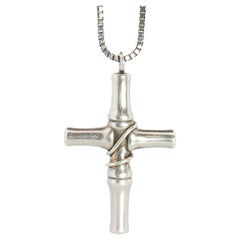
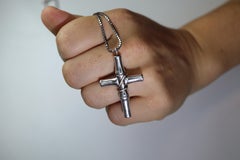
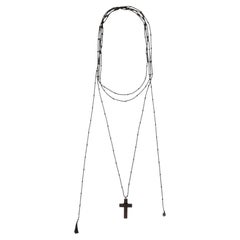
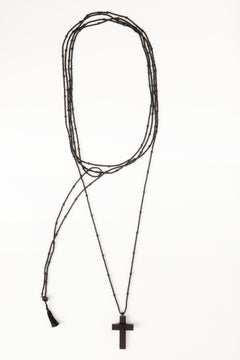
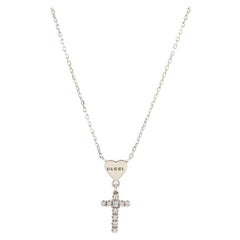
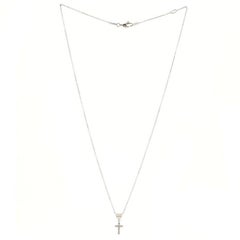
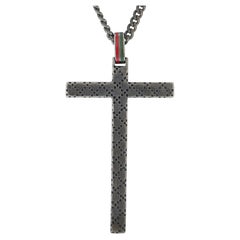
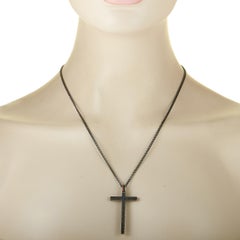
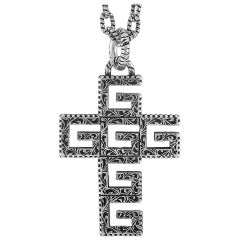
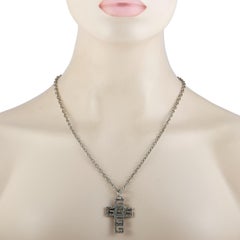
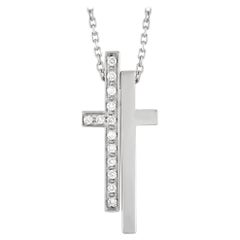
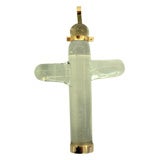
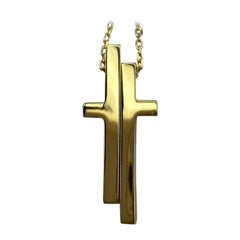
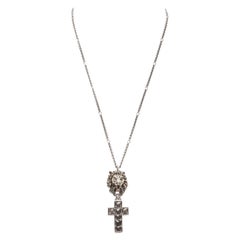
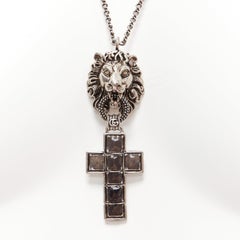
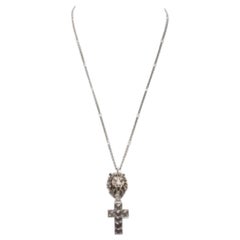
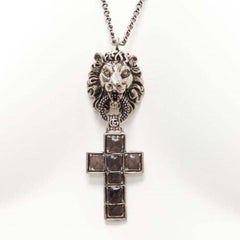
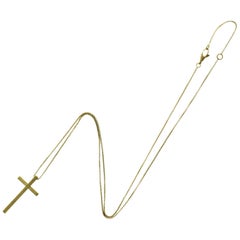
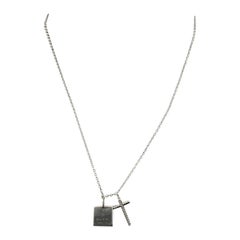
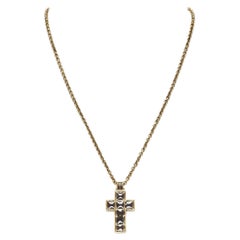
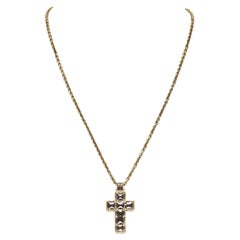
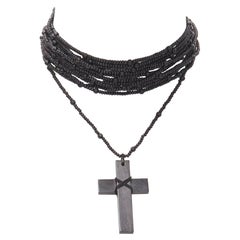
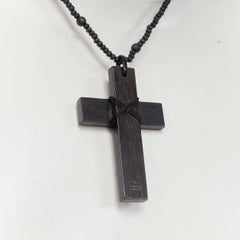
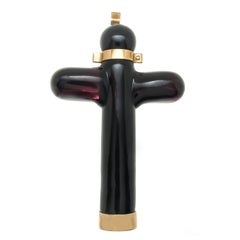
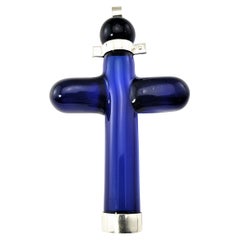
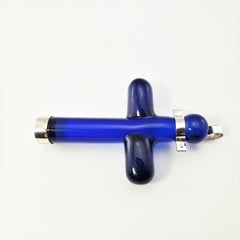
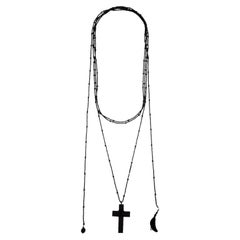
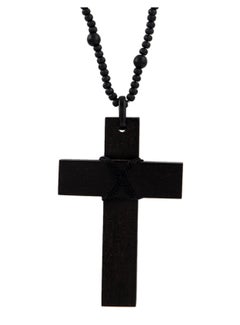
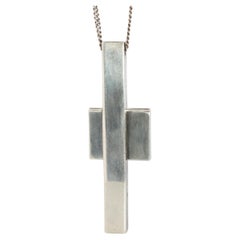
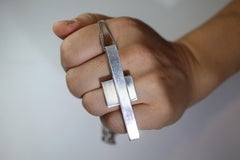
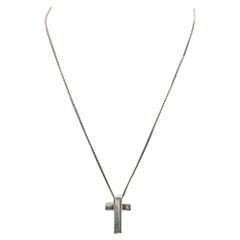
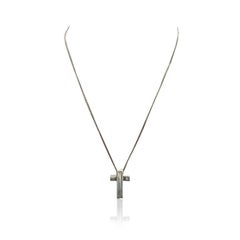
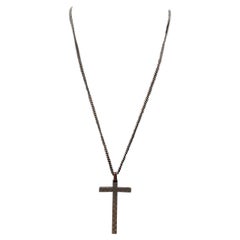
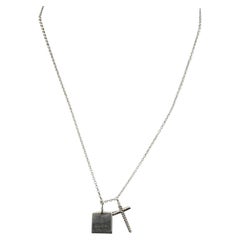
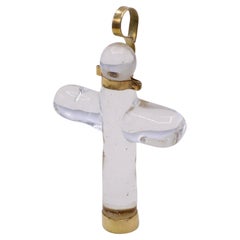
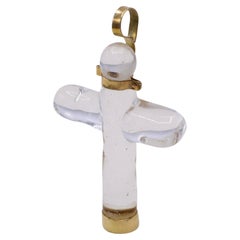
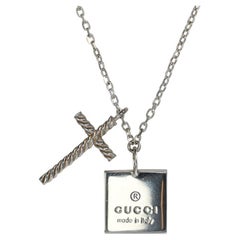
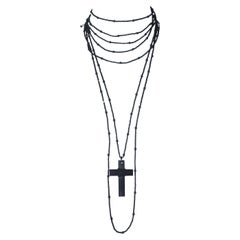
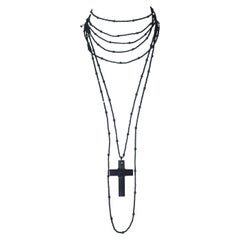
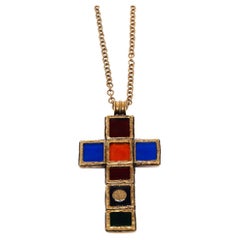
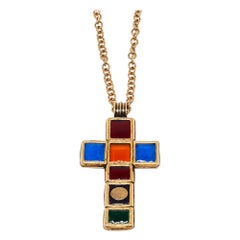
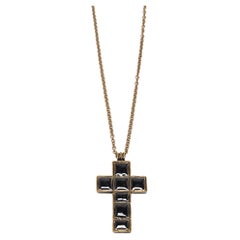
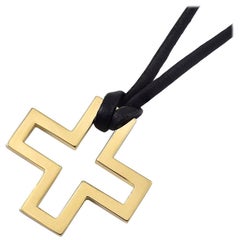
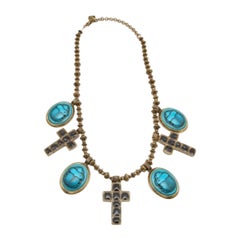
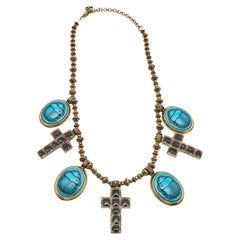
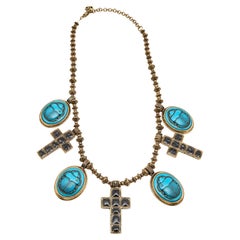
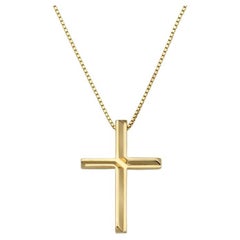
On 1stDibs, you can find the most appropriate cross necklace gucci for your needs in our varied inventory. Frequently made of
silver,
gold and
sterling silver, this item was constructed with great care. Find an antique version now, or shop for 3 vintage or 8 modern creation for a more contemporary example of these cherished accessories. Finding the perfect cross necklace gucci may mean sifting through those created during different time periods — you can find an early version that dates to the 20th Century and a newer variation that were made as recently as the 21st Century. Finding an appealing cross necklace gucci — no matter the origin — is easy, but
Gucci and
Christian Lacroix each produced a popular version that is worth a look. A cross necklace gucci of any era or style can lend versatility to your look, but a version featuring
crystal, from our inventory of 1, is particularly popular. Today, if you’re looking for a
mixed cut version of this piece and are unable to find the perfect match, our selection also includes alternatives. If you’re browsing our inventory for a cross necklace gucci, you’ll find that many are available today for
women, but there are still pieces to choose from for unisex and
men.
Long before trend-bucking creative director Alessandro Michele brought his hallucinatory “Utopian Fantasy” campaign to Gucci, it was a modest Italian leather shop. Today, it’s an internationally renowned luxury house with an iconic logo, and vintage Gucci clothing, handbags and shoes are among high fashion's most covetable goods.
Guccio Gucci (1881–1953) admired the stylish suitcases he saw wealthy guests arrive with at the Savoy Hotel in London, where he worked as a bellhop. So, in 1921, after a stint at Franzi, a luggage company in his hometown of Florence, he opened a leather goods shop of his own.
At first, Gucci’s Florence business specialized in equestrian accessories. But as its reputation flourished, particularly among the English aristocracy, so too did its footprint. In 1938, he brought three of his sons — Aldo, Vasco and Rodolfo — into the business and expanded it to Rome and later Milan. In the mid-1930s, a League of Nations embargo against Italy pushed Gucci to experiment with alternatives to imported leather. Its woven hemp fabric from Naples, adorned with the brand’s signature diamond print, was a hit, especially among A-list celebrities. The material was first used on suitcases before finding enduring popularity on handbags. (No list of revered designer purses would be complete without Gucci.)
In the 1950s, Elizabeth Taylor carried one of Gucci’s bamboo-handled tote bags, another adaptation to material rationing. After Jackie Kennedy was seen sporting a slouchy Gucci tote in 1961, it was renamed for the First Lady. Then Grace Kelly, on a visit to the boutique in Milan, inspired Rodolfo Gucci to work with Italian illustrator and Gucci textile designer Vittorio Accornero on the Flora print in 1966. Taking cues from Sandro Botticelli’s Primavera, with its pattern of flora and insects, it was painted entirely by hand and featured no fewer than 37 colors.
In 1953, just 15 days after opening his first store on New York’s 5th Avenue, Guccio passed away at 72. The early 1970s saw store openings in Tokyo and Hong Kong, but by the late 1980s, Gucci was floundering. Rodolfo Gucci took charge in 1982, but family drama and lawsuits ensued. In 1993, Rodolfo’s son, Maurizio, transferred his shares in the company to Investcorp, ending the family’s involvement in Gucci. Dawn Mello, then-president of Bergdorf Goodman, joined as creative director in 1989. But it was Tom Ford, who took over as creative director in 1994, who ultimately revived the brand.
Ford’s racy ads, shot by photographers such as Mario Testino, stirred controversy. And his potent vision of sexed-up femininity — with “jewel-toned satin shirts unbuttoned to there,” as Vogue described his breakthrough 1995 runway show — was wildly successful. The new millennium brought new ownership — Pinault Printemps Redoute in 2004 — and a more toned-down vision from Frida Giannini, who became sole creative director in 2006. Alessandro Michele was named creative director in 2015, and the storied brand took a giant leap forward.
Find vintage Gucci clothing and accessories on 1stDibs.
We are fortunate to know much of the world’s long and dazzling history of necklaces, as this type of jewelry was so treasured that it was frequently buried with its owners. Today, Van Cleef necklaces, Tiffany necklaces and Cartier necklaces are some of the most popularly searched designer necklaces on 1stDibs.
Lapis lazuli beads adorned necklaces unearthed from the royal graves at the ancient Iraqi civilization of Sumer, while the excavation of King Tut’s burial chamber revealed a sense of style that led to a frenzy of Art Deco designs, with artisans of the 1920s seeking to emulate the elegant work crafted by Ancient Egypt’s goldsmiths and jewelry makers.
In ancient times, pendant necklaces worn by royalty and nobles conferred wealth and prestige. Today, wearing jewelry is about personal expression: Luxury diamond necklaces exude confidence and can symbolize the celebratory nature of a deep romantic relationship, while paper-clip chain-link necklaces designed by the likes of goldsmith Faye Kim are firmly planted in the past as well as the present. Kim works exclusively with eco-friendly gold, and these fashionable, fun accessories owe to the design of 19th-century watch fobs.
For some, necklaces are thought of as being a solely feminine piece, but this widely loved accessory has been gender-neutral for eons. In fact, just as women rarely took to wearing a single necklace during the Renaissance, men of the era layered chains and valuable pendants atop their bejeweled clothing. In modern times, the free-spirited hippie and counterculture movements of the 1960s saw costume-jewelry designers celebrating self-expression through colorful multistrand necklaces and no shortage of beads, which were worn by anyone and everyone.
Even after all of these years, the necklace remains an irrefutable staple of any complete outfit. Although new trends in jewelry are constantly emerging, the glamour and beauty of the past continue to inform modern styles and designs. In a way, the cyclical history of the necklace differs little from its familiar looped form: The celebrated French jewelry house Van Cleef & Arpels found much inspiration in King Tut, and, now, their Alhambra collection is a go-to for modern royals. Vintage David Webb necklaces — whose work landed him on the cover of Vogue in 1950, two years after opening his Manhattan shop — were likely inspired by the ornamental styles of ancient Greece, Mesopotamia and Egypt.
On 1stDibs, browse top designers like Dior, Chanel and Bulgari, or shop by your favorite style, from eye-catching choker necklaces to understated links to pearl necklaces and more.