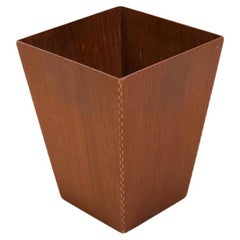
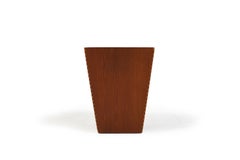
Danish Waste Paper Basket in Teak 1950s
Located in Handewitt, DE
Danish vintage waste paper basket in teak. Denmark, 1950s.
Category
Mid-20th Century Danish Scandinavian Modern Decorative Baskets
Materials
Birch, Teak
Danish Waste Paper Basket in Teak 1950s
Located in Handewitt, DE
Danish vintage waste paper basket in teak. Denmark, 1950s.
Birch, Teak
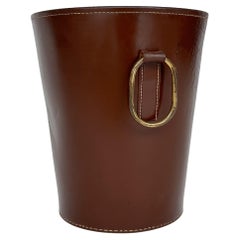
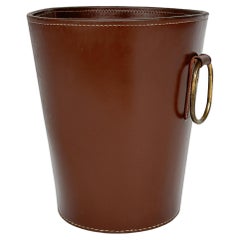
Illums Bolighus Paper Waste Basket Leather Brass Denmark 1950s Paper Bin
By Illums Bolighus, Werkstätte Carl Auböck
Located in Basel, BS
Rare paper basket in thick, stitched leather witz a solid brass handle, designed by Illums Bolighus in Copenhagen, made in Denmark in the 1950s to early 1960s.
Brass
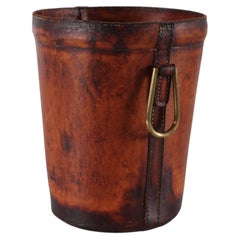
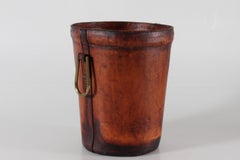
Mid-century Danish Leather Waste Paper Basket in Carl Auböck Style, ca 1960s
By Illums Bolighus, Hans J. Wegner, Werkstätte Carl Auböck
Located in Silkeborg, Silkeborg
Danish modern leather waste paper basket in the style of Carl Auböck from Illums Bolighus.
Brass
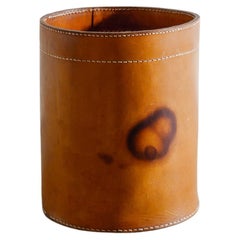
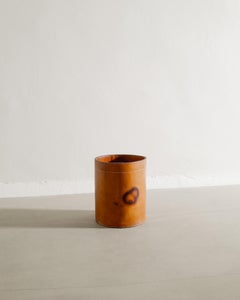
Round Danish Mid Century Paper Waste Bin in Patinated Leather, 1960s
Located in Stockholm, SE
Rare Danish mid century paper waste bin in patinated leather produced around 1960s. In good original condition. Dimensions: H: 29 cm / 11.40" Diameter: 24 cm / 9.45"
Leather
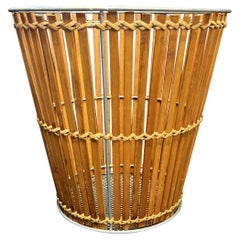
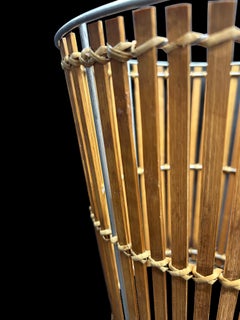
Slatted Bamboo and Rattan Waste Paper Basket
Located in Little Burstead, Essex
A very unusual Waste Paper basket with Bamboo slats and Rattan hoops.
Rattan, Bamboo
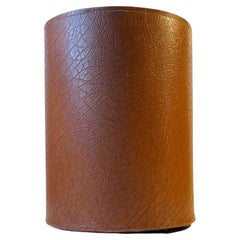
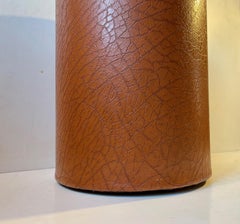
Vintage Paper Waste Basket in Faux Brown Leather, 1950s
Located in Esbjerg, DK
Vintage paper waste basket in embossed brown leather. Made in Denmark circa 1950-60 by an anonymous cabinetmaker.
Faux Leather
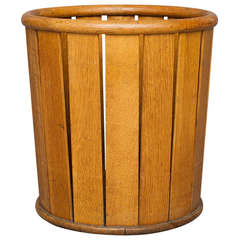
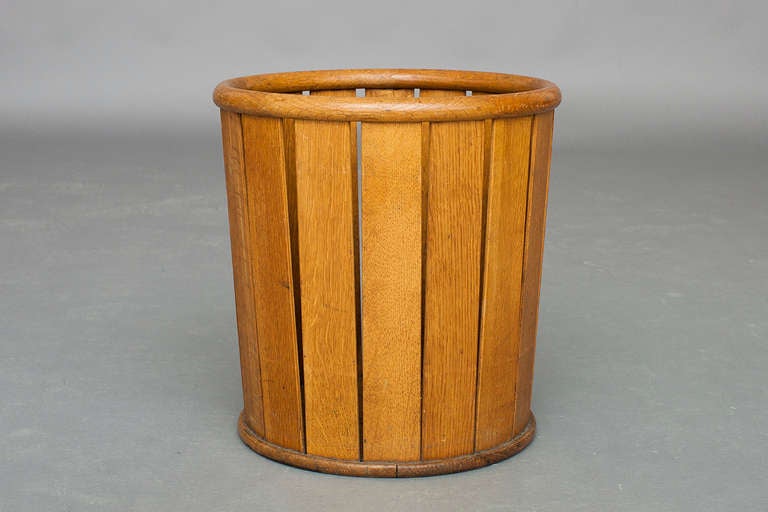
Waste paper basket by Hans J. Wegner for Plan Furniture
By Hans J. Wegner
Located in Copenhagen, DK
Waste paper basket by Hans J. Wegner for Plan Furniture. Oak. Nice vintage condition. Very rare.
Oak
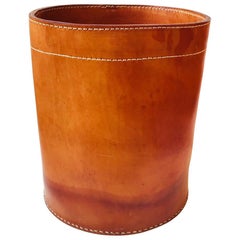
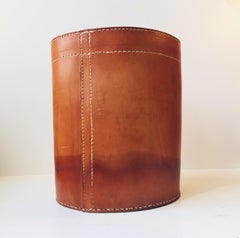
Vintage Danish Tanned Leather Paper Waste Basket, Denmark, 1960s
Located in Esbjerg, DK
Naturally aged and patinated office waste basket in very thick leather (9mm). It was manufactured in Denmark during the 1960s in a style reminiscent of Jacques Adnet and Carl Auböck....
Leather
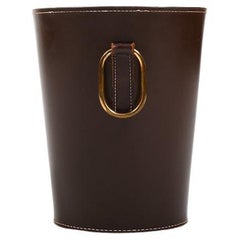
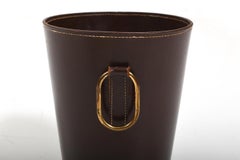
Carl Auböck 1950s Brown Leather Waste Paper Basket
By Werkstätte Carl Auböck, Illums Bolighus
Located in Handewitt, DE
Mid century Carl Auböck waste paper basket for Illums Bolighus 1950s. Made in darker brown core leather and with brass handle. Beautiful old patina. In very good vintage condition, w...
Brass
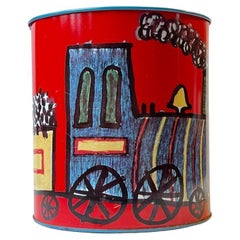

Vintage Junior Paper Waste Basket with Locomotive from IRA, Danish
Located in Esbjerg, DK
A rare Danish children's litter trash can. Its made from transfer printed pin-plate/thin metal depicting a locomotive with driver and passengers. Made by Ira in Denmark circa 1970. M...
Metal
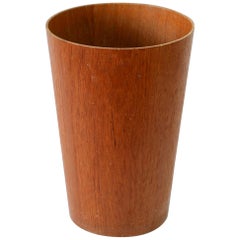
Sold
H 15.75 in Dm 10.83 in
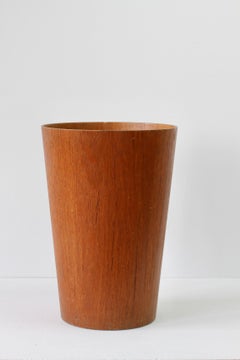
Midcentury Vintage Teak Waste Paper Basket by Martin Åberg for Servex circa 1960
By Servex 1
Located in Landau an der Isar, Bayern
Tall circular teak waste paper basket by Martin Aberg for Servex or House of Rainbow Wood Products, Sweden, circa 1960. Could also be used as an umbrella stand for your foyer, entran...
Wood, Teak, Plywood
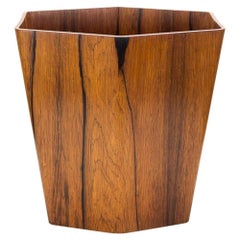

Hexagonal Rosewood Waste Paper Basket, Brdr. Bonfils, Denmark
Located in Berkhamsted, GB
A remarkable rare hexagonal rosewood waste paper basket by Brdr. Bonfils, Denmark, 1960s.
Rosewood

Rosewood waste paper basket
Located in Hudson, NY
Polished Rosewood waste paper basket.
Rosewood

Sold
H 17.5 in W 15.5 in D 8.75 in
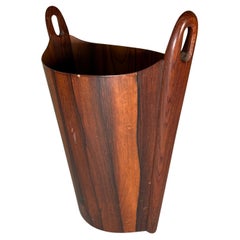
Mid-Century Modern Danish Rosewood Paper Waste Basket Einar Barnes P.S. Heggen
By P.S. Heggen, Einar Barnes
Located in Atlanta, GA
Danish Modern rosewood paper waste basket by Einar Barnes for PS Heggen.
Rosewood
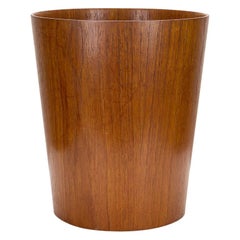
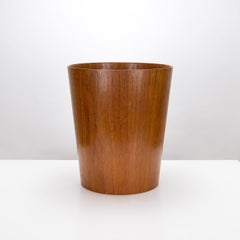
Sold
H 12.8 in W 11.03 in D 11.03 in
Teak Waste Paper Basket by Martin Åberg for Servex, Sweden, 1960s
By Servex 1, Martin Åberg
Located in Berkhamsted, GB
A teak waste paper basket by Martin Åberg for Servex, Sweden, 1960s. Surface has been refinished with patina as expected with a piece of this age.
Teak
Organically shaped, clean-lined and elegantly simple are three terms that well describe vintage mid-century modern furniture. The style, which emerged primarily in the years following World War II, is characterized by pieces that were conceived and made in an energetic, optimistic spirit by creators who believed that good design was an essential part of good living.
ORIGINS OF MID-CENTURY MODERN FURNITURE DESIGN
CHARACTERISTICS OF MID-CENTURY MODERN FURNITURE DESIGN
MID-CENTURY MODERN FURNITURE DESIGNERS TO KNOW
ICONIC MID-CENTURY MODERN FURNITURE DESIGNS
VINTAGE MID-CENTURY MODERN FURNITURE ON 1STDIBS
The mid-century modern era saw leagues of postwar American architects and designers animated by new ideas and new technology. The lean, functionalist International-style architecture of Le Corbusier and Bauhaus eminences Ludwig Mies van der Rohe and Walter Gropius had been promoted in the United States during the 1930s by Philip Johnson and others. New building techniques, such as “post-and-beam” construction, allowed the International-style schemes to be realized on a small scale in open-plan houses with long walls of glass.
Materials developed for wartime use became available for domestic goods and were incorporated into mid-century modern furniture designs. Charles and Ray Eames and Eero Saarinen, who had experimented extensively with molded plywood, eagerly embraced fiberglass for pieces such as the La Chaise and the Womb chair, respectively.
Architect, writer and designer George Nelson created with his team shades for the Bubble lamp using a new translucent polymer skin and, as design director at Herman Miller, recruited the Eameses, Alexander Girard and others for projects at the legendary Michigan furniture manufacturer.
Harry Bertoia and Isamu Noguchi devised chairs and tables built of wire mesh and wire struts. Materials were repurposed too: The Danish-born designer Jens Risom created a line of chairs using surplus parachute straps for webbed seats and backrests.
The Risom lounge chair was among the first pieces of furniture commissioned and produced by celebrated manufacturer Knoll, a chief influencer in the rise of modern design in the United States, thanks to the work of Florence Knoll, the pioneering architect and designer who made the firm a leader in its field. The seating that Knoll created for office spaces — as well as pieces designed by Florence initially for commercial clients — soon became desirable for the home.
As the demand for casual, uncluttered furnishings grew, more mid-century furniture designers caught the spirit.
Classically oriented creators such as Edward Wormley, house designer for Dunbar Inc., offered such pieces as the sinuous Listen to Me chaise; the British expatriate T.H. Robsjohn-Gibbings switched gears, creating items such as the tiered, biomorphic Mesa table. There were Young Turks such as Paul McCobb, who designed holistic groups of sleek, blond wood furniture, and Milo Baughman, who espoused a West Coast aesthetic in minimalist teak dining tables and lushly upholstered chairs and sofas with angular steel frames.
Generations turn over, and mid-century modern remains arguably the most popular style going. As the collection of vintage mid-century modern chairs, dressers, coffee tables and other furniture for the living room, dining room, bedroom and elsewhere on 1stDibs demonstrates, this period saw one of the most delightful and dramatic flowerings of creativity in design history.
Every time you move into a house or an apartment — or endeavor to refresh the home you’ve lived in for years — life for that space begins anew. The right home accent, be it the simple placement of a decorative bowl on a shelf or a ceramic vase for fresh flowers, can transform an area from drab to spectacular. But with so many materials and items to choose from, it’s easy to get lost in the process. The key to styling with antique and vintage decorative objects is to work toward making a happy home that best reflects your personal style.
Ceramics are a versatile addition to any home. If you’ve amassed an assortment of functional pottery over the years, think of your mugs and salad bowls as decorative objects, ideal for displaying in a glass cabinet. Vintage ceramic serveware can pop along white open shelving in your dining area, while large stoneware pitchers paired with woven baskets or quilts in an open cupboard can introduce a rustic farmhouse-style element to your den.
Translucent decorative boxes or bowls made of an acrylic plastic called Lucite — a game changer in furniture that’s easy to clean and lasts long — are modern accents that are neutral enough to dress up a coffee table or desktop without cluttering it. If you’re showcasing pieces from the past, a vintage jewelry box for displaying your treasures can spark conversation: Where is the jewelry box from? Is there a story behind it?
Abstract sculptures or an antique vessel for your home library can draw attention to your book collection and add narrative charm to the most appropriate of corners. There’s more than one way to style your bookcases, and decorative objects add a provocative dynamic. “I love magnifying glasses,” says Alex Assouline, global vice president of luxury publisher Assouline, of adding one’s cherished objects to a home library. “They are both useful and decorative. Objects really elevate libraries and can also make them more personal.”
To help with personalizing your space and truly making it your own, find an extraordinary collection of decorative objects on 1stDibs.
Smoking might have fallen out of fashion, but these ashtrays have enduring design appeal.
Having created extravagant homes for reality TV’s biggest stars, the designer is stepping into the spotlight with his first book.
The Finnish talent created nature-inspired pieces, from furniture to jewelry, with phenomenal staying power.