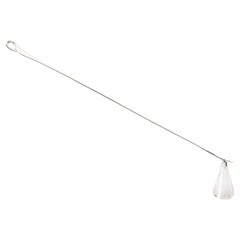
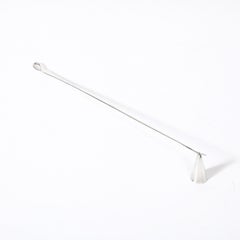
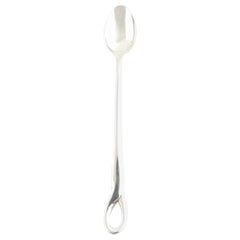
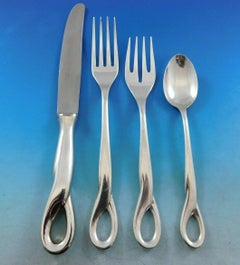
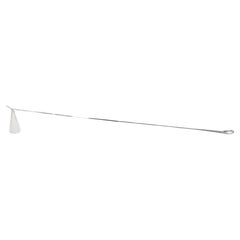
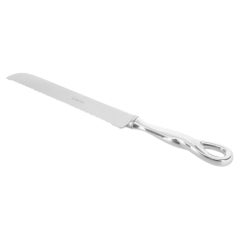
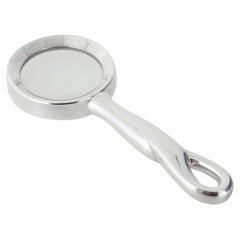
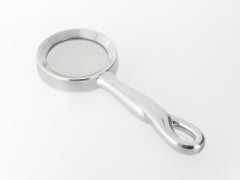
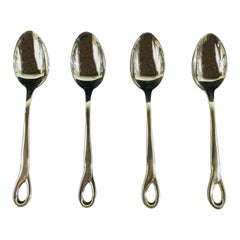
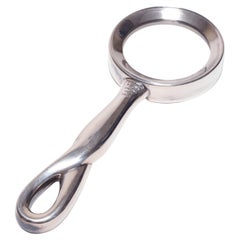
In an era of social upheaval, venerable Tiffany & Co. designer Elsa Peretti reimagined diamonds as jewelry that working women bought for themselves rather than receiving it from a suitor.
By the time the Italian-born Peretti (1940–2021) arrived in New York City, she’d already studied design in Rome, worked for a Milanese architect and taught Italian, French and skiing in Switzerland. She settled on interior design as her potential career path but then chose an altogether different route: modeling. Peretti modeled in Barcelona, Spain, and on the advice of Wilhelmina Cooper — a former model who’d by then founded Wilhelmina Modeling Agency — moved to Manhattan in 1968. When she relocated, Peretti was inspired to pick up jewelry design.
After modeling for designer Halston, the undisputed fashion king of Studio 54, Peretti became his close friend and collaborator, eventually creating jewelry and teardrop-shaped perfume bottles for him. By way of her association with Halston, Peretti took to the disco scene, flourishing in a social circle that included artist Andy Warhol and fashion designer Giorgio di Sant’Angelo.
It wasn’t long before models on di Sant’Angelo’s runway were donning two-inch sterling-silver vases, complete with a rose stem, suspended on leather thongs around their necks. The accessory was Peretti’s inaugural piece of jewelry — she designed it in 1969 after finding a flower vase at a flea market. It was hardly the only time that Peretti found motifs in nature and in organic forms. In the years that followed, her Bean pendant necklace, Starfish earrings and other sensuous accessories would draw on human emotion as well as the natural world around her. Each evocative and wholly versatile design is universally adored decades later, and each was made for a storied American jewelry house with which Peretti would be associated for nearly 50 years.
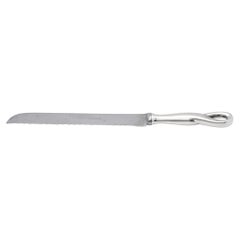
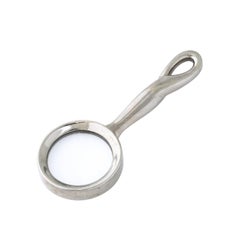
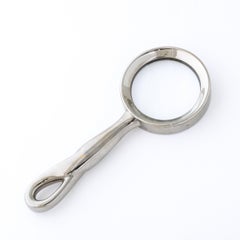
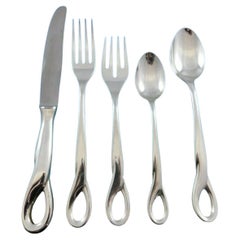
It was Halston who introduced Peretti to Tiffany & Co. She had her own boutique at Bloomingdale’s by 1972, and her partnership with the firm, which signed the venturesome and unorthodox designer to an exclusive contract in 1974, would cement her place in the lofty annals of jewelry legend. Peretti’s simple but sophisticated designs — the Teardrop collection, her minimalist Diamonds by the Yard necklace and Open Heart ring, to name a few — elevated sterling silver, previously considered unsuitable for fine jewelry, and created an enthusiastic young audience for Tiffany’s offerings. In 1977, Peretti’s designs earned the jewelry house more than $6 million. (In some years, her work has accounted for 10 percent of the company’s sales.)
In 2012, Peretti signed a 20-year, $47.3 million contract with Tiffany & Co., but she passed away in 2021, at age 80. Today, her designs are in the permanent collections of the Metropolitan Museum of Art in New York City and the British Museum.
Find an exquisite collection of Elsa Peretti jewelry today on 1stDibs.
Your dining room table is a place where stories are shared and personalities shine — why not treat yourself and your guests to the finest antique and vintage glass, silver, ceramics and serveware for your meals?
Just like the people who sit around your table, your serveware has its own stories and will help you create new memories with your friends and loved ones. From ceramic pottery to glass vases, set your table with serving pieces that add even more personality, color and texture to your dining experience.
Invite serveware from around the world to join your table settings. For special occasions, dress up your plates with a striking Imari charger from 19th-century Japan or incorporate Richard Ginori’s Italian porcelain plates into your dining experience. Celebrate the English ritual of afternoon tea with a Japanese tea set and an antique Victorian kettle. No matter how big or small your dining area is, there is room for the stories of many cultures and varied histories, and there are plenty of ways to add pizzazz to your meals.
Add different textures and colors to your table with dinner plates and pitchers of ceramic and silver or a porcelain lidded tureen, a serving dish with side handles that is often used for soups. Although porcelain and ceramic are both made in a kiln, porcelain is made with more refined clay and is more durable than ceramic because it is denser. The latter is ideal for statement pieces — your tall mid-century modern ceramic vase is a guaranteed conversation starter. And while your earthenware or stoneware is maybe better suited to everyday lunches as opposed to the fine bone china you’ve reserved for a holiday meal, handcrafted studio pottery coffee mugs can still be a rich expression of your personal style.
“My motto is ‘Have fun with it,’” says author and celebrated hostess Stephanie Booth Shafran. “It’s yin and yang, high and low, Crate & Barrel with Christofle silver. I like to mix it up — sometimes in the dining room, sometimes on the kitchen banquette, sometimes in the loggia. It transports your guests and makes them feel more comfortable and relaxed.”
Introduce elegance at supper with silver, such as a platter from celebrated Massachusetts silversmith manufacturer Reed and Barton or a regal copper-finish flatware set designed by International Silver Company, another New England company that was incorporated in Meriden, Connecticut, in 1898. By then, Meriden had already earned the nickname “Silver City” for its position as a major hub of silver manufacturing.
At the bar, try a vintage wine cooler to keep bottles cool before serving or an Art Deco decanter and whiskey set for after-dinner drinks — there are many possibilities and no wrong answers for tableware, barware and serveware. Explore an expansive collection of antique and vintage glass, ceramics, silver and serveware today on 1stDibs.