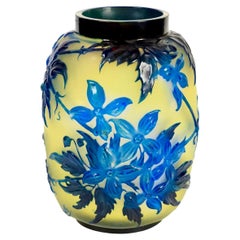
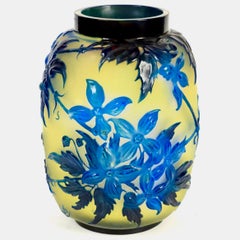
Emile Galle Blown Out Clematis Vase
By Émile Gallé
Located in Dallas, TX
Emile Galle Mold Blown Blue Clematis Glase Vase. Circa: 1910 Nancy, France A fine Galle blown-out
Category
Antique Early 1900s French Art Nouveau Vases
Materials
Art Glass
Emile Galle Blown Out Clematis Vase
By Émile Gallé
Located in Dallas, TX
Emile Galle Mold Blown Blue Clematis Glase Vase. Circa: 1910 Nancy, France A fine Galle blown-out
Art Glass
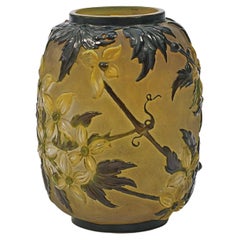
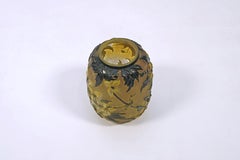
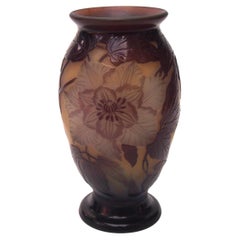
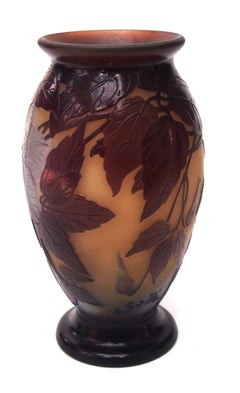
Mouth-blown vase with clematis flowers by Émile Gallé
By Émile Gallé
Located in Ciudad Autónoma Buenos Aires, C
Mouth-blown vases are rarer and more coveted than their unblown counterparts. This model, featuring
Glass
$3,796
H 5.71 in Dm 3.15 in
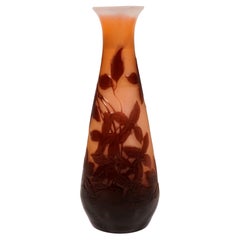
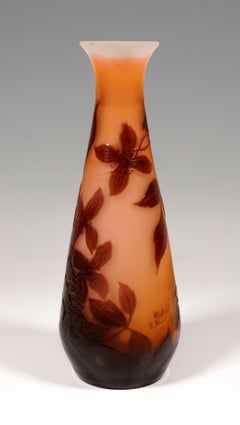
French Art Nouveau Signed Clematis Emile Gallé Cameo Glass Vase circa, 1920
By Émile Gallé
Located in Worcester Park, GB
French Art Nouveau Emile Gallé cameo vase depicting a flowering double clematis in purple and blue
Art Glass
$2,104Sale Price|20% Off
H 9.65 in Dm 3.75 in
Art Nouveau Flacon Shape Vase with Clematis Decor, Émile Gallé, France 1903/04
By Émile Gallé
Located in Vienna, AT
, above the etched decor with clematis in front of a milky red-white background. Cameo signature 'Gallé
Glass
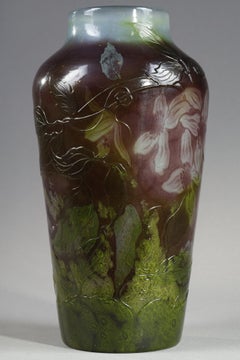
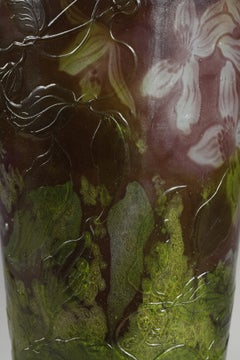
Vase with Clematis
By Émile Gallé
Located in PARIS, FR
Vase with Clematis by Émile GALLE (1846-1904) A baluster-shaped vase ornated with clematis. Green
Blown Glass
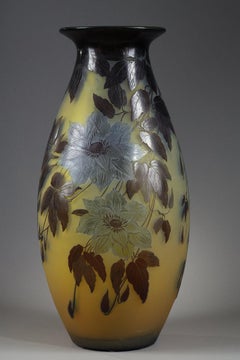
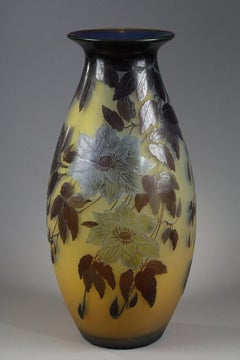
Important vase with Clematis
By Émile Gallé
Located in PARIS, FR
Important vase with Clematis by Etablissements GALLE A very important baluster shaped vase with a
Glass
French Emile Galle Art Nouveau Clematis Cameo Glass Vase 1900
By Émile Gallé
Located in London, GB
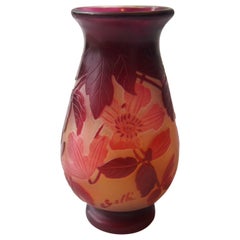
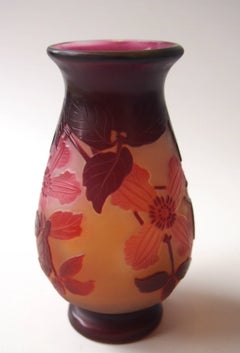
Fine Emile Galle Art Nouveau cameo vase decorated with trailing clematis flowers, in yellow, purple
Art Glass
Unavailable
H 23.63 in W 7.88 in D 7.88 in
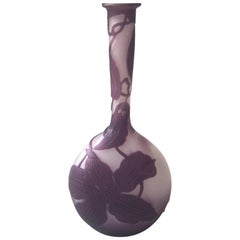
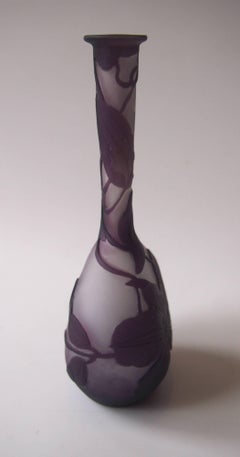
émile Gallé - Large Tube Vase Called “elephant Foot” With Clematis, Art Nouveau
By Émile Gallé
Located in NONANCOURT, FR
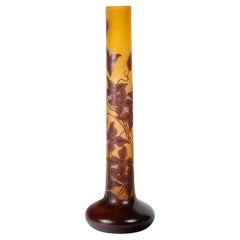
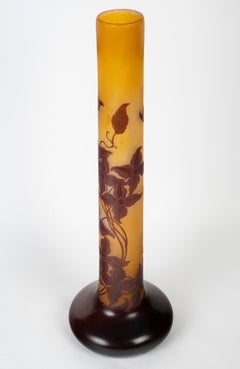
Large and elegant vase by Émile Gallé decorated with purple clematis on a yellow background
Art Glass
Unavailable
H 6.75 in W 3.5 in D 1.5 in
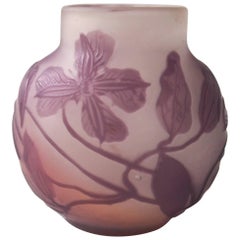
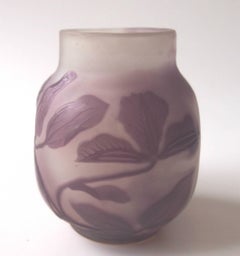
French Art Nouveau Emile Galle Cameo Glass Clematis Banjo Vase 1900
By Émile Gallé
Located in London, GB
Classic Art Nouveau Emile Galle 'Banjo' vase, depicting trailing clematis blooms in purple over
Art Glass
French Emile Galle Art Nouveau Clematis Cameo Glass Vase circa 1900
By Émile Gallé
Located in London, GB
Cute botanical Art Nouveau Emile Galle Cameo vase in purple over clear over blush pink. Depicting
Art Glass
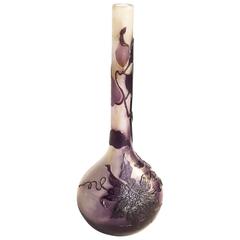
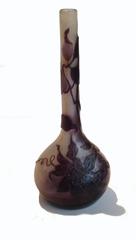
French Emile Galle Cameo Glass Long-Necked "Banjo" Vase, Clematis
Located in Brooklyn, NY
Galle's life spans a good two-thirds of the 19th century (1846-1904). He is most famous for
Art Glass, Blown Glass
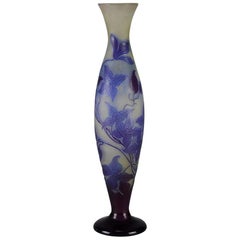

Cameo Glass Vase entitled 'Clematis' by Emile Gallé
By Émile Gallé
Located in London, GB
A very fine tall slender glass vase decorated with an Art Nouveau Clematis floral design in blue
Glass
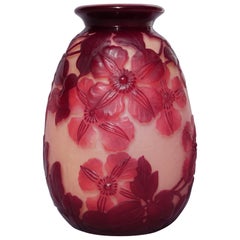
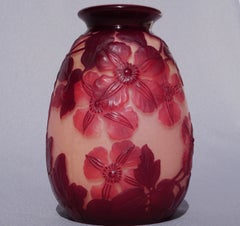
Emile Galle Blownout Red and Pink Clematis Flower Vase
By Émile Gallé
Located in Dallas, TX
An Art Nouveau Emile Galle mold blown glass Clematis vase, circa 1900 This beautiful Gallé
Art Glass
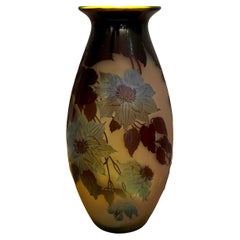

A Large Emile Galle Cameo Glass Vase with clematis blossoms, Circa 1905
By Émile Gallé
Located in Tarzana, CA
A large Art Nouveau cameo glass vase with clematis blossoms, by Emile Galle, Circa 1905 . Having a
Art Glass
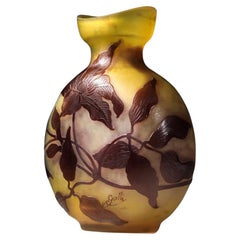

Sold
H 9.06 in W 7.09 in D 3.55 in
Moon glass vase by Emile Gallé with acid-etched clematis design 1940's
By Émile Gallé
Located in Ternay, Auvergne-Rhône-Alpes
"Moon” vase from the 1940s by French glass artist Emile Gallé. Yellow glass vase with a floral
Art Glass
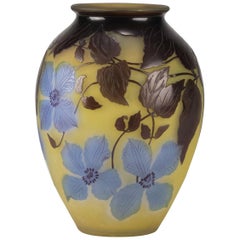

Sold
H 7.88 in W 5.91 in D 5.91 in
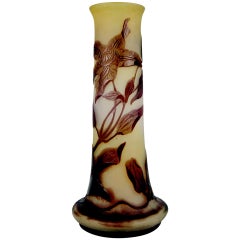
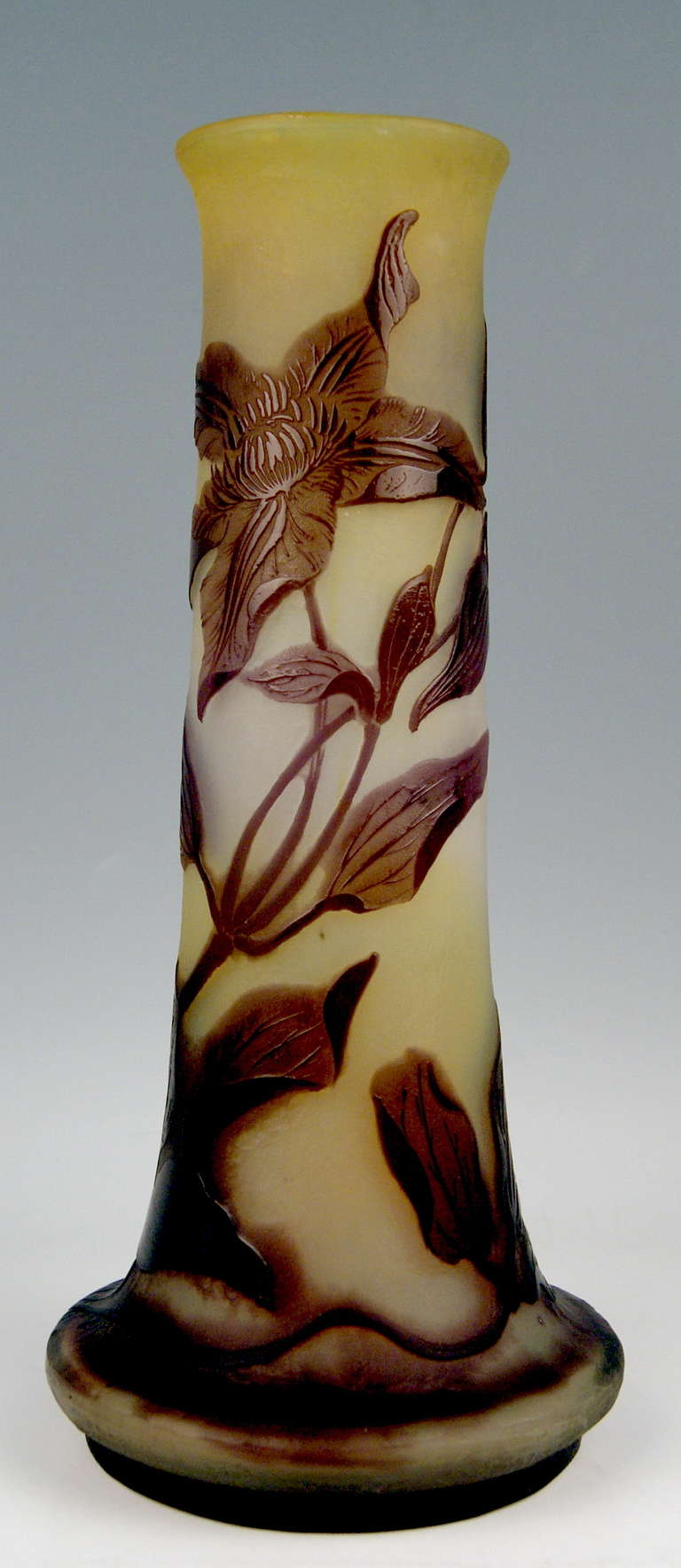
Art Nouveau French Cameo Acid Etched Glass 'Blue Clematis Vase' by Emile Gallé
By Émile Gallé
Located in London, GB
' Emile Gallé (French, 1846-1904) born in Nancy, France, in 1846, Emile Gallé is considered one of the
Glass
Sold
H 12.99 in Dm 3.26 in
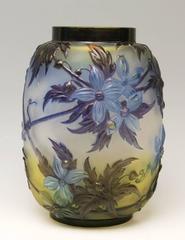
Galle Nancy Stalky Vase Clematis Flowers Art Nouveau France Lorraine made c.1905
By Émile Gallé
Located in Vienna, AT
Galle Nancy Gallé Art Nouveau Stalky Vase Made In France, Lorraine Nancy, made circa 1905-1910
Glass
Sold
H 9.56 in Dm 4.13 in
Soufflé Vase Gallé Clematis Flowers Leaves Emile Galle Nancy Art Nouveau 1925
By Émile Gallé
Located in Vienna, AT
Gallé Nancy Art Nouveau bellied Soufflé Vase made in France (Nancy, Lorraine) / circa 1925
Glass
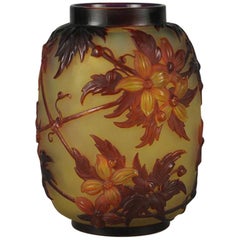

Art Nouveau French Cameo Glass 'Clematis Soufflé Vase' by Emile Gallé
By Émile Gallé
Located in London, GB
design of flowering clematis in orange and red colors against a deep yellow field, signed Gallé
Blown Glass
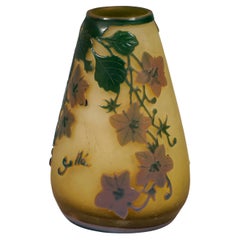

Émile Gallé Art Nouveau Vase with Clematis Decor, France Ca 1906
By Émile Gallé
Located in Vienna, AT
glass vessels were already being made in antiquity; at the end of the 19th century, Émile Gallé further
Glass
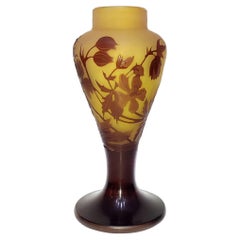

Sold
H 6.3 in Dm 2.76 in
A Rare Art Nouveau Cameo Glass Vase with Clematis Decor, by Émile Gallé Nancy
By Émile Gallé
Located in Bochum, NRW
A rare and finely executed cameo glass vase by Émile Gallé, one of the leading figures of the
Glass
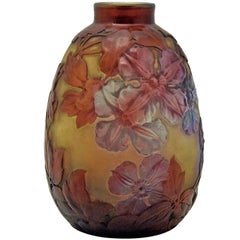

Sold
H 6.49 in Dm 3.34 in
Emile Galle Finest Bellied Vase Gallé Nancy Art Nouveau Clematis Flowers c.1920
By Émile Gallé
Located in Vienna, AT
Gallé Nancy Art Nouveau bellied vase made in France (Nancy, Lorraine)/made, circa 1920
Glass
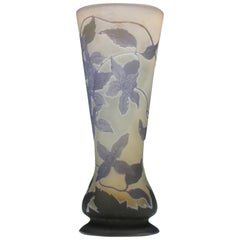

Emille Galle Cameo Glass Vase with Pale Blue Clematis Flowers
By Émile Gallé
Located in Kent, GB
Emille Galle cameo glass vase with pale blue clematis flowers, 1904-1910. Excellent condition
Glass
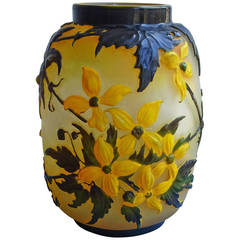

Yellow Clematis Mold-Blown Cameo Glass Vase by Emile Gallé, circa 1918
By Émile Gallé
Located in Saint-Ouen, FR
Yellow Clematis mold-blown cameo glass vase by Emile Gallé, Circa 1918. Signed "Gallé" in cameo
Blown Glass
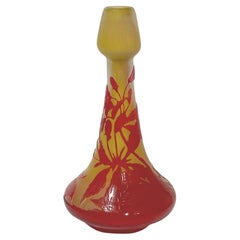
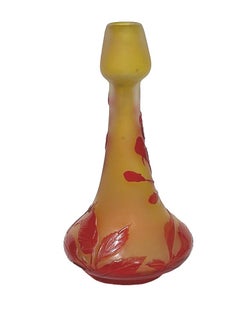
Émile Gallé Miniature Cameo Vase, Art Nouveau, Ca 1900
By Émile Gallé
Located in Delft, NL
Émile Gallé miniature Cameo vase, Art Nouveau, ca 1900 Émile Gallé (Nancy, 1846 –1904) was a French glassmaker and furniture designer Émile Gallé 7 cm high Cameo vase made in gla...
Glass
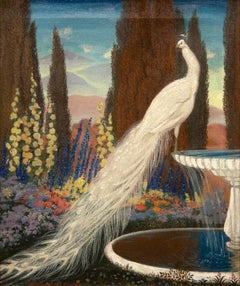
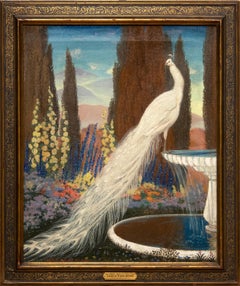
The White Peacock
By Jessie Arms Botke
Located in Palm Desert, CA
A painting by Jessie Arms Botke. "The White Peacock" is a wildlife impressionist painting, oil on canvas in a palette of whites, blues, and browns by female, American artist Jessie A...
Canvas, Oil
$41,414
H 28.35 in W 30.32 in D 12.21 in
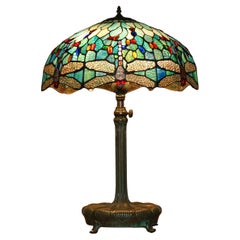
Antique Tiffany Studios Adjustable Lamp Base with Later Stained Glass Shade
By Tiffany & Co.
Located in West Sussex, Pulborough
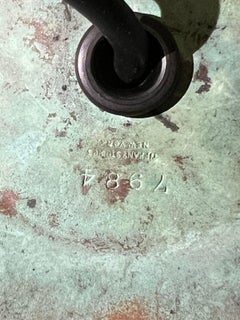
Tiffany adjustable bronze lamp base, stamped "Tiffany Studios, New York, 7984", circa 1915. The base was acquired with its current Tiffany Style stained glass shade with Dragonfly mo...
Bronze
$2,678Sale Price|20% Off
H 8.27 in Dm 2.37 in
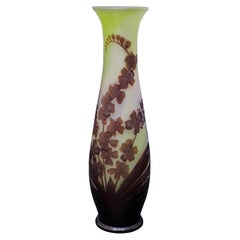
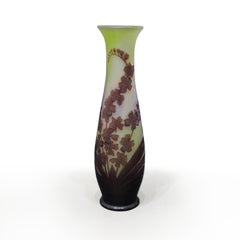
Emile Gallé Cameo Glass Vase with Orchid Oncidium Motif Nancy France 1894-1904
By Émile Gallé
Located in Bochum, NRW
Rare Emile Gallé Art Nouveau Cameo Glass Vase with Orchid Oncidium Motif — Nancy, France, Circa 1894–1904 Baluster-shaped vase, multilayer cased glass, green, colorless, and violet h...
Art Glass
$2,250Sale Price|50% Off
H 7.5 in Dm 6 in
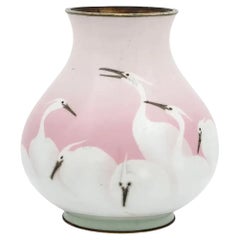
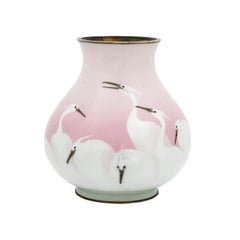
Japanese Meiji Era Wireless Cloisonne Pink Crane Enamel Vase
Located in Long Island City, NY
An antique Japanese copper vase with wireless cloisonne enamel design. Late Meiji era, before 1912. Round shape with pronounced base. The piece is decorated with a stork or crane bir...
Copper, Enamel
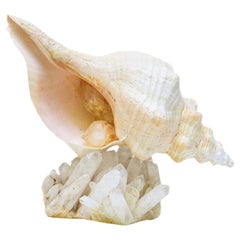
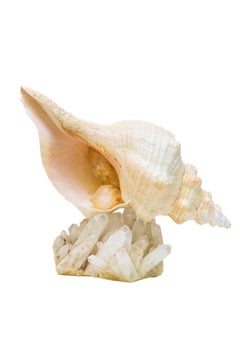
Conch Shell with Coordinating Crystal Quartz Cluster
By Interi
Located in Columbia, SC
Complete conch shell mounted on a large crystal quartz cluster and adorned with two crystal points, highlighting the neutral and warm hues of the shell. The piece was collected and ...
Crystal, Rock Crystal
$7,652
H 12.21 in Dm 4.73 in
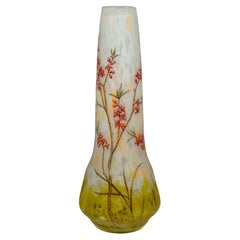
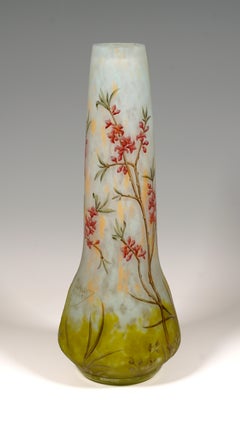
Large Art Nouveau Cameo Vase with Daphne Decor, Daum Nancy, France, 1910/15
By Daum
Located in Vienna, AT
Large long neck vase vase with a bulbous base and a round stand and a neck that tapers towards the top, colorless glass with flaky white and yellow, in the stand area with light gree...
Glass
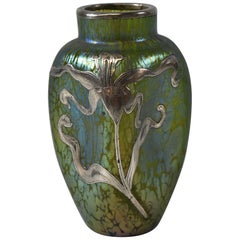
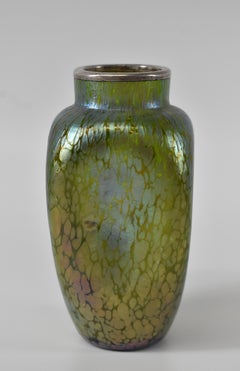
Austrian Loetz Iridescent Art Nouveau Glass Vase Sterling Overlay
By Loetz Glass
Located in Toledo, OH
Austrian Loetz iridescent art glass vase in papillon finish with sterling silver applied overlay. Art Nouveau style in a dimpled form shades of green blue and purple. Very nice condi...
Glass
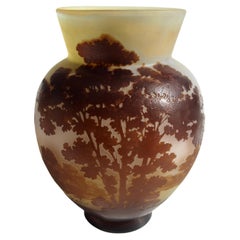
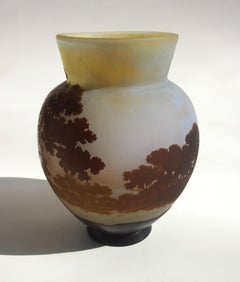
French Emile Galle Art Nouveau Cameo Glass Landscape Vase, circa 1910
By Louis Hestaux, Émile Gallé
Located in Worcester Park, GB
Impressive Art Nouveau Emile Galle Cameo landscape vase, 7 1/2 inches tall, in a variety browns and yellows with a hint of opal, signed in cameo, produced circa 1910 (Provost Mk III ...
Art Glass
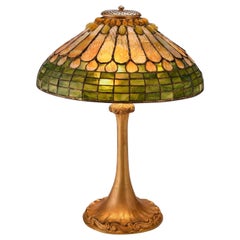
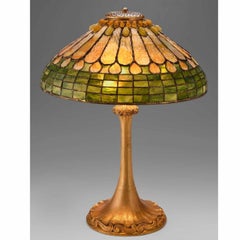
Tiffany Studios Jeweled Feather Table Lamp.
By Tiffany Studios
Located in Dallas, TX
Tiffany Studios Jeweled Feather Table Lamp. New York, Circa 1910 Base signed TIFFANY STUDIOS NEW YORK 584, Height 22 Inches Shade signed TIFFANY STUDIOS NEW YORK 1439, Diameter 16....
Bronze
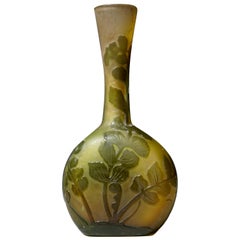
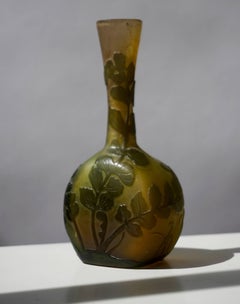
Emile Gallé French Art Nouveau Cameo Glass Vase
By Émile Gallé
Located in Antwerp, BE
Emille Galle (1846-1904). Émile Gallé was a French glass maker and furniture designer, who had his home in his native Nancy. His favourite topic, which he frequently used in his wor...
Glass
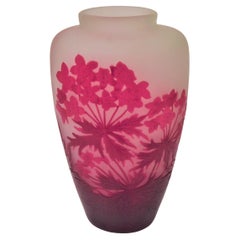
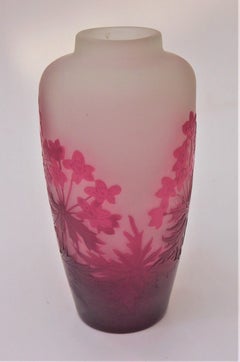
$2,733
H 7.88 in W 4.34 in D 3.55 in
French Art Nouveau Red and Clear Signed Emile Gallé Cameo Glass Vase circa 1920
By Émile Gallé
Located in Worcester Park, GB
Beautiful signed French Art Nouveau Emile Gallé botanical cameo vase depicting flowers in reds over frosted clear. A good size; the oval profile vase has mostly clear shoulders with ...
Art Glass
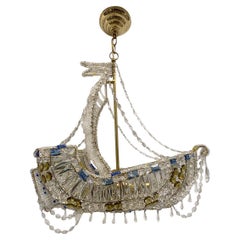
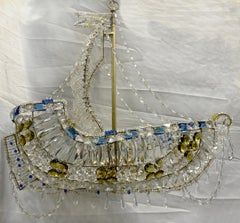
French Crystal Ship Chandelier
Located in New York, NY
A circa 1950's French crystal ship chandelier with 4 interior lights. Measurements: Height:28" Width:28" Depth:10.5"
Crystal
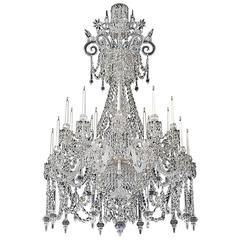
$414,140
H 86.03 in Dm 51.97 in
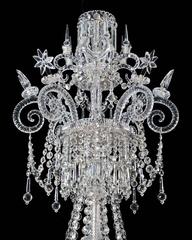
Extremely Rare Victorian Chandelier of Exceptional Quality and Size by F&C Osler
By F. & C. Osler
Located in Steyning, West sussex
An extremely rare early Victorian 20-light cut-glass silvered mounted chandelier of exceptional quality the baluster thumb and radial cut shaft with lower shaft canopy and draping pa...
Silver Plate
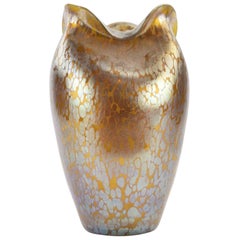
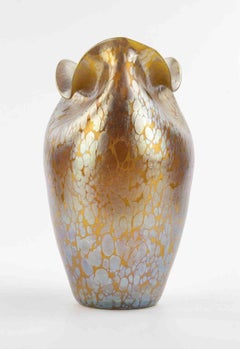
Iridescent Glass Vase Attr. to Loetz, 1930s
By Loetz Glass
Located in Roma, IT
Vintage glass vase attr. to Loetz, realized in Austria in the early 20th Century. Excellent condition.
Art Glass
$13,751Sale Price|27% Off
H 21.66 in Dm 11.03 in
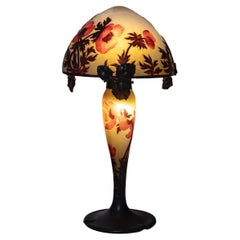
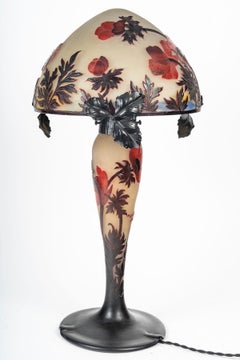
Müller Frères, Lunéville, "Anémones" Art Nouveau Glass Lamp circa 1910
By Muller Fres Luneville
Located in Saint-Ouen, FR
Muller Frères, Lunéville, “Anémones” Lamp Mushroom lamp in multi-layered glass with acid-etched and wheel-carved decoration of red and mauve magnolias in bloom on an opalescent backg...
Wrought Iron
“Art for art’s sake” was a belief strongly espoused by the celebrated French designer and glassworker Émile Gallé. Through his ethereal glass vases, other vessels and lamps, which he adorned with botanical and religious motifs, Gallé advanced the Art Nouveau ideology and led the modern renaissance of French glass.
Gallé was the son of successful faience and furniture maker Charles Gallé but studied philosophy and botany before coming to glassmaking later in life. The young Gallé’s expertise in botany, however, would inform his design style and become his signature for generations to come.
After learning the art of glassmaking, Gallé went to work at his father’s factory in Nancy. He initially created clear glass objects but later began to experiment with layering deeply colored glass.
While glassmakers on Murano had applied layers of glass and color on decorative objects before Gallé had, he was ever-venturesome in his northeastern France, taking advantage of defects that materialized during his processes and etching in natural forms like insects such as dragonflies, marine life, the sun, vines, fruits and flowers modeled from local specimens.
Gallé is also credited with reviving cameo glass, a glassware style that originated in Rome. He used cabochons, which were applied raised-glass decorations colored with metallic oxides and made to resemble rich jeweling. Gallé's cameo glass vases and vessels were widely popular at the Paris Exhibition of 1878, cementing his position as a talented designer and pioneer.
During the late 19th century, Gallé led breakthroughs in mass production and employed hundreds of artisans in his workshop.
Botany and nature remained great sources of inspiration for the artist's glassmaking — just as they had for other Art Nouveau designers. From approximately 1890 to 1910, the movement’s talented designers produced furniture, glass and architecture in the form of — or adorned with — gently intertwining trees, flowers and vines. But Gallé had many interests, such as Eastern art and ceramics. The Japanese collection he visited at the Victoria and Albert Museum in London (then the South Kensington Museum) during the 1870s had made an impression too.
Breaking free from the rigid Victorian traditions, Gallé infused new life and spirit into the art and design of his time through exquisitely crafted glass vessels and pioneering new glassworking techniques.
Find a collection of Émile Gallé vases and other furniture and decorative objects on 1stDibs.
In its sinuous lines and flamboyant curves inspired by the natural world, antique Art Nouveau furniture reflects a desire for freedom from the stuffy social and artistic strictures of the Victorian era. The Art Nouveau movement developed in the decorative arts in France and Britain in the early 1880s and quickly became a dominant aesthetic style in Western Europe and the United States.
ORIGINS OF ART NOUVEAU FURNITURE DESIGN
CHARACTERISTICS OF ART NOUVEAU FURNITURE DESIGN
ART NOUVEAU FURNITURE DESIGNERS TO KNOW
ANTIQUE ART NOUVEAU FURNITURE ON 1STDIBS
Art Nouveau — which spanned furniture, architecture, jewelry and graphic design — can be easily identified by its lush, flowing forms suggested by flowers and plants, as well as the lissome tendrils of sea life. Although Art Deco and Art Nouveau were both in the forefront of turn-of-the-20th-century design, they are very different styles — Art Deco is marked by bold, geometric shapes while Art Nouveau incorporates dreamlike, floral motifs. The latter’s signature motif is the "whiplash" curve — a deep, narrow, dynamic parabola that appears as an element in everything from chair arms to cabinetry and mirror frames.
The visual vocabulary of Art Nouveau was particularly influenced by the soft colors and abstract images of nature seen in Japanese art prints, which arrived in large numbers in the West after open trade was forced upon Japan in the 1860s. Impressionist artists were moved by the artistic tradition of Japanese woodblock printmaking, and Japonisme — a term used to describe the appetite for Japanese art and culture in Europe at the time — greatly informed Art Nouveau.
The Art Nouveau style quickly reached a wide audience in Europe via advertising posters, book covers, illustrations and other work by such artists as Aubrey Beardsley, Henri de Toulouse-Lautrec and Alphonse Mucha. While all Art Nouveau designs share common formal elements, different countries and regions produced their own variants.
In Scotland, the architect Charles Rennie Mackintosh developed a singular, restrained look based on scale rather than ornament; a style best known from his narrow chairs with exceedingly tall backs, designed for Glasgow tea rooms. Meanwhile in France, Hector Guimard — whose iconic 1896 entry arches for the Paris Metro are still in use — and Louis Majorelle produced chairs, desks, bed frames and cabinets with sweeping lines and rich veneers.
The Art Nouveau movement was known as Jugendstil ("Youth Style") in Germany, and in Austria the designers of the Vienna Secession group — notably Koloman Moser, Josef Hoffmann and Joseph Maria Olbrich — produced a relatively austere iteration of the Art Nouveau style, which mixed curving and geometric elements.
Art Nouveau revitalized all of the applied arts. Ceramists such as Ernest Chaplet and Edmond Lachenal created new forms covered in novel and rediscovered glazes that produced thick, foam-like finishes. Bold vases, bowls and lighting designs in acid-etched and marquetry cameo glass by Émile Gallé and the Daum Freres appeared in France, while in New York the glass workshop-cum-laboratory of Louis Comfort Tiffany — the core of what eventually became a multimedia decorative-arts manufactory called Tiffany Studios — brought out buoyant pieces in opalescent favrile glass.
Jewelry design was revolutionized, as settings, for the first time, were emphasized as much as, or more than, gemstones. A favorite Art Nouveau jewelry motif was insects (think of Tiffany, in his famed Dragonflies glass lampshade).
Like a mayfly, Art Nouveau was short-lived. The sensuous, languorous style fell out of favor early in the 20th century, deemed perhaps too light and insubstantial for European tastes in the aftermath of World War I. But as the designs on 1stDibs demonstrate, Art Nouveau retains its power to fascinate and seduce.
There are ways to tastefully integrate a touch of Art Nouveau into even the most modern interior — browse an extraordinary collection of original antique Art Nouveau furniture on 1stDibs, which includes decorative objects, seating, tables, garden elements and more.