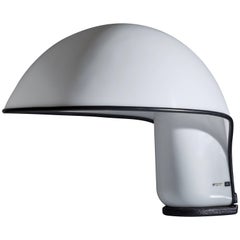
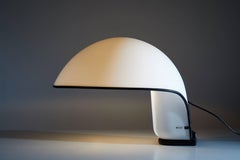
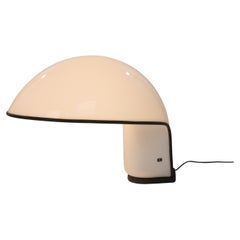
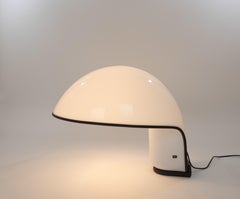
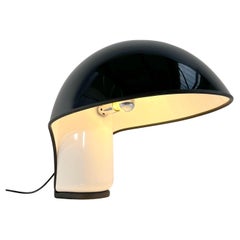
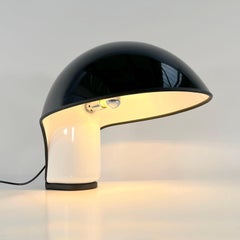
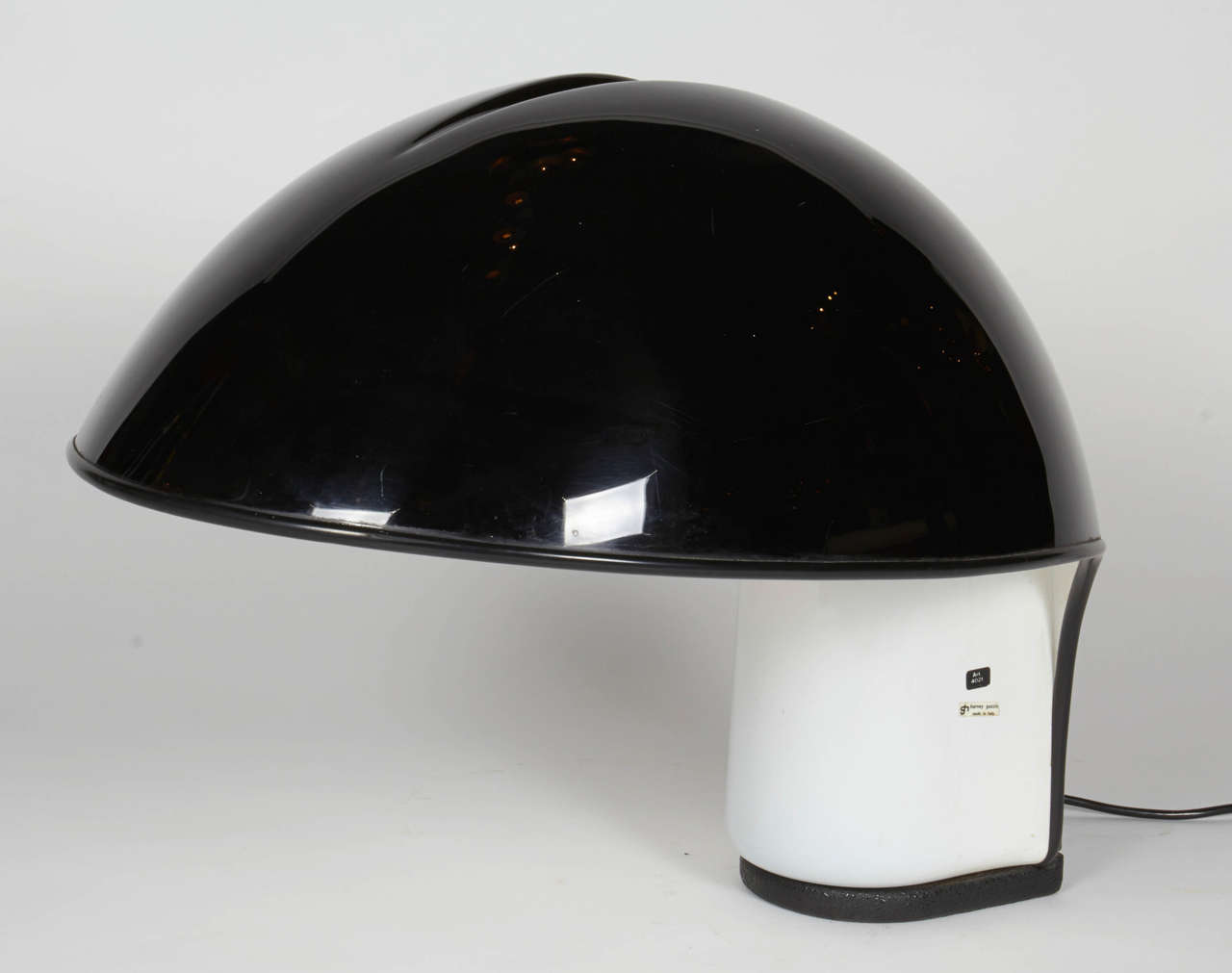
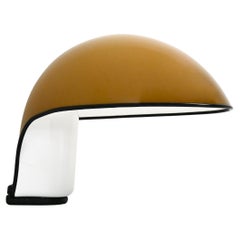
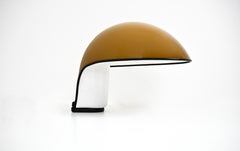
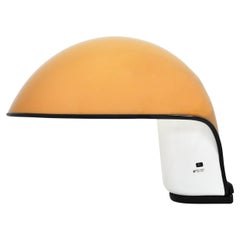
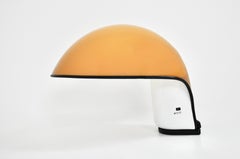
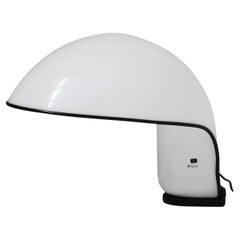
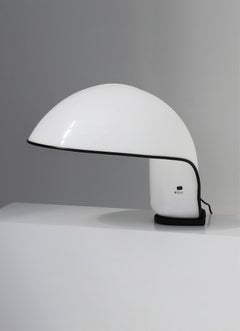
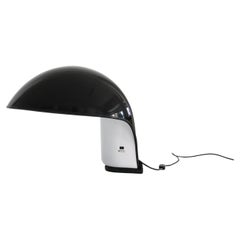
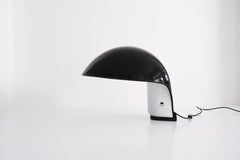
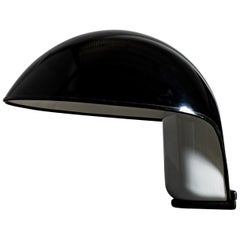
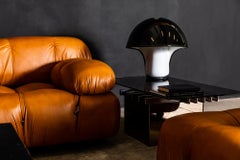
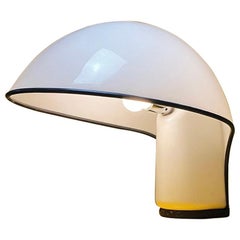
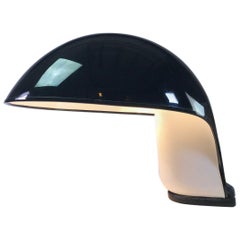
Harvey Guzzini may sound like a single designer, but it was actually a mid-century Italian lighting company started by six brothers in the Guzzini family: Giovanni, Raimondo, Giuseppe, Adolfo, Virgilio and Giannunzio. The first part of the name was an homage to the 1950 film Harvey. Compounding the historical record even further, it seems that the Guzzini company rebranded many times in the 20th century, going by, at various points, Harvey Creazioni, Guzzini, Illuminazione Guzzini and iGuzzini.
The Harvey Guzzini brand produced a range of fixtures during the postwar years, including table lamps, floor lamps and pendant lights.
Harvey Guzzini was founded in 1959 in a room of Giovanni's home in the town of Recanati. Initially, the company was focused on making copper decorative objects. The brothers quickly established their own studio space and, in 1963, they expanded into lighting production. The following year, they hired prolific Italian designer Luigi Massoni as head of design. In addition to Harvey Guzzini, Massoni was involved with many of Italy’s most influential brands, such as Poltrona Frau and Alessi.
Another key to the growing success of Harvey Guzzini was partnerships with a number of Italy's most prominent designers, including Gio Ponti, Fabio Lenci, Rodolfo Bonetto, Cesare Casati and Ennio Lucini.
From 1967 to 1968, Harvey Guzzini also participated in “Domus: Formes Italiennes,” an exhibition held at the Galeries Lafayette in Paris. By 1969, the company had grown into one of the best-known design firms in the country and opened a retail outlet in central Milan. Famous Harvey Guzzini designs include Massoni and Luciano Buttura's Mushroom table lamp (1965) as well as the in-house designed Arc floor lamp (1968), Faro table lamp (1970) and Toledo table lamp (1973).
In 1974, Harvey Guzzini rebranded as iGuzzini. The company introduced a range of new and technically advanced lighting fixtures, including low-voltage halogen lamps. In 1977, iGuzzini organized the first Italian lighting design conference. In 1991, it was awarded the Compasso d'Oro for its commitment to design.
Today, iGuzzini remains headquartered in Recanati and is a leading international architectural lighting group with a rich heritage spanning more than six decades since its early days as Harvey Guzzini. The company creates lighting fixtures for workplaces, city infrastructure and even cultural heritage sites.
On 1stDibs, find a collection of vintage Harvey Guzzini table lamps, floor lamps and other lighting.
Arguably the world’s most ubiquitous man-made material, plastic has impacted nearly every industry. In contemporary spaces, new and vintage plastic furniture is quite popular and its use pairs well with a range of design styles.
From the Italian lighting artisans at Fontana Arte to venturesome Scandinavian modernists such as Verner Panton, who created groundbreaking interiors as much as he did seating — see his revolutionary Panton chair — to contemporary multidisciplinary artists like Faye Toogood, furniture designers have been pushing the boundaries of plastic forever.
When The Graduate's Mr. McGuire proclaimed, “There’s a great future in plastics,” it was more than a laugh line. The iconic quote is an allusion both to society’s reliance on and its love affair with plastic. Before the material became an integral part of our lives — used in everything from clothing to storage to beauty and beyond — people relied on earthly elements for manufacturing, a process as time-consuming as it was costly.
Soon after American inventor John Wesley Hyatt created celluloid, which could mimic luxury products like tortoiseshell and ivory, production hit fever pitch, and the floodgates opened for others to explore plastic’s full potential. The material altered the history of design — mid-century modern legends Charles and Ray Eames, Joe Colombo and Eero Saarinen regularly experimented with plastics in the development of tables and chairs, and today plastic furnishings and decorative objects are seen as often indoors as they are outside.
Find vintage plastic lounge chairs, outdoor furniture, lighting and more on 1stDibs.
Antique table lamps became a category of their own once electricity moved light off the wall and onto furniture. The form split quickly: task-driven designs like the Anglepoise on one side, decorative ceramic and glass on the other.
Styles to Know
Base material shapes the light as much as the shade does: ceramic and glass diffuse a softer glow, while brass and metal read more directional. Layer the look with a mid-century modern floor lamp for ambient light, or set a pair on a mid-century modern nightstand for a bedroom.
How to Choose the Right Vintage Table Lamp
Buying individually rather than as a pair allows more flexibility when mixing eras across a room. For those shopping by name rather than by shape, the history of the Anglepoise lamp is worth a read. Each piece comes from a vetted 1stDibs seller, with era, designer and condition detailed, and the 1stDibs Promise stands behind every purchase.