Meissen Indian Flowers

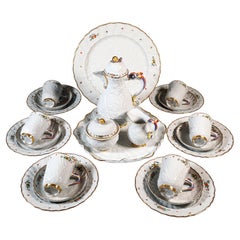
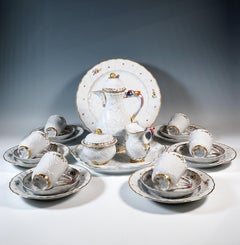
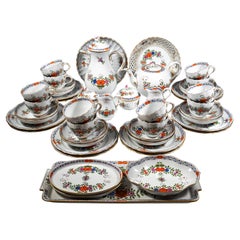
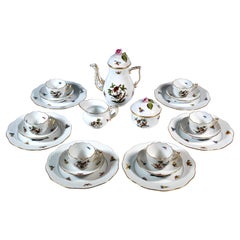
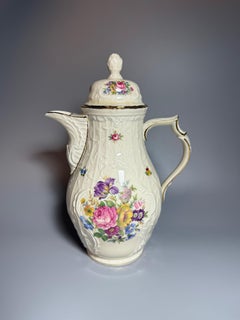
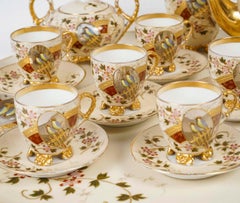
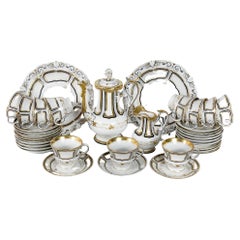
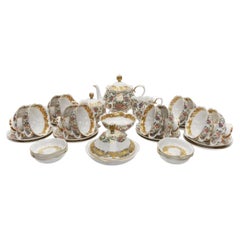
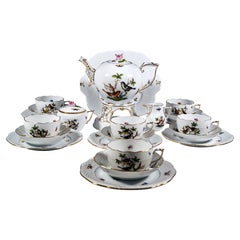
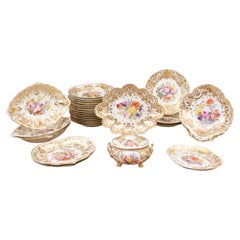
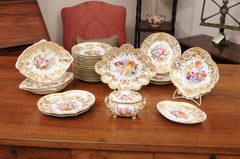
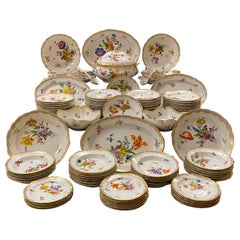
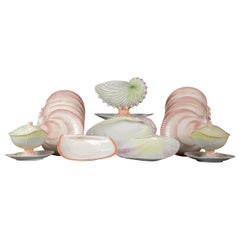
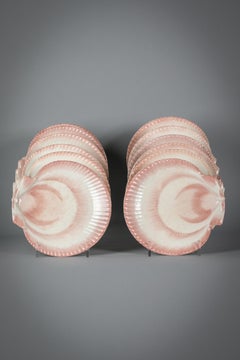
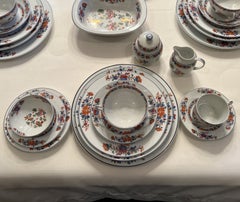
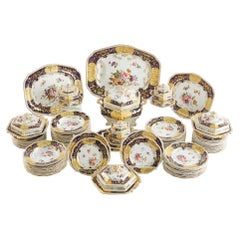
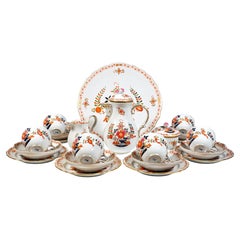
Meissen Swan Service Coffee Set For 6 Persons, With Indian Flowers, 20th Century

Meissen Swan Service Coffee Set For 6 Persons, With Indian Flowers, 20th Century

By Meissen Porcelain, Johann Joachim Kaendler

Located in Vienna, AT

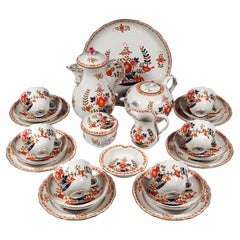
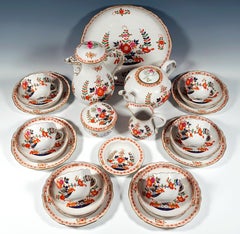
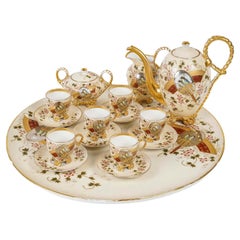
Meissen Coffee & Dessert Set for 6 Persons: Meissen service, consisting of 23 pieces: 1 coffee pot

Category

Late 20th Century German Baroque Porcelain

Materials

Porcelain

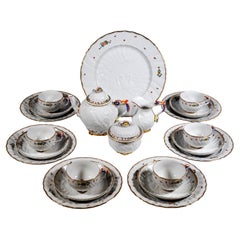
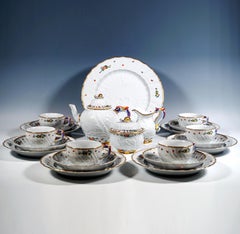
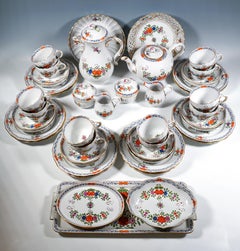
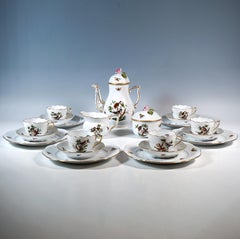
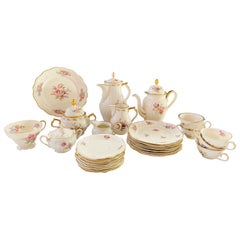
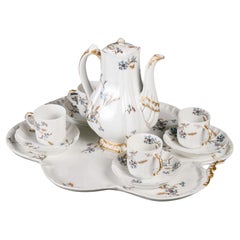
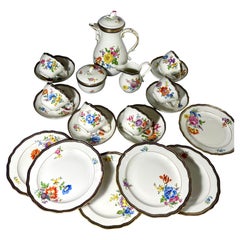
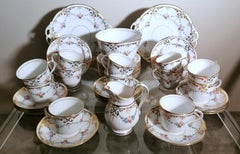
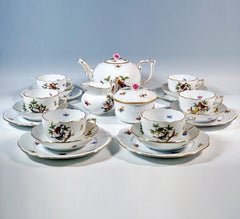
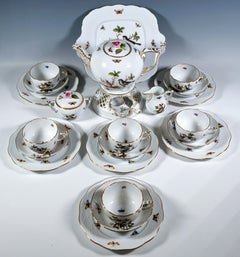
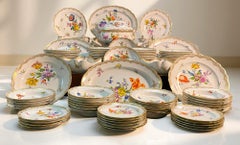
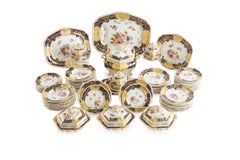
Meissen Swan Service Tea Coffee Set For 6 Persons, With Indian Flowers, 20th C

Meissen Swan Service Tea Coffee Set For 6 Persons, With Indian Flowers, 20th C

By Meissen Porcelain, Johann Joachim Kaendler

Located in Vienna, AT

painting with Indian flower branches and scattered flowers, as well as gold decoration, handles designed as

Category

Late 20th Century German Baroque Porcelain

Materials

Porcelain

Recent Sales

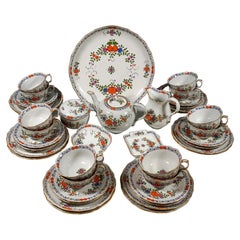
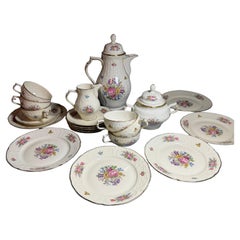
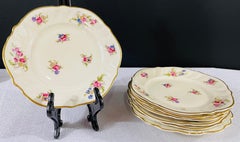
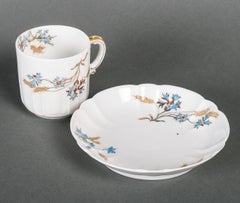
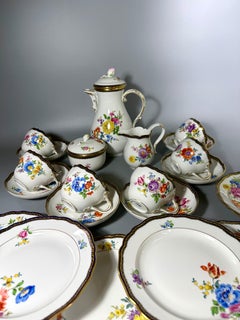
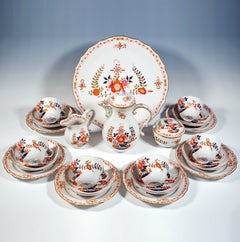
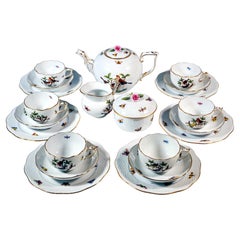
Meissen Coffee & Tea Set For 6 People, Indian Flowers Coloured & Gold, 20th C.

Meissen Coffee & Tea Set For 6 People, Indian Flowers Coloured & Gold, 20th C.

By Meissen Porcelain

Located in Vienna, AT

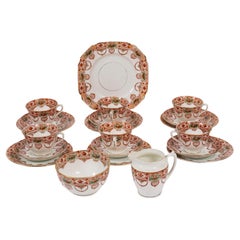
. Shape: New cutout Decor: Indian flower painting - table pattern, colourful with iron-red leaf borders

Category

Vintage 1960s German Baroque Porcelain

Materials

Porcelain

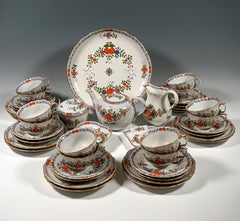
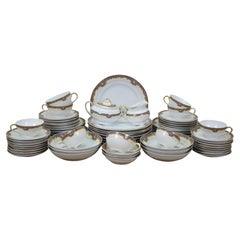
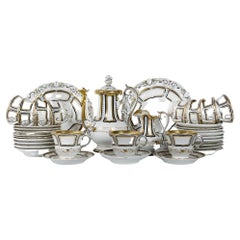
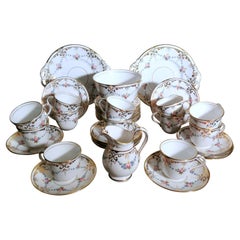
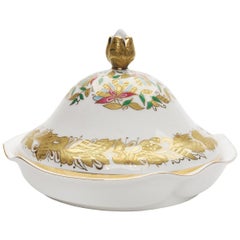
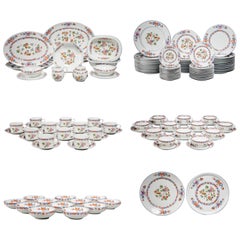
Meissen Koffee, Tee & Dessert Set For 12 Pers., Indian Flowers, Germany, 20th C.

Meissen Koffee, Tee & Dessert Set For 12 Pers., Indian Flowers, Germany, 20th C.

By Meissen Porcelain

Located in Vienna, AT

Meissen Coffee and Tea Service, Consisting of 48 Parts: 1 lidded coffee pot, 1 lidded teapot, 2

Category

20th Century German Baroque Porcelain

Materials

Porcelain

Meissen Tea & Dessert Set For 12 Indian Flowers Coloured & Gold 20th Century

Meissen Tea & Dessert Set For 12 Indian Flowers Coloured & Gold 20th Century

By Viennese Imperial Porcelain Manufactory

Located in Vienna, AT

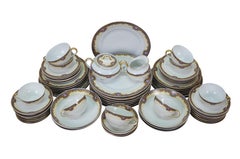
Meissen Tea Service, Consisting of 42 Parts: 1 tea pot with lid, 1 milk jug, 1 lidded sugar bowl

Category

20th Century German Baroque Porcelain

Materials

Porcelain

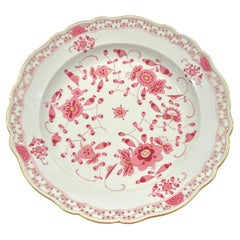
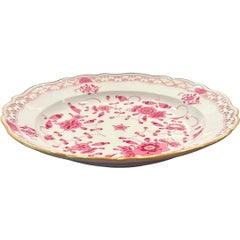
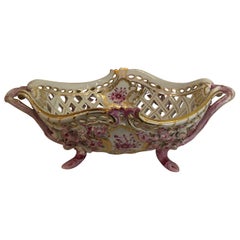
Meissen Purple Indian Reticulated Centerpiece Bowl Encrusted with Raised Flowers

Meissen Purple Indian Reticulated Centerpiece Bowl Encrusted with Raised Flowers

By Meissen Porcelain

Located in Boston, MA

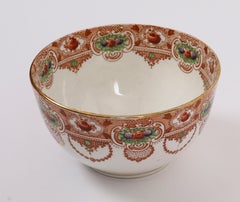
purple Indian pattern. This fabulous centerpiece is encrusted with raised pink flowers all over the

Category

Antique 1880s German Rococo Centerpieces

Materials

Porcelain

People Also Browsed

Fabergé Silver Service

Fabergé Silver Service

$248,500 / set

H 10.25 in W 20.75 in D 16.38 in

Fabergé Silver Service

By Fabergé

Located in New Orleans, LA

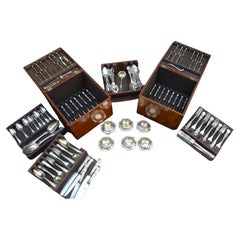
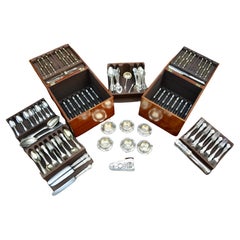
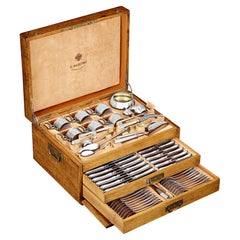
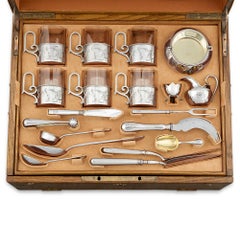
This extraordinary 128-piece service by Fabergé is a rare treasure in more ways than one. Enclosed in its original oak chest, the exquisite service remains complete and in pristine c...

Category

Antique 19th Century Russian Sterling Silver

Materials

Silver

19th Century French Monumental Silver-Gilt Tea Service by Cardeilhac, circa 1870

19th Century French Monumental Silver-Gilt Tea Service by Cardeilhac, circa 1870

By Cardeilhac

Located in Royal Tunbridge Wells, Kent

Antique 19th century exceptional French Louis XVI style silver-gilt monumental tea service, comprising of a silver plated kettle on stand and silver plated plated tray, all other pie...

Category

Antique 19th Century French Louis XVI Tea Sets

Materials

Silver, Silver Plate

A 200 Plus Set of 19 Century Imperial Russian Silver Flatware by Andrei Bragin

A 200 Plus Set of 19 Century Imperial Russian Silver Flatware by Andrei Bragin

By Andrei Bragin

Located in Vancouver, British Columbia

An exceptional and extremely rare set of a combination of silver and vermeil (gilded silver) flatware designed and crafted in St Petersburg Russia by Andrei Stepanovich Bragin d...

Category

Antique Mid-19th Century Russian Other Sterling Silver

Materials

Silver, Vermeil

133 Piece House of Puiforcat Kiang She Dinner Service for 12 by Limoges, France

133 Piece House of Puiforcat Kiang She Dinner Service for 12 by Limoges, France

By Puiforcat

Located in Morristown, NJ

20th c., France, a magnificent Chinese-inspired service from the 18th century "Kiang She" (on white background) from Puiforcat. 133 pieces of gilt and polychrome enameled porcelain, ...

Category

1990s French Chinoiserie Porcelain

Materials

Porcelain, Paint

Russian Malachite and Silver Table by Imperial Silversmiths the Grachev Brothers

Russian Malachite and Silver Table by Imperial Silversmiths the Grachev Brothers

By Grachev Brothers

Located in London, GB

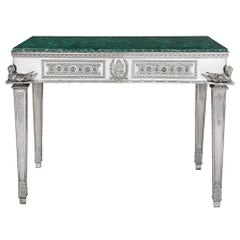
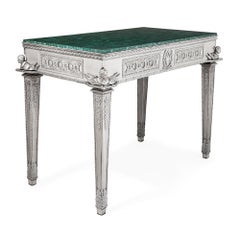
Russian malachite and silver table by Imperial silversmiths the Grachev Brothers Russian, 1884 Measures: Height 85cm, width 113cm, depth 63cm This beautiful silver table was man...

Category

Antique Late 19th Century Russian Neoclassical Center Tables

Materials

Malachite, Silver

Paul Revere Coffee Pot

Paul Revere Coffee Pot

$1,285,000

H 12.25 in W 10 in D 5 in

Paul Revere Coffee Pot

By Paul Revere

Located in New Orleans, LA

Sterling Silver Coffee Pot Paul Revere Circa 1775 This phenomenal and incredibly rare silver coffee pot by the legendary patriot Paul Revere is one of only six armorial coffee pots ...

Category

Antique 18th Century American Sterling Silver

Materials

Sterling Silver

Rare Antique 102 piece Meissen „Flower Bouqet” Dinner Service, Germany 1840

Rare Antique 102 piece Meissen „Flower Bouqet” Dinner Service, Germany 1840

By Meissen Porcelain

Located in Rome, IT

Extensive 102 Piece Rare Meissen Dinner Service "Flower Bouqett", 1815 – 1860 , colorful, richly decorated gold rim, consisting of: 45 dinner plates (Ø 24 cm,) 24 deep plates (Ø 23 ...

Category

Antique 19th Century Italian Neoclassical Dinner Plates

Materials

Porcelain

Meissen Four Elements Porcelain Ewers

Meissen Four Elements Porcelain Ewers

$298,500 / set

H 27 in W 15 in D 10 in

Meissen Four Elements Porcelain Ewers

By Meissen Porcelain

Located in New Orleans, LA

This extremely rare and important set of four Meissen ewers represents the Four Elements: Earth, Air, Water and Fire. Impressive in both size and artistry, they are among the most fa...

Category

Antique 19th Century German Other Porcelain

Materials

Porcelain

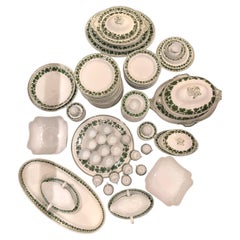
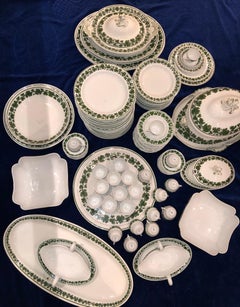
A Large 121 Total Piece 20th C. Meissen Porcelain Green Vine Table Service

A Large 121 Total Piece 20th C. Meissen Porcelain Green Vine Table Service

By Meissen Porcelain

Located in New York, NY

A Tremendously Large 121 Piece 20th Century Meissen Porcelain Green Vine Table Service. This service is fully complete with an exuberant number of pieces which can we used in all di...

Category

Mid-20th Century German Other Porcelain

Materials

Porcelain

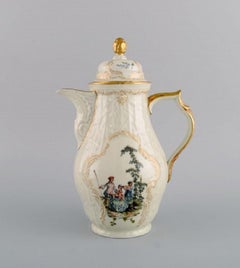
19th C Meissen Porcelain Covered Openwork Filigree Centerpiece w/ Watteau Scenes

19th C Meissen Porcelain Covered Openwork Filigree Centerpiece w/ Watteau Scenes

By Meissen Porcelain

Located in New York, NY

A 19th Century Meissen Porcelain Covered Openwork Filigree Centerpiece with Watteau Cartouches and Village Scene Cartouches. This 19th-century Meissen porcelain covered centerpiece ...

Category

Antique 1870s German Rococo Porcelain

Materials

Porcelain

Meissen Coffee Mocha & Dessert Set For 6 Persons 1001 Arabian Nights 25 Pieces

Meissen Coffee Mocha & Dessert Set For 6 Persons 1001 Arabian Nights 25 Pieces

By Ludwig Zepner, Meissen Porcelain, Heinz Werner

Located in Vienna, AT

Meissen service, consisting of 25 pieces: 1 mocha pot with lid, 1 milk jug, 1 lidded sugar bowl, 1 small bowl, 1 tea caddy, 1 bottle for rose essence, 6 cups, 6 saucers, 6 dessert pl...

Category

Vintage 1980s German Other Porcelain

Materials

Porcelain

Get Updated with New Arrivals
Save "Meissen Indian Flowers", and we’ll notify you when there are new listings in this category.

Meissen Indian Flowers For Sale on 1stDibs

Find a variety of meissen indian flowers available on 1stDibs. Frequently made of ceramic, porcelain and bronze, all meissen indian flowers available were constructed with great care. Meissen indian flowers have been made for many years, and versions that date back to the 18th Century alongside those produced as recently as the 20th Century. Meissen indian flowers bearing Rococo or Baroque hallmarks are very popular at 1stDibs. There have been many well-made meissen indian flowers over the years, but those made by Meissen Porcelain are often thought to be among the most beautiful.

How Much are Meissen Indian Flowers?

Prices for meissen indian flowers start at $280 and top out at $18,950 with the average selling for $1,500.

Meissen Porcelain for sale on 1stDibs

Meissen Porcelain (Staatliche Porzellan-Manufaktur Meissen) is one of the preeminent porcelain factories in Europe and was the first to produce true porcelain outside of Asia. It was established in 1710 under the auspices of King Augustus II “the Strong” of Saxony-Poland (1670–1733), a keen collector of Asian ceramics, particularly Ming porcelain.

In pursuing his passion, which he termed his “maladie de porcelaine,” Augustus spent vast sums, amassing some 20,000 pieces of Japanese and Chinese ceramics. These, along with examples of early Meissen, comprise the Porzellansammlung, or porcelain collection, of the Zwinger Palace, in Dresden.

The king was determined, however, to free the European market from its dependence on Asian imports and to give European artisans the freedom to create their own porcelain designs. To this end, he charged the scientist Ehrenfried Walther von Tschirnhaus and aspiring alchemist Johann Friedrich Böttger with the task of using local materials to produce true, hard-paste porcelain (as opposed to the soft-paste variety European ceramists in the Netherlands, Germany, France, Italy and Spain had been producing since the late Renaissance). In 1709, the pair succeeded in doing just that, employing kaolin, or “china clay.” A year later, the Meissen factory was born.

In its first decades, Meissen mostly looked to Asian models, producing wares based on Japanese Kakiemon ceramics and pieces with Chinese-inflected decorations called chinoiserie. During the 1720s its painters drew inspiration from the works of Watteau, and the scenes of courtly life, fruits and flowers that adorned fashionable textiles and wallpaper. It was in this period that Meissen introduced its famous cobalt-blue crossed swords logo — derived from the arms of the Elector of Saxony as Arch-Marshal of the Holy Roman Empire — to distinguish its products from those of competing factories that were beginning to spring up around Europe.

By the 1730s, Meissen’s modelers and decorators had mastered the style of Asian ceramics, and Augustus encouraged them to develop a new, original aesthetic. The factory’s director, Count Heinrich von Brühl, used Johann Wilhelm Weinmann’s botanical drawings as the basis for a new line of wares with European-style surface decoration. The Blue Onion pattern (Zwiebelmuster), first produced in 1739, melded Asian and European influences, closely following patterns used in Chinese underglaze-blue porcelain, but replacing exotic flora and fruits with Western varieties (likely peaches and pomegranates, not onions) along with peonies and asters.

During the same period, head modeler Joachim Kändler (1706–75) began crafting delicate porcelain figures derived from the Italian commedia dell’arte. Often used as centerpieces on banquet tables and decorated to reflect the latest fashions in courtly dress for men and women, these figurines were popular in their day, and are still considered among Meissen’s most iconic creations. Kändler also created the Swan Service, which, with its complex low-relief surface design and minimal decoration is considered a masterpiece of Baroque ceramics.

The rise of Neoclassicism in the latter half of the 18th century forced Meissen to change artistic direction and begin producing monumental vases, clocks, chandeliers and candelabra. In the 20th century, Meissen added to its 18th-century repertoire decidedly modern designs, including ones in the Art Nouveau style. The 1920s saw the introduction of numerous animal figures, such as the popular sea otter (Fischotter), which graced an East German postage stamp in the 1960s. Starting in 1933, artistic freedom was limited at the factory under the Nazi regime, and after World War II, when the region became part of East Germany, it struggled to reconcile its elite past with the values of the Communist government. In 1969, however, new artistic director Karl Petermann reintroduced the early designs and fostered a new degree of artistic license. Meissen became one of the few companies to prosper in East Germany.

Owned by the State of Saxony since reunification, in 1990, Meissen continues to produce its classic designs together with new ones developed collaboratively with artists from all over the world. In addition, through its artCAMPUS program, the factory has invited distinguished ceramic artists, such as Chris Antemann and Arlene Shechet, to work in its studios in collaboration with its skilled modelers and painters. The resulting works of contemporary sculpture are inspired by Meissen’s rich and complex legacy.

Find a collection of authentic Meissen Porcelain on 1stDibs.

Finding the Right Tableware for You

While it isn’t always top of mind for some, antique and vintage tableware can enhance even the most informal meal. It has been an intimate part of how we’ve interacted with our food for millennia.

Tableware has played a basic but important role in everyday life. Ancient Egyptians used spoons (which are classified as flatware) made of ivory and wood, while Greeks and Romans, who gathered for banquets involving big meals and entertainment, ate with forks and knives. At the beginning of the 17th century, however, forks were still uncommon in American homes. Over time, tableware has thankfully evolved and today includes increasingly valuable implements.

Tableware refers to the tools people use to set the table, including serving pieces, dinner plates and more. It encompasses everything from the intricate and elaborate to the austere and functional, yet are all what industrial product designer Jasper Morrison might call “Super Normal” — anonymous objects that are too useful to be considered banal.

There are four general categories of tableware — serveware, dinnerware, drinkware and, lastly, flatware, which is commonly referred to as silverware or cutlery. Serveware includes serving bowls, platters, gravy boats, casserole pans and ladles. Most tableware is practical, but it can also be decorative. And decorative objects count as tableware too. Even though they don’t fit squarely into one of the four categories, vases, statues and floral arrangements are traditional centerpieces.

Drinkware appropriately refers to the vessels we use for our beverages — mugs, cups and glasses. There is a good deal of variety that falls under this broad term. For example, your cheerful home bar or mid-century modern bar cart might be outfitted with a full range of vintage barware, which might include pilsner glasses and tumblers. Specialty cocktails are often served in these custom glasses, but they’re still a type of drinkware.
Every meal should be special — even if you’re using earthenware or stoneware for a casual lunch — but perhaps you’re hosting a dinner party to mark a specific event. The right high-quality tableware can bring a touch of luxury to your cuisine. Young couples, for example, traditionally add “fine china,” or porcelain, to their wedding registry as a commemoration of their union and likely wouldn’t turn down exquisite silver made by Tiffany & Co. or Georg Jensen.

It’s important to remember, however, that when you’re setting the dining room table to have fun with it. Just as you might mix and match your dining chairs, don’t be afraid to mix new and old or high and low with your tableware. On 1stDibs, find an extraordinary range of vintage and antique tableware to help elevate your meal as well as the mood and atmosphere of your entire dining room.