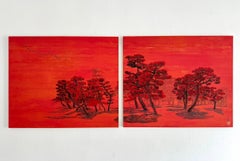
Japanese Gold Paintings

to
48
638
229
392
367
150
139
114
103
94
88
88
84
50
37
22
22
22
15
11
9
9
9
8
8
7
6
5
5
5
3
3
3
2
2
2
2
2
2
2
1
1
1
1
1
1
1
46
31
15
13
6
Sort By
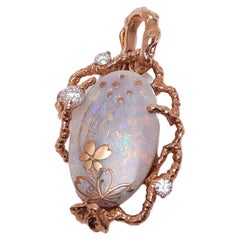
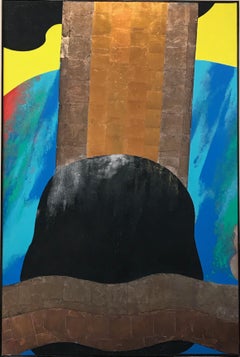
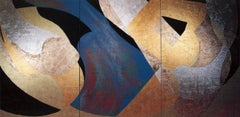
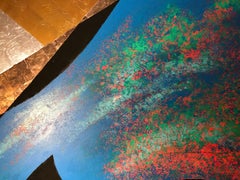
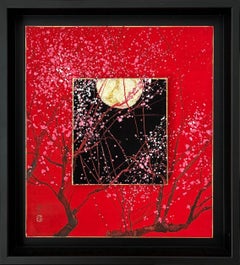
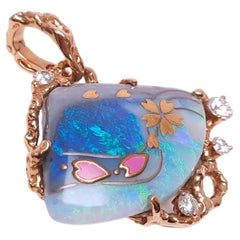
18k Gold Art Opal Pendant with Japanese Gold Painting Technology

18k Gold Art Opal Pendant with Japanese Gold Painting Technology

By MOISEIKIN

Located in Hong Kong, HK

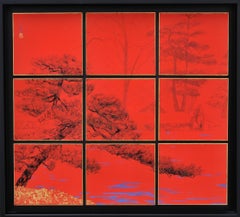
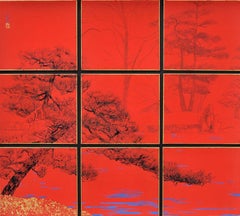
Collaborated with Japanese traditional art technique "Maki-e," MOISEIKIN® created a beautiful water

Category

2010s Russian Contemporary Pendant Necklaces

Materials

Diamond, Opal, 18k Gold

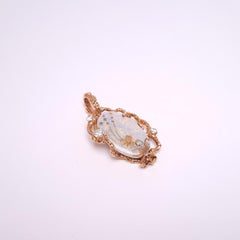
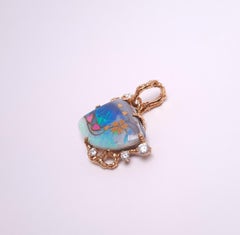
18k Gold Art Opal Pendant with Japanese Gold Painting Technology

18k Gold Art Opal Pendant with Japanese Gold Painting Technology

By MOISEIKIN

Located in Hong Kong, HK

Collaborated with Japanese traditional art technique "Maki-e," MOISEIKIN® created a beautiful water

Category

2010s Russian Contemporary Pendant Necklaces

Materials

Diamond, Opal, 18k Gold

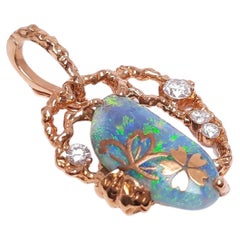
18k Gold Art Opal Pendant with Japanese Gold Painting Technology

18k Gold Art Opal Pendant with Japanese Gold Painting Technology

By MOISEIKIN

Located in Hong Kong, HK

Collaborated with Japanese traditional art technique "Maki-e," MOISEIKIN® created a beautiful water

Category

2010s Russian Contemporary Pendant Necklaces

Materials

Diamond, Opal, 18k Gold

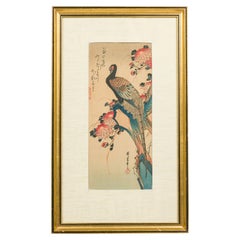
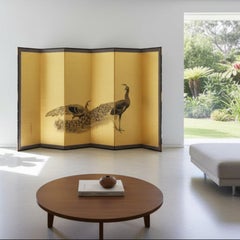
Japanese Painting of a Peacock on Branch

Japanese Painting of a Peacock on Branch

Located in Queens, NY

Vintage Asian Japanese style picture in a gold frame of a peacock standing on a branch having

Category

Antique 19th Century Japanese Anglo-Japanese Paintings

Materials

Gold

Lovely Japanese 18th-19th Century Edo or Meiji Scroll Painting Japan

Lovely Japanese 18th-19th Century Edo or Meiji Scroll Painting Japan

Located in Amsterdam, Noord Holland

Maruyama–Shijo style painting C0ndition; Good but some stains. Overall dimensions: width of

Category

Antique 19th Century Japanese Meiji Paintings and Screens

Materials

Bronze

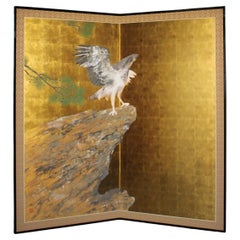
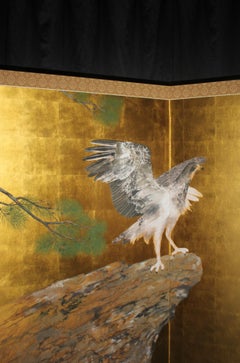
B86 Japanese Painting Art, Hawk, Gold Screen Byobu, 2-panels

B86 Japanese Painting Art, Hawk, Gold Screen Byobu, 2-panels

Located in Niiza, JP

Material: Gold Paper on wooden frame One piece: W900×H1760mm×D20mm, Unfolded size: W1800mm Folded

Category

20th Century Japanese Paintings and Screens

Materials

Paper

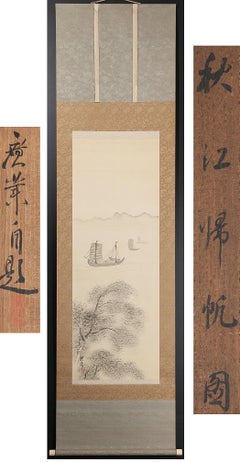
Scroll Painting Japanese 19th-20th Century Kōgyō Terasaki Meiji

Scroll Painting Japanese 19th-20th Century Kōgyō Terasaki Meiji

Located in Amsterdam, Noord Holland

A fabulous landscape by Kogyo Terasaki 1866-1919 Japan painter. Akita prefecture production

Category

20th Century Japanese Meiji Paintings and Screens

Materials

Bronze

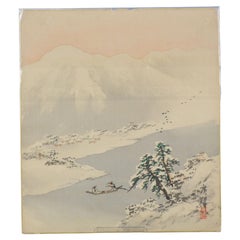
Antique Japanese Silk painting Japan Meiji Period Winter Landscape

Antique Japanese Silk painting Japan Meiji Period Winter Landscape

Located in Amsterdam, Noord Holland

A very nice blockprint 30-5-18-pm-3341 Condition / Overall Condition Perfect. Size frame: 242x 274mm. Period 19th century Meiji Periode (1867-1912)

Category

Antique 19th Century Chinese Edo Paintings and Screens

Materials

Bronze

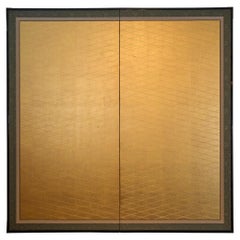
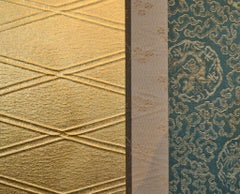
Japanese Two Panel Screen: Gold Lattice

Japanese Two Panel Screen: Gold Lattice

Located in Hudson, NY

Embossed gold paper in a lattice design with silk brocade border and black lacquer trim with bronze

Category

Early 20th Century Japanese Paintings and Screens

Materials

Gold, Bronze

Japanese Asian Signed Edo Period Kano School Painting of Mythical Landscape

Japanese Asian Signed Edo Period Kano School Painting of Mythical Landscape

Located in Studio City, CA

founded by Kano Masanobu, is one of the most famous schools of Japanese painting. The Kano school of

Category

Antique 18th Century Japanese Edo Paintings and Screens

Materials

Gold Leaf

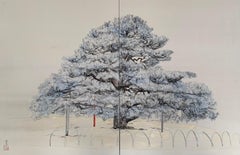
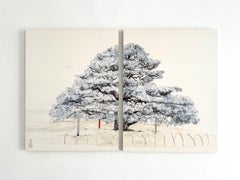
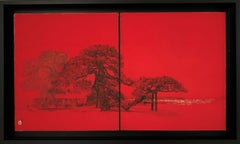
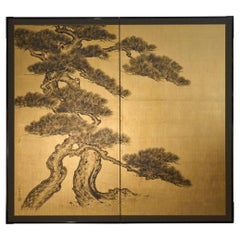
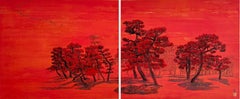
Japanese Two Panel Screen: Pine on Gold

Japanese Two Panel Screen: Pine on Gold

Located in Hudson, NY

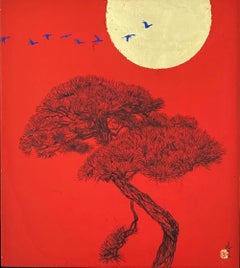
Japanese red pine tree in sumi-e ink on gold with silk brocade border and black lacquer trim

Category

Early 20th Century Japanese Paintings and Screens

Materials

Gold

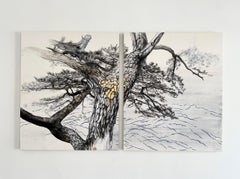
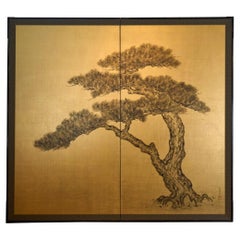
Japanese Two Panel Screen: Pine on Gold

Japanese Two Panel Screen: Pine on Gold

Located in Hudson, NY

Japanese red pine tree in sumi-e ink on gold with silk brocade border and black lacquer trim

Category

Early 20th Century Japanese Paintings and Screens

Materials

Gold

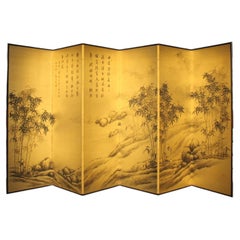
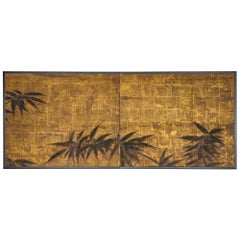
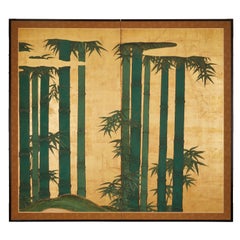
Japanese Two Panel Screen: Bamboo on gold

Japanese Two Panel Screen: Bamboo on gold

Located in Hudson, NY

heavy gold with black lacquer trim.

Category

Antique 16th Century Japanese Paintings and Screens

Materials

Gold Leaf

Japanese Painting, 17th Century, Tale of Genji, Tosa School

Japanese Painting, 17th Century, Tale of Genji, Tosa School

Located in Kyoto, JP

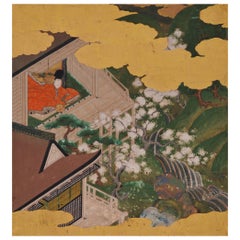
(second half of the 17th Century) Ink, pigment, gofun and gold on paper. Unframed. Dimensions

Category

Antique Late 17th Century Japanese Edo Paintings and Screens

Materials

Gold Leaf

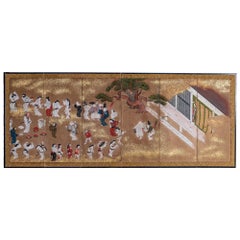
Japanese Six Panel Screen: Tosa School Painting of Theatre Scene

Japanese Six Panel Screen: Tosa School Painting of Theatre Scene

Located in Hudson, NY

with thought to be Izumo no Okuni (1578-1613). Mineral pigments and gold dust on mulberry paper

Category

Antique 18th Century Japanese Paintings and Screens

Materials

Gold

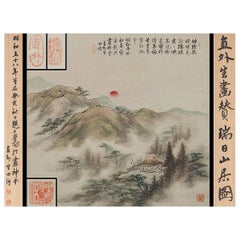
Lovely Scroll Painting Japan, 20th Century 'Showa' Artist Landscape Scene

Lovely Scroll Painting Japan, 20th Century 'Showa' Artist Landscape Scene

Located in Amsterdam, Noord Holland

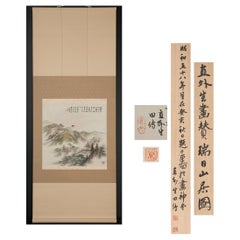
Lovely painting! Overall perfect: Size scroll, vertical 138.3 cm horizontal 54 cm picture

Category

20th Century Japanese Meiji Paintings and Screens

Materials

Bronze

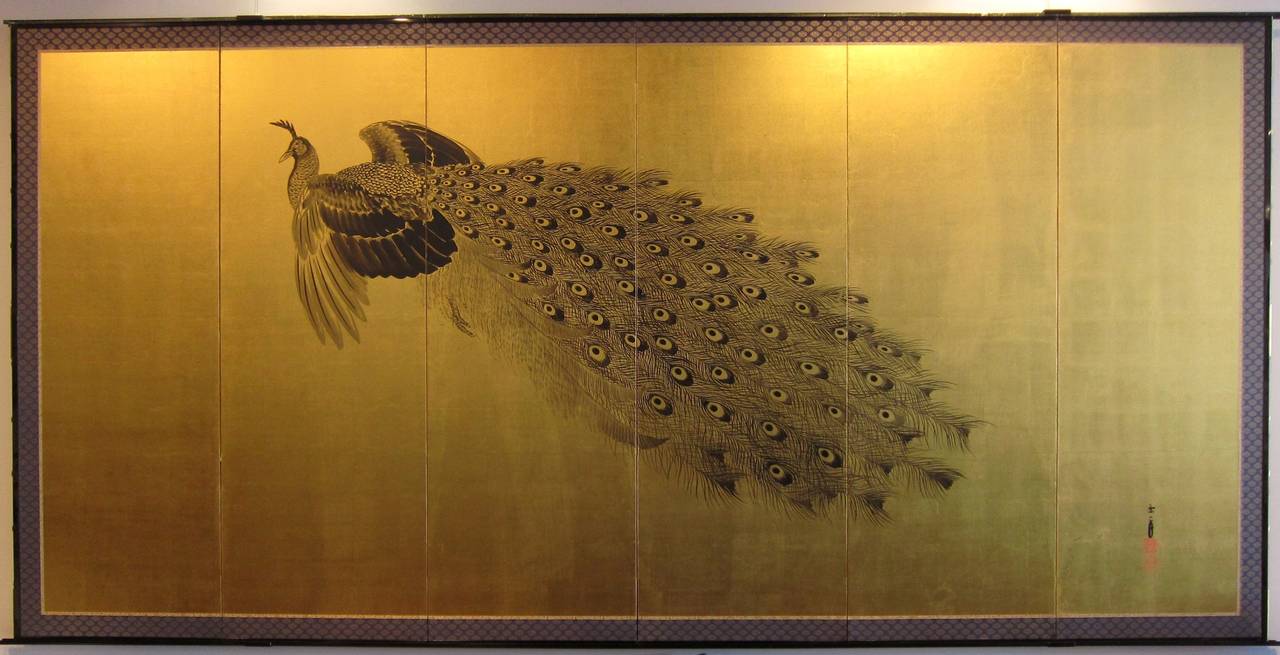
Pair of Japanese Screens: Ink paintings of peacocks on gold leaf by Imao Keinen

Pair of Japanese Screens: Ink paintings of peacocks on gold leaf by Imao Keinen

By Imao Keinen

Located in Prahran, Victoria

A pair of screens by Imao Keinen featuring peacocks painted in ink on gold leaf. Lacquered wood

Category

Antique Late 19th Century Japanese Meiji Paintings and Screens

Materials

Gold Leaf

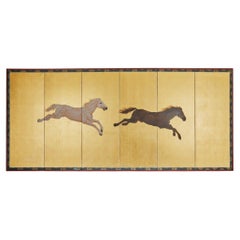
Japanese Six Panel Screen: Horses on Gold Leaf

Japanese Six Panel Screen: Horses on Gold Leaf

Located in Hudson, NY

Horses caught in full stride. Mineral pigments on gold leaf with silk brocade border and an oxblood

Category

20th Century Japanese Paintings and Screens

Materials

Gold Leaf

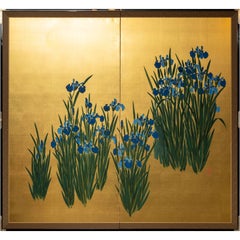
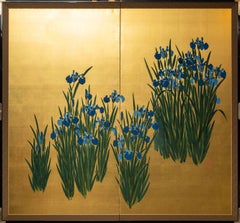
Japanese Two Panel Screen: Irises on Gold

Japanese Two Panel Screen: Irises on Gold

Located in Hudson, NY

Japanese Two Panel Screen: Irises on Gold Showa period (1926 - 1989) painting, beautifully mounted

Category

20th Century Japanese Showa Paintings and Screens

Materials

Brass

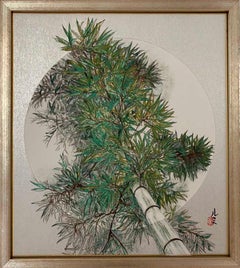
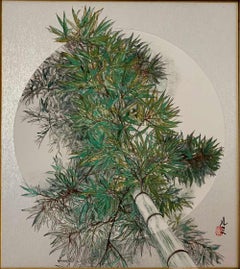
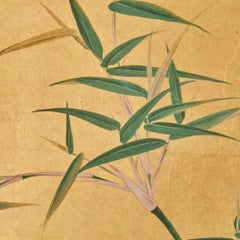
Japanese Two Panel Screen: Young Bamboo on Gold

Japanese Two Panel Screen: Young Bamboo on Gold

Located in Hudson, NY

Symbolizing the Sun, gold is often used in shrines and temples in Japan. Gold has been extensively

Category

Antique Late 19th Century Japanese Paintings and Screens

Materials

Gold

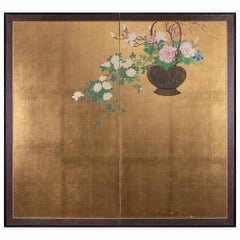
Japanese Two-Panel Screen Ikebana on Gold

Japanese Two-Panel Screen Ikebana on Gold

Located in Hudson, NY

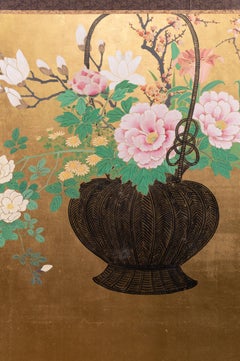
Japanese two-panel screen: Ikebana on gold. Meiji period (1868-1912) painting of a basket with

Category

Antique Late 19th Century Japanese Meiji Paintings and Screens

Materials

Gold Leaf

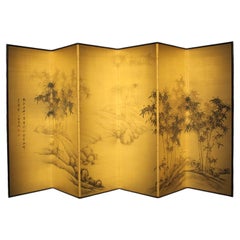
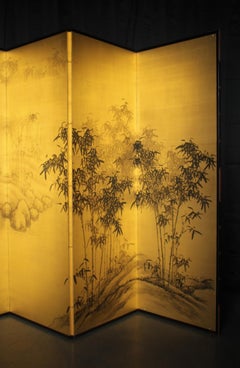
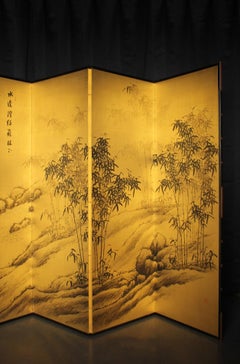
Japanese Two Panel Screen: Bamboo on Gold

Japanese Two Panel Screen: Bamboo on Gold

Located in Hudson, NY

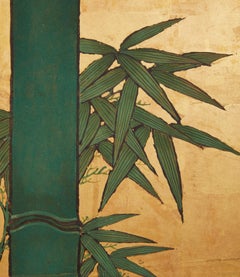
Bamboo grove on a knoll with stylized gold mist. Mineral pigments on gold leaf with silk brocade

Category

Antique Early 19th Century Japanese Paintings and Screens

Materials

Gold Leaf

  • 1
  • ...
Get Updated with New Arrivals
Save "Japanese Gold Paintings", and we’ll notify you when there are new listings in this category.

Japanese Gold Paintings For Sale on 1stDibs

At 1stDibs, there are several options of Japanese gold paintings available for sale. Each of these unique Japanese gold paintings was constructed with extraordinary care, often using metal, gold and gold leaf. There are 807 antique and vintage Japanese gold paintings for sale at 1stDibs, while we also have 32 modern editions to choose from as well. There are all kinds of Japanese gold paintings available, from those produced as long ago as the 18th Century to those made as recently as the 21st Century. Japanese gold paintings bearing mid-century modern or Art Deco hallmarks are very popular at 1stDibs. Japanese Studio, Kimono ikasu and Rimpa School each produced beautiful Japanese gold paintings that are worth considering.

How Much are Japanese Gold Paintings?

Japanese gold paintings can differ in price owing to various characteristics — the average selling price at 1stDibs is $3,475, while the lowest priced sells for $0 and the highest can go for as much as $625,725.

Finding the Right Paintings-screens for You

Traditional Asian paintings were often created on scrolls and folding screens. Artisans made screens that could be folded up or spread out by connecting several panels using hinges. Today, antique Asian folding screens and paintings are sophisticated decorative accents that can serve as makeshift partitions to ensure privacy.

The original folding screens were created by Chinese artists. The earliest record of screens comes from the 2nd century B.C., and surviving examples date back to the Ming dynasty. Chinese painting utilizes many of the same tools as calligraphy — these screens were crafted from wood with painted panels featuring striking art or calligraphy that told cultural stories or represented nature and life in the area.

The practice was introduced to Japan, where paintings for screens were made on paper and silk, in the 8th century. These paintings frequently feature subjects such as landscapes, animals, flowers and Buddhist religious themes. Along with screens for tea ceremonies and dance backgrounds, there were screens for use in Shinto and Buddhist temples.

In the 17th century, screens began to be imported to Europe where their popularity grew. Coco Chanel famously collected Coromandel folding screens.

Traditional Asian paintings can make a tasteful addition to any wall, and screens can be used as decoration or, in the case of larger iterations, as an aesthetic way to divide a large room. Browse the selection of antique Asian paintings and screens from a variety of styles and eras on 1stDibs.
Questions About Japanese Gold Paintings
  • 1stDibs ExpertApril 5, 2022
    Japanese painting is called “nihonga”. This style of painting is characterized by a reduced color palette, a lack of shadows and simple expression. Works in this style are often created with mineral-based paints on scrolls and screens and depict landscapers, women and scenes from Japanese history and culture. You’ll find a wide range of nihonga art on 1stDibs.
  • 1stDibs ExpertMarch 22, 2022
    Japanese paintings have many names, based on their style. Works produced after 1900 are known as Nihonga and combine traditional techniques with modern themes. Sumi-e are traditional Japanese ink paintings, while Ukiyo-e are figure and landscape paintings from the 17th to 19th centuries. On 1stDibs, find a range of Japanese art.
  • 1stDibs ExpertApril 5, 2022
    Japanese screen painting is the art of creating byōbu, or Japanese screens. Byōbu vary in subject matter and style. The screens are free-standing, portable and decorated with symbolic images or calligraphy. It is common to find byōbu in pairs with at least two panels. Shop a selection of byōbu on 1stDibs.
  • 1stDibs ExpertApril 5, 2022
    A Japanese silk painting is identifiable by its depictions of everyday life and scenes that are abundant with detail. The red seal or chop can also help you determine the artist of the piece. You can shop a collection of expertly vetted Japanese silk paintings from some of the world’s top sellers on 1stDibs.
  • 1stDibs ExpertAugust 26, 2024
    Yes, Gustav Klimt used real gold in some of his paintings. Specifically, Klimt applied gold leaf to his works. One of the early examples of this technique is found in Judith and the Head of Holofernes, which he painted in 1901. Find an assortment of Gustav Klimt art on 1stDibs.