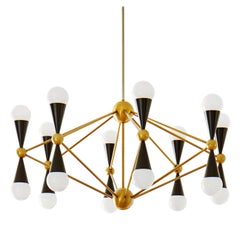
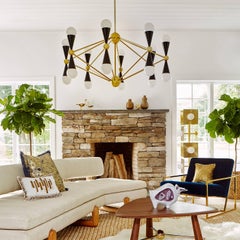
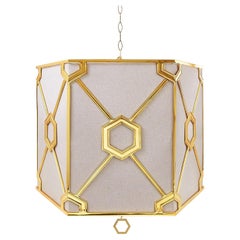
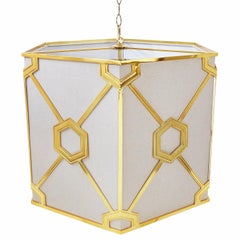
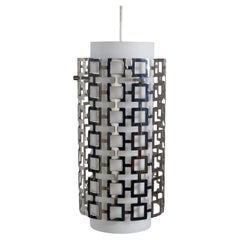
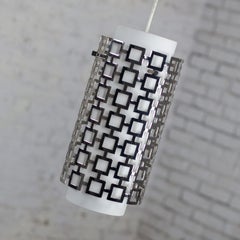
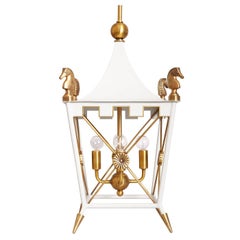
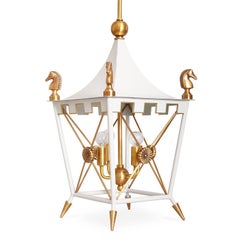
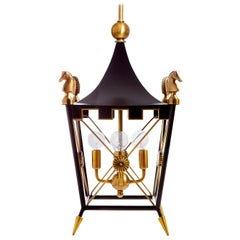
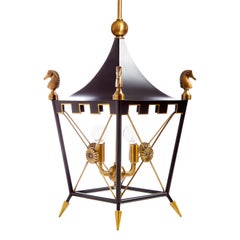
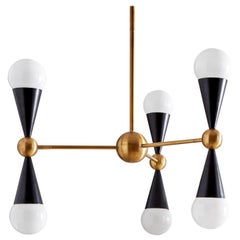
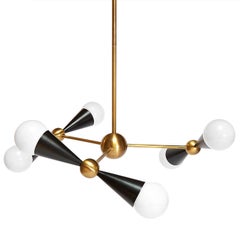
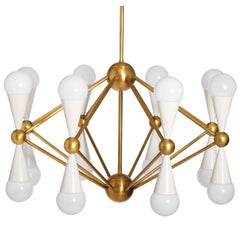
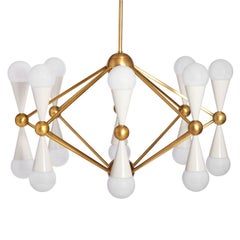
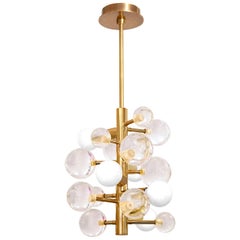
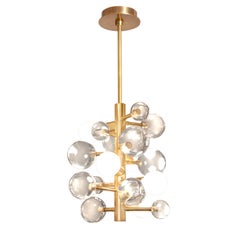
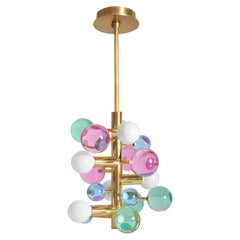
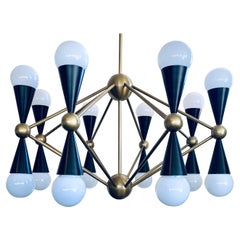
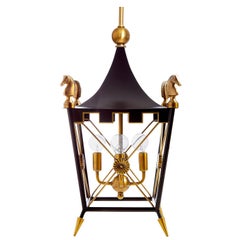
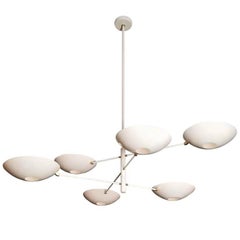
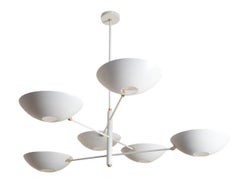
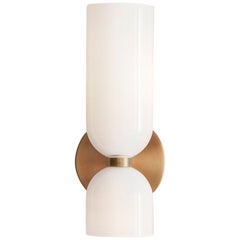
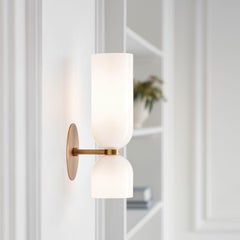
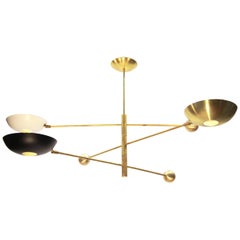
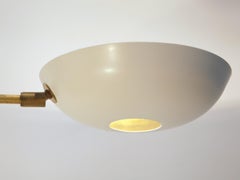
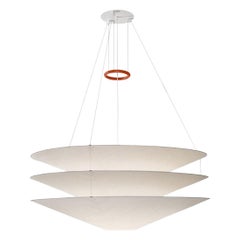
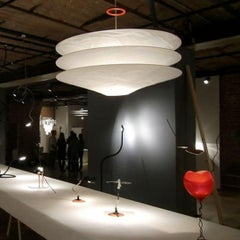
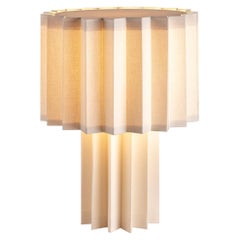
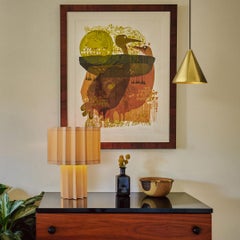
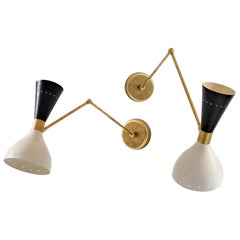
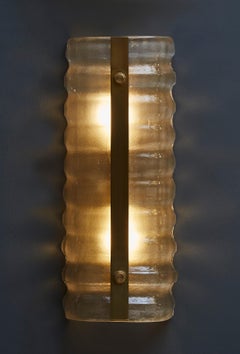
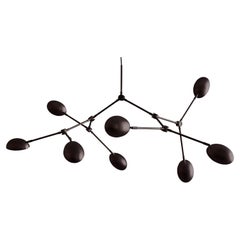
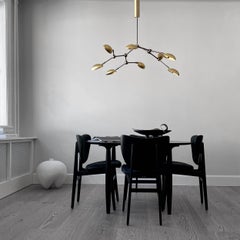
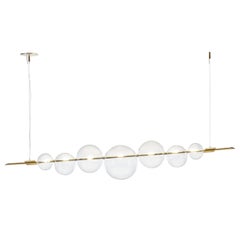
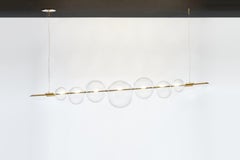
At 1stDibs, there are many versions of the ideal jonathan adler light for your home. Frequently made of
metal,
brass and
acrylic, every jonathan adler light was constructed with great care. If you’re shopping for a jonathan adler light, we have 2 options in-stock, while there are 8 modern editions to choose from as well. You’ve searched high and low for the perfect jonathan adler light — we have versions that date back to the 20th Century alongside those produced as recently as the 21st Century are available. A jonathan adler light, designed in the
Modern,
Mid-Century Modern or
Neoclassical style, is generally a popular piece of furniture. A well-made jonathan adler light has long been a part of the offerings for many furniture designers and manufacturers, but those produced by
Jonathan Adler are consistently popular.
Potter-turned-home-design guru Jonathan Adler is a man with a peripatetic mind, inspired in equal parts, it seems, by classic modern design, Surrealism and pop culture.
Although his namesake company has expanded into a mini empire touching just about every aspect of modern living — chairs and ice buckets, wallpaper and menorahs, chandeliers and rugs — made in myriad materials, Adler still creates almost every object in clay first. His guiding principle is a simple one: “I make the stuff I want to surround myself with, and I surround myself with it.”
Adler grew up in a New Jersey farm town. His grandfather became a local judge, and his father returned home after graduating from the University of Chicago. “My pop was a brilliantly talented artist. At one point, he had to decide whether to become an artist or a —,” he pauses, searching for the right word, “person.” His father became a lawyer but spent all his free time in his studio, “making art, unencumbered by the need to make money from it. It was a totally pure pursuit.” Adler’s mother, who had worked at Vogue and moved to the rural town reluctantly, was also creative, and both parents encouraged their three children’s creativity.
When he was 12, Adler went to sleepaway camp, where he threw his first pot. “And it was on,” he says. His parents bought him a pottery wheel, and he spent the remainder of his adolescence elbow-deep in clay. Even while majoring in semiotics and art history at Brown University, he hung out at the nearby Rhode Island School of Design, making pots.
Adler moved to New York City, worked briefly in entertainment, and in 1993 returned to his true love, throwing pots (in exchange for teaching classes) at a Manhattan studio called Mud Sweat & Tears. One day, at Balducci’s food market, he ran into Bill Sofield, an old friend who had recently cofounded, with Thomas O’Brien, the now-legendary Aero Studios, a design firm and shop. Sofield paid a studio visit and promptly gave him an order. Then, another friend introduced Adler to a buyer at Barneys New York, who also wrote an order.
For about three years after Adler began devoting himself to ceramics full-time. Despite the street cred of both Aero and Barneys, he also wasn’t really making enough money to live on. Then, in 1997, he teamed with Aid to Artisans, a nonprofit aimed at creating economic opportunity for skilled artisans in developing countries, and traveled to Peru to hire potters who could follow his designs, thus increasing production.
Adler’s first store opened in 1998, in the Soho shopping mecca in Manhattan. He now operates about two dozen shops, as far-flung as London and Bangkok. During Adler’s trip to Peru, he connected not only with potters but also with several talented weavers and decided to branch out into textiles. Other categories followed, leading him to travel the world in search of artisans who could execute his endless supply of ideas. In India, Adler found a man who’s expert at beadwork; he has his limed furniture made in Indonesia, his honey-colored wood pieces in Vietnam.
After a friend asked him to decorate her house, Adler expanded to interior design, taking on hotels as well as private residences — projects for which he remains “agnostic,” using pieces by other designers. “I really try to get to know my clients and then make them seem more glamorous and more eccentric than they think,” he says. “I see myself as a slimming mirror for them.”
Find Jonathan Adler seating, case pieces, decorative objects and other furniture on 1stDibs.
Chandeliers — simple in form, inspired by candelabras and originally made of wood or iron — first made an appearance in early churches. For those wealthy enough to afford them for their homes in the medieval period, a chandelier's suspended lights likely exuded imminent danger, as lit candles served as the light source for fixtures of the era. Things have thankfully changed since then, and antique chandeliers and pendant lights are popular in many interiors today.
While gas lighting during the late 18th century represented an upgrade for chandeliers — and gas lamps would long inspire Danish architect and pioneering modernist lighting designer Poul Henningsen — it would eventually be replaced with the familiar electric lighting of today.
The key difference between a pendant light and a chandelier is that a pendant incorporates only a single bulb into its design. Don’t mistake this for simplicity, however. An Art Deco–styled homage to Sputnik from Murano glass artisans Giovanni Dalla Fina, with handcrafted decorative elements supported by a chrome frame, is just one stunning example of the elaborate engineering that can be incorporated into every component of a chandelier. (Note: there is more than one lighting fixture that shares its name with the iconic mid-century-era satellite — see Gino Sarfatti’s design too.)
Chandeliers have evolved over time, but their classic elegance has remained unchanged.
Not only will the right chandelier prove impressive in a given room, but it can also offer a certain sense of practicality. These fixtures can easily illuminate an entire space, while their elevated position prevents them from creating glare or straining one’s eyes.
Certain materials, like glass, can complement naturally lit settings without stealing the show. Brass, on the other hand, can introduce an alluring, warm glow. While LEDs have earned a bad reputation for their perceived harsh bluish lights and a loss of brightness over their life span, the right design choices can help harness their lighting potential and create the perfect mood. A careful approach to lighting can transform your room into a peaceful and cozy nook, ideal for napping, reading or working.
For midsize spaces, a wall light or sconce can pull the room together and get the lighting job done. Perforated steel rings underneath five bands of handspun aluminum support a rich diffusion of light within Alvar Aalto's Beehive pendant light, but if you’re looking to brighten a more modest room, perhaps a minimalist solution is what you’re after. The mid-century modern furniture designer Charlotte Perriand devised her CP-1 wall lamps in the 1960s, in which a repositioning of sheet-metal plates can redirect light as needed.
The versatility and variability of these lighting staples mean that, when it comes to finding something like the perfect chandelier, you’ll never be left hanging. From the natural world-inspired designs of the Art Nouveau era to the classic beauty of Paul Ferrante's fixtures, there is a style for every room.
With designs for pendant lights and chandeliers across eras, colors and materials, you’ll never run out of options to explore on 1stDibs — shop a collection today that includes antique Art Deco chandeliers, Stilnovo chandeliers, Baccarat chandeliers and more.