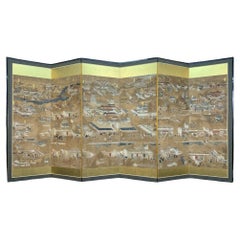
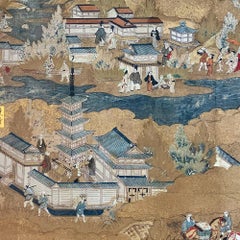
Edo Period Kyoto Screen
Located in Fukuoka, JP
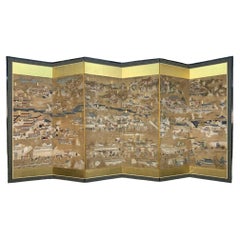
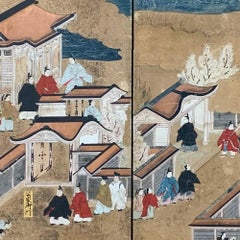
Edo Period Kyoto Screen Period: Edo period Size: 343 x 176 cm (134.6 x 69 inches) SKU: RJ69 This
Category
Antique 18th Century Japanese Edo Paintings and Screens
Materials
Silk, Wood, Paper
Edo Period Kyoto Screen
Located in Fukuoka, JP
Edo Period Kyoto Screen Period: Edo period Size: 343 x 176 cm (134.6 x 69 inches) SKU: RJ69 This
Silk, Wood, Paper
$14,183
H 68.71 in W 75.01 in D 0.79 in
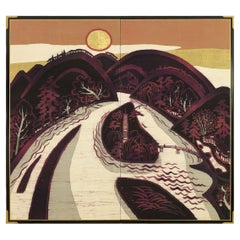
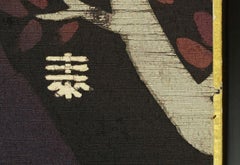
Paravent japonais- A batik silk Japanese screen with Uji Kyoto by Minagawa Taizō
Located in Brussels, BE
A two-fold some-e (batik) silk folding screen by Minagawa Taizō (1917-2005), with the landscape of
Silk, Wood
Edo Period Kyoto Screen (2/2)
Located in Fukuoka, JP
Edo Period Kyoto Screen Period: Edo period Size: 343 x 176 cm (134.6 x 69 inches) This stunning
Silk, Wood, Paper
Japanese Two-Panel Screen "Spring Mist in Kyoto"
Located in Hudson, NY
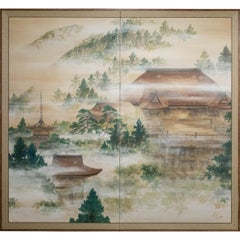
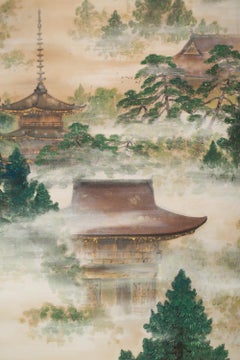
Kyoto landscape featuring Kyomizu Shrine in all its glory in the Higashiyama Hills. Artist
Silk, Paper
Japanese Kyoto Embroidered Screen
Located in Pasadena, CA
This is a finely stitched Kyoto embroidery screen that dates to the Meiji Era (1868 - 1912). Kyoto
Brass
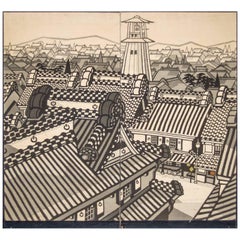
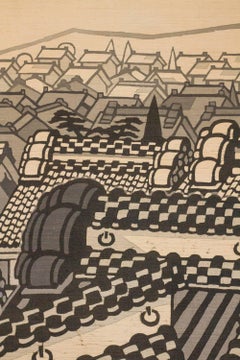
Japanese Two-Panel Screen, City View of Kyoto
Located in Hudson, NY
With the Higashiyama Hills in the distance. Sumie (ink painting) on raw silk. Seal reads: Hata
Silk
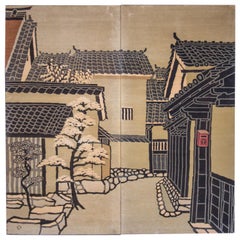
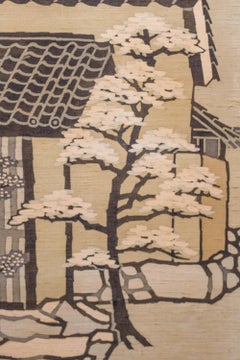
Japanese Two-Panel Screen Kyoto Town Street Scene
Located in Hudson, NY
garden. Sumie (ink painting) on raw silk. Seal reads: Hata. Born in Kyoto 1917, died 2005.
Silk, Wood
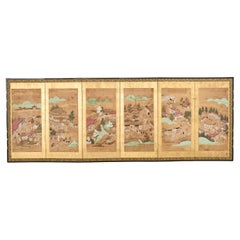
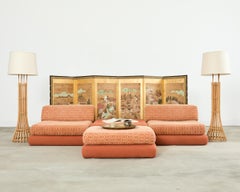
19th Century Japanese Edo Six Panel Screen Scenes of Kyoto
Located in Rio Vista, CA
cultural significance in Kyoto. The screen is set in a later ebonized wood frame with a silk brocade border
Brass, Gold Leaf
$495
H 17.63 in W 5.25 in D 0.75 in
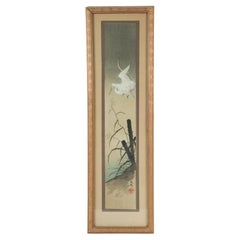
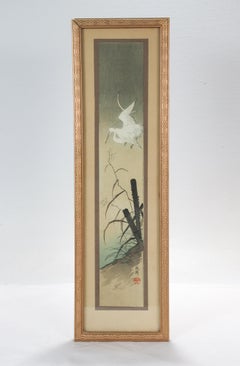
Antique Taisho Period Tanzaku Woodblock Print of Heron at Twilight by Seiko
By Seiko
Located in Philadelphia, PA
A fine antique Taisho period Japanese woodblock print. Depicting a swooping heron above a riverbed with a thin sliver of a crescent moon in the background. By Seikо̄. Seikо̄ is tho...
Paper
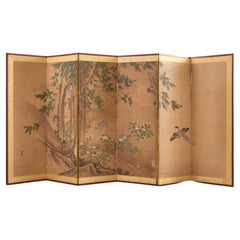
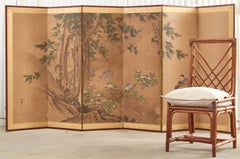
19th Century Japanese Edo Six Panel Kano School Landscape Screen
Located in Rio Vista, CA
Late Edo period 19th century Japanese six-panel landscape screen featuring a cypress tree over a flowering hibiscus with a pair of hototogisu birds. Kano school painted with ink and ...
Silk, Wood, Paper
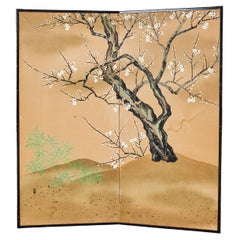
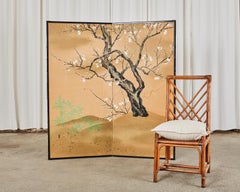
Japanese Showa Two Panel Screen Blossoming Prunus Tree
Located in Rio Vista, CA
Serene Japanese Showa period two-panel folding byobu screen depicting a large spring blossoming prunus tree or plum tree. Beautifully painted with ink and natural color pigments on m...
Brass
$1,160Sale Price|20% Off
H 72 in W 96 in D 0.5 in
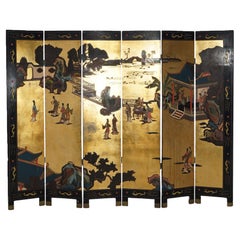
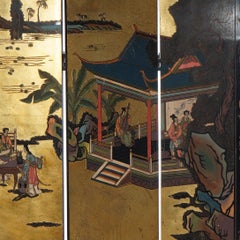
Antique Japanese Ebonized & Gilt Chinoiserie Decorated Six-Panel Screen c1920
Located in Big Flats, NY
An antique Japanese Chinoiserie screen offers six ebonized and gilt decorated panels with a continuous village genre scene with figures and en verso garden scene, c1920 Measures - 72...
Wood
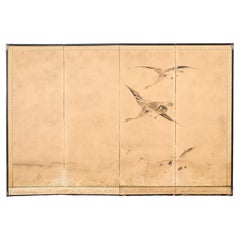
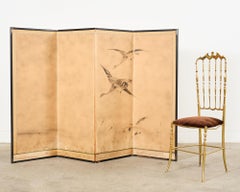
Japanese Meiji Four Panel Screen Wild Geese Over Reeds
Located in Rio Vista, CA
Muromachi period inspired Japanese four panel byobu screen depicting wild geese in flight over reeds. The 19th century Meiji period painting bears an artist's signature Chisokuken. C...
Brass
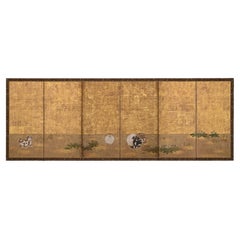
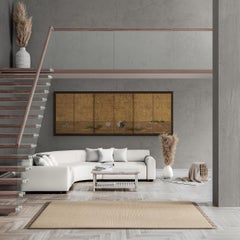
Late 17th Century Japanese Screen. Puppy and Kittens on Gold Leaf.
Located in Kyoto, JP
Anonymous Late 17th century Puppy & Kittens A six-panel Japanese screen. Ink, color, gofun, gold-leaf and gold-fleck on paper. A medium sized late 17th century Japanese screen fe...
Gold Leaf
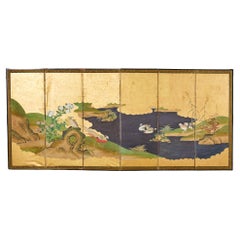
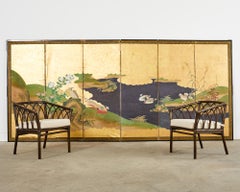
Japanese Meiji Six Panel Screen Kano School Bird Waterscape
Located in Rio Vista, CA
Stunning late 19th century Japanese Meiji period six panel byobu screen featuring a deep blue waterscape with pheasants and ducks. Made in the Kano school style with natural ink and ...
Brass, Gold Leaf
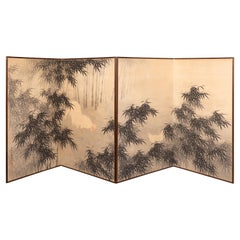
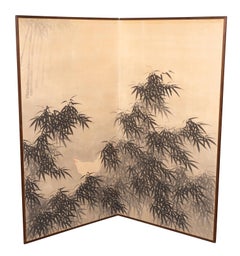
Japanese Four Panel Paper Screen
Located in Essex, MA
Pair of two panel screens with a rooster and a hen in amongst bamboo. Signed by the artist Ema Saiko 1787-1861. A Japanese painter, poet and calligrapher celebrated for her Chinese...
Paper
Chinese Export Four Panel Coromandel Screen Cranes on Gold Leaf
Located in Rio Vista, CA
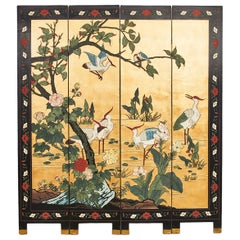
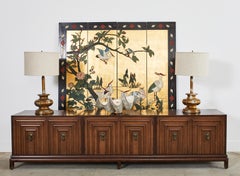
Dazzling Chinese export lacquered four-panel coromandel screen featuring a flora and fauna waterscape with stylized cranes. The carved lacquer panels are embellished with vivid color...
Brass, Gold Leaf
$7,600Sale Price|58% Off
H 69 in W 113 in D 0.5 in
Japanese Four Panel Garden Screen with Koi, Iris, & Turtles
Located in South Burlington, VT
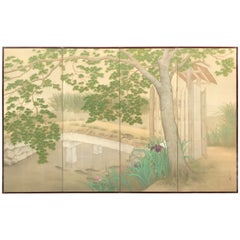
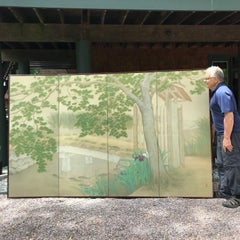
Unusual Japanese Four Panel Garden Screen, Mint Condition Japan, a superb four-panel silk screen byobu depicting a panoramic garden replete with koi, turtles, Iris nestled near a w...
Silk
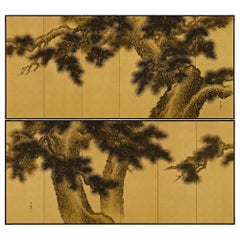
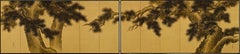
Early 20th Century Japanese Screen Pair - Ink Pine Trees on Gold
Located in Kyoto, JP
Imao Keisho (1902-1993) Pine Trees Early 20th Century, Circa 1930 Pair of six-panel Japanese screens. Ink on silk and gold leaf. Dimensions: Each screen H. 67.5” x 148” (172 cm x...
Gold Leaf
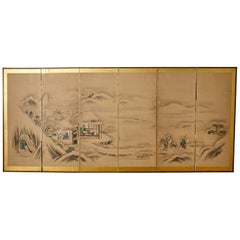
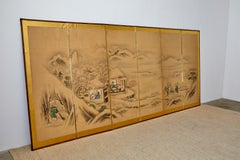
Japanese Six Panel Kano School Winter Landscape Screen
Located in Rio Vista, CA
Large Japanese Meiji period six-panel screen depicting a winter landscape with a Chinese sage visiting friends in a country villa. Ink and vivid color pigments on mulberry paper moun...
Metal
$4,800
H 51.5 in W 21.5 in D 0.75 in
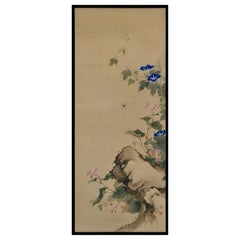
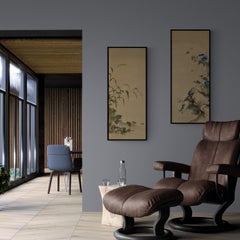
Mid 19th Century Framed Japanese Painting. Spider & Morning Glory.
Located in Kyoto, JP
Obata Tosho (1812-1886) Spider & Morning Glory Late Edo period, mid 19th Century Framed Japanese Painting. Ink and color on paper. Individually framed 19th century bird and f...
Paper
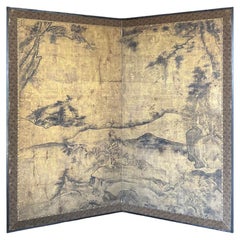
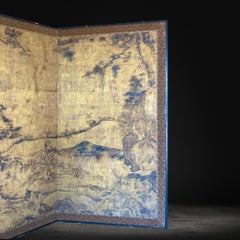
Early Edo Period Chinese-Inspired Screen
Located in Fukuoka, JP
This remarkable screen from the early Edo period, circa the 17th century, showcases the influence of early Chinese art forms with its intricate ink work on a gold leafed surface. The...
Gold Leaf
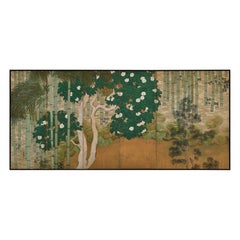
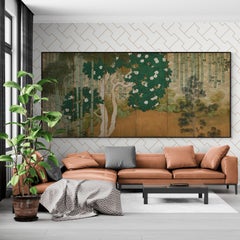
Early 20th Century Japanese Nihonga Screen. Bamboo Forest.
Located in Kyoto, JP
Anonymous Bamboo Forest Early Taisho era. Circa 1910-1915. Six-panel Japanese Screen. Mineral pigment, gofun and ink on silk. A six-panel Japanese folding screen, painted on silk in...
Silk
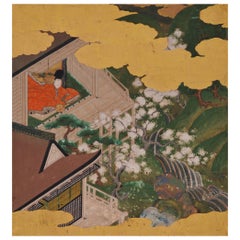
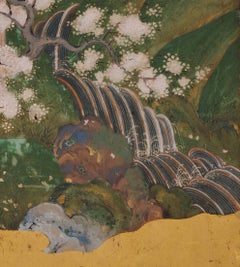
Japanese Painting, 17th Century, Tale of Genji, Tosa School
Located in Kyoto, JP
Illustration to an unidentified chapter of the Tale of Genji (Genji Monogatari) Tosa School (second half of the 17th Century) Ink, pigment, gofun and gold on paper. Unframed. ...
Gold Leaf
Traditional Asian paintings were often created on scrolls and folding screens. Artisans made screens that could be folded up or spread out by connecting several panels using hinges. Today, antique Asian folding screens and paintings are sophisticated decorative accents that can serve as makeshift partitions to ensure privacy.
The original folding screens were created by Chinese artists. The earliest record of screens comes from the 2nd century B.C., and surviving examples date back to the Ming dynasty. Chinese painting utilizes many of the same tools as calligraphy — these screens were crafted from wood with painted panels featuring striking art or calligraphy that told cultural stories or represented nature and life in the area.
The practice was introduced to Japan, where paintings for screens were made on paper and silk, in the 8th century. These paintings frequently feature subjects such as landscapes, animals, flowers and Buddhist religious themes. Along with screens for tea ceremonies and dance backgrounds, there were screens for use in Shinto and Buddhist temples.
In the 17th century, screens began to be imported to Europe where their popularity grew. Coco Chanel famously collected Coromandel folding screens.
Traditional Asian paintings can make a tasteful addition to any wall, and screens can be used as decoration or, in the case of larger iterations, as an aesthetic way to divide a large room. Browse the selection of antique Asian paintings and screens from a variety of styles and eras on 1stDibs.
Decorated with white cranes and the sought-after thousand-butterflies motif, the Meiji-period vessel offers both a celebration of traditional aesthetics and a clear reflection of the era’s appetite for exquisite export pieces.
For 25 years, gallerist Betsy Nathan has leveraged her keen eye and key connections to bring a unique selection of rare finds to the market.
Now working alongside his daughter Bianca, dealer Joel Chen has presented a most covetable array of antiques, art and contemporary creations for more than 40 years.
From cherry-blossom-adorned walls paired with glamorous lighting to wood-paneled ceilings above checkerboard-patterned chairs, these 12 spaces seamlessly blend Eastern and Western aesthetics.
The dealer and curator has spent the past 50 years amassing a collection of exceptional art, furniture and architectural elements that trace the cultural influence of the Spanish empire from Europe to the Americas and beyond.
These spaces exemplify how Eastern elements elevate a home's decor.