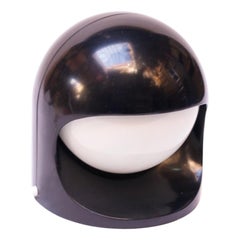
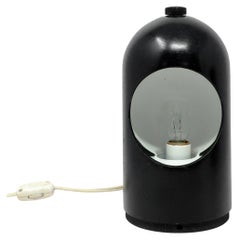
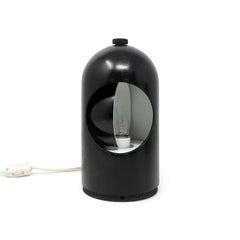
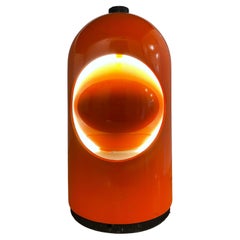
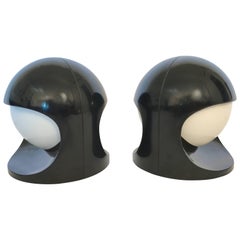
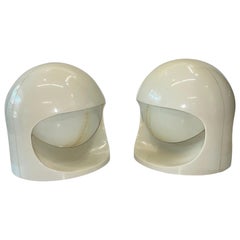
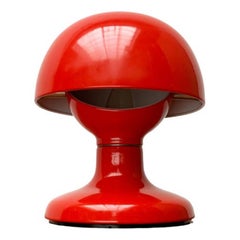
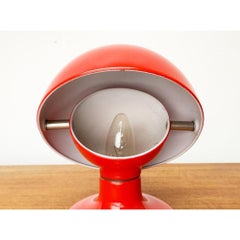
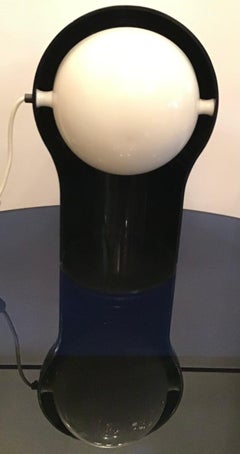
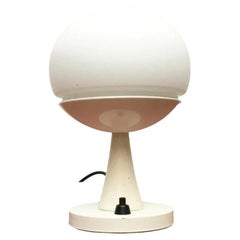
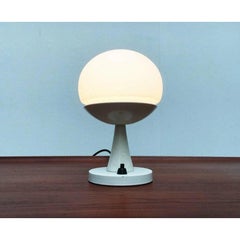
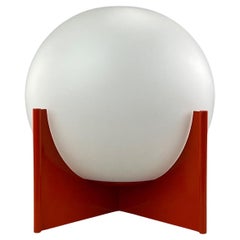
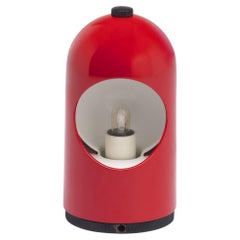
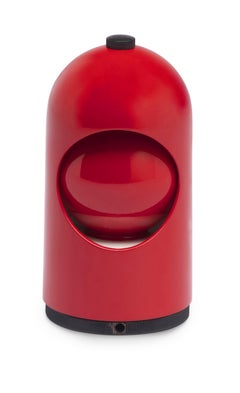
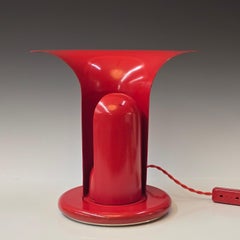
Founded in 1904 in New York and family-operated through most of its history, Lightolier was one of the pioneering American electric lighting companies, best known for its embrace of stylistic and technical innovations.
Collectors focus on vintage Lightolier lighting fixtures produced from the 1950s and into the 1970s, when an in-house design team led by Gerald Thurston — and a stellar cast of international design contributors — created an array of practical yet aesthetically lively table lamps, floor lamps, sconces and chandeliers.
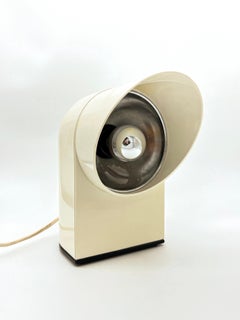
Amidst the post-World War II building boom, Lightolier — the name combines “light” and “chandelier” — aggressively boosted its residential lighting division. Thurston, who was strongly influenced by the sleek designs of Gino Sarfatti and his Italian lighting firm Arteluce, towards simpler lamp designs that offered flexibility of function. His best-known designs include the Cricket task light — a lamp with an adjustable enameled metal hood that toggles on a slender bent-metal base — and the three-legged Tripod floor lamp. At the same time, Thurston had a wonderful eye for talent and sought work from some of the lesser-known greats of the era, such as Paavo Tynell, the Finnish lighting designer, who designed several brass chandeliers for Lightolier with his trademark elegant flamboyance.
And more, Thurston recognized abilities in designers not known for their work in lighting.
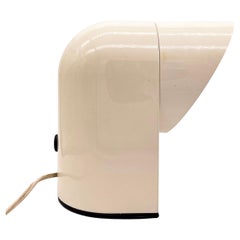
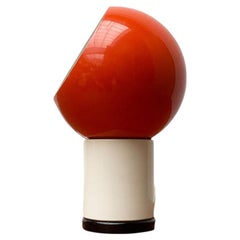
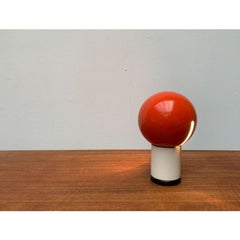
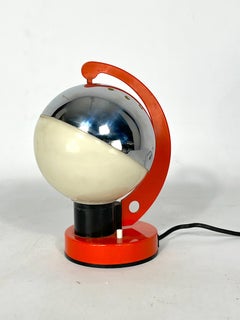
Edward Wormley, head of furniture design for Dunbar, produced several noteworthy chandeliers employing canisters and reflective hoods. Alvin Lustig was famed as a graphic designer. His ca. 1953 Ring ceiling fixture for Lightolier had a minimalist techno look some 30 years ahead of its time. But this was par. Designed by Michael Lax in 1964, the Lytegem high-intensity lamp — included in the permanent collection of the Museum of Modern Art — features a ball-shaped shade attached with a chromed armature to a cubic base, a form that would be widely copied in the following decade. Chandeliers designed in the early 1970s by Gaetano Sciolari, with details such as acrylic diffusers and vertical, two-bulb arms, would define the look of lighting in their day.
A look through these pages reveals just how astonishingly wide a range of lighting pieces Lightolier produced. The company never flicked off its stylistic switch.
Find a collection of vintage Lightolier lamps and other lighting fixtures on 1stDibs.
Arguably the world’s most ubiquitous man-made material, plastic has impacted nearly every industry. In contemporary spaces, new and vintage plastic furniture is quite popular and its use pairs well with a range of design styles.
From the Italian lighting artisans at Fontana Arte to venturesome Scandinavian modernists such as Verner Panton, who created groundbreaking interiors as much as he did seating — see his revolutionary Panton chair — to contemporary multidisciplinary artists like Faye Toogood, furniture designers have been pushing the boundaries of plastic forever.
When The Graduate's Mr. McGuire proclaimed, “There’s a great future in plastics,” it was more than a laugh line. The iconic quote is an allusion both to society’s reliance on and its love affair with plastic. Before the material became an integral part of our lives — used in everything from clothing to storage to beauty and beyond — people relied on earthly elements for manufacturing, a process as time-consuming as it was costly.
Soon after American inventor John Wesley Hyatt created celluloid, which could mimic luxury products like tortoiseshell and ivory, production hit fever pitch, and the floodgates opened for others to explore plastic’s full potential. The material altered the history of design — mid-century modern legends Charles and Ray Eames, Joe Colombo and Eero Saarinen regularly experimented with plastics in the development of tables and chairs, and today plastic furnishings and decorative objects are seen as often indoors as they are outside.
Find vintage plastic lounge chairs, outdoor furniture, lighting and more on 1stDibs.
Antique table lamps became a category of their own once electricity moved light off the wall and onto furniture. The form split quickly: task-driven designs like the Anglepoise on one side, decorative ceramic and glass on the other.
Styles to Know
Base material shapes the light as much as the shade does: ceramic and glass diffuse a softer glow, while brass and metal read more directional. Layer the look with a mid-century modern floor lamp for ambient light, or set a pair on a mid-century modern nightstand for a bedroom.
How to Choose the Right Vintage Table Lamp
Buying individually rather than as a pair allows more flexibility when mixing eras across a room. For those shopping by name rather than by shape, the history of the Anglepoise lamp is worth a read. Each piece comes from a vetted 1stDibs seller, with era, designer and condition detailed, and the 1stDibs Promise stands behind every purchase.