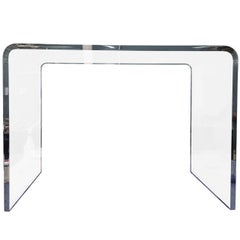
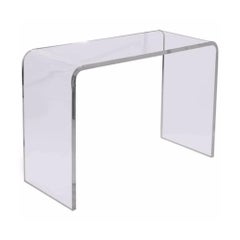
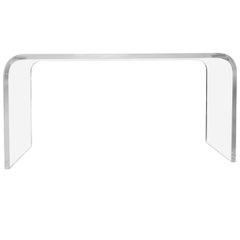
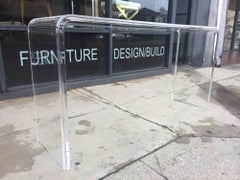
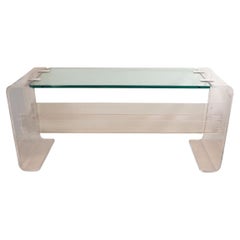
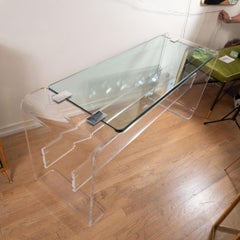
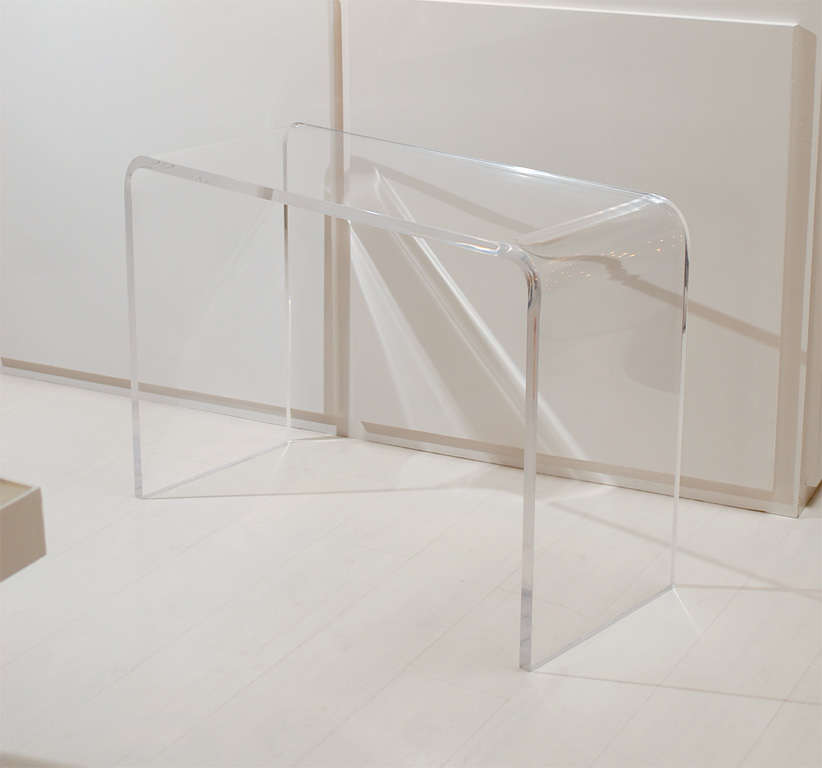
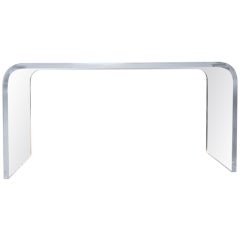
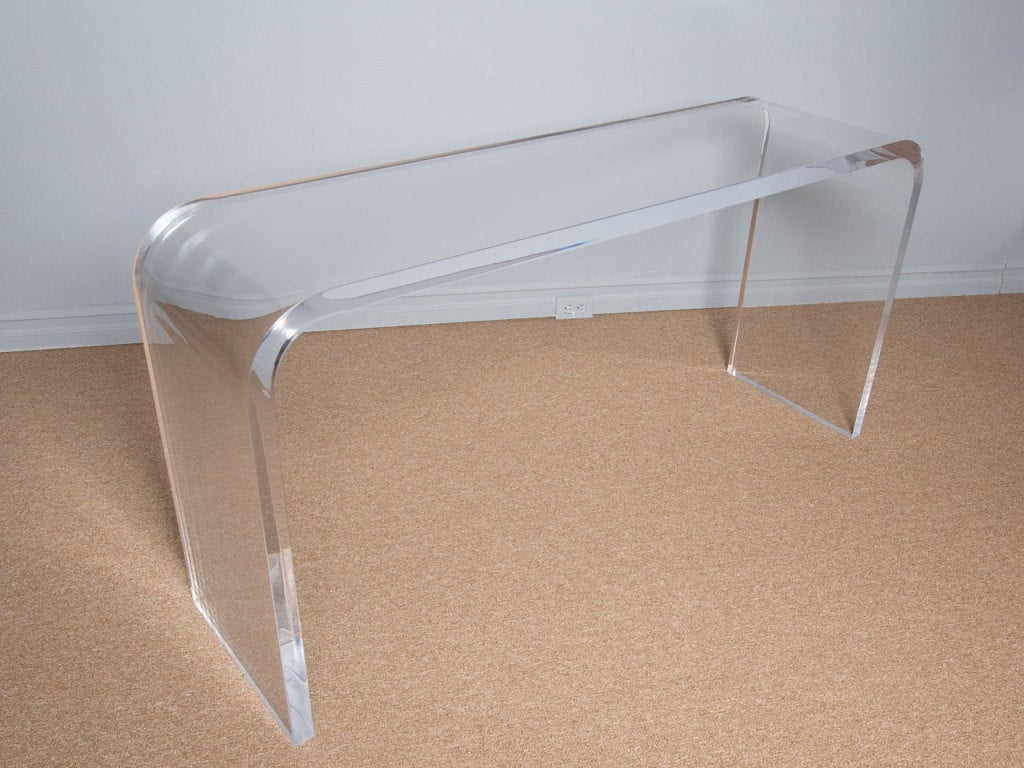
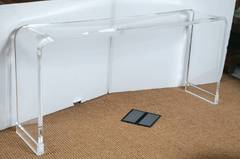
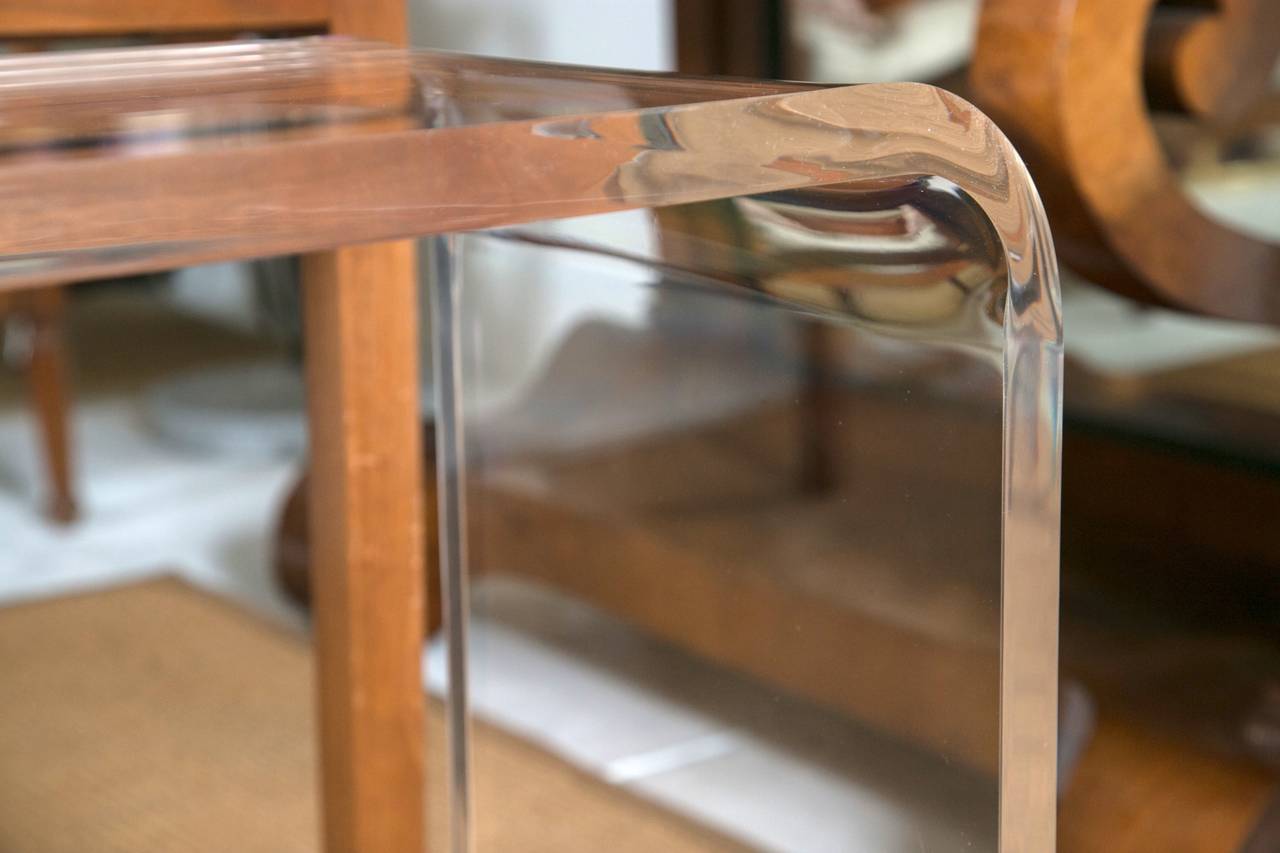
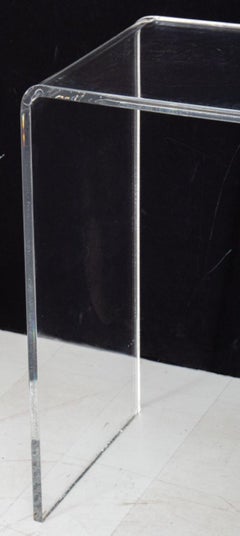
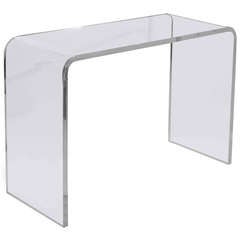
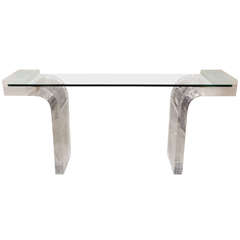
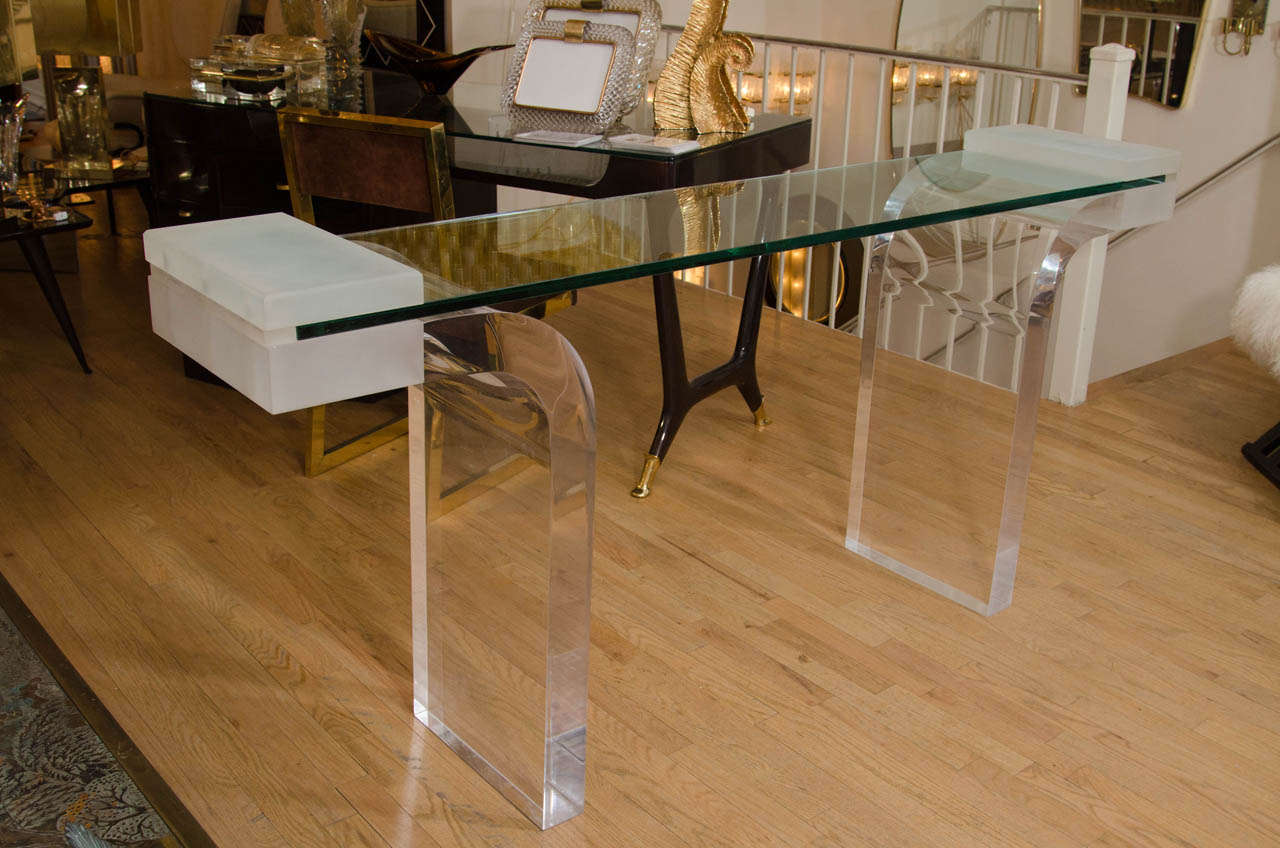
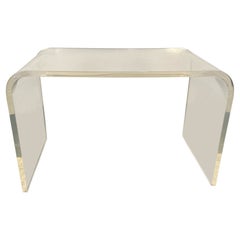
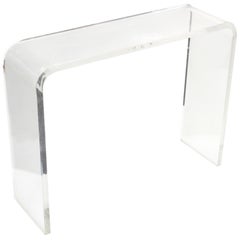
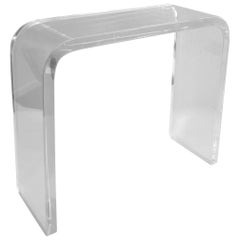
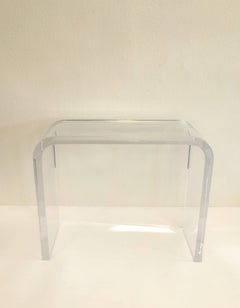
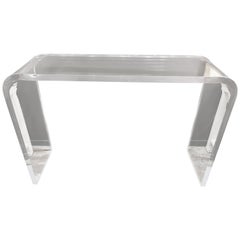
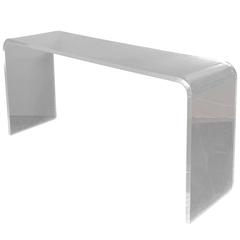
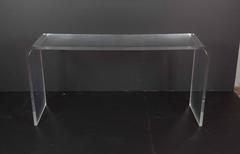
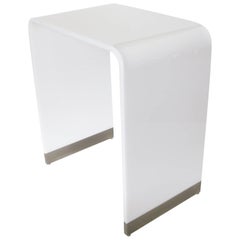
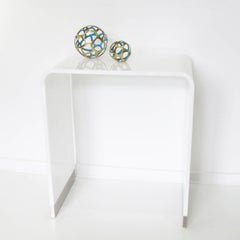
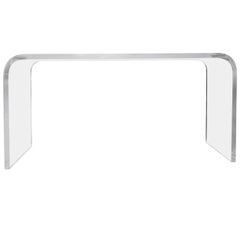
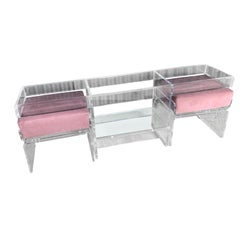
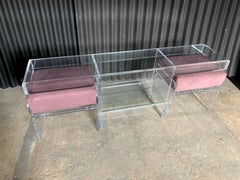
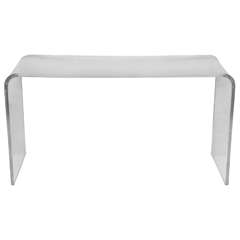
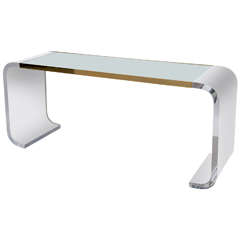
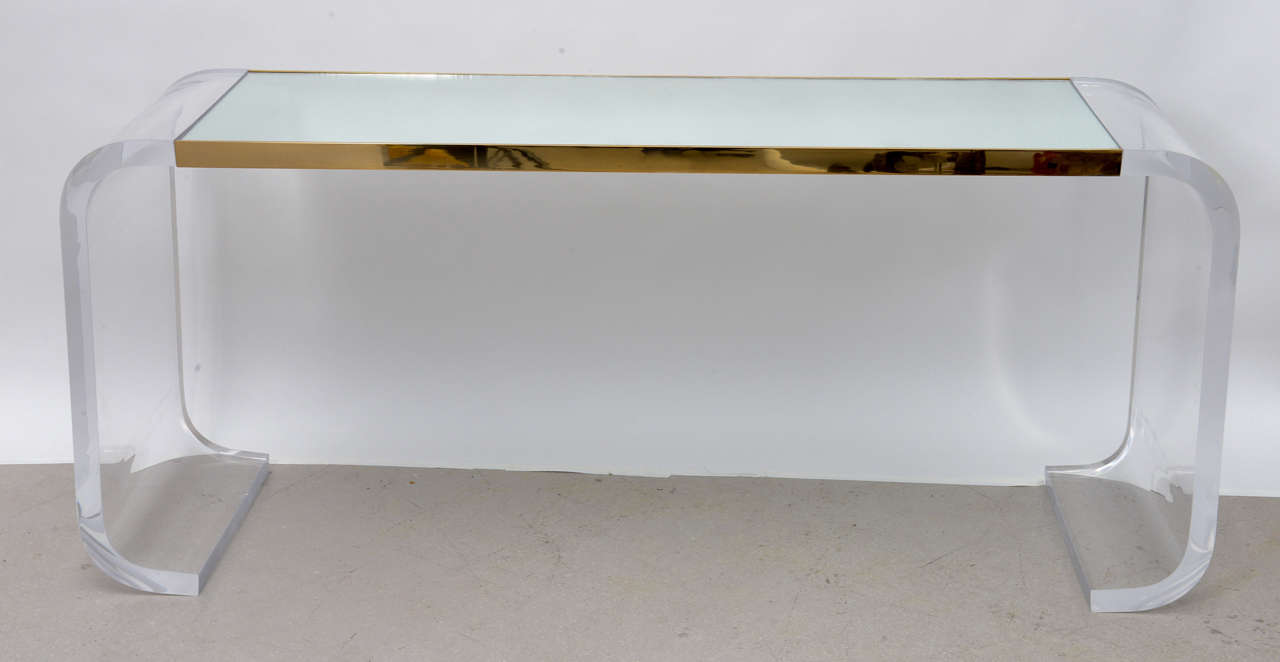
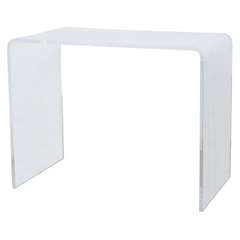
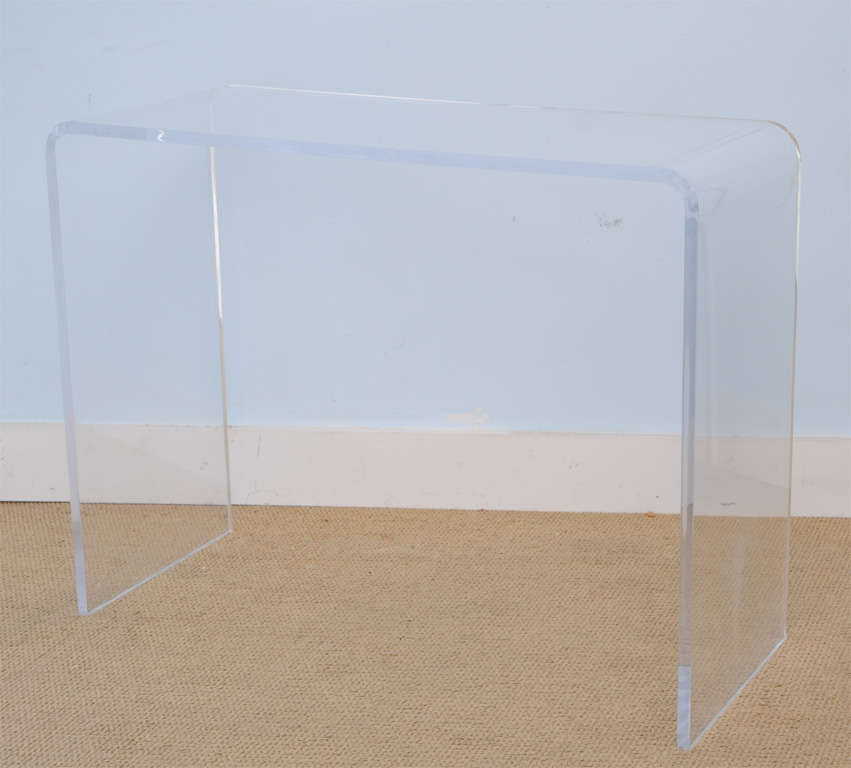
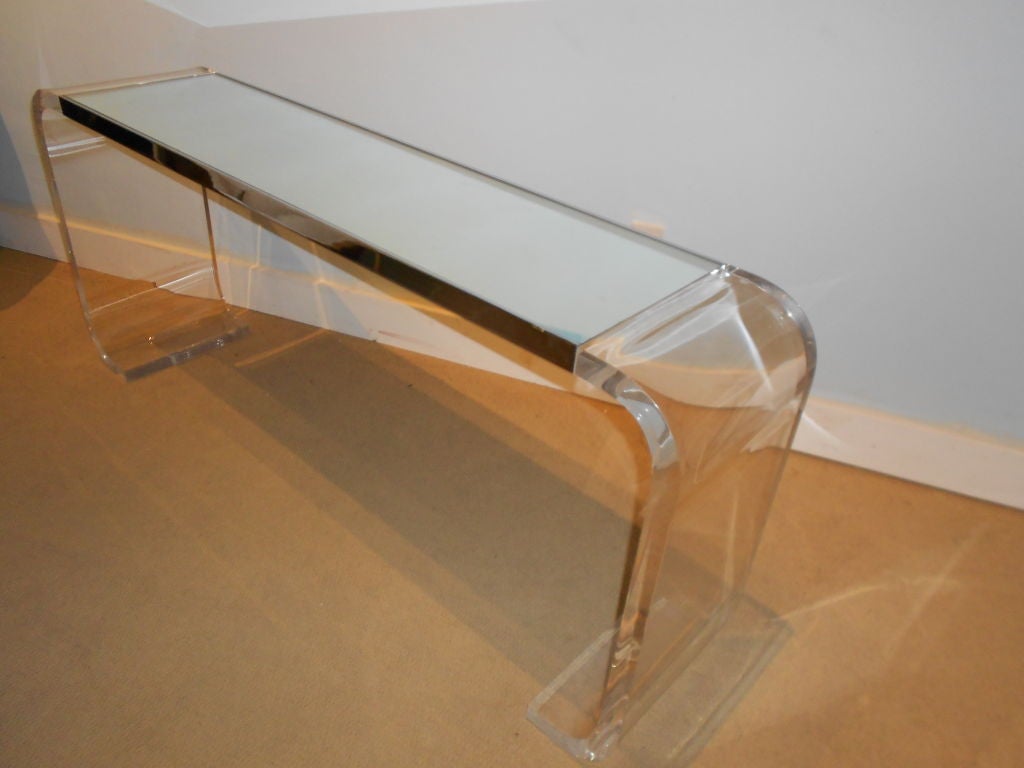
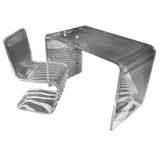
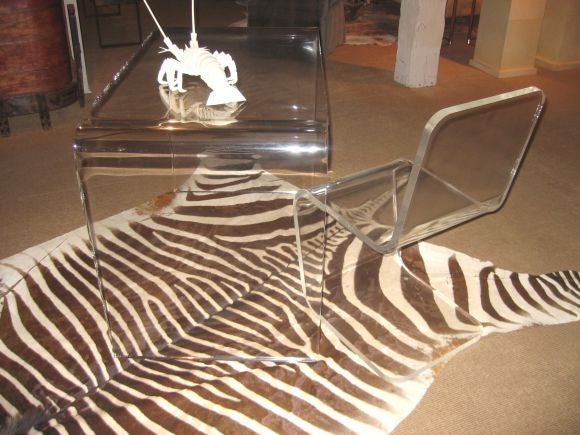
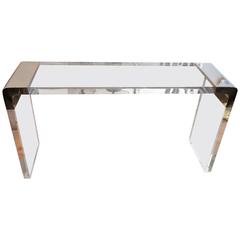
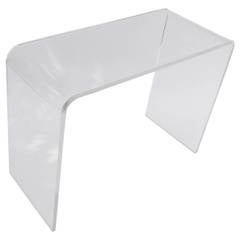
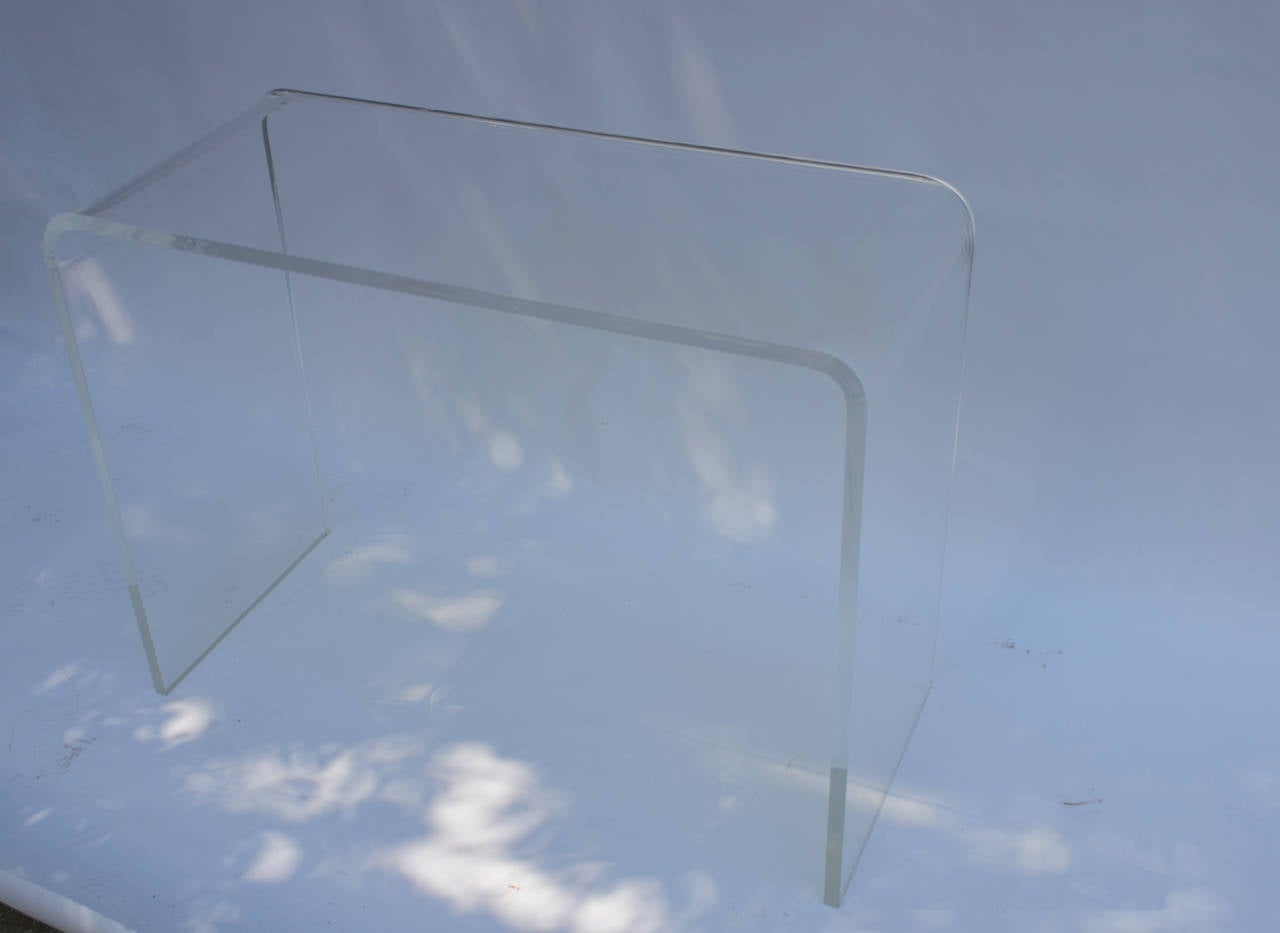
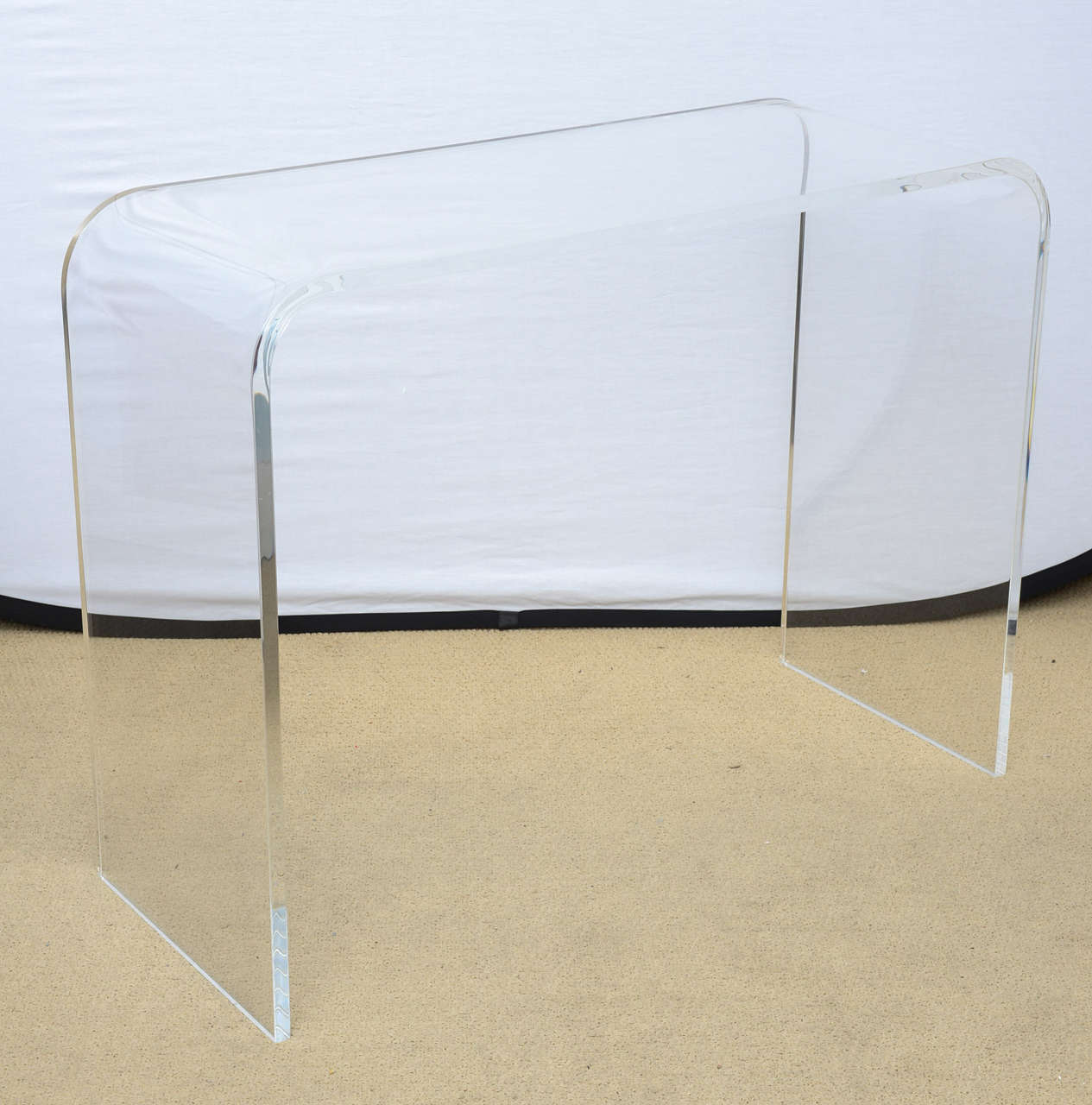
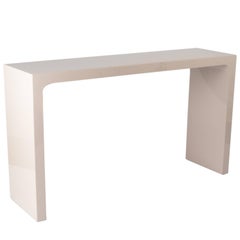
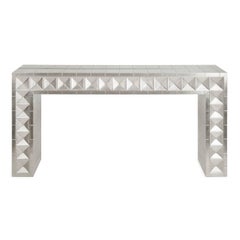
Choose from an assortment of styles, material and more with respect to the lucite waterfall console you’re looking for at 1stDibs. Frequently made of
lucite,
plastic and
acrylic, every lucite waterfall console was constructed with great care. Find 16 options for an antique or vintage lucite waterfall console now, or shop our selection of 1 modern versions for a more contemporary example of this long-cherished piece. Your living room may not be complete without a lucite waterfall console — find older editions for sale from the 20th Century and newer versions made as recently as the 21st Century. When you’re browsing for the right lucite waterfall console, those designed in
Mid-Century Modern,
Modern and
Hollywood Regency styles are of considerable interest.
Charles Hollis Jones,
Amparo Calderon Tapia and
Cain Modern each produced at least one beautiful lucite waterfall console that is worth considering.
Antique, new and vintage Lucite furniture has been on design editors’ radars for several seasons now, but thanks to a renewed interest in Lucite coffee tables, chairs and other pieces from the late 1960s and ’70s, the trend has reached fever pitch.
“I think there’s a freshness and cleanness to it,” says Fawn Galli, an interior designer based in New York. Not only is Lucite, or transparent plastic, practical, since it can work in nearly any environment, it’s incredibly stylish.
Some of the most acclaimed furniture designers share the same love for Lucite as an effective and practical material for use in any interior.
“I think there’s something really nice about the simplicity of anything Lucite or acrylic — it feels lightweight,” says Tamara Eaton, whose eponymous firm deftly balances traditional and modern designs. Even in the most historical setting, “you can still introduce some Lucite or something kind of lightweight and not have it feel like a distinct interjection, but a playful one that’s more about the shape,” she says.
For the living room in a mid-century modern townhouse in Park Slope, Brooklyn, Eaton chose a pair of box-shaped Lucite tables with copper handles from Jamie Dietrich. “We didn’t want anything to be too heavy, and that area was a place where [the family] would sometimes move those tables so the kids could play,” she says. The tables doubled as snack trays since the kitchen is nearby. “They have this transportable feel to them that I think was really fun.”
Browse a range of antique, new and vintage Lucite side tables, table lamps and other furniture now on 1stDibs.
Few pieces of furniture are celebrated for their functionality as much as their decorative attributes in the way that console tables are. While these furnishings are not as common in today’s interiors as their coffee-table and side-table counterparts, console tables are stylish home accents and have become more prevalent over the years.
The popularity of wood console tables took shape during the 17th and 18th centuries in French and Italian culture, and were exclusively featured in the palatial homes of the upper class. The era’s outwardly sculptural examples of these small structures were paired with mirrors or matching stools and had tabletops of marble. They were most often half-moon-shaped and stood on two scrolled giltwood legs, and because they weren’t wholly supported on their two legs rather than the traditional four, their flat-backed supports were intended to hug the wall behind them and were commonly joined by an ornate stretcher. The legs were affixed or bolted to the wall with architectural brackets called console brackets — hence, the name we know them by today — which gave the impression that they were freestanding furnishings. While console tables introduced a dose of drama in the foyer of any given aristocrat — an embodiment of Rococo-style furniture — the table actually occupied minimal floor space (an attractive feature in home furniture). As demand grew and console tables made their way to other countries, they gained recognition as versatile additions to any home.
Contemporary console tables comprise many different materials and are characterized today by varying shapes and design styles. It is typical to find them made of marble, walnut or oak and metal. While modern console tables commonly feature four legs, you can still find the two-legged variety, which is ideal for nestling behind the sofa. A narrow console table is a practical option if you need to save space — having outgrown their origins as purely ornamental, today’s console tables are home to treasured decorative objects, help fill empty foyers and, outfitted with drawers or a shelf, can provide a modest amount of storage as needed.
The rich collection of antique, new and vintage console tables on 1stDibs includes everything from 19th-century gems designed in the Empire style to unique rattan pieces and more.