Spode Chinese Flowers

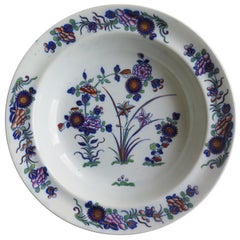
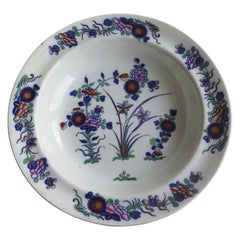
Georgian Spode Soup Bowl or Deep Plate in Chinese Flowers Pattern, circa 1820
By Spode
Located in Lincoln, Lincolnshire
pottery called Pearl-ware, in the early 19th Century. The pattern is called "Chinese Flowers" pattern
Category

Antique Early 19th Century English Chinoiserie Decorative Bowls

Materials

Pearlware

Recent Sales

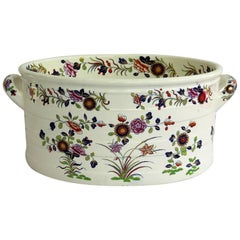
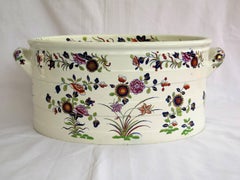
Very Rare Spode Foot Bath Earthenware Chinese Flowers Pattern 2963, Circa 1820
By Spode
Located in Lincoln, Lincolnshire
white wares. The piece is decorated in one of Spode's chinoiserie patterns called: Chinese Flowers
Category

Antique Early 19th Century English Chinoiserie Ceramics

Materials

Earthenware

People Also Browsed

Ralph Lauren "Brompton" 2.5-Seat Chesterfield Sofa - In Brown Leather & Velvet
Located in Barrowford, GB
On offer on this occasion is the rare opportunity to acquire a superb, handsome Ralph Lauren 2.5-Seat "Brompton" Chesterfield-Sofa, dressed in a sensationally refined, elegant and lu...
Category

2010s Sofas

Materials

Leather

Ralph Lauren "Brompton" 2.5-Seat Chesterfield Sofa - In Brown Leather & Velvet
$4,334 Sale Price
32% Off
H 31.5 in W 70.87 in D 39.38 in
Georgian Masons Ironstone large Dinner Plate in Vase & Rock gilded Ptn, Ca 1818
By Mason's Ironstone
Located in Lincoln, Lincolnshire
This is a very decorative ironstone pottery Large Dinner Plate produced by the Mason's factory at Lane Delph, Staffordshire, England, circa 1818. The plate is circular with a wavy i...
Category

Antique Early 19th Century English Chinoiserie Dinner Plates

Materials

Ironstone

Pair of 18th Century Dutch Delft Faience Floral Plates
Located in Pearland, TX
A gorgeous pair of antique 18th-Century Dutch Delft faience flower garden plates. These lovely plates have a hand painted floral and foliate design in vibrant cobalt blue and white. ...
Category

Antique 18th Century Dutch Delft and Faience

Materials

Faience

Strasbourg Faience Floral Plate
By Paul Hannong
Located in New York, NY
Strasbourg faience floral plate. Antique faience plate with large floral bouquets and lobed rims with further floral sprays and insects; with blue underglaze markings for Hannong Fac...
Category

Antique Mid-18th Century French Delft and Faience

Materials

Faience

Pair of Antique 18th Century Dutch Delft Faience Floral Plates
Located in Pearland, TX
A gorgeous pair of antique 18th-Century Dutch Delft faience flower garden plates. These lovely plates have a hand painted floral and foliate design in cobalt blue and white with yell...
Category

Antique Mid-18th Century Dutch Delft and Faience

Materials

Delft

Georgian Set of SIX Masons Dinner Plates in Vase Flowers & Rocks Ptn, Ca 1818
By Mason's Ironstone
Located in Lincoln, Lincolnshire
These are a fine early set of six ironstone pottery dinner plates made by the Mason's factory at Lane Delph, Staffordshire, England and beautifully decorated in the small vase, flowe...
Category

Antique Early 19th Century English Georgian Dinner Plates

Materials

Ironstone

Georgian Masons Ironstone Desert Plate in Vase Flowers & Rock Ptn, circa 1815
By Mason's Ironstone
Located in Lincoln, Lincolnshire
This is a fine Ironstone pottery Desert Plate made by the Mason's factory at Lane Delph, Staffordshire, England and beautifully decorated in the Small Vase, flower & Rock Pattern, fu...
Category

Antique Early 19th Century English Chinoiserie Pottery

Materials

Ironstone

Georgian Derby Porcelain Plate or Dish Partridge Pattern hand painted, Ca 1815
By Derby
Located in Lincoln, Lincolnshire
This is a very good antique Side / Desert Plate or Dish, made by the Derby factory, hand painted and gilded in the beautiful Partridge Pattern, during the reign of George 111 in the ...
Category

Antique Early 19th Century English Georgian Porcelain

Materials

Porcelain

18th Century Worcester Blind Earl Porcelain Dish
By James Giles, 1st Period Worcester Dr. Wall
Located in Fort Lauderdale, FL
A Worcester Blind Earl porcelain plate made circa 1770 with beautifully enamelled decoration of butterflies and insects among raised leaf and rosebud decoration, set within a delicat...
Category

Antique 1770s English Rococo Porcelain

Materials

Porcelain

19th Century French Faience Decorative Plate
Located in Winter Park, FL
A 19th century French faience charger or platter with typical hand painted burgundy floral decoration from St Clement in the East of France. Minor glaze loss. Old brass plate hanger ...
Category

Antique Late 19th Century French Delft and Faience

Materials

Faience

18th Century Italian Doccia Porcelain Dinner Service
By Doccia Porcelain
Located in Fort Lauderdale, FL
A dinner service comprising six dinner dishes and six soup dishes made by the Doccia Porcelain Manufactory, circa 1750. Italy was the site of Europe’s first porcelain production: ...
Category

Antique Mid-18th Century Italian Rococo Dinner Plates

Materials

Porcelain

Antique 18th Century De Klaauw Dutch Delft Pottery Floral Plate
By Delft, De Klaauw
Located in Philadelphia, PA
A fine antique Dutch Delft pottery plate. With a white porcelain ground richly decorated with blue, green, yellow and orange flowers and foliage. With a brown underglaze De Klaauw ...
Category

Antique Early 19th Century Dutch Baroque Delft and Faience

Materials

Delft

Mason's Ironstone Large Dinner Plate in the Flying Bird Pattern, circa 1860
By Mason's Ironstone
Located in Lincoln, Lincolnshire
This is a large 10.5 inch diameter, Ironstone dinner plate in the distinctive flying bird pattern, made by Mason's of Lane Delph, Staffordshire, England, during the mid 19th century,...
Category

Antique Mid-19th Century English Georgian Ceramics

Materials

Ironstone

19th c. Spode "Tumbledown Dick" Dessert Service on White Ground
By Spode
Located in Great Barrington, MA
Not the typical colorway of Spode's wonderful "Tumbledown Dick" pattern, this is painted on a white ground, givng it great versatility and bold contrast.The set consists of 10 desser...
Category

Antique 19th Century British Dinner Plates

Materials

Porcelain

Georgian Masons Ironstone Desert Plate in Rock Leaves & Flowers Ptn, circa 1815
By Mason's Ironstone
Located in Lincoln, Lincolnshire
This is a fine Ironstone pottery Desert Plate made by the Mason's factory at Lane Delph, Staffordshire, England and beautifully hand decorated in the Rock, Leaves and flowers Pattern...
Category

Antique Early 19th Century English Chinoiserie Ceramics

Materials

Ironstone

Georgian Masons Ironstone Desert Plate in Pink Rose on Stem & Rock ptn, Ca 1818
By Mason's Ironstone
Located in Lincoln, Lincolnshire
This is a very good hand painted Mason's ironstone Desert Plate, in the Pink Rose on stem with Rock gilded pattern, from their earliest George IIIrd period, circa 1818. The piece is...
Category

Antique Early 19th Century English Chinoiserie Platters and Serveware

Materials

Ironstone

Get Updated with New Arrivals
Save "Spode Chinese Flowers", and we’ll notify you when there are new listings in this category.

Spode Chinese Flowers For Sale on 1stDibs

There is a range of spode chinese flowers for sale on 1stDibs. The range of distinct spode chinese flowers — often made from ceramic, porcelain and stoneware — can elevate any home. Spode chinese flowers have long been popular, with older editions for sale from the 18th Century and newer versions made as recently as the 20th Century. Regency, Victorian and Rococo spode chinese flowers are consistently popular styles. Spode, Coalport Porcelain and H&R Daniel each produced beautiful spode chinese flowers that are worth considering.

How Much are Spode Chinese Flowers?

Prices for spode chinese flowers start at $165 and top out at $15,000 with the average selling for $545.

Spode for sale on 1stDibs

Spode is one of the oldest and most distinguished of the great pottery companies of Staffordshire, the time-honored home of English ceramics. The firm’s blue and white bone china transferware is a timeless classic. Spode dishes compose the sort of elegant dinner service that most of us envision on a traditional holiday table.

The company was established in 1770 in Stoke-on-Trent by Josiah Spode, a friend and neighbor of another estimable English ceramist, Josiah Wedgwood. The Wedgwood firm first came to prominence for its tableware, which quickly gained favor in aristocratic households throughout Britain and Europe.

Spode was particularly known for two technical achievements in the firm’s early decades. The first was to develop a standard formula for the making of bone china — a type of porcelain (made with a mixture of bone ash, minerals and clay) that is dazzlingly white and so strong it can be used to create very thin translucent plates and vessels.

The other advancement was to perfect the making of transferware. That process involves the transfer of pictorial images inked on tissue paper — such as the garden scenery in the famous Willow dish patterns — onto ceramics that are then sealed with a glaze. 

From the 1820s onward, Spode enjoyed tremendous success both in Britain and elsewhere owing to the beauty and vitality of its decorative imagery. By some counts, Spode created more than 40,000 patterns in the 19th century.

In 1833, following the sudden death of Josiah Spode III, business partner W. T. Copeland took over the company and changed its name to Copeland Spode (it later changed again, this time to W. T. Copeland and Sons). Collectors regard Copeland-marked pieces as Spode china. The Spode brand was revived in 1970.

Many favorite Spode patterns — among them Blue Italian, Indian Tree, Greek and Woodland — date to the company’s early years. Spode’s most popular pattern, Christmas Tree, was introduced in 1938.

Prices for antique and vintage Spode china vary widely, based on the size of the service, its condition and the pattern. An antique dinner service for 12 people or more, in good repair and complete with cups and serving dishes, will generally cost between $10,000 and $20,000. Such Spode services become heirlooms — a proud and timeless addition to a family’s table. And as you will see on these pages, Spode’s rich and varied wares offer a visual feast in and of themselves.

Find Spode serveware, ceramics and decorative objects on 1stDibs.

A Close Look at Chinoiserie Furniture

Emerging in the 17th century, chinoiserie appropriated the aesthetics and imagery of popular East Asian design for European-made versions. Reflecting the exoticization of China, Japan and other countries in this era, the word directly translates from French to “Chinese-esque,” which reveals its shortcomings as a style of furniture and decor that often stereotypically and reductively mimics Asian culture rather than showcasing and paying tribute to its artistic traditions.

The enthusiastically decorative chinoiserie style was propelled by influential tastemakers including French King Louis XIV, whose Trianon de Porcelaine in 1670 was inspired by Chinese architecture. Expanded trade between the East and West led to a demand for porcelain, lacquer objects, silk and other goods, which further informed the fanciful furniture being crafted in Europe.

Artisans working in the chinoiserie style used materials and elements like pagoda shapes, bamboo, lacquer surfaces, bird and flower motifs and other interpretations of Asian design on pieces that were frequently set against vibrant wallcoverings. This whimsical approach yielded chinoiserie furniture that boasted dramatic flourishes drawing on the natural world and reflected the dominance of Rococo during the 18th century.

As chinoiserie was shaped by approximations of Asian design by European creators, it had regional variations, such as Chinese Chippendale in England where cabinets, chairs and tea tables had wooden fretwork designs and “japanned” surfaces intended to resemble lacquer work that was created in East Asia. In North America, furniture makers in Boston and New York integrated chinoiserie-painted scenes into Queen Anne furniture.

Antique chinoiserie furniture has continued to be fashionable, from its popularity with decorators of the Hollywood Regency era — James Mont, Tommi Parzinger, William Haines and Samuel Marx favored the style — to contemporary interior designers, although it brings with it a complex history.

Find a collection of chinoiserie bedroom furniture, cabinets, decorative objects and more on 1stDibs.

Finding the Right Ceramics for You

Whether you’re adding an eye-catching mid-century modern glazed stoneware bowl to your dining table or grouping a collection of decorative plates by color for the shelving in your living room, decorating and entertaining with antique and vintage ceramics is a great way to introduce provocative pops of colors and textures to a space or family meals.

Ceramics, which includes pottery such as earthenware and stoneware, has had meaningful functional value in civilizations all over the world for thousands of years. When people began to populate permanent settlements during the Neolithic era, which saw the rapid growth of agriculture and farming, clay-based ceramics were fired in underground kilns and played a greater role as important containers for dry goods, water, art objects and more.

Today, if an Art Deco floor vase, adorned in bright polychrome glazed colors with flowers and geometric patterns, isn’t your speed, maybe minimalist ceramics can help you design a room that’s both timeless and of the moment. Mixing and matching can invite conversation and bring spirited contrasts to your outdoor dining area. The natural-world details enameled on an Art Nouveau vase might pair well with the sleek simplicity of a modern serving bowl, for example.

In your kitchen, your cabinets are likely filled with ceramic dinner plates. You’re probably serving daily meals on stoneware dishes or durable sets of porcelain or bone china, while decorative ceramic dishes may be on display in your dining room. Perhaps you’ve anchored a group of smaller pottery pieces on your mantelpiece with some taller vases and vessels, or a console table in your living room is home to an earthenware bowl with a decorative seasonal collection of leaves, greenery and acorns.

Regardless of your tastes, however, it’s possible that ceramics are already in use all over your home and outdoor space. If not, why? Whatever your needs may be, find a wide range of antique and vintage ceramics on 1stDibs.
Questions About Spode
  • 1stDibs ExpertAugust 15, 2024
    Whether Spode is made in England or China depends on the piece. Spode continues to manufacture some of its iconic china at its workshop in Stoke-on-Trent, England, which has been in continuous operation for more than 250 years. However, some lines now originate from factories in China that adhere to the brand's strict quality standards. On 1stDibs, shop a wide variety of Spode pieces.