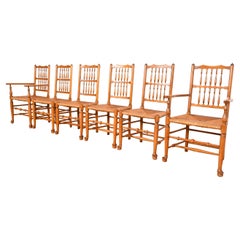
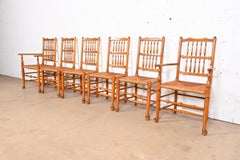
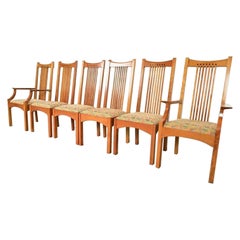
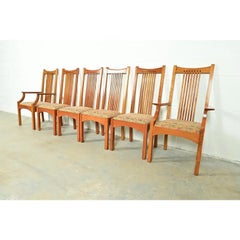
Gustav Stickley was one of the principal figures in the American Arts and Crafts movement and the creator of the Craftsman style. In 1883, Stickley established a furniture company called Stickley Brothers with two of his brothers, Albert and Charles. Gustav’s other siblings, Leopold and John George, would later form L & J.G. Stickley Inc. in Fayetteville, New York, in 1905.
As a furniture designer and publisher of the magazine The Craftsman, Gustav adopted many of the ideals of the British design reform movement and popularized both its philosophy and its aesthetics in the United States.
Born in Wisconsin, Stickley moved with his family to Pennsylvania when he was a teenager and began working in his uncle’s chair factory in the town of Brandt. There, he learned the techniques of late-19th-century furniture making at a time when the vogue was for Victorian revival furniture, which was characterized by extensive ornamentation.
When Stickley Brothers foundered, Gustav partnered five years later with salesman Elgin Simonds to form a new firm, Stickley & Simonds, which produced traditional furniture that appealed to the burgeoning American middle class. The success of this venture enabled Stickley to travel to Europe, where he discovered the writings of John Ruskin and William Morris, the two preeminent thinkers of the British Arts and Crafts movement. Stickley also traveled to France, where the Art Nouveau movement impressed him with its imaginative designs and skilled craftsmanship.
Stickley parted ways with Simonds at the turn of the 20th century and decided to focus his creative energies on producing furniture in what became known as the Craftsman style, incorporating some of the elements of the designs and movements he had encountered in Europe.
The pieces Stickley created, which he stamped with the logo of a joiner’s compass, were rectilinear, largely free of ornament, made of oak, and built in such a way that the nature of their construction was plainly visible — all reflections of the tenets of the Arts and Crafts movement. While some people referred to Stickley’s furniture as Mission furniture — a term that references the furnishings of the Spanish missions in California — Gustav commonly called his work “Craftsman” owing to the inspiration he found in the British Arts and Crafts movement.
Stickley benches and rocking chairs were popular, and his leather-upholstered armchairs combine practicality, comfort and an understated silhouette. In 1901, Stickley launched The Craftsman magazine, which contained articles on all manner of domestic topics, from gardening and cooking to art and design, as well as poetry and fiction. In addition to popularizing Stickely’s own designs, the magazine acquainted Americans with the Arts and Crafts style in all its forms through its graphic design and the bungalows, art pottery, and hammered-copper lamps pictured in its pages. When Gustav Stickley died, in 1942, Arts and Crafts had been replaced by modernism as the favored aesthetic.
The work of L & J.G. Stickley flourished even as the Arts and Crafts style fell out of fashion because Leopold and John George adapted to the changing times.
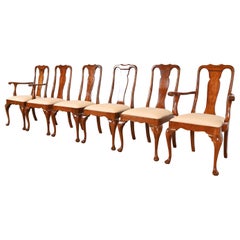
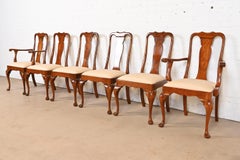
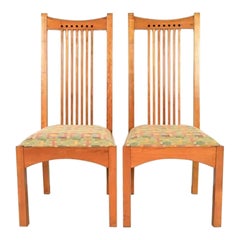
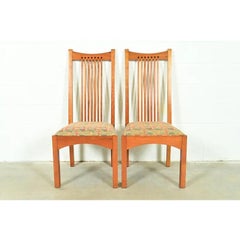
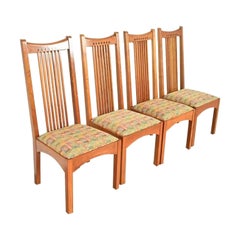
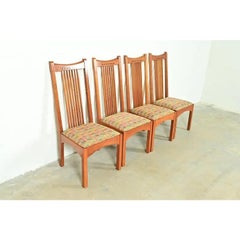
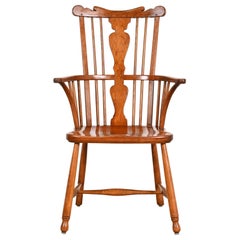
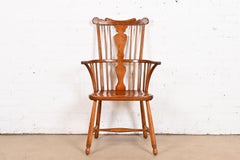
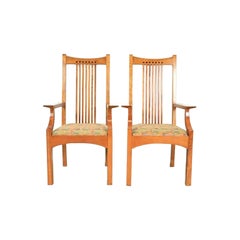
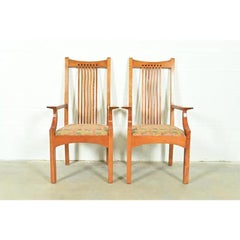
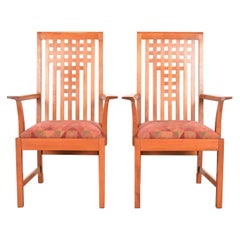
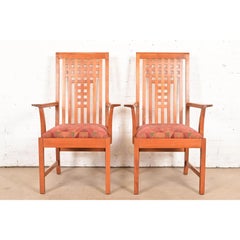
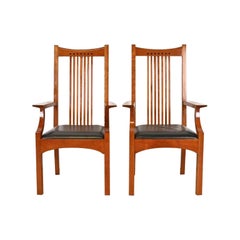
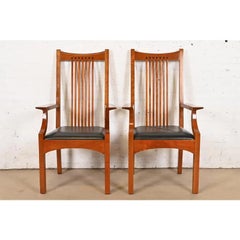
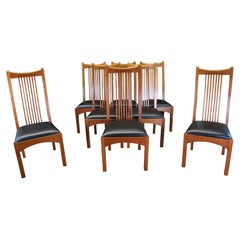
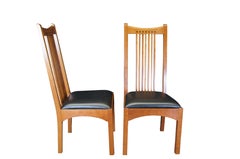
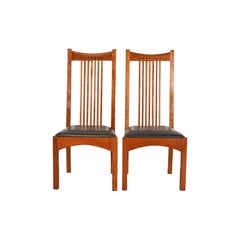
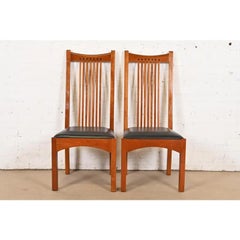
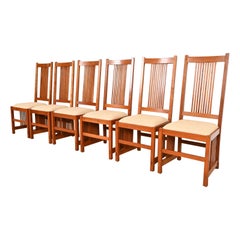
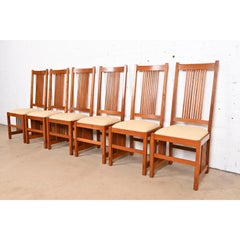
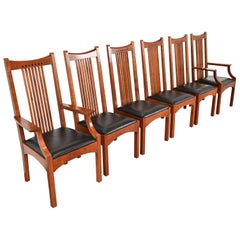
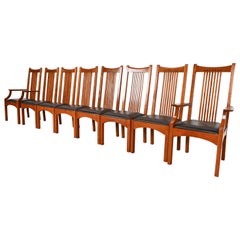
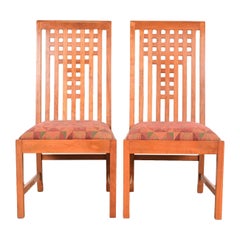
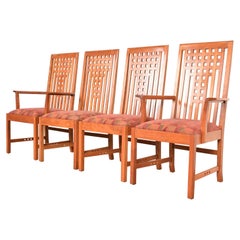
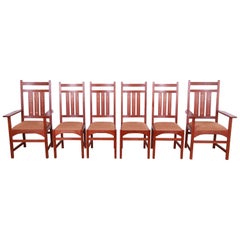
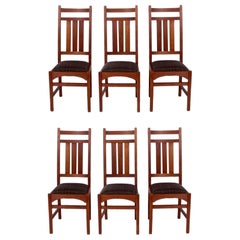
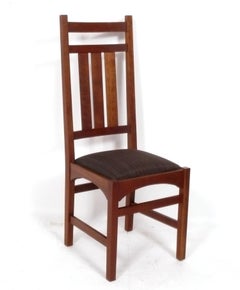
L & J.G. Stickley changed their brand name and maker’s mark to Handcraft in 1906, and rather than continue to produce Arts & Crafts-inspired designs, their bedroom furnishings, dining room chairs and other items of the era reflected the influence of Frank Lloyd Wright and the Prairie School style as well as the work of the Wiener Werkstätte. Later, Leopold’s Cherry Valley collection appealed to enthusiasts of American Colonial furniture.
Find antique L & J.G. Stickley tables, seating, case pieces and more on 1stDibs.
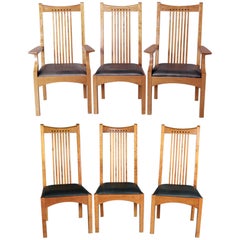
No matter what your dream dining experience looks like, there is a wide-ranging variety of vintage, new and antique dining room chairs on 1stDibs. Find upholstered dining room chairs, wood dining room chairs and more to outfit any space designated for a good meal, be it in your home or in the great outdoors.
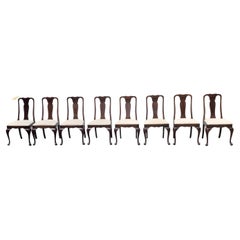
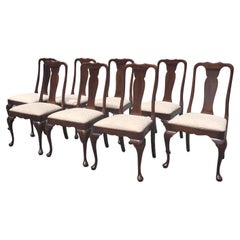
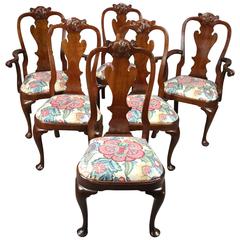
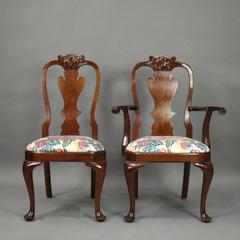
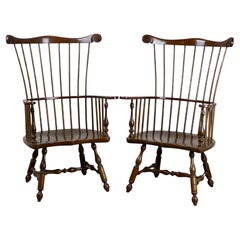
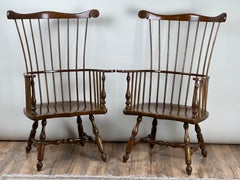
In the early 18th century, most dining room tables and other furniture was designed to look masculine. In America, dining rooms weren’t even much of a concept until the late 1700s, when a space set aside specifically for dining became a part of the construction of homes for the wealthy. Dining room chairs of the era were likely made of walnut or oak. In Europe, neoclassical dining chairs emerged during the 1750s owing to nostalgia for classical antiquity, while the curving chair crests of Queen Anne furniture in the United States preceded the artistically bold seat backs that characterized the Chippendale chairs that followed. If there weren't enough dining chairs at suppertime in the American colonies, men were prioritized and women stood.
In the dining rooms of today, however, there is enough space for everyone to have a seat at the table. Modern styles introduce innovative design choices that play with shape and style. Icons of mid-century modern dining room chairs are plentiful: With its distinctive bentwood back, there is the DCW dining chair by Charles and Ray Eames, while Hans Wegner's timeless classic, the Wishbone chair, remains relevant and elegant decades after its debut. Stefano Giovannoni's White Rabbit dining chairs, in their lovable polyethylene biomorphism, reinvent what dining can look like.
Today's wide range of dining room chairs also means that they can now be styled in different ways, bringing functionality and fun to any sumptuous dining space. No longer do tables have to be accompanied by a matching set of seats. Skillfully mixing and matching colors and designs allows you to showcase your personality without sacrificing the cohesion of a given space.
By furnishing your dining room with cozy chairs — vintage, antique or otherwise — family time can extend far beyond mealtime. The plush upholstery of Victorian-style dining room chairs is perfect for game nights that stretch from dinner to midnight snack. Outdoor tables and dining chairs can also present an excellent opportunity for bonding and eating — what goes better with a delicious meal than fresh air, anyway?
Whether you prefer your chairs streamlined and stackable or ornate and one of a kind, the offerings on 1stDibs will elevate your mealtime and beyond.