Teruko Yokoi
1980s Abstract Expressionist Landscape Drawings and Watercolors
Watercolor, Rag Paper
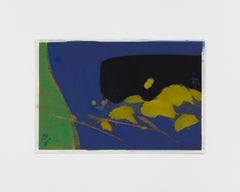

1980s Abstract Expressionist Landscape Drawings and Watercolors
Watercolor, Rag Paper
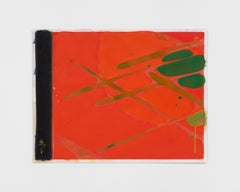
1980s Abstract Expressionist Landscape Drawings and Watercolors
Watercolor, Rag Paper
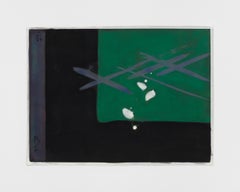
1970s Post-War Landscape Drawings and Watercolors
Watercolor
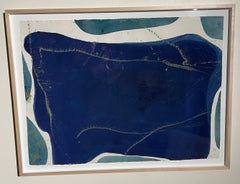
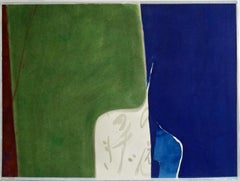
1960s Abstract Expressionist Landscape Drawings and Watercolors
Watercolor
Recent Sales
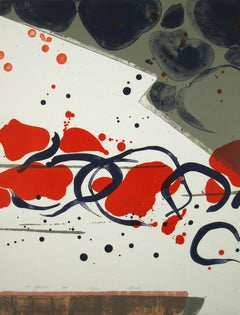
1970s Abstract Abstract Prints
Rag Paper, Pigment
People Also Browsed
Vintage 1960s French Mid-Century Modern Table Lamps
Iron
Vintage 1960s Chandeliers and Pendants
Art Glass

2010s European Vases
Ceramic, Porcelain
2010s Italian Minimalist Figurative Sculptures
Murano Glass
Late 19th Century Victorian Animal Paintings
Canvas, Oil

2010s Photorealist Still-life Paintings
Canvas, Oil
Vintage 1960s Italian Mid-Century Modern Lounge Chairs
Aluminum, Steel
2010s Abstract Abstract Paintings
Oil, Canvas, Oil Pastel
Vintage 1950s Italian Mid-Century Modern Glass
Foil
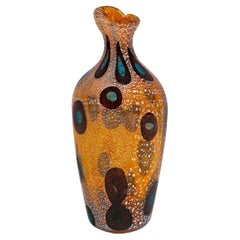
2010s Italian Candlesticks
Glass
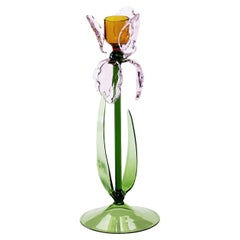
2010s Italian Vases
Glass
Early 20th Century Dutch Belle Époque Paintings
Canvas, Pine, Paint
2010s Italian Tableware
Ceramic
A Close Look at Abstract Art
Beginning in the early 20th century, abstract art became a leading style of modernism. Rather than portray the world in a way that represented reality, as had been the dominating style of Western art in the previous centuries, abstract paintings, prints and sculptures are marked by a shift to geometric forms, gestural shapes and experimentation with color to express ideas, subject matter and scenes.
Although abstract art flourished in the early 1900s, propelled by movements like Fauvism and Cubism, it was rooted in the 19th century. In the 1840s, J.M.W. Turner emphasized light and motion for atmospheric paintings in which concrete details were blurred, and Paul Cézanne challenged traditional expectations of perspective in the 1890s.
Some of the earliest abstract artists — Wassily Kandinsky and Hilma af Klint — expanded on these breakthroughs while using vivid colors and forms to channel spiritual concepts. Painter Piet Mondrian, a Dutch pioneer of the art movement, explored geometric abstraction partly owing to his belief in Theosophy, which is grounded in a search for higher spiritual truths and embraces philosophers of the Renaissance period and medieval mystics. Black Square, a daringly simple 1913 work by Russian artist Kazimir Malevich, was a watershed statement on creating art that was free “from the dead weight of the real world,” as he later wrote.
Surrealism in the 1920s, led by artists such as Salvador Dalí, Meret Oppenheim and others, saw painters creating abstract pieces in order to connect to the subconscious. When Abstract Expressionism emerged in New York during the mid-20th century, it similarly centered on the process of creation, in which Helen Frankenthaler’s expressive “soak-stain” technique, Jackson Pollock’s drips of paint, and Mark Rothko’s planes of color were a radical new type of abstraction.
Conceptual art, Pop art, Hard-Edge painting and many other movements offered fresh approaches to abstraction that continued into the 21st century, with major contemporary artists now exploring it, including Anish Kapoor, Mark Bradford, El Anatsui and Julie Mehretu.
Find original abstract paintings, sculptures, prints and other art on 1stDibs.
Finding the Right Landscape-drawings-watercolors for You
Landscape drawings and watercolors show the world through the lenses of different cultures and perspectives. They were also incredibly important for displaying natural scenes before the invention of photography.
There are many ways to effectively arrange art on your walls so that you’re maximizing your wall space. You can introduce peace and serenity within the confines of a living room or bedroom if landscape drawings and watercolors are part of the art that you choose to bring into a space.
Watercolor landscapes have a rich history dating back to ancient China, where they dominated painting genres by the late Tang dynasty. Ink-on-silk paintings in China featured mountains and large bodies of water as far back as the third century. The Netherlands was home to landscapes as a major theme in painting as early as the 1500s, and by the Renaissance, watercolors had made their way to the West and into European culture, becoming a staple of decorative art.
It wasn’t until the Industrial Revolution that watercolor paints became more widely available and embedded in fine arts. Despite their broad distribution today, some artists have chosen to revive the old craft of preparing their own watercolor pigments, paying homage to the medium’s roots.
The variety of brush combinations and painting methods makes watercolor landscapes some of the most stunning pieces in any collection. Find landscape drawings and watercolors on 1stDibs.