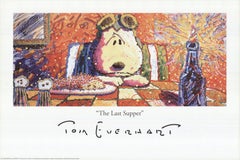
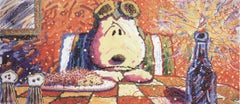
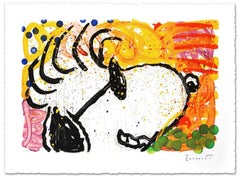
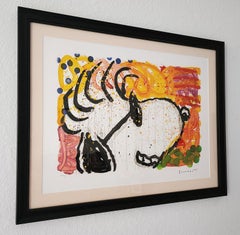
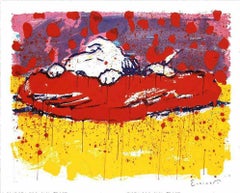
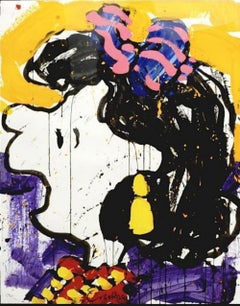
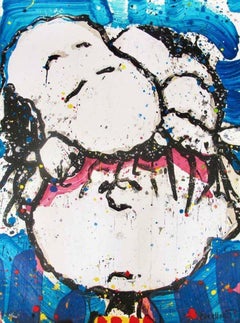
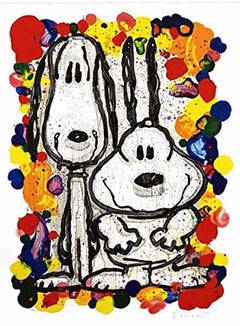
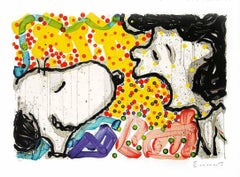
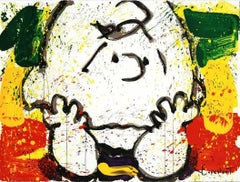
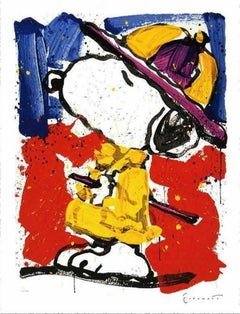
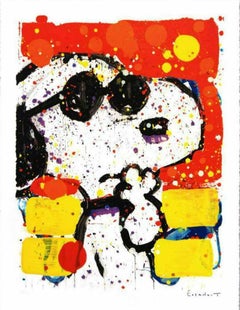
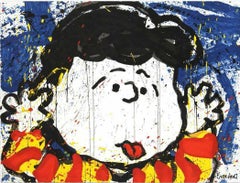
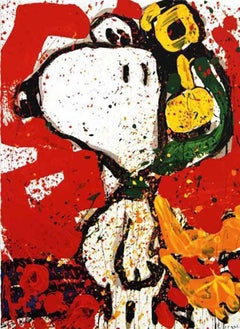
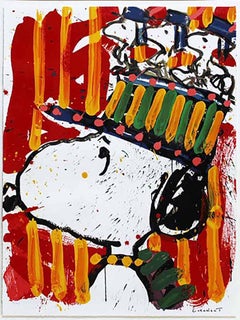
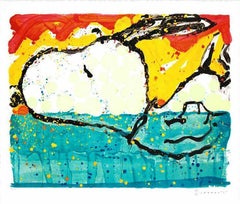
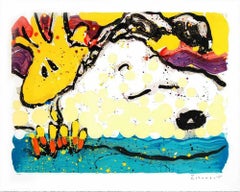
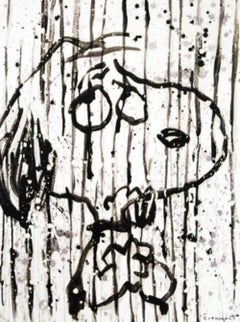
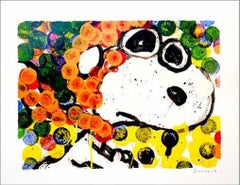
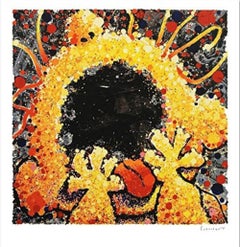
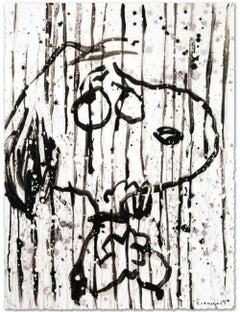
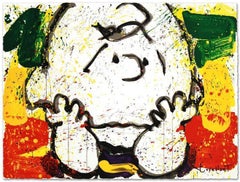
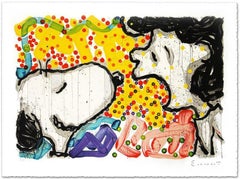
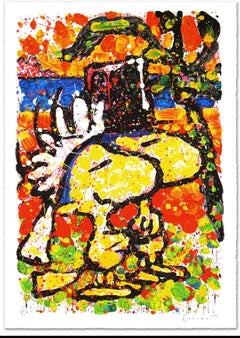
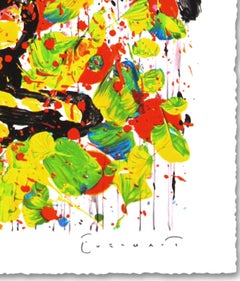
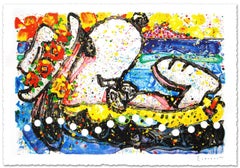
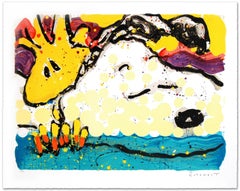
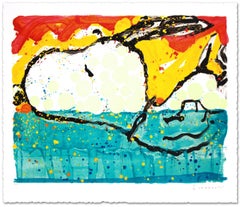
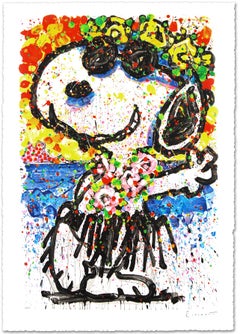
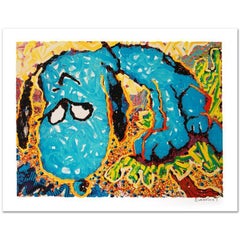
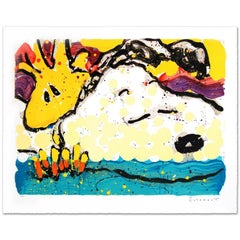
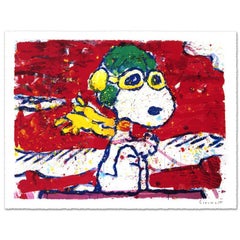
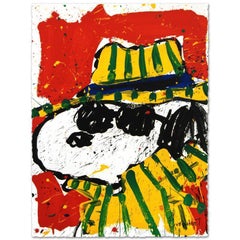
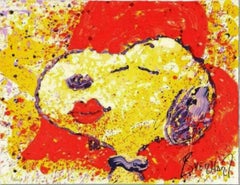
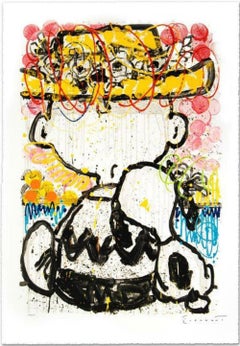
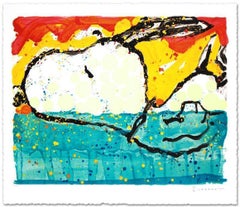
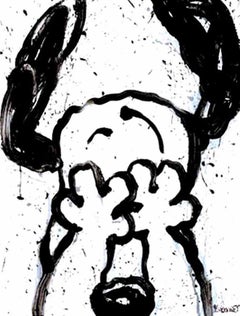
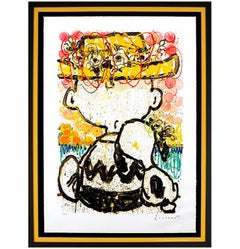
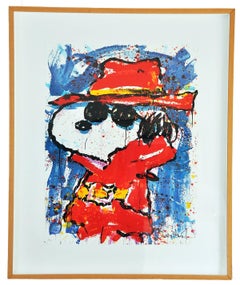
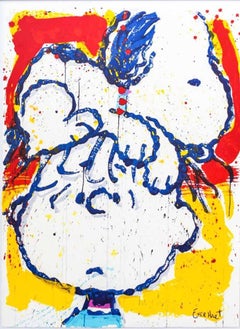
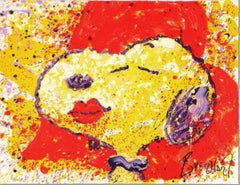
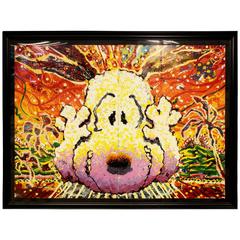
Find the exact tom everhart lithograph you’re shopping for in the variety available on 1stDibs. Find
contemporary versions now, or shop for
contemporary creations for a more modern example of these cherished works. If you’re looking for a tom everhart lithograph from a specific time period, our collection is diverse and broad-ranging, and you’ll find at least one that dates back to the 20th Century while another version may have been produced as recently as the 21st Century. On 1stDibs, the right tom everhart lithograph is waiting for you and the choices span a range of colors that includes
beige,
orange,
yellow and
black. Artworks like these — often created in
lithograph,
mixed media and
paper — can elevate any room of your home.
A tom everhart lithograph can differ in price owing to various characteristics — the average selling price for items in our inventory is $2,400, while the lowest priced sells for $999 and the highest can go for as much as $3,800.
TOM EVERHART was born on May 21, 1952 in Washington, D.C. He began his under graduate studies at the Yale University of Art and Architecture in 1970. In 1972 he participated in an independent study program under Earl Hoffman at St. Mary’s College. He returned to the Yale School of Art and Architecture in 1974 where he completed his graduate work in 1976, followed by post-graduate studies at the Musee de l’Orangerie, in Paris. He taught Life Drawing and Painting, briefly from 1979 to 1980, at Antioch College.
In 1980, Tom Everhart was introduced to cartoonist Charles M. Schulz at Schulz’s studios in Santa Rosa, California. A few weeks prior to their meeting, Everhart, having absolutely no education in cartooning, found himself involved in a freelance project that required him to draw and present Peanuts renderings to Schulz’s studios. Preparing as he would the drawings and studies for his large-scale skeleton / nature related paintings; he blew up some of the cartoonist’s strips on a twenty-five foot wall in his studio which eliminated the perimeter lines of the cartoon box, leaving only the marks of the cartoonist. Schulz’s painterly pen stroke, now larger than life, translated into painterly brush strokes and was now a language that overwhelmingly connected to Everhart’s own form of expression and communication. Completely impressed with Schulz’s line, he was able to reproduce the line art almost exactly, which in turn impressed Schulz at their meeting. It was directly at this time that Everhart confirmed his obsession with Schulz’s line art style and their ongoing relationship of friendship and education of his line style.
A few years later, while still painting full-time on his previous body of work in his studio, Everhart began drawing special projects for Schulz and United Media, both in New York and Tokyo. These authentic Schulz-style drawings included covers and interiors of magazines, art for the White House, and the majority of the Met Life campaign. When Everhart was not painting, he was now considered to be the only fine artist authorized and educated by Schulz to draw the actual Schulz line.
The paintings using Charles Schulz’s comic strip, Peanuts, as subject matter began and replaced the skeleton and nature related paintings in 1988. The inspiration came to Everhart in Johns Hopkins Hospital, where he was undergoing several operations for stage 4 colon / liver cancer in the summer of 1988. Everhart recalls lying in a hospital bed surrounded by enough flowers to open a florist shop, piles of art books and a stack of Peanuts comic strips sent to him by Schulz. The light streaming in from the window almost projected the new images of his future Schulz inspired paintings on the wall. All the images in Everhart’s work are in some respect derived from Schulz’s Peanuts comic strip.
Decorating with fine art prints — whether they’re figurative prints, abstract prints or another variety — has always been a practical way of bringing a space to life as well as bringing works by an artist you love into your home.
Pursued in the 1960s and ’70s, largely by Pop artists drawn to its associations with mass production, advertising, packaging and seriality, as well as those challenging the primacy of the Abstract Expressionist brushstroke, printmaking was embraced in the 1980s by painters and conceptual artists ranging from David Salle and Elizabeth Murray to Adrian Piper and Sherrie Levine.
Printmaking is the transfer of an image from one surface to another. An artist takes a material like stone, metal, wood or wax, carves, incises, draws or otherwise marks it with an image, inks or paints it and then transfers the image to a piece of paper or other material.
Fine art prints are frequently confused with their more commercial counterparts. After all, our closest connection to the printed image is through mass-produced newspapers, magazines and books, and many people don’t realize that even though prints are editions, they start with an original image created by an artist with the intent of reproducing it in a small batch. Fine art prints are created in strictly limited editions — 20 or 30 or maybe 50 — and are always based on an image created specifically to be made into an edition.
Many people think of revered Dutch artist Rembrandt as a painter but may not know that he was a printmaker as well. His prints have been preserved in time along with the work of other celebrated printmakers such as Pablo Picasso, Salvador Dalí and Andy Warhol. These fine art prints are still highly sought after by collectors.
“It’s another tool in the artist’s toolbox, just like painting or sculpture or anything else that an artist uses in the service of mark making or expressing him- or herself,” says International Fine Print Dealers Association (IFPDA) vice president Betsy Senior, of New York’s Betsy Senior Fine Art, Inc.
Because artist’s editions tend to be more affordable and available than his or her unique works, they’re more accessible and can be a great opportunity to bring a variety of colors, textures and shapes into a space.
For tight corners, select small fine art prints as opposed to the oversized bold piece you’ll hang as a focal point in the dining area. But be careful not to choose something that is too big for your space. And feel free to lean into it if need be — not every work needs picture-hanging hooks. Leaning a larger fine art print against the wall behind a bookcase can add a stylish installation-type dynamic to your living room. (Read more about how to arrange wall art here.)
Find fine art prints for sale on 1stDibs today.