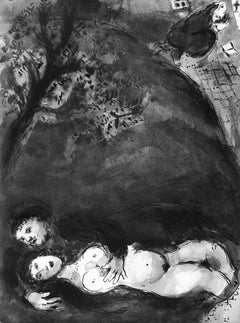
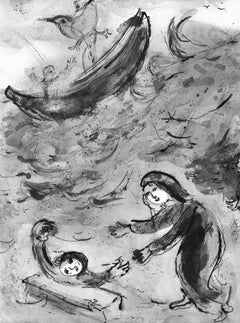
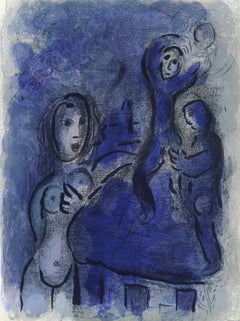
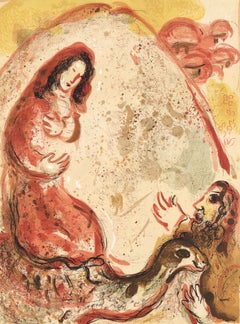
Marc Chagall Art

French, 1887-1985

Described by art critic Robert Hughes as "the quintessential Jewish artist of the twentieth century," the Russian-French modernist Marc Chagall worked in nearly every artistic medium. Influenced by Symbolism, Fauvism, Cubism and Surrealism, he developed his own distinctive style, combining avant-garde techniques and motifs with elements drawn from Eastern European Jewish folk art.

Born Moishe Segal in 1887, in Belarus (then part of the Russian empire), Chagall is often celebrated for his figurative paintings, but he also produced stained-glass windows for the cathedrals of Reims and Metz, in France; for the United Nations, in New York; and for the Hadassah Hospital in Jerusalem, as well as book illustrations, stage sets, ceramics, tapestries and fine-art prints. Characterized by a bold color palette and whimsical imagery, his works are often narrative, depicting small-village scenes and quotidian moments of peasant life, as in his late painting The Flight into Egypt from 1980.

Before World War I, Chagall traveled between St. Petersburg, Paris and Berlin. When the conflict broke out, he returned to Soviet-occupied Belarus, where he founded the Vitebsk Arts College before leaving again for Paris in 1922. He fled to the United States during World War II but in 1947 returned to France, where he spent the rest of his life. His peripatetic career left its mark on his style, which was distinctly international, incorporating elements from each of the cultures he experienced.

Marc Chagall remains one of the past century’s most respected talents — find his art on 1stDibs.

to
349
1,122
206
105
30
8
Overall Width
to
Overall Height
to
1
2
1,466
2
130
33
54
411
572
143
33
434
418
299
29
10
7
4
4
1,281
187
1
871
644
381
378
346
252
191
108
50
42
30
27
27
26
16
16
14
10
10
10
830
518
104
82
82
11,378
2,863
2,494
1,457
241
469
764
691
Artist: Marc Chagall
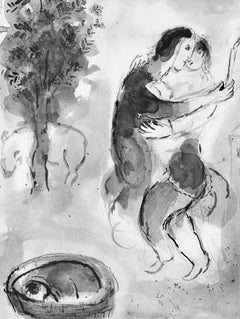
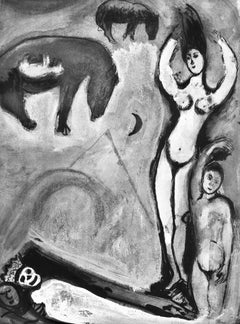
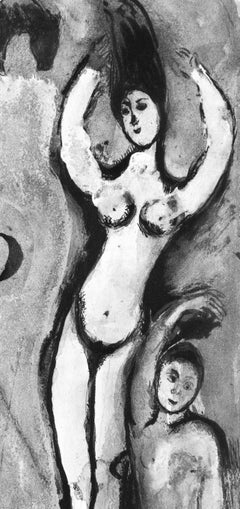
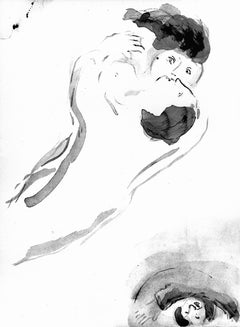
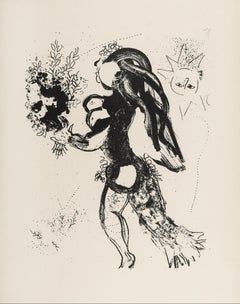
Marc Chagall, The Offering, from The Lithographs of Chagall I, 1960

Marc Chagall, The Offering, from The Lithographs of Chagall I, 1960

By Marc Chagall

Located in Southampton, NY

This exquisite lithograph by Marc Chagall (1887–1985), titled L'Offrande (The Offering), from The Lithographs of Chagall I, originates from the October 1960 issue published by Andre ...

Category

1960s Expressionist Marc Chagall Art

Materials

Lithograph

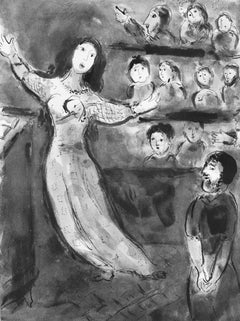
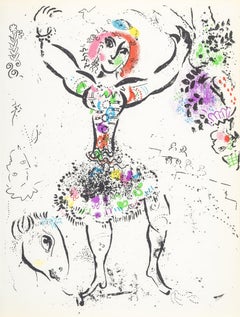
Marc Chagall, The Juggler, from The Lithographs of Chagall I, 1960

Marc Chagall, The Juggler, from The Lithographs of Chagall I, 1960

By Marc Chagall

Located in Southampton, NY

This exquisite lithograph by Marc Chagall (1887–1985), titled La Jongleuse (The Juggler), from The Lithographs of Chagall I, originates from the October 1960 issue published by Andre...

Category

1960s Expressionist Marc Chagall Art

Materials

Lithograph

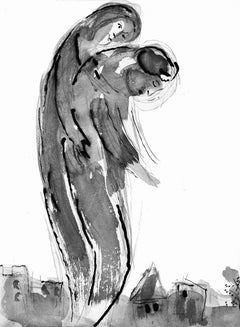
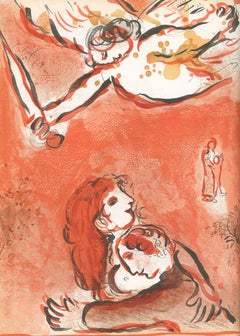
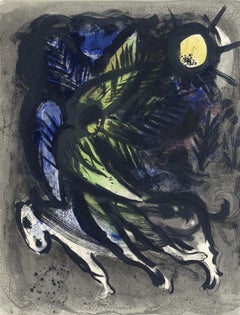
Marc Chagall, The Angel, from The Lithographs of Chagall I, 1960

Marc Chagall, The Angel, from The Lithographs of Chagall I, 1960

By Marc Chagall

Located in Southampton, NY

This exquisite lithograph by Marc Chagall (1887–1985), titled L'Ange (The Angel), from The Lithographs of Chagall I, originates from the October 1960 issue published by Andre Sauret,...

Category

1960s Expressionist Marc Chagall Art

Materials

Lithograph

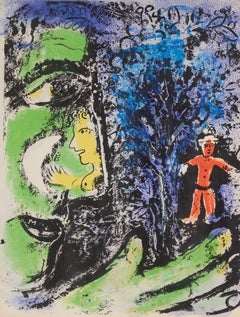
Marc Chagall, The Profile and the Red Child, The Lithographs of Chagall I, 1960

Marc Chagall, The Profile and the Red Child, The Lithographs of Chagall I, 1960

By Marc Chagall

Located in Southampton, NY

This exquisite lithograph by Marc Chagall (1887–1985), titled Le Profil et l'Enfant Rouge (The Profile and the Red Child), from The Lithographs of Chagall I, originates from the Octo...

Category

1960s Expressionist Marc Chagall Art

Materials

Lithograph

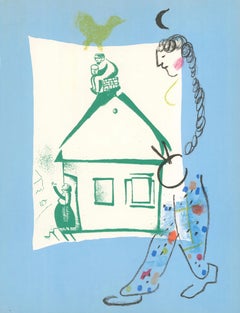
Marc Chagall, The House of My Village, from The Lithographs of Chagall I, 1960

Marc Chagall, The House of My Village, from The Lithographs of Chagall I, 1960

By Marc Chagall

Located in Southampton, NY

This exquisite lithograph by Marc Chagall (1887–1985), titled La Maison de mon Village (The House of My Village), from The Lithographs of Chagall I, originates from the October 1960 ...

Category

1960s Expressionist Marc Chagall Art

Materials

Lithograph

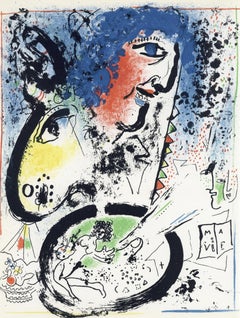
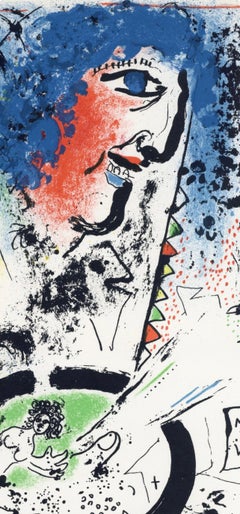
Marc Chagall, Self Portrait, from The Lithographs of Chagall I, 1960

Marc Chagall, Self Portrait, from The Lithographs of Chagall I, 1960

By Marc Chagall

Located in Southampton, NY

This exquisite lithograph by Marc Chagall (1887–1985), titled Autoportrait (Self Portrait), from The Lithographs of Chagall I, originates from the October 1960 issue published by And...

Category

1960s Expressionist Marc Chagall Art

Materials

Lithograph

Marc Chagall, The Bay of Angels, from The Lithographs of Chagall I, 1960

Marc Chagall, The Bay of Angels, from The Lithographs of Chagall I, 1960

By Marc Chagall

Located in Southampton, NY

This exquisite lithograph by Marc Chagall (1887–1985), titled La Baie des Anges (The Bay of Angels), from The Lithographs of Chagall I, originates from The Lithographs of Chagall I, ...

Category

1960s Expressionist Marc Chagall Art

Materials

Lithograph

Marc Chagall, The Lovers in the Red Sun, from The Lithographs of Chagall I, 1960

Marc Chagall, The Lovers in the Red Sun, from The Lithographs of Chagall I, 1960

By Marc Chagall

Located in Southampton, NY

This exquisite lithograph by Marc Chagall (1887–1985), titled Les Amoureux au Soleil Rouge (The Lovers in the Red Sun), from The Lithographs of Chagall I, originates from the October...

Category

1960s Expressionist Marc Chagall Art

Materials

Lithograph

Marc Chagall, Mother and Child before Notre-Dame, Verve, Revue Artistique, 1953

Marc Chagall, Mother and Child before Notre-Dame, Verve, Revue Artistique, 1953

By Marc Chagall

Located in Southampton, NY

This exquisite lithograph by Marc Chagall (1887–1985), titled Mere et enfant devant a Notre-Dame (Mother and Child before Notre-Dame), from Verve, Revue Artistique et Litteraire, Vol...

Category

1950s Expressionist Marc Chagall Art

Materials

Lithograph

Marc Chagall, Vision of Paris, from Verve, Revue Artistique, 1953

Marc Chagall, Vision of Paris, from Verve, Revue Artistique, 1953

By Marc Chagall

Located in Southampton, NY

This exquisite lithograph by Marc Chagall (1887–1985), titled Vision de Paris (Vision of Paris), from Verve, Revue Artistique et Litteraire, Vol. VII, No. 27–28, originates from the ...

Category

1950s Expressionist Marc Chagall Art

Materials

Lithograph

Marc Chagall, Spring, from Verve, Revue Artistique, 1938

Marc Chagall, Spring, from Verve, Revue Artistique, 1938

By Marc Chagall

Located in Southampton, NY

This exquisite lithograph by Marc Chagall (1887–1985), titled Printemps (Spring), from Verve, Revue Artistique et Litteraire, Vol. I, No. 3, originat...

Category

1930s Expressionist Marc Chagall Art

Materials

Lithograph

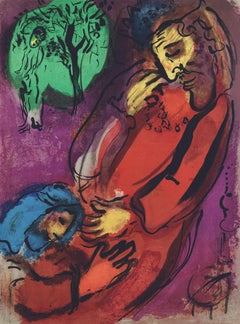
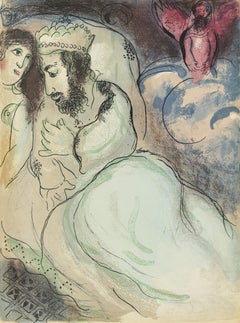
Marc Chagall, David and Absalom, from Drawings for the Bible, 1956

Marc Chagall, David and Absalom, from Drawings for the Bible, 1956

By Marc Chagall

Located in Southampton, NY

This exquisite lithograph by Marc Chagall (1887–1985), titled David et Absalon (David and Absalom), from Marc Chagall, Dessins Pour La Bible (Drawings for the Bible), Verve: Revue Ar...

Category

1950s Expressionist Marc Chagall Art

Materials

Lithograph

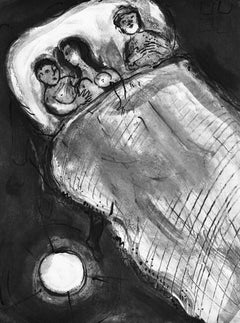
Marc Chagall, The Bed, from Tales of Boccaccio, 1950

Marc Chagall, The Bed, from Tales of Boccaccio, 1950

By Marc Chagall

Located in Southampton, NY

This exquisite lithograph by Marc Chagall (1887–1985), titled Le Lit (The Bed), from Contes de Boccace, peintures du manuscrit des ducs de Bourgogne, Bibliotheque de l'Arsenal (Ms. n...

Category

1950s Expressionist Marc Chagall Art

Materials

Lithograph

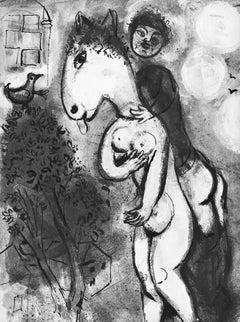
Marc Chagall, The Horse and the Lover, from Tales of Boccaccio, 1950

Marc Chagall, The Horse and the Lover, from Tales of Boccaccio, 1950

By Marc Chagall

Located in Southampton, NY

This exquisite lithograph by Marc Chagall (1887–1985), titled Le Cheval et l’Amoureux (The Horse and the Lover), from Contes de Boccace, peintures du manuscrit des ducs de Bourgogne,...

Category

1950s Expressionist Marc Chagall Art

Materials

Lithograph

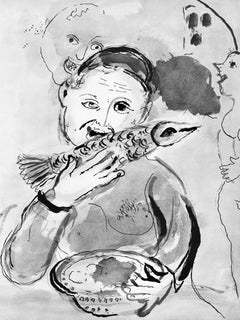
Marc Chagall, The Fish, from Tales of Boccaccio, 1950

Marc Chagall, The Fish, from Tales of Boccaccio, 1950

By Marc Chagall

Located in Southampton, NY

This exquisite lithograph by Marc Chagall (1887–1985), titled Le Poisson (The Fish), from Contes de Boccace, peintures du manuscrit des ducs de Bourgogne, Bibliotheque de l'Arsenal (...

Category

1950s Expressionist Marc Chagall Art

Materials

Lithograph

Marc Chagall, The Dream, from Tales of Boccaccio, 1950

Marc Chagall, The Dream, from Tales of Boccaccio, 1950

By Marc Chagall

Located in Southampton, NY

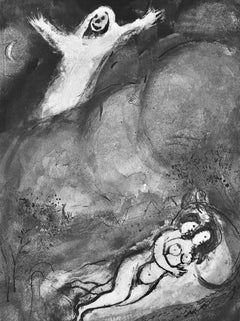
This exquisite lithograph by Marc Chagall (1887–1985), titled Le Songe (The Dream), from Contes de Boccace, peintures du manuscrit des ducs de Bourgogne, Bibliotheque de l'Arsenal (M...

Category

1950s Expressionist Marc Chagall Art

Materials

Lithograph

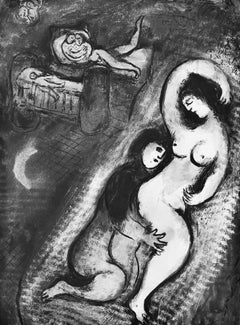
Marc Chagall, The Birth, from Tales of Boccaccio, 1950

Marc Chagall, The Birth, from Tales of Boccaccio, 1950

By Marc Chagall

Located in Southampton, NY

This exquisite lithograph by Marc Chagall (1887–1985), titled La Naissance (The Birth), from Contes de Boccace, peintures du manuscrit des ducs de Bourgogne, Bibliotheque de l'Arsena...

Category

1950s Expressionist Marc Chagall Art

Materials

Lithograph

Marc Chagall, The Lovers in Gray, from Tales of Boccaccio, 1950

Marc Chagall, The Lovers in Gray, from Tales of Boccaccio, 1950

By Marc Chagall

Located in Southampton, NY

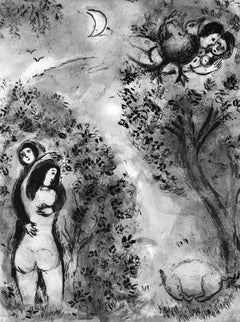
This exquisite lithograph by Marc Chagall (1887–1985), titled Les Amoureux en gris (The Lovers in Gray), from Contes de Boccace, peintures du manuscrit des ducs de Bourgogne, Bibliotheque de l'Arsenal (Ms. no. 5193) (Tales of Boccaccio, Paintings from the Manuscript of the Dukes of Burgundy, Library of the Arsenal), Lavis de Marc Chagall, from Verve, Revue Artistique et Litteraire, Vol. VI, No. 24, originates from the 1950 issue published by Editions de la revue Verve, Paris, under the direction of Teriade, Editeur, Paris, and printed by Draeger Freres, Maitres-Imprimeurs, Paris, 1950. This tender and poetic composition captures Chagall’s timeless fascination with love, memory, and the dreamlike interplay of human emotion. Les Amoureux en gris embodies the artist’s lyrical synthesis of intimacy and imagination, rendered with the delicate tonal subtlety and symbolic depth that characterize his finest graphic works. Executed as a lithograph on velin du Marais paper, this work measures 14 x 10.5 inches. Unsigned and unnumbered as issued. The edition exemplifies the exquisite craftsmanship of the Draeger Freres atelier, celebrated for its precision and tonal richness in printing fine artworks. Artwork Details: Artist: Marc Chagall (1887–1985) Title: Les Amoureux en gris (The Lovers in Gray), from Contes de Boccace (Tales of Boccaccio), Verve, Revue Artistique et Litteraire, Vol. VI, No. 24, 1950 Medium: Lithograph on velin du Marais paper Dimensions: 14 x 10.5 inches Inscription: Unsigned and unnumbered as issued Date: 1950 Publisher: Editions de la revue Verve, Paris, under the direction of Teriade, Editeur, Paris Printer: Draeger Freres, Maitres-Imprimeurs, Paris Condition: Well preserved, consistent with age and medium Provenance: From Verve, Revue Artistique et Litteraire, Vol. VI, No. 24, published by Editions de la revue Verve, Paris, 1950 Notes: Excerpted from the album (translated from French), This Verve issue contains the lavis that Marc Chagall composed to illustrate Tales of Boccaccio's Decameron and the paintings on the same theme of the Manuscript of the Dukes of Burgundy preserved in the Arsenal Library. Marc Chagall executed the cover of this work which was completed printing on April 20, 1950 on the presses of Maitres-Imprimeurs, the Draeger Freres. About the Publication: This 1950 issue of Verve, Revue Artistique et Litteraire, titled Contes de Boccace (Tales of Boccaccio), was devoted to the great Italian humanist Giovanni Boccaccio and illuminated manuscripts from the 15th century, interpreted and revived through the eyes of modern artists. Under the artistic direction of Teriade, Marc Chagall contributed a series of lyrical paintings and lavis that reimagined these Renaissance themes with his signature dreamlike color, tenderness, and spiritual symbolism. The issue juxtaposed Chagall’s contemporary vision with the rich heritage of medieval illumination, bridging centuries of artistic imagination. Printed by the master craftsmen of Draeger Freres, the publication stands as a testament to Verve’s tradition of uniting art, literature, and history in one luxurious volume that celebrates the continuity of human creativity from the Middle Ages to modernity. About the Artist: Marc Chagall (1887–1985) was a Belarus-born French painter, printmaker, and designer whose visionary imagination, radiant color, and deeply poetic symbolism made him one of the most beloved and influential artists of the 20th century. Rooted in the imagery of his Jewish heritage and the memories of his childhood in Vitebsk, Chagall’s art wove together themes of faith, love, folklore, and fantasy with a dreamlike modern sensibility. His unique style—merging elements of Cubism, Fauvism, Expressionism, and Surrealism—defied categorization, transforming ordinary scenes into lyrical meditations on memory and emotion. Influenced by Russian icon painting, medieval religious art, and the modern innovations of artists such as Pablo Picasso, Henri Matisse, and Georges Braque, Chagall developed a profoundly personal visual language filled with floating figures, vibrant animals, musicians, and lovers that symbolized the transcendent power of imagination and love. During his early years in Paris, he became an integral part of the Ecole de Paris circle, forming friendships with Amedeo Modigliani, Fernand Leger, and Sonia Delaunay, and his creative spirit resonated with that of his peers and successors—Alexander Calder, Alberto Giacometti, Salvador Dali, Joan Miro, Wassily Kandinsky, Marcel Duchamp, and Man Ray—artists who, like Chagall, sought to push the boundaries of perception, emotion, and form. Over a prolific career that spanned painting, printmaking, stained glass, ceramics, and stage design, Chagall brought an unparalleled poetic sensibility to modern art, infusing even the most abstract subjects with human warmth and spiritual depth. His works are held in the most prestigious museums around the world, including the Museum of Modern Art, the Centre Pompidou, the Tate, and the Guggenheim, where they continue to inspire generations of artists and collectors. The highest price ever paid for a Marc Chagall artwork is approximately $28.5 million USD, achieved in 2017 at Sotheby’s New York for Les Amoureux (1928). Marc Chagall Les Amoureux...

Category

1950s Expressionist Marc Chagall Art

Materials

Lithograph

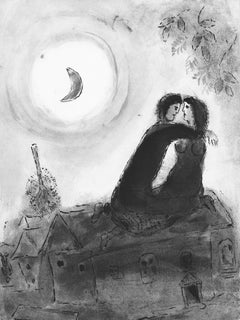
Marc Chagall, The Lovers under the Moon, from Tales of Boccaccio, 1950

Marc Chagall, The Lovers under the Moon, from Tales of Boccaccio, 1950

By Marc Chagall

Located in Southampton, NY

This exquisite lithograph by Marc Chagall (1887–1985), titled Les Amoureux sous la Lune (The Lovers under the Moon), from Contes de Boccace, peintures du manuscrit des ducs de Bourgogne, Bibliotheque de l'Arsenal (Ms. no. 5193) (Tales of Boccaccio, Paintings from the Manuscript of the Dukes of Burgundy, Library of the Arsenal), Lavis de Marc Chagall, from Verve, Revue Artistique et Litteraire, Vol. VI, No. 24, originates from the 1950 issue published by Editions de la revue Verve, Paris, under the direction of Teriade, Editeur, Paris, and printed by Draeger Freres, Maitres-Imprimeurs, Paris, 1950. This tender and poetic composition exemplifies Chagall’s lifelong fascination with love, dream, and transcendence. Les Amoureux sous la Lune radiates intimacy and serenity, its nocturnal palette and floating forms capturing the timeless romance between lovers united under the moon’s luminous gaze. Executed as a lithograph on velin du Marais paper, this work measures 14 x 10.5 inches. Unsigned and unnumbered as issued. The edition exemplifies the exquisite craftsmanship of the Draeger Freres atelier, celebrated for its precision and tonal richness in printing fine artworks. Artwork Details: Artist: Marc Chagall (1887–1985) Title: Les Amoureux sous la Lune (The Lovers under the Moon), from Contes de Boccace (Tales of Boccaccio), Verve, Revue Artistique et Litteraire, Vol. VI, No. 24, 1950 Medium: Lithograph on velin du Marais paper Dimensions: 14 x 10.5 inches Inscription: Unsigned and unnumbered as issued Date: 1950 Publisher: Editions de la revue Verve, Paris, under the direction of Teriade, Editeur, Paris Printer: Draeger Freres, Maitres-Imprimeurs, Paris Condition: Well preserved, consistent with age and medium Provenance: From Verve, Revue Artistique et Litteraire, Vol. VI, No. 24, published by Editions de la revue Verve, Paris, 1950 Notes: Excerpted from the album (translated from French), This Verve issue contains the lavis that Marc Chagall composed to illustrate Tales of Boccaccio's Decameron and the paintings on the same theme of the Manuscript of the Dukes of Burgundy preserved in the Arsenal Library. Marc Chagall executed the cover of this work which was completed printing on April 20, 1950 on the presses of Maitres-Imprimeurs, the Draeger Freres. About the Publication: This 1950 issue of Verve, Revue Artistique et Litteraire, titled Contes de Boccace (Tales of Boccaccio), was devoted to the great Italian humanist Giovanni Boccaccio and illuminated manuscripts from the 15th century, interpreted and revived through the eyes of modern artists. Under the artistic direction of Teriade, Marc Chagall contributed a series of lyrical paintings and lavis that reimagined these Renaissance themes with his signature dreamlike color, tenderness, and spiritual symbolism. The issue juxtaposed Chagall’s contemporary vision with the rich heritage of medieval illumination, bridging centuries of artistic imagination. Printed by the master craftsmen of Draeger Freres, the publication stands as a testament to Verve’s tradition of uniting art, literature, and history in one luxurious volume that celebrates the continuity of human creativity from the Middle Ages to modernity. About the Artist: Marc Chagall (1887–1985) was a Belarus-born French painter, printmaker, and designer whose visionary imagination, radiant color, and deeply poetic symbolism made him one of the most beloved and influential artists of the 20th century. Rooted in the imagery of his Jewish heritage and the memories of his childhood in Vitebsk, Chagall’s art wove together themes of faith, love, folklore, and fantasy with a dreamlike modern sensibility. His unique style—merging elements of Cubism, Fauvism, Expressionism, and Surrealism—defied categorization, transforming ordinary scenes into lyrical meditations on memory and emotion. Influenced by Russian icon painting, medieval religious art, and the modern innovations of artists such as Pablo Picasso, Henri Matisse, and Georges Braque, Chagall developed a profoundly personal visual language filled with floating figures, vibrant animals, musicians, and lovers that symbolized the transcendent power of imagination and love. During his early years in Paris, he became an integral part of the Ecole de Paris circle, forming friendships with Amedeo Modigliani, Fernand Leger, and Sonia Delaunay, and his creative spirit resonated with that of his peers and successors—Alexander Calder, Alberto Giacometti, Salvador Dali, Joan Miro, Wassily Kandinsky, Marcel Duchamp, and Man Ray—artists who, like Chagall, sought to push the boundaries of perception, emotion, and form. Over a prolific career that spanned painting, printmaking, stained glass, ceramics, and stage design, Chagall brought an unparalleled poetic sensibility to modern art, infusing even the most abstract subjects with human warmth and spiritual depth. His works are held in the most prestigious museums around the world, including the Museum of Modern Art, the Centre Pompidou, the Tate, and the Guggenheim, where they continue to inspire generations of artists and collectors. The highest price ever paid for a Marc Chagall artwork is approximately $28.5 million USD, achieved in 2017 at Sotheby’s New York for Les Amoureux (1928). Marc Chagall Les...

Category

1950s Expressionist Marc Chagall Art

Materials

Lithograph

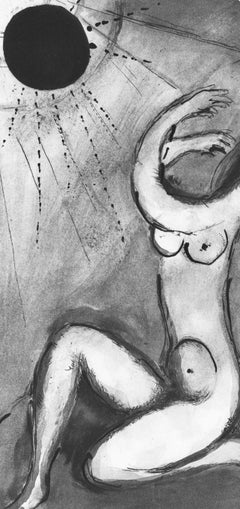
Marc Chagall, The Black Sun, from Tales of Boccaccio, 1950

Marc Chagall, The Black Sun, from Tales of Boccaccio, 1950

By Marc Chagall

Located in Southampton, NY

This exquisite lithograph by Marc Chagall (1887–1985), titled Le Soleil noir (The Black Sun), from Contes de Boccace, peintures du manuscrit des ducs de Bourgogne, Bibliotheque de l'...

Category

1950s Expressionist Marc Chagall Art

Materials

Lithograph

Marc Chagall, The Man with the Pig, from Tales of Boccaccio, 1950

Marc Chagall, The Man with the Pig, from Tales of Boccaccio, 1950

By Marc Chagall

Located in Southampton, NY

This exquisite lithograph by Marc Chagall (1887–1985), titled L’Homme au cochon (The Man with the Pig), from Contes de Boccace, peintures du manuscrit des ducs de Bourgogne, Biblioth...

Category

1950s Expressionist Marc Chagall Art

Materials

Lithograph

Marc Chagall, The Woman at the Counter, from Tales of Boccaccio, 1950

Marc Chagall, The Woman at the Counter, from Tales of Boccaccio, 1950

By Marc Chagall

Located in Southampton, NY

This exquisite lithograph by Marc Chagall (1887–1985), titled La Femme au Comptoir (The Woman at the Counter), from Contes de Boccace, peintures du manuscrit des ducs de Bourgogne, B...

Category

1950s Expressionist Marc Chagall Art

Materials

Lithograph

Marc Chagall, The Evening Angel, from Tales of Boccaccio, 1950

Marc Chagall, The Evening Angel, from Tales of Boccaccio, 1950

By Marc Chagall

Located in Southampton, NY

This exquisite lithograph by Marc Chagall (1887–1985), titled L’Ange du soir (The Evening Angel), from Contes de Boccace, peintures du manuscrit des ducs de Bourgogne, Bibliotheque d...

Category

1950s Expressionist Marc Chagall Art

Materials

Lithograph

Marc Chagall, The Lovers in the Tree, from Tales of Boccaccio, 1950

Marc Chagall, The Lovers in the Tree, from Tales of Boccaccio, 1950

By Marc Chagall

Located in Southampton, NY

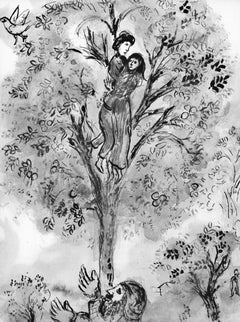
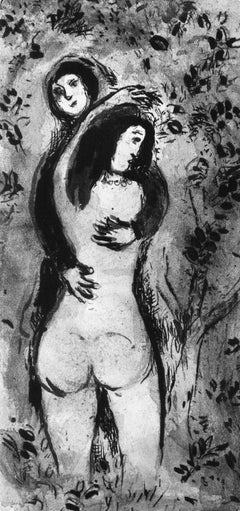
This exquisite lithograph by Marc Chagall (1887–1985), titled Les Amants dans l’arbre (The Lovers in the Tree), from Contes de Boccace, peintures du manuscrit des ducs de Bourgogne, ...

Category

1950s Expressionist Marc Chagall Art

Materials

Lithograph

Marc Chagall, The Kiss, from Tales of Boccaccio, 1950

Marc Chagall, The Kiss, from Tales of Boccaccio, 1950

By Marc Chagall

Located in Southampton, NY

This exquisite lithograph by Marc Chagall (1887–1985), titled Le Baiser (The Kiss), from Contes de Boccace, peintures du manuscrit des ducs de Bourgogne, Bibliotheque de l'Arsenal (M...

Category

1950s Expressionist Marc Chagall Art

Materials

Lithograph

Marc Chagall, The Singer, from Tales of Boccaccio, 1950

Marc Chagall, The Singer, from Tales of Boccaccio, 1950

By Marc Chagall

Located in Southampton, NY

This exquisite lithograph by Marc Chagall (1887–1985), titled La Chanteuse (The Singer), from Contes de Boccace, peintures du manuscrit des ducs de Bourgogne, Bibliotheque de l'Arsen...

Category

1950s Expressionist Marc Chagall Art

Materials

Lithograph

Marc Chagall, The Birds, from Tales of Boccaccio, 1950

Marc Chagall, The Birds, from Tales of Boccaccio, 1950

By Marc Chagall

Located in Southampton, NY

This exquisite lithograph by Marc Chagall (1887–1985), titled Les Oiseaux (The Birds), from Contes de Boccace, peintures du manuscrit des ducs de Bourgogne, Bibliotheque de l'Arsenal...

Category

1950s Expressionist Marc Chagall Art

Materials

Lithograph

Marc Chagall, The Glass of Wine, from Tales of Boccaccio, 1950

Marc Chagall, The Glass of Wine, from Tales of Boccaccio, 1950

By Marc Chagall

Located in Southampton, NY

This exquisite lithograph by Marc Chagall (1887–1985), titled Le Verre de vin (The Glass of Wine), from Contes de Boccace, peintures du manuscrit des ducs de Bourgogne, Bibliotheque ...

Category

1950s Expressionist Marc Chagall Art

Materials

Lithograph

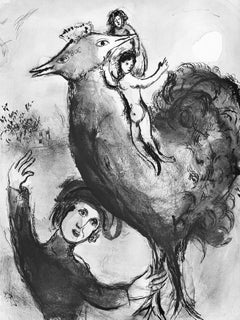
Marc Chagall, The Rooster, from Tales of Boccaccio, 1950

Marc Chagall, The Rooster, from Tales of Boccaccio, 1950

By Marc Chagall

Located in Southampton, NY

This exquisite lithograph by Marc Chagall (1887–1985), titled Le Coq (The Rooster), from Contes de Boccace, peintures du manuscrit des ducs de Bourgogne, Bibliotheque de l'Arsenal (Ms. no. 5193) (Tales of Boccaccio, Paintings from the Manuscript of the Dukes of Burgundy, Library of the Arsenal), Lavis de Marc Chagall, from Verve, Revue Artistique et Litteraire, Vol. VI, No. 24, originates from the 1950 issue published by Editions de la revue Verve, Paris, under the direction of Teriade, Editeur, Paris, and printed by Draeger Freres, Maitres-Imprimeurs, Paris, 1950. This beautifully expressive composition exemplifies Chagall’s poetic synthesis of color, movement, and imagination. Le Coq captures the artist’s timeless fascination with rural symbolism, metamorphosis, and the joyful interplay between the earthly and the divine. Executed as a lithograph on velin du Marais paper, this work measures 14 x 10.5 inches. Unsigned and unnumbered as issued. The edition exemplifies the exquisite craftsmanship of the Draeger Freres atelier, celebrated for its precision and tonal richness in printing fine artworks. Artwork Details: Artist: Marc Chagall (1887–1985) Title: Le Coq (The Rooster), from Contes de Boccace (Tales of Boccaccio), Verve, Revue Artistique et Litteraire, Vol. VI, No. 24, 1950 Medium: Lithograph on velin du Marais paper Dimensions: 14 x 10.5 inches Inscription: Unsigned and unnumbered as issued Date: 1950 Publisher: Editions de la revue Verve, Paris, under the direction of Teriade, Editeur, Paris Printer: Draeger Freres, Maitres-Imprimeurs, Paris Condition: Well preserved, consistent with age and medium Provenance: From Verve, Revue Artistique et Litteraire, Vol. VI, No. 24, published by Editions de la revue Verve, Paris, 1950 Notes: Excerpted from the album (translated from French), This Verve issue contains the lavis that Marc Chagall composed to illustrate Tales of Boccaccio's Decameron and the paintings on the same theme of the Manuscript of the Dukes of Burgundy preserved in the Arsenal Library. Marc Chagall executed the cover of this work which was completed printing on April 20, 1950 on the presses of Maitres-Imprimeurs, the Draeger Freres. About the Publication: This 1950 issue of Verve, Revue Artistique et Litteraire, titled Contes de Boccace (Tales of Boccaccio), was devoted to the great Italian humanist Giovanni Boccaccio and illuminated manuscripts from the 15th century, interpreted and revived through the eyes of modern artists. Under the artistic direction of Teriade, Marc Chagall contributed a series of lyrical paintings and lavis that reimagined these Renaissance themes with his signature dreamlike color, tenderness, and spiritual symbolism. The issue juxtaposed Chagall’s contemporary vision with the rich heritage of medieval illumination, bridging centuries of artistic imagination. Printed by the master craftsmen of Draeger Freres, the publication stands as a testament to Verve’s tradition of uniting art, literature, and history in one luxurious volume that celebrates the continuity of human creativity from the Middle Ages to modernity. About the Artist: Marc Chagall (1887–1985) was a Belarus-born French painter, printmaker, and designer whose visionary imagination, radiant color, and deeply poetic symbolism made him one of the most beloved and influential artists of the 20th century. Rooted in the imagery of his Jewish heritage and the memories of his childhood in Vitebsk, Chagall’s art wove together themes of faith, love, folklore, and fantasy with a dreamlike modern sensibility. His unique style—merging elements of Cubism, Fauvism, Expressionism, and Surrealism—defied categorization, transforming ordinary scenes into lyrical meditations on memory and emotion. Influenced by Russian icon painting, medieval religious art, and the modern innovations of artists such as Pablo Picasso, Henri Matisse, and Georges Braque, Chagall developed a profoundly personal visual language filled with floating figures, vibrant animals, musicians, and lovers that symbolized the transcendent power of imagination and love. During his early years in Paris, he became an integral part of the Ecole de Paris circle, forming friendships with Amedeo Modigliani, Fernand Leger, and Sonia Delaunay, and his creative spirit resonated with that of his peers and successors—Alexander Calder, Alberto Giacometti, Salvador Dali, Joan Miro, Wassily Kandinsky, Marcel Duchamp, and Man Ray—artists who, like Chagall, sought to push the boundaries of perception, emotion, and form. Over a prolific career that spanned painting, printmaking, stained glass, ceramics, and stage design, Chagall brought an unparalleled poetic sensibility to modern art, infusing even the most abstract subjects with human warmth and spiritual depth. His works are held in the most prestigious museums around the world, including the Museum of Modern Art, the Centre Pompidou, the Tate, and the Guggenheim, where they continue to inspire generations of artists and collectors. The highest price ever paid for a Marc Chagall artwork is approximately $28.5 million USD, achieved in 2017 at Sotheby’s New York for Les Amoureux (1928). Marc Chagall Le Coq...

Category

1950s Expressionist Marc Chagall Art

Materials

Lithograph

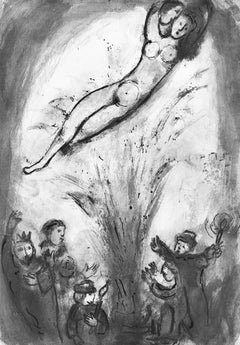
Marc Chagall, The Fireworks, from Tales of Boccaccio, 1950

Marc Chagall, The Fireworks, from Tales of Boccaccio, 1950

By Marc Chagall

Located in Southampton, NY

This exquisite lithograph by Marc Chagall (1887–1985), titled Le Feu d’artifice (The Fireworks), from Contes de Boccace, peintures du manuscrit des ducs de Bourgogne, Bibliotheque de...

Category

1950s Expressionist Marc Chagall Art

Materials

Lithograph

Marc Chagall, The Acrobat, from Tales of Boccaccio, 1950

Marc Chagall, The Acrobat, from Tales of Boccaccio, 1950

By Marc Chagall

Located in Southampton, NY

This exquisite lithograph by Marc Chagall (1887–1985), titled L’Acrobate (The Acrobat), from Contes de Boccace, peintures du manuscrit des ducs de Bourgogne, Bibliotheque de l'Arsena...

Category

1950s Expressionist Marc Chagall Art

Materials

Lithograph

Marc Chagall, The Horseman and the Bird, from Tales of Boccaccio, 1950

Marc Chagall, The Horseman and the Bird, from Tales of Boccaccio, 1950

By Marc Chagall

Located in Southampton, NY

This exquisite lithograph by Marc Chagall (1887–1985), titled Le Cavalier et l’oiseau (The Horseman and the Bird), from Contes de Boccace, peintures du manuscrit des ducs de Bourgogn...

Category

1950s Expressionist Marc Chagall Art

Materials

Lithograph

Marc Chagall, Lovers in the Moonlight, from Tales of Boccaccio, 1950

Marc Chagall, Lovers in the Moonlight, from Tales of Boccaccio, 1950

By Marc Chagall

Located in Southampton, NY

This exquisite lithograph by Marc Chagall (1887–1985), titled Les Amoureux au clair de lune (Lovers in the Moonlight), from Contes de Boccace, peintures du manuscrit des ducs de Bourgogne, Bibliotheque de l'Arsenal (Ms. no. 5193) (Tales of Boccaccio, Paintings from the Manuscript of the Dukes of Burgundy, Library of the Arsenal), Lavis de Marc Chagall, from Verve, Revue Artistique et Litteraire, Vol. VI, No. 24, originates from the 1950 issue published by Editions de la revue Verve, Paris, under the direction of Teriade, Editeur, Paris, and printed by Draeger Freres, Maitres-Imprimeurs, Paris, 1950. This enchanting composition epitomizes Chagall’s poetic vision of love, light, and dreamlike transcendence. Les Amoureux au clair de lune captures the tenderness of two lovers bathed in moonlight, suspended in a luminous harmony that merges the earthly and the celestial with Chagall’s signature grace and lyricism. Executed as a lithograph on velin du Marais paper, this work measures 14 x 10.5 inches. Unsigned and unnumbered as issued. The edition exemplifies the exquisite craftsmanship of the Draeger Freres atelier, celebrated for its precision and tonal richness in printing fine artworks. Artwork Details: Artist: Marc Chagall (1887–1985) Title: Les Amoureux au clair de lune (Lovers in the Moonlight), from Contes de Boccace (Tales of Boccaccio), Verve, Revue Artistique et Litteraire, Vol. VI, No. 24, 1950 Medium: Lithograph on velin du Marais paper Dimensions: 14 x 10.5 inches Inscription: Unsigned and unnumbered as issued Date: 1950 Publisher: Editions de la revue Verve, Paris, under the direction of Teriade, Editeur, Paris Printer: Draeger Freres, Maitres-Imprimeurs, Paris Condition: Well preserved, consistent with age and medium Provenance: From Verve, Revue Artistique et Litteraire, Vol. VI, No. 24, published by Editions de la revue Verve, Paris, 1950 Notes: Excerpted from the album (translated from French), This Verve issue contains the lavis that Marc Chagall composed to illustrate Tales of Boccaccio's Decameron and the paintings on the same theme of the Manuscript of the Dukes of Burgundy preserved in the Arsenal Library. Marc Chagall executed the cover of this work which was completed printing on April 20, 1950 on the presses of Maitres-Imprimeurs, the Draeger Freres. About the Publication: This 1950 issue of Verve, Revue Artistique et Litteraire, titled Contes de Boccace (Tales of Boccaccio), was devoted to the great Italian humanist Giovanni Boccaccio and illuminated manuscripts from the 15th century, interpreted and revived through the eyes of modern artists. Under the artistic direction of Teriade, Marc Chagall contributed a series of lyrical paintings and lavis that reimagined these Renaissance themes with his signature dreamlike color, tenderness, and spiritual symbolism. The issue juxtaposed Chagall’s contemporary vision with the rich heritage of medieval illumination, bridging centuries of artistic imagination. Printed by the master craftsmen of Draeger Freres, the publication stands as a testament to Verve’s tradition of uniting art, literature, and history in one luxurious volume that celebrates the continuity of human creativity from the Middle Ages to modernity. About the Artist: Marc Chagall (1887–1985) was a Belarus-born French painter, printmaker, and designer whose visionary imagination, radiant color, and deeply poetic symbolism made him one of the most beloved and influential artists of the 20th century. Rooted in the imagery of his Jewish heritage and the memories of his childhood in Vitebsk, Chagall’s art wove together themes of faith, love, folklore, and fantasy with a dreamlike modern sensibility. His unique style—merging elements of Cubism, Fauvism, Expressionism, and Surrealism—defied categorization, transforming ordinary scenes into lyrical meditations on memory and emotion. Influenced by Russian icon painting, medieval religious art, and the modern innovations of artists such as Pablo Picasso, Henri Matisse, and Georges Braque, Chagall developed a profoundly personal visual language filled with floating figures, vibrant animals, musicians, and lovers that symbolized the transcendent power of imagination and love. During his early years in Paris, he became an integral part of the Ecole de Paris circle, forming friendships with Amedeo Modigliani, Fernand Leger, and Sonia Delaunay, and his creative spirit resonated with that of his peers and successors—Alexander Calder, Alberto Giacometti, Salvador Dali, Joan Miro, Wassily Kandinsky, Marcel Duchamp, and Man Ray—artists who, like Chagall, sought to push the boundaries of perception, emotion, and form. Over a prolific career that spanned painting, printmaking, stained glass, ceramics, and stage design, Chagall brought an unparalleled poetic sensibility to modern art, infusing even the most abstract subjects with human warmth and spiritual depth. His works are held in the most prestigious museums around the world, including the Museum of Modern Art, the Centre Pompidou, the Tate, and the Guggenheim, where they continue to inspire generations of artists and collectors. The highest price ever paid for a Marc Chagall artwork is approximately $28.5 million USD, achieved in 2017 at Sotheby’s New York for Les Amoureux (1928). Marc Chagall Les...

Category

1950s Expressionist Marc Chagall Art

Materials

Lithograph

Marc Chagall, The King, from Tales of Boccaccio, 1950

Marc Chagall, The King, from Tales of Boccaccio, 1950

By Marc Chagall

Located in Southampton, NY

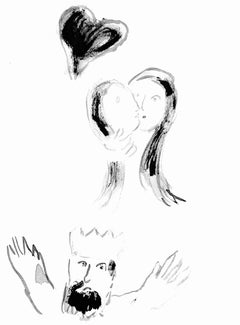
This exquisite lithograph by Marc Chagall (1887–1985), titled Le Roi (The King), from Contes de Boccace, peintures du manuscrit des ducs de Bourgogne, Bibliotheque de l'Arsenal (Ms. ...

Category

1950s Expressionist Marc Chagall Art

Materials

Lithograph

Marc Chagall, The Lovers Beneath the Tree, from Tales of Boccaccio, 1950

Marc Chagall, The Lovers Beneath the Tree, from Tales of Boccaccio, 1950

By Marc Chagall

Located in Southampton, NY

This exquisite lithograph by Marc Chagall (1887–1985), titled Les Amants sous l’arbre (The Lovers Beneath the Tree), from Contes de Boccace, peintures du manuscrit des ducs de Bourgo...

Category

1950s Expressionist Marc Chagall Art

Materials

Lithograph

Marc Chagall, The Shipwreck, from Tales of Boccaccio, 1950

Marc Chagall, The Shipwreck, from Tales of Boccaccio, 1950

By Marc Chagall

Located in Southampton, NY

This exquisite lithograph by Marc Chagall (1887–1985), titled Le Naufrage (The Shipwreck), from Contes de Boccace, peintures du manuscrit des ducs de Bourgogne, Bibliotheque de l'Ars...

Category

1950s Expressionist Marc Chagall Art

Materials

Lithograph

Marc Chagall, The Horses and the Nudes, from Tales of Boccaccio, 1950

Marc Chagall, The Horses and the Nudes, from Tales of Boccaccio, 1950

By Marc Chagall

Located in Southampton, NY

This exquisite lithograph by Marc Chagall (1887–1985), titled Les Chevaux et les Nus (The Horses and the Nudes), from Contes de Boccace, peintures du manuscrit des ducs de Bourgogne,...

Category

1950s Expressionist Marc Chagall Art

Materials

Lithograph

Marc Chagall, The Lovers, from Tales of Boccaccio, 1950

Marc Chagall, The Lovers, from Tales of Boccaccio, 1950

By Marc Chagall

Located in Southampton, NY

This exquisite lithograph by Marc Chagall (1887–1985), titled Les Amoureux (The Lovers), from Contes de Boccace, peintures du manuscrit des ducs de Bourgogne, Bibliotheque de l'Arsen...

Category

1950s Expressionist Marc Chagall Art

Materials

Lithograph

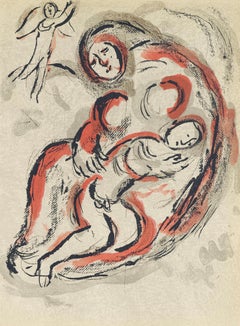
Marc Chagall, Hagar in the Desert, from Drawings for the Bible, 1960

Marc Chagall, Hagar in the Desert, from Drawings for the Bible, 1960

By Marc Chagall

Located in Southampton, NY

This exquisite lithograph by Marc Chagall (1887–1985), titled Agar dans le desert (Hagar in the Desert), from Marc Chagall, Dessins Pour La Bible (Drawings for the Bible), Verve: Rev...

Category

1960s Expressionist Marc Chagall Art

Materials

Lithograph

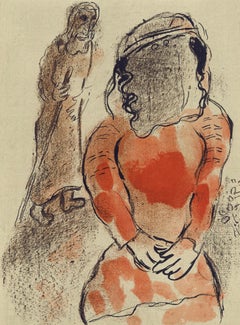
Marc Chagall, Tamar, Daughter-in-Law of Judah, from Drawings for the Bible, 1960

Marc Chagall, Tamar, Daughter-in-Law of Judah, from Drawings for the Bible, 1960

By Marc Chagall

Located in Southampton, NY

This exquisite lithograph by Marc Chagall (1887–1985), titled Tamar Belle-Fille de Judas (Tamar, Daughter-in-Law of Judah), from Marc Chagall, Dessins Pour La Bible (Drawings for the Bible), Verve: Revue Artistique et Litteraire, Vol. X, No. 37-38, originates from the July 29, 1960 issue published by Editions de la revue Verve, Paris, under the direction of Teriade, Editeur, Paris, and printed by Mourlot Freres, Paris, 1960. This visionary composition reflects Chagall’s poetic interpretation of the biblical story of Tamar, evoking themes of justice, identity, and moral complexity through his luminous color and dreamlike symbolism. The flowing forms and expressive imagery convey a sense of quiet intensity and narrative depth, capturing Tamar’s pivotal role within the unfolding story and its enduring resonance within Chagall’s distinctive visual language. Infused with movement and lyricism, the work transforms sacred narrative into a meditative vision of resilience, consequence, and the intricacies of human destiny. The piece forms part of Chagall’s celebrated series of lithographs and drawings created for Dessins Pour La Bible, a monumental project uniting art, scripture, and mysticism in one of the artist’s most important achievements. Executed as a lithograph on velin du Marais paper, this work measures 14 x 10.5 inches (35.56 x 26.67 cm). Unsigned and unnumbered as issued. The edition exemplifies the superb craftsmanship of the Mourlot Freres atelier, renowned for its collaborations with the greatest modern masters of the 20th century. Artwork Details: Artist: Marc Chagall (1887–1985) Title: Tamar Belle-Fille de Judas (Tamar, Daughter-in-Law of Judah), from Marc Chagall, Dessins Pour La Bible (Drawings for the Bible), Verve: Revue Artistique et Litteraire, Vol. X, No. 37-38, July 29, 1960 Medium: Lithograph on velin du Marais paper Dimensions: 14 x 10.5 inches (35.56 x 26.67 cm) Inscription: Unsigned and unnumbered as issued Date: 1960 Publisher: Editions de la revue Verve, Paris, under the direction of Teriade, Editeur, Paris Printer: Mourlot Freres, Paris Catalogue raisonne references: Chagall, Marc, et al. Chagall Lithographe. Andre Sauret, 1960-1986, illustration 230-276. Cramer, Patrick, and Meret Meyer. Marc Chagall: Catalogue Raisonne des Livres Illustres. P. Cramer ed., 1995, illustration 42. Condition: Well preserved, consistent with age and medium Provenance: From Marc Chagall, Dessins Pour La Bible (Drawings for the Bible), Verve: Revue Artistique et Litteraire, Vol. X, No. 37-38, published by Editions de la revue Verve, Paris, 1960 Notes: Excerpted from the folio (translated from French), This double issue of Verve includes the drawings that Marc Chagall executed in 1958 and 1959 on biblical themes that he had not generally dealt with in his illustration for the Bible, engraved with etching and which were included in issue 33/34 of Verve. This album has 96 renderings in black and 24 color litbographies as well as the cover that were specially made for this album. It was completed printing on July 29, 1960 by Draeger Freres for black gravures and by Mourlot Freres for color lithography. About the Publication: Marc Chagall, Dessins Pour La Bible (Drawings for the Bible), published as Verve Vol. X, No. 37-38 on July 29, 1960, represents a significant continuation and expansion of Chagall’s profound engagement with biblical imagery and spiritual narrative. Conceived and directed by the visionary publisher Teriade, the publication builds upon the earlier Verve issue devoted to Chagall’s Bible illustrations by presenting a new body of work executed in 1958 and 1959, exploring themes and episodes that had not been fully addressed in the initial series. Printed in Paris by Draeger Freres for black gravures and Mourlot Freres for color lithography, the edition demonstrates an exceptional level of technical refinement and artistic collaboration. The publication includes an extensive suite of ninety six black reproductions and twenty four color lithographs, as well as specially created cover imagery, reflecting Chagall’s continued innovation in translating sacred themes into graphic form. As part of the broader tradition of Verve, one of the most important artistic and literary publications of the twentieth century, this issue exemplifies the fusion of text, image, and craftsmanship at the highest level. Today, Verve Vol. X, No. 37-38 stands as a major achievement within Chagall’s graphic oeuvre, reaffirming his role as one of the foremost interpreters of biblical narrative in modern art. About the Artist: Marc Chagall (1887–1985) was a Belarus-born French painter, printmaker, and designer whose visionary imagination, radiant color, and deeply poetic symbolism made him one of the most beloved and influential artists of the 20th century. Rooted in the imagery of his Jewish heritage and the memories of his childhood in Vitebsk, Chagall’s art wove together themes of faith, love, folklore, and fantasy with a dreamlike modern sensibility. His unique style merging elements of Cubism, Fauvism, Expressionism, and Surrealism defied categorization, transforming ordinary scenes into lyrical meditations on memory and emotion. Influenced by Russian icon painting, medieval religious art, and the modern innovations of artists such as Pablo Picasso, Henri Matisse, and Georges Braque, Chagall developed a profoundly personal visual language filled with floating figures, vibrant animals, musicians, and lovers that symbolized the transcendent power of imagination and love. During his early years in Paris, he became an integral part of the Ecole de Paris circle, forming friendships with Amedeo Modigliani, Fernand Leger, and Sonia Delaunay, and his creative spirit resonated with that of his peers and successors Alexander Calder, Alberto Giacometti, Salvador Dali, Joan Miro, Wassily Kandinsky, Marcel Duchamp, and Man Ray, artists who sought to push the boundaries of perception, emotion, and form. Over a prolific career that spanned painting, printmaking, stained glass, ceramics, and stage design, Chagall brought an unparalleled poetic sensibility to modern art, infusing even the most abstract subjects with human warmth and spiritual depth. His works are held in the most prestigious museums around the world, including the Museum of Modern Art, the Centre Pompidou, the Tate, and the Guggenheim, where they continue to inspire generations of artists and collectors. The highest price ever paid for a Marc Chagall artwork is approximately 28.5 million USD, achieved in 2017 at Sotheby’s New York for Les Amoureux (1928). Marc Chagall Tamar...

Category

1960s Expressionist Marc Chagall Art
Materials

Lithograph

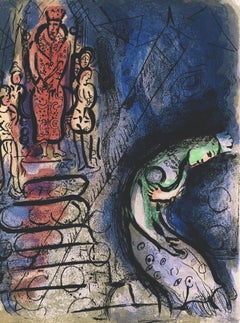
Marc Chagall, Ahasuerus Banishes Vashti, from Drawings for the Bible, 1960

Marc Chagall, Ahasuerus Banishes Vashti, from Drawings for the Bible, 1960

By Marc Chagall

Located in Southampton, NY

This exquisite lithograph by Marc Chagall (1887–1985), titled Asuerus chasse Vasthi (Ahasuerus Dismisses Vashti), from Marc Chagall, Dessins Pour La Bible (Drawings for the Bible), V...

Category

1960s Expressionist Marc Chagall Art
Materials

Lithograph

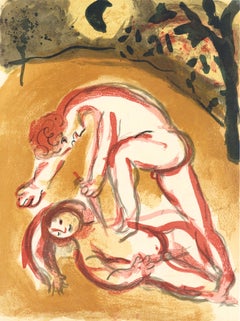
Marc Chagall, Cain and Abel, from Drawings for the Bible, 1960

Marc Chagall, Cain and Abel, from Drawings for the Bible, 1960

By Marc Chagall

Located in Southampton, NY

This exquisite lithograph by Marc Chagall (1887–1985), titled Cain et Abel (Cain and Abel), from Marc Chagall, Dessins Pour La Bible (Drawings for the Bible), Verve: Revue Artistique...

Category

1960s Expressionist Marc Chagall Art
Materials

Lithograph

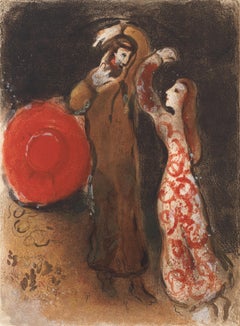
Marc Chagall, Rahab and the Spies of Jericho, from Drawings for the Bible, 1960

Marc Chagall, Rahab and the Spies of Jericho, from Drawings for the Bible, 1960

By Marc Chagall

Located in Southampton, NY

This exquisite lithograph by Marc Chagall (1887–1985), titled Rahab et les espions de Jericho (Rahab and the Spies of Jericho), from Marc Chagall, Dessins Pour La Bible (Drawings for...

Category

1960s Expressionist Marc Chagall Art
Materials

Lithograph

Marc Chagall, Rachel Steals Her Father’s Idols, Drawings for the Bible, 1960

Marc Chagall, Rachel Steals Her Father’s Idols, Drawings for the Bible, 1960

By Marc Chagall

Located in Southampton, NY

This exquisite lithograph by Marc Chagall (1887–1985), titled Rachel derobe les Idoles de son Pere (Rachel Steals Her Father’s Idols), from Marc Chagall, Dessins Pour La Bible (Drawings for the Bible), Verve: Revue Artistique et Litteraire, Vol. X, No. 37-38, originates from the July 29, 1960 issue published by Editions de la revue Verve, Paris, under the direction of Teriade, Editeur, Paris, and printed by Mourlot Freres, Paris, 1960. This visionary composition reflects Chagall’s poetic interpretation of the biblical episode in which Rachel secretly takes her father’s household idols, evoking themes of identity, defiance, and spiritual transformation through his luminous color and dreamlike symbolism. The flowing forms and radiant imagery convey a sense of tension and quiet determination, capturing the narrative’s emotional complexity and symbolic resonance within Chagall’s distinctive visual language. Infused with movement and lyricism, the work transforms sacred narrative into a meditative vision of transition, belief, and the shifting boundaries between past and future. The piece forms part of Chagall’s celebrated series of lithographs and drawings created for Dessins Pour La Bible, a monumental project uniting art, scripture, and mysticism in one of the artist’s most important achievements. Executed as a lithograph on velin du Marais paper, this work measures 14 x 10.5 inches (35.56 x 26.67 cm). Unsigned and unnumbered as issued. The edition exemplifies the superb craftsmanship of the Mourlot Freres atelier, renowned for its collaborations with the greatest modern masters of the 20th century. Artwork Details: Artist: Marc Chagall (1887–1985) Title: Rachel derobe les Idoles de son Pere (Rachel Steals Her Father’s Idols), from Marc Chagall, Dessins Pour La Bible (Drawings for the Bible), Verve: Revue Artistique et Litteraire, Vol. X, No. 37-38, July 29, 1960 Medium: Lithograph on velin du Marais paper Dimensions: 14 x 10.5 inches (35.56 x 26.67 cm) Inscription: Unsigned and unnumbered as issued Date: 1960 Publisher: Editions de la revue Verve, Paris, under the direction of Teriade, Editeur, Paris Printer: Mourlot Freres, Paris Catalogue raisonne references: Chagall, Marc, et al. Chagall Lithographe. Andre Sauret, 1960-1986, illustration 230-276. Cramer, Patrick, and Meret Meyer. Marc Chagall: Catalogue Raisonne des Livres Illustres. P. Cramer ed., 1995, illustration 42. Condition: Well preserved, consistent with age and medium Provenance: From Marc Chagall, Dessins Pour La Bible (Drawings for the Bible), Verve: Revue Artistique et Litteraire, Vol. X, No. 37-38, published by Editions de la revue Verve, Paris, 1960 Notes: Excerpted from the folio (translated from French), This double issue of Verve includes the drawings that Marc Chagall executed in 1958 and 1959 on biblical themes that he had not generally dealt with in his illustration for the Bible, engraved with etching and which were included in issue 33/34 of Verve. This album has 96 renderings in black and 24 color litbographies as well as the cover that were specially made for this album. It was completed printing on July 29, 1960 by Draeger Freres for black gravures and by Mourlot Freres for color lithography. About the Publication: Marc Chagall, Dessins Pour La Bible (Drawings for the Bible), published as Verve Vol. X, No. 37-38 on July 29, 1960, represents a significant continuation and expansion of Chagall’s profound engagement with biblical imagery and spiritual narrative. Conceived and directed by the visionary publisher Teriade, the publication builds upon the earlier Verve issue devoted to Chagall’s Bible illustrations by presenting a new body of work executed in 1958 and 1959, exploring themes and episodes that had not been fully addressed in the initial series. Printed in Paris by Draeger Freres for black gravures and Mourlot Freres for color lithography, the edition demonstrates an exceptional level of technical refinement and artistic collaboration. The publication includes an extensive suite of ninety six black reproductions and twenty four color lithographs, as well as specially created cover imagery, reflecting Chagall’s continued innovation in translating sacred themes into graphic form. As part of the broader tradition of Verve, one of the most important artistic and literary publications of the twentieth century, this issue exemplifies the fusion of text, image, and craftsmanship at the highest level. Today, Verve Vol. X, No. 37-38 stands as a major achievement within Chagall’s graphic oeuvre, reaffirming his role as one of the foremost interpreters of biblical narrative in modern art. About the Artist: Marc Chagall (1887–1985) was a Belarus-born French painter, printmaker, and designer whose visionary imagination, radiant color, and deeply poetic symbolism made him one of the most beloved and influential artists of the 20th century. Rooted in the imagery of his Jewish heritage and the memories of his childhood in Vitebsk, Chagall’s art wove together themes of faith, love, folklore, and fantasy with a dreamlike modern sensibility. His unique style merging elements of Cubism, Fauvism, Expressionism, and Surrealism defied categorization, transforming ordinary scenes into lyrical meditations on memory and emotion. Influenced by Russian icon painting, medieval religious art, and the modern innovations of artists such as Pablo Picasso, Henri Matisse, and Georges Braque, Chagall developed a profoundly personal visual language filled with floating figures, vibrant animals, musicians, and lovers that symbolized the transcendent power of imagination and love. During his early years in Paris, he became an integral part of the Ecole de Paris circle, forming friendships with Amedeo Modigliani, Fernand Leger, and Sonia Delaunay, and his creative spirit resonated with that of his peers and successors Alexander Calder, Alberto Giacometti, Salvador Dali, Joan Miro, Wassily Kandinsky, Marcel Duchamp, and Man Ray, artists who sought to push the boundaries of perception, emotion, and form. Over a prolific career that spanned painting, printmaking, stained glass, ceramics, and stage design, Chagall brought an unparalleled poetic sensibility to modern art, infusing even the most abstract subjects with human warmth and spiritual depth. His works are held in the most prestigious museums around the world, including the Museum of Modern Art, the Centre Pompidou, the Tate, and the Guggenheim, where they continue to inspire generations of artists and collectors. The highest price ever paid for a Marc Chagall artwork is approximately 28.5 million USD, achieved in 2017 at Sotheby’s New York for Les Amoureux (1928). Marc Chagall Rachel...

Category

1960s Expressionist Marc Chagall Art
Materials

Lithograph

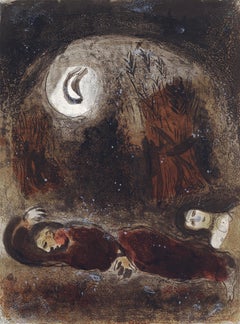
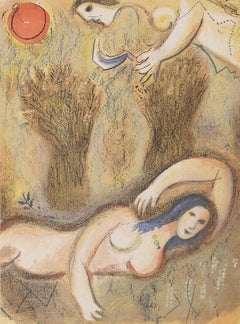
Marc Chagall, Ruth at the Feet of Boaz, from Drawings for the Bible, 1960

Marc Chagall, Ruth at the Feet of Boaz, from Drawings for the Bible, 1960

By Marc Chagall

Located in Southampton, NY

This exquisite lithograph by Marc Chagall (1887–1985), titled Ruth aux pieds de Booz (Ruth at the Feet of Boaz), from Marc Chagall, Dessins Pour La Bible (Drawings for the Bible), Verve: Revue Artistique et Litteraire, Vol. X, No. 37-38, originates from the July 29, 1960 issue published by Editions de la revue Verve, Paris, under the direction of Teriade, Editeur, Paris, and printed by Mourlot Freres, Paris, 1960. This visionary composition reflects Chagall’s poetic interpretation of the biblical moment in which Ruth lies at the feet of Boaz, evoking themes of humility, devotion, and destiny through his luminous color and dreamlike symbolism. The flowing forms and radiant imagery convey a sense of intimacy and quiet revelation, capturing the emotional and spiritual significance of the encounter within Chagall’s distinctive visual language. Infused with movement and lyricism, the work transforms sacred narrative into a meditative vision of faith, grace, and providential union. The piece forms part of Chagall’s celebrated series of lithographs and drawings created for Dessins Pour La Bible, a monumental project uniting art, scripture, and mysticism in one of the artist’s most important achievements. Executed as a lithograph on velin du Marais paper, this work measures 14 x 10.5 inches (35.56 x 26.67 cm). Unsigned and unnumbered as issued. The edition exemplifies the superb craftsmanship of the Mourlot Freres atelier, renowned for its collaborations with the greatest modern masters of the 20th century. Artwork Details: Artist: Marc Chagall (1887–1985) Title: Ruth aux pieds de Booz (Ruth at the Feet of Boaz), from Marc Chagall, Dessins Pour La Bible (Drawings for the Bible), Verve: Revue Artistique et Litteraire, Vol. X, No. 37-38, July 29, 1960 Medium: Lithograph on velin du Marais paper Dimensions: 14 x 10.5 inches (35.56 x 26.67 cm) Inscription: Unsigned and unnumbered as issued Date: 1960 Publisher: Editions de la revue Verve, Paris, under the direction of Teriade, Editeur, Paris Printer: Mourlot Freres, Paris Catalogue raisonne references: Chagall, Marc, et al. Chagall Lithographe. Andre Sauret, 1960-1986, illustration 230-276. Cramer, Patrick, and Meret Meyer. Marc Chagall: Catalogue Raisonne des Livres Illustres. P. Cramer ed., 1995, illustration 42. Condition: Well preserved, consistent with age and medium Provenance: From Marc Chagall, Dessins Pour La Bible (Drawings for the Bible), Verve: Revue Artistique et Litteraire, Vol. X, No. 37-38, published by Editions de la revue Verve, Paris, 1960 Notes: Excerpted from the folio (translated from French), This double issue of Verve includes the drawings that Marc Chagall executed in 1958 and 1959 on biblical themes that he had not generally dealt with in his illustration for the Bible, engraved with etching and which were included in issue 33/34 of Verve. This album has 96 renderings in black and 24 color litbographies as well as the cover that were specially made for this album. It was completed printing on July 29, 1960 by Draeger Freres for black gravures and by Mourlot Freres for color lithography. About the Publication: Marc Chagall, Dessins Pour La Bible (Drawings for the Bible), published as Verve Vol. X, No. 37-38 on July 29, 1960, represents a significant continuation and expansion of Chagall’s profound engagement with biblical imagery and spiritual narrative. Conceived and directed by the visionary publisher Teriade, the publication builds upon the earlier Verve issue devoted to Chagall’s Bible illustrations by presenting a new body of work executed in 1958 and 1959, exploring themes and episodes that had not been fully addressed in the initial series. Printed in Paris by Draeger Freres for black gravures and Mourlot Freres for color lithography, the edition demonstrates an exceptional level of technical refinement and artistic collaboration. The publication includes an extensive suite of ninety six black reproductions and twenty four color lithographs, as well as specially created cover imagery, reflecting Chagall’s continued innovation in translating sacred themes into graphic form. As part of the broader tradition of Verve, one of the most important artistic and literary publications of the twentieth century, this issue exemplifies the fusion of text, image, and craftsmanship at the highest level. Today, Verve Vol. X, No. 37-38 stands as a major achievement within Chagall’s graphic oeuvre, reaffirming his role as one of the foremost interpreters of biblical narrative in modern art. About the Artist: Marc Chagall (1887–1985) was a Belarus-born French painter, printmaker, and designer whose visionary imagination, radiant color, and deeply poetic symbolism made him one of the most beloved and influential artists of the 20th century. Rooted in the imagery of his Jewish heritage and the memories of his childhood in Vitebsk, Chagall’s art wove together themes of faith, love, folklore, and fantasy with a dreamlike modern sensibility. His unique style merging elements of Cubism, Fauvism, Expressionism, and Surrealism defied categorization, transforming ordinary scenes into lyrical meditations on memory and emotion. Influenced by Russian icon painting, medieval religious art, and the modern innovations of artists such as Pablo Picasso, Henri Matisse, and Georges Braque, Chagall developed a profoundly personal visual language filled with floating figures, vibrant animals, musicians, and lovers that symbolized the transcendent power of imagination and love. During his early years in Paris, he became an integral part of the Ecole de Paris circle, forming friendships with Amedeo Modigliani, Fernand Leger, and Sonia Delaunay, and his creative spirit resonated with that of his peers and successors Alexander Calder, Alberto Giacometti, Salvador Dali, Joan Miro, Wassily Kandinsky, Marcel Duchamp, and Man Ray, artists who sought to push the boundaries of perception, emotion, and form. Over a prolific career that spanned painting, printmaking, stained glass, ceramics, and stage design, Chagall brought an unparalleled poetic sensibility to modern art, infusing even the most abstract subjects with human warmth and spiritual depth. His works are held in the most prestigious museums around the world, including the Museum of Modern Art, the Centre Pompidou, the Tate, and the Guggenheim, where they continue to inspire generations of artists and collectors. The highest price ever paid for a Marc Chagall artwork is approximately 28.5 million USD, achieved in 2017 at Sotheby’s New York for Les Amoureux (1928). Marc Chagall Ruth...

Category

1960s Expressionist Marc Chagall Art
Materials

Lithograph

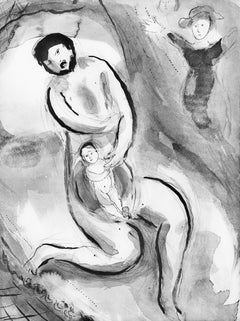
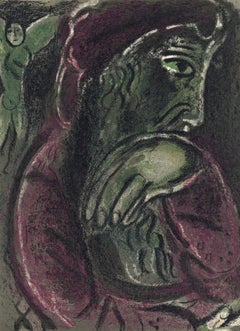
Marc Chagall, Job in Despair, from Drawings for the Bible, 1960

Marc Chagall, Job in Despair, from Drawings for the Bible, 1960

By Marc Chagall

Located in Southampton, NY

This exquisite lithograph by Marc Chagall (1887–1985), titled Job En Desespoir (Job in Despair), from Marc Chagall, Dessins Pour La Bible (Drawings for the Bible), Verve: Revue Artistique et Litteraire, Vol. X, No. 37-38, originates from the July 29, 1960 issue published by Editions de la revue Verve, Paris, under the direction of Teriade, Editeur, Paris, and printed by Mourlot Freres, Paris, 1960. This visionary composition reflects Chagall’s poetic interpretation of the biblical figure of Job in a moment of profound suffering, evoking themes of anguish, endurance, and spiritual trial through his luminous color and dreamlike symbolism. The flowing forms and expressive imagery convey a sense of emotional intensity and existential weight, capturing Job’s despair and inner turmoil within Chagall’s distinctive visual language. Infused with movement and lyricism, the work transforms sacred narrative into a meditative vision of sorrow, resilience, and the search for divine meaning. The piece forms part of Chagall’s celebrated series of lithographs and drawings created for Dessins Pour La Bible, a monumental project uniting art, scripture, and mysticism in one of the artist’s most important achievements. Executed as a lithograph on velin du Marais paper, this work measures 14 x 10.5 inches (35.56 x 26.67 cm). Unsigned and unnumbered as issued. The edition exemplifies the superb craftsmanship of the Mourlot Freres atelier, renowned for its collaborations with the greatest modern masters of the 20th century. Artwork Details: Artist: Marc Chagall (1887–1985) Title: Job En Desespoir (Job in Despair), from Marc Chagall, Dessins Pour La Bible (Drawings for the Bible), Verve: Revue Artistique et Litteraire, Vol. X, No. 37-38, July 29, 1960 Medium: Lithograph on velin du Marais paper Dimensions: 14 x 10.5 inches (35.56 x 26.67 cm) Inscription: Unsigned and unnumbered as issued Date: 1960 Publisher: Editions de la revue Verve, Paris, under the direction of Teriade, Editeur, Paris Printer: Mourlot Freres, Paris Catalogue raisonne references: Chagall, Marc, et al. Chagall Lithographe. Andre Sauret, 1960-1986, illustration 230-276. Cramer, Patrick, and Meret Meyer. Marc Chagall: Catalogue Raisonne des Livres Illustres. P. Cramer ed., 1995, illustration 42. Condition: Well preserved, consistent with age and medium Provenance: From Marc Chagall, Dessins Pour La Bible (Drawings for the Bible), Verve: Revue Artistique et Litteraire, Vol. X, No. 37-38, published by Editions de la revue Verve, Paris, 1960 Notes: Excerpted from the folio (translated from French), This double issue of Verve includes the drawings that Marc Chagall executed in 1958 and 1959 on biblical themes that he had not generally dealt with in his illustration for the Bible, engraved with etching and which were included in issue 33/34 of Verve. This album has 96 renderings in black and 24 color litbographies as well as the cover that were specially made for this album. It was completed printing on July 29, 1960 by Draeger Freres for black gravures and by Mourlot Freres for color lithography. About the Publication: Marc Chagall, Dessins Pour La Bible (Drawings for the Bible), published as Verve Vol. X, No. 37-38 on July 29, 1960, represents a significant continuation and expansion of Chagall’s profound engagement with biblical imagery and spiritual narrative. Conceived and directed by the visionary publisher Teriade, the publication builds upon the earlier Verve issue devoted to Chagall’s Bible illustrations by presenting a new body of work executed in 1958 and 1959, exploring themes and episodes that had not been fully addressed in the initial series. Printed in Paris by Draeger Freres for black gravures and Mourlot Freres for color lithography, the edition demonstrates an exceptional level of technical refinement and artistic collaboration. The publication includes an extensive suite of ninety six black reproductions and twenty four color lithographs, as well as specially created cover imagery, reflecting Chagall’s continued innovation in translating sacred themes into graphic form. As part of the broader tradition of Verve, one of the most important artistic and literary publications of the twentieth century, this issue exemplifies the fusion of text, image, and craftsmanship at the highest level. Today, Verve Vol. X, No. 37-38 stands as a major achievement within Chagall’s graphic oeuvre, reaffirming his role as one of the foremost interpreters of biblical narrative in modern art. About the Artist: Marc Chagall (1887–1985) was a Belarus-born French painter, printmaker, and designer whose visionary imagination, radiant color, and deeply poetic symbolism made him one of the most beloved and influential artists of the 20th century. Rooted in the imagery of his Jewish heritage and the memories of his childhood in Vitebsk, Chagall’s art wove together themes of faith, love, folklore, and fantasy with a dreamlike modern sensibility. His unique style merging elements of Cubism, Fauvism, Expressionism, and Surrealism defied categorization, transforming ordinary scenes into lyrical meditations on memory and emotion. Influenced by Russian icon painting, medieval religious art, and the modern innovations of artists such as Pablo Picasso, Henri Matisse, and Georges Braque, Chagall developed a profoundly personal visual language filled with floating figures, vibrant animals, musicians, and lovers that symbolized the transcendent power of imagination and love. During his early years in Paris, he became an integral part of the Ecole de Paris circle, forming friendships with Amedeo Modigliani, Fernand Leger, and Sonia Delaunay, and his creative spirit resonated with that of his peers and successors Alexander Calder, Alberto Giacometti, Salvador Dali, Joan Miro, Wassily Kandinsky, Marcel Duchamp, and Man Ray, artists who sought to push the boundaries of perception, emotion, and form. Over a prolific career that spanned painting, printmaking, stained glass, ceramics, and stage design, Chagall brought an unparalleled poetic sensibility to modern art, infusing even the most abstract subjects with human warmth and spiritual depth. His works are held in the most prestigious museums around the world, including the Museum of Modern Art, the Centre Pompidou, the Tate, and the Guggenheim, where they continue to inspire generations of artists and collectors. The highest price ever paid for a Marc Chagall artwork is approximately 28.5 million USD, achieved in 2017 at Sotheby’s New York for Les Amoureux (1928). Marc Chagall Job...

Category

1960s Expressionist Marc Chagall Art
Materials

Lithograph

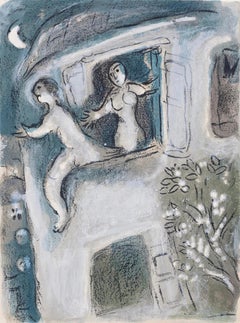
Marc Chagall, David Saved by Michal, from Drawings for the Bible, 1960

Marc Chagall, David Saved by Michal, from Drawings for the Bible, 1960

By Marc Chagall

Located in Southampton, NY

This exquisite lithograph by Marc Chagall (1887–1985), titled David sauve par Michal (David Saved by Michal), from Marc Chagall, Dessins Pour La Bible (Drawings for the Bible), Verve...

Category

1960s Expressionist Marc Chagall Art
Materials

Lithograph

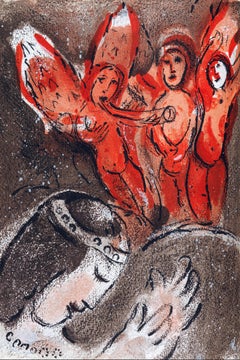
Marc Chagall, Sarah and Abimelech, from Drawings for the Bible, 1960

Marc Chagall, Sarah and Abimelech, from Drawings for the Bible, 1960

By Marc Chagall

Located in Southampton, NY

This exquisite lithograph by Marc Chagall (1887–1985), titled Sara et Abimelech (Sarah and Abimelech), from Marc Chagall, Dessins Pour La Bible (Drawings for the Bible), Verve: Revue...

Category

1960s Expressionist Marc Chagall Art
Materials

Lithograph

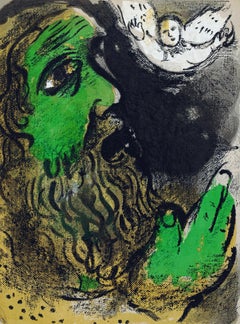
Marc Chagall, Job in Prayer, from Drawings for the Bible, 1960

Marc Chagall, Job in Prayer, from Drawings for the Bible, 1960

By Marc Chagall

Located in Southampton, NY

This exquisite lithograph by Marc Chagall (1887–1985), titled Job en priere (Job in Prayer), from Marc Chagall, Dessins Pour La Bible (Drawings for the Bible), Verve: Revue Artistique et Litteraire, Vol. X, No. 37-38, originates from the July 29, 1960 issue published by Editions de la revue Verve, Paris, under the direction of Teriade, Editeur, Paris, and printed by Mourlot Freres, Paris, 1960. This visionary composition reflects Chagall’s poetic interpretation of the biblical figure of Job, evoking themes of suffering, faith, and spiritual endurance through his luminous color and dreamlike symbolism. The flowing forms and radiant imagery convey a sense of introspection and divine supplication, capturing Job’s prayerful posture and inner resilience within Chagall’s distinctive visual language. Infused with movement and lyricism, the work transforms sacred narrative into a meditative vision of perseverance, humility, and unwavering devotion. The piece forms part of Chagall’s celebrated series of lithographs and drawings created for Dessins Pour La Bible, a monumental project uniting art, scripture, and mysticism in one of the artist’s most important achievements. Executed as a lithograph on velin du Marais paper, this work measures 14 x 10.5 inches (35.56 x 26.67 cm). Unsigned and unnumbered as issued. The edition exemplifies the superb craftsmanship of the Mourlot Freres atelier, renowned for its collaborations with the greatest modern masters of the 20th century. Artwork Details: Artist: Marc Chagall (1887–1985) Title: Job en priere (Job in Prayer), from Marc Chagall, Dessins Pour La Bible (Drawings for the Bible), Verve: Revue Artistique et Litteraire, Vol. X, No. 37-38, July 29, 1960 Medium: Lithograph on velin du Marais paper Dimensions: 14 x 10.5 inches (35.56 x 26.67 cm) Inscription: Unsigned and unnumbered as issued Date: 1960 Publisher: Editions de la revue Verve, Paris, under the direction of Teriade, Editeur, Paris Printer: Mourlot Freres, Paris Catalogue raisonne references: Chagall, Marc, et al. Chagall Lithographe. Andre Sauret, 1960-1986, illustration 230-276. Cramer, Patrick, and Meret Meyer. Marc Chagall: Catalogue Raisonne des Livres Illustres. P. Cramer ed., 1995, illustration 42. Condition: Well preserved, consistent with age and medium Provenance: From Marc Chagall, Dessins Pour La Bible (Drawings for the Bible), Verve: Revue Artistique et Litteraire, Vol. X, No. 37-38, published by Editions de la revue Verve, Paris, 1960 Notes: Excerpted from the folio (translated from French), This double issue of Verve includes the drawings that Marc Chagall executed in 1958 and 1959 on biblical themes that he had not generally dealt with in his illustration for the Bible, engraved with etching and which were included in issue 33/34 of Verve. This album has 96 renderings in black and 24 color litbographies as well as the cover that were specially made for this album. It was completed printing on July 29, 1960 by Draeger Freres for black gravures and by Mourlot Freres for color lithography. About the Publication: Marc Chagall, Dessins Pour La Bible (Drawings for the Bible), published as Verve Vol. X, No. 37-38 on July 29, 1960, represents a significant continuation and expansion of Chagall’s profound engagement with biblical imagery and spiritual narrative. Conceived and directed by the visionary publisher Teriade, the publication builds upon the earlier Verve issue devoted to Chagall’s Bible illustrations by presenting a new body of work executed in 1958 and 1959, exploring themes and episodes that had not been fully addressed in the initial series. Printed in Paris by Draeger Freres for black gravures and Mourlot Freres for color lithography, the edition demonstrates an exceptional level of technical refinement and artistic collaboration. The publication includes an extensive suite of ninety six black reproductions and twenty four color lithographs, as well as specially created cover imagery, reflecting Chagall’s continued innovation in translating sacred themes into graphic form. As part of the broader tradition of Verve, one of the most important artistic and literary publications of the twentieth century, this issue exemplifies the fusion of text, image, and craftsmanship at the highest level. Today, Verve Vol. X, No. 37-38 stands as a major achievement within Chagall’s graphic oeuvre, reaffirming his role as one of the foremost interpreters of biblical narrative in modern art. About the Artist: Marc Chagall (1887–1985) was a Belarus-born French painter, printmaker, and designer whose visionary imagination, radiant color, and deeply poetic symbolism made him one of the most beloved and influential artists of the 20th century. Rooted in the imagery of his Jewish heritage and the memories of his childhood in Vitebsk, Chagall’s art wove together themes of faith, love, folklore, and fantasy with a dreamlike modern sensibility. His unique style merging elements of Cubism, Fauvism, Expressionism, and Surrealism defied categorization, transforming ordinary scenes into lyrical meditations on memory and emotion. Influenced by Russian icon painting, medieval religious art, and the modern innovations of artists such as Pablo Picasso, Henri Matisse, and Georges Braque, Chagall developed a profoundly personal visual language filled with floating figures, vibrant animals, musicians, and lovers that symbolized the transcendent power of imagination and love. During his early years in Paris, he became an integral part of the Ecole de Paris circle, forming friendships with Amedeo Modigliani, Fernand Leger, and Sonia Delaunay, and his creative spirit resonated with that of his peers and successors Alexander Calder, Alberto Giacometti, Salvador Dali, Joan Miro, Wassily Kandinsky, Marcel Duchamp, and Man Ray, artists who sought to push the boundaries of perception, emotion, and form. Over a prolific career that spanned painting, printmaking, stained glass, ceramics, and stage design, Chagall brought an unparalleled poetic sensibility to modern art, infusing even the most abstract subjects with human warmth and spiritual depth. His works are held in the most prestigious museums around the world, including the Museum of Modern Art, the Centre Pompidou, the Tate, and the Guggenheim, where they continue to inspire generations of artists and collectors. The highest price ever paid for a Marc Chagall artwork is approximately 28.5 million USD, achieved in 2017 at Sotheby’s New York for Les Amoureux (1928). Marc Chagall Job...

Category

1960s Expressionist Marc Chagall Art
Materials

Lithograph

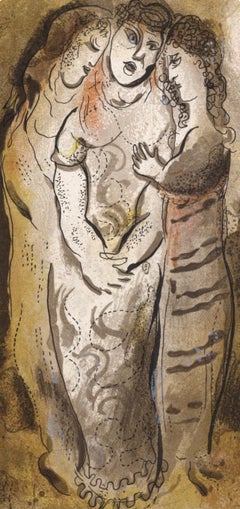
Marc Chagall, Naomi and Her Daughters-in-Law, from Drawings for the Bible, 1960

Marc Chagall, Naomi and Her Daughters-in-Law, from Drawings for the Bible, 1960

By Marc Chagall

Located in Southampton, NY

This exquisite lithograph by Marc Chagall (1887–1985), titled Noemie et ses Belles-Filles (Naomi and Her Daughters-in-Law), from Marc Chagall, Dessins Pour La Bible (Drawings for the...

Category

1960s Expressionist Marc Chagall Art
Materials

Lithograph

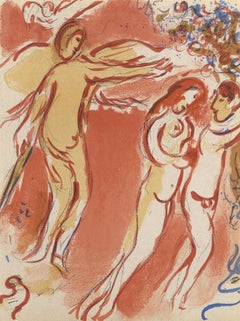
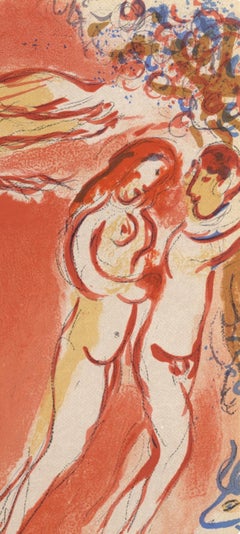
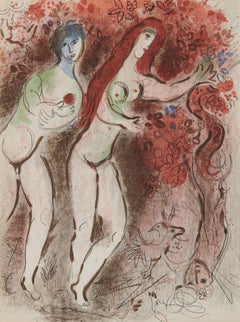
Marc Chagall, Adam and Eve Expelled from Paradise, Drawings for the Bible, 1960

Marc Chagall, Adam and Eve Expelled from Paradise, Drawings for the Bible, 1960

By Marc Chagall

Located in Southampton, NY

This exquisite lithograph by Marc Chagall (1887–1985), titled Adam et Eve chasses du Paradis (Adam and Eve Expelled from Paradise), from Marc Chagall, Dessins Pour La Bible (Drawings...

Category

1960s Expressionist Marc Chagall Art
Materials

Lithograph

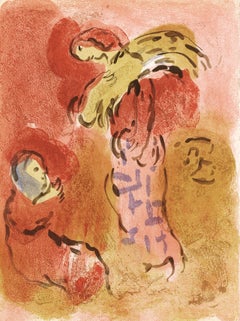
Marc Chagall, Ruth the Gleaner, from Drawings for the Bible, 1960

Marc Chagall, Ruth the Gleaner, from Drawings for the Bible, 1960

By Marc Chagall

Located in Southampton, NY

This exquisite lithograph by Marc Chagall (1887–1985), titled Ruth glaneuse (Ruth the Gleaner), from Marc Chagall, Dessins Pour La Bible (Drawings for the Bible), Verve: Revue Artistique et Litteraire, Vol. X, No. 37-38, originates from the July 29, 1960 issue published by Editions de la revue Verve, Paris, under the direction of Teriade, Editeur, Paris, and printed by Mourlot Freres, Paris, 1960. This visionary composition reflects Chagall’s poetic interpretation of the biblical story of Ruth, evoking themes of devotion, humility, and providence through his luminous color and dreamlike symbolism. The flowing forms and radiant imagery convey a sense of quiet resilience and spiritual grace, capturing Ruth’s act of gleaning and its deeper significance within Chagall’s distinctive visual language. Infused with movement and lyricism, the work transforms sacred narrative into a meditative vision of faith, sustenance, and divine care. The piece forms part of Chagall’s celebrated series of lithographs and drawings created for Dessins Pour La Bible, a monumental project uniting art, scripture, and mysticism in one of the artist’s most important achievements. Executed as a lithograph on velin du Marais paper, this work measures 14 x 10.5 inches (35.56 x 26.67 cm). Unsigned and unnumbered as issued. The edition exemplifies the superb craftsmanship of the Mourlot Freres atelier, renowned for its collaborations with the greatest modern masters of the 20th century. Artwork Details: Artist: Marc Chagall (1887–1985) Title: Ruth glaneuse (Ruth the Gleaner), from Marc Chagall, Dessins Pour La Bible (Drawings for the Bible), Verve: Revue Artistique et Litteraire, Vol. X, No. 37-38, July 29, 1960 Medium: Lithograph on velin du Marais paper Dimensions: 14 x 10.5 inches (35.56 x 26.67 cm) Inscription: Unsigned and unnumbered as issued Date: 1960 Publisher: Editions de la revue Verve, Paris, under the direction of Teriade, Editeur, Paris Printer: Mourlot Freres, Paris Catalogue raisonne references: Chagall, Marc, et al. Chagall Lithographe. Andre Sauret, 1960-1986, illustration 230-276. Cramer, Patrick, and Meret Meyer. Marc Chagall: Catalogue Raisonne des Livres Illustres. P. Cramer ed., 1995, illustration 42. Condition: Well preserved, consistent with age and medium Provenance: From Marc Chagall, Dessins Pour La Bible (Drawings for the Bible), Verve: Revue Artistique et Litteraire, Vol. X, No. 37-38, published by Editions de la revue Verve, Paris, 1960 Notes: Excerpted from the folio (translated from French), This double issue of Verve includes the drawings that Marc Chagall executed in 1958 and 1959 on biblical themes that he had not generally dealt with in his illustration for the Bible, engraved with etching and which were included in issue 33/34 of Verve. This album has 96 renderings in black and 24 color litbographies as well as the cover that were specially made for this album. It was completed printing on July 29, 1960 by Draeger Freres for black gravures and by Mourlot Freres for color lithography. About the Publication: Marc Chagall, Dessins Pour La Bible (Drawings for the Bible), published as Verve Vol. X, No. 37-38 on July 29, 1960, represents a significant continuation and expansion of Chagall’s profound engagement with biblical imagery and spiritual narrative. Conceived and directed by the visionary publisher Teriade, the publication builds upon the earlier Verve issue devoted to Chagall’s Bible illustrations by presenting a new body of work executed in 1958 and 1959, exploring themes and episodes that had not been fully addressed in the initial series. Printed in Paris by Draeger Freres for black gravures and Mourlot Freres for color lithography, the edition demonstrates an exceptional level of technical refinement and artistic collaboration. The publication includes an extensive suite of ninety six black reproductions and twenty four color lithographs, as well as specially created cover imagery, reflecting Chagall’s continued innovation in translating sacred themes into graphic form. As part of the broader tradition of Verve, one of the most important artistic and literary publications of the twentieth century, this issue exemplifies the fusion of text, image, and craftsmanship at the highest level. Today, Verve Vol. X, No. 37-38 stands as a major achievement within Chagall’s graphic oeuvre, reaffirming his role as one of the foremost interpreters of biblical narrative in modern art. About the Artist: Marc Chagall (1887–1985) was a Belarus-born French painter, printmaker, and designer whose visionary imagination, radiant color, and deeply poetic symbolism made him one of the most beloved and influential artists of the 20th century. Rooted in the imagery of his Jewish heritage and the memories of his childhood in Vitebsk, Chagall’s art wove together themes of faith, love, folklore, and fantasy with a dreamlike modern sensibility. His unique style merging elements of Cubism, Fauvism, Expressionism, and Surrealism defied categorization, transforming ordinary scenes into lyrical meditations on memory and emotion. Influenced by Russian icon painting, medieval religious art, and the modern innovations of artists such as Pablo Picasso, Henri Matisse, and Georges Braque, Chagall developed a profoundly personal visual language filled with floating figures, vibrant animals, musicians, and lovers that symbolized the transcendent power of imagination and love. During his early years in Paris, he became an integral part of the Ecole de Paris circle, forming friendships with Amedeo Modigliani, Fernand Leger, and Sonia Delaunay, and his creative spirit resonated with that of his peers and successors Alexander Calder, Alberto Giacometti, Salvador Dali, Joan Miro, Wassily Kandinsky, Marcel Duchamp, and Man Ray, artists who sought to push the boundaries of perception, emotion, and form. Over a prolific career that spanned painting, printmaking, stained glass, ceramics, and stage design, Chagall brought an unparalleled poetic sensibility to modern art, infusing even the most abstract subjects with human warmth and spiritual depth. His works are held in the most prestigious museums around the world, including the Museum of Modern Art, the Centre Pompidou, the Tate, and the Guggenheim, where they continue to inspire generations of artists and collectors. The highest price ever paid for a Marc Chagall artwork is approximately 28.5 million USD, achieved in 2017 at Sotheby’s New York for Les Amoureux (1928). Marc Chagall Ruth...

Category

1960s Expressionist Marc Chagall Art
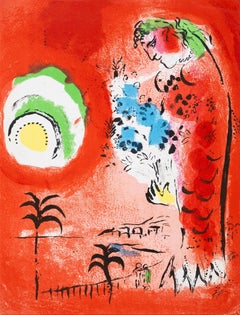
Materials

Lithograph

Marc Chagall, Sarah and the Angels, from Drawings for the Bible, 1960

Marc Chagall, Sarah and the Angels, from Drawings for the Bible, 1960

By Marc Chagall

Located in Southampton, NY

This exquisite lithograph by Marc Chagall (1887–1985), titled Sara et les Anges (Sarah and the Angels), from Marc Chagall, Dessins Pour La Bible (Drawings for the Bible), Verve: Revu...

Category

1960s Expressionist Marc Chagall Art
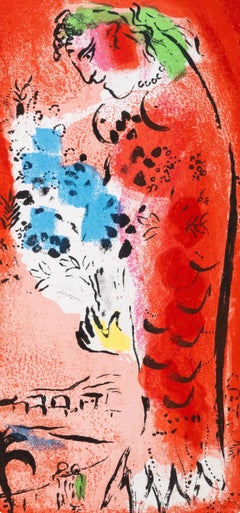
Materials

Lithograph

Marc Chagall, The Face of Israel, from Drawings for the Bible, 1960

Marc Chagall, The Face of Israel, from Drawings for the Bible, 1960

By Marc Chagall

Located in Southampton, NY

This exquisite lithograph by Marc Chagall (1887–1985), titled Le visage d'Israel (The Face of Israel), from Marc Chagall, Dessins Pour La Bible (Drawings for the Bible), Verve: Revue...

Category

1960s Expressionist Marc Chagall Art
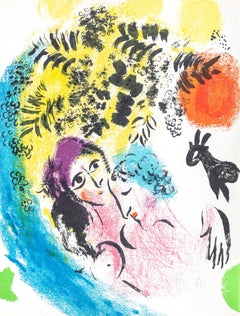
Materials

Lithograph

Marc Chagall, The Meeting of Ruth and Boaz, from Drawings for the Bible, 1960

Marc Chagall, The Meeting of Ruth and Boaz, from Drawings for the Bible, 1960

By Marc Chagall

Located in Southampton, NY

This exquisite lithograph by Marc Chagall (1887–1985), titled Rencontre de Ruth et de Booz (The Meeting of Ruth and Boaz), from Marc Chagall, Dessins Pour La Bible (Drawings for the ...

Category

1960s Expressionist Marc Chagall Art
Materials

Lithograph

Marc Chagall, Boaz Awakes and Sees Ruth at His Feet, from Verve, Revue, 1960

Marc Chagall, Boaz Awakes and Sees Ruth at His Feet, from Verve, Revue, 1960

By Marc Chagall

Located in Southampton, NY

This exquisite lithograph by Marc Chagall (1887–1985), titled Booz se reveille et voit Ruth a ses pieds (Boaz Awakens and Sees Ruth at His Feet), from Marc Chagall, Dessins Pour La B...

Category

1960s Expressionist Marc Chagall Art
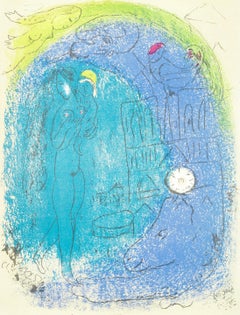
Materials

Lithograph

Marc Chagall, Adam and Eve and the Forbidden Fruit, Drawings for the Bible, 1960

Marc Chagall, Adam and Eve and the Forbidden Fruit, Drawings for the Bible, 1960

By Marc Chagall

Located in Southampton, NY

This exquisite lithograph by Marc Chagall (1887–1985), titled Adam et Eve et le fruit defendu (Adam and Eve and the Forbidden Fruit), from Marc Chagall, Dessins Pour La Bible (Drawin...

Category

1960s Expressionist Marc Chagall Art
Materials

Lithograph

Marc Chagall, Esther, from Drawings for the Bible, 1960

Marc Chagall, Esther, from Drawings for the Bible, 1960

By Marc Chagall

Located in Southampton, NY

This exquisite lithograph by Marc Chagall (1887–1985), titled Esther (Esther), from Marc Chagall, Dessins Pour La Bible (Drawings for the Bible), Verve: Revue Artistique et Litteraire, Vol. X, No. 37-38, originates from the July 29, 1960 issue published by Editions de la revue Verve, Paris, under the direction of Teriade, Editeur, Paris, and printed by Mourlot Freres, Paris, 1960. This visionary composition reflects Chagall’s poetic interpretation of the biblical figure Esther, evoking themes of courage, faith, and divine providence through his luminous color and dreamlike symbolism. The flowing forms and radiant imagery convey a sense of spiritual intensity and narrative depth, capturing the heroine’s quiet strength and the unfolding drama of her story within Chagall’s distinctive visual language. Infused with movement and lyricism, the work transforms sacred narrative into a meditative vision of devotion and destiny. The piece forms part of Chagall’s celebrated series of lithographs and drawings created for Dessins Pour La Bible, a monumental project uniting art, scripture, and mysticism in one of the artist’s most important achievements. Executed as a lithograph on velin du Marais paper, this work measures 14 x 10.5 inches (35.56 x 26.67 cm). Unsigned and unnumbered as issued. The edition exemplifies the superb craftsmanship of the Mourlot Freres atelier, renowned for its collaborations with the greatest modern masters of the 20th century. Artwork Details: Artist: Marc Chagall (1887–1985) Title: Esther (Esther), from Marc Chagall, Dessins Pour La Bible (Drawings for the Bible), Verve: Revue Artistique et Litteraire, Vol. X, No. 37-38, July 29, 1960 Medium: Lithograph on velin du Marais paper Dimensions: 14 x 10.5 inches (35.56 x 26.67 cm) Inscription: Unsigned and unnumbered as issued Date: 1960 Publisher: Editions de la revue Verve, Paris, under the direction of Teriade, Editeur, Paris Printer: Mourlot Freres, Paris Catalogue raisonne references: Chagall, Marc, et al. Chagall Lithographe. Andre Sauret, 1960-1986, illustration 230-276. Cramer, Patrick, and Meret Meyer. Marc Chagall: Catalogue Raisonne des Livres Illustres. P. Cramer ed., 1995, illustration 42. Condition: Well preserved, consistent with age and medium Provenance: From Marc Chagall, Dessins Pour La Bible (Drawings for the Bible), Verve: Revue Artistique et Litteraire, Vol. X, No. 37-38, published by Editions de la revue Verve, Paris, 1960 Notes: Excerpted from the folio (translated from French), This double issue of Verve includes the drawings that Marc Chagall executed in 1958 and 1959 on biblical themes that he had not generally dealt with in his illustration for the Bible, engraved with etching and which were included in issue 33/34 of Verve. This album has 96 renderings in black and 24 color litbographies as well as the cover that were specially made for this album. It was completed printing on July 29, 1960 by Draeger Freres for black gravures and by Mourlot Freres for color lithography. About the Publication: Marc Chagall, Dessins Pour La Bible (Drawings for the Bible), published as Verve Vol. X, No. 37-38 on July 29, 1960, represents a significant continuation and expansion of Chagall’s profound engagement with biblical imagery and spiritual narrative. Conceived and directed by the visionary publisher Teriade, the publication builds upon the earlier Verve issue devoted to Chagall’s Bible illustrations by presenting a new body of work executed in 1958 and 1959, exploring themes and episodes that had not been fully addressed in the initial series. Printed in Paris by Draeger Freres for black gravures and Mourlot Freres for color lithography, the edition demonstrates an exceptional level of technical refinement and artistic collaboration. The publication includes an extensive suite of ninety six black reproductions and twenty four color lithographs, as well as specially created cover imagery, reflecting Chagall’s continued innovation in translating sacred themes into graphic form. As part of the broader tradition of Verve, one of the most important artistic and literary publications of the twentieth century, this issue exemplifies the fusion of text, image, and craftsmanship at the highest level. Today, Verve Vol. X, No. 37-38 stands as a major achievement within Chagall’s graphic oeuvre, reaffirming his role as one of the foremost interpreters of biblical narrative in modern art. About the Artist: Marc Chagall (1887–1985) was a Belarus-born French painter, printmaker, and designer whose visionary imagination, radiant color, and deeply poetic symbolism made him one of the most beloved and influential artists of the 20th century. Rooted in the imagery of his Jewish heritage and the memories of his childhood in Vitebsk, Chagall’s art wove together themes of faith, love, folklore, and fantasy with a dreamlike modern sensibility. His unique style merging elements of Cubism, Fauvism, Expressionism, and Surrealism defied categorization, transforming ordinary scenes into lyrical meditations on memory and emotion. Influenced by Russian icon painting, medieval religious art, and the modern innovations of artists such as Pablo Picasso, Henri Matisse, and Georges Braque, Chagall developed a profoundly personal visual language filled with floating figures, vibrant animals, musicians, and lovers that symbolized the transcendent power of imagination and love. During his early years in Paris, he became an integral part of the Ecole de Paris circle, forming friendships with Amedeo Modigliani, Fernand Leger, and Sonia Delaunay, and his creative spirit resonated with that of his peers and successors Alexander Calder, Alberto Giacometti, Salvador Dali, Joan Miro, Wassily Kandinsky, Marcel Duchamp, and Man Ray, artists who sought to push the boundaries of perception, emotion, and form. Over a prolific career that spanned painting, printmaking, stained glass, ceramics, and stage design, Chagall brought an unparalleled poetic sensibility to modern art, infusing even the most abstract subjects with human warmth and spiritual depth. His works are held in the most prestigious museums around the world, including the Museum of Modern Art, the Centre Pompidou, the Tate, and the Guggenheim, where they continue to inspire generations of artists and collectors. The highest price ever paid for a Marc Chagall artwork is approximately 28.5 million USD, achieved in 2017 at Sotheby’s New York for Les Amoureux (1928). Marc Chagall Esther...

Category

1960s Expressionist Marc Chagall Art
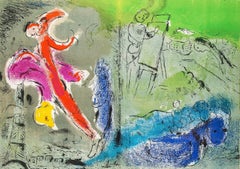
Materials

Lithograph

Marc Chagall, David and Bathsheba, from Drawings for the Bible, 1956

Marc Chagall, David and Bathsheba, from Drawings for the Bible, 1956

By Marc Chagall

Located in Southampton, NY

This exquisite lithograph by Marc Chagall (1887–1985), titled David et Bethsabee (David and Bathsheba), from Marc Chagall, Dessins Pour La Bible (Drawings for the Bible), Verve: Revu...

Category

1950s Expressionist Marc Chagall Art
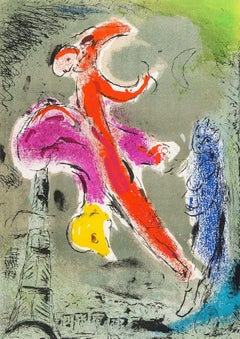
Materials

Lithograph

Marc Chagall, David with the Harp, from Drawings for the Bible, 1956

Marc Chagall, David with the Harp, from Drawings for the Bible, 1956

By Marc Chagall

Located in Southampton, NY

This exquisite lithograph by Marc Chagall (1887–1985), titled David a la harpe (David with the Harp), from Marc Chagall, Dessins Pour La Bible (Drawings for the Bible), Verve: Revue ...

Category

1950s Expressionist Marc Chagall Art
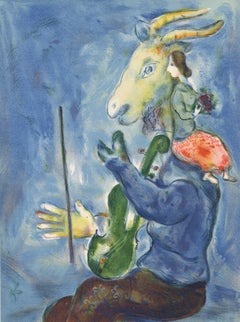
Materials

Lithograph

Marc Chagall art for sale on 1stDibs.

Find a wide variety of authentic Marc Chagall art available for sale on 1stDibs. If you’re browsing the collection of art to introduce a pop of color in a neutral corner of your living room or bedroom, you can find work that includes elements of orange, blue, yellow and other colors. You can also browse by medium to find art by Marc Chagall in lithograph and more. Much of the original work by this artist or collective was created during the 20th century and is mostly associated with the Surrealist style. Not every interior allows for large Marc Chagall art, so small editions measuring 5 inches across are available. Customers who are interested in this artist might also find the work of Salvador Dalí, Leonor Fini, and André Masson. Marc Chagall art prices can differ depending upon medium, time period and other attributes. On 1stDibs, the price for these items starts at $75 and tops out at $1,450,000, while the average work can sell for $1,229.

Artists Similar to Marc Chagall

Questions About Marc Chagall Art
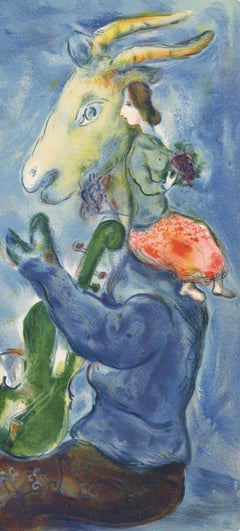
  • 1stDibs ExpertMarch 26, 2024
    Marc Chagall is famous for his art. He is one of the best known artists of the 20th century.

    Chagall produced magnificent stained-glass windows for structures in France, Israel, Germany and the United States, and his lively paintings of Paris are revered all over the world. The Russian-French modernist worked in nearly every artistic medium. Influenced by Symbolism, Fauvism, Cubism and Surrealism, Chagall developed his own distinctive style, combining avant-garde techniques and motifs with elements drawn from Eastern European Jewish folk art.

    Find authentic Marc Chagall prints and paintings on 1stDibs.
  • 1stDibs ExpertMarch 22, 2022
    Marc Chagall was a painter, illustrator, glass artisan, print maker and set designer who made a lasting impact on modern art. He was born on July 7, 1887, in Liozna, Belarus, and died on March 28, 1985, in Saint Paul de Vence, France. On 1stDibs, shop a selection of Marc Chagall art.
  • 1stDibs ExpertMarch 22, 2022
    Marc Chagall was born in Liozna, Belarus on July 7, 1887. He went on to become one of the most influential artists of the 20th century, creating works that drew from the movements of Cubism, Surrealism and Fauvism. On 1stDibs, find a selection of Marc Chagall art.
  • 1stDibs ExpertMarch 22, 2022
    Marc Chagall was born on July 7, 1887, in Liozna, Belarus. He was an influential artist who worked in a variety of mediums, including paint, stained glass and illustrations. Chagall died on March 28, 1985, in Saint Paul de Vence, France. On 1stDibs, find a collection of Marc Chagall art.
  • 1stDibs ExpertMarch 22, 2022
    To pronounce Marc Chagall, say "Mark Shu-GALL." The artist's real name was Moishe Shagal. Although the artist changed his name, he referenced his heritage in many works by including fish to represent his father who worked as a herring merchant. Shop a variety of Marc Chagall art on 1stDibs.
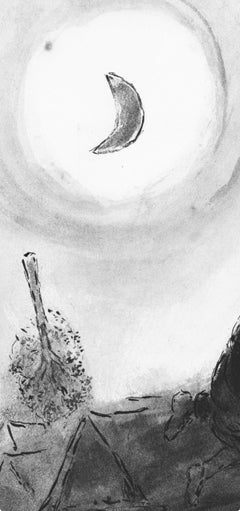
  • 1stDibs ExpertFebruary 7, 2024
    Marc Chagall painted around 10,000 works during the course of his 75-year career. The Russian-French modernist worked in nearly every artistic medium. Influenced by Symbolism, Fauvism, Cubism and Surrealism, he developed his own distinctive style, combining avant-garde techniques and motifs with elements drawn from Eastern European Jewish folk art. On 1stDibs, find a selection of Marc Chagall art.
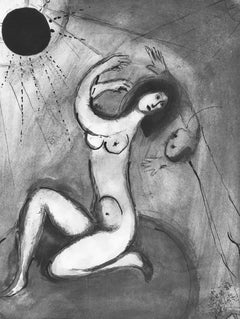
  • 1stDibs ExpertMarch 26, 2024
    Yes, Marc Chagall worked in the Expressionist style, but he is associated with a range of modes and was inspired by various styles.

    Chagall's lithographs as well as his other prints and paintings widely influenced the fantastic imagery of Surrealism and other movements of the 20th century. Known for his dreamlike creations inspired by folk art, Chagall drew on the colors and forms introduced by Cubism and Fauvism for a distinctive style all his own.

    Expressionist artists experimented in paintings and prints with skewed perspectives, abstraction and unconventional, bright colors to portray how isolating and anxious the world felt rather than how it appeared. You can certainly detect the trademark bright colors and dramatic, exaggerated brushstrokes of Expressionism reflected in Chagall’s works such as his Vision of Paris and I and the Village.

    Find a selection of Marc Chagall art on 1stDibs.
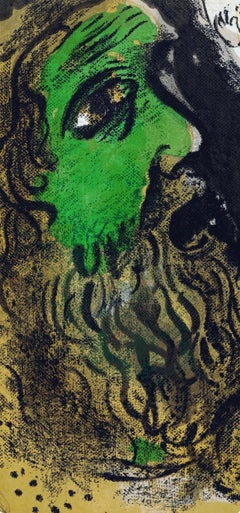
  • 1stDibs ExpertMarch 26, 2024
    To collect Marc Chagall art, seek out works from well known and respected sources. When it comes to making an investment of any kind, it’s important to conduct research and only work with reputable sellers. You can shop the collections of art dealers, auction houses and trusted online platforms to find authentic Marc Chagall paintings, prints and other works.
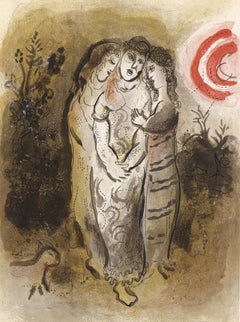
    There are many reasons to collect art. A meaningful collection of art should help a residence feel more like itself. Buy art that speaks to you. Take your time when you’re shopping for art, and choose works that will resonate with you.

    Shop Marc Chagall art on 1stDibs.
  • 1stDibs ExpertOctober 15, 2024
    To tell if a Chagall print is real, experts recommend having a certified appraiser or experienced art dealer evaluate your piece. Fewer than 5% of Chagall's prints are signed and numbered, and counterfeiters have taken advantage of this and flooded the market with many convincing replicas. As a result, it can be very difficult to authenticate an original Chagall without experience and training. On 1stDibs, find a collection of Marc Chagall art.
  • 1stDibs ExpertMarch 26, 2024
    Marc Chagall’s body of work is quite big. Over the course of his 75-year career, Chagall created approximately 10,000 pieces, including prints, paintings, book illustrations, stained glass windows and more.

    The Russian-French modernist worked in nearly every artistic medium, and Chagall’s vibrant and densely colorful prints are known around the world. Characterized by a bold color palette and whimsical imagery, his works are often narrative, depicting small-village scenes and quotidian moments of peasant life, as in his late painting The Flight into Egypt from 1980.

    On 1stDibs, find a selection of Marc Chagall art.
  • 1stDibs ExpertMarch 22, 2022
    Yes, Marc Chagall used oil paint to produce many of his paintings. He also worked with gouaches and watercolors. Not just a painter, Chagall made stained glass windows, illustrations, prints, ceramics and other types of works throughout his life. Find a collection of Marc Chagall art on 1stDibs.
  • 1stDibs ExpertMarch 22, 2022
    Yes, Marc Chagall migrated to the United States. The Jewish artist fled Europe during World War II, moving to New York City in 1941. He settled in France in 1947 and lived there until he died in 1985. On 1stDibs, shop a range of Marc Chagall art.
  • 1stDibs ExpertMarch 22, 2022
    Many artists and things inspired Marc Chagall. Historians believe that his Jewish heritage and his hometown of Liozna, Belarus, served as sources of inspiration throughout his life. His work also displays the influence of surrealist, cubist, symbolist and fauve artists. On 1stDibs, shop a variety of Marc Chagall art.
  • 1stDibs ExpertMarch 26, 2024
    Marc Chagall used a variety of materials in his art. The Russian-French modernist worked in nearly every artistic medium. Influenced by Symbolism, Fauvism, Cubism and Surrealism, Chagall developed his own distinctive style, combining avant-garde techniques and motifs with elements drawn from Eastern European Jewish folk art.

    Chagall produced magnificent stained-glass windows for structures in France, Israel, Germany and the United States. Additionally, his lively paintings of Paris are revered all over the world. Chagall had created etchings of Russian life during the 1920s but would explore printmaking later more deeply, during the 1950s, when he sought guidance from veteran lithographer Charles Sorlier, who became a friend and collaborator.

    Find authentic Marc Chagall art on 1stDibs.
  • 1stDibs ExpertMarch 22, 2022
    Marc Chagall lived many places over the course of his life. He was born in Liozna, Belarus, on July 7, 1887. When he began working as an artist, he lived and worked in Saint Petersburg, Russia; Paris, France; and Berlin, Germany. During World War II, he relocated to the U.S. and then returned to Paris where he primarily resided until his death in 1985. On 1stDibs, find a variety of Marc Chagall art.
  • 1stDibs ExpertApril 5, 2022
    One of Marc Chagall’s most known works is entitled I and the Village. His style mixes bold colors in both the cubism and fauvism style. Shop a selection of Marc Chagall’s pieces from some of the world’s top art dealers on 1stDibs.
  • 1stDibs ExpertSeptember 28, 2021
    A Marc Chagall painting is likely worth anywhere between $50,000 to $70,000 according to current estimates. Marc Chagall is a Russian-French artist of Belarusian Jewish origin who is credited to be among the pioneering modernists. Adept in several styles and techniques, Chagall was best-known for creating stain-glass, tapestries and murals apart from paintings. On 1stDibs, find a variety of Marc Chagall paintings.
  • 1stDibs ExpertMarch 26, 2024
    Yes, Marc Chagall personally signed some of his bookplates. Other bookplate illustrations created by the artist bear a reproduction of his signature. Many of the signed versions come from the collections of notable historical figures, including Nicholas II, the last Russian czar. Find signed Marc Chagall lithographs on 1stDibs.