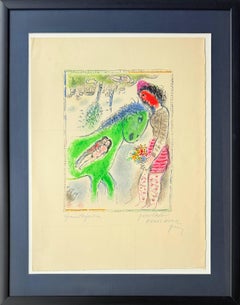
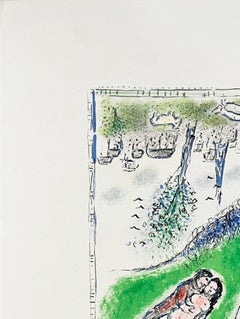
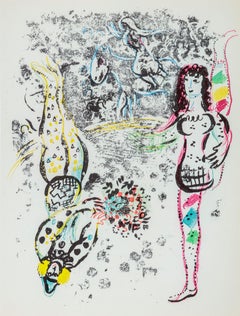
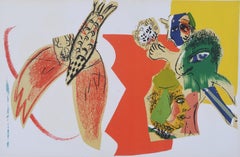
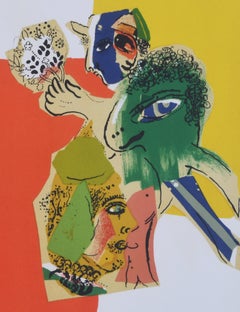
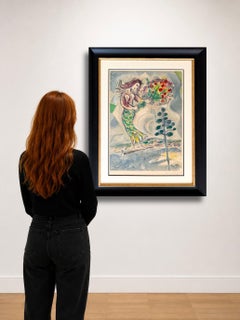
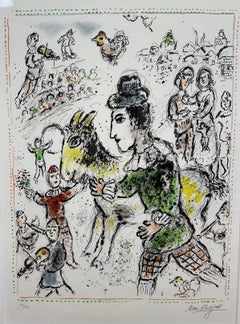
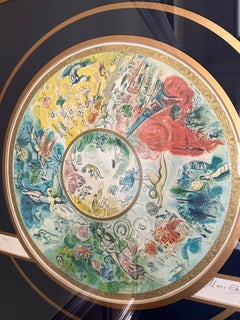
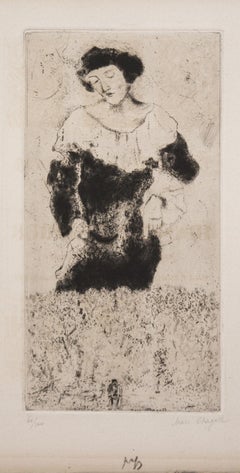
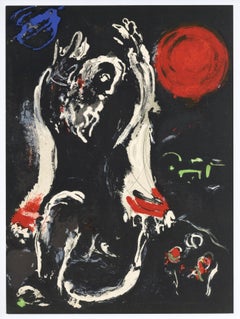
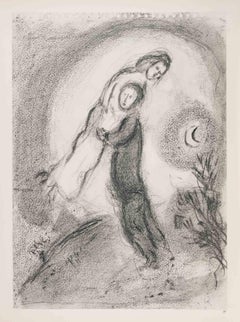
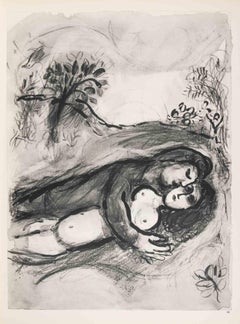
Marc Chagall Art

French, 1887-1985

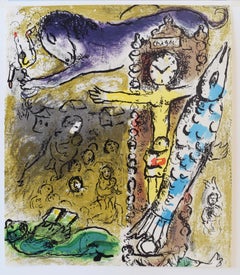
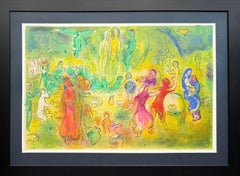
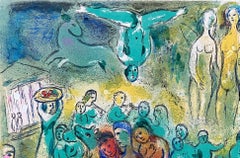
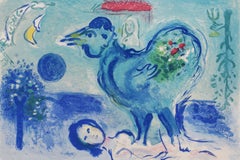
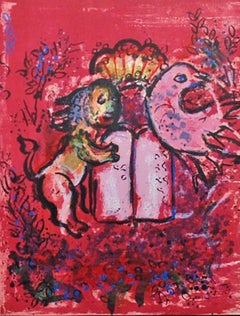
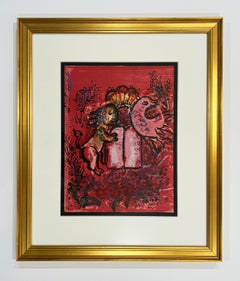
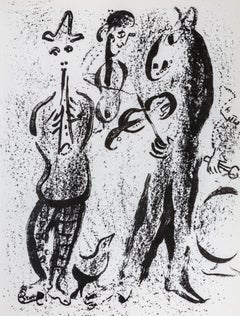
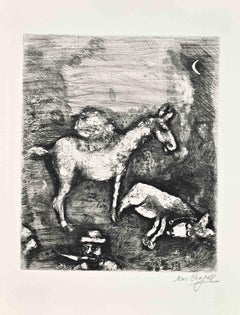
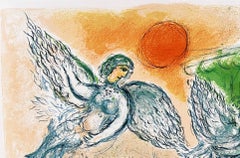
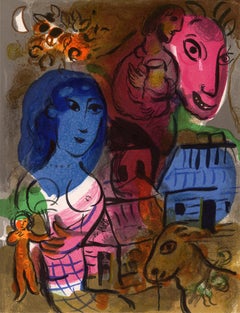
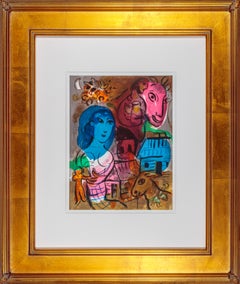
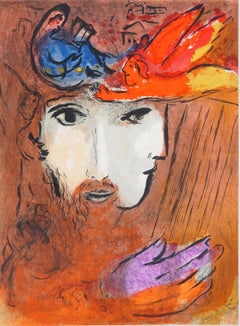
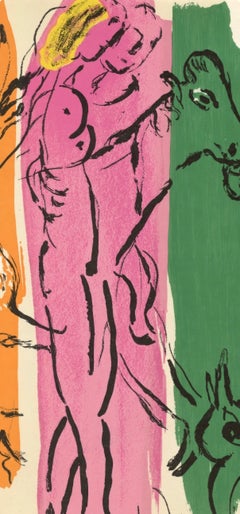
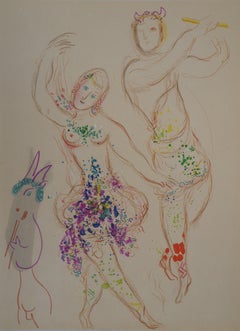
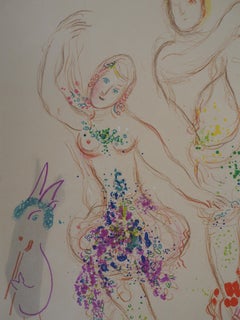
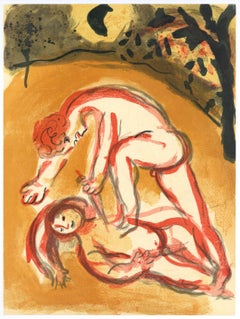
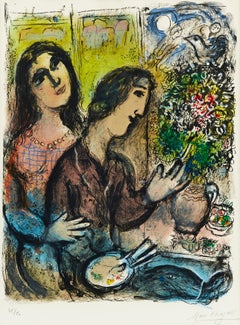
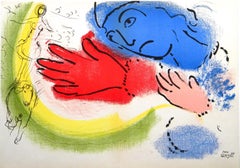
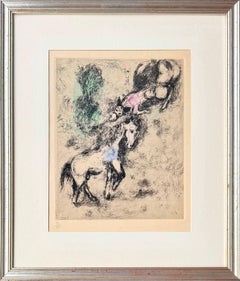
Described by art critic Robert Hughes as "the quintessential Jewish artist of the twentieth century," the Russian-French modernist Marc Chagall worked in nearly every artistic medium. Influenced by Symbolism, Fauvism, Cubism and Surrealism, he developed his own distinctive style, combining avant-garde techniques and motifs with elements drawn from Eastern European Jewish folk art.

Born Moishe Segal in 1887, in Belarus (then part of the Russian empire), Chagall is often celebrated for his figurative paintings, but he also produced stained-glass windows for the cathedrals of Reims and Metz, in France; for the United Nations, in New York; and for the Hadassah Hospital in Jerusalem, as well as book illustrations, stage sets, ceramics, tapestries and fine-art prints. Characterized by a bold color palette and whimsical imagery, his works are often narrative, depicting small-village scenes and quotidian moments of peasant life, as in his late painting The Flight into Egypt from 1980.

Before World War I, Chagall traveled between St. Petersburg, Paris and Berlin. When the conflict broke out, he returned to Soviet-occupied Belarus, where he founded the Vitebsk Arts College before leaving again for Paris in 1922. He fled to the United States during World War II but in 1947 returned to France, where he spent the rest of his life. His peripatetic career left its mark on his style, which was distinctly international, incorporating elements from each of the cultures he experienced.

Marc Chagall remains one of the past century’s most respected talents — find his art on 1stDibs.

to
264
870
177
88
26
13
Overall Width
to
Overall Height
to
2
1,170
2
96
29
18
325
497
86
35
392
274
223
25
10
6
6
1
1,021
150
1
771
584
337
331
306
265
165
81
38
38
30
27
25
22
15
13
11
10
9
9
747
307
84
84
58
1,199
10,297
2,810
2,500
1,406
187
449
554
480
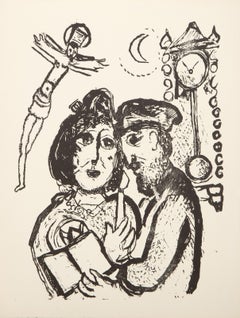
Artist: Marc Chagall
Marc Chagall - Original Lithograph

Marc Chagall - Original Lithograph

By Marc Chagall

Located in Collonge Bellerive, Geneve, CH

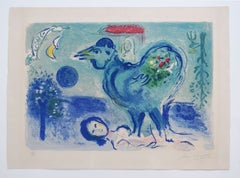
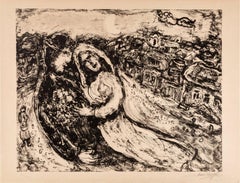
Marc Chagall Original Lithograph 1963 Dimensions: 32 x 24 cm Reference: Chagall Lithographe 1957-1962. VOLUME II. Condition : Excellent Marc Chagall (born in 1887) Marc Chagall was born in Belarus in 1887 and developed an early interest in art. After studying painting, in 1907 he left Russia for Paris, where he lived in an artist colony on the city’s outskirts. Fusing his own personal, dreamlike imagery with hints of the fauvism and cubism popular in France at the time, Chagall created his most lasting work—including I and the Village (1911)—some of which would be featured in the Salon des Indépendants exhibitions. After returning to Vitebsk for a visit in 1914, the outbreak of WWI trapped Chagall in Russia. He returned to France in 1923 but was forced to flee the country and Nazi persecution during WWII. Finding asylum in the U.S., Chagall became involved in set and costume design before returning to France in 1948. In his later years, he experimented with new art forms and was commissioned to produce numerous large-scale works. Chagall died in St.-Paul-de-Vence in 1985. The Village Marc Chagall was born in a small Hassidic community on the outskirts of Vitebsk, Belarus, on July 7, 1887. His father was a fishmonger, and his mother ran a small sundries shop in the village. As a child, Chagall attended the Jewish elementary school, where he studied Hebrew and the Bible, before later attending the Russian public school. He began to learn the fundamentals of drawing during this time, but perhaps more importantly, he absorbed the world around him, storing away the imagery and themes that would feature largely in most of his later work. At age 19 Chagall enrolled at a private, all-Jewish art school and began his formal education in painting, studying briefly with portrait artist Yehuda Pen. However, he left the school after several months, moving to St. Petersburg in 1907 to study at the Imperial Society for the Protection of Fine Arts. The following year, he enrolled at the Svanseva School, studying with set designer Léon Bakst, whose work had been featured in Sergei Diaghilev's Ballets Russes. This early experience would prove important to Chagall’s later career as well. Despite this formal instruction, and the widespread popularity of realism in Russia at the time, Chagall was already establishing his own personal style, which featured a more dreamlike unreality and the people, places and imagery that were close to his heart. Some examples from this period are his Window Vitebsk (1908) and My Fianceé with Black Gloves (1909), which pictured Bella Rosenfeld, to whom he had recently become engaged. The Beehive Despite his romance with Bella, in 1911 an allowance from Russian parliament member and art patron Maxim Binaver enabled Chagall to move to Paris, France. After settling briefly in the Montparnasse neighborhood, Chagall moved further afield to an artist colony known as La Ruche (“The Beehive”), where he began to work side by side with abstract painters such as Amedeo Modigliani and Fernand Léger as well as the avant-garde poet Guillaume Apollinaire. At their urging, and under the influence of the wildly popular fauvism and cubism, Chagall lightened his palette and pushed his style ever further from reality. I and the Village (1911) and Homage to Apollinaire (1912) are among his early Parisian works, widely considered to be his most successful and representative period. Though his work stood stylistically apart from his cubist contemporaries, from 1912 to 1914 Chagall exhibited several paintings at the annual Salon des Indépendants exhibition, where works by the likes of Juan Gris, Marcel Duchamp and Robert Delaunay were causing a stir in the Paris art world. Chagall’s popularity began to spread beyond La Ruche, and in May 1914 he traveled to Berlin to help organize his first solo exhibition, at Der Sturm Gallery. Chagall remained in the city until the highly acclaimed show opened that June. He then returned to Vitebsk, unaware of the fateful events to come. War, Peace and Revolution In August 1914 the outbreak of World War I precluded Chagall’s plans to return to Paris. The conflict did little to stem the flow of his creative output, however, instead merely giving him direct access to the childhood scenes so essential to his work, as seen in paintings such as Jew in Green (1914) and Over Vitebsk (1914). His paintings from this period also occasionally featured images of the war’s impact on the region, as with Wounded Soldier (1914) and Marching (1915). But despite the hardships of life during wartime, this would also prove to be a joyful period for Chagall. In July 1915 he married Bella, and she gave birth to a daughter, Ida, the following year. Their appearance in works such as Birthday (1915), Bella and Ida by the Window (1917) and several of his “Lovers” paintings give a glimpse of the island of domestic bliss that was Chagall’s amidst the chaos. To avoid military service and stay with his new family, Chagall took a position as a clerk in the Ministry of War Economy in St. Petersburg. While there he began work on his autobiography and also immersed himself in the local art scene, befriending novelist Boris Pasternak, among others. He also exhibited his work in the city and soon gained considerable recognition. That notoriety would prove important in the aftermath of the 1917 Russian Revolution when he was appointed as the Commissar of Fine Arts in Vitebsk. In his new post, Chagall undertook various projects in the region, including the 1919 founding of the Academy of the Arts. Despite these endeavors, differences among his colleagues eventually disillusioned Chagall. In 1920 he relinquished his position and moved his family to Moscow, the post-revolution capital of Russia. In Moscow, Chagall was soon commissioned to create sets and costumes for various productions at the Moscow State Yiddish Theater...

Category

1960s Surrealist Marc Chagall Art

Materials

Lithograph

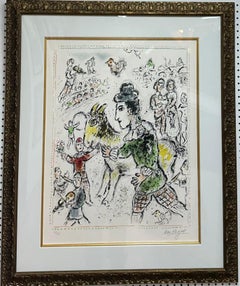
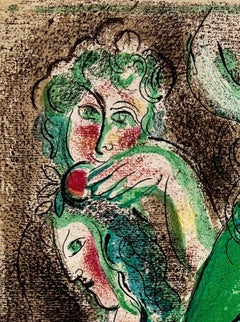
"Job's Despair" original lithograph

"Job's Despair" original lithograph

By Marc Chagall

Located in Henderson, NV

Medium: original lithograph. Printed by Mourlot and published in Paris by Teriade for the art revue Verve in 1960 for a special edition devoted exclusively to Chagall's original Bibl...

Category

1960s Marc Chagall Art

Materials

Lithograph

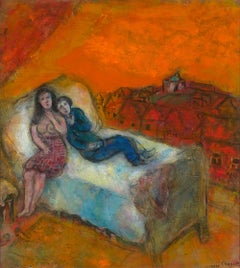
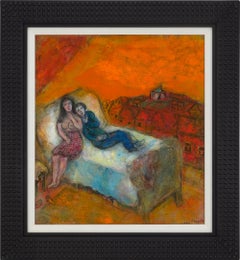
Couple sur le lit by Marc Chagall

Couple sur le lit by Marc Chagall

By Marc Chagall

Located in New Orleans, LA

Marc Chagall 1887-1985 Russian Couple sur le lit (Couple on bed) Signed 'Marc Chagall' (lower right) Oil and India ink on canvas Marc Chagall's exquisite work, Couple sur le lit,...

Category

20th Century Post-Impressionist Marc Chagall Art

Materials

Canvas, India Ink, Oil

Marc Chagall, Femme à l’oiseau, Lithograph, 1959

Marc Chagall, Femme à l’oiseau, Lithograph, 1959

By Marc Chagall

Located in Chatsworth, CA

Marc Chagall Femme à l’oiseau Lithograph in colors Numbered 872/970 from the edition of 970 Signed in the plate From "Douze Contemporains" by Jacques Lassaigne and published by Editi...

Category

1950s Modern Marc Chagall Art

Materials

Lithograph

The Village, from: Chagall: Jacques Lassaigne - French Russian Village

The Village, from: Chagall: Jacques Lassaigne - French Russian Village

By Marc Chagall

Located in London, GB

This original lithograph is hand signed in pencil by the artist ‘Marc Chagall’ at the lower right margin. It is also numbered from the edition 27 of 90 at the lower left margin. It...

Category

1950s Modern Marc Chagall Art

Materials

Lithograph

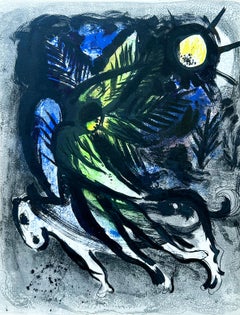
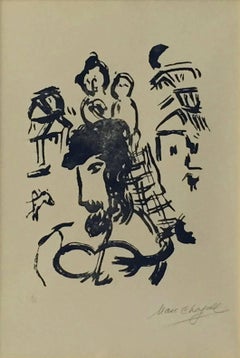
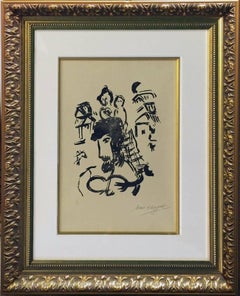
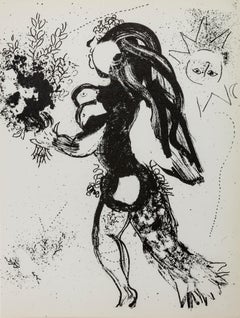
Inspiration, Modern Art Lithograph by Marc Chagall

Inspiration, Modern Art Lithograph by Marc Chagall

By Marc Chagall

Located in Long Island City, NY

"Inspiration" is an original lithograph by Marc Chagall published in the "Lithographs of Marc Chagall vol. II". The book was published in a limited edition of 6000. Size: 12.5 x 9.5...

Category

1960s Modern Marc Chagall Art

Materials

Lithograph

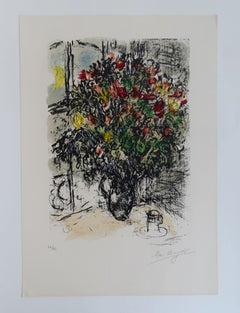
Le Bouquet Rose (The Rose Bouquet), 1980 - Hand-Signed Original Lithograph

Le Bouquet Rose (The Rose Bouquet), 1980 - Hand-Signed Original Lithograph

By Marc Chagall

Located in Los Angeles, CA

Original Lithograph on Arches wove paper, pencil hand-signed and numbered 32/50, with gold leaf frame. Paper Size: 45.7" x 29.7" Framed Size: 54" x 39" Catalogue raisonné: M.979 Th...

Category

1950s Surrealist Marc Chagall Art

Materials

Lithograph

Marc Chagall “Le Nu” The Nude - Color Lithograph 1978 - Framed - Signed - Angel

Marc Chagall “Le Nu” The Nude - Color Lithograph 1978 - Framed - Signed - Angel

By Marc Chagall

Located in Rancho Santa Fe, CA

Marc Chagall "Le Nu" Lithograph in colors on Arches paper 21.25 x 14 in. (image size) 25.5 x 18.38 in (sheet size) ​​​​​​​Edition of 50 + Épreuve d'artiste Signed in pencil lower rig...

Category

1970s Modern Marc Chagall Art

Materials

Lithograph, Archival Paper

Lovers with a Bouquet of Flowers - Original lithograph HANDIGNED (Mourlot #1037)

Lovers with a Bouquet of Flowers - Original lithograph HANDIGNED (Mourlot #1037)

By Marc Chagall

Located in Paris, IDF

Marc Chagall (1887-1985) Lovers with a Bouquet, 1984 Original color lithograph Signed with the artist's stamp Justified EA (artist proof) On Arches vellum, 56 x 43 cm (c. 22 x 17 in) Authenticated by the artist's studio dry stamp REFERENCES: Sorlier / Mourlot catalogue raisonné...

Category

1980s Modern Marc Chagall Art

Materials

Lithograph

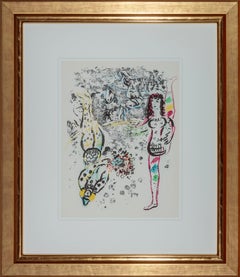
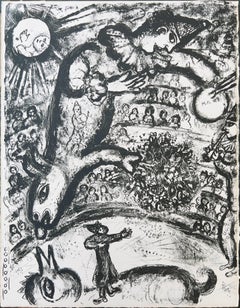
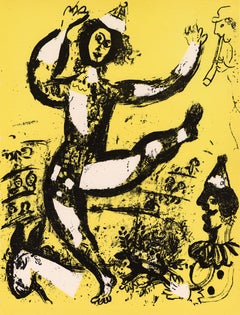
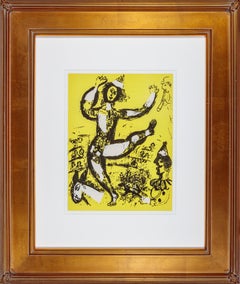
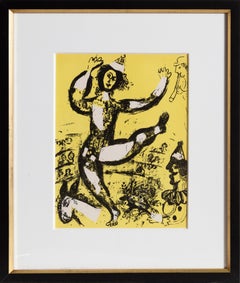
Reve de Cirque (Circus Dream)

Reve de Cirque (Circus Dream)

By Marc Chagall

Located in Fairlawn, OH

Reve de Cirque (Circus Dream) Color lithograph, 1966 Unsigned (as issued) Pubished in XXe Siecle, Paris, Volume XXVI Publisher: Gualtieri di San Lazzaro (1904-1974). Printer: Mourlo...

Category

1960s French School Marc Chagall Art

Materials

Lithograph

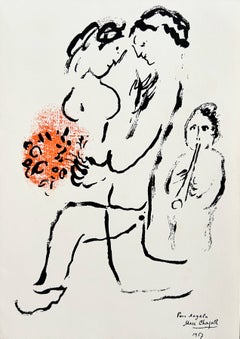
Marc Chagall "Le joueur de flûte"

Marc Chagall "Le joueur de flûte"

By Marc Chagall

Located in Los Angeles, CA

MARC CHAGALL 1887 - 1985 "Le joueur de flûte" 1958 Colour lithograph 25.5x44 cm, illustration; 38.3x57.3 cm, sheet size Signed lower right by the artist in ink "Marc Chagall" and dedicated "Pour Ursula et Gerd Hatje / "merci" / Marc Chagall / 1958". Inscribed lower left by the artist "Epreuve d'artiste". This is an artist’s proof, aside from the edition of 90. Catalogue Raisonné : Mourlot 197 Gerd Hatje (14 April 1915 – 24 July 2007) was a German publisher. The publishing house that he founded in 1945, named the Humanitas Verlag, renamed in 1947 as Verlag Gerd Hatje, is internationally known for contemporary art, photography and architecture. It merged in to Hatje Cantz in 1999. In the 1950s and 1960s, Hatje changed the focus to art, photography, and architecture.[1] He had contact with and was a friend of contemporary artists such as Hans Arp, Willi Baumeister, Joseph Beuys, Max Bill, Georges Braque, Marcel Breuer, Marc Chagall, Christo, Le Corbusier, Max Ernst, Alberto Giacometti, Walter Gropius, Joan Miró, Pablo Picasso, Ludwig Mies van der Rohe, and James Stirling...

Category

Mid-19th Century Impressionist Marc Chagall Art

Materials

Paper, Lithograph

Marc Chagall ”L’Oranger”

Marc Chagall ”L’Oranger”

By Marc Chagall

Located in Los Angeles, CA

Marc Chagall (Russia/France 1887‑1985). ”L’Oranger”. Year 1975 Signed and numbered Marc Chagall 8/50. Colour lithograph printed on Arches. Framed 35.5H x 28W x 2D Inches Illustr...

Category

1970s Modern Marc Chagall Art

Materials

Lithograph

Marc Chagall, Samuel Called by God (Plate 59), etching; hand colored

Marc Chagall, Samuel Called by God (Plate 59), etching; hand colored

By Marc Chagall

Located in Chatsworth, CA

Marc Chagall "Samuel Called by God" from the series The Bible, which consists of 105 original etchings. Original hand colored etching 1958 Hand initialed "M.Ch" in pencil Numbered ...

Category

1950s Surrealist Marc Chagall Art

Materials

Watercolor, Etching

Grenade (Cramer 51; Kornfeld 121), Paroles peintes I, Marc Chagall

Grenade (Cramer 51; Kornfeld 121), Paroles peintes I, Marc Chagall

By Marc Chagall

Located in Southampton, NY

Etching on vélin Johannot d’Arches paper. Inscription: Unsigned and unnumbered, as issued. Good condition. Notes: From the album, Paroles peintes I, 1962. Published by Éditions O. La...

Category

1960s Modern Marc Chagall Art

Materials

Etching

XXe Siecle-Hommage a Marc Chagall

XXe Siecle-Hommage a Marc Chagall

By Marc Chagall

Located in Fairlawn, OH

XXe Siecle-Hommage a Marc Chagall Color lithograph, 1969 Unsigned as issued by XXe Siecle From: XXe Siecle, Volume, Special Issue Marc Chagall Published by G. di San Lazzaro for A. M...

Category

1960s French School Marc Chagall Art

Materials

Lithograph

"The Barefoot Lumberjack" Etching from "Les Ames Mortes" by Marc Chagall

"The Barefoot Lumberjack" Etching from "Les Ames Mortes" by Marc Chagall

By Marc Chagall

Located in Soquel, CA

"The Barefoot Lumberjack" Etching from "Les Ames Mortes" by Marc Chagall Playful etching of a lumberjack by Marc Chagall (Russian, 1887-1985). A stout lumberjack is shown holing his...

Category

1940s Post-War Marc Chagall Art

Materials

Ink, Laid Paper

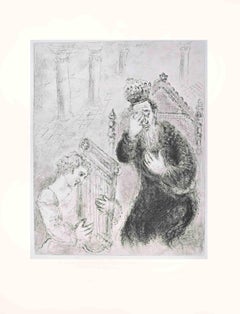
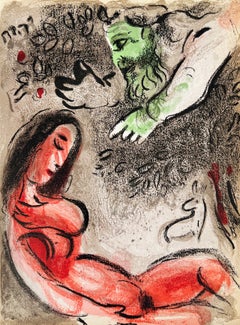
Marc Chagall, David and Bathsheba, from Drawings for the Bible, 1956

Marc Chagall, David and Bathsheba, from Drawings for the Bible, 1956

By Marc Chagall

Located in Southampton, NY

This exquisite lithograph by Marc Chagall (1887–1985), titled David et Bethsabee (David and Bathsheba), from Marc Chagall, Dessins Pour La Bible (Drawings for the Bible), Verve: Revu...

Category

1950s Expressionist Marc Chagall Art
Materials

Lithograph

Bible : Dove and Menorah candlestick - Original Lithograph

Bible : Dove and Menorah candlestick - Original Lithograph

By Marc Chagall

Located in Paris, IDF

Marc CHAGALL (1887-1985) Bible : Dove and Menorah candlestick, 1962 Original lithograph (Mourlot workshop) Unsigned On Vellum 32.5 x 24 cm REFERENCE: Mourlot catalog raisonné #366 ...

Category

1960s Modern Marc Chagall Art

Materials

Lithograph

"Cain and Abel" original lithograph

"Cain and Abel" original lithograph

By Marc Chagall

Located in Henderson, NV

Medium: original lithograph. Printed by Mourlot and published in Paris by Teriade for the art revue Verve in 1960 for a special edition devoted exclusively to Chagall's original Bibl...

Category

1960s Marc Chagall Art

Materials

Lithograph

Gravure XXII from Poemes, Surrealist Woodcut Print by Marc Chagall

Gravure XXII from Poemes, Surrealist Woodcut Print by Marc Chagall

By Marc Chagall

Located in Long Island City, NY

Marc Chagall, Russian (1887 - 1985) - Gravure XXII from Poemes, Year: 1968, Medium: Woodcut, Size: 14.5 x 11.25 in. (36.83 x 28.58 cm), Printer: Atelier Lacouriere et Frelaut, Paris...

Category

1960s Surrealist Marc Chagall Art

Materials

Woodcut

Marc Chagall - The Bible - Boaz wakes up and sees Ruth - Original Lithograph

Marc Chagall - The Bible - Boaz wakes up and sees Ruth - Original Lithograph

By Marc Chagall

Located in Collonge Bellerive, Geneve, CH

Marc Chagall, Original Lithograh depicting an instant of the Bible. Technique: Original lithograph in colours (Mourlot no. 234) On the reverse: another black and white original litho...

Category

1960s Modern Marc Chagall Art

Materials

Lithograph

Le coeur de cirque (The Heart of the Circus)

Le coeur de cirque (The Heart of the Circus)

By Marc Chagall

Located in OPOLE, PL

Marc Chagall (1887-1985) - Le coeur de cirque (The Heart of the Circus) Lithograph from 1967. The edition of 31/50 on Arches paper. Dimensions of work: 75.5 x 58.5 cm. Hand signe...

Category

1960s Modern Marc Chagall Art

Materials

Lithograph

LE PROPHETE (MOURLOT 713)

LE PROPHETE (MOURLOT 713)

By Marc Chagall

Located in Aventura, FL

Lithograph in colors on Arches paper. Hand signed and numbered by Marc Chagall. Mourlot 713. Edition 41/50. Image size 27.25 x 21 inches. Sheet size 32 x 24.25 inches. Frame ...

Category

1970s Surrealist Marc Chagall Art

Materials

Paper, Lithograph

La Ruse de Dorcon Lithograph, Symbolist Style, Signed, 1961 Edition

La Ruse de Dorcon Lithograph, Symbolist Style, Signed, 1961 Edition

By Marc Chagall

Located in OPOLE, PL

Marc Chagall (1887-1985) - La Ruse de Dorcon, from Daphnis et Chloé Lithograph from 1961. The edition of 59/60 with wide margins. Dimensions of work: 53.7 x 37.8 cm. Hand signed....

Category

1960s Symbolist Marc Chagall Art

Materials

Lithograph

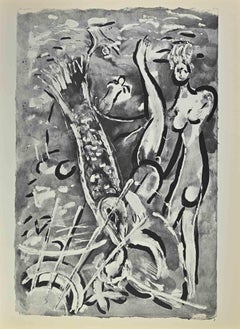
The Lovers - Héliogravure by Marc Chagall - 1960

The Lovers - Héliogravure by Marc Chagall - 1960

By Marc Chagall

Located in Roma, IT

Héliogravure on brown-toned paper, so signature. On bot sheets, recto and verso. Edition of 6500 unsigned copies. Printed by Mourlot and published by Tériade, Paris. Ref. Mourlot,...

Category

1960s Surrealist Marc Chagall Art

Materials

Photogravure

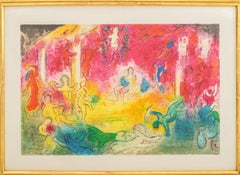
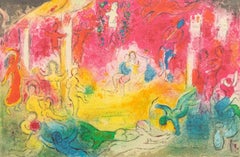
Marc Chagall, Daphnis and Chloe, from XXe Siecle, 1960

Marc Chagall, Daphnis and Chloe, from XXe Siecle, 1960

By Marc Chagall

Located in Southampton, NY

This exquisite lithograph by Marc Chagall (1887–1985), titled Daphnis et Chloe (Daphnis and Chloe), from the album XXe Siecle, Nouvelle serie, XXIIe Annee, No. 14, Juin 1960, originates from the 1960 edition published by Societe Internationale d'Art XXe Siecle, Paris, under the direction of Gualtieri di San Lazzaro, editeur, Paris, and printed by Mourlot Freres, Paris, 1960. Daphnis et Chloe reflects Chagall’s poetic fusion of love, mythology, and dreamlike imagery, inspired by the ancient Greek pastoral romance and reimagined through his luminous color harmonies and floating forms. The work embodies Chagall’s timeless exploration of passion, innocence, and the spiritual beauty of nature, rendered in his signature chromatic radiance and lyricism. Executed as a lithograph on velin paper, this work measures 12.5 x 9.75 inches. Unsigned and unnumbered as issued. The edition exemplifies the superb craftsmanship of Mourlot Freres, Paris. Artwork Details: Artist: Marc Chagall (1887–1985) Title: Daphnis et Chloe (Daphnis and Chloe), from the album XXe Siecle, Nouvelle serie, XXIIe Annee, No. 14, Juin 1960 Medium: Lithograph on velin paper Dimensions: 12.5 x 9.75 inches (31.75 x 24.77 cm) Inscription: Unsigned and unnumbered as issued Date: 1960 Publisher: Societe Internationale d'Art XXe Siecle, Paris, under the direction of Gualtieri di San Lazzaro, editeur, Paris Printer: Mourlot Freres, Paris Catalogue raisonne reference: Mourlot, Fernand, and Marc Chagall. Chagall Lithographe, Volume II, 1957–1962. Chagall Lithographe, Sauret, 1963, illustration 227 Condition: Well preserved, consistent with age and medium Provenance: From the album XXe Siecle, Nouvelle serie, XXIIe Annee, No. 14, Juin 1960, published by Societe Internationale d'Art XXe Siecle, Paris; printed by Mourlot Freres, Paris, 1960 About the Publication: Gualtieri di San Lazzaro's XXe Siecle (Twentieth Century) was one of the most influential art journals of the modern era, founded in Paris in 1938 as a platform for the greatest painters, sculptors, and writers of the 20th century. San Lazzaro, a visionary editor, critic, and champion of modernism, believed that art and literature should coexist as expressions of a shared human imagination. Under his direction, XXe Siecle became a cultural bridge between Europe and the wider world, publishing special issues devoted to leading figures such as Picasso, Matisse, Chagall, Braque, Calder, Miro, Kandinsky, and Leger. Each edition combined essays by renowned critics and poets with original lithographs and woodcuts printed by the foremost ateliers of Paris, Milan, and New York, including Mourlot, Curwen, and Amilcare Pizzi, creating a uniquely rich dialogue between text and image. The 1960 issue, XXe Siecle, Nouvelle serie, No. 14, showcased Daphnis et Chloe, one of Chagall’s most celebrated lithographic subjects, coinciding with his work on the monumental suite of lithographs inspired by the same pastoral tale, published by Teriade. Through this publication, San Lazzaro further cemented Chagall’s reputation as the modern poet of color and love, uniting myth, nature, and emotion in visual form. Today, XXe Siecle remains an essential record of 20th-century modernism, celebrated for its seamless integration of fine art, literature, and design. About the Artist: Marc Chagall (1887–1985) was a Belarus-born French painter, printmaker, and designer whose visionary imagination, radiant color, and deeply poetic symbolism made him one of the most beloved and influential artists of the 20th century. Rooted in the imagery of his Jewish heritage and the memories of his childhood in Vitebsk, Chagall’s art wove together themes of faith, love, folklore, and fantasy with a dreamlike modern sensibility. His unique style—merging elements of Cubism, Fauvism, Expressionism, and Surrealism—defied categorization, transforming ordinary scenes into lyrical meditations on memory and emotion. Influenced by Russian icon painting, medieval religious art, and the modern innovations of artists such as Pablo Picasso, Henri Matisse, and Georges Braque, Chagall developed a profoundly personal visual language filled with floating figures, vibrant animals, musicians, and lovers that symbolized the transcendent power of imagination and love. During his early years in Paris, he became an integral part of the Ecole de Paris circle, forming friendships with Amedeo Modigliani, Fernand Leger, and Sonia Delaunay, and his creative spirit resonated with that of his peers and successors—Alexander Calder, Alberto Giacometti, Salvador Dali, Joan Miro, Wassily Kandinsky, Marcel Duchamp, and Man Ray—artists who, like Chagall, sought to push the boundaries of perception, emotion, and form. Over a prolific career that spanned painting, printmaking, stained glass, ceramics, and stage design, Chagall brought an unparalleled poetic sensibility to modern art, infusing even the most abstract subjects with human warmth and spiritual depth. His works are held in the most prestigious museums around the world, including the Museum of Modern Art, the Centre Pompidou, the Tate, and the Guggenheim, where they continue to inspire generations of artists and collectors. The highest price ever paid for a Marc Chagall artwork is approximately 28.5 million USD, achieved in 2017 at Sotheby’s New York for Les Amoureux (1928). Marc Chagall Daphnis...

Category

1960s Expressionist Marc Chagall Art

Materials

Lithograph

"Vision of Paris" original lithograph

"Vision of Paris" original lithograph

By Marc Chagall

Located in Henderson, NV

Medium: original lithograph. Catalogue reference: Mourlot 81. Printed in 1952 at the atelier Mourlot for the art revue Verve (Volume 7, Number 27-28) and published in Paris by Teriad...

Category

1950s Marc Chagall Art

Materials

Lithograph

Marc Chagall - Homage to Marc Chagall - Original Lithograph

Marc Chagall - Homage to Marc Chagall - Original Lithograph

By Marc Chagall

Located in Collonge Bellerive, Geneve, CH

Marc Chagall Original Lithograph 1969 From the revue XXe Siecle, edition of 12,000 Unsigned, as issued Dimensions: 32 x 24 Condition : Excellent Reference: Mourlot 572 Marc Chagall (born in 1887) Marc Chagall was born in Belarus in 1887 and developed an early interest in art. After studying painting, in 1907 he left Russia for Paris, where he lived in an artist colony on the city’s outskirts. Fusing his own personal, dreamlike imagery with hints of the fauvism and cubism popular in France at the time, Chagall created his most lasting work—including I and the Village (1911)—some of which would be featured in the Salon des Indépendants exhibitions. After returning to Vitebsk for a visit in 1914, the outbreak of WWI trapped Chagall in Russia. He returned to France in 1923 but was forced to flee the country and Nazi persecution during WWII. Finding asylum in the U.S., Chagall became involved in set and costume design before returning to France in 1948. In his later years, he experimented with new art forms and was commissioned to produce numerous large-scale works. Chagall died in St.-Paul-de-Vence in 1985. The Village Marc Chagall was born in a small Hassidic community on the outskirts of Vitebsk, Belarus, on July 7, 1887. His father was a fishmonger, and his mother ran a small sundries shop in the village. As a child, Chagall attended the Jewish elementary school, where he studied Hebrew and the Bible, before later attending the Russian public school. He began to learn the fundamentals of drawing during this time, but perhaps more importantly, he absorbed the world around him, storing away the imagery and themes that would feature largely in most of his later work. At age 19 Chagall enrolled at a private, all-Jewish art school and began his formal education in painting, studying briefly with portrait artist Yehuda Pen. However, he left the school after several months, moving to St. Petersburg in 1907 to study at the Imperial Society for the Protection of Fine Arts. The following year, he enrolled at the Svanseva School, studying with set designer Léon Bakst, whose work had been featured in Sergei Diaghilev's Ballets Russes. This early experience would prove important to Chagall’s later career as well. Despite this formal instruction, and the widespread popularity of realism in Russia at the time, Chagall was already establishing his own personal style, which featured a more dreamlike unreality and the people, places and imagery that were close to his heart. Some examples from this period are his Window Vitebsk (1908) and My Fianceé with Black Gloves (1909), which pictured Bella Rosenfeld, to whom he had recently become engaged. The Beehive Despite his romance with Bella, in 1911 an allowance from Russian parliament member and art patron Maxim Binaver enabled Chagall to move to Paris, France. After settling briefly in the Montparnasse neighborhood, Chagall moved further afield to an artist colony known as La Ruche (“The Beehive”), where he began to work side by side with abstract painters such as Amedeo Modigliani and Fernand Léger as well as the avant-garde poet Guillaume Apollinaire. At their urging, and under the influence of the wildly popular fauvism and cubism, Chagall lightened his palette and pushed his style ever further from reality. I and the Village (1911) and Homage to Apollinaire (1912) are among his early Parisian works, widely considered to be his most successful and representative period. Though his work stood stylistically apart from his cubist contemporaries, from 1912 to 1914 Chagall exhibited several paintings at the annual Salon des Indépendants exhibition, where works by the likes of Juan Gris, Marcel Duchamp and Robert Delaunay were causing a stir in the Paris art world. Chagall’s popularity began to spread beyond La Ruche, and in May 1914 he traveled to Berlin to help organize his first solo exhibition, at Der Sturm Gallery. Chagall remained in the city until the highly acclaimed show opened that June. He then returned to Vitebsk, unaware of the fateful events to come. War, Peace and Revolution In August 1914 the outbreak of World War I precluded Chagall’s plans to return to Paris. The conflict did little to stem the flow of his creative output, however, instead merely giving him direct access to the childhood scenes so essential to his work, as seen in paintings such as Jew in Green (1914) and Over Vitebsk (1914). His paintings from this period also occasionally featured images of the war’s impact on the region, as with Wounded Soldier (1914) and Marching (1915). But despite the hardships of life during wartime, this would also prove to be a joyful period for Chagall. In July 1915 he married Bella, and she gave birth to a daughter, Ida, the following year. Their appearance in works such as Birthday (1915), Bella and Ida by the Window (1917) and several of his “Lovers” paintings give a glimpse of the island of domestic bliss that was Chagall’s amidst the chaos. To avoid military service and stay with his new family, Chagall took a position as a clerk in the Ministry of War Economy in St. Petersburg. While there he began work on his autobiography and also immersed himself in the local art scene, befriending novelist Boris Pasternak, among others. He also exhibited his work in the city and soon gained considerable recognition. That notoriety would prove important in the aftermath of the 1917 Russian Revolution when he was appointed as the Commissar of Fine Arts in Vitebsk. In his new post, Chagall undertook various projects in the region, including the 1919 founding of the Academy of the Arts. Despite these endeavors, differences among his colleagues eventually disillusioned Chagall. In 1920 he relinquished his position and moved his family to Moscow, the post-revolution capital of Russia. In Moscow, Chagall was soon commissioned to create sets and costumes for various productions at the Moscow State Yiddish Theater, where he would paint a series of murals titled Introduction to the Jewish Theater as well. In 1921, Chagall also found work as a teacher at a school for war orphans. By 1922, however, Chagall found that his art had fallen out of favor, and seeking new horizons he left Russia for good. Flight After a brief stay in Berlin, where he unsuccessfully sought to recover the work exhibited at Der Sturm before the war, Chagall moved his family to Paris in September 1923. Shortly after their arrival, he was commissioned by art dealer and publisher Ambroise Vollard to produce a series of etchings for a new edition of Nikolai Gogol's 1842 novel Dead Souls. Two years later Chagall began work on an illustrated edition of Jean de la Fontaine’s Fables, and in 1930 he created etchings for an illustrated edition of the Old Testament, for which he traveled to Palestine to conduct research. Chagall’s work during this period brought him new success as an artist and enabled him to travel throughout Europe in the 1930s. He also published his autobiography, My Life (1931), and in 1933 received a retrospective at the Kunsthalle in Basel, Switzerland. But at the same time that Chagall’s popularity was spreading, so, too, was the threat of Fascism and Nazism. Singled out during the cultural "cleansing" undertaken by the Nazis in Germany, Chagall’s work was ordered removed from museums throughout the country. Several pieces were subsequently burned, and others were featured in a 1937 exhibition of “degenerate art” held in Munich. Chagall’s angst regarding these troubling events and the persecution of Jews in general can be seen in his 1938 painting White Crucifixion. With the eruption of World War II, Chagall and his family moved to the Loire region before moving farther south to Marseilles following the invasion of France. They found a more certain refuge when, in 1941, Chagall’s name was added by the director of the Museum of Modern Art (MOMA) in New York City to a list of artists and intellectuals deemed most at risk from the Nazis’ anti-Jewish campaign. Chagall and his family would be among the more than 2,000 who received visas and escaped this way. Haunted Harbors Arriving in New York City in June 1941, Chagall discovered that he was already a well-known artist there and, despite a language barrier, soon became a part of the exiled European artist community. The following year he was commissioned by choreographer Léonide Massine to design sets and costumes for the ballet Aleko, based on Alexander Pushkin’s “The Gypsies” and set to the music of Pyotr Ilyich Tchaikovsky. But even as he settled into the safety of his temporary home, Chagall’s thoughts were frequently consumed by the fate befalling the Jews of Europe and the destruction of Russia, as paintings such as The Yellow Crucifixion...

Category

1960s Surrealist Marc Chagall Art

Materials

Lithograph

LE CHEVALET AUX FLEURS (MOURLOT 838)

LE CHEVALET AUX FLEURS (MOURLOT 838)

By Marc Chagall

Located in Aventura, FL

Hand signed and numbered by the artist. Lithograph in colors on wove paper. Mourlot 838. Sheet size 30.25 x 20 inches. Image size 22.5 x 14.75 inches. Frame size approx 36.5 x 26.5 inches. Edition 34/50. Artwork is in excellent condition. All reasonable offers will be considered. About the Artist: Marc Chagall (French/Russian, 1887–1985) was an artist whose work anticipated the dream-like imagery of Surrealism. Over the course of his career, Chagall developed the poetic, amorphous, and deeply personal visual language evident in paintings like I and the Village...

Category

1970s Surrealist Marc Chagall Art

Materials

Paper, Lithograph

Marc Chagall, The Tree of Jesse, from Derriere le Miroir, 1960

Marc Chagall, The Tree of Jesse, from Derriere le Miroir, 1960

By Marc Chagall

Located in Southampton, NY

This exquisite lithograph by Marc Chagall (1887–1985), titled L’Arbre de Jesse (The Tree of Jesse), originates from the 1960 folio Derriere le Miroir, No. 119, Poetes, peintres, sculpteurs (Poets, Painters, Sculptors), published by Maeght Editeur, Paris, under the direction of Aime Maeght, and printed by Mourlot Freres, Paris. This lyrical composition exemplifies Chagall’s visionary fusion of faith, memory, and color, uniting biblical symbolism with the artist’s poetic sensibility. In L’Arbre de Jesse, Chagall reimagines a sacred theme as a vibrant allegory of spiritual lineage, evoking the mystical harmony between heaven and earth that defines his most celebrated works. Executed on velin paper, this lithograph measures 15 x 11 inches (38.1 x 27.9 cm), as issued. Unsigned and unnumbered, as issued. The edition reflects the exceptional quality and craftsmanship of the Maeght and Mourlot collaborations, which brought Chagall’s radiant imagery to print with unparalleled fidelity. Artwork Details: Artist: Marc Chagall (1887–1985) Title: L’Arbre de Jesse (The Tree of Jesse), from Derriere le Miroir, No. 119, Poetes, peintres, sculpteurs (Poets, Painters, Sculptors), 1960 Medium: Lithograph on velin paper Dimensions: 15 x 11 inches (38.1 x 27.9 cm), as issued Inscription: Unsigned and unnumbered, as issued Date: 1960 Publisher: Maeght Editeur, Paris Printer: Mourlot Freres, Paris Catalogue raisonne references: Mourlot, Fernand, and Marc Chagall. “Chagall Lithographe, Volume II, 1957–1962.” Chagall Lithographe, Sauret, 1963, illustration 297. Cramer, Patrick, and Meret Meyer. Marc Chagall: Catalogue Raisonné Des Livres Illustrés. P. Cramer ed., 1995, illustration 40 Condition: Well preserved, consistent with age and medium Provenance: From the 1960 folio Derriere le Miroir, No. 119, Poetes, peintres, sculpteurs (Poets, Painters, Sculptors), published by Maeght Editeur, Paris About the Publication: Derriere le Miroir (translated as "Behind the Mirror") was an iconic French art periodical published from 1946 to 1982 by Maeght Editeur, one of the most influential art publishers of the 20th century. Founded by Aime Maeght in Paris, the publication was conceived as a visual and literary collaboration between leading modern artists, poets, and critics. Each issue functioned as both an exhibition catalogue and a work of art in itself—featuring original lithographs printed directly from the artists' stones or plates, alongside essays, poems, and critical commentary. Over the course of 36 years, Derriere le Miroir produced more than 250 issues and showcased an extraordinary roster of artists including Henri Matisse, Marc Chagall, Joan Miro, Georges Braque, Alexander Calder, Fernand Leger, Pierre Bonnard, Alberto Giacometti, Eduardo Chillida, Ellsworth Kelly, Francis Bacon, Paul Rebeyrolle, Claude Garache, Antoni Tapies, Bram van Velde, Pierre Alechinsky, Pol Bury, Shusaku Arakawa, and Gerard Titus-Carmel. Printed in the ateliers of Mourlot, Arte, and Imprimerie Moderne du Lion, the periodical set new standards for quality in color lithography, combining fine art printing with elegant typography and poetic text. Beyond its visual brilliance, Derriere le Miroir also became a cultural chronicle of postwar European modernism. Each issue coincided with exhibitions held at Galerie Maeght, providing a collectible and widely accessible record of groundbreaking shows. Its integration of image, text, and philosophy created a dialogue between art and literature that elevated the modern art book to new aesthetic heights. Today, Derriere le Miroir remains one of the most sought-after and historically significant art publications, prized by collectors and scholars alike for its craftsmanship, influence, and its role in defining the visual language of 20th-century modernism. The Maeght Foundation in Saint-Paul-de-Vence continues to honor this legacy through exhibitions and archival preservation of the series, affirming Derriere le Miroir's enduring place in the history of modern art and fine art publishing. About the Artist: Marc Chagall (1887–1985) was a Belarus-born French painter, printmaker, and designer whose visionary use of color and poetic symbolism made him one of the most beloved and influential artists of the 20th century. Rooted in the rich imagery of his Jewish heritage and childhood in Vitebsk, Chagall’s dreamlike compositions fused memory, folklore, faith, and romance with the expressive innovations of modern art. His work evolved alongside and in dialogue with the great modern masters—Pablo Picasso, Henri Matisse, Alexander Calder, Salvador Dali, Joan Miro, Georges Braque, Wassily Kandinsky, Marcel Duchamp, and Man Ray—artists who, like Chagall, redefined artistic language for a new century. Spanning painting, printmaking, stained glass, ceramics, stage design, and illustration, Chagall’s career reflected both his deep spirituality and his boundless imagination. His works are held in major museum collections worldwide, including the Museum of Modern Art, the Guggenheim, the Tate, and the Centre Pompidou. The highest price ever paid for a Marc Chagall artwork is approximately $28.5 million USD, achieved in 2017 at Sotheby’s New York for Les Amoureux (1928). Marc Chagall L’Arbre de Jesse, Chagall Derriere le Miroir, Chagall Maeght...

Category

1960s Expressionist Marc Chagall Art

Materials

Lithograph

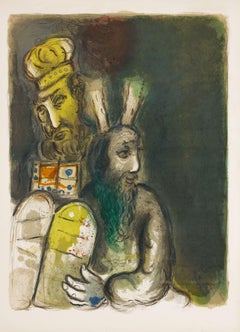
Marc Chagall, Moses I, from Drawings for the Bible, 1956

Marc Chagall, Moses I, from Drawings for the Bible, 1956

By Marc Chagall

Located in Southampton, NY

This exquisite lithograph by Marc Chagall (1887–1985), titled Moise I (Moses I), from Marc Chagall, Dessins Pour La Bible (Drawings for the Bible), Verve: Revue Artistique et Littera...

Category

1950s Expressionist Marc Chagall Art
Materials

Lithograph

"Isaiah" original lithograph

"Isaiah" original lithograph

By Marc Chagall

Located in Henderson, NV

Medium: original lithograph. Printed by Mourlot and published in Paris by Teriade for Verve in 1956 for a special edition devoted exclusively to Chagall's original Bible art. Size: 1...

Category

1950s Marc Chagall Art

Materials

Lithograph

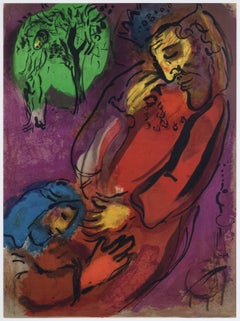
Marc Chagall, David and Absalom, from Drawings for the Bible, 1956

Marc Chagall, David and Absalom, from Drawings for the Bible, 1956

By Marc Chagall

Located in Southampton, NY

This exquisite lithograph by Marc Chagall (1887–1985), titled David et Absalon (David and Absalom), from Marc Chagall, Dessins Pour La Bible (Drawings for the Bible), Verve: Revue Ar...

Category

1950s Expressionist Marc Chagall Art
Materials

Lithograph

Marc Chagall, The Juggler, from The Lithographs of Chagall, 1960

Marc Chagall, The Juggler, from The Lithographs of Chagall, 1960

By Marc Chagall

Located in Southampton, NY

This exquisite lithograph by Marc Chagall (1887–1985), titled La Jongleuse (The Juggler), from the album The Lithographs of Chagall, Volume I, originates from the 1960 edition publis...

Category

1960s Expressionist Marc Chagall Art

Materials

Lithograph

Marc Chagall -- POEMES: Dans ma Memoire

Marc Chagall -- POEMES: Dans ma Memoire

By Marc Chagall

Located in BRUCE, ACT

Marc Chagall Dans ma Memoire, 1968 LES POEMES #8 Colored woodcut on Rives paper Unsigned Edition: 96 / 226 Image size: c 24 * 32 cm Published by Cramer Editeur, Geneva LITERATUR...

Category

1960s Marc Chagall Art

Materials

Woodcut

Adam and Eve - Héliogravure by Marc Chagall - 1960

Adam and Eve - Héliogravure by Marc Chagall - 1960

By Marc Chagall

Located in Roma, IT

Héliogravure on brown-toned paper, so signature. On bot sheets, recto and verso. Edition of 6500 unsigned copies. Printed by Mourlot and published by Tériade, Paris. Ref. Mourlot,...

Category

1960s Surrealist Marc Chagall Art

Materials

Photogravure

Ruth Gleaner - Lithograph by Marc Chagall - 1960

Ruth Gleaner - Lithograph by Marc Chagall - 1960

By Marc Chagall

Located in Roma, IT

Color lithograph realized by Marc Chagall in 1960 to illustrate "The Bible".  Edition of 6500, published by Tériade in no. 33 and 34 of the Art Magazine Verve. Printed by Mourlot a...

Category

1960s Surrealist Marc Chagall Art

Materials

Lithograph

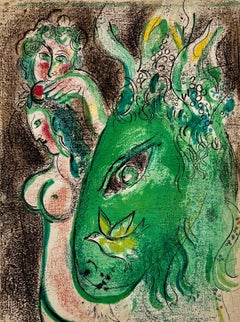
'Paradise II' Lithograph from The Bible

'Paradise II' Lithograph from The Bible

By Marc Chagall

Located in Philadelphia, PA

Marc Chagall Paradise II From the rare limited edition Editions de la Revue VERVE, Paris The Bible Original double sided lithograph on paper 1956 Mint Condition

Category

1950s Marc Chagall Art

Materials

Lithograph

The Bible : Adam and Eve in Paradise - Original Lithograph (Mourlot #233)

The Bible : Adam and Eve in Paradise - Original Lithograph (Mourlot #233)

By Marc Chagall

Located in Paris, IDF

Marc Chagall (1887-1985) The Bible, Adam and Eve in Paradise, 1960 Original lithograph (Mourlot Workshop) On paper 36 x 26.5 cm (c. 14.2 x 10.2 in) Second lithograph on the back, ...

Category

Mid-20th Century Modern Marc Chagall Art

Materials

Lithograph

Marc Chagall Figurative Lithograph, Unsigned, 1960, "Paradise"

Marc Chagall Figurative Lithograph, Unsigned, 1960, "Paradise"

By Marc Chagall

Located in Washington, DC

Artist: Marc Chagall Title: Paradise Portfolio: Drawings for the Bible Medium: Lithograph Date: 1960 Edition: Unnumbered Frame Size: 22 3/4" x 18 3/4" Sheet Size: 14 3/8" x 10 1/4" I...

Category

1960s Marc Chagall Art

Materials

Lithograph

Marc Chagall "In the Sky of the Opera"

Marc Chagall "In the Sky of the Opera"

By Marc Chagall

Located in Los Angeles, CA

Marc Chagall (Russia/France 1887‑1985) "In the Sky of the Opera" color lithograph on Arches 1980 Pencil-signed lower right, numbered ##/50 lower left; published by Editions Maeght,...

Category

1980s Expressionist Marc Chagall Art

Materials

Archival Paper, Lithograph

Marc Chagall, Cain and Abel, from Drawings for the Bible, 1956

Marc Chagall, Cain and Abel, from Drawings for the Bible, 1956

By Marc Chagall

Located in Southampton, NY

This exquisite lithograph by Marc Chagall (1887–1985), titled Cain et Abel (Cain and Abel), from Marc Chagall, Dessins Pour La Bible (Drawings for the Bible), Verve: Revue Artistique...

Category

1950s Expressionist Marc Chagall Art
Materials

Lithograph

Jonas by Marc Chagall - School of Paris, Russian Artist

Jonas by Marc Chagall - School of Paris, Russian Artist

By Marc Chagall

Located in London, GB

*PLEASE NOTE UK BUYERS WILL ONLY PAY 5% VAT ON THIS PURCHASE. Once an order is placed we will arrange the VAT of 20% to be reduced to 5% Jonas by Marc Chagall (1887-1985) Indian ink...

Category

1950s Modern Marc Chagall Art

Materials

Paper, India Ink

The Bible : Daniel the Prophet - Original Lithograph

The Bible : Daniel the Prophet - Original Lithograph

By Marc Chagall

Located in Paris, IDF

Marc Chagall (1887-1985) The Bible, Daniel the Prophet Original lithography (Mourlot Workshop) On paper 37 x 26.5 cm (c. 14.5 x 10.2 in) Second illustration on back, see photo no...

Category

1950s Modern Marc Chagall Art

Materials

Lithograph

Marc Chagall, Moses II, from Drawings for the Bible, 1956

Marc Chagall, Moses II, from Drawings for the Bible, 1956

By Marc Chagall

Located in Southampton, NY

This exquisite lithograph by Marc Chagall (1887–1985), titled Moise II (Moses II), from Marc Chagall, Dessins Pour La Bible (Drawings for the Bible), Verve: Revue Artistique et Litte...

Category

1950s Expressionist Marc Chagall Art
Materials

Lithograph

The Prophet - Héliogravure by Marc Chagall - 1960

The Prophet - Héliogravure by Marc Chagall - 1960

By Marc Chagall

Located in Roma, IT

Héliogravure on brown-toned paper, so signature. Héliogravure  on bot sheets, recto and verso. Edition of 6500 unsigned copies. Printed by Mourlot and published by Tériade, Paris. ...

Category

1960s Surrealist Marc Chagall Art

Materials

Photogravure

Les Amoreaux Dans La Ciel a Saint Paul

Les Amoreaux Dans La Ciel a Saint Paul

By Marc Chagall

Located in Naples, Florida

Signed in pencil Chagall worked extensively in etching and aquatint during the later decades of his career, producing numerous independent compositions and illustrated projects. H...

Category

1960s Surrealist Marc Chagall Art

Materials

Paper, Etching, Aquatint

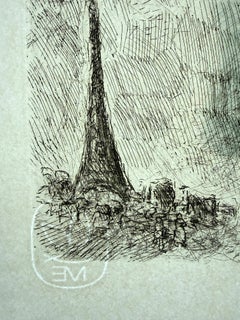
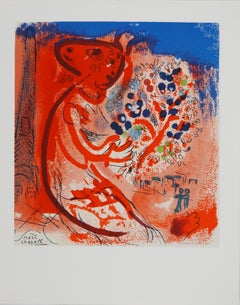
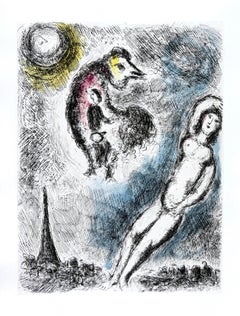
La Tour Eiffel Verte

La Tour Eiffel Verte

By Marc Chagall

Located in New York, NY

A rare signed, original, artist's proof lithograph (épreuve d'artiste). Throughout his career, Chagall produced colored lithographs such as “La Tour Eiffel...

Category

Mid-20th Century Modern Marc Chagall Art

Materials

Lithograph

Le Village, Paris
Le Village, Paris

Le Village, Paris

By Marc Chagall

Located in Milwaukee, WI

No. 199 in the Catalogue Raisonne of Chagall's lithographs This lithograph was created by Chagall especially for this edition of the book "Chagall" by Jacques Lassaigne. The back co...

Category

1950s Marc Chagall Art

Materials

Lithograph

L'Homme sans Passeport Devant le Capitaine Ispravnik

L'Homme sans Passeport Devant le Capitaine Ispravnik

By Marc Chagall

Located in Roma, IT

Etching and drypoint on wove paper realized by Marc Chagall between 1923 and 1927. Plate from the Suite "Les Ames Mortes de Gogol" published by Tériade in Paris in 1948. Edition of 1...

Category

1920s Surrealist Marc Chagall Art

Materials

Paper, Etching

Adam, Eve and the Forbidden Fruit - Lithograph by Marc Chagall - 1960

Adam, Eve and the Forbidden Fruit - Lithograph by Marc Chagall - 1960

By Marc Chagall

Located in Roma, IT

Color lithograph realized by Marc Chagall in 1960 to illustrate "The Bible".  Edition of 6500, published by Tériade in no. 33 and 34 of the Art Magazine Verve. Printed by Mourlot a...

Category

1960s Surrealist Marc Chagall Art

Materials

Lithograph

Reverie Lithograph by Marc Chagall, Modern, 1969, Unframed, 15x22

Reverie Lithograph by Marc Chagall, Modern, 1969, Unframed, 15x22

By Marc Chagall

Located in Brooklyn, NY

The artwork featured on pages 4 and 5 of Derrière le Miroir No. 182 (1969) by Marc Chagall is titled "Reverie". This double-page lithograph presents a dreamlike composition, reflecti...

Category

1960s Modern Marc Chagall Art

Materials

Lithograph

Marc Chagall, Adam and Eve and the Forbidden Fruit, Drawings for the Bible, 1956

Marc Chagall, Adam and Eve and the Forbidden Fruit, Drawings for the Bible, 1956

By Marc Chagall

Located in Southampton, NY

This exquisite lithograph by Marc Chagall (1887–1985), titled Adam et Eve et le fruit defendu (Adam and Eve and the Forbidden Fruit), from Marc Chagall, Dessins Pour La Bible (Drawin...

Category

1950s Expressionist Marc Chagall Art
Materials

Lithograph

Marc Chagall, Rachel Steals Her Father’s Idols, Drawings for the Bible, 1956

Marc Chagall, Rachel Steals Her Father’s Idols, Drawings for the Bible, 1956

By Marc Chagall

Located in Southampton, NY

This exquisite lithograph by Marc Chagall (1887–1985), titled Rachel derobe les Idoles de son Pere (Rachel Steals Her Father’s Idols), from Marc Chagall, Dessins Pour La Bible (Drawings for the Bible), Verve: Revue Artistique et Litteraire, Vol. VIII, No. 33–34, originates from the September 1956 issue published by Editions de la revue Verve, Paris, under the direction of Teriade, Editeur, Paris, and printed by Mourlot Freres, Paris, 1956. This poignant and symbolic composition illustrates the biblical episode in which Rachel secretly takes her father Laban’s household idols, an act that represents both defiance and devotion. Chagall’s interpretation imbues the scene with mystery and spiritual complexity, transforming it into a meditation on faith, transformation, and the tension between tradition and revelation. With his characteristic use of fluid lines and emotional resonance, Chagall elevates this intimate moment into a timeless vision of courage and divine purpose. The piece forms part of Chagall’s celebrated series of lithographs and drawings created for Dessins Pour La Bible, a monumental project uniting art, scripture, and mysticism in one of the artist’s most important achievements. Executed as a lithograph on velin du Marais paper, this work measures 14 x 10.5 inches (35.56 x 26.67 cm). Unsigned and unnumbered as issued. The edition exemplifies the superb craftsmanship of the Mourlot Freres atelier, renowned for its collaborations with the greatest modern masters of the 20th century. Artwork Details: Artist: Marc Chagall (1887–1985) Title: Rachel derobe les Idoles de son Pere (Rachel Steals Her Father’s Idols), from Marc Chagall, Dessins Pour La Bible (Drawings for the Bible), Verve: Revue Artistique et Litteraire, Vol. VIII, No. 33–34, September 1956 Medium: Lithograph on velin du Marais paper Dimensions: 14 x 10.5 inches (35.56 x 26.67 cm) Inscription: Unsigned and unnumbered as issued Date: 1956 Publisher: Editions de la revue Verve, Paris, under the direction of Teriade, Editeur, Paris Printer: Mourlot Freres, Paris Catalogue raisonne references: Cain, Julien, and Fernand Mourlot. Chagall Lithographe. Andre Sauret, Editeur, 1960, illustrations 117–46. Cramer, Patrick, and Meret Meyer. Marc Chagall: Catalogue Raisonne Des Livres Illustrés. P. Cramer ed., 1995, illustration 25. Condition: Well preserved, consistent with age and medium Provenance: From Marc Chagall, Dessins Pour La Bible (Drawings for the Bible), Verve: Revue Artistique et Litteraire, Vol. VIII, No. 33–34, published by Editions de la revue Verve, Paris, 1956 Notes: Excerpted from the album (translated from French), This double issue of Verve is dedicated to the full reproduction in heliogravure of the one hundred-five plates etched by Marc Chagall, between 1930 and 1955, for the illustration of the Bible. The artist composed especially for the present work, sixteen lithographs in color and twelve in black, as well as the cover and the title page. This volume was completed and printed on September 10, 1956, by the Master Printers Draeger Freres for heliogravure, and by Mourlot Freres for lithography. About the Publication: Marc Chagall, Dessins Pour La Bible (Drawings for the Bible), published as Verve Vol. VIII, No. 33–34 in September 1956, represents one of the crowning achievements of Chagall’s lifelong dialogue with the sacred. Conceived and directed by the visionary publisher Teriade and printed by the master lithographers Mourlot Freres, the issue features thirty-four color lithographs and numerous black-and-white drawings inspired by biblical figures and stories. Chagall’s works for this edition unite text and image in a luminous meditation on divine creation, moral struggle, and spiritual renewal, imbued with his signature dreamlike symbolism and radiant color. Produced in postwar Paris, this landmark publication reaffirmed the enduring union of art and faith, establishing Dessins Pour La Bible as one of the most important illustrated works of the 20th century. About the Artist: Marc Chagall (1887–1985) was a Belarus-born French painter, printmaker, and designer whose visionary imagination, radiant color, and deeply poetic symbolism made him one of the most beloved and influential artists of the 20th century. Rooted in the imagery of his Jewish heritage and the memories of his childhood in Vitebsk, Chagall’s art wove together themes of faith, love, folklore, and fantasy with a dreamlike modern sensibility. His unique style—merging elements of Cubism, Fauvism, Expressionism, and Surrealism—defied categorization, transforming ordinary scenes into lyrical meditations on memory and emotion. Influenced by Russian icon painting, medieval religious art, and the modern innovations of artists such as Pablo Picasso, Henri Matisse, and Georges Braque, Chagall developed a profoundly personal visual language filled with floating figures, vibrant animals, musicians, and lovers that symbolized the transcendent power of imagination and love. During his early years in Paris, he became an integral part of the Ecole de Paris circle, forming friendships with Amedeo Modigliani, Fernand Leger, and Sonia Delaunay, and his creative spirit resonated with that of his peers and successors—Alexander Calder, Alberto Giacometti, Salvador Dali, Joan Miro, Wassily Kandinsky, Marcel Duchamp, and Man Ray—artists who, like Chagall, sought to push the boundaries of perception, emotion, and form. Over a prolific career that spanned painting, printmaking, stained glass, ceramics, and stage design, Chagall brought an unparalleled poetic sensibility to modern art, infusing even the most abstract subjects with human warmth and spiritual depth. His works are held in the most prestigious museums around the world, including the Museum of Modern Art, the Centre Pompidou, the Tate, and the Guggenheim, where they continue to inspire generations of artists and collectors. The highest price ever paid for a Marc Chagall artwork is approximately $28.5 million USD, achieved in 2017 at Sotheby’s New York for Les Amoureux (1928). Marc Chagall Rachel...

Category

1950s Expressionist Marc Chagall Art
Materials

Lithograph

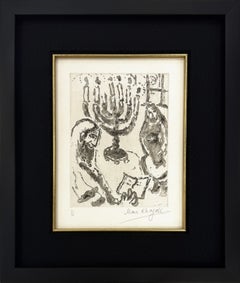
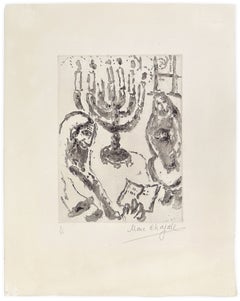
Le Chandelier (The Candlestick)

Le Chandelier (The Candlestick)

By Marc Chagall

Located in Milwaukee, WI

Framed 24.50 x 21 in No. 366 in the Catalogue Raisonne of Chagall's lithographs Framed with museum-quality archival materials, including museum glass which filters out 99% of harmf...

Category

1960s Marc Chagall Art

Materials

Lithograph

Marc Chagall, Sarah and the Angels, from Drawings for the Bible, 1956

Marc Chagall, Sarah and the Angels, from Drawings for the Bible, 1956

By Marc Chagall

Located in Southampton, NY

This exquisite lithograph by Marc Chagall (1887–1985), titled Sara et les Anges (Sarah and the Angels), from Marc Chagall, Dessins Pour La Bible (Drawings for the Bible), Verve: Revu...

Category

1950s Expressionist Marc Chagall Art
Materials

Lithograph

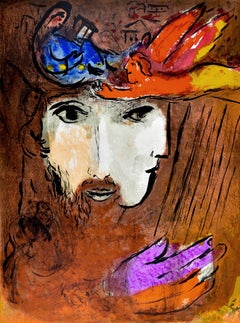
Marc Chagall - Double Portrait - Original Lithograph

Marc Chagall - Double Portrait - Original Lithograph

By Marc Chagall

Located in Collonge Bellerive, Geneve, CH

Marc Chagall, Original Lithograph depicting an instant of the Bible. Technique: Original lithograph in colours Year: 1956 Sizes: 35,5 x 26 cm / 14" x 10.2" (sheet) Published by: Édit...

Category

1950s Modern Marc Chagall Art

Materials

Lithograph

Marc Chagall art for sale on 1stDibs.

Find a wide variety of authentic Marc Chagall art available for sale on 1stDibs. If you’re browsing the collection of art to introduce a pop of color in a neutral corner of your living room or bedroom, you can find work that includes elements of orange, blue, yellow and other colors. You can also browse by medium to find art by Marc Chagall in lithograph and more. Much of the original work by this artist or collective was created during the 20th century and is mostly associated with the Surrealist style. Not every interior allows for large Marc Chagall art, so small editions measuring 5 inches across are available. Customers who are interested in this artist might also find the work of Salvador Dalí, Leonor Fini, and André Masson. Marc Chagall art prices can differ depending upon medium, time period and other attributes. On 1stDibs, the price for these items starts at $75 and tops out at $1,450,000, while the average work can sell for $1,229.
Questions About Marc Chagall Art
  • 1stDibs ExpertMarch 26, 2024
    Marc Chagall is famous for his art. He is one of the best known artists of the 20th century.

    Chagall produced magnificent stained-glass windows for structures in France, Israel, Germany and the United States, and his lively paintings of Paris are revered all over the world. The Russian-French modernist worked in nearly every artistic medium. Influenced by Symbolism, Fauvism, Cubism and Surrealism, Chagall developed his own distinctive style, combining avant-garde techniques and motifs with elements drawn from Eastern European Jewish folk art.

    Find authentic Marc Chagall prints and paintings on 1stDibs.
  • 1stDibs ExpertMarch 22, 2022
    Marc Chagall was a painter, illustrator, glass artisan, print maker and set designer who made a lasting impact on modern art. He was born on July 7, 1887, in Liozna, Belarus, and died on March 28, 1985, in Saint Paul de Vence, France. On 1stDibs, shop a selection of Marc Chagall art.
  • 1stDibs ExpertMarch 22, 2022
    Marc Chagall was born in Liozna, Belarus on July 7, 1887. He went on to become one of the most influential artists of the 20th century, creating works that drew from the movements of Cubism, Surrealism and Fauvism. On 1stDibs, find a selection of Marc Chagall art.
  • 1stDibs ExpertMarch 22, 2022
    Marc Chagall was born on July 7, 1887, in Liozna, Belarus. He was an influential artist who worked in a variety of mediums, including paint, stained glass and illustrations. Chagall died on March 28, 1985, in Saint Paul de Vence, France. On 1stDibs, find a collection of Marc Chagall art.
  • 1stDibs ExpertMarch 22, 2022
    To pronounce Marc Chagall, say "Mark Shu-GALL." The artist's real name was Moishe Shagal. Although the artist changed his name, he referenced his heritage in many works by including fish to represent his father who worked as a herring merchant. Shop a variety of Marc Chagall art on 1stDibs.
  • 1stDibs ExpertFebruary 7, 2024
    Marc Chagall painted around 10,000 works during the course of his 75-year career. The Russian-French modernist worked in nearly every artistic medium. Influenced by Symbolism, Fauvism, Cubism and Surrealism, he developed his own distinctive style, combining avant-garde techniques and motifs with elements drawn from Eastern European Jewish folk art. On 1stDibs, find a selection of Marc Chagall art.
  • 1stDibs ExpertMarch 26, 2024
    Yes, Marc Chagall worked in the Expressionist style, but he is associated with a range of modes and was inspired by various styles.

    Chagall's lithographs as well as his other prints and paintings widely influenced the fantastic imagery of Surrealism and other movements of the 20th century. Known for his dreamlike creations inspired by folk art, Chagall drew on the colors and forms introduced by Cubism and Fauvism for a distinctive style all his own.

    Expressionist artists experimented in paintings and prints with skewed perspectives, abstraction and unconventional, bright colors to portray how isolating and anxious the world felt rather than how it appeared. You can certainly detect the trademark bright colors and dramatic, exaggerated brushstrokes of Expressionism reflected in Chagall’s works such as his Vision of Paris and I and the Village.

    Find a selection of Marc Chagall art on 1stDibs.
  • 1stDibs ExpertMarch 26, 2024
    To collect Marc Chagall art, seek out works from well known and respected sources. When it comes to making an investment of any kind, it’s important to conduct research and only work with reputable sellers. You can shop the collections of art dealers, auction houses and trusted online platforms to find authentic Marc Chagall paintings, prints and other works.
    There are many reasons to collect art. A meaningful collection of art should help a residence feel more like itself. Buy art that speaks to you. Take your time when you’re shopping for art, and choose works that will resonate with you.

    Shop Marc Chagall art on 1stDibs.
  • 1stDibs ExpertOctober 15, 2024
    To tell if a Chagall print is real, experts recommend having a certified appraiser or experienced art dealer evaluate your piece. Fewer than 5% of Chagall's prints are signed and numbered, and counterfeiters have taken advantage of this and flooded the market with many convincing replicas. As a result, it can be very difficult to authenticate an original Chagall without experience and training. On 1stDibs, find a collection of Marc Chagall art.
  • 1stDibs ExpertMarch 26, 2024
    Marc Chagall’s body of work is quite big. Over the course of his 75-year career, Chagall created approximately 10,000 pieces, including prints, paintings, book illustrations, stained glass windows and more.

    The Russian-French modernist worked in nearly every artistic medium, and Chagall’s vibrant and densely colorful prints are known around the world. Characterized by a bold color palette and whimsical imagery, his works are often narrative, depicting small-village scenes and quotidian moments of peasant life, as in his late painting The Flight into Egypt from 1980.

    On 1stDibs, find a selection of Marc Chagall art.
  • 1stDibs ExpertMarch 22, 2022
    Yes, Marc Chagall used oil paint to produce many of his paintings. He also worked with gouaches and watercolors. Not just a painter, Chagall made stained glass windows, illustrations, prints, ceramics and other types of works throughout his life. Find a collection of Marc Chagall art on 1stDibs.
  • 1stDibs ExpertMarch 22, 2022
    Yes, Marc Chagall migrated to the United States. The Jewish artist fled Europe during World War II, moving to New York City in 1941. He settled in France in 1947 and lived there until he died in 1985. On 1stDibs, shop a range of Marc Chagall art.
  • 1stDibs ExpertMarch 22, 2022
    Many artists and things inspired Marc Chagall. Historians believe that his Jewish heritage and his hometown of Liozna, Belarus, served as sources of inspiration throughout his life. His work also displays the influence of surrealist, cubist, symbolist and fauve artists. On 1stDibs, shop a variety of Marc Chagall art.
  • 1stDibs ExpertMarch 26, 2024
    Marc Chagall used a variety of materials in his art. The Russian-French modernist worked in nearly every artistic medium. Influenced by Symbolism, Fauvism, Cubism and Surrealism, Chagall developed his own distinctive style, combining avant-garde techniques and motifs with elements drawn from Eastern European Jewish folk art.

    Chagall produced magnificent stained-glass windows for structures in France, Israel, Germany and the United States. Additionally, his lively paintings of Paris are revered all over the world. Chagall had created etchings of Russian life during the 1920s but would explore printmaking later more deeply, during the 1950s, when he sought guidance from veteran lithographer Charles Sorlier, who became a friend and collaborator.

    Find authentic Marc Chagall art on 1stDibs.
  • 1stDibs ExpertMarch 22, 2022
    Marc Chagall lived many places over the course of his life. He was born in Liozna, Belarus, on July 7, 1887. When he began working as an artist, he lived and worked in Saint Petersburg, Russia; Paris, France; and Berlin, Germany. During World War II, he relocated to the U.S. and then returned to Paris where he primarily resided until his death in 1985. On 1stDibs, find a variety of Marc Chagall art.
  • 1stDibs ExpertApril 5, 2022
    One of Marc Chagall’s most known works is entitled I and the Village. His style mixes bold colors in both the cubism and fauvism style. Shop a selection of Marc Chagall’s pieces from some of the world’s top art dealers on 1stDibs.
  • 1stDibs ExpertSeptember 28, 2021
    A Marc Chagall painting is likely worth anywhere between $50,000 to $70,000 according to current estimates. Marc Chagall is a Russian-French artist of Belarusian Jewish origin who is credited to be among the pioneering modernists. Adept in several styles and techniques, Chagall was best-known for creating stain-glass, tapestries and murals apart from paintings. On 1stDibs, find a variety of Marc Chagall paintings.
  • 1stDibs ExpertMarch 26, 2024
    Yes, Marc Chagall personally signed some of his bookplates. Other bookplate illustrations created by the artist bear a reproduction of his signature. Many of the signed versions come from the collections of notable historical figures, including Nicholas II, the last Russian czar. Find signed Marc Chagall lithographs on 1stDibs.