Michael Thonet Building and Garden Elements

Austrian, German, 1796-1871

The development of bentwood for use in furniture is one of history’s most significant innovations in design. A range of renowned mid-century modern designers such as Alvar Aalto, Arne Jacobsen, and Charles and Ray Eames drew heavily on this technological advancement, and the success of their enduring works owes to the efforts of pioneering German-Austrian industrialist and designer Michael Thonet — founder of Thonet and widely considered the father of bentwood furniture

Bentwood furniture dates as far back as the Middle Ages, but it is the 19th-century cabinetmaker and master of parquetry Michael Thonet who is most often associated with this now-classic technique. Thonet in 1856 patented a method for bending solid wood through the use of steam, and from there, the bentwood look skyrocketed to furniture fame. He experimented with bending birch rods into rounded shapes — forming delicately seductive, curving Art Nouveau creations that were a daring departure from the heavy, hand-carved designs attributed to his contemporaries. 

The Boppard-born Thonet honed his carpentry skills in his father’s workshop, where he carried out experiments with plywood and modified the Biedermeier chairs that populated the studio. He received an invitation from Austrian Chancellor Prince Metternich to contribute Neo-Rococo interiors to the Liechtenstein City Palace in Vienna. From there, the cabinetmaker gained international recognition, including at London’s Great Exhibition of 1851, which featured works created by members of the Arts and Crafts movement as well as industrial products. Thonet showed a range of furniture at the fair and won the bronze medal for his bentwood chairs. He ​​incorporated his family’s company, the Thonet Brothers — or Gebrüder Thonet — with his sons in 1853

Considered the world’s oldest mass-produced chair, Michael Thonet’s ubiquitous Chair No. 14 demonstrated that his patented bentwood technology made it possible to efficiently produce furniture on an industrial scale.

Often called the Coffee House chair — the company’s first substantial order was for a Viennese coffeehouse — the No. 14 remains an icon. Thonet originally designed the chair in 1859, and it is considered the starting point for modern furniture. Composed of just six parts, the chair, with its simple, lightweight design, belies its durability. The No. 14 was followed by the No. 18, or the Bistro chair, in 1867, and the 209, or the Architect’s chair, of which Le Corbusier was a fan. (The influential Swiss-French architect and designer used Thonet furniture in his Pavillon de l’Esprit Nouveau at the 1925 International Exposition of Decorative Arts in Paris.)

The business began mass-producing furniture. By the end of the 1850s, there were additional Thonet workshops in Eastern Europe and hundreds of employees. Michael Thonet’s reputation attracted the attention of notable architects including Otto Wagner, Marcel Breuer and Ludwig Mies van der Rohe

Thonet’s patented bentwood technology also yielded an improvement to rocking chairs for his company — in the middle of the 19th century, Michael produced a series of rockers in which the different curved parts were integrated into fluid, sinuous wholes. Thanks to Thonet, the humble rocker acquired something unexpected: style. And bentwood furniture was embraced by a series of design greats — the innovation can be found in the seating that Josef Hoffman designed for Thonet, in the elegant Superleggera chair created by Gio Ponti and Alvar Aalto’s expressive Paimio armchair

The No. 14 chair earned a gold medal at the 1867 Paris World’s Fair and reportedly sold 50 million copies prior to World War I. Today it’s a staple furnishing in countless movies, television shows, restaurants, bars and homes. 

On 1stDibs, find an array of antique Michael Thonet seating, tables and more.
to
1
1
1
Height
to
Width
to
1
1
1
1
1
1
1
1
1
1
1
1
56
369
351
122
119
Creator: Michael Thonet
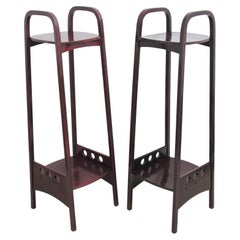
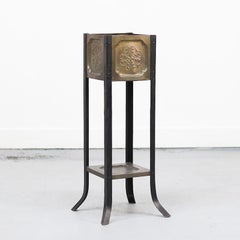
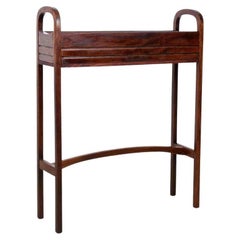
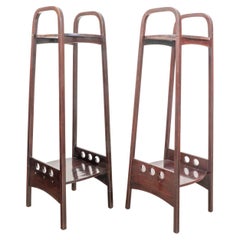
Thonet - Plant Stand (2) - Beech

Thonet - Plant Stand (2) - Beech

$2,328Sale Price / set|20% Off

Thonet - Plant Stand (2) - Beech

By Michael Thonet, Thonet

Located in Budapest, HU

Pair of Art Nouveau Thonet Plant Stands – Circa 1900 A striking pair of original Art Nouveau plant stands attributed to Thonet, crafted around 1900...

Category

Early 1900s Austrian Art Nouveau Antique Michael Thonet Building and Garden Elements

Materials

Beech

Related Items
French Style 1950s Plant Stand

French Style 1950s Plant Stand

$3,500

H 37.75 in W 17 in D 17 in

French Style 1950s Plant Stand

Located in Sharon, CT

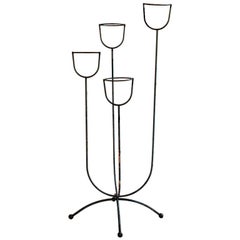
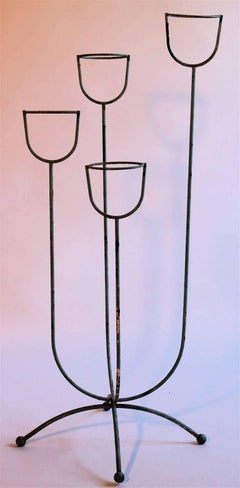
A plant stand that holds four small plants in style. Light blue over white paint. The holes are 4" in diameter.

Category

Mid-20th Century French Mid-Century Modern Michael Thonet Building and Garden Elements

Materials

Steel

Antique Art Devco Nouveau French Jardiniere / Plant Stand

Antique Art Devco Nouveau French Jardiniere / Plant Stand

Located in OOSTERHOUT, NL

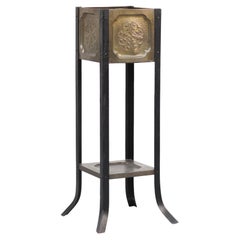
Standing antique jardinière from the 1920s, gracefully shaped and crafted from metal and brass. An elegant and characterful object. 77cm high, 22cm diameter bowl, 32cm diameter base.

Category

Early 20th Century French Art Nouveau Michael Thonet Building and Garden Elements

Materials

Brass, Iron

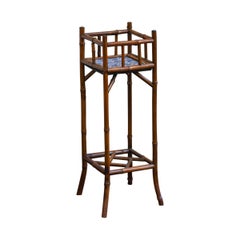
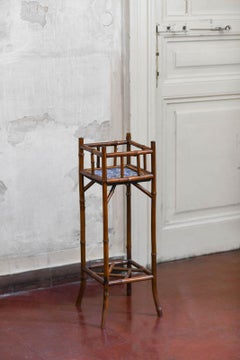
Bamboo Plant Stand
Bamboo Plant Stand

Bamboo Plant Stand

$2,445

H 29.93 in W 9.85 in D 9.85 in

Bamboo Plant Stand

Located in Roma, RM

Bamboo Plant Stand Product details From the residence of Antonello Falqui – Falqui Collection. Quadrangular top inlaid with majolica. Dimensions 25 W x 76 H x 25 D cm

Category

Early 20th Century Michael Thonet Building and Garden Elements

Materials

Maiolica, Bamboo

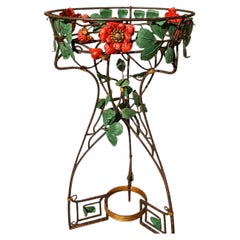
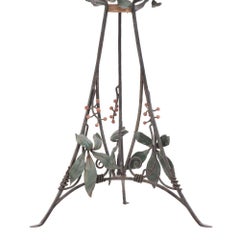
Exceptional Art Nouveau Wrought Iron Plant Stand, circa 1900

Exceptional Art Nouveau Wrought Iron Plant Stand, circa 1900

Located in Antwerp, BE

An exceptional and highly decorative Art Nouveau plant stand, handcrafted in wrought iron around 1900. Beautifully executed with flowing organic lines, the stand is richly adorned wi...

Category

Early 20th Century French Art Nouveau Michael Thonet Building and Garden Elements

Materials

Iron, Wrought Iron

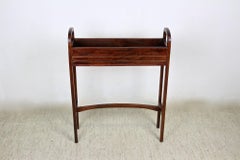
20th Century Art Nouveau Thonet Flower Tub / Plant Stand, Bentwood, AT ca 1915

20th Century Art Nouveau Thonet Flower Tub / Plant Stand, Bentwood, AT ca 1915

By Thonet

Located in Lichtenberg, AT

Beautiful, timeless bentwood plant stand or flower tub made by the famous company of Thonet Vienna. A unique shaped piece from the renowed company in Austria around 1915. Superbly de...

Category

Early 20th Century Austrian Art Nouveau Michael Thonet Building and Garden Elements

Materials

Metal

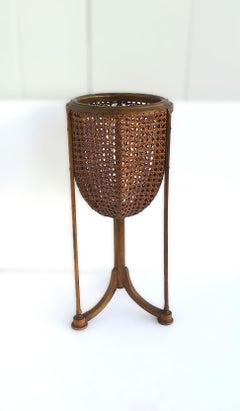
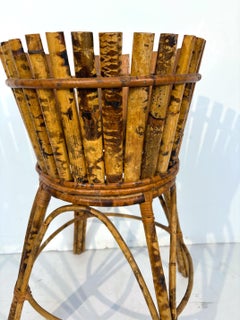
Wicker Cane Plant Stand

Wicker Cane Plant Stand

$780Sale Price|20% Off

H 25.5 in Dm 12 in

Wicker Cane Plant Stand

Located in New York, NY

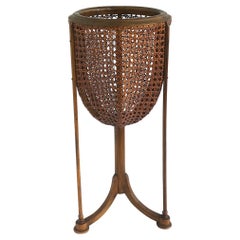
A vintage wicker cane plantstand with tri-pod base/legs, mid-20th century, circa 1960s-1970s. Plantstand has a round funnel-like cane basket supported by a wood frame/tripod base/leg...

Category

Mid-20th Century Michael Thonet Building and Garden Elements

Materials

Wicker, Cane, Wood

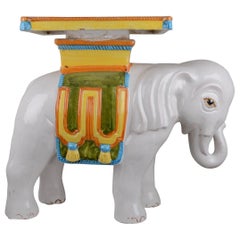
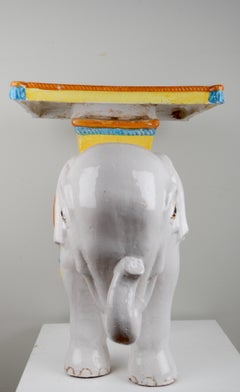
Plant Stand, Faience, 20th Century

Plant Stand, Faience, 20th Century

$1,921

H 19.3 in W 21.26 in D 7.88 in

Plant Stand, Faience, 20th Century

Located in Stockholm, SE

Faience plant stand in form of a elephant, 20th century.

Category

20th Century Unknown Mid-Century Modern Michael Thonet Building and Garden Elements

Materials

Faience

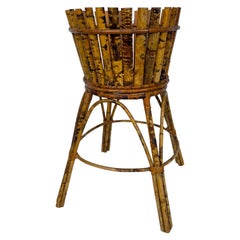
Bamboo Plant Stand
Bamboo Plant Stand

Bamboo Plant Stand

$200

H 25 in W 13.5 in D 13.5 in

Bamboo Plant Stand

Located in Pomona, CA

Bamboo planter with stand.

Category

1960s Asian Vintage Michael Thonet Building and Garden Elements

Materials

Bamboo

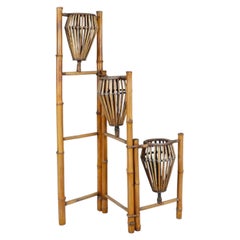
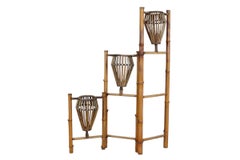
1970’s Folding Bamboo Plant Stand

1970’s Folding Bamboo Plant Stand

$595

H 47.5 in W 27 in D 11 in

1970’s Folding Bamboo Plant Stand

Located in Bradenton, FL

A 1970’s folding bamboo plant stand. Three lantern shaped vases are secured with pins and rattan to bamboo ladder frames at graduated heights. The ladders concertina fold together so vases...

Category

1970s Vintage Michael Thonet Building and Garden Elements

Materials

Bamboo, Rattan

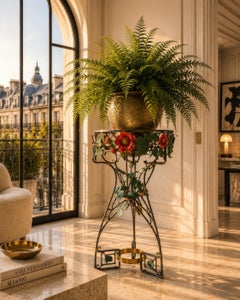
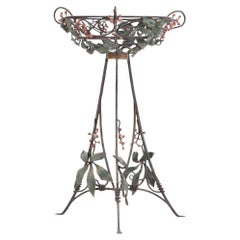
An Art Nouveau style iron plant stand, C. 1950.

An Art Nouveau style iron plant stand, C. 1950.

$1,850

H 33.25 in W 21 in D 21 in

An Art Nouveau style iron plant stand, C. 1950.

Located in Philadelphia, PA

A charming iron planter in the Art Nouveau style! It features gracefully curving lines of open wire work, and decorative painted accents of leaves and berries on the upper bowl suppo...

Category

Mid-20th Century Art Nouveau Michael Thonet Building and Garden Elements

Materials

Iron

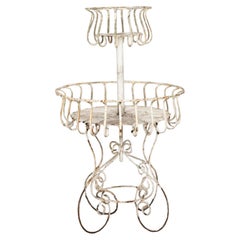
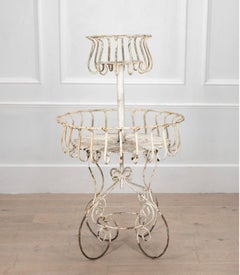
French Iron Two Tiered Plant Stand

French Iron Two Tiered Plant Stand

$1,435

H 53.15 in Dm 29.93 in

French Iron Two Tiered Plant Stand

Located in Haywards Heath, GB

Original paint two tiered plant stand of good size/scale Strong and sturdy 1900

Category

20th Century French Michael Thonet Building and Garden Elements

Materials

Iron

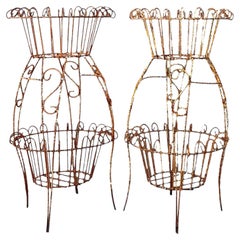
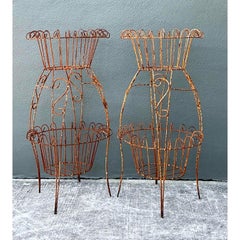
Vintage Distressed Wire Plant Stands - A Pair

Vintage Distressed Wire Plant Stands - A Pair

$1,450 / set

H 36 in W 18.25 in D 18 in

Vintage Distressed Wire Plant Stands - A Pair

Located in West Palm Beach, FL

This striking pair of vintage wire plant stands captures the effortless charm and romantic elegance of French Country garden design. Each stand features a sophisticated two-tier silh...

Category

Mid-20th Century American Rustic Michael Thonet Building and Garden Elements

Materials

Iron

Michael Thonet building and garden elements for sale on 1stDibs.

Michael Thonet building and garden elements are available for sale on 1stDibs. If you’re looking for additional options, many customers also consider building and garden elements by and Werkstätte Carl Auböck.