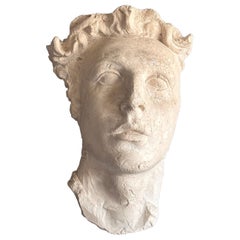
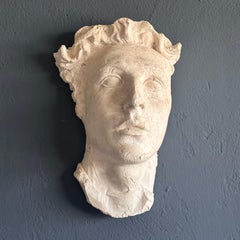
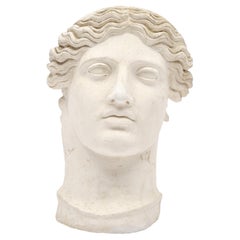
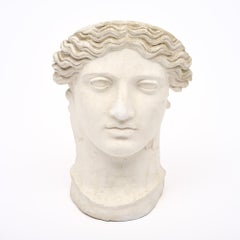
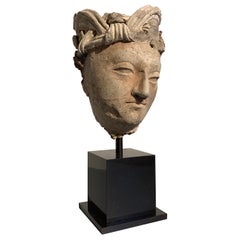
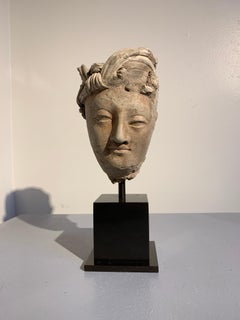
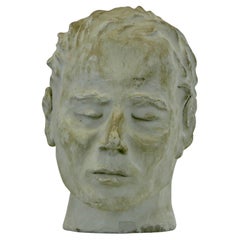
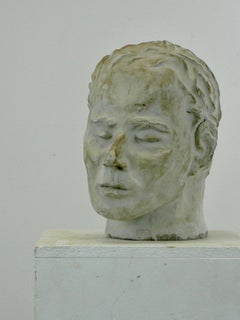
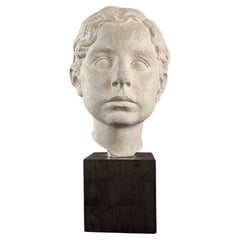
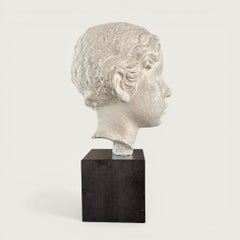
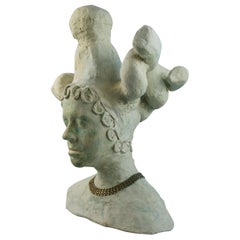
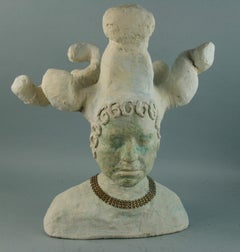
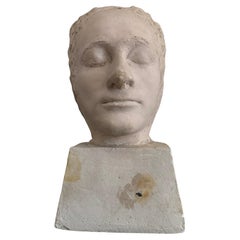
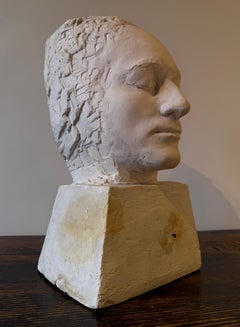
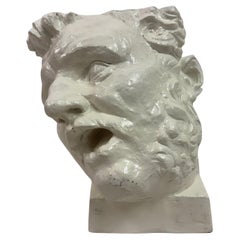
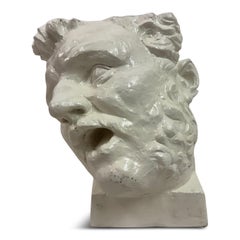
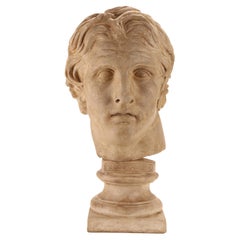
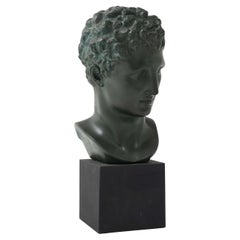
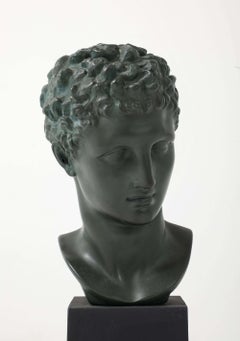
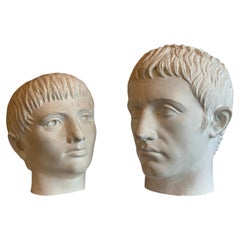
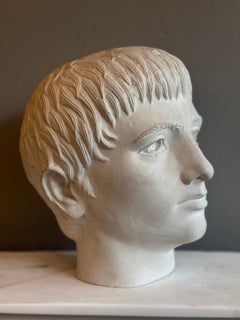
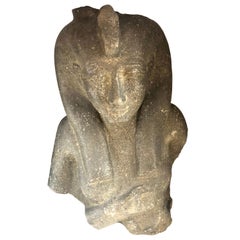
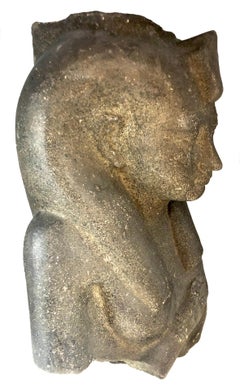
A striking Gandharan molded stucco head of a male Bodhisattva, tentatively identified as Manjushri, ancient region of Gandhara, probably Hadda or surrounding area, 3rd-5th century.
The Bodhisattva is sculpted of stucco in an idealized manner as a youthful male, with soft and kind features, a benign expression on his face. He wears an elaborate pleated turban wrapped around his head, with two sweeping lobes at the front.
His turban secured on one side by a small image of a roaring lion. The lion may be read as a reference to Manjushri, the Bodhisattva of Wisdom, who is often depicted as riding or subduing a roaring lion, a metaphor for taming the wild thoughts of the mind.
Manjushri gazes outwards in a beatific manner from almond shaped eyes, a gentle smile on his lips. The eyes at different levels when looking at the sculpture head on, indicating the original placement of the head was meant to be viewed at an angle.
Remnants of pigments to the eyes, nose, mouth and ears.
Mounted on a custom black metal stand.
Hadda was an important center of Buddhist learning in the early history of Greco Buddhist Gandhara, and at one time may have housed a bone relic of the historical Buddha, Shakyamuni. The sculpture and architecture of Hadda followed Hellenistic artistic conventions faithfully, leading some scholars to believe the distinct Greco Buddhist style of Gandhara was first developed in Hadda before spreading to the rest of the region.
The kingdom of Gandhara was situated at a crossroads of trade and cultures. Being one of the last remnants of Alexander the Great's Empire, the inhabitants of the Greco-Bactrian Buddhist kingdom preserved Greek culture and heritage for centuries after the decline of the Greek Empire...
Category
15th Century and Earlier Afghan Hellenistic Antique Plaster Sculptures