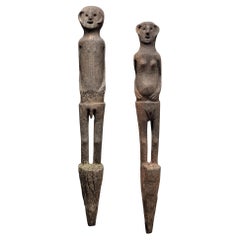
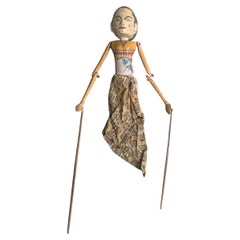
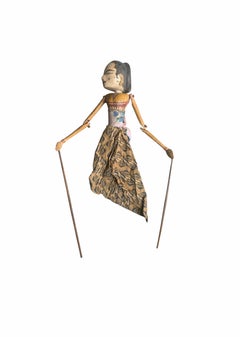
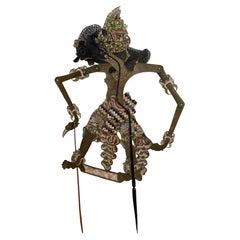
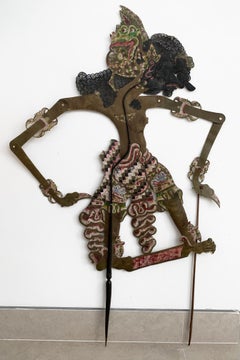
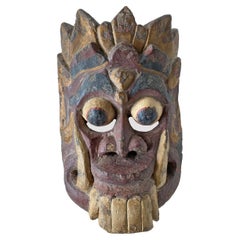
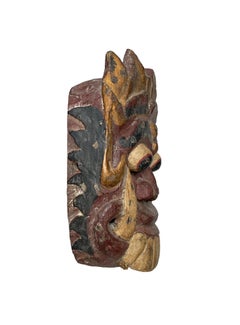
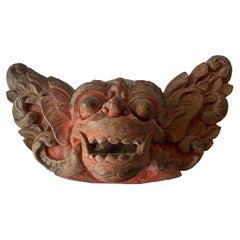
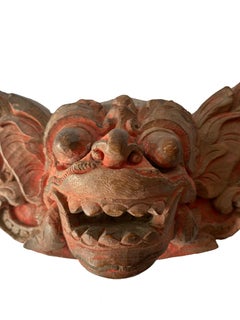
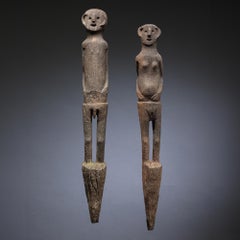
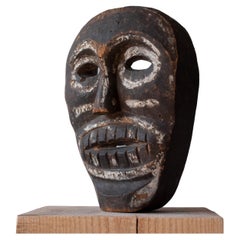
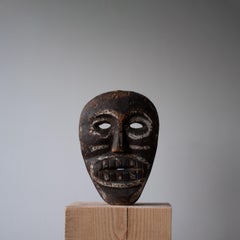
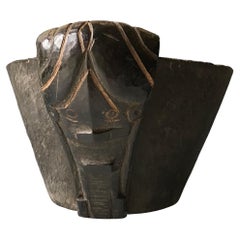
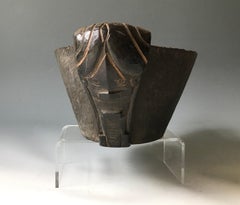
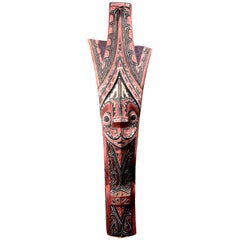
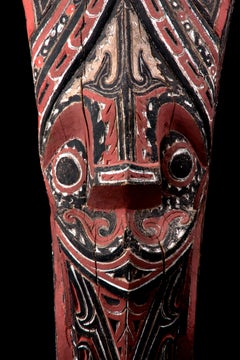
Indonesia, Nias, 19th century
H. 37.5 x W. 10 cm
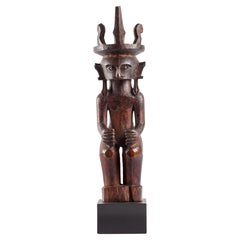
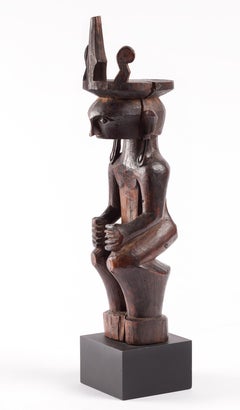
Sculptures like the one present are not only decorative items but are believed to be vessels that house the spirits of ancestors and are used to communicate with them.
After the death of a person a wooden image or Adu Zatua was made to mediate between the human world and the spiritual realm. These kinds of figures were commissioned by noble Nias families, whereas simple and lesser quality carvings generally were found among lower class families.
In this particularly fine example, the sculptor has paid careful attention to the proportions of the different parts of the body, dividing it into three main sections – the head, the torso, and the legs. The shapes are sometimes flat, round, or have notches, but all are perfectly in balance creating a certain divine tranquillity. This Adua Zatua’s ears are decorated with earrings, and it is wearing a headdress, pointing towards a chiefly provenance.
In 1914 the Dutch gained complete control of the island of Nias and started spreading Protestant Christianity. Many ancestor statues...
Category
19th Century Antique Indonesian Folk Art