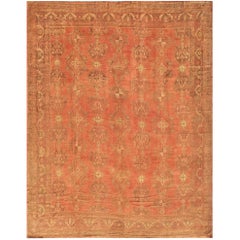
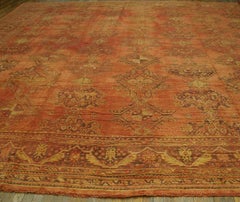
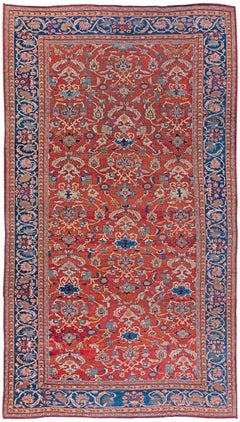
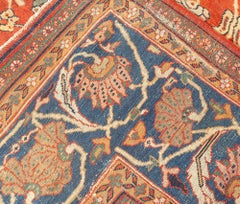
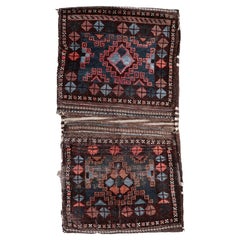
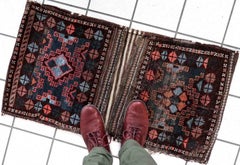
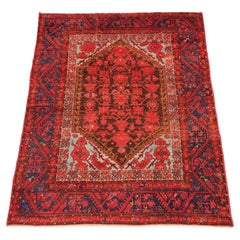
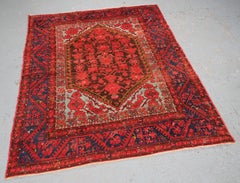
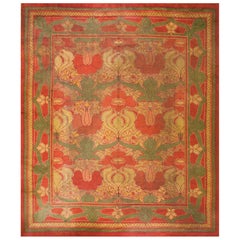
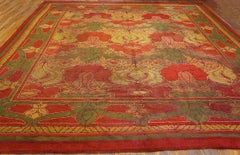
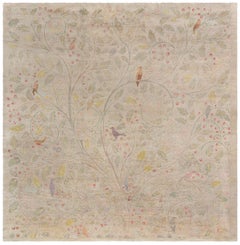
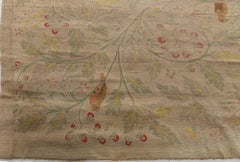
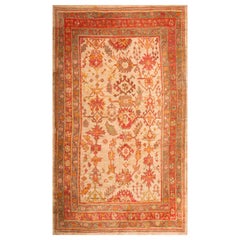
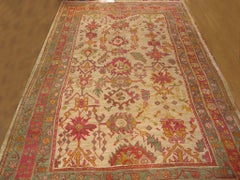
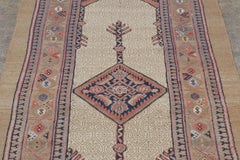
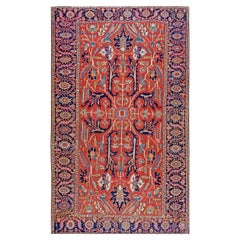
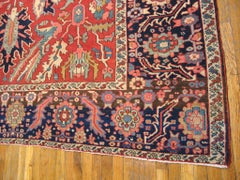
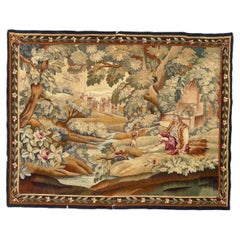
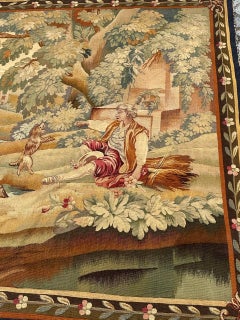
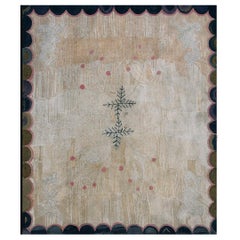
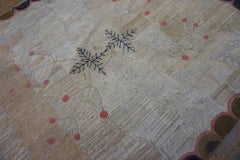
A rare and museum-quality antique Indonesian ikat textile from the island of Sumba in East Nusa Tenggara — a hinggi kombu (men's ceremonial cloth) of exceptional age, cultural significance, and visual power, woven in the late nineteenth or early twentieth century using techniques and motifs that have remained essentially unchanged for centuries.
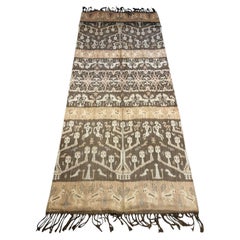
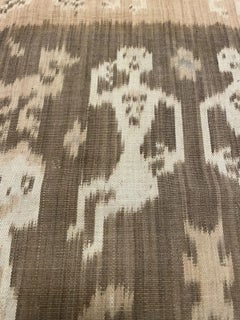
This is a textile of genuine rarity. The central field is dominated by rows of large-scale figurative ancestor motifs — stylized human figures with outstretched arms, rendered in luminous ivory and cream against a deep chocolate-brown ground in the characteristic feathered, bleeding lines of warp ikat resist-dyeing. These figures — associated in Sumba's animist marapu tradition with ancestral spirits, noble clan identity, and the mediation between the living and the dead — represent one of the most prestigious and sought-after motif hierarchies in the entire canon of Indonesian textile art. Their presence in the central field of a hinggi of this scale and quality identifies this cloth as a prestige object, woven for a noble household and used in the most significant ceremonial contexts: mortuary rites, bride price exchanges, and the investiture of clan leaders.
The textile is constructed in the traditional manner: two narrow panels, each woven on a backstrap loom, joined along the center by a fine seam — the standard construction of Sumba hinggi, which are always produced as paired panels and united into a single cloth. The border structure is complex and hierarchical: a multi-register sequence of secondary figurative and foliate ikat bands frames the central field on all sides, each border zone rendered in a different scale and rhythm — dense scrolling motifs in the inner borders, flame and arrow forms in the terminal bands — creating a compositional architecture of great formal sophistication.
The palette is entirely natural dye: deep chocolate brown from soga (the bark of Peltophorum pterocarpum), ivory and cream from undyed natural wool, and accents of slate blue-indigo in the border zones — the classic three-color natural dye palette of East Sumba ikat...
Category
French Antique Early 1900s Rugs and Carpets