Gothic Revival Furniture

Gothic Revival Style

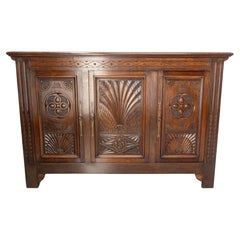
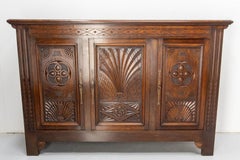
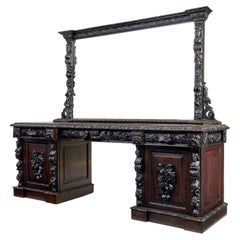
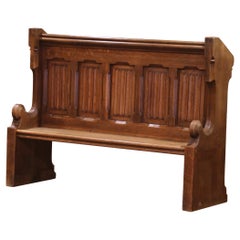
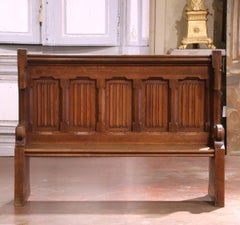
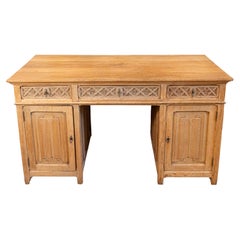
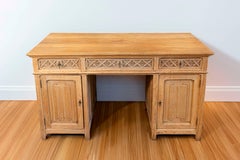
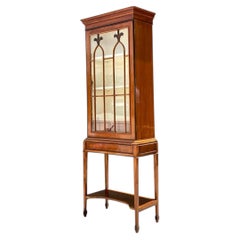
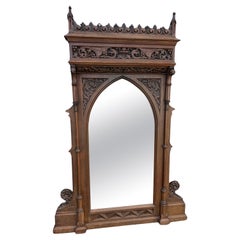
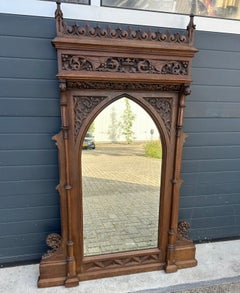
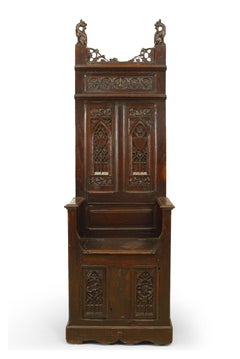
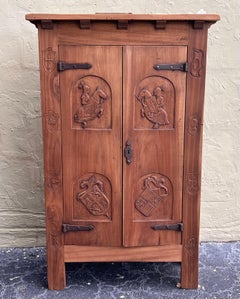
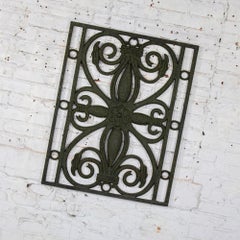
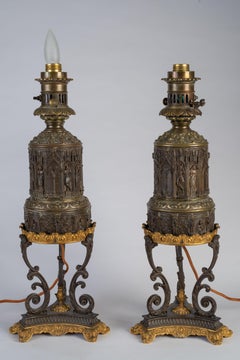
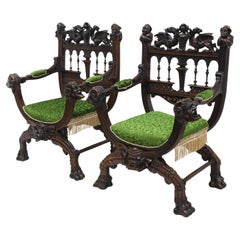
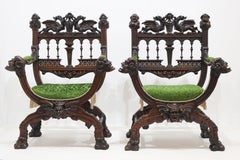
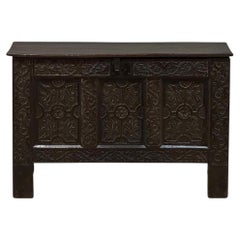
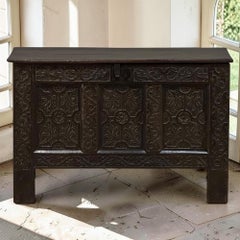
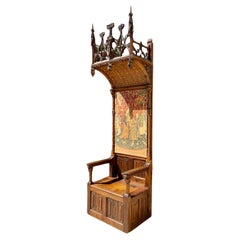
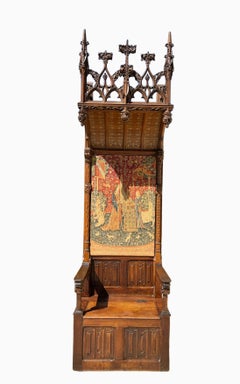
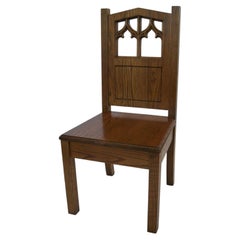
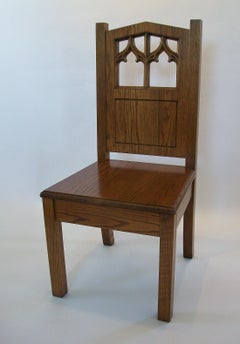
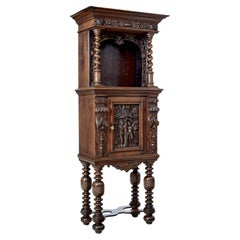
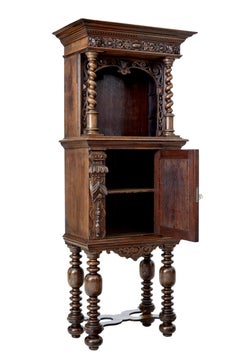
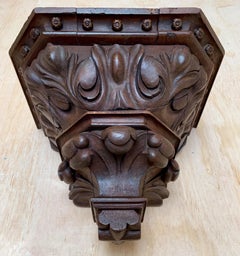
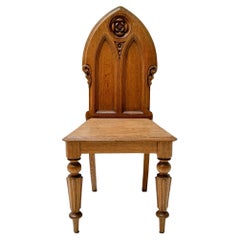
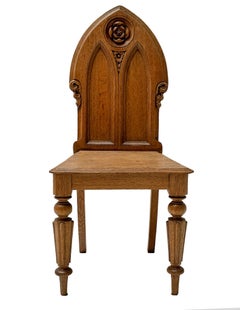
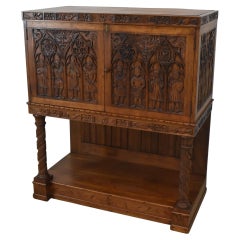
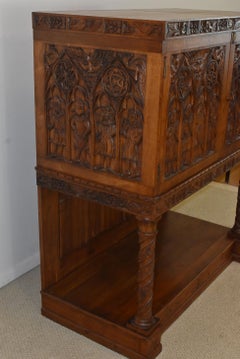
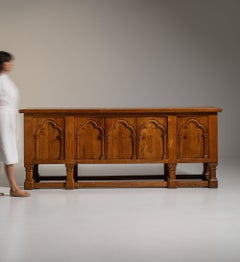
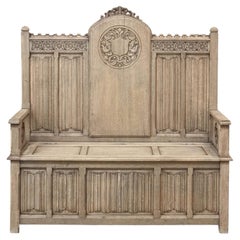
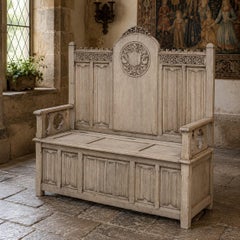
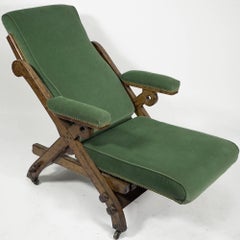
The Gothic Revival movement (also called Victorian Gothic or Neo-Gothic) emerged in Britain in the 1740s, and reached its height in the late-19th century. Gothic Revival furniture's characteristics include such decorative flourishes as pointed arches, floral details, finials, heraldic motifs and linenfold carving.

The movement was rooted in religious and social conservatism. Gothic Revival's proponents, who included Charles Barry and A.W.N. Pugin, the architects of London’s Houses of Parliament (designed in 1840), believed that the art and architecture of the Middle Ages were authentically spiritual and inherently moral.

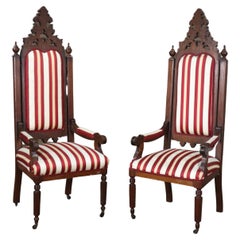
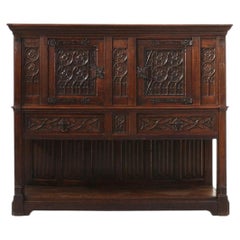
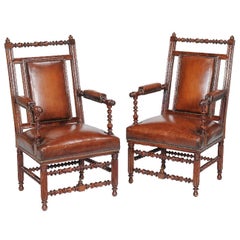
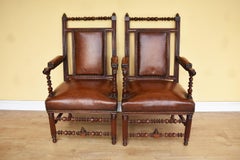
In the United States, the Gothic Revival movement shaped both public buildings and private houses. Numerous American schools were built in the early-19th century in a style now called Collegiate Gothic. Many builders and craftsmen were inspired by Andrew Jackson Downing’s widely read 1850 book Architecture for Country Houses, which posited that a family’s home should exemplify their values — and that the Gothic Revival style was particularly well-suited to scholars and clergymen. Furniture with detailing that mirrored that of Gothic Revival buildings appeared in the same period. Such pieces typically feature dark, intricately carved wood, and upholstery in velvet or leather.

Much like the castles or cathedrals that inspired them, Gothic Revival chairs, bookcases and beds make a bold design statement. And while you probably don’t have to cross a moat or raise a portcullis to get through your front door, a Gothic Revival piece will declare that your home is indeed your castle.

to
157
595
336
935
8
3
197,340
114,854
44,101
33,029
16,202
12,147
10,901
10,829
9,957
8,921
7,338
6,619
6,522
6,392
6,201
6,124
4,923
3,753
12
589
334
11
176
78
23
27
7
21
7
6
12
15
6
3
3
511
450
302
185
122
770
293
232
230
64
946
939
939
14
10
7
5
4
Style: Gothic Revival
RYRIE BROS. - Pierced Sterling Silver Bonbon Dish - Canada - Early 20th Century
Located in Chatham, ON
RYRIE BROTHERS - Antique sterling silver bonbon or nut dish - featuring a pierced quatrefoil basket design on three scrolled feet with a beaded bord...
Category

Early 20th Century Canadian Gothic Revival Furniture

Materials

Sterling Silver

Antique Pair of Brass & Bronze Gothic Wall Picture Frames with Saint Sculptures
Located in Lisse, NL
For the collectors of rare and ready to use Gothic antiques. These beautiful and all handcrafted Gothic Revival picture frames with Biblical texts in Latin are an absolute joy to ow...
Category

Early 20th Century European Gothic Revival Furniture

Materials

Brass, Bronze

Italian Gothic Revival Bookcase or Display Cabinet Wood Glass & Plastic Accents
Located in Topeka, KS
Magnificent 1960’s Italian Gothic Revival walnut toned wood and glass extra-large bookcase or display cabinet with plastic accents. Comprised of 2 pieces, a top hutch with glass shel...
Category

1960s Italian Vintage Gothic Revival Furniture

Materials

Brass

A W N Pugin, after a design by. A late 20th Century Gothic Revival oak table
Located in London, GB
A. W. N. Pugin, after a design by. A late 20th Century Gothic Revival oak table. Of the type that Pugin instructed was to be made for "poor vicars". He asked the furniture maker John...
Category

1990s English Gothic Revival Furniture

Materials

Oak

Antique English Window Seat Bed Bench Gothic Revival Carved Oak 2 Drawers c.1900
Located in Tyler, TX
Charming antique English oak window seat or end-of-bed bench~~Gothic Revival~~two drawers ~~c. 1900 Classic British flair decorator piece~~NICELY CARVED with Gothic crown...
Category

Early 1900s English Antique Gothic Revival Furniture

Materials

Oak

Vintage Italian Sterling Silver Picture or Mirror Frame with Ornate Gothic Motif
Located in Hamilton, Ontario
This vintage picture or mirror frame is signed by an unknown maker and presumed to have originated from Italy and date to approximately 1970 and done in a Gothic Revival style. The f...
Category

Mid-20th Century Italian Gothic Revival Furniture

Materials

Sterling Silver

Stunning Antique Gothic Revival Hand Carved Elm Wood Blanket Chest / Trunk 1750
Located in Lisse, NL
Great looking and patina antique Gothic trunk, made of solid elmwood. This impressive looking and practical size chest shows a number of deep and...
Category

Early 18th Century Spanish Antique Gothic Revival Furniture

Materials

Wrought Iron

Gothic Revival Oak Draw Leaf Dining Table
Located in Essex, MA
With a rectangular top with two pull out extensions. The top in a parquet pattern. The apron of the table with carved gothic tracery supported on carved legs headed by ionic capitols...
Category

1880s English Antique Gothic Revival Furniture

Materials

Oak

19th Century Belgian Gothic Revival Carved Dark Oak Bar Cabinet
Located in South Bend, IN
A gorgeous Gothic or Renaissance Revival bar cabinet Belgium, Circa Late 19th Century Carved dark oak, with original iron hardware. Measures: 18.25"W x 15"D x 51.25"H. Go...
Category

Late 19th Century Belgian Antique Gothic Revival Furniture

Materials

Iron

Antique and Handcrafted Gothic Revival Solid Tiger Oak Practical Hallway Bench
Located in Lisse, NL
Perfect size and shape church bench. This very well crafted, solid oak bench is a perfect example of quality made European furniture from the late 1900's. We felt very fortunate to ...
Category

Late 19th Century European Antique Gothic Revival Furniture

Materials

Oak

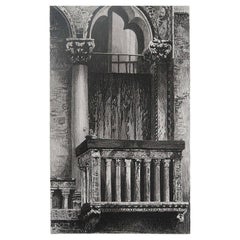
"Watching the People Below" Etching by John Taylor Arms
Located in Toledo, OH
This etching by John Taylor Arms titled "Watching the People Below." John Taylor Arms(1887-1953) was a famous printmaker in the early 20th century. This piece features a griffin o to...
Category

1920s Vintage Gothic Revival Furniture

Materials

Paper

Victorian Gothic Hall Tree Coat Rack with Mirror w Cast Iron Umbrella Stand
Located in Port Jervis, NY
Fabulous Victorian Gothic hall tree with a mirror and a cast iron umbrella tray. Four brass coat hooks with porcelain tips. Fresh black paint, grey on...
Category

1870s American Antique Gothic Revival Furniture

Materials

Brass, Iron

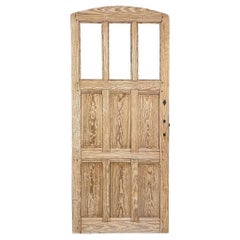
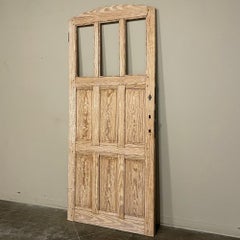
English Gothic Revival Oak Arched Exterior Door for Glazing
Located in Wormelow, Herefordshire
A substantial unglazed solid English oak arched exterior door in the gothic revival style. This door comes without glass, ready from custom-glazing as you desire, and includes a matc...
Category

Late 19th Century English Antique Gothic Revival Furniture

Materials

Wood, Oak
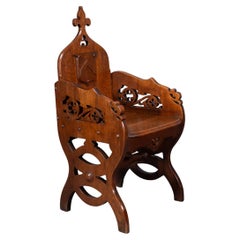
A W N Pugin, probably made by Gillows of Lancaster A Gothic Revival oak armchair
Located in London, GB
A W N Pugin, probably made by Gillows of Lancaster for the House of Lords London. A Gothic Revival oak armchair with carved rosettes to the headrest, and each side of the arms, and u...
Category

1860s English Antique Gothic Revival Furniture

Materials

Oak
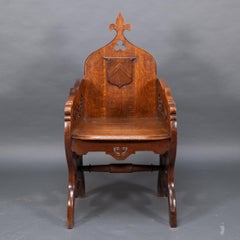
19th C Highly Carved English Oak Bench Hall Seat w Lions & Dragons + Storage

Located in Port Jervis, NY
Fantastic highly carved Gothic Oak hall bench with full lions and winged dragons on the back panel. Full body mythic lions make up the armrests while the back panel has swirling drag...
Category

1860s Scottish Antique Gothic Revival Furniture

Materials

Brass

Gothic Revival Oak Library Bookcase
Located in Petworth, GB
Magnificent Gothic Revival library bookcase. In oak with 4 linen fold panel doors and Tudor rose carved detailing Castellated top and carved corner motifs to upper doors Cast bras...
Category

1850s English Antique Gothic Revival Furniture

Materials

Brass

A Belgian carved stone finial, C. 1850.
Located in Philadelphia, PA
This finely detailed Gothic Revival finial or spire will be a stately addition to your garden or serve as a statement for your interior. The changing profile with its layers of folia...
Category

Mid-19th Century Belgian Antique Gothic Revival Furniture

Materials

Stone

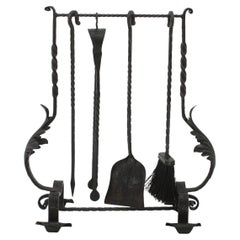
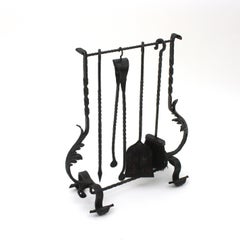
Wrought Iron and Cast Bronze Gothic Fireplace Tool Set c. 19th C.
By Samuel Yellin
Located in New York, NY
Exceptional 19th century set of wrought iron and cast bronze fireplace tools, with dragon, griffin handles. The set features inscribed line drawn decorative surfaces, with twisted an...
Category

19th Century French Antique Gothic Revival Furniture

Materials

Bronze, Wrought Iron

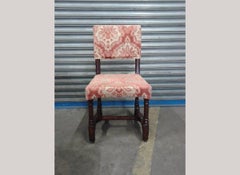
Charles Bevan attributed. A gothic Revival side chair with chamfered edges
Located in London, GB
Charles Bevan attributed. A gothic Revival side chair with chamfered edges, and ebonized dot decoration to the lower back, and to the front and back seat corners. With ring turned su...
Category

1870s English Antique Gothic Revival Furniture

Materials

Walnut

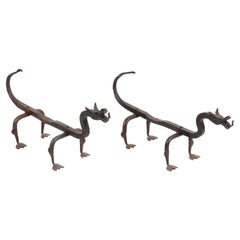
Italian Wrought Iron Dragon Andirons, 1920s
Located in Milan, IT
Italian wrought iron Dragon Andirons, 1920s Beautiful Hand Craftmanship.
Category

1920s Italian Vintage Gothic Revival Furniture

Materials

Wrought Iron

Signed Oscar Bach Large Ornate Lion Head with Scrolls Bronze & Upholstery Bench
Located in St. Louis, MO
Scarce bronze hall bench designed by famed designer Oscar Bruno Bach (1884-1957). Over 6' bench with lion head, hand wrought, hammered, twisted bronze and fret work on faux leopard p...
Category

1930s American Vintage Gothic Revival Furniture

Materials

Bronze

Rare Medieval Style Hand-Forged Wrought Iron Dragon Chandelier - Candle Holder
Located in Lisse, NL
Great quality, early 1900s hand-horged wrought iron dragon chandelier Medieval / Gothic style / candle holder / electrification Optional. This stunning early 20th-century wrought i...
Category

Early 20th Century European Gothic Revival Furniture

Materials

Wrought Iron

Hendrik Petrus Berlage. Dutch. A set of four Gothic Revival oak side chairs
By Hendrik Petrus Berlage
Located in London, GB
Hendrik Petrus Berlage. Dutch. A captivating set of four Gothic Revival oak side chairs with a progressive architectural A frame design to the...
Category

Early 1900s Dutch Antique Gothic Revival Furniture

Materials

Oak

Antique Greek Goddess Plaque Bas Relief Neo-Gothic Revival 29cm
Located in Poperinge, BE
Beautiful antique gilt bronze plaque in bas relief of a Greek goddess depicted with wings, probably the goddess Clio, the plaque is mounted on a hardwood carving in neo-Gothic reviva...
Category

Late 19th Century European Antique Gothic Revival Furniture

Materials

Bronze, Gold Leaf

Bruce Talbert, Gillows, Two Rare Gothic Revival Oak Armchair in Blue Upholstery.
Located in London, GB
Bruce Talbert. Gillows of Lancaster. Two rare Gothic Revival armchairs. *The two with dark and light blue upholstery shown here are available, the one with brown upholstery is now s...
Category

1860s English Antique Gothic Revival Furniture

Materials

Oak

Antique Gothic Oak Desk with Leather Top
Located in Dallas, TX
Antique Gothic oak desk with leather top is atypical for the style, being raised up on turned legs and a classic "H" support, rather than sporting floo...
Category

Early 20th Century Belgian Gothic Revival Furniture

Materials

Oak

Morris and Co, In the style of, An Aesthetic Movement Gilt Marble Mantle Clock
Located in London, GB
Morris and Co, In the style of, An Aesthetic Movement noir belge and red Marble gilded mantle or bracket clock with an important Gay Vicarino & Co French...
Category

Mid-19th Century British Antique Gothic Revival Furniture

Materials

Marble, Belgian Black Marble

19th Spanish Carved Gargoyles Walnut Renaissance Library / Writing or Desk Table
Located in Miami, FL
In grand, gothic style, this Spanish library / writing table has a deeply carved edge and this is just the tip of the proverbial iceberg, as the carving never really stops. It goes o...
Category

Late 19th Century Spanish Antique Gothic Revival Furniture

Materials

Walnut

French Vintage Oak & Wrought Iron Buffet Neogothic Style Basque Cross Midcentury
Located in Labrit, Landes
French oak sideboard buffet in the neogothic style. From South of France Basque country (area near Spain). Goes very well with Spanish style déc...
Category

1960s French Vintage Gothic Revival Furniture

Materials

Oak

Substantial Gothic Oak Alter Table
Located in Cheshire, GB
Substantial oak alter / hall table, of architectural form with very large rectangular top, above pierced Gothic freeze raised on trestle legs united by carved trefoil stretcher. Dimensions: Height 36...
Category

Late 19th Century British Antique Gothic Revival Furniture

Materials

Oak

Substantial Gothic Oak Alter Table
$3,535 Sale Price
32% Off
1940s Gilt Iron Spanish Drinks Table / Martini Table / Gueridon with Handle
Located in Barcelona, ES
Elegant hand-hammered iron drinks end table or pedestal table standing on a tripod base with handle on the top. Spain, 1940s. This table features a round top richly adorned by the Ha...
Category

Mid-20th Century Spanish Gothic Revival Furniture

Materials

Iron, Wrought Iron, Gold Leaf

19th Century Wrought and Cast Iron Illuminated Neo-Gothic Overdoor
Located in Hastings, GB
One of the most outstanding pieces of ironwork we have ever seen, truly a one off spectacular mid-19th century iron overdoor, sourced from a Scottish estate this bespoke overdoor exp...
Category

Mid-19th Century Scottish Antique Gothic Revival Furniture

Materials

Wrought Iron

Set of Nine Gothic Revival Dining Chairs
Located in Dekalb, IL
Upholstered Victorian-inspired dining chair set. Have you ever hosted a vampire family for dinner and realized you didn't have appropriate seating? Well these Gothic Revival chairs ...
Category

Late 19th Century American Antique Gothic Revival Furniture

Materials

Leather, Walnut

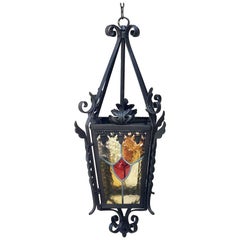
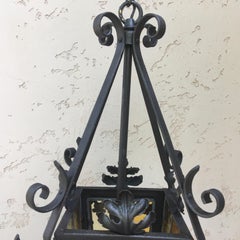
Antique & Good Size Gothic Revival Wrought Iron & Cathedral Glass Lantern 1920s
Located in Lisse, NL
Stunning, top quality made and all original antique pendant in the Gothic style. If you are a collector of rare and ancient looking Gothic antiques then this good size and possibly ...
Category

Early 20th Century French Gothic Revival Furniture

Materials

Metal, Wrought Iron

Lambs of Manchester. A Gothic Revival Bedside Cabinet with Carved Floral Details
Located in London, GB
Lambs of Manchester. A Gothic Revival Bedside Cabinet in the style of Bruce Talbert with stylized brass hinges and handle and carved details to the side vents which double up for mov...
Category

Late 19th Century English Antique Gothic Revival Furniture

Materials

Ash

Flemish 19th century carved oak gothic revival dining table and benches
Located in Debenham, Suffolk
19th century Flemish carved oak dining table and benches circa 1890. Excellent quality green man trestle dining table and matching benches.  Simple plain oak top with moulded edges,...
Category

Late 19th Century Belgian Antique Gothic Revival Furniture

Materials

Oak

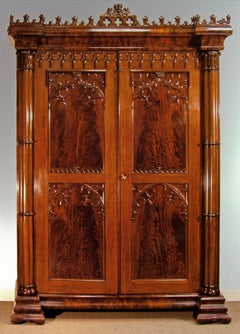
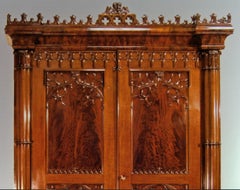
Gothic Armoire
Located in New York, NY
FAPG 19959D/2 Gothic Revival armoire New York, about 1835-1840 Mahogany, with brass hardware Measure: 104 in. high, 73 in. wide, 30 in. deep Exhibited: Hirschl & Adler Galleries, New York, 2011–12, The World of Duncan Phyfe: The Arts of New York, 1800–1847, p. 89 no. 45 illus. 89 Ex coll.: Private collection (probably R. H. Selstadt, Big Stone Gap, Virginia) Although no specific pieces of Gothic furniture documented as by Duncan Phyfe have come to light, there is considerable evidence that he, like various of his contemporaries in New York, embraced the Gothic style. For example, the catalogue of the Halliday & Jenkins auction sale of the contents of Phyfe’s furniture ware rooms, which was held on site at 192 and 194 Fulton Street, New York, on April 16 and 17, 1847, included a “mahogany centre table Gothic gilt pillar and Egyptian marble top” (Halliday & Jenkins, p. 3 no. 63); “12 mahogany Gothic chairs...
Category

19th Century American Antique Gothic Revival Furniture

Materials

Brass

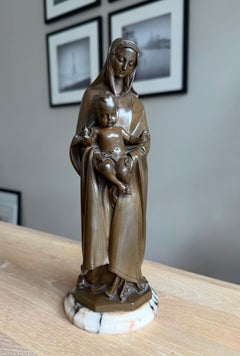
Vintage Wrought Iron Frame with Leaded Glass Wall Fixture, Madonna & Child
Located in Lisse, NL
Meaningful and exceptional quality leaded glass wall fixture, with painted Madonna & Child. This work of religious art from the early 1950s combines masterful craftsmanship with tim...
Category

Mid-20th Century European Gothic Revival Furniture

Materials

Blown Glass, Paint

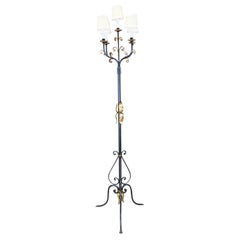
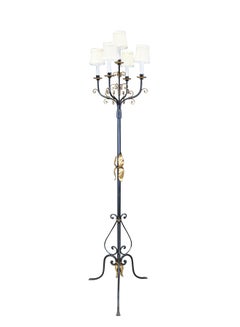
Vintage French Gothic Revival Scrolled Iron Torchiere Candelabra Floor Lamp 81"
Located in Dayton, OH
Tall vintage French Gothic Revival five light floor lamp featuring scrolled black iron with gold acanthus accents and a five arm candlestick cand...
Category

Late 20th Century Gothic Revival Furniture

Materials

Iron

Gothic Revival Ebonized Lion's Head Pedestal
Located in Riverdale, NY
Elegant Gothic Revival ebonized pedestal from the 19th century. Carved Lion heads are set on 4 sides with carved paw feet at base. Ebonized carved wood. 1870s USA. Measures: top 14...
Category

1870s American Antique Gothic Revival Furniture

Materials

Wood

19th Century Gothic Revival Stool / Side table
Located in Hoddesdon, GB
19th-century French Gothic revival carved, oak side table/stool. Good condition with signs of age and use. Dimensions: 26 cm x 27 cm x 41 cm
Category

Late 19th Century French Antique Gothic Revival Furniture

Materials

Oak

19th Century French Gothic Revival Hall Tree ~ Coat Rack
Located in Dallas, TX
19th Century French Gothic Revival Hall Tree ~ Coat Rack is a marvel of style and flair, executed in quarter sawn oak and exquisitely wrought ...
Category

1870s French Antique Gothic Revival Furniture

Materials

Wrought Iron

Gothic Revival Oak Hall Bench c1880
Located in High Peak, GB
St016 Victorian Gothic Revival hall bench in solid oak, having panelled back, sloping sides and lift up seat enclosing storage compartment above panelled base. This antique hall benc...
Category

19th Century English Antique Gothic Revival Furniture

Materials

Oak

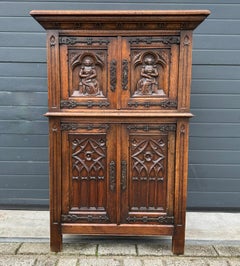
Neo-Gothic Oak Cabinet with Rich Carvings and Hidden Storage, France, Circa 1850
Located in North Miami, FL
This remarkable Neo-Gothic oak cabinet, crafted in France circa 1850, features exquisite detailing and hidden storage. Made from warm, dark oak wood...
Category

19th Century French Antique Gothic Revival Furniture

Materials

Brass

Coppia di applique in stile Neogotico
Located in Lugo, IT
Coppia di applique. Dal peso possibile bronzo dorato. Possibile stile Neogotico. Il diffusore in vetro con molature di foglie e uva. Stampo; Mod Brev; Modello brevettato buone condiz...
Category

1950s Italian Vintage Gothic Revival Furniture

Materials

Bronze

Rare Gothic Revival Embossed Brass Eagle Sculpture Church Altar Bible Stand
Located in Lisse, NL
Stunning and sculptural, Arts & Crafts era, church bible or book stand. This late 1800s bible stand has beautiful details and it is in remarkably good condition. The stunning overal...
Category

Late 19th Century European Antique Gothic Revival Furniture

Materials

Brass

Charles Bevan Style of Gothic Revival Bedside Cab with Inlaid Details Throughout
Located in London, GB
Charles Bevan In the style of. A Gothic Revival oak bedside cupboard with chevron inlaid details throughout and 45 degree planking to the sides.
Category

1880s English Antique Gothic Revival Furniture

Materials

Oak

Antique Carved Oak Church, Gothic Revival Studio Easel Display Stand or Pedestal
Located in Lisse, NL
Unique Gothic Revival two shelf sculpture stand with a beautiful patina. This impressive and adjustable Gothic stand dates from circa 1890. To find this rare and sizeable antique mo...
Category

Late 19th Century French Antique Gothic Revival Furniture

Materials

Wood, Oak
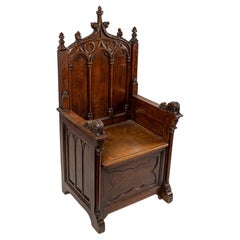
Second Empire Gothic Cathedral Clock and Garniture
By Pierre-François Feuchère
Located in Vancouver, British Columbia
A mid 19 century French Gilt Bronze Gothic style mantel clock and garniture which the French call " A la Cathedrale". The three pieces are of finely chased and gilded bronze; the cl...
Category

Mid-19th Century French Antique Gothic Revival Furniture

Materials

Bronze

Enormous Antique Bronze Eagle Sculpture Church Bible Stand or Saint John Lectern
Located in Lisse, NL
*Note that we arrange the shipping ourselves to ensure a smooth, secure, and reliable delivery. This allows us to provide the best possible service and care for your purchase. Monumental Bronze Eagle Lectern Sculpture .. Symbol of Saint John the Evangelist, Church Relic, ca. 1900 For the true connoisseur of ecclesiastical antiques and meaningful design, this remarkable bronze eagle sculpture offers a rare opportunity to own an object that is both spiritually symbolic and visually commanding. Originally crafted as a Bible lectern...
Category

19th Century European Antique Gothic Revival Furniture

Materials

Bronze

PAIR OF ANTIQUE ViCTORIAN 1880 CONTINENTAL JACOBEAN GOTHIC REVIVAL BOOKCASES
Located in West Sussex, Pulborough
Royal House Antiques Royal House Antiques is delighted to offer for this lovely pair of stunning circa 1860-1880 hand carved Continental Oak, Library bookcase cabinets in the Jacobe...
Category

1880s English Antique Gothic Revival Furniture

Materials

Oak
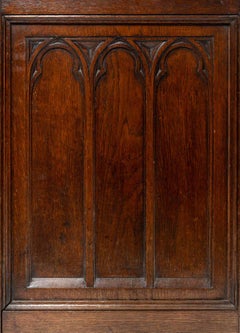
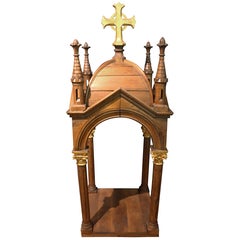
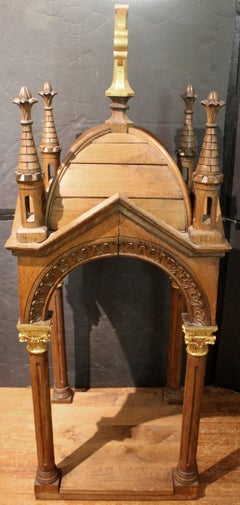
Circa 1880 French Gothic Style Baldachin or Statuary Niche
Located in Chapel Hill, NC
Circa 1880 French Gothic style Baldachin or Statuary Niche. Derived from canopies for processions, the term has come to signify all such coverings, most famously the Bernini high alt...
Category

1880s French Antique Gothic Revival Furniture

Materials

Gold Leaf

Charles Bevan attr. A set of five Gothic Revival oak dining chairs & an armchair
Located in London, GB
Charles Bevan for Marsh Jones and Cribb, attributed. A good quality set of six Gothic Revival oak dining chairs with geometric dot and...
Category

1870s English Antique Gothic Revival Furniture

Materials

Oak
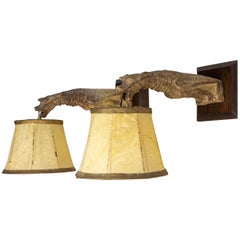
J P Seddon, Exhibited Crystal Palace 1851. Six Gothic Revival oak dining chairs
Located in London, GB
John Pollard Seddon (1827-1906), six Gothic Revival oak dining chairs. These upholstered dining chairs are the side chairs en suite t...
Category

1850s Antique Gothic Revival Furniture

Materials

Oak

Pair of large brass church candelabra in patinated brass, France circa 1880
By Eugène Emmanuel Viollet Le Duc
Located in Paris, FR
Impressive pair of large neo-Gothic church candelabras with eleven candle holders on three levels, in finely cut brass and bronze, decorated with leaves, flowers, scrolls, lily flowers and glass beads. Lion claw feet. In the spirit of Viollet Le Duc...
Category

1880s French Antique Gothic Revival Furniture

Materials

Brass, Bronze

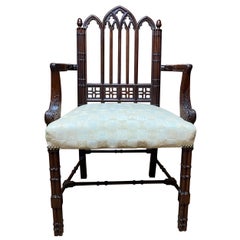
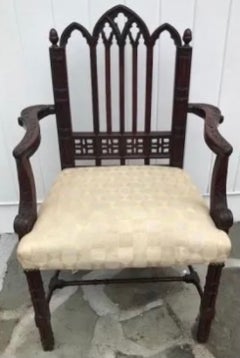
Neo-Gothic Walnut Armchair, 19th Century
Located in Saint-Ouen, FR
Neo-Gothic walnut armchair, 19th century Large neo-Gothic walnut armchair, 19th century, cathedral seat. H: 126 cm, W: 63 cm, D: 50 cm
Category

Mid-19th Century French Antique Gothic Revival Furniture

Materials

Walnut

Antique Victorian Gothic Revival Solid Oak Swivel Desk Chair
Located in London, GB
A superb antique Victorian Gothic revival solid oak swivel desk chair, made in England and dating from around the 1870-1880 period. This is of outstanding quality, it is beautifully...
Category

1870s British Antique Gothic Revival Furniture

Materials

Oak

Stunning & Powerful Altar Crucifix with Detailed Bronze Sculpture of Christ 1912
Located in Lisse, NL
Unique table crucifix and a wonderful work of religious art, dated 1912 and numbered. For us the most powerful statement will always be 'the truth will set you free'. It is what we have learned most from the life of Christ and of His teachings and it is the one thing we always think about whenever we look at a crucifix. Anyone who has tried to break down his/her ego and found a clearer consciousness in the process knows how healing and rewarding that journey can be. After that you can only be grateful for all the good things that are bound to come your way. Good things will come your way, because the universe needs people like you. Whomever created this amazing work of religious art too must have been inspired and motivated by the life of Christ, because how ever could anyone create a piece that is of such quality, so beautiful and so powerful at the same time. Both the beautifully designed bronze cross with the King of the Jews inscription and the amazingly detailed bronze corpus of Christ are of a quality that you will only rarely find on the open market. They are perfectly mounted on a stunning marble base and together they create one of the most impressive table or altar crucifixes...
Category

Early 20th Century European Gothic Revival Furniture

Materials

Marble, Bronze

Selection of eight restored 19th C Neo-Gothic Stained-Glass Windows
Located in Leuven , BE
The Color Experience: Stained-glass windows “Color is a power which directly influences the soul” (Wassili Kandinsky, Moskou 1866 – Neuilly-sur-Seine, 1944) “Color! What a deep and mysterious language, the language of dreams!” (« La couleur ! Quelle langue profonde et mystérieuse, le langage des rêves », Paul Gauguin, Paris, 1848-Fatu-Hiva, 1903) ‘Color and feeling’, ‘color and meaning’, these are concepts that have gone together since time immemorial. Artists and craftsmen have a special bond with color. After all, it is a means of expression that can have a real reinforcing effect. Especially linking color with light offers unlimited possibilities. Glaziers and glass painters have tried to master both these ‘instruments’ for centuries. The set of beautifully restored neo-Gothic windows in our collection are enough reason for us to let these works of art figure in a broader story. As a bonus, we would like to introduce you to the contemporary stained-glass artist and stained-glass restorer, Daniël Theys. whose workshop is in Sint-Pieters-Rode (Belgium). He talked to us about the materials and techniques he used for the restoration of our set of neo-Gothic stained-glass windows. A fascinating look at the tricks of the trade from a specialist! A bird’s eye view of the history of the European stained-glass window. Although the Romans already used translucent glass plates to cover wall openings, the stained-glass window reached its peak in Europe between 1150 and 1500. A period also known as the era of the cathedrals. At that time, stained-glass windows became more than just a way to let in the light, and to keep the space closed off. From now on, their functionality was also found in their didactic value. The biblical and saints’ stories that adorned the stained-glass windows became a kind of poor man’s bible. They brought, as it were, the knowledge of the holy scriptures in an understandable, pictorial way. At the same time, the colored light provided additional symbolism. The invading light was interpreted as a manifestation of God. It is also no coincidence that the main altar was bathed in light. It was the place where the most important sacrament was celebrated, that of the Eucharist. How were these magical colors obtained? Well, during the 12th and 13th centuries, metal oxides gave color to the glass. Copper, for example, produced different colors in the various stages of oxidation. The metal could color the glass light blue, green and even red. It should be noted that from the 13th century onwards, clear glass, which was cheaper and at the same time allowed more light into the buildings, was used more often. A century later, in the years 1400 to 1500, glass painters frequently painted onto the glass with a ‘stain’ of silver chloride or sulfide. The painted piece of glass was heat-treated in a furnace. The heating process ensured that the silver ions migrated into the glass and became suspended within the glass network. The stain gave colors ranging from a pale yellow to a rather deep red. This new technique allowed glaziers to get more than one color on a single glass fragment. The shades produced by painting in silver chloride were well suited for depicting golden crowns, scepters and other gilded objects and ornaments. But the most important advantage of the technique was the fact that the glass painter could now make transitions from yellow tones to white without having to apply separations with lead strips! This also improved the legibility of the pictured scene. You can imagine that the labor-intensive process of the production of stained-glass windows was a very costly affair and therefore it was often patrons who donated them to a church or a chapel. The benefactors were usually eager to propagate their social status and were moved by concern for their salvation. In the 16th century, stained-glass windows also began to appear in secular buildings such as town halls, the homes of the wealthy and commercial premises such as inns. It is striking that during this period the use of lead strips that border many parts of the image was further reduced in favor of real painting on stained glass. This was due to an increasing love of detail. For example, one wanted realistically painted portrait heads. Working with enamel paints was cumbersome. Each newly applied color had to be burned into the glass before another color or overpainting could be applied. It was not only the coloring of the glass that was complicated, the process of obtaining flat glass plates required many steps as well. The glazier blew a glass bulb with a blowpipe and then cut it open. Finally, each half of the sphere was turned around so fast that it became a disc. In later periods, the glazier blew out his glass bulb into a cylinder. Once the cylinder had cooled, its closed ends were removed, and the long sides were cut open. The pieces of glass obtained were then heated and flattened. During the 16th century, there was a division of labor between the stained-glass designer, the glazier, and the glass painter. It happened as well that the stained-glass artist used prints as models for his stained-glass windows. Whoever drew the design, the glazier always needed a model on the right scale, the so-called cartoon. On the cartoon, the lead strips were clearly marked, and the use of colors was indicated. Contracts at the time show that the price of stained-glass windows was calculated per square foot. The price per square foot included the labor and material costs. The price of the cartoon was not included. In the 17th century, the work of glass painters remained important. At the same time, there was a growing popularity of stained-glass windows with heraldic themes. In the Low Countries there were several high-quality glass painters active. During the 18th century, glass painting went downhill in our regions. The French occupation of the Southern Netherlands resulted in the destruction and sale of religious stained-glass windows. It was only around the middle of the 19th century that the young Belgian state experienced a revival of stained glass. The renewed interest in the Middle Ages, the so-called ‘gothic revival’, caused a wave of restoration of old stained-glass windows of churches and orders for neo-gothic stained-glass windows. The Sint-Lucas art schools in Belgium played an important role in this. Industrial developments in the glass and steel industries naturally had an important hand in the popularity of stained-glass windows. Stained-glass had a wide range of uses; think of stained glasses in winter gardens, domes, windows, and doors of large mansions. Significant glazier’ studios arose in several larger Belgian cities. In Brussels, for example, you had the workshops of Capronnier and Colpaert, in Bruges the studios of Coucke and Dobbelaere, in Ghent the companies of Ganton-Defoin or Ladon. During the 19th century, glaziers followed the style developments in the visual arts. For example, the number of windows in Art Nouveau and Art Deco style is large. The restored stained-glass windows with male and female saints that we offer for sale, come from a building in Laeken, near Brussels. They probably decorated the space of a church, chapel, convent, or Catholic school. In the results of the interview with glass restorer Daniël Theys, you will learn more about the particularities of these splendid windows. Chatting and browsing in the workshop of Daniël Theys The Belgian Glass restorer and glass blower, Daniël Theys (), made a career switch at a later age and has been active in the profession since 1987. He is an important player in the field of stained-glass window art in Belgium. Moreover, he is the only one in the country who still masters the technique of glass etching. Daniël Theys receives many commissions from small parish churches to restore old stained-glass windows to their former glory. He made a name for himself in that niche and that is how Spectandum brought the set of 19th century stained glass windows to his workshop for reconstruction. They were delivered in old numbered wooden crates and Daniel had to start puzzling. Numbered wooden crates with sections of the stained-glass windows Normally a glazier starts working from a drawing with a scale of 1:1 (full size drawing), but in this case each piece had to be cataloged and photographed. The smaller pieces were grouped on the light box and photographed in their entirety. Then Daniël made a drawing of the remaining pieces that he had puzzled together with great care. Smaller pieces identified and grouped on the light box The restauration guidelines of the Agency for Monuments and Landscapes are not always the same as those of a restorer. For this reconstruction, Daniël primarily considered the purpose of the stained-glass windows. It had to be an aesthetic and salable set of stained-glass windows, so the choice of filling the gaps with neutral glass or epoxy was not really an option. Theys left well-executed previous restorations untouched. The windows may have been repaired three or four times in the past. Piece of a cloak with glass shards from different periods (restorations) Another problem Daniel faced during the restoration was the fact that some small parts of the old grisaille had been eaten away by microorganisms. The defect – caused by moisture – can be seen from the discoloration of the grisaille. The black-brown color is turned red. This fragment shows well how the brown grisaille has turned red due to the attack of micro-organisms The stained-glass windows of the 19th century are made of ‘in the mass-colored’ glass. This means that the colors were added to the liquid glass during its production process. This type of glass differs from glass colored with enamel paint, which became popular from the interwar period. The latter process involves applying enamel paint (this is a glass powder with a metal oxide to which a medium has been added) to the colorless glass. When firing the glass with the enamel paint, the powder fuses with the glass. The colors of email painted glass are less intense and less brilliant than those of ‘in the mass-colored glass’. Jars with colored powder for the enamel paints For the restoration Daniël only worked with mouth-blown glass, both with ‘in the mass-colored glass’ and with ‘verre plaqué’. This is blown glass composed of several layers of different shades. Over the years, Theys built up a large stock of old blown glass. Colored blown glass always has sliding shades. For example, a red piece of glass can have a color transition from bright red to light orange. These differences in shades are the result of the different thicknesses of the piece of glass. It allows the glazier to use a wide variety of shades. The purple-red foliage with light blue accents was obtained by etching away parts of a piece ‘verre plaqué’. A small part of the lower glass layer is exposed. The windows were completely re-leaded by the restorer because there was virtually no ‘lead net’ preserved. In general, lead strips only have a limited lifespan because of oxidation processes. Daniël removed the old lead remnants and placed new lead profiles. Then he applied putty between the glass fragments and the lead strips to seal the lead. A window must be made watertight. The current condition of the windows is excellent. Decorative glass part with original lead remnants New lead strip The set of stained-glass windows we present today, originally consisted of windows of 5 to 6 m high. After all, they originally adorned a neo-gothic church. Since the original dimensions are not suitable for private buildings, it was decided to only restore the figurative representation. The original spire of one of the windows Thanks to a suspension eye, the window can be hung. There is also the possibility to place the window in an upright position. Thanks to the craftsmanship of the Theys-Studio, we can once again enjoy the brilliance of color! Looking for the missing link The set of 19th-century stained-glass windows came into the possession of Spectandum without a clear provenance. The renowned Leuven antiques dealer, Cornelius Engelen, recalls that the windows came from a church in Laeken. There is no solid starting point for a search for the provenance. Based on the style of the stained-glass windows – most probably the late 19th century -, their religious iconography, and their original shape (pointed arch windows) and dimensions (5 to 6 cm high), we can assume that they were once displayed in a (neo-)gothic cult building. On the one hand, the stained-glass windows may have been removed after storm damage or other calamities, on the other they may have been taken away during a renovation or a demolition of a church. The Church of Our Lady in Laeken is the most famous church building in that municipality that could qualify. In the early 1920s, the central windows of the transept were badly damaged by a hurricane. Today, glass fragments of these windows (dating from 1893-1894) with the names of the sixteen missing saints and an arch infill of the western window are officially known. It would be interesting to find out if our set of eight saints once were part of the transept of Our Lady in Laeken. Research in the records of the church administrators could provide clarification. Knowing that most neo-gothic stained-glass windows from the Church of Our Lady come from the Jules Dobbelaere’s glass studio in Bruges, it is useful to consult that company’s archive as well. It is kept in the KADOC (Documentation and research center for religion, culture and; in Leuven. Of course, the sizes and shape of the stone window openings of the transept can also provide an indication. If we stylistically compare the grisailles of the set of stained-glass windows with the work of Jules Dobbelaere, we do see some relationship. Especially with a stained-glass window in the chapel of Our Lady of the Saint Anthony Church in Aalst. Another line of research that we could follow, is that of the iconography of the series. One of the saints depicted is Saint Roch. There once was a Saint-Roch church in Laeken with 19th-century stained-glass windows from the Brussels studio of Jean-Baptiste Capronnier. The company archive of the glaziers François and Jean-Baptiste Capronnier is owned by the Flemish government and can be consulted in the above-mentioned KADOC. We already searched the sales catalog of 1892, in which Capronnier’s drawings and cartoons are described one by one. The saints that are represented in our set of windows, does not correspond with the names of the saints mentioned for the church of St. Roch in Laeken. Building on this argument, it can be concluded that the eight saints were not destined for this house of worship. In the absence of lavishly illustrated monographs on the various glazier-companies in Belgium, the execution of a comparative study of the stained-glass windows is time-consuming and complex. Although a limited number of old photos of stained-glass windows can still be found in the database ‘Balat’ of the KIK-IRPA (), this remains far too limited to get a good picture of the output of the various companies. 19th C, Saint, Neo-Gothic Stained-Glass Window with Saint Martin, Belgium, 163 x 73 cm Most people know Saint Martin (Szombathely, ca. 316 – Candes, 397) as the Roman Tribune who cut his cloak in two with his sword and gave one half to a beggar. The artist of the stained-glass window has opted for a different, less common iconographic representation here. Saint Martin is presented as a bishop with a miter and staff. According to a legend, Martin was lured to the city of Tours with a trick to consecrate him as a bishop. He refused the ecclesiastical office and hid in a barn with some geese. The birds betrayed him with their twittering. In the end Martin received his episcopal consecration. The goose at the feet of the saint clearly refers to this event. 19th C, Saint, Neo-Gothic Stained-Glass Window with St. Angela, Belgium, 163 x 73 cm Angela de Merici was an Italian woman who taught young women religion, health care, and household skills. She founded the monastic community of the Ursulines. They played an important social role as founders of schools and orphanages. Saint Angela died in Brescia in 1540. It should therefore come as no surprise that the saint on the stained-glass-window is depicted with a girl by her side. 19th C, Saint, Neo-Gothic Stained-Glass Window with Charles Borromeo, Belgium, 163 x 73 cm Charles Borromeo (Milan, 1538-1584) grew up in a noble family. He was already made Cardinal and Archbishop of Milan at the age of 24. With his writings he contributed to the implementation of the Church reforms determined at the Council of Trent. Among other things, he released a new catechism. With his book on the design of church buildings, “Instructiones Fabriacae et Supellectilis Ecclesiasticae”, he left a mark on Baroque church construction. At the outbreak of the plague in his diocese in 1576, he devoted himself to the care of those affected. Hence, people sometimes pray to him when they have been hit by a serious illness. 19th C, Saint, Neo-Gothic Stained-Glass Window with St. Roch, Belgium, 163 x 73 cm Saint Roch (Montpellier, 1295? /1350? -1327? /1380?) was born with a port-wine stain in the shape of a cross on his left hip. It was interpreted as a sign from God. After the dead of his parents, he gave his money to the poor and went on to live the life of pilgrim. He cared for plague sufferers and healed some of them by making a sign of the cross. He is especially invoked as protector against the plague. 19th C, Neo-Gothic Stained-Glass Window with St. Bernard of Clairvaux, Belgium, 163 x 73 cm Bernard of Clairvaux (Fontaines, 1090-Clairvaux, 1153) decided to become a monk at the age of 21. In 1112 he entered in the monastery of Cîtaux. He was soon commissioned by the abbot to find a new monastery in Clairvaux. Because of his intellectual capacities and eloquence, he was consulted by various ecclesiastical and secular leaders. He ensured the expansion of the Cistercian order throughout Europe. As a Doctor of the Church, he wrote many tracts and sermons and established a new rule for the Templars. Above all, he was concerned with the discipline of the clergy. Therefore, he wrote a spiritual manual for the priests and bishops. Saint Bernard can be seen as a true mystic. He envisioned the union of the human soul with God as the most important goal in life. According to a legend, Bernard once had a vision in which the Blessed Virgin appeared to him and strengthened him with her mother’s milk. In the arts, the saint is mainly depicted with an abbot’s staff and a book with the Cistercian rule. His vision was also often portrayed. 19th C, Neo-Gothic Stained-Glass Window with St. John Berchmans, Belgium, 163 x 73 cm The Belgian Jan Berchmans (Diest, 1599-Rome, 1621) was the eldest of five children. When his mother became seriously ill, he initially took care of her, but at the age of nine he was housed with the town’s priest. After a few years he moved to Mechelen to become the servant of a canon. It also gave him the opportunity to begin his studies in the seminary for priests. He eventually joined the Jesuits of Mechelen. He got their permission to study philosophy in Rome. In the Eternal City, he visited working-class neighbourhoods to teach the children about God. He died of an illness at the age of 22. Saint Jan Berchmans is the patron saint of school children and students. 19th C, Neo-Gothic Stained-Glass Window with Saint Clare...
Category

19th Century Belgian Antique Gothic Revival Furniture

Materials

Art Glass, Stained Glass

19th Century Primitive Folk Art Hand Made Arm Chair
Located in Oud-Turnhout, VAN
Vintage Primitive Folk Art Hand Made Arm Chair. Made in the 19th Century. Solid oak wood constructed armchair. Probably made from scraps of a former large wardrobe or chest back in t...
Category

Late 19th Century European Antique Gothic Revival Furniture

Materials

Oak

Gothic Revival furniture for sale on 1stDibs.

Find a broad range of unique Gothic Revival furniture for sale on 1stDibs. Many of these items were first offered in the 21st Century and Contemporary, but contemporary artisans have continued to produce works inspired by this style. If you’re looking to add vintage furniture created in this style to your space, the works available on 1stDibs include more furniture and collectibles, seating, lighting and other home furnishings, frequently crafted with wood, metal and other materials. If you’re shopping for used Gothic Revival furniture made in a specific country, there are Europe, United Kingdom, and France pieces for sale on 1stDibs. While there are many designers and brands associated with original furniture, popular names associated with this style include John Ruskin, Augustus Welby Northmore Pugin, Gillows of Lancaster & London, and Britt Jewett. It’s true that these talented designers have at times inspired knockoffs, but our experienced specialists have partnered with only top vetted sellers to offer authentic pieces that come with a buyer protection guarantee. Prices for furniture differ depending upon multiple factors, including designer, materials, construction methods, condition and provenance. On 1stDibs, the price for these items starts at $30 and tops out at $189,810 while the average work can sell for $3,122.

Recently Viewed

View All