Engraved Furniture

to
1,519
5,962
1,428
7,158
442
32
286
213
192
170
152
147
100
98
80
74
35
28
22
22
22
15
15
7
2,857
2,685
1,616
474
601
414
356
106
35
86
86
37
75
88
139
90
57
4,965
2,115
1,051
650
559
5,225
1,371
1,148
836
830
7,632
7,332
7,469
226
96
90
75
47
Technique: Engraved
Roman Gold Finger-Ring

Roman Gold Finger-Ring

Located in London, GB

Roman Gold Finger-Ring Set with an un-engraved ‘Nicolo Gem’ Gold, chalcedony Roman Empire Circa 3rd Century AD Size: 52 (EU) L 1/2 (UK) 5 7/8 (US)
Weight: 26.6 grams 
Provenance: ...

Category

15th Century and Earlier Italian Antique Engraved Furniture

Materials

Gold

French Pair of World War I Brass Engraved Shell Casings Trench Artillery, French

French Pair of World War I Brass Engraved Shell Casings Trench Artillery, French

Located in Labrit, Landes

Antique French pair of shell casings from the World War I vases. Trench Artillery Brass engraved representing on each casing. This pair can also also be used as vases. Good condi...

Category

Early 20th Century French French Provincial Engraved Furniture

Materials

Brass

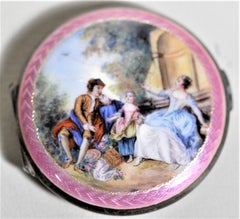
Snuffbox Round Sterling Silver fired enamel on guilloché and blue line Salimbeni

Snuffbox Round Sterling Silver fired enamel on guilloché and blue line Salimbeni

By Salimbeni, Renato Salimbeni

Located in Firenze, FI

Round snuffbox in gold-plated 800/1000 silver with translucent fired enamel on a guilloché pattern with a blue line, in the English Art Nouveau style of the early 1900s. External dia...

Category

1950s Italian George IV Vintage Engraved Furniture

Materials

Gold Plate, Sterling Silver, Enamel

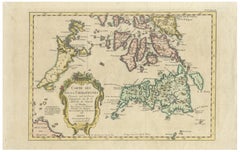
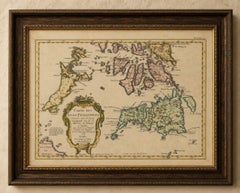
Antique Map of Raja Ampat and New Guinea, Bellin, Papuan Islands c.1749

Antique Map of Raja Ampat and New Guinea, Bellin, Papuan Islands c.1749

Located in Langweer, NL

Antique Map of Raja Ampat and New Guinea, Bellin, Papuan Islands c.1749 This refined and historically significant 18th-century map of the Papuan Islands was engraved by the eminent French hydrographer Jacques-Nicolas Bellin and published in Paris circa 1748–1749 as part of Abbé Prévost’s celebrated Histoire Générale des Voyages. It presents one of the earliest detailed European cartographic renderings of the Raja Ampat archipelago and the western extremity of New Guinea, a region of immense importance during the height of the global spice trade. The composition centers on the intricate island networks of Waigeo (Terre de Waigeew), Salawati (Sallawatty), and Misool (Mixoal), alongside the adjacent coastlines of New Guinea (Terre de Papous) and Ceram. Bellin’s rendering captures the fragmented geography of this maritime landscape with remarkable clarity, depicting narrow straits, scattered islets, and navigational routes that would have been critical to European explorers and traders operating in the East Indies. The map is elegantly enhanced with original hand coloring, delicately outlining coastlines in soft greens and yellows, adding both visual depth and decorative appeal. In the upper right, a finely engraved rococo cartouche provides the title, adorned with stylized foliage, reflecting the artistic sophistication characteristic of mid-18th-century French cartography. The equatorial line is clearly marked, emphasizing the map’s scientific intent alongside its aesthetic qualities. Bellin, appointed Hydrographer to the French Navy, was among the most respected cartographers of his time, and his work formed the backbone of many major European travel accounts. Maps such as this were instrumental in shaping European understanding of Southeast Asia and the Pacific, particularly regions that remained only partially explored. Today, this map holds strong appeal for collectors of early Indonesian cartography, maritime history, and decorative works on paper. Its balance of geographic importance and refined design makes it equally suitable for scholarly collections and high-end interior display. This is an original 18th-century engraving, not a reproduction. All items we offer are authentic period works of art over 100 years old. The print is sold unframed; any framed images are shown for presentation and interior inspiration only and not always on scale in the visual presentation. Condition: Good overall condition for its age, with light age toning and minor handling wear consistent with 18th-century paper. Original fold lines as issued. Colors remain fresh and attractive. Plate mark visible. Framing tips: This map benefits from a dark walnut or ebonized frame combined with a wide ivory or warm off-white mat to enhance contrast and bring out the hand coloring. For a more regional aesthetic, it also works exceptionally well in a warm, textured interior setting inspired by Indonesian or coastal design, where the soft tones of the paper complement natural materials. Technique: Copper engraving with original hand coloring Maker: Jacques-Nicolas Bellin, Paris, circa 1748–1749 Keywords: Raja Ampat map, Papua New Guinea...

Category

Mid-18th Century French Antique Engraved Furniture

Materials

Paper
Antique Map of Asia Minor Turkey with Greek Key Border by Tallis, c.1850

Antique Map of Asia Minor Turkey with Greek Key Border by Tallis, c.1850

Located in Langweer, NL

Antique Map of Asia Minor Turkey with Greek Key Border by Tallis, c.1850 A highly decorative and finely engraved map titled “Asia Minor,” depicting the region of Anatolia (modern-da...

Category

Mid-19th Century British Antique Engraved Furniture

Materials

Paper
Renaissance Anatolia Map, Natolia Nuova Tavola, Italian Atlas c.1598

Renaissance Anatolia Map, Natolia Nuova Tavola, Italian Atlas c.1598

Located in Langweer, NL

Title: Renaissance Anatolia Map, Natolia Nuova Tavola, Italian Atlas c.1598 A refined and highly decorative Renaissance map of Asia Minor, titled *Natolia Nuova Tavola*, presenting ...

Category

16th Century Italian Antique Engraved Furniture

Materials

Paper
Alexander the Great’s Empire Map — Classical Campaign Routes, c.1800

Alexander the Great’s Empire Map — Classical Campaign Routes, c.1800

Located in Langweer, NL

Title: Alexander the Great’s Empire Map — Classical Campaign Routes, c.1800 This striking and intellectually engaging map charts the vast empire and legendary campaigns of Alexander...

Category

Early 19th Century French Antique Engraved Furniture

Materials

Paper
Holy Land Map, Jerusalem & Sinai — Dufour Biblical Map, Paris 1846

Holy Land Map, Jerusalem & Sinai — Dufour Biblical Map, Paris 1846

Located in Langweer, NL

Title: Holy Land Map, Jerusalem & Sinai — Dufour Biblical Map, Paris 1846 This elegant and finely engraved map of the Holy Land was created by the French geographer A.H. Dufour ...
Category

Mid-19th Century French Antique Engraved Furniture

Materials

Paper
Creation of the World to Abraham Sacrifice, Genesis Engravings, 1700

Creation of the World to Abraham Sacrifice, Genesis Engravings, 1700

Located in Langweer, NL

Title: Creation of the World to Abraham Sacrifice, Genesis Engravings, 1700 Description: This impressive set of six early-18th-century copper engravings forms part of a larger Genes...

Category

Early 1700s Dutch Antique Engraved Furniture

Materials

Paper
Genesis Narrative Engravings Set – Mortier Amsterdam, Flood to Babel Scenes 1700

Genesis Narrative Engravings Set – Mortier Amsterdam, Flood to Babel Scenes 1700

Located in Langweer, NL

Genesis Narrative Engravings Set – Mortier Amsterdam, Flood to Babel Scenes 1700 Description: This rare and visually compelling set of six early-18th-century biblical engravings was...

Category

Early 1700s Dutch Antique Engraved Furniture

Materials

Paper
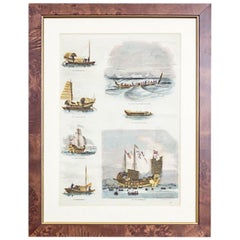
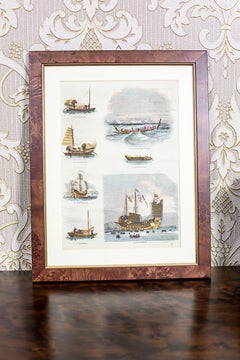
Creation of the World & Genesis Scenes, Mortier Amsterdam, circa 1700

Creation of the World & Genesis Scenes, Mortier Amsterdam, circa 1700

Located in Langweer, NL

Creation of the World & Genesis Scenes, Mortier Amsterdam, circa 1700 Description: This striking pair of early 18th-century copper engravings forms part of a larger Genesis ser...
Category

Early 1700s Dutch Antique Engraved Furniture

Materials

Paper
Antique Levasseur Maps Asia & Oceania, Decorative Atlas Pair c.1845

Antique Levasseur Maps Asia & Oceania, Decorative Atlas Pair c.1845

Located in Langweer, NL

Antique Levasseur Maps Asia & Oceania, Decorative Atlas Pair c.1845 A visually compelling and highly decorative pair of mid-19th-century maps depicting Asia and Oceania, created by the renowned French cartographer Victor Levasseur and published in Paris circa 1842–1845 as part of the celebrated Atlas Universel Illustré. Among the most sought-after plates from Levasseur’s atlas, these maps combine detailed geography with richly engraved allegorical borders, offering a complete artistic and historical vision of the regions. The map of Asia presents the vast continent in finely hand-colored divisions, surrounded by an elaborate architectural frame filled with ethnographic figures, animals, and cultural scenes reflecting 19th-century European perspectives on the East. The upper and lower borders include finely engraved vignettes illustrating daily life and regional costumes, while the side panels contain statistical and descriptive texts, enhancing both the visual and intellectual appeal of the composition. The Oceania map offers a striking contrast, depicting Australia, New Zealand, and the islands of the Pacific within a lush ornamental border of tropical vegetation and exploration-themed imagery. Portrait medallions and figures evoke the age of discovery, while the lower register features a coastal scene with ships and fortifications, reinforcing the maritime narrative of the region. Both maps retain their original hand coloring, applied to highlight political and geographic distinctions, while the surrounding engravings remain in refined monochrome. The balance between delicate coloration and intricate engraving gives these works a strong decorative presence, making them particularly appealing for interior design as well as for collectors of antique cartography. As a paired set, Asia and Oceania form a harmonious and visually engaging combination, ideal for display in a study, library, or sophisticated interior. The pairing also reflects a broader 19th-century worldview, linking continents through exploration, trade, and cultural imagination. This is an original 19th-century engraving, not a reproduction. All items we offer are authentic period works of art over 100 years old. The maps are sold unframed; any framed images are shown for presentation and interior inspiration only. Condition: Overall in very good condition for age, with light age-related toning and minor wear to the margins. Occasional faint spotting consistent with 19th-century paper. Strong impressions with fresh original hand color. Plate marks visible. Framing tips: These maps display beautifully as a balanced pair in dark walnut or ebonized frames with wide ivory or warm off-white mats. A symmetrical hanging enhances their visual harmony, while soft directional lighting highlights the intricate engraved borders and central cartography, creating a refined, museum-quality presentation. Technique: Steel engraving with original hand coloring Maker: Victor Levasseur, Paris, circa 1842–1845 Keywords: Levasseur Asia map, Levasseur Oceania map, Atlas Universel Illustré, antique Asia map, antique Oceania map, 19th century map pair, decorative cartography, French engraving, hand colored map, architectural border map, ethnographic figures map, Victorian era atlas, Paris published map, Pacific Ocean map antique, Australia New Zealand map...

Category

Mid-19th Century French Antique Engraved Furniture

Materials

Paper

Medieval Knights in Combat, Elegant Hand-Colored Antique Print, France 1845

Medieval Knights in Combat, Elegant Hand-Colored Antique Print, France 1845

Located in Langweer, NL

Medieval Knights in Combat, Elegant Hand-Colored Antique Print, France 1845 This striking hand-colored lithograph from 1845 depicts two medieval knights locked in ceremonial combat,...

Category

Mid-19th Century French Antique Engraved Furniture

Materials

Paper

Chikanobu Triptych – Shogun Returns from the Hunt in Koganehara, c.1897

Chikanobu Triptych – Shogun Returns from the Hunt in Koganehara, c.1897

Located in Langweer, NL

Chikanobu Triptych – Shogun Returns from the Hunt in Koganehara, c.1897 This powerful and dynamic triptych by Toyohara Chikanobu (1838–1912) depicts the Shogun and his retinue returning from a falconry hunt across the vast grasslands of Koganehara. The print is part of the celebrated Meiji-era series Chiyoda no Omote (Outer Palace of Chiyoda), which portrayed ceremonial and military scenes from the life of the Tokugawa shogunate. This series blends historical reverence with a modern Meiji sensibility, celebrating Japan’s warrior heritage at a time of rapid transformation. Rendered in rich color and vivid linework, the triptych shows a noble procession in motion: the mounted Shogun at center turns back toward the viewer, while falconers and warriors in elaborate dress surround him. Attendants carry game and falconry equipment, and a dense forest line marks the horizon behind them. The sweeping composition emphasizes both movement and status, with the central figure visually dominant and placed against a pale, open sky. The triptych is signed by Chikanobu with the toshidama cartouche and published by Fukuda Hatsujirō around 1897. Chikanobu, one of the last great ukiyo-e masters, was celebrated for his ability to capture imperial ceremony, samurai culture, and the feminine elegance of the court — often in triptych format for dramatic impact. While the work shows some age-related signs, it retains strong visual appeal and is a compelling historical document of samurai-era tradition as imagined through Meiji eyes. Condition report: Good overall condition considering age. The three sheets are mounted together on old Japanese paper backing (verso), which is loosening slightly along the joins. Light overall toning and minor wrinkling across the panels. Colors remain well preserved with strong impression and no major losses or tears. Margins present, minor handling wear visible. A stable and attractive display piece. Framing tips: We recommend float mounting the full triptych in a custom horizontal frame, allowing the slight backing and joins to remain visible as part of its historical charm. Use a dark walnut or black lacquer frame with an off-white or light beige acid-free mat. Proper archival mounting can help preserve the integrity of the backing while enhancing its display quality. Technique: Woodblock print (ōban triptych) Maker: Toyohara Chikanobu, Japan, c.1897 Publisher: Fukuda Hatsujirō Keywords: Chikanobu triptych, samurai falconry print, Japanese woodblock print, Meiji print, Chiyoda no Omote, shogun artwork, Koganehara, antique Japanese triptych...

Category

1890s Japanese Antique Engraved Furniture

Materials

Paper

Antique Louvre Bas-Relief Engravings Pair, French Neoclassical, 1803

Antique Louvre Bas-Relief Engravings Pair, French Neoclassical, 1803

Located in Langweer, NL

Antique Louvre Bas-Relief Engravings Pair, French Neoclassical, 1803 A striking and architecturally balanced pair of early 19th-century French engravings depicting sculptural bas-re...

Category

Early 19th Century French Antique Engraved Furniture

Materials

Paper

Medieval Messengers & Courtiers, Elegant Hand-Colored Antique Print, France 1845

Medieval Messengers & Courtiers, Elegant Hand-Colored Antique Print, France 1845

Located in Langweer, NL

Title: Medieval Messengers & Courtiers, Elegant Hand-Colored Antique Print, France 1845 Description: This refined hand-colored lithograph from 1845 depicts a lively medieval scene o...

Category

Mid-19th Century French Antique Engraved Furniture

Materials

Paper

A boxwood netsuke depicting an Oni and the Setsubun festival

A boxwood netsuke depicting an Oni and the Setsubun festival

Located in Milano, IT

A boxwood netsuke depicting a kneeling Oni during the Setsubun festival, shielding himself with a straw hat to protect against the bean throwing. The himotoshi is pierced through th...

Category

19th Century Japanese Antique Engraved Furniture

Materials

Boxwood

Midcentury Modern Round Shape Glass Flush Mount / Ceiling Fixture with Teak Wood

Midcentury Modern Round Shape Glass Flush Mount / Ceiling Fixture with Teak Wood

Located in Lisse, NL

Beautifully decorated and stylish 3-light pendant light from the midcentury era. This Mint condition Mid-Century Modern work of (lighting) art with the teak wooden elements is anoth...

Category

Mid-20th Century European Mid-Century Modern Engraved Furniture

Materials

Brass

Rare Dutch Bird Print – Hoopoe, Bullfinch, Linnet and Quail, ca. 1770–1829

Rare Dutch Bird Print – Hoopoe, Bullfinch, Linnet and Quail, ca. 1770–1829

By Cornelius Nozeman, M. Houttuyn, J.C. Sepp

Located in Langweer, NL

Rare Dutch Bird Print – Hoopoe, Bullfinch, Linnet and Quail, ca. 1770–1829 Antique hand-coloured print from Nederlandsche Vogelen, the monumental ornithological work published in Am...

Category

Late 18th Century Dutch Antique Engraved Furniture

Materials

Paper

18th Century Copper Engraving by Lister

18th Century Copper Engraving by Lister

Located in Houston, TX

Framed large black and white engraving of sea shells by Lister. This very rare copper engraving is from Martin Lister's work Historiae sive synopsis m...

Category

18th Century English Antique Engraved Furniture

Materials

Paper

Napoleonic Architecture Engravings Set, Baltard Paris Monuments Plates - 1803

Napoleonic Architecture Engravings Set, Baltard Paris Monuments Plates - 1803

By Louis-Pierre Baltard

Located in Langweer, NL

Napoleonic Architectural Engravings Set, Baltard Paris Monuments Plates, 1803 This striking set of eight early 19th-century architectural engravings originates from the rare French publication Paris et ses Monuments, mesurés, dessinés et gravés, created by architect and engraver Louis-Pierre Baltard and published in Paris in 1803 during the early Napoleonic period. Baltard’s monumental publication was dedicated to Napoleon Bonaparte and aimed to systematically document the architectural treasures of Paris and its surrounding monuments through precise measurement, architectural drawing, and finely executed copperplate engravings. Today the work is regarded as one of the earliest comprehensive visual surveys of Parisian architecture produced during the Napoleonic era. The present group forms a visually balanced and highly decorative set illustrating several aspects of classical and Renaissance architecture. The engravings include façade elevations, architectural plans, ornamental studies, sculptural fragments, and atmospheric architectural views. Together they present a remarkable overview of architectural design, structural composition, and decorative detail typical of the scholarly architectural publications produced in France at the beginning of the nineteenth century. One of the most notable plates in the group shows the measured plan of the Château d’Écouen, one of the most important Renaissance châteaux in France. Built in the sixteenth century for the powerful Montmorency family, the château later became an important national monument and today houses the Musée National de la Renaissance. The engraved plan carefully illustrates the château’s symmetrical layout around its central courtyard together with the surrounding terraces, landscaped grounds, and tree-lined avenues. Other plates depict grand classical façades, monumental arches, richly carved capitals, sculptural ornaments, and picturesque architectural views set within wooded landscapes. Baltard’s engravings are admired for their combination of architectural precision and refined artistic engraving. Crisp linework defines the structural forms, while delicate shading creates depth in the sculptural and landscape elements. Architectural engravings from Paris et ses Monuments have become increasingly desirable among collectors, architects, and interior designers. Their refined balance between scholarly architectural documentation and decorative visual appeal makes them particularly suitable for elegant interiors such as libraries, studies, galleries, or sophisticated European-style homes. Displayed together as a gallery wall, the engravings create a striking architectural ensemble reflecting the intellectual spirit and artistic ambition of the Napoleonic period. The original antique engravings are offered unframed, giving flexibility to select frames that best suit the intended interior. Condition report: Very good condition for early nineteenth-century engravings. Printed on laid paper with wide margins. Light age toning and occasional small spots consistent with age. The engraved impressions remain sharp and clear. Framing tips: These engravings display beautifully as a coordinated wall set. Dark walnut or black frames with generous ivory or warm off-white mats create a refined museum-style presentation. For a more contemporary interior, thin black gallery frames with wide mats highlight the elegant linework and architectural detail. Technique: Copperplate engraving Maker: Louis-Pierre Baltard, Paris, 1803 Keywords: napoleonic architectural engravings, baltard paris monuments 1803, antique french architecture prints...

Category

Early 19th Century French Neoclassical Antique Engraved Furniture

Materials

Paper

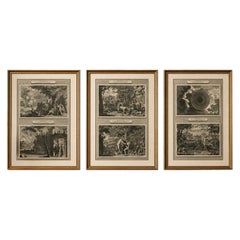
Set of Three Double-Scene Biblical Copper Engravings, Pieter Mortier, ca 1700

Set of Three Double-Scene Biblical Copper Engravings, Pieter Mortier, ca 1700

Located in Langweer, NL

Set of Three Double-Scene Biblical Copper Engravings, Pieter Mortier, ca 1700 This rare and decorative set consists of three early-18th-century biblical copper engravings, each shee...

Category

Early 1700s Dutch Antique Engraved Furniture

Materials

Paper

Chinese Wind Chariot Merchant – Ferrario Costume Print, Hand-Colored c.1815

Chinese Wind Chariot Merchant – Ferrario Costume Print, Hand-Colored c.1815

Located in Langweer, NL

Chinese Wind Chariot Merchant – Ferrario Costume Print, Hand-Colored c.1815 Description: This finely hand-coloured copperplate engraving depicts a Chinese itinerant merchant operati...

Category

Early 19th Century Italian Antique Engraved Furniture

Materials

Paper

Antique Double Map of Europe, Barbarian Invasions – Lapie, Paris, 1838

Antique Double Map of Europe, Barbarian Invasions – Lapie, Paris, 1838

Located in Langweer, NL

Antique Double Map of Europe, Barbarian Invasions – Lapie, Paris, 1838 This striking double-sheet map of Europe was published in Paris in 1838 as part of the Atlas Universel de Géog...

Category

Early 19th Century French Antique Engraved Furniture

Materials

Paper

The Cape of Good Hope — VOC Anchorage and Table Mountain, c.1750

The Cape of Good Hope — VOC Anchorage and Table Mountain, c.1750

Located in Langweer, NL

View of the Cape of Good Hope — VOC Ships & Table Mountain, Universal Magazine c.1750 Description: This striking 18th-century engraving presents a panoramic view of the Cape of Good...

Category

Mid-18th Century British Antique Engraved Furniture

Materials

Paper

Antique Tuttle Edwardian Georgian Sterling Silver Sugar Caster

Antique Tuttle Edwardian Georgian Sterling Silver Sugar Caster

By Tuttle Silver Company

Located in New York, NY

Edwardian Georgian sterling silver sugar caster. Made by Tuttle in Boston, ca 1910. Baluster on stepped round foot. Cover has stepped top with vasiform finial; sides pierced with eng...

Category

Early 20th Century American Georgian Engraved Furniture

Materials

Sterling Silver

Mughal Brass Engraved Hookah Base, 20th Century

Mughal Brass Engraved Hookah Base, 20th Century

Located in Islamabad, PK

The brass Mughal hookah features a beautifully engraved brass base adorned with intricate floral and geometric motifs. The base is a work of art, showca...

Category

20th Century Indian Anglo-Indian Engraved Furniture

Materials

Brass

Boiled Leather Trunk, Spanish, 17th Century

Boiled Leather Trunk, Spanish, 17th Century

Located in Bruxelles, BE

Leather trunk Spanish, 17th century Boiled Leather, wood and iron Measures: 22 x 53 x 32 cm. Provenance : - collection Metz-Noblat, Château de Clevant, France Rectangular trunk of the form and size of a small suitcase with wrought iron hinges and lock-plate. Wood, covered with leather, cut and embossed with every surface of the thick cow hide covered in interlace, zoomorphic features. The construction method is boiled leather, often referred to by its French translation cuir-bouilli: a process used to change flexible, vegetable-tanned leather into rigid, moulded objects. For shaping of the vegetable-tanned leather, heat and moisture were used, as indicated by the term boiled leather. No written medieval sources describing the production of decorated cuir bouilli objects survive, so knowledge of the process relies on the important studies of the Scottish leather historian John William Waterer. A large range of methods, materials and techniques could be used in various combinations. The vegetable-tanned leather, made supple with moisture and heat, was stuffed, shaped and nailed to the rigid wooden coffer support. The stuffing material was probably modeled beeswax or stearin wax. To shape the leather, to create its topography, « Cushions » were made by lacing a thread through an awl hole and attaching the flexible leather and stuffing to the rigid wooden support on the bottom. Then the decoration was done: lines were incised through the upper layer of the leather (epidermis) with different thicknesses of knives or needles. Contours were created with deep v-shaped cuts, decoration with thin incision and final details with a needle point. For the incision and pouncing stage, the leather was probably kept heated and moistened for suppleness. Once dry, the leather would be hard and rigid. the saturated leather is worked over a form, possibly even damp sand, with the pattern shaped using bone or wooden tools. Compare to metal, leather was lighter and it offered protection from cuts and punctures. Cuir bouilli objects were produced by specialist leather workers and needed skillful craftsmanship. The surface is filled with roundels shaped foliages enclosing animals, lions and peacocks. The foliate arabesques creating a vegetal connection tweet the animals create the impression of a lush verdant space . The vegetal pattern here employed in combination with geometrical pattern came from the pre-islamic artistic traditions of the Byzantine and Sasanian empires. An aspect of Islamic geometry Is the basic symmetrical repetition and mirroring of the shapes that create a sense of harmony. The decoration of this truck is inspired by the islamic « arabesque » a form of vegetal ornament composed of spirals, intertwining plants and abstract curvilinear motifs. An arabesque character is given to the birds of the decorations through extreme stylisation. This arabesque maintained the classical tradition of median symmetry, freedom in Detail and heterogeneity of ornament. The presence of the peacocks is a paradisiacal allusion: in popular Islamic literature they were among the original inhabitants of the garden of Paradise expelled with Adam and Eve. Peacock as a decorative motif may have originated in the West, despite their eastern provenance. There was an ancient belief that the flesh and feathers of peacock do not decay. This led to the peacock becoming a christian symbol for Christ’s resurrection. Renowned for their decorative wall hangings, seventeenth-century Spanish leatherworkers also produced utilitarian objects, such as this trunk. A similar trunk is on display at the Metropolitan museum of art ( 09.158.1). Related literature : Davies L. 2006. Cuir bouilli. Conservation of leather and related materials, 94-102, Oxford: elsevier Butterworth-Heinemann Grabar, Oleg. The Mediation of Ornament. Princeton: Princeton University Press, 1992 Gabriela Germana Roquez, "El mueble en el Peru en el siglo XVIII...

Category

17th Century Antique Engraved Furniture

Materials

Iron

Art Deco Chandelier in Wrought Iron and Blown Glass, Muller Frères, France, 1920

Art Deco Chandelier in Wrought Iron and Blown Glass, Muller Frères, France, 1920

By Muller Fres Luneville, Muller Frères

Located in VÉZELAY, FR

Art Deco Chandelier in Wrought Iron and Blown Glass by Muller Frères Lunéville, France, Circa 1920. We are pleased to offer you an exceptional chandelier, emblematic of Art Deco, si...

Category

1920s French Art Deco Vintage Engraved Furniture

Materials

Metal, Iron, Wrought Iron

A Silver German Havdalah Spice Box, Early 20th Century

A Silver German Havdalah Spice Box, Early 20th Century

Located in New York, NY

A silver German spice box from the early 20th century is a finely crafted, understated yet elegant piece that reflects the high level of craftsmanship typical of German silversmiths during this period. The box is rectangular, with smooth silver surfaces and the design leans toward simplicity, characteristic of the early 20th century's shift toward Art Deco or late Jugendstil (German Art Nouveau) influences. The hinged lid features clean geometric patterns that frame the engraving written in Hebrew at the center flanked by flower engravings and securely closes over the compartment with a latch that holds the fragrant spices. The sides of the spice box are beautifully engraved with more Hebrew verses relating to the blessings of the spices and flanked by flower motifs. The overall structure is delicate yet sturdy, reflecting the precision and skill of early 20th-century German Judaica...

Category

Early 20th Century German Engraved Furniture

Materials

Silver

Antique engraving of Windsor Bridge on the Thames, Tombleson, c.1832–1834

Antique engraving of Windsor Bridge on the Thames, Tombleson, c.1832–1834

Located in Langweer, NL

Antique engraving of Windsor Bridge on the Thames, Tombleson, c.1832–1834 This detailed antique engraving depicts the old Windsor Bridge, a three-arched crossing over the River Thames linking Windsor in Berkshire with Eton in Buckinghamshire. The bridge was a vital crossing point in the early 19th century, carrying both pedestrians and traffic across the river. In this composition, the bridge is shown with a horse-drawn cart and several figures making their way across, while activity on the water and along the riverbanks brings additional life to the scene. In the foreground, a barge with a furled sail moves slowly beneath the bridge, manned by boatmen engaged in their work. To the right, figures in brightly colored dress gather by the riverbank, one leaning on a pole near the water’s edge while others attend to daily activities. The houses and riverside buildings frame the view, adding to the sense of a bustling riverside townscape. The whole scene is animated by the interplay of people, architecture, and the flowing Thames, presenting Windsor as both a place of commerce and community. The drawing is by William Tombleson (1795–1846), a leading English topographical draughtsman whose series Views of the Thames and Medway (published between 1832 and 1834) was highly admired for its combination of accuracy and artistic style. The engraving was executed by Charles Mottram...

Category

1830s British Antique Engraved Furniture

Materials

Paper

Early 20th Century Argentinian Silver and Gold Torah Crown

Early 20th Century Argentinian Silver and Gold Torah Crown

Located in New York, NY

Silver and gold Torah crown, Buenos Aires, Argentina, 1925. On silver base decorated with a small gold Stars of David. The lower ribs decorated with applie...

Category

1920s Argentine Vintage Engraved Furniture

Materials

Silver, Gold

Steel Panel "PARASKA" Size S

Steel Panel "PARASKA" Size S

By Victoria Yakusha

Located in Miami, FL

Each panel is handmade in the artist’s studio, available in several sizes (S, M, L) and can be displayed individually or as part of a composition. DREVO by Victoria Yakusha is a ser...

Category

2010s Ukrainian Modern Engraved Furniture

Materials

Stainless Steel

Pair of Russian Empire Brass Candlesticks with Drip Basins, circa 1790–1835

Pair of Russian Empire Brass Candlesticks with Drip Basins, circa 1790–1835

Located in West Palm Beach, FL

Pair of Russian Empire Brass Candlesticks with Drip Basins, circa 1790–1835 A substantial and finely proportioned pair of Russian Empire–period brass candlesticks, dating to the lat...

Category

Late 18th Century Russian Empire Antique Engraved Furniture

Materials

Brass

18th-Century Holy Roman Empire Engraving with Heraldry and Imperial Symbols

18th-Century Holy Roman Empire Engraving with Heraldry and Imperial Symbols

Located in Langweer, NL

Icon Synoptica Sac. Rom. Imp. Electorum Ducum cum Principum – 18th-Century Allegorical Engraving This fascinating 18th-century engraving, 'Icon Synoptica Sac. Rom. Imp. Electorum ...

Category

1740s Antique Engraved Furniture

Materials

Paper

Rare 17th Century Map of Batavia and Castle on Java by Isaac de l'Obel

Rare 17th Century Map of Batavia and Castle on Java by Isaac de l'Obel

Located in Langweer, NL

Rare 17th Century Map of Batavia and Castle on Java by Isaac de l'Obel This finely detailed and vividly hand-colored copperplate engraving offers a rare and early view of Batavia (p...

Category

Late 17th Century Dutch Antique Engraved Furniture

Materials

Paper

Austrian Art Nouveau Silver and Enamel Cane by Georg Adam Scheid

Austrian Art Nouveau Silver and Enamel Cane by Georg Adam Scheid

By Georg Adam Scheid

Located in London, GB

Austrian Art Nouveau silver and enamel cane by Georg Adam Scheid Austrian, 1872 Height 90cm, diameter 3cm This stunning Art Nouveau walking stick, created around 1900, is the work ...

Category

Late 19th Century Austrian Art Nouveau Antique Engraved Furniture

Materials

Silver, Enamel

19th Century Horse and Rider Engraving

19th Century Horse and Rider Engraving

Located in Charlottesville, VA

A line engraving of a rider on horseback with a second figure alongside, rendered in a spare, linear style. Numbered “25” upper left. Well matted and framed in a black and gilt molding.

Category

19th Century Antique Engraved Furniture

Materials

Glass, Wood, Paper

Black Lacquer Side Table With A Engraved Brass Top, Belgium 1970.

Black Lacquer Side Table With A Engraved Brass Top, Belgium 1970.

Located in Brussels, BE

Black lacquer side table with a brass top finely carved. Rounded edges. From Belgium 1970.

Category

1970s Belgian Brutalist Vintage Engraved Furniture

Materials

Brass

Scales, decorative brass panel

Scales, decorative brass panel

Located in Milano, IT

A very thin sheet of brass, finely engraved and cut with geometric patterns, is transformed into a three-dimensional surface capable of enriching rooms with refined plays of light an...

Category

21st Century and Contemporary Italian Engraved Furniture

Materials

Brass

Old Map of Ancient Assyria Divided into Syria, Mesopotamia, Babylonia & Assyria

Old Map of Ancient Assyria Divided into Syria, Mesopotamia, Babylonia & Assyria

Located in Langweer, NL

This map, "Assyria vetus diuisa in Syriam, Messopotamiam, Babyloniam, et Assyriam", by Pierre Mortier, is a late 17th-century depiction of the historical Middle East. Title: Ancie...

Category

Early 1700s Antique Engraved Furniture

Materials

Paper

Mid 20th Century Moroccan Silver Hamsa

Mid 20th Century Moroccan Silver Hamsa

Located in New York, NY

This Mid-20th Century Moroccan Silver Hamsa is an artifact that carries deep cultural and symbolic significance and reflects the skilled craftsmanship typ...

Category

Mid-20th Century Moroccan Engraved Furniture

Materials

Silver

Copper Engraving by Merian of The Battle Fleet off Constantinople, 1646

Copper Engraving by Merian of The Battle Fleet off Constantinople, 1646

Located in Langweer, NL

An engraving by Matthäus Merian senior depicting the "Sea battle of the Venetians against the Turks in the Dardanelles" from 1646 . It presents a dramatic and detailed scene capturi...

Category

1640s German Antique Engraved Furniture

Materials

Paper

Small Japanese Meiji Period Black and Gold Altar Stand

Small Japanese Meiji Period Black and Gold Altar Stand

Located in Hudson, NY

This small late 19th-century Meiji period altar or stand with gilded & engraved brass mounts is a refined example of the art of lacquer in Japan. Crafted of deep black shiny lacquer ...

Category

Late 19th Century Japanese Meiji Antique Engraved Furniture

Materials

Brass

St Thomas’s Hospital London, 18thC Bird’s-Eye View Engraving, Toms, c.1750

St Thomas’s Hospital London, 18thC Bird’s-Eye View Engraving, Toms, c.1750

Located in Langweer, NL

St Thomas’s Hospital London – 18thC Bird’s-Eye View Engraving, Toms A finely detailed mid-18th century copper engraving depicting St Thomas’s Hospital in Southwark, London, engraved...

Category

Mid-18th Century British Antique Engraved Furniture

Materials

Paper

French 1950s Daum "Chardon" Cristal Table Lamp

French 1950s Daum "Chardon" Cristal Table Lamp

By Daum

Located in New York, NY

Crystal table lamp by Daum with acid engraved Chardon motif, signed on the bottom. Rewire and shade upon request.

Category

Mid-20th Century French Mid-Century Modern Engraved Furniture

Materials

Crystal

1940's French Engraved Silver Plated Vases Pair

1940's French Engraved Silver Plated Vases Pair

Located in New York, NY

1940's French silver plated pair vases design with engraved ornament on body

Category

1940s French French Provincial Vintage Engraved Furniture

Materials

Silver Plate, Bronze

Blaeu Map of Cambrai, Artois & Hainaut – Heraldic France c.1642

Blaeu Map of Cambrai, Artois & Hainaut – Heraldic France c.1642

Located in Langweer, NL

Title: Blaeu Map of Cambrai, Artois & Hainaut – Heraldic France c.1642 Description: A finely engraved and richly decorated 17th-century map of the historic Archbishopric of Cambrai,...

Category

Mid-17th Century Dutch Antique Engraved Furniture

Materials

Paper

Blaeu Map of Boulogne & Calais Coast – Maritime France, Ships c.1642

Blaeu Map of Boulogne & Calais Coast – Maritime France, Ships c.1642

Located in Langweer, NL

Blaeu Map of Boulogne, Calais & Guînes – Coastal France, Ships c.1642 A striking and highly decorative 17th-century map of the northern French coast, centered on Boulogne-sur-Mer, C...

Category

Mid-17th Century Dutch Antique Engraved Furniture

Materials

Paper

Southern Greece: A Large 17th C. Hand-colored Map by Sanson and Jaillot

Southern Greece: A Large 17th C. Hand-colored Map by Sanson and Jaillot

By Nicolas Sanson

Located in Alamo, CA

This large original hand-colored copperplate engraved map of southern Greece and the Pelopponese Peninsula entitled "La Moree Et Les Isles De Zante, Cefalonie, Ste. Marie, Cerigo & C...

Category

1690s French Antique Engraved Furniture

Materials

Paper

Sociable Encounters at the Monolithic Giants: Easter Island's Enigmatic Statues

Sociable Encounters at the Monolithic Giants: Easter Island's Enigmatic Statues

Located in Langweer, NL

Image title: "Chile: Inhabitants and monuments of Easter Island." Publsihed: 1797, based on a drawing from 1786 Title: "Sociable Encounters at the Monolithic Giants: Easter Island'...

Category

Late 18th Century Antique Engraved Furniture

Materials

Paper

Antique French Louvre Architectural Engravings, Set of 4, Baltard 1803

Antique French Louvre Architectural Engravings, Set of 4, Baltard 1803

Located in Langweer, NL

Antique French Louvre Architectural Engravings, Set of 4, Baltard 1803 A refined and highly decorative set of four early 19th-century French architectural engravings from Paris et s...

Category

Early 19th Century French Antique Engraved Furniture

Materials

Paper

Antique Beetle Chromolithographs, European Coleoptera Plates, Calwer 1893

Antique Beetle Chromolithographs, European Coleoptera Plates, Calwer 1893

By Louis-Pierre Baltard

Located in Langweer, NL

Antique Cabinet of Curiosities Beetle Plates, Jewel & Firefly Insects, 1893 Description: This striking set of six Victorian natural history beetle plates originates from the cel...

Category

Late 19th Century German Neoclassical Antique Engraved Furniture

Materials

Paper

20th Century Asian Handcrafted Brass Tray Table with Folding Base

20th Century Asian Handcrafted Brass Tray Table with Folding Base

Located in Doylestown, PA

Asian handcrafted engraved brass tray table, 1920-30s. The tray is decorated with varying intricate hand carved floral and animal habitat scenes surrounding central calligraphy. The tray grips and sits securely on a midcentury metal faux bamboo foldable base...

Category

20th Century Asian Engraved Furniture

Materials

Metal, Brass

Egyptian Engraved Silver Dish

Egyptian Engraved Silver Dish

Located in London, GB

Egyptian engraved silver dish Egyptian, 1959-1961 Measures: Height 2cm, diameter 28.5cm This fine, elegant bowl is wrought from silver, and features floral and geometric engravings all over, as well as a stepped rim and petal edge. The underside is stamped with the Egyptian lotus...

Category

Mid-20th Century Egyptian Engraved Furniture

Materials

Silver