Engraved Furniture

to
1,526
5,911
1,418
7,098
440
33
280
212
193
170
153
149
100
97
80
74
34
27
23
22
21
15
15
6
2,824
2,663
1,611
473
599
416
353
103
36
87
88
38
75
85
139
90
57
4,918
2,099
1,043
652
553
5,160
1,359
1,121
833
814
7,571
7,273
7,410
226
96
90
75
47
Technique: Engraved
Antique Portrait Prince Rupert – English Civil War Commander, c.1850

Antique Portrait Prince Rupert – English Civil War Commander, c.1850

Located in Langweer, NL

Antique Portrait Prince Rupert – English Civil War Commander, c.1850 A finely engraved and highly decorative mid-19th century portrait of Prince Rupert of the Rhine, one of the most...

Category

Mid-19th Century British Antique Engraved Furniture

Materials

Paper

Antique Portrait Lord John Russell – British Prime Minister Engraving c.1850

Antique Portrait Lord John Russell – British Prime Minister Engraving c.1850

Located in Langweer, NL

Antique Portrait Lord John Russell – British Prime Minister Engraving c.1850 A refined and highly decorative mid-19th century engraved portrait of Lord John Russell, one of the most...

Category

Mid-19th Century British Antique Engraved Furniture

Materials

Paper

Antique Portrait Lord Rodney – British Naval Hero Engraving c.1850

Antique Portrait Lord Rodney – British Naval Hero Engraving c.1850

Located in Langweer, NL

Antique Portrait Lord Rodney – British Naval Hero Engraving c.1850 A finely executed and highly decorative mid-19th century engraved portrait of George Brydges Rodney, 1st Baron Rod...

Category

Mid-19th Century British Antique Engraved Furniture

Materials

Paper

Antique Portrait Queen Anne – Tallis Engraving, British Royalty c.1850

Antique Portrait Queen Anne – Tallis Engraving, British Royalty c.1850

Located in Langweer, NL

Antique Portrait Queen Anne – Tallis Engraving, British Royalty c.1850 A refined and highly decorative mid-19th century engraved portrait of Queen Anne, the last monarch of the Hous...

Category

Mid-19th Century British Antique Engraved Furniture

Materials

Paper

Antique Portrait William Pitt – Earl of Chatham, Tallis Engraving c.1850

Antique Portrait William Pitt – Earl of Chatham, Tallis Engraving c.1850

Located in Langweer, NL

Antique Portrait William Pitt – Earl of Chatham, Tallis Engraving c.1850 A refined and highly decorative mid-19th century engraved portrait of William Pitt, 1st Earl of Chatham, one...

Category

Mid-19th Century British Antique Engraved Furniture

Materials

Paper

Antique Portrait Sir Francis Drake – Tallis Engraving, c.1850

Antique Portrait Sir Francis Drake – Tallis Engraving, c.1850

Located in Langweer, NL

Antique Portrait Sir Francis Drake – Tallis Engraving, c.1850 A highly decorative and finely engraved mid-19th century portrait of Sir Francis Drake, the legendary English naval com...

Category

Mid-19th Century British Antique Engraved Furniture

Materials

Paper

Antique India Print – Tipu Sultan Sons Surrender, Mysore War, c.1850

Antique India Print – Tipu Sultan Sons Surrender, Mysore War, c.1850

Located in Langweer, NL

Antique India Print – Tipu Sultan Sons Surrender, Mysore War, c.1850 A powerful and historically charged mid-19th century engraving depicting The Surrender of the Two Sons of Tippoo...

Category

Mid-19th Century British Antique Engraved Furniture

Materials

Paper

Mexican Market Vendor and Charcoal Seller – Hand-Colored Engraving, 1867

Mexican Market Vendor and Charcoal Seller – Hand-Colored Engraving, 1867

Located in Langweer, NL

Mexican Market Vendor and Charcoal Seller – Hand-Colored Engraving, 1867 This finely hand-colored 19th-century engraving, from the “Types Mexicains” series, depicts two traditional ...

Category

1860s French Antique Engraved Furniture

Materials

Paper

Historic 1806 Shiva and Vishnu Harihara Antique Print - Hindu Deity Engraving

Historic 1806 Shiva and Vishnu Harihara Antique Print - Hindu Deity Engraving

Located in Langweer, NL

Historic 1806 Shiva and Vishnu Harihara Antique Print - Hindu Deity Engraving Description: This exquisite antique print, titled "Chiven et Vichenou, sous le nom de Singara narainen,...

Category

Early 1800s Antique Engraved Furniture

Materials

Paper

Antique Institut de France Grand Staircase Interior Print – Baltard 1803

Antique Institut de France Grand Staircase Interior Print – Baltard 1803

Located in Langweer, NL

Antique Institut de France Grand Staircase Interior Print – Baltard 1803 Description: This striking early 19th-century architectural engraving originates from the rare and important publication Paris et ses Monuments, mesurés, dessinés et gravés, produced by the French architect and engraver Louis-Pierre Baltard and published in Paris in 1803. Baltard was a prominent Neoclassical architect and the father of Victor Baltard, the celebrated architect responsible for the famous iron market halls of Les Halles in Paris. Louis-Pierre Baltard became widely known for his exceptionally precise architectural engravings documenting the great monuments of France during the Napoleonic era. The engraving depicts the interior vestibule and grand staircase of the Institut de France in Paris. The building was originally constructed as the Collège des Quatre-Nations, founded in 1661 by Cardinal Mazarin and designed by the royal architect Louis Le Vau. Its monumental architecture reflects the grandeur of French Baroque design and the ambition to create a prestigious educational institution within the capital. By the time this engraving was produced in 1803, the building had recently been repurposed to house the Institut de France, which had been established in 1795 following the French Revolution. The Institut brought together the leading intellectual academies of France, including the Académie Française, transforming the building into the central institution of French scholarship and culture. Baltard’s engraving therefore captures the interior of this historic building at a moment when it was emerging as the intellectual heart of the nation. The composition focuses on the elegant architectural perspective of the grand staircase and vestibule. A richly decorated barrel-vaulted ceiling stretches dramatically across the upper portion of the scene. The ceiling panels are filled with elaborate classical ornamentation, including framed compartments and sculptural motifs inspired by Roman architectural decoration. Massive classical columns support the structure and divide the space rhythmically, reinforcing the monumental scale of the interior. The staircase itself forms a central architectural element, symbolizing both physical and symbolic ascent within the institution. Such grand staircases, often referred to as escaliers d’honneur, were important ceremonial spaces in major public buildings of the period. They emphasized prestige and grandeur while guiding visitors toward the principal rooms of the institution. Baltard’s engraving is remarkable for its meticulous use of linear perspective and refined engraving technique. Through dense cross-hatching and delicate shading, he creates a dramatic interplay of light and shadow across the architectural surfaces. The light entering from the tall arched windows illuminates the stair and architectural details, producing a subtle chiaroscuro effect that enhances the sense of depth and monumentality. Architectural prints from *Paris et ses Monuments* were intended both as scholarly documentation and as visual references for architects, artists, and students studying historic monuments. Today they remain highly sought after by collectors of architectural engravings, historians of French architecture, and interior designers seeking authentic classical imagery. This is an original print from the year of publication, not a later reproduction. The print is offered unframed, allowing the buyer freedom to select framing according to personal or interior design preferences. Any framed examples shown in photographs are for visual inspiration only. Condition: Good antique condition with general age-related toning and occasional light foxing mainly in the margins. Wide margins preserved with a strong impression and visible plate mark. Minor handling wear consistent with age. Framing tips: This architectural engraving displays beautifully with a generous ivory or warm cream mat and a dark walnut, ebonized, or gilded frame. The strong architectural perspective and dramatic interior scene make it particularly striking in libraries, studies, or gallery walls dedicated to architectural subjects. Technique: copperplate engraving Maker: Louis-Pierre Baltard, Paris, 1803 Keyword block: antique architectural print, institut de france staircase engraving, baltard paris monuments, louis pierre baltard engraving, paris monument engraving 1803, french neoclassical architecture print...

Category

Early 19th Century French Antique Engraved Furniture

Materials

Paper

Striking 18th-Century Engraving of Papal Chronology and Symbols of the Vatican

Striking 18th-Century Engraving of Papal Chronology and Symbols of the Vatican

Located in Langweer, NL

Title: Striking 18th-Century Engraving of Papal Chronology and Symbols of the Vatican This beautifully detailed 18th-century engraving, 'Pontificum Romanorum Series Chronologica'...

Category

1740s German Antique Engraved Furniture

Materials

Paper

O-Mai Visiting Captain Cook aboard the Resolution at Tahiti, 18th Century

O-Mai Visiting Captain Cook aboard the Resolution at Tahiti, 18th Century

Located in Langweer, NL

Title: O-Mai Visiting Captain Cook aboard the Resolution at Tahiti, 18th Century Description: This finely engraved 18th-century copperplate print depicts a diplomatic encounter betw...

Category

Late 18th Century British Antique Engraved Furniture

Materials

Paper

Chinese Boats and River Vessels, Hand-Coloured Ferrario Engraving, 1815

Chinese Boats and River Vessels, Hand-Coloured Ferrario Engraving, 1815

Located in Langweer, NL

Chinese Boats and River Vessels, Hand-Coloured Ferrario Engraving 1815 A finely hand-coloured copperplate engraving depicting a variety of traditional Chinese boats and river vessel...

Category

Early 19th Century Italian Antique Engraved Furniture

Materials

Paper

Long-Nosed Surgeonfish – Antique Hand-Colored Fish Engraving, Nodder c.1794

Long-Nosed Surgeonfish – Antique Hand-Colored Fish Engraving, Nodder c.1794

Located in Langweer, NL

Long-Nosed Surgeonfish – Antique Hand-Colored Fish Engraving, Nodder c.1794 This finely detailed hand-colored engraving depicts a long-nosed surgeonfish, shown in lateral profile an...

Category

Late 18th Century German Antique Engraved Furniture

Materials

Paper

Antique Costume Print Young Lady of St John of Patmos Jefferys, 1749

Antique Costume Print Young Lady of St John of Patmos Jefferys, 1749

Located in Langweer, NL

Antique Costume Print Young Lady of St John of Patmos Jefferys 1749 This finely detailed engraving depicts a young lady of St. John of Patmos, an island in the archipelago, rendered in traditional attire. Published by Thomas Jefferys in London in 1749, the print reflects European interest in regional Mediterranean cultures. The figure wears layered garments with apron and shawl, complemented by soft hand coloring in muted tones. Her poised stance and the refined engraving give the composition a quiet elegance. This piece combines ethnographic interest with decorative charm, making it a desirable collectible. Condition: Good overall condition with age toning and light spotting. Minor edge wear and small marginal losses. Plate mark visible. Framing tips: A warm or dark wood frame with a wide mat enhances the understated palette and elegance. Special note: This is an original 18th-century engraving, not a reproduction. All items we offer are authentic period works of art over 100 years old. The print is sold unframed; any framed images are shown for presentation and interior inspiration only and may not always be on scale with the original. Technique: Engraving with original hand color Maker: Thomas Jefferys, London, 1749 Keywords: antique print, patmos, greek island costume, ethnographic print, 18th century engraving, thomas jefferys, mediterranean dress...

Category

Mid-18th Century British Antique Engraved Furniture

Materials

Paper

Antique Louvre Sculpture Reliefs Print, Institut Fireplace – Baltard 1803

Antique Louvre Sculpture Reliefs Print, Institut Fireplace – Baltard 1803

Located in Langweer, NL

Antique Louvre Sculpture Reliefs Print, Institut Fireplace – Baltard 1803 Description: This elegant early 19th-century copperplate engraving originates from the rare architectural publication Paris et ses Monuments, mesurés, dessinés et gravés, produced by the French architect and engraver Louis-Pierre Baltard and published in Paris in 1803. Dedicated to Napoleon Bonaparte, the monumental work aimed to carefully document the architectural masterpieces of Paris through measured drawings and highly refined engravings. Baltard’s publication remains one of the earliest systematic visual surveys of Parisian monuments produced during the Napoleonic period. The present engraving illustrates two sculptural relief figures titled Fragments d’une Cheminée qui existoit dans la salle de l’Institut (Fragments of a fireplace that existed in the hall of the Institute). The plate depicts architectural fragments that once decorated an elaborate Renaissance fireplace associated with the Louvre complex and the early halls used by the Institut de France. The two vertical relief figures are shown separately, allowing detailed study of the sculptural forms. The left figure represents a classical male figure wearing a laurel wreath and partially draped garment that falls across one shoulder and around the waist. The sculpted anatomy is rendered with remarkable clarity, reflecting Renaissance admiration for antique Roman sculpture. Surrounding the figure are rich garlands of fruit and foliage, motifs frequently used in French Renaissance ornament inspired by classical Roman decorative programs. The right relief depicts a graceful female figure clad in flowing classical drapery. Her stance is relaxed and elegant, with one leg slightly forward and the drapery falling in delicate rhythmic folds. The sculptural treatment of the fabric demonstrates the Renaissance fascination with classical sculpture and the mastery of artists influenced by the School of Fontainebleau. The figure is framed by ornamental garlands and vegetal motifs similar to those surrounding the male figure, reinforcing the balanced decorative scheme typical of Renaissance architectural interiors. These sculptural fragments reflect the artistic vocabulary of the French Renaissance, when classical mythology, allegorical figures, and antique decorative elements were incorporated into royal architecture. Such motifs were widely used in the decorative programs of the Louvre Palace during the reigns of Francis I and Henry II, when French artists embraced Italian Renaissance ideals and classical antiquity. Baltard engraved these sculptures with extraordinary precision, using fine burin work to capture the subtle modeling of the figures and the deep shadows within the relief carvings. His engravings were intended not only as illustrations but also as instructional references for architects and artists studying historical ornament. By isolating and carefully rendering architectural fragments, Baltard allowed viewers to examine the sculptural details with exceptional clarity. Today prints from *Paris et ses Monuments* are highly valued by collectors of architectural prints, historians of French Renaissance art, and interior designers seeking authentic classical imagery. The composition of two complementary relief figures makes this engraving particularly decorative and well suited for framing. This is an original print from the year of publication, not a later reproduction. The print is offered unframed, allowing the buyer full freedom of framing according to personal taste or interior design preferences. Any framed examples shown in photographs are for visual inspiration only. Condition: Good antique condition with general age-related toning and occasional light foxing. Wide margins preserved. Strong impression with visible plate mark. Minor handling wear consistent with age. Framing tips: This engraving frames beautifully with a generous ivory or warm cream mat and a dark walnut, ebonized, or gilded frame. The vertical sculptural panels create a balanced composition that works particularly well in classical interiors, libraries, or architectural gallery walls. Technique: copperplate engraving Maker: Louis-Pierre Baltard, Paris, 1803 Keyword block: antique architectural print, baltard paris monuments, louvre sculpture engraving, institut fireplace sculpture, french renaissance relief, classical sculpture engraving, french neoclassical architecture print, paris monument engraving 1803, renaissance fireplace ornament, architectural ornament engraving, classical figure relief print, french renaissance decoration, antique paris architecture print...

Category

Early 19th Century French Antique Engraved Furniture

Materials

Paper

Grecian Woman of Meteline Costume Print, Hand-Colored Jefferys 1749

Grecian Woman of Meteline Costume Print, Hand-Colored Jefferys 1749

Located in Langweer, NL

Grecian Woman of Meteline Costume Print, Hand-Colored Jefferys 1749 This refined and elegant costume engraving depicts a Habit of a Grecian Woman of the Island of Meteline (Metylene...

Category

Mid-18th Century British Antique Engraved Furniture

Materials

Paper

Antique Caryatid Sculpture of the Louvre Interior – Baltard Paris 1803

Antique Caryatid Sculpture of the Louvre Interior – Baltard Paris 1803

Located in Langweer, NL

Antique Caryatid Sculpture of the Louvre Interior – Baltard Paris 1803 Description: This impressive early 19th-century architectural engraving originates from the rare French publication Paris et ses Monuments, mesurés, dessinés et gravés, created by the architect and engraver Louis-Pierre Baltard and published in Paris in 1803. Baltard’s monumental work was dedicated to Napoleon Bonaparte and aimed to systematically document the architectural treasures of Paris through precise measurements and carefully executed engravings. The publication is regarded as one of the most important early visual surveys of Parisian monuments during the Napoleonic era. The present plate depicts a monumental caryatid sculpture placed within an elaborate Renaissance architectural interior associated with the Louvre Palace. Caryatids—sculpted female figures used as architectural supports—derive from ancient Greek architecture and were widely revived during the Renaissance. French Renaissance architects and sculptors embraced these classical motifs to evoke the authority and elegance of antiquity, particularly in royal architectural projects such as the Louvre. The figure stands gracefully upon a decorated pedestal, her body wrapped in flowing classical drapery that clings to the form beneath. The folds of the garment are rendered with exceptional delicacy, demonstrating the sculptural style associated with the French Renaissance and the influence of the School of Fontainebleau. The figure’s calm expression and symmetrical stance reinforce the classical ideals of harmony and balance that characterized Renaissance architectural decoration. Behind the statue Baltard carefully renders fragments of richly ornamented architectural elements, including carved friezes, decorative panels, and sections of an elaborate coffered ceiling. These architectural fragments display dense Renaissance ornamentation: fruit garlands, geometric borders, classical motifs, and sculptural reliefs. One decorative panel features a small sculptural figure framed within a classical border, while surrounding carvings display vegetal ornament and antique-inspired patterns typical of the decorative programs commissioned by the French monarchy during the 16th century. The composition reflects Baltard’s method of presenting architectural studies through carefully arranged fragments that highlight the richness of Renaissance ornamentation. Rather than documenting a single viewpoint, the engraver often grouped significant sculptural and architectural details together to illustrate their artistic and structural relationships. This approach allowed artists, architects, and scholars of the early 19th century to study the details of French Renaissance architecture with remarkable clarity. Executed with masterful copperplate engraving, the plate displays extraordinary technical precision. Baltard used fine burin work to reproduce the textures of carved stone, the subtle depth of architectural moldings, and the soft fall of drapery across the sculpture. The dense hatchings and controlled shading create a convincing sense of depth and mass, producing a striking trompe-l'œil effect that makes the architectural fragments appear almost sculptural on the page. Architectural engravings of this quality were intended as both documentation and inspiration. During the early 19th century they served as important visual references for architects and artists studying the achievements of Renaissance design. Today they remain highly sought after by collectors of architectural prints, historians of French art, and interior designers seeking authentic classical imagery. This is an original print from the year of publication, not a later reproduction. The print is offered unframed, allowing the buyer freedom to select framing appropriate to their interior or collection. Any framed examples shown in photographs are for visual inspiration only. Condition: Good antique condition with general age-related toning and occasional light foxing. Wide margins preserved. Strong impression with visible plate mark. Minor handling wear consistent with age. Framing tips: This engraving displays beautifully with a generous ivory or warm off-white mat and a dark walnut, ebonized, or gilded frame. The vertical composition and sculptural subject make it particularly suitable for classical interiors, libraries, or architectural gallery walls. Technique: copperplate engraving Maker: Louis-Pierre Baltard, Paris, 1803 Keyword block: antique architectural print, caryatid sculpture engraving, baltard paris monuments, louvre renaissance architecture, french neoclassical engraving, paris monument print 1803, classical caryatid sculpture, french renaissance ornament print, architectural study engraving, louvre palace decoration print, institut de france architecture, antique paris architecture print...

Category

Early 19th Century French Antique Engraved Furniture

Materials

Paper

Antique Louvre Cour Carrée Exposition Print, Paris Industry Fair – 1803

Antique Louvre Cour Carrée Exposition Print, Paris Industry Fair – 1803

Located in Langweer, NL

Antique Louvre Cour Carrée Exposition Print, Paris Industry Fair – 1803 Description: This impressive early 19th-century engraving depicts the Cour Carrée of the Louvre Palace in Par...

Category

Early 19th Century French Antique Engraved Furniture

Materials

Paper

Antique Costume Print Grecian Lady Bridal Dress Jefferys, 1749

Antique Costume Print Grecian Lady Bridal Dress Jefferys, 1749

Located in Langweer, NL

Antique Costume Print Grecian Lady Bridal Dress Jefferys 1749 This refined engraving depicts a Grecian lady in bridal attire, highlighting ceremonial dress and tradition. Published ...

Category

Mid-18th Century British Antique Engraved Furniture

Materials

Paper

Antique Costume Print Grecian Lady Morning Dress Jefferys, 1749

Antique Costume Print Grecian Lady Morning Dress Jefferys, 1749

Located in Langweer, NL

Antique Costume Print Grecian Lady Morning Dress Jefferys 1749 This graceful engraving shows a Grecian lady in morning dress, illustrating everyday attire in 18th-century interpreta...

Category

Mid-18th Century British Antique Engraved Furniture

Materials

Paper

Antique Costume Print Lady of Chio Greek Island Dress Jefferys, 1749

Antique Costume Print Lady of Chio Greek Island Dress Jefferys, 1749

Located in Langweer, NL

Antique Costume Print Lady of Chio Greek Island Dress Jefferys 1749 This finely detailed engraving depicts a lady of Chio, an island in the archipelago, presented in traditional attire. Published by Thomas Jefferys in 1749, the print reflects European interest in Greek island culture. The figure is adorned in a richly layered costume with embroidered apron and elaborate headpiece. The subtle hand coloring enhances the soft reds, creams, and greens, creating a harmonious and refined composition. As part of an ethnographic series, this print combines artistic elegance with cultural insight. Condition: Good condition with age-related toning and light spotting. Minor marginal wear and small losses. Plate mark visible. Framing tips: A warm wood or black frame with a generous mat enhances the delicate details and vertical composition. Special note: This is an original 18th-century engraving, not a reproduction. All items we offer are authentic period works of art over 100 years old. The print is sold unframed; any framed images are shown for presentation and interior inspiration only and may not always be on scale with the original. Technique: Engraving with original hand color Maker: Thomas Jefferys, London, 1749 Keywords: antique print, chio, greek island costume, ethnographic print, 18th century engraving, thomas jefferys, mediterranean dress...

Category

Mid-18th Century British Antique Engraved Furniture

Materials

Paper

Antique Costume Print Young Lady of Bulgaria Traditional Dress Jefferys, 1749

Antique Costume Print Young Lady of Bulgaria Traditional Dress Jefferys, 1749

Located in Langweer, NL

Antique Costume Print Young Lady of Bulgaria Traditional Dress Jefferys 1749 This elegant engraving portrays a young lady of Bulgaria in traditional dress, published by Thomas Jeffe...

Category

Mid-18th Century British Antique Engraved Furniture

Materials

Paper

Antique Costume Print Young Lady of Argentiera Archipelago by Jefferys, 1749

Antique Costume Print Young Lady of Argentiera Archipelago by Jefferys, 1749

Located in Langweer, NL

Antique Costume Print Young Lady of Argentiera Archipelago Jefferys 1749 This charming mid-18th century engraving depicts a young lady of Argentiera, an island in the archipelago, r...

Category

Mid-18th Century British Antique Engraved Furniture

Materials

Paper

Cavendish’s Ship Desire in Storm near the Strait of Magellan – 18th Century

Cavendish’s Ship Desire in Storm near the Strait of Magellan – 18th Century

Located in Langweer, NL

Cavendish’s Ship Desire in Storm near the Strait of Magellan – 18th Century Description: This dramatic 18th-century copperplate engraving depicts The Desire, one of the ships of the...

Category

Late 18th Century British Antique Engraved Furniture

Materials

Paper

Views of the Pyramids at Dashur and Plan of the False Pyramid – Egypt, 1776

Views of the Pyramids at Dashur and Plan of the False Pyramid – Egypt, 1776

Located in Langweer, NL

Title: Views of the Pyramids at Dashur and Plan of the False Pyramid – Egypt Engraving, 1776 Description: This original engraving from 1776 features a series of views and architectu...

Category

Late 18th Century Dutch Antique Engraved Furniture
Materials

Paper

David Duncan Studios Tourbillion Swirl Pendant

David Duncan Studios Tourbillion Swirl Pendant

By David Duncan

Located in New York, NY

A new, contemporary pendant ceiling light with comma-shaped cutouts emitting light through opal lucite diffusers on the sides. The underside with optical Tourbillon Swirl design in e...

Category

Early 2000s American Engraved Furniture

Materials

Brass

Large antique Victorian quality engraved circular mixed metal tray

Large antique Victorian quality engraved circular mixed metal tray

Located in Ipswich, GB

Large antique Victorian quality engraved circular mixed metal tray having a large quality antique Victorian engraved mixed metal circular tray with fantastic engraved decoration. D...

Category

19th Century Antique Engraved Furniture

Materials

Metal, Brass

"Set of 9, 18th Century Italian Engravings Feature the Portrait of Female Statue

"Set of 9, 18th Century Italian Engravings Feature the Portrait of Female Statue

By Giovanni Domenico Campiglia

Located in Los Angeles, CA

These Beautiful Italian 18th Century Black & White Engravings on Laid Paper Feature the Portrait of Female Statues, these pieces have been professionally Framed using all new Mat...

Category

18th Century Italian Renaissance Antique Engraved Furniture

Materials

Paint, Paper, Wood, Linen, Textile

1617 Horse and Deer Engraving by Vondel – Warande der Dieren

1617 Horse and Deer Engraving by Vondel – Warande der Dieren

Located in Langweer, NL

Rare 1617 Vondel Engraving from Warande der Dieren – The Horse and the Deer Description: This exceptionally rare original engraving comes from the 1617 publication 'Warande der Dier...

Category

Early 17th Century Dutch Antique Engraved Furniture
Materials

Paper

18th Century Silver Salver by Paul de Lamerie

18th Century Silver Salver by Paul de Lamerie

By Paul de Lamerie

Located in London, GB

18th century silver salver by Paul de Lamerie English, 1744 Height 3cm, diameter 27cm Hailing from the workshop of the eminent Dutch-born English sil...

Category

18th Century English Rococo Antique Engraved Furniture

Materials

Silver

Late 19th Century Arts & Crafts Style Silver Mounted Walking Stick

Late 19th Century Arts & Crafts Style Silver Mounted Walking Stick

Located in London, GB

Late 19th century Arts & Crafts style silver mounted walking stick English, 1893 Height 90cm, diameter 3.5cm Expertly crafted in 1893, this antique walking stick embodies the es...

Category

Late 19th Century English Arts and Crafts Antique Engraved Furniture

Materials

Metal, Silver

Large and Very Rare Silver-Inlaid Antique Judaica Tray

Large and Very Rare Silver-Inlaid Antique Judaica Tray

Located in London, GB

A large and very rare silver-inlaid antique Judaica tray Jerusalem, c.1900 Height 2.5cm, diameter 62cm This large and remarkable work is a copper and silver-inlaid antique Jewish tray, featuring meticulous and exceptional metalwork, and was made in Jerusalem around the turn of the twentieth century. It features a twelve-fold repeating pictorial decoration, which is set between two circles, that of the central ring in which a large menorah...

Category

Early 1900s Israeli Modern Antique Engraved Furniture

Materials

Silver, Brass, Copper

Diana of the Ephesians Antique Engraving, Montfaucon Antiquité Expliquée 1721

Diana of the Ephesians Antique Engraving, Montfaucon Antiquité Expliquée 1721

Located in Langweer, NL

Diana of the Ephesians Antique Engraving, Montfaucon Antiquité Expliquée 1721 This original early eighteenth-century copper engraving depicts the famed Diana of the Ephesians (Artemis of Ephesus), one of the most recognizable and symbolically rich cult images of the ancient world. The plate originates from Bernard de Montfaucon’s monumental antiquarian publication *L’Antiquité expliquée et représentée en figures*, published in Paris in 1721, a foundational scholarly work that systematically documented classical antiquities and helped establish archaeology as an academic discipline. Montfaucon’s encyclopedic project sought to gather visual knowledge of ancient civilizations through carefully engraved illustrations based on surviving sculptures, coins, manuscripts, and earlier collections. This engraving presents the Ephesian Artemis in her distinctive archaic form: a rigid frontal figure crowned with a mural headdress, arms extended, and a body covered with symbolic registers. The multiple rounded forms across the torso—traditionally interpreted as fertility attributes—reflect the goddess’s role as a universal mother and protector of nature. Bands of animals, mythological creatures, and sacred motifs reinforce her association with cosmic order, fertility, and the natural world. Unlike the athletic huntress Artemis familiar from Greek sculpture, the Ephesian Diana represents an older Anatolian cult tradition absorbed into Greco-Roman religion. The engraving therefore documents not only a sculpture but also Enlightenment-era attempts to understand ancient religious symbolism through comparative study. Montfaucon’s precise linework and balanced composition exemplify the refined craftsmanship of Parisian copperplate engraving during the early 18th century, combining scholarly accuracy with strong decorative appeal. Today, engravings from L’Antiquité expliquée are highly regarded by collectors of classical antiquity, archaeology, and early academic illustration. The graphic symmetry and sculptural clarity make this image particularly suitable for interiors ranging from traditional libraries to contemporary gallery walls. This original antique engraving is offered unframed, allowing flexibility to select a frame that best suits the intended interior. Condition: Good antique condition with age-related toning and light discoloration to the paper, consistent with early eighteenth-century prints. Minor edge wear and handling marks confined mainly to the margins. Plate impression visible. Blank verso. Framing tips: A dark walnut or ebonized frame with a wide ivory mat enhances the classical presence of the figure. For a modern interior, a slim black frame with generous mat spacing creates a museum-quality presentation emphasizing the engraving’s symmetry. Technique: Copper engraving Maker: Bernard de Montfaucon, France, Paris, 1721 Keywords: Diana of Ephesus, Artemis of Ephesus engraving, Montfaucon Antiquité expliquée, antique classical engraving, Ephesian Diana print, Greek mythology print...

Category

1720s British Antique Engraved Furniture

Materials

Paper

Chinese Nobleman’s Study Interior – Ferrario Costume Print, Hand-Colored c.1815

Chinese Nobleman’s Study Interior – Ferrario Costume Print, Hand-Colored c.1815

Located in Langweer, NL

Chinese Nobleman’s Study Interior – Ferrario Costume Print, Hand-Colored c.1815 Description: This finely hand-coloured etching presents an elegant interior view of a Chinese noblema...

Category

Early 19th Century Italian Antique Engraved Furniture

Materials

Paper

Rare Antique Engraving – Asunción Market Square, Paraguay, 1867

Rare Antique Engraving – Asunción Market Square, Paraguay, 1867

Located in Langweer, NL

Antique Engraving of Asunción, Market Square, 1867 Engraving titled Place du Marché, à l’Assomption, published in 1867. The scene depicts the bustling market square of Asunción, cap...

Category

1860s French Antique Engraved Furniture

Materials

Paper

Rare 1681 Map of Batavia: Detailed Dutch Colonial Era Cartography, 1681

Rare 1681 Map of Batavia: Detailed Dutch Colonial Era Cartography, 1681

Located in Langweer, NL

The map of Batavia (modern-day Jakarta) from 1681, attributed to Frederick de Wit holds significant historical importance for several reasons: Historical Context 1. Colonial Era: This map dates back to the Dutch colonial era when Batavia served as the administrative and commercial hub of the Dutch East India Company (VOC). The VOC was a powerful trading entity that played a crucial role in the global spice trade and colonization in Southeast Asia. 2. Strategic Importance: Batavia was strategically located on the northwestern coast of Java, providing the Dutch with a critical base for their maritime operations. The city became the center of Dutch political and military control in the region. Cartographic Significance 1. Detailed Urban Layout: The map meticulously details the layout of Batavia, including its fortifications, canals, streets, and significant buildings. This level of detail provides insights into the urban planning and architectural styles of the period. 2. Military Engineering: The fortifications shown on the map illustrate the advanced military engineering techniques used by the Dutch to protect their valuable colony. The walls, bastions, and moats indicate the strategic considerations taken to defend against potential invasions. 3. Maritime Activity: The depiction of ships in the harbor highlights Batavia's role as a major maritime center. The VOC's fleets were essential for trade routes connecting Europe, Africa, and Asia, making Batavia a crucial node in global commerce. Artistic and Cultural Value 1. Artistic Elements: The decorative elements, such as the lion holding a shield and the intricate cartouches, reflect the artistic trends of Dutch Golden Age cartography. These embellishments were not only informative but also served to display the cartographer's skill and the map's prestige. 2. Cultural Exchange: Maps like this one provide evidence of cultural exchange between the Dutch and the indigenous populations of Java. The blending of Dutch and local influences can be seen in various aspects of the map and the architecture of the city. Rarity and Preservation 1. Rarity: Maps from the 17th century, especially those in good condition, are relatively rare and highly valued by collectors and historians. Each map provides a unique snapshot of historical geography and urban development. 2. Preservation of History: This map serves as a historical document, preserving knowledge about Batavia's cityscape, infrastructure, and colonial governance. It helps historians and scholars understand the socio-economic and political dynamics of the period. Conclusion The map of Batavia from 1681 is special due to its detailed depiction of one of the most important colonial cities in Southeast Asia during the Dutch Golden Age. It reflects the strategic, economic, and cultural significance of Batavia, serving as a valuable resource for understanding the history of Dutch colonialism and its global impact. The map's artistry and precision make it an important artifact in the history of cartography. --------------- The map is an original and historical map of Batavia (present-day Jakarta) on the island of Java, dated 1681. There are several details to consider when evaluating its origins and possible authorship: 1. **Style and Detail**: The intricate details and style are reminiscent of maps created by Frederick de Wit, a prominent Dutch cartographer and engraver of the 17th century. He was known for his detailed city maps and sea charts. 2. **Lack of Signature**: The absence of "F. de Wit, Excudit" could indicate either an omission or a different engraver. However, it is essential to note that some maps from that period were reproduced or copied by other engravers and cartographers. This was not uncommon, as map-making was a collaborative effort, and copies of popular maps were frequently made. 3. **Map Characteristics**: - The depiction of ships and the detailed fortifications are typical of Dutch cartography in the late 17th century. - The decorative elements, such as the lion holding a shield, are also characteristic of Dutch map engravers. 4. **Other Possible Engravers**: While Frederick de Wit is a strong candidate, other notable Dutch engravers from that period include Joan Blaeu and Willem Janszoon Blaeu. They also produced highly detailed maps and could potentially be the creators or inspirers of this map. To determine the precise authorship, you might consider: - **Comparing** this map with other confirmed works of Frederick de Wit and his contemporaries to identify stylistic similarities and differences. - **Historical Records**: Consulting historical records or publications related to Dutch cartography in the 17th century might provide more context or even direct references to this particular map. If you have access to additional details or higher-resolution images of specific sections, it might help further pinpoint the map's origin and authorship. ------------- Frederick de Wit (1629–1706) was a prominent Dutch cartographer, engraver, and publisher known for his detailed and decorative maps, atlases, and globes. He played a significant role in the Dutch Golden Age of cartography, contributing to the wealth of geographic knowledge and artistic achievement during this period. Here are key aspects of his life and work: ### Biography - **Early Life**: Frederick de Wit was born in Gouda, Netherlands, in 1629. Little is known about his early years, but he moved to Amsterdam, the epicenter of Dutch cartography, in the mid-17th century. - **Career Beginnings**: De Wit began his career as an engraver and publisher, initially producing maps that were reissues of earlier works by other cartographers, such as Joan Blaeu and Willem Janszoon Blaeu. ### Contributions to Cartography - **Mapmaking**: De Wit was known for his meticulous attention to detail and artistic flair. He produced a wide range of maps, including world maps, regional maps, city plans, and maritime charts...

Category

1680s Antique Engraved Furniture

Materials

Paper

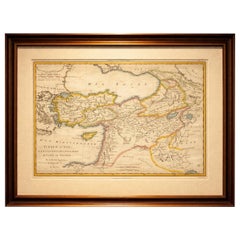
Ancient Syria & Assyria Map — Biblical Near East, Wilkinson London 1815

Ancient Syria & Assyria Map — Biblical Near East, Wilkinson London 1815

Located in Langweer, NL

Ancient Syria & Assyria Map — Biblical Near East, Wilkinson London 1815 This finely engraved and original hand-colored antique map titled Syria et Assyria presents a detailed reconstruction of the ancient Near East, published in London in 1815 by the noted cartographer and publisher Robert Wilkinson. Created during the early nineteenth century’s renewed scholarly interest in classical and biblical geography, the map illustrates the historical landscapes of Syria, Mesopotamia, and surrounding regions as described by Greek, Roman, and early historical sources. The map extends from the eastern Mediterranean coastline across the Levant and deep into Mesopotamia, encompassing territories that today include Syria, Lebanon, Israel, Iraq, and parts of Turkey and Iran. Regions such as Syria, Assyria, Babylonia, Chaldea, Mesopotamia, and Media are clearly defined through delicate original hand coloring, allowing viewers to distinguish ancient political and cultural divisions at a glance. Important historical cities appear throughout the composition, including Damascus, Palmyra, Babylon, Nineveh, Antioch, and Jerusalem, alongside rivers fundamental to early civilization such as the Euphrates and Tigris. Cyprus is shown prominently offshore, reinforcing the map’s eastern Mediterranean context and trade connections of antiquity. Desert regions labeled *Arabia Deserta* evoke the classical geographic understanding of the Near Eastern frontier. Wilkinson’s historical atlas sought not to depict contemporary borders but to visualize the ancient world itself — an intellectual endeavor shaped by Enlightenment scholarship, archaeology, and growing European fascination with biblical history. The elegant engraving style, restrained pastel palette, and balanced typography give the map both academic authority and refined decorative appeal. Today, maps from Wilkinson’s classical atlas are highly appreciated for their clarity, historical atmosphere, and suitability for interior display, particularly in studies, libraries, or spaces inspired by classical or Middle Eastern history. Condition: Good antique condition overall. Light age-related toning with scattered spotting and minor handling wear mainly to the margins. Plate mark visible. Framing tips: Particularly striking in a dark walnut or warm gilt frame with an ivory mount. A generous mat enhances the subtle hand coloring and emphasizes the map’s panoramic horizontal composition. Technique: Copperplate engraving with original hand color Maker: Robert Wilkinson, London, 1815 Keywords: Syria et Assyria map, ancient Syria map, Assyria antique map, Mesopotamia map, Babylonia, Chaldea, Media, Nineveh, Babylon, Damascus, Palmyra, Antioch, Jerusalem, Judea, Cyprus antique map...

Category

Early 19th Century British Antique Engraved Furniture

Materials

Paper

Antique Map of Eastern Germany, Bohemia, Moravia & Silesia – 1858

Antique Map of Eastern Germany, Bohemia, Moravia & Silesia – 1858

Located in Langweer, NL

Antique Map of Eastern Germany, Bohemia, Moravia & Silesia – 1858 Detailed 19th-century engraved map titled "Östliches Deutschland mit Böhmen, Mähren und Schlesien" (Eastern German...

Category

Mid-19th Century German Antique Engraved Furniture

Materials

Paper

Antique Map Sweden and Norway, Scandinavia, Robert de Vaugondy, 1782

Antique Map Sweden and Norway, Scandinavia, Robert de Vaugondy, 1782

Located in Langweer, NL

Antique Map Sweden and Norway, Scandinavia, Robert de Vaugondy, 1782 This antique copperplate engraved map titled “Suede et Norvege” presents a refined late-18th-century depiction o...

Category

18th Century French Antique Engraved Furniture

Materials

Paper

Armored Emperor Maximilian on Horseback in Ornate Renaissance Parade Dress. 1845

Armored Emperor Maximilian on Horseback in Ornate Renaissance Parade Dress. 1845

Located in Langweer, NL

Armored Emperor Maximilian on Horseback in Ornate Renaissance Parade Dress This richly detailed hand-colored print, numbered MCCCC No.74, depicts Emperor Maximilian I in full ceremo...

Category

Mid-19th Century French Antique Engraved Furniture

Materials

Paper

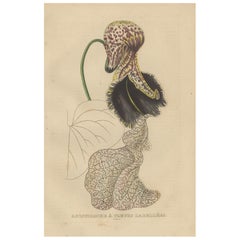
Antique Botanical Print of Aristolochia à Fleurs Labellées - 19th Century

Antique Botanical Print of Aristolochia à Fleurs Labellées - 19th Century

Located in Langweer, NL

Title: Antique Botanical Print of Aristolochia à Fleurs Labellées - 19th Century Description: This antique botanical print, titled "Aristolochie à Fleurs Labellées," is a stunning 1...

Category

1820s Antique Engraved Furniture

Materials

Paper

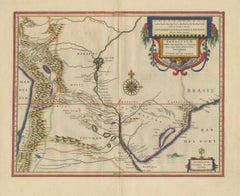
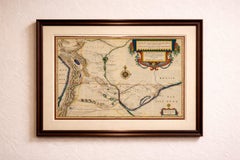
Terra Firma, Blaeu c.1642 – Antique Map of New Granada & Popayán

Terra Firma, Blaeu c.1642 – Antique Map of New Granada & Popayán

Located in Langweer, NL

Terra Firma, Blaeu c.1642 – Antique Map of New Granada & Popayán A richly detailed and highly decorative map of northern South America by Willem Blaeu, one of the most prestigious n...

Category

Mid-17th Century Dutch Antique Engraved Furniture
Materials

Paper

Philippines, China, Japan & Korea – Jesuit Map with Guam Inset, Scherer c.1700

Philippines, China, Japan & Korea – Jesuit Map with Guam Inset, Scherer c.1700

Located in Langweer, NL

Title: Philippines, China, Japan & Korea – Jesuit Map with Guam Inset, Scherer c.1700 Description: This fascinating and richly detailed map depicts the Philippines, China, Japan, an...

Category

Early 18th Century German Antique Engraved Furniture

Materials

Paper

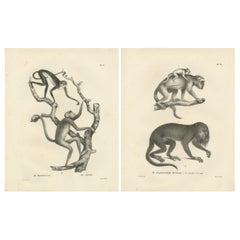
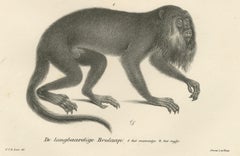
Orangutan, Chimpanzee, Siamang & Gibbons, Lithographs by C.Last, 1836, Primates

Orangutan, Chimpanzee, Siamang & Gibbons, Lithographs by C.Last, 1836, Primates

Located in Langweer, NL

These two lithographs present primates in naturalistic settings, with careful attention to their anatomy and behavior. They are part of a series drawn by Carel Christiaan Antony Last...

Category

1830s Antique Engraved Furniture

Materials

Paper

A Silver Russian Torah Pointer, Kavkaz 19th Century

A Silver Russian Torah Pointer, Kavkaz 19th Century

Located in New York, NY

A Very Rare Silver Russian Torah Pointer made in Kavkaz in the 19th Century. Many Pieces of Judaica were made by Russian silversmiths in Russia and after they emigrated to America R...

Category

19th Century Russian Antique Engraved Furniture

Materials

Silver

Antique Liquorice Botanical Print, Glycyrrhiza Glabra & Echinata, c.1831

Antique Liquorice Botanical Print, Glycyrrhiza Glabra & Echinata, c.1831

Located in Langweer, NL

Antique Liquorice Botanical Print, Glycyrrhiza Glabra & Echinata, c.1831 Description: This detailed botanical engraving illustrates two liquorice species, Glycyrrhiza glabra and Gly...

Category

1830s German Antique Engraved Furniture

Materials

Paper

English Moths and Caterpillars on Oak and Rose – Antique Insect Engraving, 1720

English Moths and Caterpillars on Oak and Rose – Antique Insect Engraving, 1720

Located in Langweer, NL

English Moths and Caterpillars on Oak and Rose – Antique Insect Engraving, 1723 Published in London in 1723, this original hand-colored copper engraving forms part of Eleazar Albin’...

Category

Early 18th Century British Antique Engraved Furniture

Materials

Paper

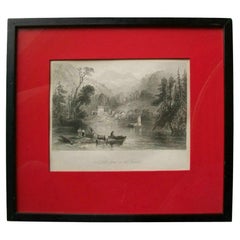
Antique engraving of Windsor Bridge on the Thames, Tombleson, c.1832–1834

Antique engraving of Windsor Bridge on the Thames, Tombleson, c.1832–1834

Located in Langweer, NL

Antique engraving of Windsor Bridge on the Thames, Tombleson, c.1832–1834 This detailed antique engraving depicts the old Windsor Bridge, a three-arched crossing over the River Thames linking Windsor in Berkshire with Eton in Buckinghamshire. The bridge was a vital crossing point in the early 19th century, carrying both pedestrians and traffic across the river. In this composition, the bridge is shown with a horse-drawn cart and several figures making their way across, while activity on the water and along the riverbanks brings additional life to the scene. In the foreground, a barge with a furled sail moves slowly beneath the bridge, manned by boatmen engaged in their work. To the right, figures in brightly colored dress gather by the riverbank, one leaning on a pole near the water’s edge while others attend to daily activities. The houses and riverside buildings frame the view, adding to the sense of a bustling riverside townscape. The whole scene is animated by the interplay of people, architecture, and the flowing Thames, presenting Windsor as both a place of commerce and community. The drawing is by William Tombleson (1795–1846), a leading English topographical draughtsman whose series Views of the Thames and Medway (published between 1832 and 1834) was highly admired for its combination of accuracy and artistic style. The engraving was executed by Charles Mottram...

Category

1830s British Antique Engraved Furniture

Materials

Paper

Antique Edinburgh City Map 1885, Victorian Ordnance Atlas Plan by G.W. Bacon

Antique Edinburgh City Map 1885, Victorian Ordnance Atlas Plan by G.W. Bacon

Located in Langweer, NL

Antique Edinburgh City Map 1885, Victorian Ordnance Atlas Plan by G.W. Bacon A finely detailed antique city plan of Edinburgh, published in 1885 by the London cartographer George W. Bacon as part of the New Large Scale Ordnance Atlas of the British Isles with Plans of Towns. Based on official Ordnance and actual surveys, the map documents the Scottish capital during a period of remarkable industrial growth and urban transformation in the late Victorian era. The plan presents Edinburgh with exceptional clarity, illustrating streets, railway lines, public buildings, squares, and expanding residential districts at a time when modern infrastructure reshaped historic European cities. The precise grid system and indexed layout reflect the practical surveying purpose of the atlas while simultaneously producing a striking architectural composition appreciated today for its decorative qualities. Soft original hand coloring highlights parks, waterways, and key districts, creating visual contrast between dense urban development and open green spaces. Areas such as The Meadows and surrounding parklands introduce balance and rhythm across the composition, enhancing both readability and aesthetic appeal. The map captures Edinburgh before major twentieth-century redevelopment, preserving a valuable historical record of the Victorian cityscape. George W. Bacon was one of the leading London publishers of accessible yet highly accurate cartographic works in the nineteenth century. His atlas plans translated official survey information into elegant engraved maps suitable for both reference and display, and today they are increasingly valued for their blend of historical importance and interior design appeal. This example functions equally as a scholarly document and a refined decorative artwork, ideal for collectors of antique cartography, Scottish historical material, or designers seeking an intellectually engaging statement piece for contemporary or traditional interiors. Condition Good antique condition overall. Light age-related toning and scattered spotting consistent with age. Minor handling wear to the margins and faint fold lines as issued. Presents attractively and frames well. Framing Tips Best presented in a dark walnut, black, or ebonized frame with a generous ivory or museum-white mat. A wider mat enhances the architectural detail and gives the map a calm gallery presence suitable for studies, libraries, or modern interiors. Technique: Lithograph with original hand color Maker: George W. Bacon, London, 1885 Keyword Block antique map, Edinburgh map, Scotland map...

Category

Late 19th Century British Antique Engraved Furniture

Materials

Paper

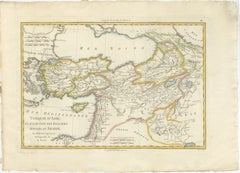
Antique Map of Syria, Mount Lebanon and Palestine – circa 1760

Antique Map of Syria, Mount Lebanon and Palestine – circa 1760

Located in Langweer, NL

Map of Syria and Mount Lebanon – “Carte de la Syrie”, c.1760 This finely engraved 18th-century map, titled Carte de la Syrie nouvellement corrigée, presents the region of Syria and ...

Category

Mid-18th Century French Antique Engraved Furniture
Materials

Paper

Large Pair of Swedish Gilt Metal and Engraved Glass Mirrors after Precht

Large Pair of Swedish Gilt Metal and Engraved Glass Mirrors after Precht

By Burchard Precht

Located in London, GB

Large pair of Swedish gilt metal and engraved glass mirrors after Precht Swedish, 19th Century Height 132cm, width 75cm, depth 5cm Crafted in 19th century Sweden, the design of this elegant pair of mirrors is after the work of the Precht family. Burchard (d.1738), Gustav (d. 1763) and Christian (d. 1779) Precht were synonymous with 18th century mirror production in Sweden and crafted exceptional pieces for the Swedish court. Mounted on an ebonised wood backing, the front of the mirrors is adorned with gilt metal frames and engraved glass detailing. The egg and dart motif is used for the gilt metal frames. The glass is engraved with floral and scrolling patterns, in between which are gilt metal mounts of a similar design. Centering each mirror is a large glass plane. Surmounting the mirror is a shaped, gilt metal, and engraved glass panel with adornments like the ones below. Topping these are gilt metal vases filled with rich bouquets. Celebrating the work of 18th century Swedish mirror...

Category

19th Century Swedish Baroque Antique Engraved Furniture

Materials

Metal

18th-Century Holy Roman Empire Engraving with Heraldry and Imperial Symbols

18th-Century Holy Roman Empire Engraving with Heraldry and Imperial Symbols

Located in Langweer, NL

Icon Synoptica Sac. Rom. Imp. Electorum Ducum cum Principum – 18th-Century Allegorical Engraving This fascinating 18th-century engraving, 'Icon Synoptica Sac. Rom. Imp. Electorum ...

Category

1740s Antique Engraved Furniture

Materials

Paper

Biblical Chronology Chart from Noah to Abraham — Wilkinson 1823

Biblical Chronology Chart from Noah to Abraham — Wilkinson 1823

Located in Langweer, NL

Post-Diluvian Patriarchs Chrono-Genealogical Chart — Biblical Timeline, Wilkinson 1823 This finely engraved and delicately hand-colored chrono-genealogical chart titled “Chrono-Gene...

Category

Early 19th Century British Antique Engraved Furniture
Materials

Paper

Engraving of Maximilian I° Roman Emperor, 16th Century, Antique Print

Engraving of Maximilian I° Roman Emperor, 16th Century, Antique Print

Located in Alessandria, Piemonte

ST/728-2. Engraving of Maximilian I°, Roman emperor, from the original engravings "The triumph of Maximilian " of the 16th and 17th centuries by Albrecht...

Category

Early 20th Century European Other Engraved Furniture

Materials

Paper

De Bry Engraving Expressio Germinum – Exotic Plants of St. Lawrence Island, 1598

De Bry Engraving Expressio Germinum – Exotic Plants of St. Lawrence Island, 1598

Located in Langweer, NL

De Bry Engraving “Expressio Germinum” – Exotic Plants of St. Lawrence Island, c.1598 A fascinating original 16th-century copper engraving from Theodor de Bry’s Petits Voyages (Frank...

Category

16th Century German Antique Engraved Furniture
Materials

Paper