Carved Paintings

490 Results
to
75
380
112
496
2
Height
to
Width
to
55
29
28
14
13
12
9
5
5
4
1
1
1
74
251
171
2
44
53
13
14
4
1
6
5
1
5
2
1
3
427
295
288
243
202
396
124
62
58
40
498
498
498
15
7
6
4
3
Technique: Carved
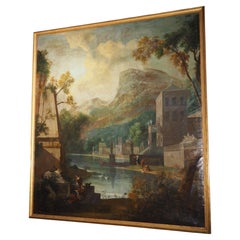
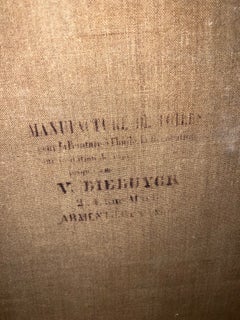
Rare and Monumental 18th C Italianate Landscape Oil on Canvas, Dutch Old Master

Rare and Monumental 18th C Italianate Landscape Oil on Canvas, Dutch Old Master

Located in Dallas, TX

This is a Dutch Old Master oil on canvas, measuring 130 inches tall by 119 wide (~10.8 Feet x 10 Feet). Known as a behangsel or large-scale room decoration commissioned for Dutch or ...

Category

18th Century Dutch Antique Carved Paintings

Materials

Gold Leaf

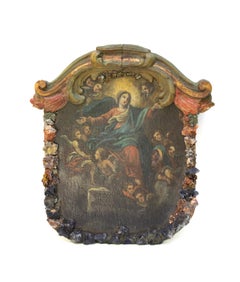
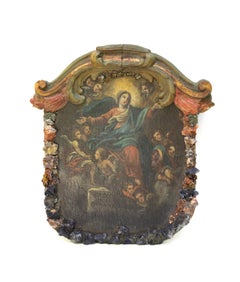
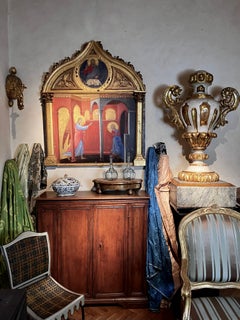
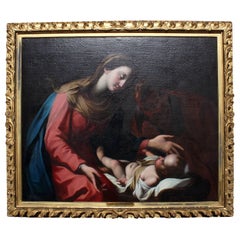
17th Century Italian 'Madonna and Angels' Painting Framed with Gems and Minerals

17th Century Italian 'Madonna and Angels' Painting Framed with Gems and Minerals

By Interi

Located in Columbia, SC

17th century Italian oil painting of Mary surrounded by cherub angels framed with a 17th century Italian pediment and fluorite, pyrite, chalcedony, jasper, and barite natural specime...

Category

17th Century Italian Baroque Antique Carved Paintings

Materials

Rock Crystal, Quartz, Pyrite

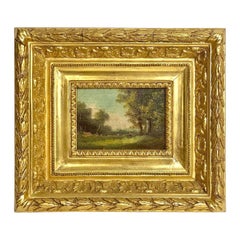
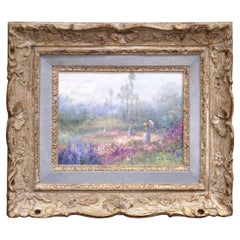
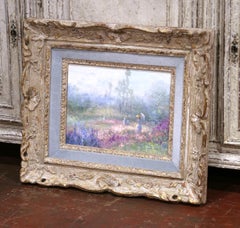
Adolphe Valette, Small Landscape Oil on Panel, Late 19th Century

Adolphe Valette, Small Landscape Oil on Panel, Late 19th Century

By Adolphe Valette

Located in LA CIOTAT, FR

This small oil on panel is attributed to Adolphe Valette (1876–1942), the French painter who later became a leading figure of the Manchester School and mentor to L.S. Lowry. Dating f...

Category

Late 19th Century French Antique Carved Paintings

Materials

Giltwood, Paint

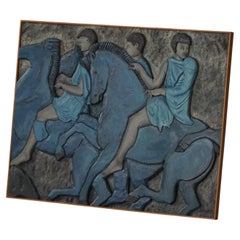
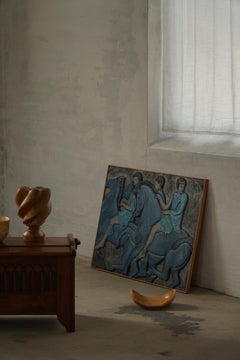
European Mid-20th Century, Modern Wall Relief with Figural Motif

European Mid-20th Century, Modern Wall Relief with Figural Motif

Located in Odense, DK

A beautiful mid-century modern wall relief panel featuring a dynamic figural composition rendered in sculptural low relief. The artwork depicts stylized human figures in motion along...

Category

Mid-20th Century Greek Classical Greek Carved Paintings

Materials

Ceramic, Plaster, Wood

English Victorian Hunting Dog Painting

English Victorian Hunting Dog Painting

Located in Queens, NY

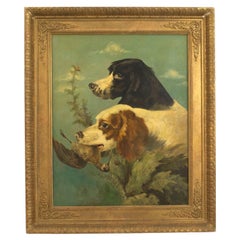
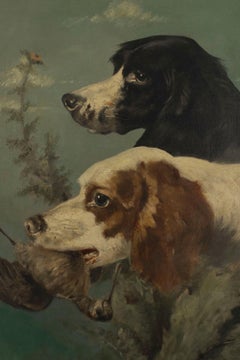
English Victorian oil painting of 2 hunting dogs with one hold a bird in a gilt frame with carved corners and edge.

Category

19th Century British British Colonial Antique Carved Paintings

Materials

Paint

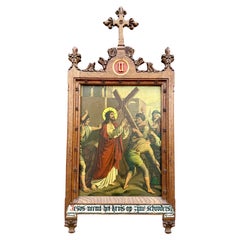
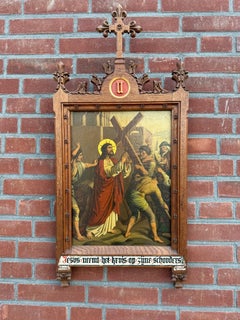
Fine Gothic Painting / 2nd Station Crucifixion, Jesus Takes Up His Cross

Fine Gothic Painting / 2nd Station Crucifixion, Jesus Takes Up His Cross

Located in Lisse, NL

Another stunning hand-painted oil on canvas work of religious art. This antique oil painting was first hand-painted on canvas and later mounted onto a zinc backplate .. a traditiona...

Category

Early 19th Century European Gothic Revival Antique Carved Paintings

Materials

Iron, Zinc

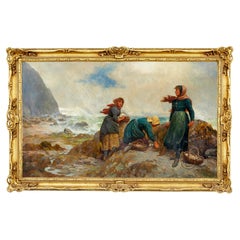
19th century oil painting of yorkshire flither pickers by Robert Farren

19th century oil painting of yorkshire flither pickers by Robert Farren

Located in Debenham, Suffolk

19th century oil painting of yorkshire flither pickers by robert farren circa 1890. Painted by robert b. Farren (1832-1912) This is a a skilfully executed and coloured oil painting...

Category

Late 19th Century English Victorian Antique Carved Paintings

Materials

Wood, Giltwood, Paint

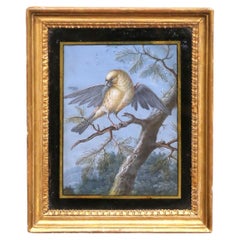
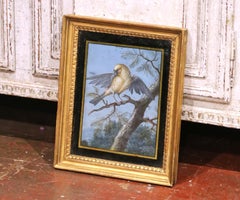
19th Century French Fixé Sous Verre Bird Painting in Carved Giltwood Frame

19th Century French Fixé Sous Verre Bird Painting in Carved Giltwood Frame

Located in Dallas, TX

19th Century French Fixé Sous Verre Bird Painting in Giltwood Frame. Decorate a study, powder room, or gallery wall with this charming antique French fixé sous verre painting crafted...

Category

Mid-19th Century French Antique Carved Paintings

Materials

Glass, Giltwood

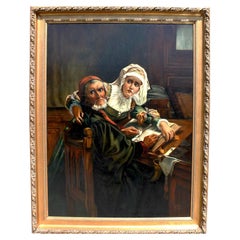
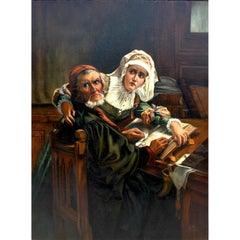
Oil on Canvas "the Prohibited Reading" After Karel Ooms

Oil on Canvas "the Prohibited Reading" After Karel Ooms

Located in Los Angeles, CA

A Large Continental Oil on Canvas "The Prohibited Reading " after Karel Ooms (Belgium, 1845-1900). This beautiful executed painting depicts a historical scene of an old man and a young woman who are huddled over a bible. The pair is gazing in apparent concern or alarm, over the old man's shoulder, towards something outside of the picture. The scene is likely set in the 16th or 17th century when Protestants were prosecuted, amongst others, for reading the bible in the vernacular, a practice prohibited by the Catholic Church at the time. Signed (l/r) A. Ribas 15-12-913. Within a giltwood carved frame. circa: Probably Belgium, 1913. Karel Ooms was born in Dessel on January 27, 1845 as the youngest son of a large peasant family. At school his extraordinary talent for drawing was discovered. When he was twelve his hometown provided financial support which allowed him to study at the Antwerp Academy of fine Arts. One of his teachers at the Academy was Nicaise de Keyser, one of the key figures in the Belgian Romantic-historical school of painting and a painter of mainly history paintings and portraits. After graduating from the Academy 1865 Karel Ooms was welcomed with pomp in his home town Dessel. He painted two altarpieces for the local church Saint Nicolas, to express his gratitude to his city. Karel Ooms settled as an independent artist in Antwerp around 1871. He quickly established a reputation as a portrait painter. In addition, he received commissions for religious paintings and history paintings. He gained particular recognition with two large paintings...

Category

Early 20th Century Belgian Renaissance Revival Carved Paintings

Materials

Canvas, Giltwood

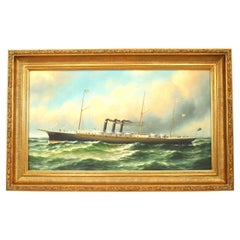
American Victorian Steamship Painting

American Victorian Steamship Painting

Located in Queens, NY

American Victorian style (20th Century) oil painting on canvas depicting a black steamship with American flag in carved gilt frame.

Category

20th Century American Victorian Carved Paintings

Materials

Canvas

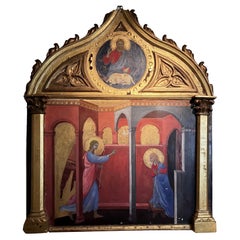
Italian Renaissance Style Religious Tempera Painting on Gold Ground Wood Panel

Italian Renaissance Style Religious Tempera Painting on Gold Ground Wood Panel

Located in Firenze, IT

This Italian tempera painted on gilt wood gold ground panel is a Tuscan religious artwork in the style of late Renaissance - early Gothic period. The sc...

Category

19th Century Italian Renaissance Antique Carved Paintings

Materials

Gold Leaf

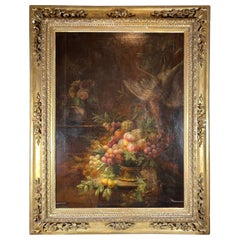
Italian 17th Century Still Life Painting in Period Carved Gilt Frame

Italian 17th Century Still Life Painting in Period Carved Gilt Frame

Located in Vero Beach, FL

Italian 17th century still life painting in period carved gilt frame Italian school still life painting from the workshop of a great master. The 17th century Baroque painting in oil...

Category

17th Century Italian Baroque Antique Carved Paintings

Materials

Canvas, Giltwood

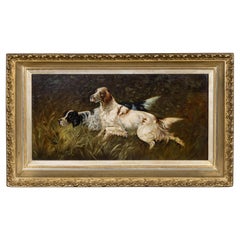
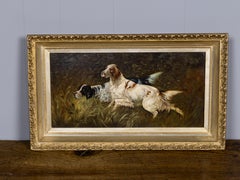
English 19th Century Oil on Board Painting of Two Setters in a Landscape

English 19th Century Oil on Board Painting of Two Setters in a Landscape

Located in Atlanta, GA

English 19th century oil on board painting depicting two setter-type sporting dogs in a natural landscape setting. The composition shows the pair moving alertly through tall grasses,...

Category

19th Century English Antique Carved Paintings

Materials

Wood, Paint

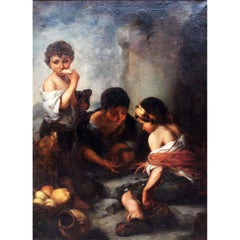
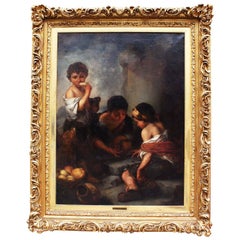
Large Oil on Canvas "Beggar Boys Playing Dice" After Bartolomé Esteban Murrillo

Large Oil on Canvas "Beggar Boys Playing Dice" After Bartolomé Esteban Murrillo

By Bartolomé Esteban Murillo

Located in Los Angeles, CA

A fine and large 19th century oil on canvas after Bartolomé Esteban Murrillo's (Spanish, 1617-1682) Masterpiece "Beggar Boys Playing Dice" (The original work by Murillo was painted in 1675). The impressive artwork depicts two young boys playing dice while another eats a piece of fruit as his dog watches on., within an ornate gildwood and gesso frame bearing a label from the faming company Bigelow & Jordan. The original work by Murillo is currently at the Alte Pinakothek Museum in Munich, Germany. The present work is signed: L. Rüber. Circa: Munich, Late 19th Century. Bartolomé Esteban Murillo (born late December 1617, baptized January 1, 1618 – April 3, 1682) was a Spanish Baroque painter. Although he is best known for his religious works, Murillo also produced a considerable number of paintings of contemporary women and children. These lively, realist portraits of flower girls, street urchins, and beggars constitute an extensive and appealing record of the everyday life of his times. Murillo was born to Gaspar Esteban and María Pérez Murillo. He may have been born in Seville or in Pilas, a smaller Andalusian town. It is clear that he was baptized in Seville in 1618, the youngest son in a family of fourteen. His father was a barber and surgeon. His parents died when Murillo was still very young, and the artist was largely brought up by his aunt and uncle. Murillo began his art studies under Juan del Castillo in Seville. There he became familiar with Flemish painting and the "Treatise on Sacred Images" of Molanus (Ian van der Meulen or Molano). The great commercial importance of Seville at the time ensured that he was subject to influences from other regions. His first works were influenced by Zurbarán, Jusepe de Ribera and Alonzo Cano, and he shared their strongly realist approach. As his painting developed, his more important works evolved towards the polished style that suited the bourgeois and aristocratic tastes of the time, demonstrated especially in his Roman Catholic religious works. In 1642, at the age of 26, he moved to Madrid, where he most likely became familiar with the work of Velázquez, and would have seen the work of Venetian and Flemish masters in the royal collections; the rich colors and softly modeled forms of his subsequent work suggest these influences. In 1645 he returned to Seville and married Beatriz Cabrera y Villalobos, with whom he eventually had eleven children. In that year, he painted eleven canvases for the convent of St. Francisco el Grande in Seville. These works depicting the miracles of Franciscan saints vary between the Zurbaránesque tenebrism of the Ecstasy of St Francis and a softly luminous style (as in Death of St Clare...

Category

Late 19th Century German Baroque Antique Carved Paintings

Materials

Gesso, Canvas, Wood
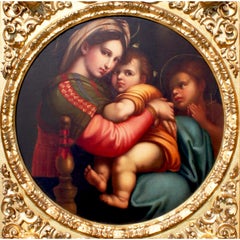
After Raffaello Sanzio 1483-1520 Raphael La Madonna della Seggiola Oil on Canvas

After Raffaello Sanzio 1483-1520 Raphael La Madonna della Seggiola Oil on Canvas

By Raphael (Raffaello Sanzio da Urbino)

Located in Los Angeles, CA

A fine Italian 19th century oil painting on canvas "La Madonna della Seggiola" after Raphael (Raffaello Sanzio da Urbino 1483-1520) The circular canvas depicting a seated Madonna holding an infant Jesus Christ next to a child Saint John the Baptist, all within a massive carved gilt wood and gesso frame (all high quality gilt is original) which is identical to the frame on Raphael's original artwork. This painting is a 19th Century copy of Raphael's Madonna della Seggiola painted in 1514 and currently exhibited and part of the permanent collection at the Palazzo Pitti, Galleria Palatina, Florence, Italy. The bodies of the Virgin, Christ, and the boy Baptist fill the whole picture. The tender, natural looking embrace of the Mother and Child, and the harmonious grouping of the figures in the round, have made this one of Raphael's most popular Madonnas. The isolated chair leg is reminiscent of papal furniture, which has led to the assumption that Leo X himself commissioned the painting, circa 1890-1900. Subject: Religious painting Measures: Canvas height: 29 1/4 inches (74.3 cm) Canvas width: 29 1/4 inches (74.3 cm) Painting diameter: 28 1/4 inches (71.8 cm) Frame height: 57 7/8 inches (147 cm) Frame width: 45 1/2 inches (115.6 cm) Frame depth: 5 1/8 inches (13 cm).   Raffaello Sanzio da Urbino (Italian, March 28 or April 6, 1483 - April 6, 1520), known as Raphael, was an Italian painter and architect of the High Renaissance. His work is admired for its clarity of form, ease of composition, and visual achievement of the Neoplatonic ideal of human grandeur. Together with Michelangelo and Leonardo da Vinci, he forms the traditional trinity of great masters of that period. Raphael was enormously productive, running an unusually large workshop and, despite his death at 37, leaving a large body of work. Many of his works are found in the Vatican Palace, where the frescoed Raphael Rooms were the central, and the largest, work of his career. The best known work is The School of Athens in the Vatican Stanza della Segnatura. After his early years in Rome much of his work was executed by his workshop from his drawings, with considerable loss of quality. He was extremely influential in his lifetime, though outside Rome his work was mostly known from his collaborative printmaking. After his death, the influence of his great rival Michelangelo was more widespread until the 18th and 19th centuries, when Raphael's more serene and harmonious qualities were again regarded as the highest models. His career falls naturally into three phases and three styles, first described by Giorgio Vasari: his early years in Umbria, then a period of about four years (1504–1508) absorbing the artistic traditions of Florence, followed by his last hectic and triumphant twelve years in Rome, working for two Popes and their close associates. Raphael was born in the small but artistically significant central Italian city of Urbino in the Marche region, where his father Giovanni Santi was court painter to the Duke. The reputation of the court had been established by Federico III da Montefeltro, a highly successful condottiere who had been created Duke of Urbino by the Pope - Urbino formed part of the Papal States - and who died the year before Raphael was born. The emphasis of Federico's court was rather more literary than artistic, but Giovanni Santi was a poet of sorts as well as a painter, and had written a rhymed chronicle of the life of Federico, and both wrote the texts and produced the decor for masque-like court entertainments. His poem to Federico shows him as keen to show awareness of the most advanced North Italian painters, and Early Netherlandish artists as well. In the very small court of Urbino he was probably more integrated into the central circle of the ruling family than most court painters. Federico was succeeded by his son Guidobaldo da Montefeltro, who married Elisabetta Gonzaga, daughter of the ruler of Mantua, the most brilliant of the smaller Italian courts for both music and the visual arts. Under them, the court continued as a centre for literary culture. Growing up in the circle of this small court gave Raphael the excellent manners and social skills stressed by Vasari. Court life in Urbino at just after this period was to become set as the model of the virtues of the Italian humanist court through Baldassare Castiglione's depiction of it in his classic work The Book of the Courtier, published in 1528. Castiglione moved to Urbino in 1504, when Raphael was no longer based there but frequently visited, and they became good friends. He became close to other regular visitors to the court: Pietro Bibbiena and Pietro Bembo, both later cardinals, were already becoming well known as writers, and would be in Rome during Raphael's period there. Raphael mixed easily in the highest circles throughout his life, one of the factors that tended to give a misleading impression of effortlessness to his career. He did not receive a full humanistic education however; it is unclear how easily he read Latin. Early Life and Works His mother Màgia died in 1491 when Raphael was eight, followed on August 1, 1494 by his father, who had already remarried. Raphael was thus orphaned at eleven; his formal guardian became his only paternal uncle Bartolomeo, a priest, who subsequently engaged in litigation with his stepmother. He probably continued to live with his stepmother when not staying as an apprentice with a master. He had already shown talent, according to Vasari, who says that Raphael had been "a great help to his father". A self-portrait drawing from his teenage years shows his precocity. His father's workshop continued and, probably together with his stepmother, Raphael evidently played a part in managing it from a very early age. In Urbino, he came into contact with the works of Paolo Uccello, previously the court painter (d. 1475), and Luca Signorelli, who until 1498 was based in nearby Città di Castello. According to Vasari, his father placed him in the workshop of the Umbrian master Pietro Perugino as an apprentice "despite the tears of his mother". The evidence of an apprenticeship comes only from Vasari and another source, and has been disputed—eight was very early for an apprenticeship to begin. An alternative theory is that he received at least some training from Timoteo Viti, who acted as court painter in Urbino from 1495.Most modern historians agree that Raphael at least worked as an assistant to Perugino from around 1500; the influence of Perugino on Raphael's early work is very clear: "probably no other pupil of genius has ever absorbed so much of his master's teaching as Raphael did", according to Wölfflin. Vasari wrote that it was impossible to distinguish between their hands at this period, but many modern art historians claim to do better and detect his hand in specific areas of works by Perugino or his workshop. Apart from stylistic closeness, their techniques are very similar as well, for example having paint applied thickly, using an oil varnish medium, in shadows and darker garments, but very thinly on flesh areas. An excess of resin in the varnish often causes cracking of areas of paint in the works of both masters. The Perugino workshop was active in both Perugia and Florence, perhaps maintaining two permanent branches. Raphael is described as a "master", that is to say fully trained, in December 1500. His first documented work was the Baronci altarpiece for the church of Saint Nicholas of Tolentino in Città di Castello, a town halfway between Perugia and Urbino. Evangelista da Pian di Meleto, who had worked for his father, was also named in the commission. It was commissioned in 1500 and finished in 1501; now only some cut sections and a preparatory drawing remain. In the following years he painted works for other churches there, including the Mond Crucifixion (about 1503) and the Brera Wedding of the Virgin (1504), and for Perugia, such as the Oddi Altarpiece. He very probably also visited Florence in this period. These are large works, some in fresco, where Raphael confidently marshals his compositions in the somewhat static style of Perugino. He also painted many small and exquisite cabinet paintings in these years, probably mostly for the connoisseurs in the Urbino court, like the Three Graces and St. Michael, and he began to paint Madonnas and portraits. In 1502 he went to Siena at the invitation of another pupil of Perugino, Pinturicchio, "being a friend of Raphael and knowing him to be a draughtsman of the highest quality" to help with the cartoons, and very likely the designs, for a fresco series in the Piccolomini Library in Siena Cathedral. He was evidently already much in demand even at this early stage in his career. Influence of Florence Raphael led a "nomadic" life, working in various centres in Northern Italy, but spent a good deal of time in Florence, perhaps from about 1504. Although there is traditional reference to a "Florentine period...

Category

19th Century Italian Baroque Antique Carved Paintings

Materials

Gesso, Canvas, Wood
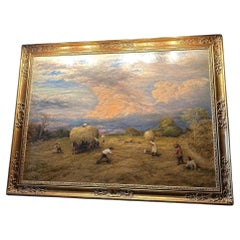
Old Master John Linnell Landscape Collector Painting Oil on Canvas Museum Art

Old Master John Linnell Landscape Collector Painting Oil on Canvas Museum Art

By John Linnell (b.1792)

Located in West Hollywood, CA

Old Master John Linnell Landscape Collector Painting Oil on Canvas Museum Art. “The Barley Field” By John Linnell 1874 / Oil on Canvas / 1792-1882 / English . SIGNED and DATED at the...

Category

19th Century European Antique Carved Paintings

Materials

Canvas, Wood, Giltwood, Paint

19th Century English Horse and Hound Oil Painting in Frame, Signed C. Goddard

19th Century English Horse and Hound Oil Painting in Frame, Signed C. Goddard

Located in Atlanta, GA

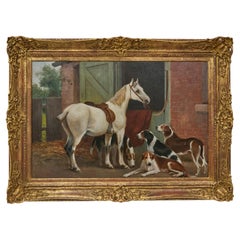
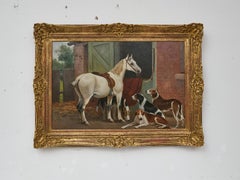
An English oil on canvas painting signed C. Goddard, depicting a horse and hound dogs. This English oil on canvas painting, signed by C. Goddard, presents a serene scene of a white horse and four hound dogs gathered in front of a stable. The grouping suggests a sense of companionship and belonging among the animals, with the horse tethered...

Category

20th Century English Carved Paintings

Materials

Giltwood, Paint

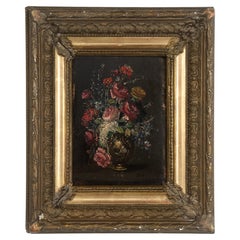
Victorian Petite Painting

Victorian Petite Painting

Located in Highwood, IL

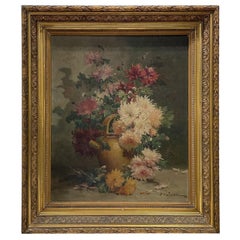
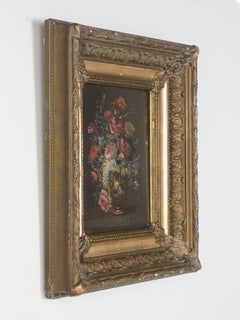
Victorian Classic Still Life Painting of Flowers from the late 1800's. The Antique Oil Painting is on panel and features a dark floral still life setting of a multi-colored Bouquet o...

Category

1880s Victorian Antique Carved Paintings

Materials

Giltwood

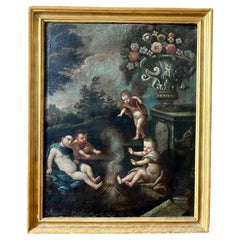
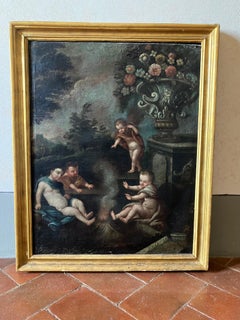
Italian Baroque Oil on Canvas Painting with Putti, Cherubs in Gold Leaf Frame

Italian Baroque Oil on Canvas Painting with Putti, Cherubs in Gold Leaf Frame

Located in Firenze, IT

This antique Baroque period oil on canvas painting, is an authentic 1600s Italian School Allegory of Winter featuring putti and cherubs in a rich still life, and housed in its original golden frame, is a rare masterpiece preserved in prima tela (original first canvas). Sourced directly from an exclusive, historic private villa in Tuscany, this exceptional piece has been meticulously preserved by the same noble family for generations. Emerging on the art market for the very first time, this late 17th-century canvas represents a premier acquisition from The Tuscan Villa Collection, offering absolute authenticity and prestigious provenance. Design, Details & Attribution The composition is a sophisticated allegorical study executed with the dramatic chiaroscuro and emotional depth characteristic of the late Italian 1600s. Four masterfully proportioned putti (cherubs) gather around a small fire, their flesh tones illuminated by a theatrical play of light against a deep, crepuscular Italianate landscape. To the right, a monumental Baroque urn overflowing with a finely detailed floral still life anchors the scene, symbolizing the cycles of nature. The dense brushwork, rich earthy palette, and expressive anatomical rendering point directly to a highly skilled hand active in the Italian Baroque School circa 1680-1710. Stylistically, the artwork shares strong affinities with the classicizing Baroque circle of Carlo Cignani and central Italian genre painters of the era. The canvas remains housed in its spectacular coeval original frame, which retains its genuine gold leaf gilding and a magnificent, deep, age-earned patina. Styling & Placement With its grand visual presence and historical importance, this authentic 17th-century canvas serves as an elite statement piece for high-end interiors. The Classical Anchor: Perfectly suited above an early 18th-century walnut console table or credenza in a formal dining room, entryway, or library, where the golden frame and warm tones create an immediate focal point. The Curated Contrast: Highly effective when placed in a minimalist, contemporary space. The juxtaposition of a genuine Baroque masterpiece against clean, modern architecture offers profound historical depth. Collection Harmony: This painting communicates beautifully with fine period furniture, particularly Biedermeier walnut pieces or Italian marquetry chests...

Category

17th Century Italian Baroque Antique Carved Paintings

Materials

Paint, Giltwood, Canvas

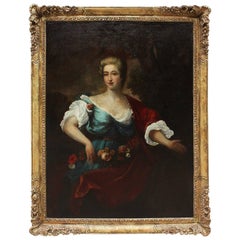
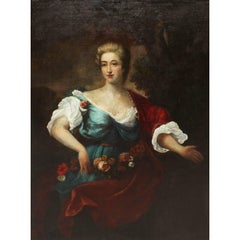
French 19th Century Oil on Canvas Portrait of Lady, Style of Jean-Marc Nattier

French 19th Century Oil on Canvas Portrait of Lady, Style of Jean-Marc Nattier

By Jean-Marc Nattier

Located in Los Angeles, CA

A very fine French 18th-19th century oil on canvas portrait of a posing lady with flowers, in the style after Jean-Marc Nattier (1685-1766) within an ornate gilt wood carved frame, c...

Category

Early 19th Century French Louis XV Antique Carved Paintings

Materials

Canvas, Giltwood

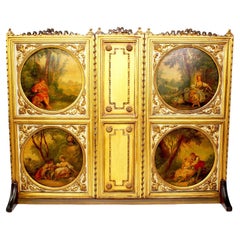
French 19th Century Louis XV & Vernis Martin Style Giltwood Fireplace Screen

French 19th Century Louis XV & Vernis Martin Style Giltwood Fireplace Screen

By Vernis Martin

Located in Los Angeles, CA

A very Fine and rare French 19th century Louis XV style giltwood carved Vernis Martin Stylefl fireplace screen. The rectangular carved giltwood panel surmounted with four circular oil paintings...

Category

Late 19th Century French Louis XV Antique Carved Paintings

Materials

Wood, Giltwood

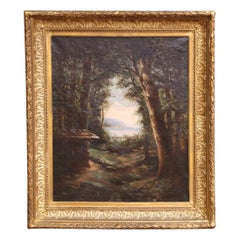
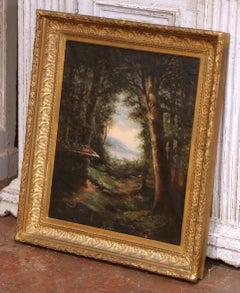
19th C. French Barbizon School Oil on Canvas Landscape in Giltwood Frame Signed

19th C. French Barbizon School Oil on Canvas Landscape in Giltwood Frame Signed

Located in Dallas, TX

This atmospheric antique French oil on canvas painting, dating to circa 1870, presents a beautifully rendered forest clearing opening toward a shimmering lake and distant mountains, ...

Category

Late 19th Century French Antique Carved Paintings

Materials

Giltwood, Canvas

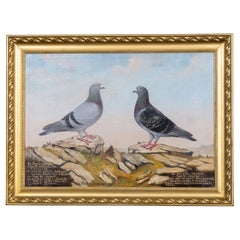
Belgian Oil Painting of Racing Pigeons with Competition Records, Signed Fraiture

Belgian Oil Painting of Racing Pigeons with Competition Records, Signed Fraiture

Located in Atlanta, GA

This early 20th-century Belgian oil on canvas painting presents a finely composed portrait of two racing pigeons, depicted in profile and set against a softly rendered rocky landscap...

Category

Early 20th Century Belgian Carved Paintings

Materials

Canvas, Wood, Paint

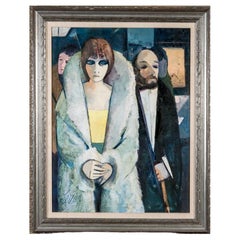
Charles Levier (French, 1920 - 2003) Figurative Large Oil On Canvas Montparnasse

Charles Levier (French, 1920 - 2003) Figurative Large Oil On Canvas Montparnasse

By Charles Levier

Located in Bridgeport, CT

Charles Levier born of a French Father and American mother. He was was active/lived in New York, California / United Kingdom, France and is known for landscape, still life and figura...

Category

Mid-20th Century French Mid-Century Modern Carved Paintings

Materials

Canvas, Wood
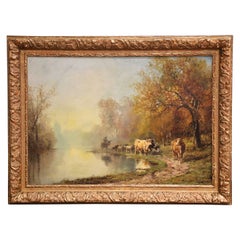
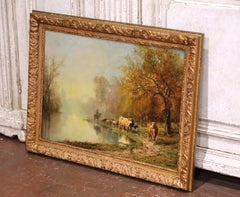
19th C. French Oil Painting with Herd in Carved Frame Signed Théodore Levigne

19th C. French Oil Painting with Herd in Carved Frame Signed Théodore Levigne

By Theodore Levigne

Located in Dallas, TX

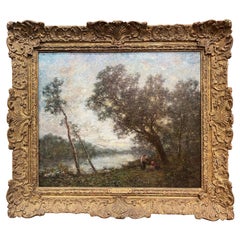
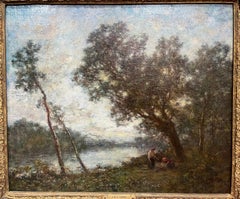
This antique oil on canvas painting by Théodore Levigne (1848–1912) captures a tranquil riverside scene at sunrise, as a herder leads cattle and sheep along a winding path beneath go...

Category

Late 19th Century French Antique Carved Paintings

Materials

Giltwood

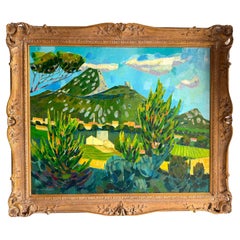
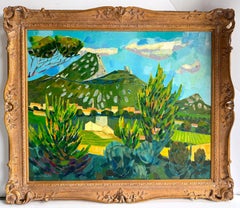
Gérard Calvet French, (b. 1926) Expressionist Gruissan Mountainous Landscape

Gérard Calvet French, (b. 1926) Expressionist Gruissan Mountainous Landscape

Located in West Palm Beach, FL

Gérard Calvet French (b. 1926)  Expressionist Gruissan Mountainous Landscape French painter and sculptor (1926–2017) An exquisite oil on canvas by renowned French painter and sculpt...

Category

20th Century French Modern Carved Paintings

Materials

Canvas, Giltwood

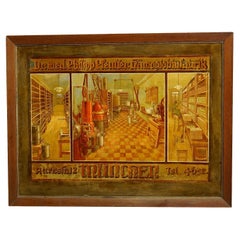
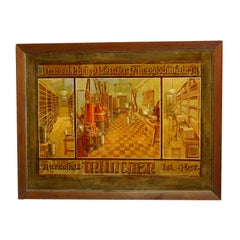
Antique Hand Painted Advertising Poster for a Hemoglobin Fabrication in Munich

Antique Hand Painted Advertising Poster for a Hemoglobin Fabrication in Munich

Located in Berghuelen, DE

Antique Handpainted Advertising Poster for a Hemoglobin Fabrication in Munich A large antique handpainted advertising poster for a hemoglobin fabrication in the 19th century in Muni...

Category

1890s German Black Forest Antique Carved Paintings

Materials

Wood

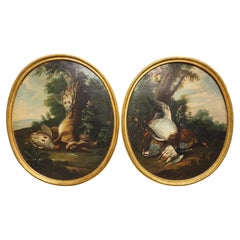
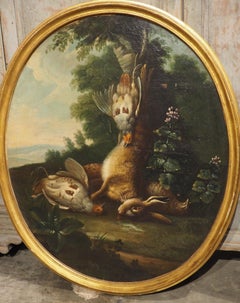
Pair of French Antique Hunt Trophy Paintings in Giltwood Frames, 19th Century

Pair of French Antique Hunt Trophy Paintings in Giltwood Frames, 19th Century

Located in Dallas, TX

More information coming soon… Set within giltwood frames, this pair of oval French paintings depicts two hunting trophies. Both displays of game are set within lush vegetation, inc...

Category

19th Century French Antique Carved Paintings

Materials

Canvas, Wood, Giltwood, Paint

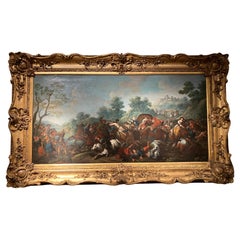
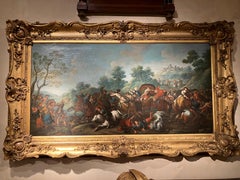
Italian 17th Century Baroque Battle Scene Oil on Canvas Painting Giltwood Frame

Italian 17th Century Baroque Battle Scene Oil on Canvas Painting Giltwood Frame

Located in Firenze, IT

This large Italian Baroque oil on canvas, dating from the late 17th century represents an exceptionally vivid battle scene with the unusual subject of a brigand ambush on a stagecoac...

Category

17th Century Italian Baroque Antique Carved Paintings

Materials

Gold Leaf

After Raffaello Sanzio 1483-1520 Raphael La Madonna Della Seggiola Oil on Canvas

After Raffaello Sanzio 1483-1520 Raphael La Madonna Della Seggiola Oil on Canvas

A fine Italian 19th century oil painting on canvas "La Madonna della Seggiola" after Raphael (Raffaello Sanzio da Urbino 1483-1520). The circular painted canvas depicting a seated Ma...

Category

Late 19th Century Italian Baroque Antique Carved Paintings

Materials

Canvas, Giltwood

19th Century French Landscape Painting Signed Corot in Original Giltwood Frame

19th Century French Landscape Painting Signed Corot in Original Giltwood Frame

By Jean-Baptiste-Camille Corot

Located in Dallas, TX

Decorate a study or dining room with this elegant French oil on canvas landscape, set in its original carved giltwood frame. Painted circa 1870 and signed “Corot” in red at the lower...

Category

Mid-19th Century French Antique Carved Paintings

Materials

Canvas, Giltwood

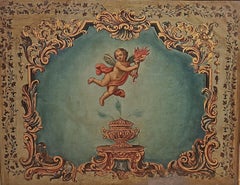
LATE 18TH-CENTURY PAINTING FEATURING AN ALLEGORY OF A WINGED PUTTO

LATE 18TH-CENTURY PAINTING FEATURING AN ALLEGORY OF A WINGED PUTTO

Located in Firenze, FI

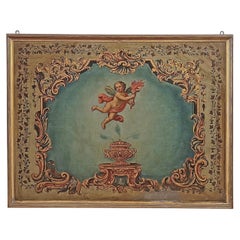
A refined oil painting on canvas, set in a carved and gilded wooden frame. The painting features an inner frame decorated with scrollwork friezes and floral motifs, at the center of ...

Category

Late 18th Century Italian Neoclassical Revival Antique Carved Paintings

Materials

Canvas, Wood, Paint

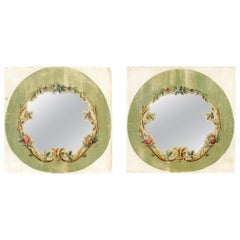
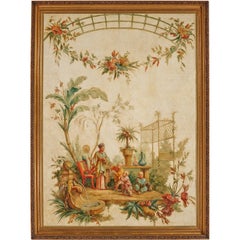
Pair of French 18th Century Green Floral Aubusson Cartoon Mirrors

Pair of French 18th Century Green Floral Aubusson Cartoon Mirrors

By Interi

Located in Columbia, SC

Pair of 18th century French Aubusson cartoon green floral mirrors. The french mirrors are Aubusson tapestry cartoon mirrors painted in gouache on pap...

Category

18th Century French Aubusson Antique Carved Paintings

Materials

Mirror, Wood, Paint, Paper

French 19th Century Framed Oil on Canvas Still-Life Painting Depicting Fruits

French 19th Century Framed Oil on Canvas Still-Life Painting Depicting Fruits

Located in Atlanta, GA

A French framed oil on canvas still-life painting from the 19th century depicting fruits. Born in France during the 19th century, this exquisite still-life painting depicts an abunda...

Category

19th Century French Antique Carved Paintings

Materials

Canvas, Giltwood, Paint

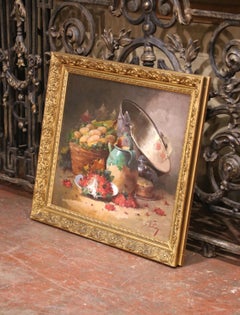
19th Century French Still Life Oil Painting in Carved Gilt Frame by G. Vallon

19th Century French Still Life Oil Painting in Carved Gilt Frame by G. Vallon

By G. Vallon

Located in Dallas, TX

Rich in detail and traditional charm, this late 19th-century French still life painting is signed by G. Vallon, an academic artist known for classical compositions and refined techni...

Category

Late 19th Century French Antique Carved Paintings

Materials

Giltwood

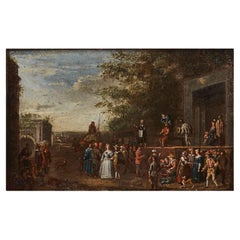
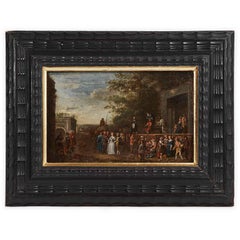
Dipinto Fiammingo su Rame 1650 circa Scena di Genere con Commedia delle Arti

Dipinto Fiammingo su Rame 1650 circa Scena di Genere con Commedia delle Arti

Located in Milano, MI

Dipinto Fiammingo del 1600 a olio su rame raffigurante uno scorcio di paesaggio con figure, una scena di genere con una moltitudine di personaggi affollati in una strada con delle ar...

Category

Mid-17th Century Baroque Antique Carved Paintings

Materials

Copper

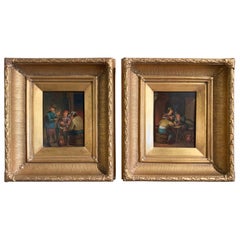
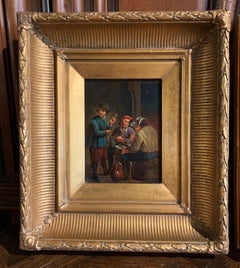
Pair of 19th Century Flemish Tavern Scene Oil Paintings on Copper

Pair of 19th Century Flemish Tavern Scene Oil Paintings on Copper

By David Teniers

Located in Dallas, TX

Evoking the lively tavern interiors of the Dutch and Flemish Old Masters, this engaging pair of antique genre paintings captures intimate scenes of men gathered over drinks, pipes, a...

Category

Mid-19th Century Belgian Antique Carved Paintings

Materials

Copper

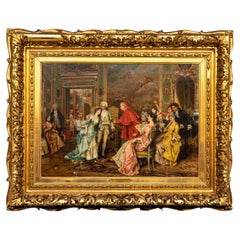
A 19th C. Italian Oil on Canvas "The Cardinal's Present" by Arturo Ricci

A 19th C. Italian Oil on Canvas "The Cardinal's Present" by Arturo Ricci

By Arturo Ricci

Located in New York, NY

A Marvelous 19th Century Italian Oil on Canvas titled "The Cardinal's Present" by Arturo Ricci. This oil on canvas is truly incredible and one of Ricci's best works of art. The sce...

Category

1880s Italian Louis XVI Antique Carved Paintings

Materials

Canvas, Wood
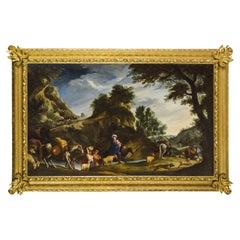
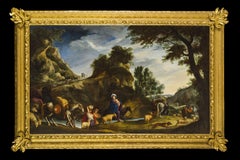
17th Century, Italian Painting by Pier Francesco Cittadini, Jacob and his Family

17th Century, Italian Painting by Pier Francesco Cittadini, Jacob and his Family

Located in IT

Pier Francesco Cittadini (Milan, 1616-Bologna, 1681) "Jacob and his family go to Egypt" Oil on canvas, cm 109 x 190 (canvas only) The valuable painting, made in oil on canvas, depicts Jacob and his family go to Egypt and we believe it can be, given the high quality painting, autograph work of Italian Pier Francesco Cittadini (Italy Milan, 1616 - Bologna, 1681) made after 1647. The work, in excellent condition is accompanied by a coeval frame in wood finely carved and golden. The scene depicted, which was confused with the Flight to Egypt in the past years, is instead identified with the biblical episode of Jacob’s journey. In the foreground, reading the painting from left to right, we see a caravan composed of animals, including donkeys, dromedaries, goats, dogs and horses and people, women, men and slaves, who carry on their journey along the banks of a river, following a path that to the right, would seem to lead to the through of a bridge. In addition to the watercourse is described an environment characterized by large rocks and impervious come far to cover the entire verticality of the canvas. On the left, in the distance, we see the tail of the caravan that runs along the steep path. Large trees enliven and harmonize the environment, as well as white and grey clouds characterize the predominantly clear sky and illuminated on the right by sunlight. The story is told in the Bible, Book of Genesis, 30, 25, passage in which is described the flight of Jacob from Haran after the contrasts with Laban, father of his wife Rachel. Jacob is the third great patriarch of the Bible. From his descendants originate the twelve generations of the people of Israel. He is the son of Isaac and Rebekah, who led him to flee from the wrath of Esau to Haran to seek refuge from his brother, Laban. At his uncle’s house Jacob met his daughter Rachel. As soon as he saw his cousin, Jacob was taken. Jacob will stay seven years in the service of Laban to marry his beloved Rachel. But Laban, with a deception, will give him in marriage first Lia, the least beautiful eldest daughter, and only after another seven years the splendid Rachel. From his first wife he will have several children, while Rachel will give birth to the beloved son, Joseph, who will become viceroy of Egypt. After years of service, Jacob asked to be paid with every dark-coloured garment among the sheep and every spotted and dotted garment among the goats. Laban accepted and sent away from his sons all the leaders of that kind. So Jacob took fresh branches of poplar, almond and plane tree, and flayed them, and put them in the troughs. The optical suggestion induced the goats and the sheep to conceive and give birth to dark, striped and dotted garments. He also ensured that all the strongest and healthiest leaders of the flock of Laban would drink near the barked branches, thus assuring a genetic superiority to his part of the flock. His flocks grew numerous and strong and he became richer than his relative, arousing envy. It was clear that Laban would not respect him much longer. At the suggestion of the Lord, Jacob decided to return to Canaan. Trying to avoid any possible dispute, he left with his family while Laban was absent for shearing sheep. But when, three days later, his uncle returned home, he became angry, feeling offended because Jacob had gone secretly and had not allowed him to greet his daughters and grandchildren. In addition, his teraphim, statuettes, or idols, which depicted the family deities, had disappeared. After 7 days of pursuit, Laban and his men reached Jacob’s group on Mount Gilead, in the mountainous region west of the Euphrates River, where his uncle and grandson had a stormy conversation. The younger man was outraged at being accused of stealing idols and told Labano to rummage through his family’s tents at will. Neither of them could know or even imagine that it was Rachel who took the idols and hid them in the saddle of the camel. During the search, she sat down firmly on the saddle, apologizing for not being able to get up, «because I usually have what happens to women» (Gen 31:35). So the loot wasn’t discovered. The author of this work was inspired by the composition of an engraving by Stefano Della Bella (1610-1664) of circa 1647. The engraving by Stefano della Bella bears the title "Iacob sur ses vieux jours quitte sans fascherie pour voir son filz Ioseph, sa terre et sa patrie" and is signed on the bottom left "Stef. of the Beautiful In. et fe." while on the right it is declared "Cum privil. Regis", that is with license of the king. Stefano Della Bella (Italy - Florence, May 18, 1610-Florence, July 12, 1664) was born in a family of painters, sculptors and goldsmiths and was left early orphan of his father sculptor, he dedicated himself first to the art of goldsmith at the school of Giovanni Benedetto Castiglione and Gasparo Mola, then turning his attention to drawing and engraving. He soon began drawing figures and copying the etchings of Jacques Callot, which inspired his early works. Under the protection of the Medici, in particular of Don Lorenzo, cadet son of Grand Duke Ferdinand I, Della Bella has the opportunity to make study trips to Rome, where he stayed from 1633-1636; In Rome he met French engravers and publishers of prints such as Israël Henriet and François Langlois, who influenced his decision to move to Paris in 1639, four years after the death of Callot. In Paris he soon reached, thanks to the engravings commissioned by Cardinal Richelieu, the success also worldly; he frequented courtiers, theatre artists and writers, while refusing too oppressive honors. In 1646-1647 he continued his travels in the Netherlands to Amsterdam, Antwerp and Dordrecht. He returned to Florence in 1650 and resumed working under the protection of the Medici court, working for his patrons. In 1656 he became a member of the Academy of Apatists. The painting object of this study is reasonably attributable to Pier Francesco Cittadini, or Pierfrancesco Cittadini, called the Milanese or the Franceschino (Italy - Milan, 1616-Bologna, 1681) as some exemplary stylistic comparisons proposed to follow can prove. Pier Francesco Cittadini was an Italian baroque painter, mainly active in Bologna. His artistic training first took place with the painter Daniele Crespi...

Category

Mid-17th Century European Baroque Antique Carved Paintings

Materials

Canvas, Giltwood

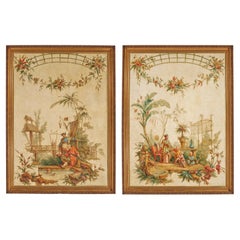
Pair French 18th-19th Century Chinoiserie Circle of Jean B. Pillement

Pair French 18th-19th Century Chinoiserie Circle of Jean B. Pillement

By Jean-Baptiste Pillement

Located in Los Angeles, CA

A fine pair of French 18th-19th century whimsical rococo style chinoiserie oil on canvas, circle of Jean-Baptiste Pillement. (French, 1728-1808). One oil painting depicting an outdoor patio scene of a standing young mother, holding a fan, with her three young children playing with a horse-toy, a parrot and a cat, all surrounded by flowers, plants, trees, planters and flanked by a dragon fountain...

Category

Late 18th Century French Chinoiserie Antique Carved Paintings

Materials

Canvas, Giltwood

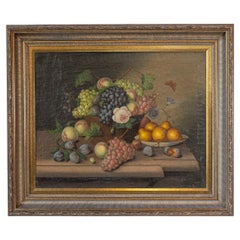
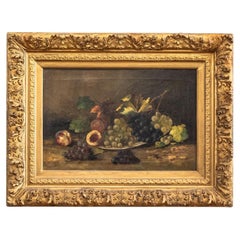
French Giltwood Framed 19th Century Oil on Canvas Painting Depicting Fruits

French Giltwood Framed 19th Century Oil on Canvas Painting Depicting Fruits

Located in Atlanta, GA

A French giltwood framed oil on canvas still-life painting from the 19th century depicting a bowl of fruits. Born in France during the 19th century, this horizontal oil on canvas still-life painting depicts a delicate arrangement of mouth-watering fruits standing out beautifully on a brown-toned neutral background. Our eye is immediately drawn to the yellow and red grapes displayed...

Category

19th Century French Antique Carved Paintings

Materials

Canvas, Giltwood, Paint

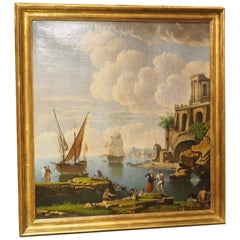
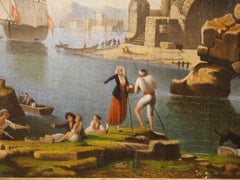
18th Century French Port Scene Oil Painting from Provence

18th Century French Port Scene Oil Painting from Provence

Located in Dallas, TX

Sharing similarities of a mid-17th-century Italian capriccio painting, this French oil painting from Provence depicts fantastical architecture set amongst the more realistic setting ...

Category

18th Century French Antique Carved Paintings

Materials

Canvas, Wood, Giltwood, Paint

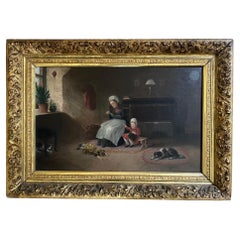
Antique Oil Painting of Interior Scene, Signed A. Hart, 1892

Antique Oil Painting of Interior Scene, Signed A. Hart, 1892

Located in Ross, CA

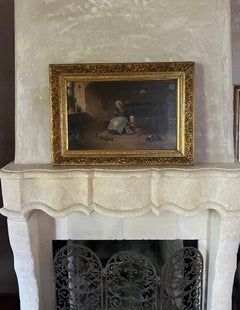
Antique oil painting dated 1892 and signed by the artist as A. Hart. The sweet interior scene shows a grandmother sewing with a granddaughter, with the doll thrown on the floor and ...

Category

1890s Unknown Late Victorian Antique Carved Paintings

Materials

Paint, Plaster, Giltwood

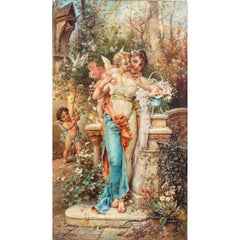
Hans Zatzka, Austrian Oil on Canvas Titled "Spring Love" Maiden with Cherubs"

Hans Zatzka, Austrian Oil on Canvas Titled "Spring Love" Maiden with Cherubs"

By Hans Zatzka

Located in Los Angeles, CA

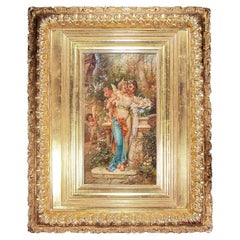
Hans Zatzka (Austrian, 1859-1945) a superb quality oil on canvas titled "Spring Love" depicting a standing young maiden holding a wicker basket filled with fresh flower as she is bei...

Category

1880s Austrian Belle Époque Antique Carved Paintings

Materials

Wood, Giltwood

Large & Impressive Oil on Canvas "Madonna & Child" After Murillo - V. Bianchini

Large & Impressive Oil on Canvas "Madonna & Child" After Murillo - V. Bianchini

By Bartolomé Esteban Murillo

Located in Los Angeles, CA

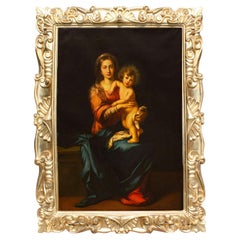
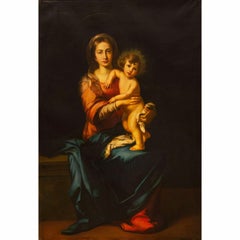
A Large and Impressive Early 20th Century Oil on Canvas "Madonna and Child" After Bartolomé Esteban Murillo (Spanish, 1618-1682) depicting a seated Virgin Mary with a baby Jesus Chri...

Category

1910s Italian Baroque Vintage Carved Paintings

Materials

Canvas, Giltwood

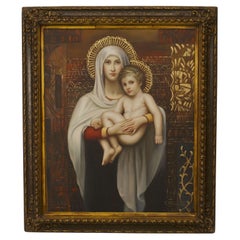
Italian Renaissance Madonna & Child Oil Painting, 20th Century

Italian Renaissance Madonna & Child Oil Painting, 20th Century

Located in Queens, NY

Italian Renaissance style (modern) oil painting of Madonna & Child in antique gold carved frame

Category

20th Century Italian Renaissance Carved Paintings

Materials

Paint

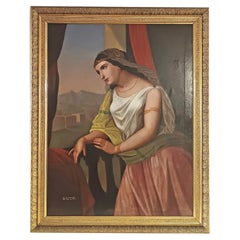
MID-19th CENTURY PAINTING OF THE POETESS SAPPHUS BY ENRICO FANFANI

MID-19th CENTURY PAINTING OF THE POETESS SAPPHUS BY ENRICO FANFANI

Located in Firenze, FI

Refined medium-large oil on canvas painting, embellished with a carved and gilded wooden frame. The painting depicts the famous Greek poet Sappho, whose identification is further con...

Category

Mid-19th Century Italian Antique Carved Paintings

Materials

Canvas, Wood, Paint

Hans Zatzka 'Austrian, 1859-1945' a Very Fine Oil on Canvas "Spring Beauties"

Hans Zatzka 'Austrian, 1859-1945' a Very Fine Oil on Canvas "Spring Beauties"

By Hans Zatzka

Located in Los Angeles, CA

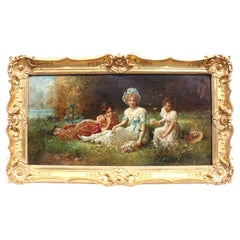
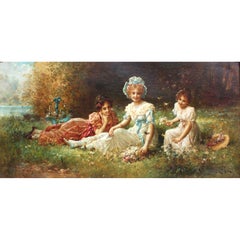
Hans Zatzka (Austrian, 1859-1945) a very fine and charming oil on canvas "Spring Beauties", depicting three young maidens picking flowers by a lake. The three young girls sitting, kneeling and laying on a grassy area of the forest, her wicker basket filled with the freshly picked flowers, the middle one wearing a bonnet and a straw-hat laying on the ground behind with butterflies flying by, within a gilt-wood and gesso carved frame. Signed (l/r): H. Zatzka. Circa: 1890-1900's, Hans Zatzka (Austrian, 1859-1945) was a well known and regarded Austrian fantasy artist whose most popular and valuable works depicted figures of young maidens with angels, floral and other cheerful and warm scenes, including Orientalist themes. In the past thirty years alone, the high quality and detail of his beautiful paintings has caught the attention of International collectors and art dealers alike, creating a highly sought after market and demand for his instantly recognizable body of work. In the late 19th and early 20th century, many of Zazka's charming works were photographed for commercial and collectable postcards. Though no information about his works being exhibited in museums is currently available, most of Zatzka's paintings are in private collections and, in the past century, very few of them have become available on the open market. At the young age of eighteen Zatzka joined Austria's Academy of Fine Arts under the leadership of Professor Blaas. For his fine early works, in 1880 he received The Golden Fügermedal award. Zatzka, like many other artists of the era, traveled around Europe working and selling his art and, in one of his many trips to Italy, he developed a special interest in Religious themes, decorating churches with frescos as well as painting several religious scenes of Madonna's and Child, Saints, Angels and others. In 1885 Zatzka was commissioned to paint "The Naiad of Baden" a ceiling fresco at Kurhaus Baden. Most of Zatzka's income came from his work in religious art and special church commissions. Numerous leading art dealers from around the world that specialize in late 19th and early 20th century European genre paintings have come to the conclusion that the painter signing his works Bernard Zatzka, Joseph Bernard or J. Bernard is almost certainly the artist Hans Zatzka. The consensus seems quite plausible when comparing works known to have been executed by Hans Zatzka together with similar works displaying the signature; Joseph Bernard, J. Bernard or Bernard Zatzka. Lohengrin refers to the knight of the swan, hero of German versions of a legend widely known in variant forms from the European Middle Ages onward. It seems to bear some relation to the northern European folktale of “The Seven Swans,” but its actual origin is uncertain. It is also a character in German Arthurian literature. The son of Parzival (Percival), he is a knight of the Holy Grail sent in a boat pulled by swans...

Category

Late 19th Century Austrian Belle Époque Antique Carved Paintings

Materials

Canvas, Giltwood

Pair of 18th Century French Pastoral Oil Paintings in Original Gilt Frames

Pair of 18th Century French Pastoral Oil Paintings in Original Gilt Frames

Located in Dallas, TX

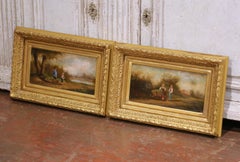
This refined pair of 18th-century French pastoral pendant paintings depicts idyllic rural scenes populated by figures engaged in quiet moments of daily life. Painted in oil on canvas...

Category

Late 18th Century French Antique Carved Paintings

Materials

Giltwood, Canvas

Mid-Century Oil Still Life Painting of Vase with Flowers, Framed

Mid-Century Oil Still Life Painting of Vase with Flowers, Framed

Located in Queens, NY

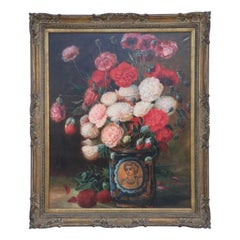
Mid-Century oil still life painting of a vase featuring a medallion portrait filled with flowers in varying shades of red, white, and pink in a rect...

Category

20th Century American Mid-Century Modern Carved Paintings

Materials

Wood, Giltwood, Canvas

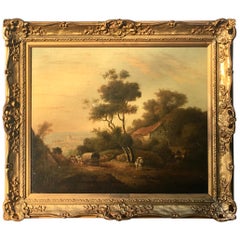
Julius Caesar Ibbetson 1759-1817 Old Master Painting English, 18th Century

Julius Caesar Ibbetson 1759-1817 Old Master Painting English, 18th Century

Located in Vero Beach, FL

Julius Caesar Ibbetson 1759-1817 old master painting English, 18th century This English school painting by Julius Caesar Ibbetson (1759-1817) depicts a countryside farm house off of a road with a horse drawn wagon...

Category

18th Century English Baroque Antique Carved Paintings

Materials

Canvas, Giltwood

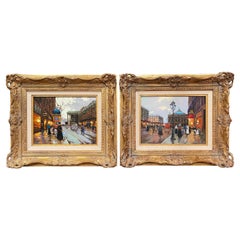
Pair of Mid-Century Paris Street Scene Oil Paintings Signed Robert Lebron

Pair of Mid-Century Paris Street Scene Oil Paintings Signed Robert Lebron

By Robert Lebron

Located in Dallas, TX

Full of color, movement, and Parisian atmosphere, this charming pair of vintage cityscape paintings is by American artist Robert Lebron (1928–2013). Crafted circa 1960, each oil on c...

Category

Mid-20th Century American Carved Paintings

Materials

Canvas, Giltwood

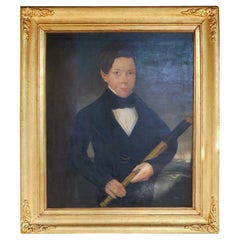
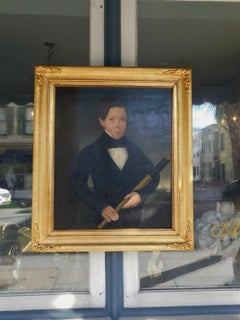
American Oil on Canvas Ship Captain with Spyglass in Orig, Gilt Frame, C. 1840

American Oil on Canvas Ship Captain with Spyglass in Orig, Gilt Frame, C. 1840

Located in Charleston, SC

American portrait oil on canvas of a young ship captain holding a spyglass with a sailing ship, crew in rowboat, and gulls in lower background mounted in the original decorative gilt...

Category

1840s American American Empire Antique Carved Paintings

Materials

Gesso, Canvas, Wood, Giltwood, Paint

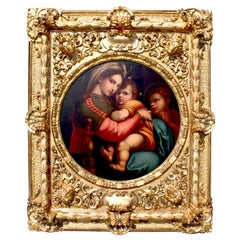
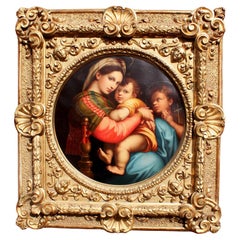
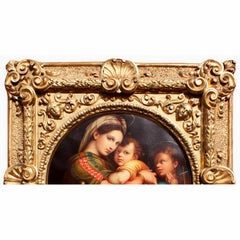
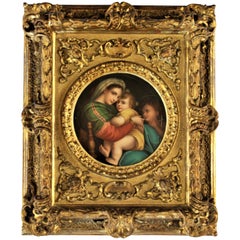
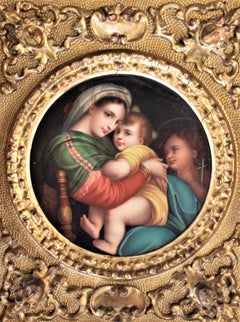
Antique Italian Hand Painted Religious Porcelain Panel with Carved Wood Frame
Antique Italian Hand Painted Religious Porcelain Panel with Carved Wood Frame
Located in Hamilton, Ontario
This antique hand painted porcelain panel is unsigned but was done in Italy in circa 1890 in the Roccoco style. The hand painted porcelain disc of La Madonna della Sedia, after Rafael Sanzio...
Category

Late 19th Century Italian Rococo Revival Antique Carved Paintings

Materials

Porcelain, Wood