Pop Art Portrait Paintings

582 Results
POP ART STYLE

Perhaps one of the most influential contemporary art movements, Pop art emerged in the 1950s. In stark contrast to traditional artistic practice, its practitioners drew on imagery from popular culture — comic books, advertising, product packaging and other commercial media — to create original Pop art paintings, prints and sculptures that celebrated ordinary life in the most literal way.

ORIGINS OF POP ART

CHARACTERISTICS OF POP ART 

  • Bold imagery
  • Bright, vivid colors
  • Straightforward concepts
  • Engagement with popular culture 
  • Incorporation of everyday objects from advertisements, cartoons, comic books and other popular mass media

POP ARTISTS TO KNOW

ORIGINAL POP ART ON 1STDIBS

The Pop art movement started in the United Kingdom as a reaction, both positive and critical, to the period’s consumerism. Its goal was to put popular culture on the same level as so-called high culture.

Richard Hamilton’s 1956 collage Just what is it that makes today’s homes so different, so appealing? is widely believed to have kickstarted this unconventional new style.

Pop art works are distinguished by their bold imagery, bright colors and seemingly commonplace subject matter. Practitioners sought to challenge the status quo, breaking with the perceived elitism of the previously dominant Abstract Expressionism and making statements about current events. Other key characteristics of Pop art include appropriation of imagery and techniques from popular and commercial culture; use of different media and formats; repetition in imagery and iconography; incorporation of mundane objects from advertisements, cartoons and other popular media; hard edges; and ironic and witty treatment of subject matter.

Although British artists launched the movement, they were soon overshadowed by their American counterparts. Pop art is perhaps most closely identified with American Pop artist Andy Warhol, whose clever appropriation of motifs and images helped to transform the artistic style into a lifestyle. Most of the best-known American artists associated with Pop art started in commercial art (Warhol made whimsical drawings as a hobby during his early years as a commercial illustrator), a background that helped them in merging high and popular culture.

Roy Lichtenstein was another prominent Pop artist that was active in the United States. Much like Warhol, Lichtenstein drew his subjects from print media, particularly comic strips, producing paintings and sculptures characterized by primary colors, bold outlines and halftone dots, elements appropriated from commercial printing. Recontextualizing a lowbrow image by importing it into a fine-art context was a trademark of his style. Neo-Pop artists like Jeff Koons and Takashi Murakami further blurred the line between art and popular culture.

Pop art rose to prominence largely through the work of a handful of men creating works that were unemotional and distanced — in other words, stereotypically masculine. However, there were many important female Pop artists, such as Rosalyn Drexler, whose significant contributions to the movement are recognized today. Best known for her work as a playwright and novelist, Drexler also created paintings and collages embodying Pop art themes and stylistic features.

Read more about the history of Pop art and the style’s famous artists, and browse the collection of original Pop art paintings, prints, photography and other works for sale on 1stDibs.

to
71
89
81
70
144
199
Overall Width
to
Overall Height
to
68
515
1
1
1
7
14
23
4,924
1,180
908
682
637
444
424
423
174
127
99
23
7
296
180
96
349
200
171
162
118
81
48
43
40
29
27
24
24
23
16
16
14
13
10
9
474
349
349
347
331
59
34
27
26
18
157
106
407
130
Style: Pop Art
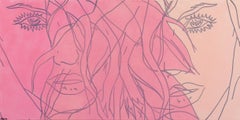
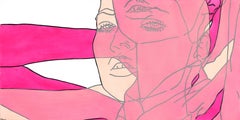
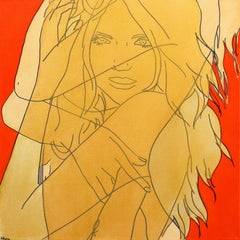
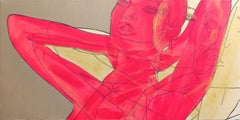
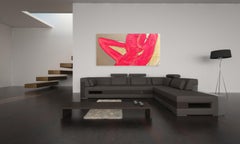
Untitled (Pink V) - Figurative Portrait Woman Pop Art Painting

Untitled (Pink V) - Figurative Portrait Woman Pop Art Painting

By Hilary Bond

Located in Los Angeles, CA

In bold, acrylic line paintings, US artist Hilary Bond depicts the heads and torsos of women, often repeating the image in overlapping compositions. Her contemporary groups of pop c...

Category

21st Century and Contemporary Pop Art Portrait Paintings

Materials

Canvas, Acrylic

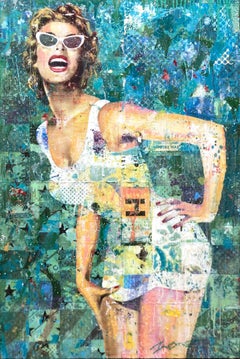
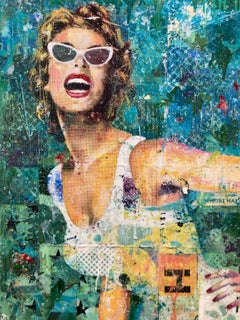
"White Swimsuit White Sunglasses" Figurative Collage Composition on Panel Board

"White Swimsuit White Sunglasses" Figurative Collage Composition on Panel Board

By Jon Davenport

Located in New York, NY

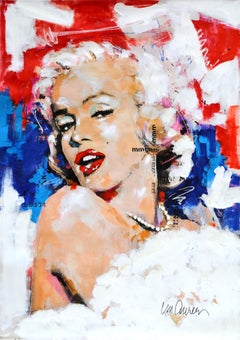
This piece depicts a colorful collage composition portrait of a Pin-up model from the 1950s, as Jon Davenport explores the process of deconstructing iconic imagery from the past and present. Davenport start’s out with photos of his paint-stained studio floor and collages in articles/advertising from an array of vintage magazines collected over the years; plus any other interesting stuff captured on his travels. He then transfers the images to a panel board, layering them on with gel medium, together with strokes, splashes, drips, and splats of paint. Once it's dry, another layer of gel medium is poured on to give it a melting effect. After it drys off again, another layer of paint is added to embellish a few areas and to accentuate or fade out certain aspects. And then, he finally adds a coat of polyurethane for protection and making the colors pop. This unique work is executed on a wood panel board and comes ready to be displayed with hanging wire on verso, signed by the artist lower right. Art measures 36 x 24 inches From biology student to owning and running a creative agency in London to a career as a fine artist, life has taken Jon Davenport on a rewarding and unconventional journey. Despite his scientific beginnings, he’s always had a strong artistic streak weaving its way through his different career paths. Growing up in Ipswich, UK, Jon was always an avid drawer, and could often be found with a pencil and paper in hand. With the arrival of his first computer, he embraced the new frontier of digital art and had work published in one of those early computer magazines. His creative urges took a backseat to get a biology degree at Brunel University in London. It was afterward, in his first job working at the Archant newspaper group in Ipswich, that he quickly progressed from plate maker to becoming an integral member of the art studio. It was during this time that he taught himself photoshop, desktop publishing, and graphic & web design. After a few years, he set up a design agency, and eventually went full time and moved to London. This proved to be a successful move, working for a number of clients such as Nike and Virgin, and gaining praise from the likes of Richard Branson and Tony Blair. It wasn’t until Jon moved to the USA to marry his wife, Atlanta artist Christy Kinard...

Category

2010s Pop Art Portrait Paintings

Materials

Mixed Media, Wood Panel, Polyurethane

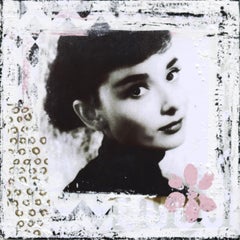
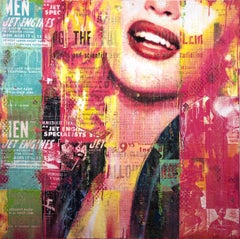
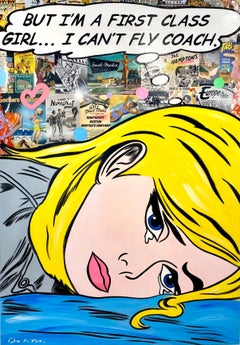
Audrey's Flower - Portrait Artwork Mixed Media Original

Audrey's Flower - Portrait Artwork Mixed Media Original

By Marion Duschletta

Located in Los Angeles, CA

Swiss artist Marion Duschletta transforms luxury objects and urban landscapes from around the world into unique layered artworks. She combines an intriguing mixture of urban photogra...

Category

21st Century and Contemporary Pop Art Portrait Paintings

Materials

Mixed Media, Board, Acrylic

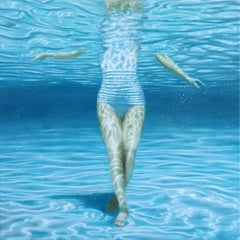
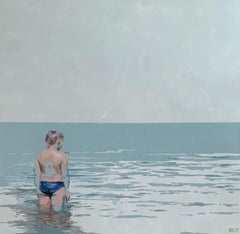
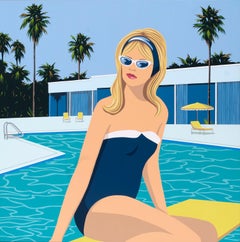
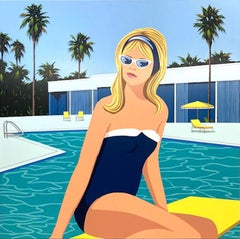
Summer Swim Acrylic Painting on Canvas, Pop Art Style, Signed, 37x37

Summer Swim Acrylic Painting on Canvas, Pop Art Style, Signed, 37x37

By Elise Remender

Located in Los Angeles, CA

Elise Remender captures the romantic glamour of a bygone era in her contemporary figurative paintings that blend classical fine art and contemporary pop realism. Fantasy, mid-century fashion, and the glamour of travel and coastal living inform soft brush strokes and abstracted beauty; reminiscent of vintage advertisements and dusted sunlight. This original 37-inch square acrylic on canvas painting evokes a sense of delight and playfully nods at summery vintage aesthetics. It is signed by Remender on the front bottom right corner of the artwork. The sides are painted as a continuation of the front and it does not require framing. Free delivery within the local Los Angeles area. Affordable Continental U.S. and international shipping available. This artwork includes a certificate of authenticity issued by the gallery. Remender grew up in Arizona and is based in Southern California, but she has traveled all over the world gaining inspiration for her work. Her most recent series, Bathing Beauties, which captures the human form and abstracts it through light and reflection, was inspired by the vintage elegance and history of Southeast Asia’s historic hotel pools and gardens. It evokes a bygone era when Ernest Hemingway and Jackie O. were among the clientele. “I’m a bit of an old soul and there is a sense of elegance and beauty that has been lost in modern-day society, and I seek to recapture this essence in my work. I’m creating a sort of fantasy world of luxury, leisure, and old Hollywood glamour.” Her work has appeared in galleries in the US and Asia and in GQ Magazine, Architectural Digest, Dwell, California Home, People, among many other publications. Her paintings hang in luxury properties including The Ritz Carlton San Francisco, The Hard Rock Hotel Las Vegas, and Hilton properties across the United States, as well as in the homes of celebrity collectors including Ryan Seacrest and Kylie Jenner. REPRESENTATION: Artplex Gallery, Los Angeles, CA EXHIBITIONS: 2023 Artplex Gallery, Los Angeles, CA 2021 “The Beauty Myth”, Artplex Gallery, Los Angeles, CA 2018 “All American Inspired,” Merritt Gallery/Renaissance Fine Arts, PA, MD “At the Shore,” Eisenhauer Gallery, Edgartown, MA “Color in Motion,” Eisenhauer Gallery, Edgartown, MA “Having a Ball,” Jules Place, Boston, MA Meritt Gallery, Renaissance Fine Arts, PA, MD Studio E. Gallery, Palm Beach, FL 2017 “Distant Memories,” 111 Minna Gallery, San Francisco, CA Merrit Gallery, Renaissance Fine Arts, PA, MD “Holiday Gift Guide...

Category

2010s Pop Art Portrait Paintings

Materials

Acrylic, Canvas

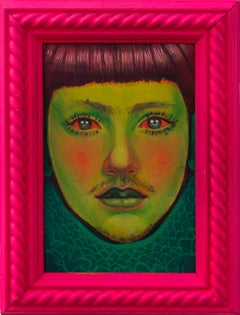
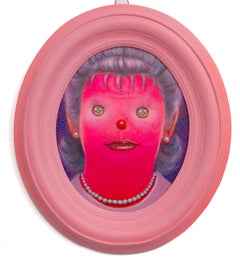
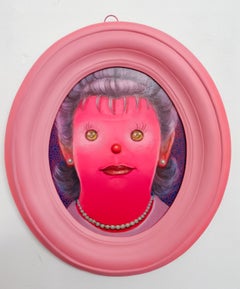
Miniature Green Emoji Portrait in Acrylic on Wood with Pink Resin Frame

Miniature Green Emoji Portrait in Acrylic on Wood with Pink Resin Frame

By Natasha Lelenco

Located in FISTERRA, ES

This green emoji portrait by Natasha Lelenco is painted with acrylic and Posca marker on a wood panel and presented in a hand-painted pink resin frame. The compact frontal face combi...

Category

2010s Pop Art Portrait Paintings

Materials

Acrylic, Resin, Wood Panel, Permanent Marker

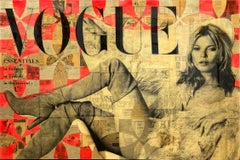
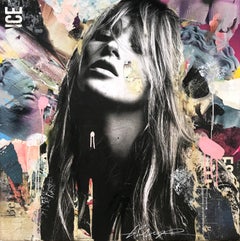
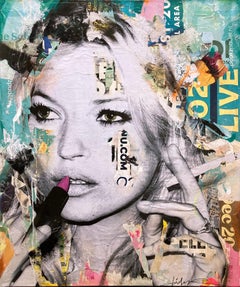
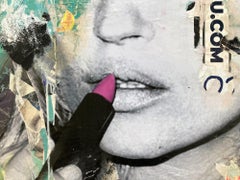
"Multitasking" Pop Art Street Posters Décollage Painting on Canvas of Kate Moss

"Multitasking" Pop Art Street Posters Décollage Painting on Canvas of Kate Moss

By Gieler

Located in New York, NY

This piece depicts famous British model Kate Moss. Done with beautiful expressive colors and a distinctive street art design, this piece pops with energy and romantic beauty. Its com...

Category

2010s Pop Art Portrait Paintings

Materials

Canvas, Mixed Media, Spray Paint, Acrylic

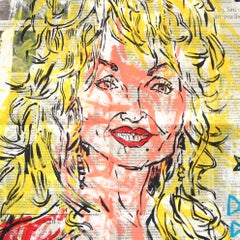
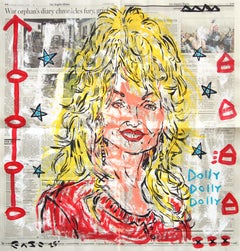
High Hair Harmony - Dolly Parton Icon Portrait Pop Art Painting by Gary John

High Hair Harmony - Dolly Parton Icon Portrait Pop Art Painting by Gary John

By Gary John

Located in Los Angeles, CA

Los Angeles street artist Gary John exploded onto the international art scene first during Art Basel Miami in 2013. John’s playfully bold work quickly gained attention and he was nam...

Category

21st Century and Contemporary Pop Art Portrait Paintings

Materials

Mixed Media, Acrylic, Newsprint

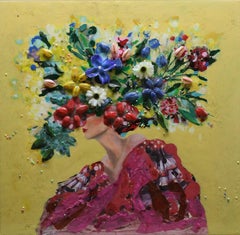
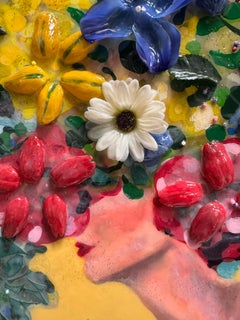
Flower Power: Mixed Media on Canvas with Resin, Contemporary Figurative

Flower Power: Mixed Media on Canvas with Resin, Contemporary Figurative

By Enric Pont

Located in Atlanta, GA

Item is in excellent condition and has only been displayed in a gallery setting. Gallery wrapped canvas. Enric Pont was born in Atzeneta d ́Albaida, a province of Valencia, Spain ...

Category

2010s Pop Art Portrait Paintings

Materials

Canvas, Mixed Media

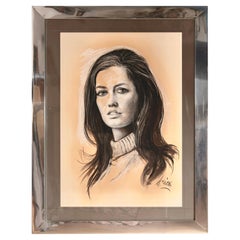
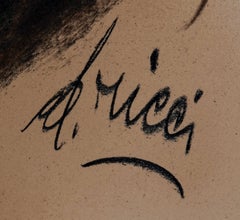
1970s Italian Signed Pop Art Painting

1970s Italian Signed Pop Art Painting

By Dante Ricci

Located in Roma, IT

Beautiful 1970s Italian portrait of a young woman in full Pop Art style. Pastel on paper This artwork, never before on the market, comes from an important private collection and is b...

Category

1970s Pop Art Portrait Paintings

Materials

Pastel

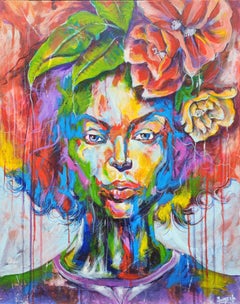
"Untitled"
"Untitled"

"Untitled"

Located in Edinburgh, GB

Soul in bloom, A vibrant expressionist portrait that masterfully weaves human emotion with the vivid beauty of nature. Painted with bold, textured brushstrokes and dynamic palette ch...

Category

2010s Pop Art Portrait Paintings

Materials

Canvas, Acrylic

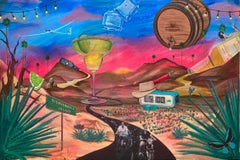
"Casamigos" Tequila Inspired Pop Art Mixed Media Collage on Canvas Painting

"Casamigos" Tequila Inspired Pop Art Mixed Media Collage on Canvas Painting

By Jojo Anavim

Located in New York, NY

A dreamy sunrise landscape with neon and warm colors of the "Land of the Tequila" in Jalisco with George Clooney and Rande Gerber. Both are depicted riding along the winding road on their motorcycles, with the alarm clock set to 5 AM. The agave plantations are found in the distance, and a monumental Margarita glass with two ice cubes falling into it are depicted. Sitting on the far back of the mountains are two tequila bottles, letting the tequila flow down the hill, making some rivers and up in the sky a sailplane and a “Casamigos” Tequila barrel with a lemon slice hanging from a tree branch in the style of ‘The Persistence of Memory’ by Salvador Dalí...

Category

2010s Pop Art Portrait Paintings

Materials

Canvas, Mixed Media, Acrylic

Marilyn with a Bun -Original Quirky Figurative Pop Art Portrait by Gary John

Marilyn with a Bun -Original Quirky Figurative Pop Art Portrait by Gary John

By Gary John

Located in Los Angeles, CA

Los Angeles street artist Gary John exploded onto the international art scene first during Art Basel Miami in 2013. John’s playfully bold work quickly gained attention and he was nam...

Category

21st Century and Contemporary Pop Art Portrait Paintings

Materials

Paper, Acrylic, Newsprint

Diamonds are a Girl's Best Friend

Diamonds are a Girl's Best Friend

Located in Atlanta, GA

J. C. Morey is a Spanish artist from the province of Alicante. He was born into a family of artists and connected to the art world since the 60s, which gave him the opportunity from ...

Category

2010s Pop Art Portrait Paintings

Materials

Canvas, Mixed Media, Acrylic

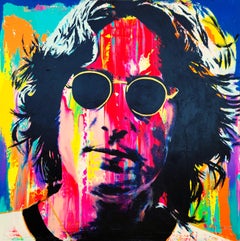
John Lennon VIII /// Contemporary Street Pop Art The Beatles Portrait Painting

John Lennon VIII /// Contemporary Street Pop Art The Beatles Portrait Painting

By Jack Graves III

Located in Saint Augustine, FL

Artist: Jack Graves III (American, 1988-) Title: "John Lennon VIII" Series: Icon *Signed by Graves lower right. It is also signed, titled, and dated on verso Year: 2025 Medium: Ori...

Category

2010s Pop Art Portrait Paintings

Materials

Canvas, Paint, Acrylic

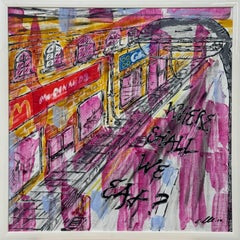
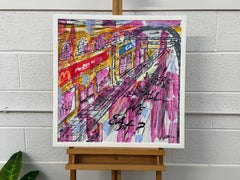
'Nutrition' - Painting of McDonald's on Board by British Graffiti Artist

'Nutrition' - Painting of McDonald's on Board by British Graffiti Artist

By Chris Pegg

Located in Preston, GB

'Nutrition’ is an original painting by British urban and street artist Chris Pegg, a self-taught artist whose distinctive work frequently combines bold visual imagery with social com...

Category

2010s Pop Art Portrait Paintings

Materials

Wood, Paint, Ink, Mixed Media, Oil, Spray Paint, Acrylic, Wood Panel, Bo...

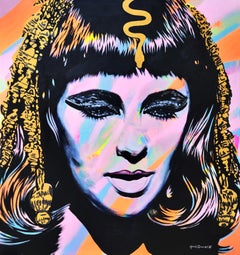
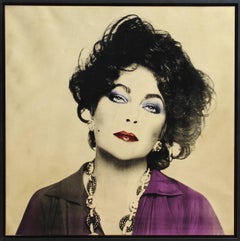
Cleopatra III (Elizabeth Taylor) /// Jack Graves Pop Art Warhol Hollywood Paint

Cleopatra III (Elizabeth Taylor) /// Jack Graves Pop Art Warhol Hollywood Paint

By Jack Graves III

Located in Saint Augustine, FL

Artist: Jack Graves III (American, 1988-) Title: "Cleopatra III (Elizabeth Taylor)" Series: Icon *Signed by Graves lower right. It is also signed, dated, and titled on verso Year: 20...

Category

2010s Pop Art Portrait Paintings

Materials

Canvas, Paint, Acrylic

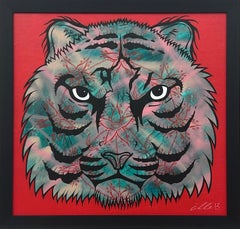
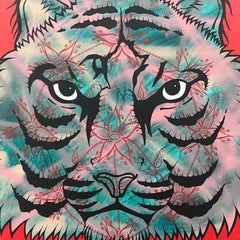
Tiger Portrait Pop Art with Floral Mandala in Chains by British Graffiti Artist

Tiger Portrait Pop Art with Floral Mandala in Chains by British Graffiti Artist

By Chris Pegg

Located in Preston, GB

Tiger Portrait Pop Art with Floral Mandala in Chains by British Urban Graffiti Artist, Chris Pegg, using red, pink & turquoise. Chris Pegg is a self-taught Street Artist producin...

Category

2010s Pop Art Portrait Paintings

Materials

Paint, Ink, Mixed Media, Oil, Spray Paint, Acrylic, Felt Pen, Pencil, St...

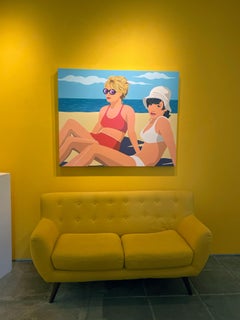
Retro_Pop_Female Portrait/Figurative_Acrylic/Gloss_James Wolanin, Beach Duo

Retro_Pop_Female Portrait/Figurative_Acrylic/Gloss_James Wolanin, Beach Duo

By James Wolanin

Located in Laguna Beach, CA

JAMES WOLANIN "Beach Duo" Acrylic & Gloss Varnish on Panel 40 x 50 inches ______________________ James Wolanin’s paintings transport the viewer to an effervescent, candy coated wor...

Category

2010s Pop Art Portrait Paintings

Materials

Varnish, Acrylic, Panel

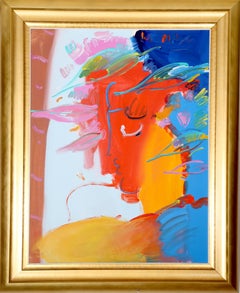
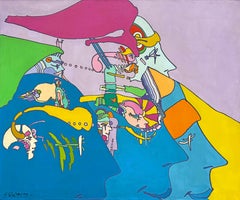
Profile, Pop Art Portrait by Peter Max

Profile, Pop Art Portrait by Peter Max

By Peter Max

Located in Long Island City, NY

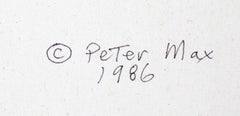
Artist: Peter Max, German/American (1937) Title: Profile Year: 1986 Medium: Acrylic on Canvas, signed u.r. Size: 40 in. x 30 in. (101.6 cm x 76.2 cm) Frame Size: 49.5 x 39.5 inches

Category

1980s Pop Art Portrait Paintings

Materials

Canvas, Acrylic

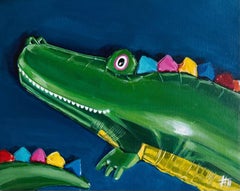
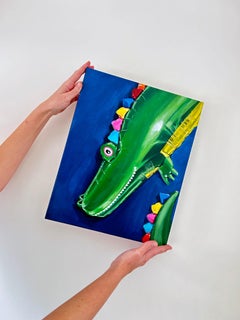
Colorful Green Crocodile Wildlife Painting Balloon Animal on Linen Canvas

Colorful Green Crocodile Wildlife Painting Balloon Animal on Linen Canvas

By Sofía Cristina Jiménez

Located in FISTERRA, ES

Crocodile wildlife painting depicting a balloon-like reptile with a colorful crest, combining animal portraiture, humor and pop surrealist imagery on linen canvas. Sir Tori I is an ...

Category

2010s Pop Art Portrait Paintings

Materials

Canvas, Linen, Acrylic

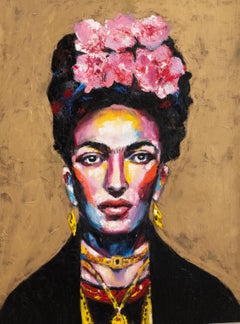
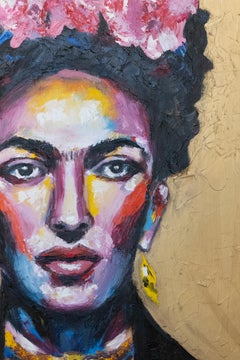
Frida Kahlo  . original painting

Frida Kahlo . original painting

By Alina O'Dwyer

Located in Zofingen, AG

Frida Kahlo is an iconic Mexican artist and a great inspiration to me. She transformed her personal pain into art, a feat that resonates deeply with me. Her surrealistic artwork is c...

Category

2010s Pop Art Portrait Paintings

Materials

Canvas, Oil

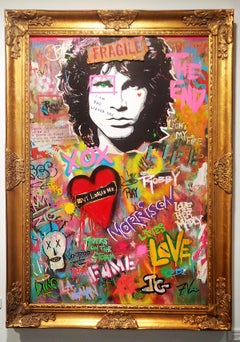
"Fragile Heart" Spray paint, Acrylic and Mixed Media on Faux Brick panel

"Fragile Heart" Spray paint, Acrylic and Mixed Media on Faux Brick panel

Located in Southampton, NY

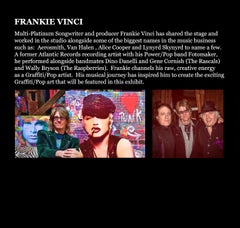
Multi-Platinum Songwriter and producer Frankie Vinci has shared the stage and worked in the studio alongside some of the biggest names in the music business such as: Aerosmith, Van H...

Category

2010s Pop Art Portrait Paintings

Materials

Mixed Media, Spray Paint, Acrylic, Panel

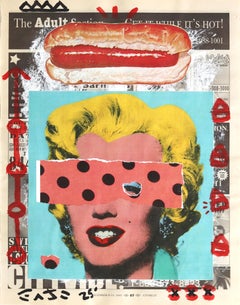
"You'll Never Know" Mixed Media Figurative Collage Composition on Panel Board

"You'll Never Know" Mixed Media Figurative Collage Composition on Panel Board

By Jon Davenport

Located in New York, NY

This piece depicts a colorful collage composition portrait of Marilyn Monroe, as Jon Davenport explores the process of deconstructing iconic imagery from the past and present. Davenport start’s out with photos of his paint-stained studio floor and collages in articles/advertising from an array of vintage magazines collected over the years; plus any other interesting stuff captured on his travels. He then transfers the images to a panel board, layering them on with gel medium, together with strokes, splashes, drips, and splats of paint. Once it's dry, another layer of gel medium is poured on to give it a melting effect. After it drys off again, another layer of paint is added to embellish a few areas and to accentuate or fade out certain aspects. And then, he finally adds a coat of polyurethane for protection and making the colors pop. This unique work is executed on a wood panel board and comes ready to be displayed with hanging wire on verso, signed by the artist lower right. Art measures 36 x 36 in From biology student to owning and running a creative agency in London to a career as a fine artist, life has taken Jon Davenport on a rewarding and unconventional journey. Despite his scientific beginnings, he’s always had a strong artistic streak weaving its way through his different career paths. Growing up in Ipswich, UK, Jon was always an avid drawer, and could often be found with a pencil and paper in hand. With the arrival of his first computer, he embraced the new frontier of digital art and had work published in one of those early computer magazines. His creative urges took a backseat to get a biology degree at Brunel University in London. It was afterward, in his first job working at the Archant newspaper group in Ipswich, that he quickly progressed from plate maker to becoming an integral member of the art studio. It was during this time that he taught himself photoshop, desktop publishing, and graphic & web design. After a few years, he set up a design agency, and eventually went full time and moved to London. This proved to be a successful move, working for a number of clients such as Nike and Virgin, and gaining praise from the likes of Richard Branson and Tony Blair. It wasn’t until Jon moved to the USA to marry his wife, Atlanta artist Christy Kinard...

Category

2010s Pop Art Portrait Paintings

Materials

Mixed Media, Wood Panel, Polyurethane

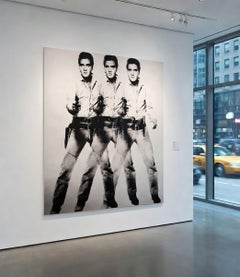
"Triple Elvis" Denied Andy Warhol Silver Black Pop Art Painting by Charles Lutz

"Triple Elvis" Denied Andy Warhol Silver Black Pop Art Painting by Charles Lutz

By Charles Lutz

Located in Brooklyn, NY

"Triple Elvis" (Denied) Silkscreen Painting by Charles Lutz Silkscreen and silver enamel paint on canvas with Artist's Denied stamp of the Andy Warhol Art Authentication Board. 82 x 72" inches 2010 This important example was shown alongside works by Warhol in a two-person show "Warhol Revisited (Charles Lutz / Andy Warhol)" at UAB Abroms-Engel Institute for the Visual Arts in 2024. Lutz's 2007 ''Warhol Denied'' series gained international attention by calling into question the importance of originality or lack thereof in the work of Andy Warhol. The authentication/denial process of the [[Andy Warhol Art Authentication Board]] was used to create value by submitting recreations of Warhol works for judgment with the full intention for the works to be formally marked "DENIED". The final product of the conceptual project being "officially denied" "Warhol" paintings authored by Lutz. Based on the full-length Elvis Presley paintings by Pop Artist Andy Warhol in 1964, this is likely one of his most iconic images, next to Campbell's Soup Cans and portraits of Jackie Kennedy, Marilyn Monroe, Liz Taylor, and Marlon Brando. This is the rarest of the Elvis works from the series, as Lutz sourced a vintage roll of 1960's primed artist linen which was used for this one Elvis. The silkscreen, like Warhol's embraced imperfections, like the slight double image printing of the Elvis image. Lutz received his BFA in Painting and Art History from Pratt Institute and studied Human Dissection and Anatomy at Columbia University, New York. Lutz's work deals with perceptions and value structures, specifically the idea of the transference of values. Lutz's most recently presented an installation of new sculptures dealing with consumerism at Frank Lloyd Wright's Fallingwater House in 2022. Lutz's 2007 Warhol Denied series received international attention calling into question the importance of originality in a work of art. The valuation process (authentication or denial) of the Andy Warhol Art Authentication Board was used by the artist to create value by submitting recreations of Warhol works for judgment, with the full intention for the works to be formally marked "DENIED" of their authenticity. The final product of this conceptual project is "Officially DENIED" "Warhol" paintings authored by Lutz. Later in 2013, Lutz went on to do one of his largest public installations to date. At the 100th Anniversary of Marcel Duchamp's groundbreaking and controversial Armory Show, Lutz was asked by the curator of Armory Focus: USA and former Director of The Andy Warhol Museum, Eric Shiner to create a site-specific installation representing the US. The installation "Babel" (based on Pieter Bruegel's famous painting) consisted of 1500 cardboard replicas of Warhol's Brillo Box (Stockholm Type) stacked 20 ft tall. All 1500 boxes were then given to the public freely, debasing the Brillo Box as an art commodity by removing its value, in addition to debasing its willing consumers. Elvis was "the greatest cultural force in the Twentieth Century. He introduced the beat to everything, and he changed everything - music, language, clothes, it's a whole new social revolution." Leonard Bernstein in: Exh. Cat., Boston, The Institute of Contemporary Art and traveling, Elvis + Marilyn 2 x Immortal, 1994-97, p. 9. Andy Warhol "quite simply changed how we all see the world around us." Kynaston McShine in: Exh. Cat., New York, Museum of Modern Art (and traveling), Andy Warhol: Retrospective, 1996, p. 13. In the summer of 1963 Elvis Presley was just twenty-eight years old but already a legend of his time. During the preceding seven years - since Heartbreak Hotel became the biggest-selling record of 1956 - he had recorded seventeen number-one singles and seven number-one albums; starred in eleven films, countless national TV appearances, tours, and live performances; earned tens of millions of dollars; and was instantly recognized across the globe. The undisputed King of Rock and Roll, Elvis was the biggest star alive: a cultural phenomenon of mythic proportions apparently no longer confined to the man alone. As the eminent composer Leonard Bernstein put it, Elvis was "the greatest cultural force in the Twentieth Century. He introduced the beat to everything, and he changed everything - music, language, clothes, it's a whole new social revolution." (Exh. Cat., Boston, The Institute of Contemporary Art (and traveling), Elvis + Marilyn 2 x Immortal, 1994, p. 9). In the summer of 1963 Andy Warhol was thirty-four years old and transforming the parameters of visual culture in America. The focus of his signature silkscreen was leveled at subjects he brilliantly perceived as the most important concerns of day to day contemporary life. By appropriating the visual vernacular of consumer culture and multiplying readymade images gleaned from newspapers, magazines and advertising, he turned a mirror onto the contradictions behind quotidian existence. Above all else he was obsessed with themes of celebrity and death, executing intensely multifaceted and complex works in series that continue to resound with universal relevance. His unprecedented practice re-presented how society viewed itself, simultaneously reinforcing and radically undermining the collective psychology of popular culture. He epitomized the tide of change that swept through the 1960s and, as Kynaston McShine has concisely stated, "He quite simply changed how we all see the world around us." (Exh. Cat., New York, Museum of Modern Art (and traveling), Andy Warhol: Retrospective, 1996, p. 13). Thus in the summer of 1963 there could not have been a more perfect alignment of artist and subject than Warhol and Elvis. Perhaps the most famous depiction of the biggest superstar by the original superstar artist, Double Elvis is a historic paradigm of Pop Art from a breath-taking moment in Art History. With devastating immediacy and efficiency, Warhol's canvas seduces our view with a stunning aesthetic and confronts our experience with a sophisticated array of thematic content. Not only is there all of Elvis, man and legend, but we are also presented with the specter of death, staring at us down the barrel of a gun; and the lone cowboy, confronting the great frontier and the American dream. The spray painted silver screen denotes the glamour and glory of cinema, the artificiality of fantasy, and the idea of a mirror that reveals our own reality back to us. At the same time, Warhol's replication of Elvis' image as a double stands as metaphor for the means and effects of mass-media and its inherent potential to manipulate and condition. These thematic strata function in simultaneous concert to deliver a work of phenomenal conceptual brilliance. The portrait of a man, the portrait of a country, and the portrait of a time, Double Elvis is an indisputable icon for our age. The source image was a publicity still for the movie Flaming Star, starring Presley as the character Pacer Burton and directed by Don Siegel in 1960. The film was originally intended as a vehicle for Marlon Brando and produced by David Weisbart, who had made James Dean's Rebel Without a Cause in 1955. It was the first of two Twentieth Century Fox productions Presley was contracted to by his manager Colonel Tom Parker, determined to make the singer a movie star. For the compulsive movie-fan Warhol, the sheer power of Elvis wielding a revolver as the reluctant gunslinger presented the zenith of subject matter: ultimate celebrity invested with the ultimate power to issue death. Warhol's Elvis is physically larger than life and wears the expression that catapulted him into a million hearts: inexplicably and all at once fearful and resolute; vulnerable and predatory; innocent and explicit. It is the look of David Halberstam's observation that "Elvis Presley was an American original, the rebel as mother's boy, alternately sweet and sullen, ready on demand to be either respectable or rebellious." (Exh. Cat., Boston, Op. Cit.). Indeed, amidst Warhol's art there is only one other subject whose character so ethereally defies categorization and who so acutely conflated total fame with the inevitability of mortality. In Warhol's work, only Elvis and Marilyn harness a pictorial magnetism of mythic proportions. With Marilyn Monroe, whom Warhol depicted immediately after her premature death in August 1962, he discovered a memento mori to unite the obsessions driving his career: glamour, beauty, fame, and death. As a star of the silver screen and the definitive international sex symbol, Marilyn epitomized the unattainable essence of superstardom that Warhol craved. Just as there was no question in 1963, there remains still none today that the male equivalent to Marilyn is Elvis. However, despite his famous 1968 adage, "If you want to know all about Andy Warhol, just look at the surface of my paintings" Warhol's fascination held purpose far beyond mere idolization. As Rainer Crone explained in 1970, Warhol was interested in movie stars above all else because they were "people who could justifiably be seen as the nearest thing to representatives of mass culture." (Rainer Crone, Andy Warhol, New York, 1970, p. 22). Warhol was singularly drawn to the idols of Elvis and Marilyn, as he was to Marlon Brando and Liz Taylor, because he implicitly understood the concurrence between the projection of their image and the projection of their brand. Some years after the present work he wrote, "In the early days of film, fans used to idolize a whole star - they would take one star and love everything about that star...So you should always have a product that's not just 'you.' An actress should count up her plays and movies and a model should count up her photographs and a writer should count up his words and an artist should count up his pictures so you always know exactly what you're worth, and you don't get stuck thinking your product is you and your fame, and your aura." (Andy Warhol, The Philosophy of Andy Warhol (From A to B and Back Again), San Diego, New York and London, 1977, p. 86). The film stars of the late 1950s and early 1960s that most obsessed Warhol embodied tectonic shifts in wider cultural and societal values. In 1971 John Coplans argued that Warhol was transfixed by the subject of Elvis, and to a lesser degree by Marlon Brando and James Dean, because they were "authentically creative, and not merely products of Hollywood's fantasy or commercialism. All three had originative lives, and therefore are strong personalities; all three raised - at one level or another - important questions as to the quality of life in America and the nature of its freedoms. Implicit in their attitude is a condemnation of society and its ways; they project an image of the necessity for the individual to search for his own future, not passively, but aggressively, with commitment and passion." (John Coplans, "Andy Warhol and Elvis Presley," Studio International, vol. 181, no. 930, February 1971, pp. 51-52). However, while Warhol unquestionably adored these idols as transformative heralds, the suggestion that his paintings of Elvis...

Category

21st Century and Contemporary Pop Art Portrait Paintings

Materials

Enamel

"Heartbreak a Stranger" Kate Moss with Stuart Weitzman Collage Resin Panel Board

"Heartbreak a Stranger" Kate Moss with Stuart Weitzman Collage Resin Panel Board

By Robert Mars

Located in New York, NY

This piece depicts famous British model Kate Moss from a Fall 2013 ad campaign with Stuart Weitzman during the Milan Fashion Week while featuring Kate Moss swaggering to Nancy Sinatr...

Category

2010s Pop Art Portrait Paintings

Materials

Epoxy Resin, Mixed Media, Acrylic, Wood Panel, Newsprint

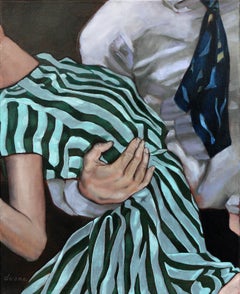
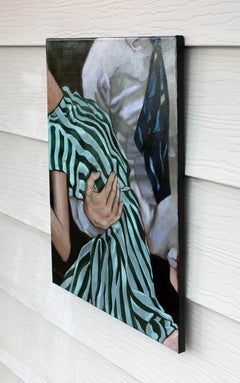
Striped Dip, Oil Painting

Striped Dip, Oil Painting

By Duane Brown

Located in San Francisco, CA

Artist Comments
Flowing stripes on the dancer's dress create a bold visual rhythm. The composition crops both figures intentionally, shifting focus to the textures, patterns,...

Category

21st Century and Contemporary Pop Art Portrait Paintings

Materials

Oil

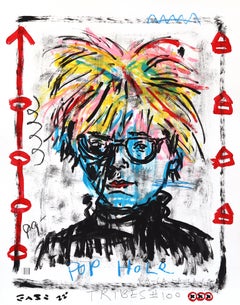
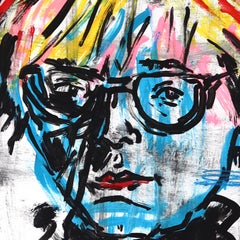
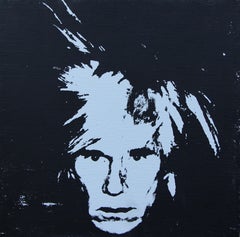
Electric Andy - Original Figurative Portrait Mixed Media Artwork by Gary John

Electric Andy - Original Figurative Portrait Mixed Media Artwork by Gary John

By Gary John

Located in Los Angeles, CA

Los Angeles street artist Gary John exploded onto the international art scene first during Art Basel Miami in 2013. John’s playfully bold work quickly gained attention and he was nam...

Category

21st Century and Contemporary Pop Art Portrait Paintings

Materials

Acrylic, Illustration Board

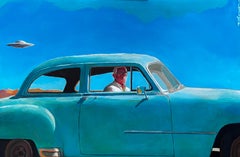
Object in the Mirror, Oil Painting

Object in the Mirror, Oil Painting

By Keith Thomson

Located in San Francisco, CA

Artist Comments
A vintage sedan cuts through a blazing blue desert sky as the driver glances out the window, caught between curiosity and concern. He knows mirages are common i...

Category

21st Century and Contemporary Pop Art Portrait Paintings

Materials

Oil

Untitled (Pinks XV) - Figurative Portrait Woman Pop Art Painting

Untitled (Pinks XV) - Figurative Portrait Woman Pop Art Painting

By Hilary Bond

Located in Los Angeles, CA

In bold, acrylic line paintings, US artist Hilary Bond depicts the heads and torsos of women, often repeating the image in overlapping compositions. Her contemporary groups of pop c...

Category

21st Century and Contemporary Pop Art Portrait Paintings

Materials

Canvas, Acrylic

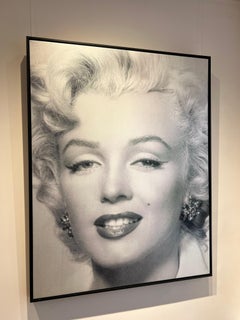
Marilyn Superstar
Marilyn Superstar

Russell YoungMarilyn Superstar, 2015

$11,200Sale Price|20% Off

Marilyn Superstar

By Russell Young

Located in PARIS, FR

Original and unique artwork. Hand painted metallic leaf pigment paint and enamel screen print on linen, unframed dimensions 48 x 37,5 inches, 2015, from the series "Marilyn Superstar...

Category

2010s Pop Art Portrait Paintings

Materials

Enamel

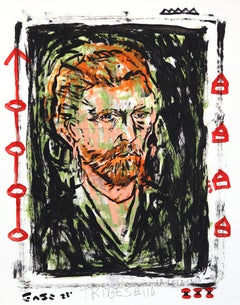
Vincent Was Here - Abstract Figurative Van Gogh Portrait Artwork by Gary John

Vincent Was Here - Abstract Figurative Van Gogh Portrait Artwork by Gary John

By Gary John

Located in Los Angeles, CA

Los Angeles street artist Gary John exploded onto the international art scene first during Art Basel Miami in 2013. John’s playfully bold work quickly gained attention and he was nam...

Category

21st Century and Contemporary Pop Art Portrait Paintings

Materials

Paper, Acrylic, Foam Board

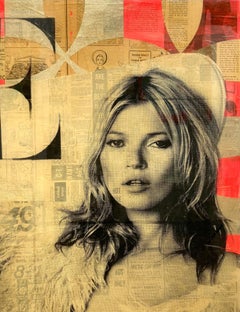
"It's a Sin to Be Tired" Pop Art Street Art Mixed Media Portrait of Kate Moss

"It's a Sin to Be Tired" Pop Art Street Art Mixed Media Portrait of Kate Moss

By Gieler

Located in New York, NY

This piece depicts famous English model Kate Moss. Done with beautiful expressive colors and a distinctive street art design, this piece pops with energy and romantic beauty. Its com...

Category

2010s Pop Art Portrait Paintings

Materials

Canvas, Mixed Media, Spray Paint, Acrylic

Untitled (Fire III) - Figurative Portrait Red and Yellow Woman Pop Art Painting

Untitled (Fire III) - Figurative Portrait Red and Yellow Woman Pop Art Painting

By Hilary Bond

Located in Los Angeles, CA

In bold, acrylic line paintings, US artist Hilary Bond depicts the heads and torsos of women, often repeating the image in overlapping compositions. Her contemporary groups of pop c...

Category

21st Century and Contemporary Pop Art Portrait Paintings

Materials

Canvas, Acrylic

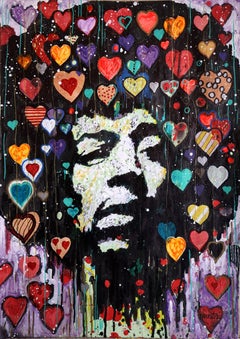
Jimi Hendrix Painting, Pop Art Style, Acrylic and Oil Pastel

Jimi Hendrix Painting, Pop Art Style, Acrylic and Oil Pastel

Located in Zofingen, AG

In this vibrant portrayal, I've merged multiple art styles to capture an explosion of emotions. By layering acrylics, watercolors, and colored pencils, I've created a textured harmon...

Category

2010s Pop Art Portrait Paintings

Materials

Acrylic, Oil Pastel, Archival Paper

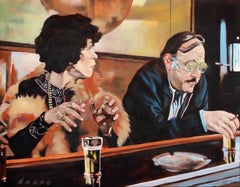
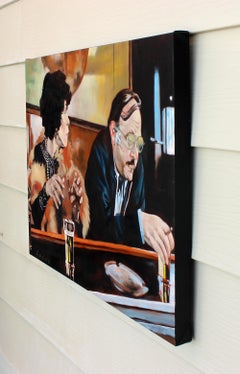
First Call, Oil Painting

First Call, Oil Painting

By Duane Brown

Located in San Francisco, CA

Artist Comments
Two people share a tense, personal moment over a morning beer in a bar. The scene delivers a strong story through the use of color, light, and character portray...

Category

21st Century and Contemporary Pop Art Portrait Paintings

Materials

Oil

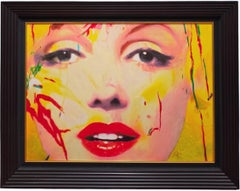
Portrait of Marylin Monroe, American Pop Artist

Portrait of Marylin Monroe, American Pop Artist

Located in Grand Rapids, MI

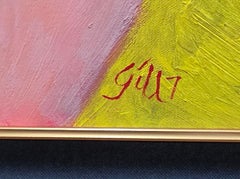
James Francis Gill (American, Born 1934) Signed: Gill 7 (Lower, Right) " Marilyn Pose 3 ", 2007 (Titled on Canvas Verso) (Marilyn Monroe) Acrylic over Print on Canvas Housed in...

Category

21st Century and Contemporary Pop Art Portrait Paintings

Materials

Canvas, Acrylic

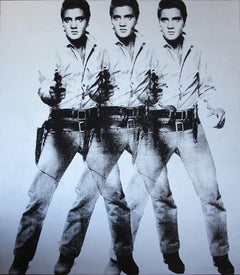
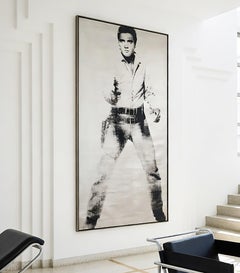
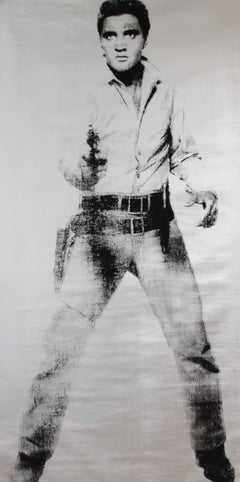
"Elvis", Denied Andy Warhol Silver & Black Pop Art Painting by Charles Lutz

"Elvis", Denied Andy Warhol Silver & Black Pop Art Painting by Charles Lutz

By Charles Lutz

Located in Brooklyn, NY

Elvis, Metallic Silver and Black Full Length Silkscreen Painting by Charles Lutz Silkscreen and silver enamel painted on vintage 1960's era linen with Artist's Denied stamp of the Andy Warhol Art Authentication Board. 82" x 40" inches 2010 Lutz's 2007 ''Warhol Denied'' series gained international attention by calling into question the importance of originality or lack thereof in the work of Andy Warhol. The authentication/denial process of the [[Andy Warhol Art Authentication Board]] was used to create value by submitting recreations of Warhol works for judgment with the full intention for the works to be formally marked "DENIED". The final product of the conceptual project being "officially denied" "Warhol" paintings authored by Lutz. Based on the full-length Elvis Presley paintings by Pop Artist Andy Warhol in 1964, this is likely one of his most iconic images, next to Campbell's Soup Cans and portraits of Jackie Kennedy, Marilyn Monroe, Liz Taylor, and Marlon Brando. This is the rarest of the Elvis works from the series, as Lutz sourced a vintage roll of 1960's primed artist linen which was used for this one Elvis. The silkscreen, like Warhol's embraced imperfections, like the slight double image printing of the Elvis image. Lutz received his BFA in Painting and Art History from Pratt Institute and studied Human Dissection and Anatomy at Columbia University, New York. Lutz's work deals with perceptions and value structures, specifically the idea of the transference of values. Lutz's most recently presented an installation of new sculptures dealing with consumerism at Frank Lloyd Wright's Fallingwater House in 2022. Lutz's 2007 Warhol Denied series received international attention calling into question the importance of originality in a work of art. The valuation process (authentication or denial) of the Andy Warhol Art Authentication Board was used by the artist to create value by submitting recreations of Warhol works for judgment, with the full intention for the works to be formally marked "DENIED" of their authenticity. The final product of this conceptual project is "Officially DENIED" "Warhol" paintings authored by Lutz. Later in 2013, Lutz went on to do one of his largest public installations to date. At the 100th Anniversary of Marcel Duchamp's groundbreaking and controversial Armory Show, Lutz was asked by the curator of Armory Focus: USA and former Director of The Andy Warhol Museum, Eric Shiner to create a site-specific installation representing the US. The installation "Babel" (based on Pieter Bruegel's famous painting) consisted of 1500 cardboard replicas of Warhol's Brillo Box (Stockholm Type) stacked 20 ft tall. All 1500 boxes were then given to the public freely, debasing the Brillo Box as an art commodity by removing its value, in addition to debasing its willing consumers. Elvis was "the greatest cultural force in the Twentieth Century. He introduced the beat to everything, and he changed everything - music, language, clothes, it's a whole new social revolution." Leonard Bernstein in: Exh. Cat., Boston, The Institute of Contemporary Art and traveling, Elvis + Marilyn 2 x Immortal, 1994-97, p. 9. Andy Warhol "quite simply changed how we all see the world around us." Kynaston McShine in: Exh. Cat., New York, Museum of Modern Art (and traveling), Andy Warhol: Retrospective, 1996, p. 13. In the summer of 1963 Elvis Presley was just twenty-eight years old but already a legend of his time. During the preceding seven years - since Heartbreak Hotel became the biggest-selling record of 1956 - he had recorded seventeen number-one singles and seven number-one albums; starred in eleven films, countless national TV appearances, tours, and live performances; earned tens of millions of dollars; and was instantly recognized across the globe. The undisputed King of Rock and Roll, Elvis was the biggest star alive: a cultural phenomenon of mythic proportions apparently no longer confined to the man alone. As the eminent composer Leonard Bernstein put it, Elvis was "the greatest cultural force in the Twentieth Century. He introduced the beat to everything, and he changed everything - music, language, clothes, it's a whole new social revolution." (Exh. Cat., Boston, The Institute of Contemporary Art (and traveling), Elvis + Marilyn 2 x Immortal, 1994, p. 9). In the summer of 1963 Andy Warhol was thirty-four years old and transforming the parameters of visual culture in America. The focus of his signature silkscreen was leveled at subjects he brilliantly perceived as the most important concerns of day to day contemporary life. By appropriating the visual vernacular of consumer culture and multiplying readymade images gleaned from newspapers, magazines and advertising, he turned a mirror onto the contradictions behind quotidian existence. Above all else he was obsessed with themes of celebrity and death, executing intensely multifaceted and complex works in series that continue to resound with universal relevance. His unprecedented practice re-presented how society viewed itself, simultaneously reinforcing and radically undermining the collective psychology of popular culture. He epitomized the tide of change that swept through the 1960s and, as Kynaston McShine has concisely stated, "He quite simply changed how we all see the world around us." (Exh. Cat., New York, Museum of Modern Art (and traveling), Andy Warhol: Retrospective, 1996, p. 13). Thus in the summer of 1963 there could not have been a more perfect alignment of artist and subject than Warhol and Elvis. Perhaps the most famous depiction of the biggest superstar by the original superstar artist, Double Elvis is a historic paradigm of Pop Art from a breath-taking moment in Art History. With devastating immediacy and efficiency, Warhol's canvas seduces our view with a stunning aesthetic and confronts our experience with a sophisticated array of thematic content. Not only is there all of Elvis, man and legend, but we are also presented with the specter of death, staring at us down the barrel of a gun; and the lone cowboy, confronting the great frontier and the American dream. The spray painted silver screen denotes the glamour and glory of cinema, the artificiality of fantasy, and the idea of a mirror that reveals our own reality back to us. At the same time, Warhol's replication of Elvis' image as a double stands as metaphor for the means and effects of mass-media and its inherent potential to manipulate and condition. These thematic strata function in simultaneous concert to deliver a work of phenomenal conceptual brilliance. The portrait of a man, the portrait of a country, and the portrait of a time, Double Elvis is an indisputable icon for our age. The source image was a publicity still for the movie Flaming Star, starring Presley as the character Pacer Burton and directed by Don Siegel in 1960. The film was originally intended as a vehicle for Marlon Brando and produced by David Weisbart, who had made James Dean's Rebel Without a Cause in 1955. It was the first of two Twentieth Century Fox productions Presley was contracted to by his manager Colonel Tom Parker, determined to make the singer a movie star. For the compulsive movie-fan Warhol, the sheer power of Elvis wielding a revolver as the reluctant gunslinger presented the zenith of subject matter: ultimate celebrity invested with the ultimate power to issue death. Warhol's Elvis is physically larger than life and wears the expression that catapulted him into a million hearts: inexplicably and all at once fearful and resolute; vulnerable and predatory; innocent and explicit. It is the look of David Halberstam's observation that "Elvis Presley was an American original, the rebel as mother's boy, alternately sweet and sullen, ready on demand to be either respectable or rebellious." (Exh. Cat., Boston, Op. Cit.). Indeed, amidst Warhol's art there is only one other subject whose character so ethereally defies categorization and who so acutely conflated total fame with the inevitability of mortality. In Warhol's work, only Elvis and Marilyn harness a pictorial magnetism of mythic proportions. With Marilyn Monroe, whom Warhol depicted immediately after her premature death in August 1962, he discovered a memento mori to unite the obsessions driving his career: glamour, beauty, fame, and death. As a star of the silver screen and the definitive international sex symbol, Marilyn epitomized the unattainable essence of superstardom that Warhol craved. Just as there was no question in 1963, there remains still none today that the male equivalent to Marilyn is Elvis. However, despite his famous 1968 adage, "If you want to know all about Andy Warhol, just look at the surface of my paintings" Warhol's fascination held purpose far beyond mere idolization. As Rainer Crone explained in 1970, Warhol was interested in movie stars above all else because they were "people who could justifiably be seen as the nearest thing to representatives of mass culture." (Rainer Crone, Andy Warhol, New York, 1970, p. 22). Warhol was singularly drawn to the idols of Elvis and Marilyn, as he was to Marlon Brando and Liz Taylor, because he implicitly understood the concurrence between the projection of their image and the projection of their brand. Some years after the present work he wrote, "In the early days of film, fans used to idolize a whole star - they would take one star and love everything about that star...So you should always have a product that's not just 'you.' An actress should count up her plays and movies and a model should count up her photographs and a writer should count up his words and an artist should count up his pictures so you always know exactly what you're worth, and you don't get stuck thinking your product is you and your fame, and your aura." (Andy Warhol, The Philosophy of Andy Warhol (From A to B and Back Again), San Diego, New York and London, 1977, p. 86). The film stars of the late 1950s and early 1960s that most obsessed Warhol embodied tectonic shifts in wider cultural and societal values. In 1971 John Coplans argued that Warhol was transfixed by the subject of Elvis, and to a lesser degree by Marlon Brando and James Dean, because they were "authentically creative, and not merely products of Hollywood's fantasy or commercialism. All three had originative lives, and therefore are strong personalities; all three raised - at one level or another - important questions as to the quality of life in America and the nature of its freedoms. Implicit in their attitude is a condemnation of society and its ways; they project an image of the necessity for the individual to search for his own future, not passively, but aggressively, with commitment and passion." (John Coplans, "Andy Warhol and Elvis Presley," Studio International, vol. 181, no. 930, February 1971, pp. 51-52). However, while Warhol unquestionably adored these idols as transformative heralds, the suggestion that his paintings of Elvis are uncritical of a generated public image issued for mass consumption fails to appreciate the acuity of his specific re-presentation of the King. As with Marilyn, Liz and Marlon, Warhol instinctively understood the Elvis brand as an industrialized construct, designed for mass consumption like a Coca-Cola bottle or Campbell's Soup Can, and radically revealed it as a precisely composed non-reality. Of course Elvis offered Warhol the biggest brand of all, and he accentuates this by choosing a manifestly contrived version of Elvis-the-film-star, rather than the raw genius of Elvis as performing Rock n' Roll pioneer. A few months prior to the present work he had silkscreened Elvis' brooding visage in a small cycle of works based on a simple headshot, including Red Elvis, but the absence of context in these works minimizes the critical potency that is so present in Double Elvis. With Double Elvis we are confronted by a figure so familiar to us, yet playing a role relating to violence and death that is entirely at odds with the associations entrenched with the singer's renowned love songs. Although we may think this version of Elvis makes sense, it is the overwhelming power of the totemic cipher of the Elvis legend that means we might not even question why he is pointing a gun rather than a guitar. Thus Warhol interrogates the limits of the popular visual vernacular, posing vital questions of collective perception and cognition in contemporary society. The notion that this self-determinedly iconic painting shows an artificial paradigm is compounded by Warhol's enlistment of a reflective metallic surface, a treatment he reserved for his most important portraits of Elvis, Marilyn, Marlon and Liz. Here the synthetic chemical silver paint becomes allegory for the manufacture of the Elvis product, and directly anticipates the artist's 1968 statement: "Everything is sort of artificial. I don't know where the artificial stops and the real starts. The artificial fascinates me, the bright and shiny..." (Artist quoted in Exh. Cat., Stockholm, Moderna Museet and traveling, Andy Warhol, 1968, n.p.). At the same time, the shiny silver paint of Double Elvis unquestionably denotes the glamour of the silver screen and the attractive fantasies of cinema. At exactly this time in the summer of 1963 Warhol bought his first movie camera and produced his first films such as Sleep, Kiss and Tarzan and Jane Regained. Although the absence of plot or narrative convention in these movies was a purposely anti-Hollywood gesture, the unattainability of classic movie stardom still held profound allure and resonance for Warhol. He remained a celebrity and film fanatic, and it was exactly this addiction that so qualifies his sensational critique of the industry machinations behind the stars he adored. Double Elvis was executed less than eighteen months after he had created 32 Campbell's Soup Cans for his immortal show at the Ferus Gallery, Los Angeles in July and August 1962, and which is famously housed in the Museum of Modern Art, New York. In the intervening period he had produced the series Dollar Bills, Coca-Cola Bottles, Suicides, Disasters, and Silver Electric Chairs, all in addition to the portrait cycles of Marilyn and Liz. This explosive outpouring of astonishing artistic invention stands as definitive testament to Warhol's aptitude to seize the most potent images of his time. He recognized that not only the product itself, but also the means of consumption - in this case society's abandoned deification of Elvis - was symptomatic of a new mode of existence. As Heiner Bastian has precisely summated: "the aura of utterly affirmative idolization already stands as a stereotype of a 'consumer-goods style' expression of an American way of life and of the mass-media culture of a nation." (Exh. Cat., Berlin, Neue Nationalgalerie (and traveling), Andy Warhol: Retrospective, 2001, p. 28). For Warhol, the act of image replication and multiplication anaesthetized the effect of the subject, and while he had undermined the potency of wealth in 200 One Dollar Bills, and cheated the terror of death by electric chair in Silver Disaster # 6, the proliferation of Elvis here emasculates a prefabricated version of character authenticity. Here the cinematic quality of variety within unity is apparent in the degrees to which Presley's arm and gun become less visible to the left of the canvas. The sense of movement is further enhanced by a sense of receding depth as the viewer is presented with the ghost like repetition of the figure in the left of the canvas, a 'jump effect' in the screening process that would be replicated in the multiple Elvis paintings. The seriality of the image heightens the sense of a moving image, displayed for us like the unwinding of a reel of film. Elvis was central to Warhol's legendary solo exhibition organized by Irving Blum at the Ferus Gallery in the Fall of 1963 - the show having been conceived around the Elvis paintings since at least May of that year. A well-known installation photograph shows the present work prominently presented among the constant reel of canvases, designed to fill the space as a filmic diorama. While the Elvis canvases...

Category

21st Century and Contemporary Pop Art Portrait Paintings
Materials

Enamel

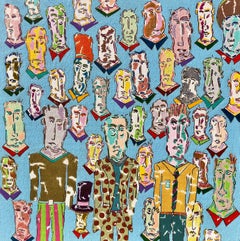
All the Kin Folk, Original Painting

All the Kin Folk, Original Painting

By John McCabe

Located in San Francisco, CA

Artist Comments
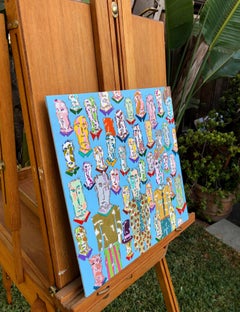
Boldy colored and stylized figures fill the scene. Their expressions exude anticipation as if waiting for a band to start or a train to arrive. The blue backg...

Category

21st Century and Contemporary Pop Art Portrait Paintings
Materials

Acrylic

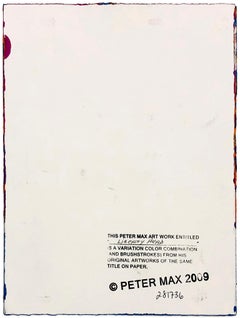
Liberty Head Mixed Media on Paper, Unique, Signed, Pop Art, 2009

Liberty Head Mixed Media on Paper, Unique, Signed, Pop Art, 2009

By Peter Max

Located in Aventura, FL

Mixed media with acrylic painting and color lithography on paper. Hand-signed in acrylic paint on front by Peter Max. A unique variation. Frame size 18 x 15.5 inches. Artwork siz...

Category

2010s Pop Art Portrait Paintings
Materials

Paper, Mixed Media, Acrylic, Lithograph

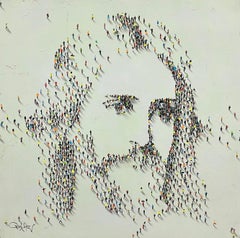
Jesus by Craig Alan - Original Mixed Media

Jesus by Craig Alan - Original Mixed Media

By Craig Alan

Located in New York City, NY

ORIGINAL MIXED MEDIA ON ARTBOARD 48 x 48 inches - Original mixed media signed by the artist. Craig Alan is a Pop Surrealist, internationally recognized for his ingenious portraits o...

Category

2010s Pop Art Portrait Paintings
Materials

Mixed Media, Acrylic

Retro Pop Portrait of Women on Panel, Los Angeles I’m Yours by James Wolanin

Retro Pop Portrait of Women on Panel, Los Angeles I’m Yours by James Wolanin

By James Wolanin

Located in Laguna Beach, CA

JAMES WOLANIN "Los Angeles I’m Yours" Acrylic & Gloss Varnish on Panel 48 x 48 inches ______________________ James Wolanin’s paintings transport the viewer to an effervescent, ...

Category

2010s Pop Art Portrait Paintings
Materials

Varnish, Acrylic, Panel

Pop Art portrait paintings for sale on 1stDibs.
Find a wide variety of authentic Pop Art portrait paintings available for sale on 1stDibs. Works in this style were very popular during the 21st Century and Contemporary, but contemporary artists have continued to produce works inspired by this movement. If you’re looking to add portrait paintings created in this style to introduce contrast in an otherwise neutral space in your home, the works available on 1stDibs include elements of blue, orange, pink, yellow and other colors. Many Pop art paintings were created by popular artists on 1stDibs, including Steve Kaufman, Iryna Kastsova, Virginie Schroeder, and Annemarie Ambrosoli. Frequently made by artists working with Paint, and Acrylic Paint and other materials, all of these pieces for sale are unique and have attracted attention over the years. Not every interior allows for large Pop Art portrait paintings, so small editions measuring 7.88 inches across are also available. Prices for portrait paintings made by famous or emerging artists can differ depending on medium, time period and other attributes. On 1stDibs, the price for these items starts at $1 and tops out at $699,000, while the average work sells for $4,000.