1850s Art

to
313
1,006
107
48
30
24
Overall Width
to
Overall Height
to
7,596
21,426
163,272
229,807
2,001
2,266
4,982
6,535
5,755
15,003
20,644
25,733
18,671
13,962
5,394
837
15
7
4
2
2
1
673
508
22
664
370
314
271
227
177
152
112
85
76
70
69
67
55
47
46
45
45
38
36
846
329
167
124
71
119
87
60
58
16
168
662
392
169
Period: 1850s
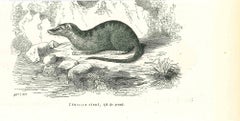
The Skull - Original Lithograph by Paul Gervais - 1854

The Skull - Original Lithograph by Paul Gervais - 1854

By Paul Gervais

Located in Roma, IT

The Skull is an original lithograph on ivory-colored paper, realized by Paul Gervais (1816-1879). The artwork is from The Series of "Les Trois Règnes de la Nature", and was published...

Category

Modern 1850s Art

Materials

Paper, Lithograph

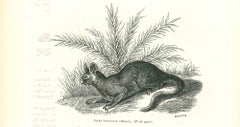
The Bat - Original Lithograph by Paul Gervais - 1854

The Bat - Original Lithograph by Paul Gervais - 1854

By Paul Gervais

Located in Roma, IT

The Bat is an original lithograph on ivory-colored paper, realized by Paul Gervais (1816-1879). The artwork is from The Series of "Les Trois Règnes de la Nature", and was published i...

Category

Modern 1850s Art

Materials

Paper, Lithograph

Antique French portrait oil painting of a Chef smoking, 1800's French Art

Antique French portrait oil painting of a Chef smoking, 1800's French Art

Located in AIGNAN, FR

Antique French portrait oil painting of a Chef smoking in the kitchen. This rare oil painting on wood is signed in the upper left and depicts a chef taking a quiet moment to himself...

Category

1850s Art

Materials

Oil

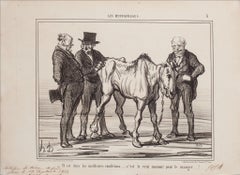
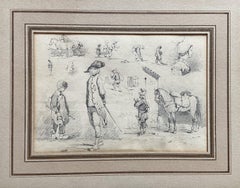
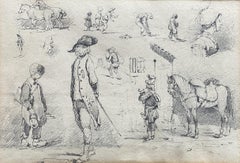
French Drawing - Figure Study

French Drawing - Figure Study

Located in Houston, TX

Lovely one-of-a-kind pencil and watercolor sketch of various figures and a work horse, circa 1850. Original artwork on paper displayed on a white mat with a gold border. Archival pl...

Category

1850s Art

Materials

Paper, Watercolor, Pencil

Oil on canvas, "Madonna and Child" 1850, Eastern Europe

Oil on canvas, "Madonna and Child" 1850, Eastern Europe

Located in Vicenza, VI

A painting that refers to Our Lady Eleusa, also known as the "Mother of God of Tenderness," which shows an undeniable feeling of affection and tenderness between mother and child. Th...

Category

Other Art Style 1850s Art

Materials

Canvas, Oil

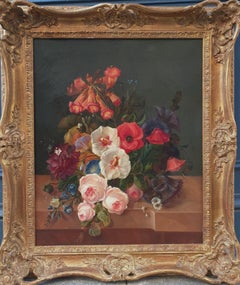
Roses,  Historic Botanical

Roses, Historic Botanical

Located in New York, NY

A most popular drawing master, Lesourd-Beauregard exhibited extensively at the Paris Salons, and was awarded a medal in 1842. He is famous for his in depth botanical studies done in...

Category

French School 1850s Art

Materials

Oil, Panel

Winter Scene with Figures on Ice, 1859

Winter Scene with Figures on Ice, 1859

Located in Stockholm, SE

This signed and dated winter scene from 1859 constitutes an important and revealing example of the artistic practice of Gustaf Adolf Schuknecht, a Swedish painter whose work survives...

Category

Realist 1850s Art

Materials

Canvas, Oil

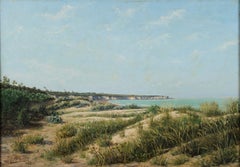
Beach landscape on Atlantic French coast

Beach landscape on Atlantic French coast

Located in BELEYMAS, FR

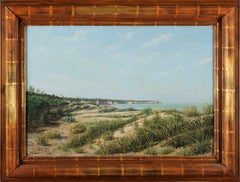
Jean-Georges PASQUET (Périgueux 1851 - 1936) Pointe de Suzac at Saint Georges de Didonne Oil on canvas H. 59 cm; W. 85 cm Signed and dated 1885 lower left Provenance: Private collec...

Category

French School 1850s Art

Materials

Oil, Canvas

Superb Neoclassical White Marble Bust of Flora France 1850 '

Superb Neoclassical White Marble Bust of Flora France 1850 '

Located in Rome, IT

Superbly carved white statuary Carrara marble bust of Flora, the goddess of flowers. Flora was often associated with the coming of spring and the fertility of the land. She also sy...

Category

1850s Art

Materials

Marble

Vigilant Fox - The psyche of the fox -

Vigilant Fox - The psyche of the fox -

Located in Berlin, DE

Carl Friedrich Deiker (1838 Wetzlar - 1892 Düsseldorf). Vigilant fox. Pencil drawing on brown paper, 18 × 29.5 cm (inside measurement), 31.5 x 43.5 cm (mount), signed and dated "Deiker [18]54" at lower right. - a little bit stained, with a light water stain at lower right About the artwork Carl Friedrich Deiker's consummate ability to depict animals is already evident in this early work. He brought a whole new psychological dimension to animal painting, so that one could literally speak of animal portraits. The naturalistic appearance of the fox alone makes it seem alive. Every strand of muscle, even every hair, is captured, which requires an intensive artistic study of animal anatomy and physiology. But the fox's real liveliness comes not from its natural appearance, but from its internal movement: Stretched out, it has been brought out of rest. It turns around and, with its ears pricked up, looks intently in the direction from which it has seen something. His mouth is slightly open and his pointed teeth are bared, as if he were growling. Tension gradually takes hold of his whole body. While the hind legs were still in a relaxed position, closely observed by Deiker, one front leg was already raised, ready to begin a rising movement. The fox seems so alarmed with all its senses that one gets the impression that, at any moment, its tail will move jerkily and the animal will jump up. While wild animals have traditionally been portrayed as beasts or anthropomorphised, often for caricatural purposes, Deiker explores their inherent nature by attempting to capture their psychic impulses. The wild animal is neither bestial nor human, but a creature in its own right, valued by Deiker for its own sake. In this way, he brought the dignity of the animal into representation and raised animal painting to a whole new artistic level. About the artist Carl Friedrich Deiker was the son of the drawing teacher Christian Friedrich Deiker and the younger brother of the animal painter Johannes Deiker. In addition to the family art lessons, Christian Friedrich shared a studio with his brother Johannes at Braunfels Castle, Deiker attended the drawing academy in Hanau, and from 1858 he was a student at the Karlsruhe Art Academy, where he studied under the landscape painter Johann Wilhelm Schirmer. Carl Friedrich Deiker was already in demand as an artist during his first year: Grand Duke Frederick I of Baden, Margrave Max of Baden and Grand Duke Michael of Russia bought hunting scenes by him. In 1859 he went on a study trip to the Reinhardswald. Just as the Barbizon School had rediscovered the landscape, Deiker opened up the forest for animal painting. From 1861-64 Deiker had his own studio in Karlsruhe, then moved to Düsseldorf, where his brother Johannes followed four years later. Deiker married a daughter of the landscape painter Karl Hilger and remained in Düsseldorf until his death. In 1868 he finally achieved international fame with his painting 'Pursued Noble Deer' and was regarded as a virtuoso new founder of animal painting. "Deiker brought for the first time a truly great artistic quality to animal painting [...]". - Hans Vollmer From 1870 he participated in the academic art exhibitions in Berlin, Dresden, Munich and Hanover. He was also very busy as an illustrator. He drew for the Gartenlaube, the Salon, the Universum, and produced many of the finely illustrated hunting and animal books of the period. He also worked as a printmaker, while his oil paintings circulated as reprints by Franz Dinger. From 1865 to 1892 Deiker was a member of the artists' association Malkasten. Carl Friedrich Deiker's life's work was honoured with a large posthumous memorial exhibition at the Düsseldorf Kunsthalle in 1892. His son Carl Deiker, born in 1879, also became a painter. Selection of art museums that own works by Carl Friedrich Deiker: Hamburger Kunsthalle / Kunsthalle Karlsruhe / Kunstmuseum Düsseldorf / Wallraff Richartz Cologne. Selected Bibliography H. Schmidt: Johannes and...

Category

Naturalistic 1850s Art

Materials

Pencil

"Building the Allegheny Railroad, Pennsylvania" Alfred Wall, Scalp Level School

"Building the Allegheny Railroad, Pennsylvania" Alfred Wall, Scalp Level School

Located in New York, NY

Alfred S. Wall (American, 1825-1896) Untitled (Building the Railroad), 1859 Oil on canvas 14 1/2 x 18 1/2 inches Signed and dated lower left For Christmas, 2008, the Pittsburgh Post-Gazette featured Alfred Wall's painting, Old Saw Mill from the collection of the Westmoreland Museum of American Art in Greensburg, PA. It was painted in 1851 in the town of Lilly, Pennsylvania in the Allegheny Mountains. The newspaper description stated that "though the saw mill is long gone, it still conveys all the warmth and coziness of this time of year. The article, written by Patricia Lowry, continued: At first glance, Alfred S. Wall's painting of a saw mill in snowy woods triggers nostalgia for the coziness of a log cabin, the smell of a wood-burning fire and the warming of chilled hands and feet beside it. But as sentimental as it seems on the surface, Mr. Wall's painting has a deeper and unexpected context. This is more than a painting about sled-riding children and early industry planted in the middle of virgin forest. Intended or not, this is a painting about conquering the great divide of the Allegheny Mountains. For the third consecutive year, the Post-Gazette features a winter-scene painting on the cover of the Christmas Day newspaper. This year's painting, Old Saw Mill, was selected by co-publisher and editor-in-chief John Robinson Block and executive editor David Shribman during a visit to the Westmoreland Museum of American Art in Greensburg. Mr. Wall, listed as a portrait painter in the 1850 census, was about 26 when he painted Old Saw Mill in 1851. The self-taught artist was born in Mount Pleasant, Westmoreland County, to William and Lucy Wall, who'd emigrated from England around 1820. An artistic sensibility ran in the family: William was a sculptor who carved ornate tombstones here; Alfred's children, A. Bryan and Bessie, were landscape painters, as was Alfred's older brother, William Coventry Wall. For more than a century the Walls formed a prominent art dynasty in Pittsburgh, and Alfred, eventually a partner in the city's most prestigious art gallery, was well known as a painter, dealer and restorer. In Old Saw Mill, two wood cutters, each holding an axe, meet outside the mill; one points in the direction of the forest. On the other side of the stream, one child pulls another down the hillside on a sled. Just behind the hill's slope, the roof of a building appears, perhaps the home of the sawyer. The luminous, late afternoon light comes from the northwest, casting lengthening shadows on the snow under a darkening sky. The saw mill in "Old Saw Mill" likely would have been impossible to track down had Mr. Wall, presumably, not written on the back of the painting: "old saw mill near Jct. 4, Portage RR, Pa." "There was no Junction 4," said Mike Garcia, park ranger at the Allegheny Portage Railroad National Historic Site, about 90 miles east of Pittsburgh near Gallitzen, Cambria County. "But there was an Inclined Plane No. 4 at Lilly, and there was a saw mill there." In fact, there were at least six saw mills at Lilly over the years, said longtime resident Jim Salony, president of the Lilly-Washington Historical Society. But when he saw an image of the painting, Mr. Salony had no trouble coming up with a location. While there are no known photographs of the saw mill, he believes it stood near the intersection of Portage and Washington streets, next to Bear Rock Run. Mr. Salony, retired academic dean at Mount Aloysius College, didn't know exactly when the mill was torn down, but it's been gone since at least the late 1800s. He was pleased to learn of the painting, even though that knowledge came too late for inclusion in a new book about Lilly, The Spirit of a Community, for which he served as primary author and editor. It runs to more than 700 pages. For a little town -- population 869 last year -- Lilly has a lot of history. Nestled in a bowl on the western slope of the Allegheny Mountains about 3 miles south of Cresson, Lilly was first settled in 1806 by Joseph Meyer and his family, who named their 332-acre land patent Dundee. Although the Meyers had left by 1811, other settlers followed, but the community didn't flourish until the 1830s, when the Allegheny Portage Railroad began its 23-year-run through the town. For 200 years the Alleghenies had stood as an impediment to trade and travel between Pittsburgh and the east. A canal from Philadelphia to Pittsburgh would change that and compete with New York's Erie Canal. But a portage railroad would have to be built, on which teams of horses would lead the canal boats over the mountains. Engineer Sylvester Welch began his surveying from the small settlement at Lilly. The railroad would require 10 inclined planes, some quite steep, between Hollidaysburg and Johnstown. To build it, trees had to be cut along a 120-foot-wide right-of-way for 36 miles, along which track and engine houses had to be built. William Brown, who owned the saw mill on Bear Rock Run, built at least one of the engine houses at Inclined Plane No. 4; an 1834 contract also included fencing the dwelling lots at the head and foot of the plane. Lilly is located at what was the foot of Inclined Plane No. 4., giving the community one of its early informal names, Foot of Four. Named in 1883 for Richard Lilly, who'd completed the grist mill there, Lilly had another early name: Hemlock, so dubbed by a Portage Railroad traveler who smelled the bark stripped from the trees at the saw mill. Because there isn't another Allegheny Portage Railroad location like it, where a cut in the mountains opens into a bowl, Mr. Salony thinks it was Lilly that Charles Dickens wrote about following his trip from Harrisburg to Pittsburgh on the Pennsylvania Canal in late March 1842, describing what he saw after emerging from "the bottom of the cut": "It was very pretty while traveling, to look down into a valley full of light and softness, catching glimpses through the tree-tops of scattered cabins; children running to the doors; dogs bursting out to bark, who we could see without hearing; terrified pigs scampering homeward; families sitting out in their rude gardens; cows gazing upward with a stupid indifference; men in their shirt-sleeves looking on at their unfinished houses, planning out to-morrow's work; and we riding onward, high above them, like a whirlwind." To get to Lilly, Mr. Wall may have taken the Pennsylvania Canal from his home in Allegheny City, now the North Side. He'd married young, at 21, to Sarah Carr in 1846, the same year he began his career as an artist. By 1880 they were living in a brick townhouse at 104 (later 814) Arch St., now demolished. Across the river in Pittsburgh he shared a studio at 67 Fourth Ave. with his brother William; they later moved to Burke's Building, today the city's oldest office building at 209-211 Fourth. But often they worked outdoors, sometimes as part of the colony of artists that grew up around painter George Hetzel beginning in the late 1860s at Scalp Level...

Category

Hudson River School 1850s Art

Materials

Canvas, Oil

19th Century Oil on Canvas Italian Young Girl Portrait Painting, 1850

19th Century Oil on Canvas Italian Young Girl Portrait Painting, 1850

Located in Vicoforte, IT

A splendid Italian painting from the mid-19th century. Oil on canvas, first canvas, painting depicting a marvelous portrait of a young woman, rendered with great delicacy of light an...

Category

1850s Art

Materials

Canvas, Oil

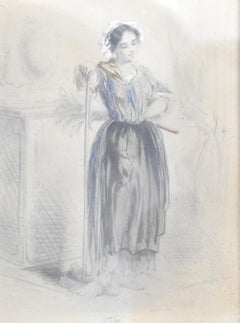
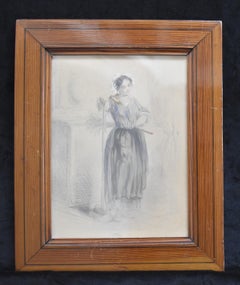
Paul Gavarni (1804-1866) La Soubrette (The handmaid), watercolor

Paul Gavarni (1804-1866) La Soubrette (The handmaid), watercolor

Paul Gavarni (1804-1866) La Soubrette (The handmaid), pencil, watercolor and heightenings of gouache on paper Signed lower right (faded) 20 x 15 cm In quite good condition, lightly sunstroke and yellowed Framed 28.5 x 23 cm Paul Gavarni was the nom de plume of Sulpice Guillaume Chevalier (13 January 1804 – 24 November 1866), a French illustrator, born in Paris. The story is told that he took his name from Gavarnie in Luz-Saint-Sauveur where he had taken a journey into the Pyrenees. He was a very famous illustrator, friend of Felix Nadar...

Category

1850s Art

Materials

Watercolor

19th century watercolor of a street scene in Tewkesbury, England

19th century watercolor of a street scene in Tewkesbury, England

Located in Los Angeles, CA

Framed in wood with museum glass to 9" x 11" One of the watercolors says Tweksbury, July (?) 1850 Framed by Commonwealth Print Conservation, Boston in 1988 Very nice watercolor. Par...

Category

1850s Art

Materials

Watercolor

The Bat - Original Lithograph by Paul Gervais - 1854

The Bat - Original Lithograph by Paul Gervais - 1854

By Paul Gervais

Located in Roma, IT

The Bat is an original lithograph on ivory-colored paper, realized by Paul Gervais (1816-1879). The artwork is from The Series of "Les Trois Règnes de la Nature", and was published i...

Category

Modern 1850s Art

Materials

Paper, Lithograph

The Bat - Lithograph by Paul Gervais - 1854

The Bat - Lithograph by Paul Gervais - 1854

By Paul Gervais

Located in Roma, IT

The Bat is an original lithograph on ivory-colored paper, realized by Paul Gervais (1816-1879). The artwork is from The Series of "Les Trois Règnes de la Nature", and was published i...

Category

Modern 1850s Art

Materials

Paper, Lithograph

The Bat - Lithograph by Paul Gervais - 1854

The Bat - Lithograph by Paul Gervais - 1854

By Paul Gervais

Located in Roma, IT

The Bat is an original lithograph on ivory-colored paper, realized by Paul Gervais (1816-1879). The artwork is from The Series of "Les Trois Règnes de la Nature", and was published i...

Category

Modern 1850s Art

Materials

Paper, Lithograph

The Bat -Lithograph by Paul Gervais - 1854

The Bat -Lithograph by Paul Gervais - 1854

By Paul Gervais

Located in Roma, IT

The Bat is an original lithograph on ivory-colored paper, realized by Paul Gervais (1816-1879). The artwork is from The Series of "Les Trois Règnes de la Nature", and was published i...

Category

Modern 1850s Art

Materials

Paper, Lithograph

The Bat - Lithograph by Paul Gervais - 1854

The Bat - Lithograph by Paul Gervais - 1854

By Paul Gervais

Located in Roma, IT

The Bat is an original lithograph on ivory-colored paper, realized by Paul Gervais (1816-1879). The artwork is from The Series of "Les Trois Règnes de la Nature", and was published i...

Category

Modern 1850s Art

Materials

Paper, Lithograph

The Bat - Lithograph by Paul Gervais - 1854

The Bat - Lithograph by Paul Gervais - 1854

By Paul Gervais

Located in Roma, IT

The Bat is an original lithograph on ivory-colored paper, realized by Paul Gervais (1816-1879). The artwork is from The Series of "Les Trois Règnes de la Nature", and was published i...

Category

Modern 1850s Art

Materials

Paper, Lithograph

The Bat - Lithograph by Paul Gervais - 1854

The Bat - Lithograph by Paul Gervais - 1854

By Paul Gervais

Located in Roma, IT

The Bat is an original lithograph on ivory-colored paper, realized by Paul Gervais (1816-1879). The artwork is from The Series of "Les Trois Règnes de la Nature", and was published i...

Category

Modern 1850s Art

Materials

Paper, Lithograph

The Bat - Lithograph by Paul Gervais - 1854

The Bat - Lithograph by Paul Gervais - 1854

By Paul Gervais

Located in Roma, IT

The Bat is an original lithograph on ivory-colored paper, realized by Paul Gervais (1816-1879). The artwork is from The Series of "Les Trois Règnes de la Nature", and was published i...

Category

Modern 1850s Art

Materials

Paper, Lithograph

The Skull - Original Lithograph by Paul Gervais - 1854

The Skull - Original Lithograph by Paul Gervais - 1854

By Paul Gervais

Located in Roma, IT

The Skull is an original lithograph on ivory-colored paper, realized by Paul Gervais (1816-1879). The artwork is from The Series of "Les Trois Règnes de la Nature", and was published...

Category

Modern 1850s Art

Materials

Paper, Lithograph

Loch Awe and Kilchurn Castle Scotland, 19th Century, Mountain and Loch Landscape

Loch Awe and Kilchurn Castle Scotland, 19th Century, Mountain and Loch Landscape

Located in Hillsborough, NC

Loch Awe and Kilchurn Castle is a landscape oil painting on board by 19th century artist Edward Train (1801 -1866). Train was a British artist, painting mostly landscapes in northern England and, like this one, in Scotland. The painting is signed E. Train (lower left) and dated 1850 or 1856, the last number being too faint to be certain. From 1850 to 1880 Train flourished as an artist. His work was exhibited from the 1830s. Born in Gateshead, Tyneside, Train left to take an apprenticeship with a London engraver. In the 1830s Train traveled with an expedition to the Hebrides and Shetland Islands. Here he became fascinated with the Scottish scenery that would become part of his repertoire of landscape art. Loch Awe lies in the west of Scotland in Argyll and Bute. Kilchurn Castle, built in the 16th century, lies on a peninsula inside the Loch, on the water's edge. Train would have traveled to the Highlands and painted the dramatic scene from the east banks of Loch Awe, across from the Castle. This painting captures the Highland mountains, loch and castle that was very much the ouevre of this artist's work. Train painted the Highlands decades before other renowned landscape artists of the 19th century, such as Alfred de Breanski, Louis Bosworth Hurt, Douglas and Duncan Cameron...

Category

Naturalistic 1850s Art

Materials

Board, Oil

David with the Head of Goliath, 19th Century Victorian Oil

David with the Head of Goliath, 19th Century Victorian Oil

By John Rogers Herbert

Located in London, GB

John Rogers Herbert RA 1810- 1890 Oil on canvas, dated '1850' lower right on sword strap Image size: 33 ½ x 23 ½ inches Gilt Watts frame This striking painting, depicts David as a y...

Category

Victorian 1850s Art

Materials

Oil

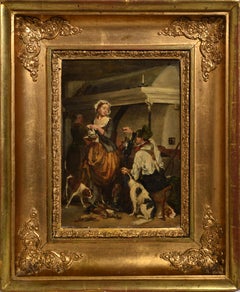
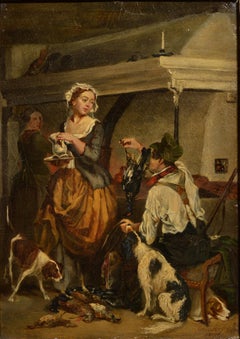
"Still Life and Hunting Dogs, 1851" P. M. Guillemin (French, 1800-1874)

"Still Life and Hunting Dogs, 1851" P. M. Guillemin (French, 1800-1874)

Located in SANTA FE, NM

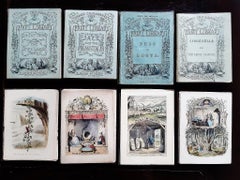
"Still Life and Hunting Dogs, 1851" P. M. Guillemin (French, 1800-1874) Monogrammed "EG" on right side. Oil on cradle board 26 x 21 (36 x 31 frame) inches Stunning example and un...

Category

Romantic 1850s Art
Materials

Oil, Wood Panel

Women portraits from Napoleon III period

Women portraits from Napoleon III period

By Charles Chaplin

Located in BELEYMAS, FR

Charles CHAPLIN (Les Andelys 1825 – Paris, 1891) Portraits of women Pair of oils on rectangular canvases H. 60 cm; L. 50 cm Signed Student of Michel Martin Drolling at the École des...

Category

French School 1850s Art

Materials

Canvas, Oil

Rare Seaweed "Nature Prints" by Henry Bradbury

Rare Seaweed "Nature Prints" by Henry Bradbury

Located in London, GB

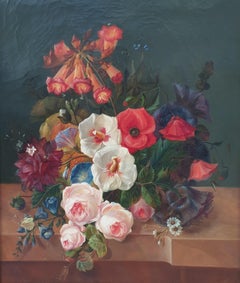
A beautifully framed set of twelve rare "nature prints" produced in 1856 by Henry Bradbury. Henry Bradbury (1829-1860) is known for the innovative technique of “nature printing”, a...

Category

Naturalistic 1850s Art
Materials

Paper

Lord Clyde and His Staff

Lord Clyde and His Staff

Located in Stockholm, SE

In 1857 an uprising had broken out in India, known as ”The Mutiny". As far as British relations with India were concerned, the event represented a watershed, as a result of which the...

Category

1850s Art

Materials

Paper, Watercolor

Portrait of a Lady
Portrait of a Lady

Portrait of a Lady

By Alexandre-François Caminade

Located in Saint-Ouen, FR

Alexandre François CAMINADE (1789-1862) Portrait of a Lady Oil on wood signed low right Old frame gilded with leaves Wood size : 22 X 15 cm Frame size : 40 X 30 cm Alexandre-Françoi...

Category

Academic 1850s Art
Materials

Oil

Ariccia Bridge Landscape Painting, Oil on Paper, Circa 1850s

Ariccia Bridge Landscape Painting, Oil on Paper, Circa 1850s

Located in Stockholm, SE

View of the Ariccia Bridge and the Alban Hills This finely executed plein air landscape depicts the monumental bridge of Ariccia and the town with the surrounding Alban Hills, painted by German landscape artist Joachim Ludwig Heinrich Daniel Bünsow (born 1821 in Kiel, died 1910 in the same city). Executed in oil on paper mounted on cardboard, the work dates from his Italian period between 1853 and 1858. Not signed. Bünsow received his artistic training at the Royal Danish Academy of Fine Arts in Copenhagen from 1839 to 1848, studying under Johann Ludwig Lund and Christoffer Wilhelm Eckersberg. In 1844, the Copenhagen Art Association acquired his painting "Tellingstedt in Dithmarschen." Following his studies, he traveled to Dresden, where he became associated with the circle around Johan Christian Dahl. A scholarship from the Copenhagen Academy enabled Bünsow to reside in Rome from 1853 to 1858. During this period, his landscapes evolved from the finely toned, naturalistic style of his early work to more atmospheric and idealized compositions, influenced by Louis Gurlitt. Bünsow's early works from his time in Copenhagen are characterized by fine tonality and naturalistic rendering, reflecting the style of his teacher Christoffer Wilhelm Eckersberg. His Italian landscapes, however, exhibit a more atmospheric and idealized approach, influenced by Louis Gurlitt. Notably, Bünsow produced high-quality drawings during his time in Rome, some of which are preserved in the Kunsthalle zu Kiel. Historical Context: The Ariccia Bridge In the early 19th century, the local authorities sought to improve the Appian Way's safety and accessibility. The solution involved constructing bridges to span the Ariccia valley and adjacent ravines. In 1843, Pope Gregory XVI commissioned a six-arched bridge to address the elevation differences. Following his death in 1846, Pope Pius IX continued the project, entrusting architect Ireneo Aleandri with the design and Giuseppe Bertolini with the execution. Completed in 1854, the bridge stands as a significant 19th-century engineering achievement. Featuring three tiers of elegant neoclassical arches inspired by Roman art, it measures 59 meters in height and 312 meters in length. Travertine columns at both ends commemorate the Roman milestones...

Category

Other Art Style 1850s Art
Materials

Oil, Cardboard, Paper