1850s Art

to
95
1,020
107
49
31
26
Overall Width
to
Overall Height
to
7,582
21,454
163,142
226,023
2,003
2,272
4,953
6,506
5,817
14,927
20,602
25,675
18,589
14,025
5,364
841
16
7
4
2
2
1
680
519
22
675
369
320
275
231
177
153
112
86
76
70
69
67
55
51
48
46
45
38
36
850
331
166
126
73
119
87
64
58
16
168
667
401
168
Period: 1850s
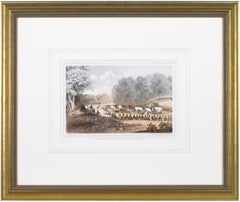
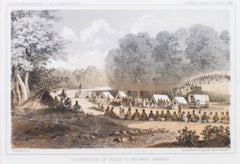
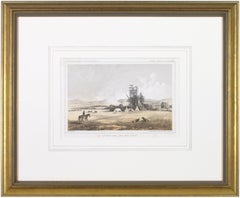
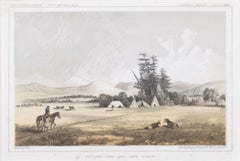
'Distribution of Goods to the Assiniboines' original John Mix Stanley lithograph

'Distribution of Goods to the Assiniboines' original John Mix Stanley lithograph

By John Mix Stanley

Located in Milwaukee, WI

In the mid-nineteenth century, the United States government set out to survey and document its newly acquired lands and territories west of the Mississippi. The goals of these surveys were manifold: to produce topographical maps, to document flora and fauna, and to document natural resources to build the emerging US economy. These surveys, and the images from them, also functioned to build the new sense of American identity with the landscape, condensing vistas into the 'picturesque' tradition of European image making. Thus, the entire span of US territory could be seen as a single, cohesive whole. This lithograph comes from one of six surveys commissioned by the Army's Topographic Bureau in 1853, which sought to find the best route to construct a transcontinental railroad. The result was a thirteen-volume report including maps, lithographs, and technical data entitled 'Explorations and Surveys to ascertain the most practicable and economical route for a Railroad from the Mississippi river to the Pacific Ocean.' When it came to depicting the Assiniboine people, as seen in the present print, Stanley chose to juxtapose their encampment, marked by tipis in the distance, with the encampment of the Isaac Stevens survey party. In the foreground, commemorating this moment, Isaac Stevens can be seen presenting trade goods, which are known to include thirty two dressed skins and two robes. The survey leader Isaac Stevens noted being grateful for the generosity of the Assiniboine, commenting: "I felt very grateful indeed to those Indians, for their kindness to my men, their proffer of kind feeling and hospitality to myself and the survey." This description and this image, however, are arguably depicted through rose-colored glasses: to the Assiniboine people, this meeting may well have included stressful diplomatic relationships and have indicated a threat to the sovereignty over the territories agreed to be theirs by the 1851 Treaty of Fort Laramie. 5.75 x 8.75 inches, image 6.5 x 9.25 inches, stone 17 x 19.75 inches, frame Artist 'Stanley Del.' lower left Entitled 'Distribution of Goods to the Assiniboines' lower center margin Publisher 'Sarony, Major & Knapp. Lith.s 449 Broadway N.Y.' lower right Inscribed 'U.S.P.R.R. EXP. & SURVEYS — 47th & 49th PARALLELS' upper left Inscribed 'GENERAL REPORT — PLATE XIV' upper right Framed to conservation standards using 100 percent rag matting with French accents; glazed with UV5 Plexiglas to inhibit fading; housed in a gold reverse ogee moulding. Print in overall good condition; some localized foxing and discoloration; frame in excellent condition. John Mix Stanley...

Category

Romantic 1850s Art

Materials

Lithograph

Portrait Studies
Portrait Studies

Portrait Studies

By Edwin Longsden Long

Located in London, GB

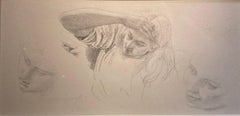
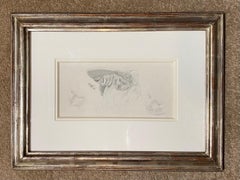
Edwin Long 1829 - 1891 Portrait Studies Graphite on paper Image size: 4 x 8 inches (10 x 20.5 cm) Framed Edwin Longsden Long RA (1829-1891, British) wa...

Category

Pre-Raphaelite 1850s Art

Materials

Graphite

"Violette" Oil on Canvas

"Violette" Oil on Canvas

Located in Los Angeles, CA

A beautifully painted oil on canvas of a flower vendor. Signed illegibly upper right corner. Framed in an ornate ebonized and gilded frame.

Category

Other Art Style 1850s Art

Materials

Canvas, Paint

Manuel Barrón, Vista de Sevilla

Manuel Barrón, Vista de Sevilla

Located in Madrid, ES

MANUEL BARRÓN Spanish, 1814 - 1844 VISTA DE SEVILLA signed, located and dated "Manuel Barrón / Sevilla. 1854" (lower right) oil on canvas 30-1/8 x 49 inches (76.5 x 124.5 cm.) framed...

Category

1850s Art

Materials

Oil, Canvas

Myzanthe Ignipectus (Fire-breasted Flowerpecker) /// John Gould Ornithology Bird

Myzanthe Ignipectus (Fire-breasted Flowerpecker) /// John Gould Ornithology Bird

By John Gould

Located in Saint Augustine, FL

Artist: John Gould (English, 1804-1881) Title: "Myzanthe Ignipectus (Fire-breasted Flowerpecker)" (Vol. 2, Plate 40) Portfolio: The Birds of Asia Year: 1850-1883 Medium: Original Hand-Colored Lithograph on wove paper Limited edition: approx. 235 Printer: Hullmandel & Walton, T. Walter or Walter & Cohn, London, UK Publisher: Taylor and Francis, John Gould, London, UK Reference: Anker No. 178; Nissen No. IVB 368; Sauer No. 17, Zimmer page 258; Wood page 365; Sitwell page 102 Sheet size: 21.38" x 14.57" Image size: 16" x 9.75" Condition: Light toning to sheet. Has been professionally stored away for decades. In excellent condition with strong colors Extremely rare Notes: Provenance: private collection - Aspen, CO. Lithography and hand-coloring by John Gould and English artist Henry Constantine Richter (1821-1902). Comes from Gould's seven volume "The Birds of Asia", (1850-1883) (First edition), which consists of 530 hand-colored lithographs. Other contributing lithographers were German artist Joseph Wolf (1820-1899) and Irish artist William Hart (1830-1908). "The Birds of Asia" was Gould's last work before his death. Gold gilded edges as issued. The fire-breasted flowerpecker is a species of bird in the family Dicaeidae found in the Indian Subcontinent and Southeast Asia. Like other flowerpeckers, this tiny bird feeds on fruits and plays an important role in the dispersal of fruiting plants. Biography: John Gould FRS (14 September 1804 – 3 February 1881) was an English ornithologist and bird artist. He published a number of monographs on birds, illustrated by plates that he produced with the assistance of his wife, Elizabeth Gould, and several other artists including Edward Lear, Henry Constantine Richter, Joseph Wolf and William Matthew Hart. He has been considered the father of bird study in Australia and the Gould League in Australia is named after him. His identification of the birds now nicknamed "Darwin's finches" played a role in the inception of Darwin's theory of evolution by natural selection. Gould's work is referenced in Charles Darwin's book, "On the Origin of Species".

Category

Victorian 1850s Art

Materials

Watercolor, Lithograph

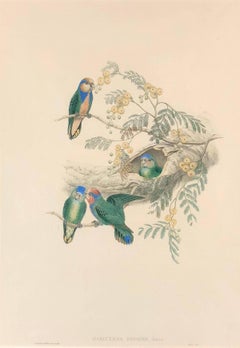
Nasiterna Bruijni
Nasiterna Bruijni

Nasiterna Bruijni

By John Gould

Located in Missouri, MO

John Gould (British, 1804-1881) Nasiterna Bruijni c. 1849-1861 Hand Colored Lithograph Image Size: approx 19.5 x 13.5 inches Framed Size: 27 3/8 x 21 1/2 inches John Gould was an English ornithologist and bird artist. The Gould League in Australia was named after him. His identification of the birds now nicknamed "Darwin's finches" played a role in the inception of Darwin's theory of evolution by natural selection. Gould's work is referenced in Charles Darwin's book, On the Origin of Species. Gould was born in Lyme Regis, Dorset, the son of a gardener, and the boy probably had a scanty education. Shortly afterwards his father obtained a position on an estate near Guildford, Surrey, and then in 1818 became foreman in the Royal Gardens of Windsor. He was for some time under the care of J T Aiton, of the Royal Gardens of Windsor. The young Gould started training as a gardener, being employed under his father at Windsor from 1818 to 1824, and he was subsequently a gardener at Ripley Castle in Yorkshire. He became an expert in the art of taxidermy, and in 1824 he set himself up in business in London as a taxidermist, and his skill led to him becoming the first Curator and Preserver at the museum of the Zoological Society of London in 1827. Gould's position brought him into contact with the country's leading naturalists, and also meant that he was often the first to see new collections of birds given to the Society. In 1830 a collection of birds arrived from the Himalayas, many not previously described. Gould published these birds in A Century of Birds from the Himalaya Mountains (1830-1832). The text was by Nicholas Aylward Vigors, and the illustrations were lithographed by Gould's wife Elizabeth, daughter of Nicholas Coxen of Kent. This work was followed by four more in the next seven years including Birds of Europe in five volumes - completed in 1837, with the text written by Gould himself, edited by his clerk Edwin Prince. Some of the illustrations were made by Edward Lear as part of his Illustrations of the Family of Psittacidae in 1832. Lear however was in financial difficulty, and he sold the entire set of lithographs to Gould. The books were published in a very large size, imperial folio, with magnificent coloured plates. Eventually 41 of these volumes were published with about 3000 plates. They appeared in parts at £3 3s. a number, subscribed for in advance, and in spite of the heavy expense of preparing the plates, Gould succeeded in making his ventures pay and in realizing a fortune. In 1838 he and his wife moved to Australia to work on the Birds of Australia and shortly after his return to England, his wife died in 1841. When Charles Darwin presented his mammal and bird specimens collected during the second voyage of HMS Beagle to the Geological Society of London at their meeting on 4 January 1837, the bird specimens were given to Gould for identification. He set aside his paying work and at the next meeting on 10 January reported that birds from the Galápagos Islands, which Darwin had thought were blackbirds, "gross-bills" and finches were in fact "a series of ground Finches which are so peculiar" as to form "an entirely new group, containing 12 species." This story made the newspapers. In March, Darwin met Gould again, learning that his Galápagos "wren" was another species of finch and the mockingbirds he had labeled by island were separate species rather than just varieties, with relatives on the South American mainland. Subsequently Gould advised that the smaller southern Rhea specimen that had been rescued from a Christmas dinner...

Category

Naturalistic 1850s Art

Materials

Lithograph

Indian Huntress
Indian Huntress

Indian Huntress

Located in PARIS, FR

Charles Cumberworth (1811-1852) Indian Huntress Bronze with double patina Vittoz chiseller Old cast France circa 1850 height 52 cm Biography: Charles Cumberworth (1811-1852), son...

Category

American Realist 1850s Art

Materials

Bronze

Utagawa Kuniyoshi -- No. 38 Totomi 遠江

Utagawa Kuniyoshi -- No. 38 Totomi 遠江

By Utagawa Kuniyoshi

Located in BRUCE, ACT

Utagawa Kuniyoshi No. 38 Totomi 遠江, 1852 From Series: Sankai medetai zue 山海目出度図絵 (Celebrated Treasures of Mountains and Seas) Woodblock print Oban Woodblock print, oban tate-e. Woma...

Category

1850s Art

Materials

Woodcut

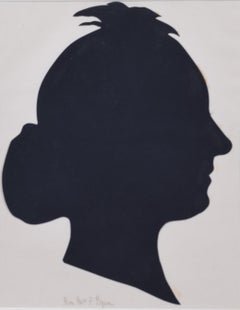
Nineteenth century silhouette of a gentleman: Lennox

Nineteenth century silhouette of a gentleman: Lennox

Located in London, GB

To see more, scroll down to "More from this Seller" and below it click on "See all from this Seller." Silhouette (circa 1870) Lennox Gouache, pen, and ink 52 x 44 cm Prior to phot...

Category

1850s Art

Materials

Ink, Gouache, Pen

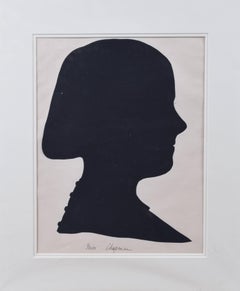
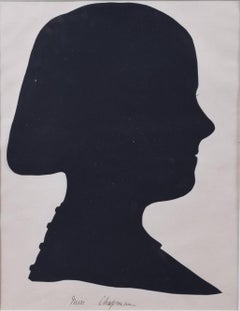
Nineteenth century silhouette of a lady: Miss Chapman

Nineteenth century silhouette of a lady: Miss Chapman

Located in London, GB

To see more, scroll down to "More from this Seller" and below it click on "See all from this Seller." Silhouette (circa 1870) Miss Chapman Gouache, pen, and ink 52 x 44 cm One of ...

Category

1850s Art

Materials

Ink, Gouache, Pen

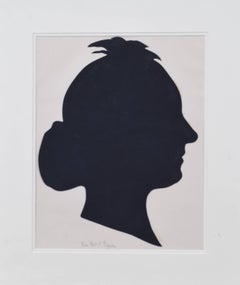
Nineteenth-century silhouette of a lady: the Hon Mrs F Byron

Nineteenth-century silhouette of a lady: the Hon Mrs F Byron

Located in London, GB

To see more, scroll down to "More from this Seller" and below it click on "See all from this Seller." Silhouette (circa 1870) The Hon Mrs F Byron Gouache, pen, and ink 52 x 44 cm ...

Category

1850s Art

Materials

Ink, Gouache, Pen

"Swishing A Rasper" 1850 by Henry Alken

"Swishing A Rasper" 1850 by Henry Alken

By Henry Alken

Located in Bristol, CT

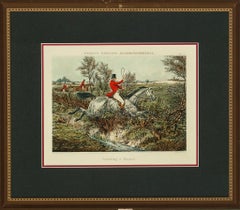
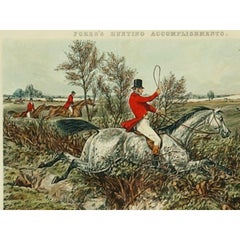
Classic fox-hunt engraving Pl.3. "Swishing a Rasper" by H(enry) Alken printed 1850 from Fores' Hunting Accomplishments in hunter green mat w/ gilt frame Image Sz: 10"H x 12.75"W Fr...

Category

1850s Art

Materials

Lithograph

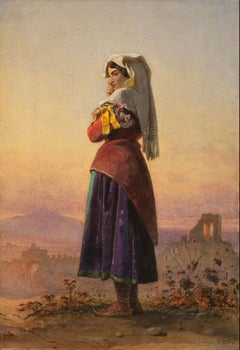
Italian Campagna

Italian Campagna

By Carl Haag

Located in London, GB

Watercolour on paper, signed and dated '1855' lower right Image size: 20 x 14 inches (51 x 35.3 cm) Acid free mount This striking watercolour depicts an Italian peasant woman in the...

Category

1850s Art

Materials

Watercolor, Laid Paper

"Getting Ready. Hearn's Hotel, Clonmel" 1856 Aquatint

"Getting Ready. Hearn's Hotel, Clonmel" 1856 Aquatint

Located in Bristol, CT

Car-Travelling In The South Of Ireland In The Year 1856. Bianconi's Establishment Print Sz: 10 7/8"H x 14"W Frame Sz: 19"H x 23"W Published 1856 by Ackermann & Co Engraver: John...

Category

1850s Art

Materials

Aquatint

'Distribution of Goods to the Gros Ventres' lithograph by John Mix Stanley

'Distribution of Goods to the Gros Ventres' lithograph by John Mix Stanley

By John Mix Stanley

Located in Milwaukee, WI

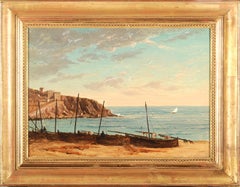
In the mid-nineteenth century, the United States government set out to survey and document its newly acquired lands and territories west of the Mississippi. The goals of these surveys were manifold: to produce topographical maps, to document flora and fauna, and to document natural resources to build the emerging US economy. These surveys, and the images from them, also functioned to build the new sense of American identity with the landscape, condensing vistas into the 'picturesque' tradition of European image making. Thus, the entire span of US territory could be seen as a single, cohesive whole. This lithograph comes from one of six surveys commissioned by the Army's Topographic Bureau in 1853, which sought to find the best route to construct a transcontinental railroad. The result was a thirteen-volume report including maps, lithographs, and technical data entitled 'Explorations and Surveys to ascertain the most practicable and economical route for a Railroad from the Mississippi river to the Pacific Ocean.' In particular, the print comes from the northern survey, commanded by Isaac Stevens, which explored the regions between the 47th and 49th parallels. In this image, Stanley documented the encounter with the Gros Ventre people at Milk River. The explorers were invited to the Gros Ventres camp and the two groups exchanged gifts in friendship. The Stevens Party provided "... blankets, shirts, calico, knives, beads, paint, powder, shot, tobacco, hard bread, etc." The image likewise alludes to how, in 1855, Isaac Stevens, concluded a treaty (Stat., L., XI, 657) to provide peace between the United States and the Blackfoot, Flathead and Nez Perce tribes. The Gros Ventres signed the treaty as part of the Blackfoot Confederacy, whose territory near the Three Fork area became a common hunting ground for the Flathead, Nez Perce, Kootenai, and Crow Indians. 5.75 x 8.75 inches, image 6.5 x 9.25 inches, stone 17 x 20 inches, frame Artist 'Stanley Del.' lower left Entitled 'Distribution of Goods to the Gros Ventres' lower center margin Publisher 'Sarony, Major & Knapp. Lith.s 449 Broadway N.Y.' lower right Inscribed 'U.S.P.R.R. EXP. & SURVEYS — 47th & 49th PARALLELS' upper left Inscribed 'GENERAL REPORT — PLATE XXI' upper right Framed to conservation standards using 100 percent rag matting with French accents; glazed with UV5 Plexiglas to inhibit fading; housed in a gold reverse ogee moulding. Print in overall good condition; some localized foxing and discoloration; minor surface abrasions to frame. John Mix...

Category

Romantic 1850s Art
Materials

Lithograph

'Victor's Camp - Hell Gate Ronde' original John Mix Stanley lithograph

'Victor's Camp - Hell Gate Ronde' original John Mix Stanley lithograph

By John Mix Stanley

Located in Milwaukee, WI

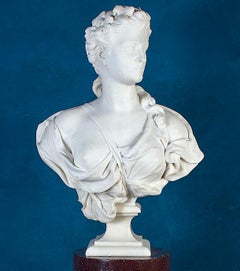
In the mid-nineteenth century, the United States government set out to survey and document its newly acquired lands and territories west of the Mississippi. The goals of these surveys were manifold: to produce topographical maps, to document flora and fauna, and to document natural resources to build the emerging US economy. These surveys, and the images from them, also functioned to build the new sense of American identity with the landscape, condensing vistas into the 'picturesque' tradition of European image making. Thus, the entire span of US territory could be seen as a single, cohesive whole. This lithograph comes from one of six surveys commissioned by the Army's Topographic Bureau in 1853, which sought to find the best route to construct a transcontinental railroad. The result was a thirteen-volume report including maps, lithographs, and technical data entitled 'Explorations and Surveys to ascertain the most practicable and economical route for a Railroad from the Mississippi river to the Pacific Ocean.' In particular, the print comes from the northern survey, commanded by Isaac Stevens, which explored the regions between the 47th and 49th parallels. Stanley shows here the stop the Stanley Party made at the junction of the Bitterroot and Hell Gate, in present day Montana. While there, the Party met with the Flathead Chief by the name Victor, as is shown in the image. The figures and their encampment are dwarfed by the vast landscape around them, indicating the sublimity of these new American territories. 5.75 x 8.75 inches, image 6.5 x 9.25 inches, stone 17 x 20 inches, frame Artist 'Stanley Del.' lower left Entitled 'Victor's Camp - Hell Gate Ronde' lower center margin Publisher 'Sarony, Major & Knapp. Lith.s 449 Broadway N.Y.' lower right Inscribed 'U.S.P.R.R. EXP. & SURVEYS — 47th & 49th PARALLELS' upper left Inscribed 'GENERAL REPORT — PLATE XXXI' upper right Framed to conservation standards using 100 percent rag matting with French accents; glazed with UV5 Plexiglas to inhibit fading; housed in a gold reverse ogee moulding. Print in overall good condition; some localized foxing and discoloration; minor surface abrasions to frame. John Mix Stanley...

Category

Romantic 1850s Art
Materials

Lithograph

'Lieutenant Crovers Despatch – Return of Governor Stevens to Fort Benton'

'Lieutenant Crovers Despatch – Return of Governor Stevens to Fort Benton'

By John Mix Stanley

Located in Milwaukee, WI

In the mid-nineteenth century, the United States government set out to survey and document its newly acquired lands and territories west of the Mississippi. The goals of these surveys were manifold: to produce topographical maps, to document flora and fauna, and to document natural resources to build the emerging US economy. These surveys, and the images from them, also functioned to build the new sense of American identity with the landscape, condensing vistas into the 'picturesque' tradition of European image making. Thus, the entire span of US territory could be seen as a single, cohesive whole. This lithograph comes from one of six surveys commissioned by the Army's Topographic Bureau in 1853, which sought to find the best route to construct a transcontinental railroad. The result was a thirteen-volume report including maps, lithographs, and technical data entitled 'Explorations and Surveys to ascertain the most practicable and economical route for a Railroad from the Mississippi river to the Pacific Ocean.' In particular, the print comes from the northern survey, commanded by Isaac Stevens, which explored the regions between the 47th and 49th parallels. 5.75 x 8.75 inches, image 6.5 x 9.25 inches, stone 17 x 20 inches, frame Artist 'Stanley Del.' lower left Entitled 'Lieutenant Crovers Despatch – Return of Governor Stevens to Fort Benton' lower center margin Publisher 'Sarony, Major & Knapp. Lith.s 449 Broadway N.Y.' lower right Inscribed 'U.S.P.R.R. EXP. & SURVEYS — 47th & 49th PARALLELS' upper left Inscribed 'GENERAL REPORT — PLATE XXXVII' upper right Framed to conservation standards using 100 percent rag matting with French accents; glazed with UV5 Plexiglas to inhibit fading; housed in a gold reverse ogee moulding. Print in overall good condition; some localized foxing and discoloration; minor surface abrasions to frame. John Mix Stanley...

Category

Romantic 1850s Art
Materials

Lithograph

"Elegant Hospitality" Bar At Gentlemen's Private Club c1854 Print

"Elegant Hospitality" Bar At Gentlemen's Private Club c1854 Print

Located in Bristol, CT

Print Sz: 11 1/2"H x 15"W Frame Sz: 17 1/4"H x 20 1/2"W Composed and drawn on stone by A. Fay Stylish gentlemen's private club interior scene featuring a grand bar c.1854

Category

1850s Art

Materials

Lithograph

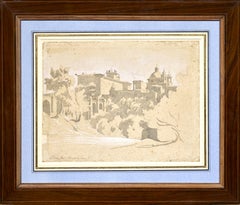
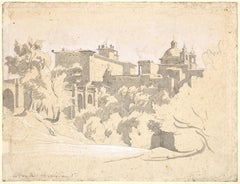
View of Ariccia, a preparatory drawing by Achille Bénouville (1815 - 1891)

View of Ariccia, a preparatory drawing by Achille Bénouville (1815 - 1891)

Located in PARIS, FR

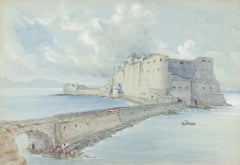
This very modern drawing presents a view of Ariccia, a small town 25 kilometres south-east of Rome. The Palazzo Chigi (in which the film-maker Luchino Visconti would film a large part of The Leopard a century later) and the adjoining church are seen from the bottom of the ravine that surrounds the town. This drawing is a moving testimony to the attraction of the city for artists of the Romantic period, who established in Ariccia a vivid artists' colony. 1. Achille Bénouville...

Category

Romantic 1850s Art
Materials

Ink, Gouache, Pencil

19th century watercolor of farm house in Tewkesbury, England

19th century watercolor of farm house in Tewkesbury, England

Located in Los Angeles, CA

Framed in wood with museum glass to 9" x 11" One of the watercolors says Tweksbury, July (?) 1850 Framed by Commonwealth Print Conservation, Boston in 1988 Very nice watercolor. Par...

Category

1850s Art
Materials

Watercolor

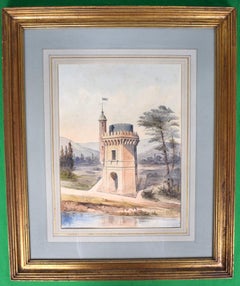
Castle Folly 1859 Watercolour

Castle Folly 1859 Watercolour

Located in Bristol, CT

Watercolour depicting a castle tower signed & dated 1859 in a French mat & gilt frame Art Sz: 17"H x 12 3/8"W Frame Sz: 27 7/8"H x 23 3/8"W

Category

1850s Art
Materials

Watercolor

Boston
Boston

Boston

By John William Hill

Located in Missouri, MO

John William Hill (1812-1879) "Boston" 1857 Hand-Colored Engraving Site Size: 29 x 41 inches Framed Size: 39 x 52 inches Born in London, England, John William Hill came to America with his family at age 7. His father, John Hill, was a well-known landscape painter, engraver, and aquatintist. John William had a career of two phases, a city topographer-engraver and then, the leading pre-Rafaelite school painter in this country. Employed by the New York Geological Survey and then by Smith Brothers...

Category

Pre-Raphaelite 1850s Art
Materials

Engraving, Aquatint