1850s Art

to
148
1,007
105
49
29
24
Overall Width
to
Overall Height
to
7,556
21,292
162,569
229,494
2,000
2,268
4,962
6,532
5,750
15,009
20,615
25,705
18,589
13,849
5,355
837
15
7
4
2
2
1
673
507
22
662
369
314
271
227
177
153
111
85
76
69
69
67
55
47
46
45
45
38
36
846
330
165
122
69
119
87
60
58
16
166
662
394
166
Period: 1850s
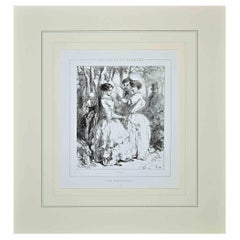
Les Buveurs - Lithograph by Victor Loutrel - 1850
Located in Roma, IT
Lithograph realized by Victor Loutrel after Adrian Guignet. Printed by Bertauts, Paris. Not signed. Matted, in very good condition.
Category

Modern 1850s Art

Materials

Lithograph

Ancient View of Salt Lake City - Original Lithograph - 1850s
Located in Roma, IT
Ancient View of Salt Lake City is an original modern artwork realized in the first half of the 19th Century. Original Colored Lithograph on Ivory Paper...
Category

Modern 1850s Art

Materials

Lithograph

Miss Pigoizeau - Original Lithograph by J.J Grandville - 1852
Located in Roma, IT
Miss Pigoizeau is an original lithograph on ivory-colored paper realized by J.J. Grandville from Scènes de la vie privée et publique des animaux, 1852. Published by Manesq & Harvard,...
Category

Modern 1850s Art

Materials

Paper, Lithograph

Limehouse
Located in New York, NY
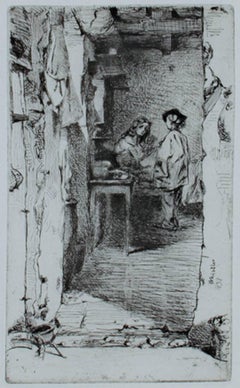
James McNeill Whistler (1834-1903), Limehouse, etching, 1859. References: Glasgow 48, fifth state (of 6), Kennedy 40, third state (of 3), signed with the butterfly in pencil in the lower margin. [Also signed and dated in the plate.]With margins, 5 x 7 7/8 inches, the sheet 6 1/2 x 9 1/2 inches. Published as no. 12 in A Series of Sixteen Etchings of Scenes on the Thames and Other Subjects, otherwise known as the Thames Set. In good condition apart from a soft diagonal fold in the sky. A very fine impression, in black ink on a thin Japan paper. Provenance: Dr. John W. Randall (cf. Lugt 2130), without his mark, annotated on the mat. Limehouse, the entrance to the West Indies Docks, lies opposite the Surrey Commercial Docks in Rotherhithe, along the lower Thames. It’s unusual to find the signed butterfly (or any pencil signature) on the early London etchings, but it is known that Whistler signed...
Category

Realist 1850s Art

Materials

Etching

Vous ne le croirez pas ma chère? - Lithograph by J.J. Grandville - 19th Century
Located in Roma, IT
Vous ne le croirez pas ma chère? is an original lithograph on ivory-colored paper realized by J.J. Grandville in the 19th Century. Good Conditions. Jean Ignace Isidore Gérard (13 S...
Category

Modern 1850s Art

Materials

Lithograph

Figures - Drawing by Paul Gavarni - 19th Century
Located in Roma, IT
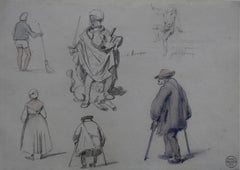
Figures is a drawing in china ink realized by Paul Gavarni in the 19th Century. Good conditions. The artwork is depicted through soft strokes in a well-balanced composition.
Category

Modern 1850s Art

Materials

Ink

Constant Troyon Shepherdess After The Storm Large Oil Painting
Located in Dallas, TX
Constant Troyon (French 1810-1865) Shepherdess After The Storm. A large and powerful plein air Barbizon painting by The master Constant Troyon representing a Shepherdess giving at yo...
Category

Barbizon School 1850s Art

Materials

Canvas, Oil

LAURENS French romantic Drawing 19th century pencil Departure children mountain
Located in PARIS, FR
Jules LAURENS Carpentras (Vaucluse), 1825 - Saint-Didier (Vaucluse), 1895 Pencil 29 x 23 cm (36 x 30 cm with frame) Signed and dated lower left "JL / 52" Modern frame Excellent condi...
Category

Academic 1850s Art

Materials

Pencil

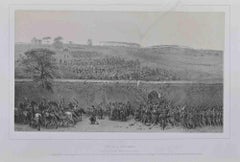
Battle of Pozzolo - Lithograph after Louis Martinet - 1850s
Located in Roma, IT
Pozzolo Battle is a lithograph print on paper realized After Louis Martinet in the 1850s. Titled, signed on the plate. The artwork is in good conditions with aged margins and diffu...
Category

Modern 1850s Art

Materials

Lithograph

Serbian Musician - Original Etching by Théodore Valério - 1854
Located in Roma, IT
Serbian Musician is an Original Etching realized by Theodore Valerio in 1854. The artwork is in very good condition, included a white cardboard passpartout (50x34 cm). Hand-signed ...
Category

Modern 1850s Art

Materials

Etching

Le Beau Monde aux Tuileries - Lithograph by J.J Grandville - 1852
Located in Roma, IT
Le Beau Monde aux Tuileries is an original lithographs by J.J. Grandville from "Scènes de la vie privée et publique des animaux, 1852. Published by Manesq & Harvard, Paris. Good Co...
Category

Modern 1850s Art

Materials

Paper, Lithograph

The Recommendation - Original Lithograph by J.J Grandville - 1852
Located in Roma, IT
The Recommendation is an original lithographs by J.J. Grandville from "Scènes de la vie privée et publique des animaux, 1852. Published by Manesq & Harvard, Paris. Good Conditions ...
Category

Modern 1850s Art

Materials

Paper, Lithograph

A Family Scene - Original Lithograph by J.J Grandville - 1852
Located in Roma, IT
A Family Scene is an original lithographs by J.J. Grandville from "Scènes de la vie privée et publique des animaux, 1852. Published by Manesq & Harvard, Paris. Good Conditions. Th...
Category

Modern 1850s Art

Materials

Paper, Lithograph

Untitled - Etching by Kees van Dongen - 1850
Located in Roma, IT
Untitled is an original Modern artwork realized by Cornelis Theodorus Maria 'Kees' van Dongen (26 January 1877 – 28 May 1968). Hand signed and numbered by artist with pencil, with d...
Category

Modern 1850s Art

Materials

Etching

The Lady Dunlin With Her Hand Fan - Original Lithograph by J.J Grandville - 1852
Located in Roma, IT
The Lady Dunlin With Her Hand Fan is an original lithographs on ivory-colored paper realized by J.J. Grandville from Scènes de la vie privée et publique des animaux, 1852. Published ...
Category

Modern 1850s Art

Materials

Paper, Lithograph

Humility - Original Lithograph by J.J Grandville - 1852
Located in Roma, IT
Humility is an original lithographs by J.J. Grandville from "Scènes de la vie privée et publique des animaux, 1852. Published by Manesq & Harvard, Paris. Good Conditions but aged. ...
Category

Modern 1850s Art

Materials

Paper, Lithograph

The Monkey - Original Lithograph by Paul Gervais - 1854
Located in Roma, IT
The Rat is an original lithograph on ivory-colored paper, realized by Paul Gervais (1816-1879). The artwork is from The Series of "Les Trois Règnes de la Nature", and was published i...
Category

Modern 1850s Art

Materials

Paper, Lithograph

The Poet - Original Etching by Léopold Flameng - 1853
Located in Roma, IT
"The Poet" is an original etching on paper, realized by Léopold Flameng. The state of preservation of the artwork is very good. Signed on the plate. The artwork represents beautiful poets in a tavern, the etching technique is used. Léopold Flameng (1831 - 1911): Léopold F. was a French engraver, illustrator and painter. He was born of French parents. He was a medallist at the Exposition Universelle (1878) and was elected a member of the Académie des Beaux-Arts in 1898 . Known for his etchings of works by Jan van Eyck , Leonardo da Vinci , Rembrandt , Ingres and Delacroix , he illustrated several books on Paris and numerous literary works of classical and contemporary authors, including Boccaccio , Paul Scarron , Victor Hugo and François Coppée . He had numerous students, including his son, François Flameng...
Category

Modern 1850s Art

Materials

Etching

Mr. Monkey Drowning Himself - Original Lithograph by J.J Grandville - 1852
Located in Roma, IT
Mr. Monkey Drowning Himself is an original lithograph on ivory-colored paper realized by J.J. Grandville from Scènes de la vie privée et publique des animaux, 1852. Published by Mane...
Category

Modern 1850s Art

Materials

Paper, Lithograph

Miss.Bird " Don't Find Her Pretty?" - Lithograph by J.J Grandville - 1852
Located in Roma, IT
Miss.Bird " Don't Find Her Pretty?" is an original lithograph on ivory-colored paper realized by J.J. Grandville from Scènes de la vie privée et publique des animaux, 1852. Publish...
Category

Modern 1850s Art

Materials

Paper, Lithograph

The Dogs - Original Lithograph by Paul Gervais - 1854
Located in Roma, IT
The Dogs is an original lithograph on ivory-colored paper, realized by Paul Gervais (1816-1879). The artwork is from The Series of "Les Trois Règnes de la Nature", and was published ...
Category

Modern 1850s Art

Materials

Lithograph

The Petition - Original Lithograph by J.J Grandville - 1852
Located in Roma, IT
The Petition is an original lithograph by J.J. Grandville from "Scènes de la vie privée et publique des animaux, 1852. Published by Manesq & Harvard, Paris. Good Conditions but age...
Category

Modern 1850s Art

Materials

Paper, Lithograph

The Rabbit - Lithograph by Paul Gervais - 1854
Located in Roma, IT
The Rabbit is an original lithograph on ivory-colored paper, realized by Paul Gervais (1816-1879). The artwork is from The Series of "Les Trois Règnes de la Nature", and was publishe...
Category

Modern 1850s Art

Materials

Paper, Lithograph

Speaking of Ladies Roses - Original Lithograph by J.J. Grandville - 1852
Located in Roma, IT
Speaking of Ladies Roses is an original lithograph on ivory-colored paper realized by J.J. Grandville from Scènes de la vie privée et publique des animaux, 1852. Published by Manesq ...
Category

Old Masters 1850s Art

Materials

Lithograph

Innocent Mrs. Cat In The Court - Lithograph by J.J Grandville - 1852
Located in Roma, IT
Innocent Mrs. Cat In The Court is an original lithograph on ivory-colored paper realized by J.J. Grandville from Scènes de la vie privée et publique des animaux, 1852. Published by M...
Category

Modern 1850s Art

Materials

Paper, Lithograph

The Meeting - Original Lithograph by J.J Grandville - 1852
Located in Roma, IT
The Meeting is an original lithographs by J.J. Grandville from "Scènes de la vie privée et publique des animaux, 1852. Published by Manesq & Harvard, Paris. Good Conditions but age...
Category

Modern 1850s Art

Materials

Paper, Lithograph

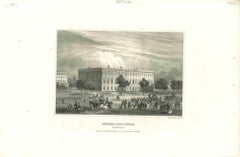
Ancient View of General Post Office - Original Lithograph - 1850s
Located in Roma, IT
Ancient View of General Post Office is an original modern artwork realized in the first half of the 19th Century. Original Lithograph on Ivory Paper. Inscripted in capital letters...
Category

Modern 1850s Art

Materials

Lithograph

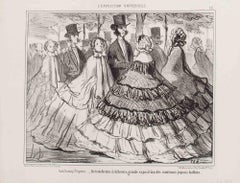
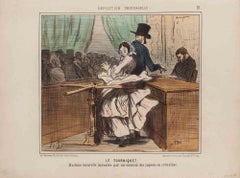
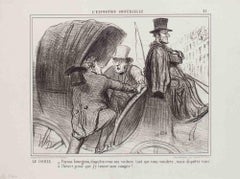
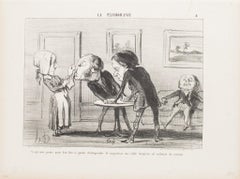
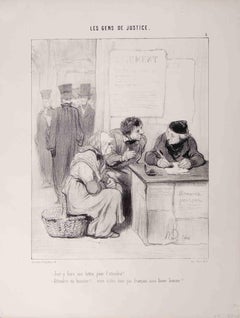
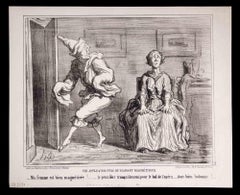
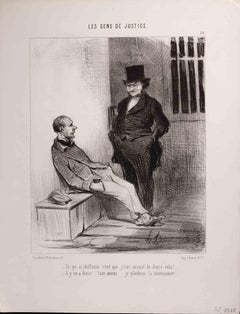
Ce qui nous prouve (...) - Lithograph by Honoré Daumier - 1853
Located in Roma, IT
Ce qui nus prouve (…) is a original b/w lithograph (plate n. 4), from La Fluidomanie. This is a satiric series composed of 12 plates of caricatures “de mœurs” (of behaviours), real...
Category

1850s Art

Materials

Lithograph

19th century color lithograph portraits ship seascape patriotic flags military
Located in Milwaukee, WI
The present hand-colored lithograph is an excellent example of patriotic mid-nineteenth century American imagery. The print shows the battle and several of the major figures involved in the Battle of Lake Erie: At the center is a view of several frigates on the lake, embroiled in conflict. Above the battle is the quotation: "We have met the enemy and they are ours." Surrounding are laurel-lined roundels with portraits of Oliver Hazard Perry (1785-1819), Stephen Dicateur (1779-1820), Johnston Blakeley (1871-1814), William Bainbridge (1774-1833), David Porter (1780-1843), and James Lawrence (1781-1813) - all of these framed by American flags, banners and cannons. This print shows that the Battle of Lake Erie, part of the War of 1812, still held resonance for American audiences several decades later and was part of the larger narrative of the founding of the country. 9.5 x 13.5 inches, artwork 20 x 23.38 inches, frame Entitled in the image Signed in the stone, lower left "Lith. and Pub. by N. Currier" Inscribed lower right "2 Spruce N.Y." and "No. 1" Copyrighted lower center "Entered according to Act of Congress in the year 1846 by N. Currier in the Clerk's office of the Southern District of N.Y." Framed to conservation standards using 100 percent rag matting and housed in a gold gilded moulding. Nathaniel Currier was a tall introspective man with a melancholy nature. He could captivate people with his piercing stare or charm them with his sparkling blue eyes. Nathaniel was born in Roxbury, Massachusetts on March 27th, 1813, the second of four children. His parents, Nathaniel and Hannah Currier, were distant cousins who lived a humble yet spartan life. When Nathaniel was eight years old, tragedy struck. Nathaniel’s father unexpectedly passed away leaving Nathaniel and his eleven-year-old brother Lorenzo to provide for the family. In addition to their mother, Nathaniel and Lorenzo had to care for six-year-old sister Elizabeth and two-year-old brother Charles. Nathaniel worked a series of odd jobs to support the family, and at fifteen, he started what would become a life-long career when he apprenticed in the Boston lithography shop of William and John Pendleton. A Bavarian gentleman named Alois Senefelder invented lithography just 30 years prior to young Nat Currier’s apprenticeship. While under the employ of the brothers Pendleton, Nat was taught the art of lithography by the firm’s chief printer, a French national named Dubois, who brought the lithography trade to America. Lithography involves grinding a piece of limestone flat and smooth then drawing in mirror image on the stone with a special grease pencil. After the image is completed, the stone is etched with a solution of aqua fortis leaving the greased areas in slight relief. Water is then used to wet the stone and greased-ink is rolled onto the raised areas. Since grease and water do not mix, the greased-ink is repelled by the moisture on the stone and clings to the original grease pencil lines. The stone is then placed in a press and used as a printing block to impart black on white images to paper. In 1833, now twenty-years old and an accomplished lithographer, Nat Currier left Boston and moved to Philadelphia to do contract work for M.E.D. Brown, a noted engraver and printer. With the promise of good money, Currier hired on to help Brown prepare lithographic stones of scientific images for the American Journal of Sciences and Arts. When Nat completed the contract work in 1834, he traveled to New York City to work once again for his mentor John Pendleton, who was now operating his own shop located at 137 Broadway. Soon after the reunion, Pendleton expressed an interest in returning to Boston and offered to sell his print shop to Currier. Young Nat did not have the financial resources to buy the shop, but being the resourceful type he found another local printer by the name of Stodart. Together they bought Pendleton’s business. The firm ‘Currier & Stodart’ specialized in "job" printing. They produced many different types of printed items, most notably music manuscripts for local publishers. By 1835, Stodart was frustrated that the business was not making enough money and he ended the partnership, taking his investment with him. With little more than some lithographic stones, and a talent for his trade, twenty-two year old Nat Currier set up shop in a temporary office at 1 Wall Street in New York City. He named his new enterprise ‘N. Currier, Lithographer’ Nathaniel continued as a job printer and duplicated everything from music sheets to architectural plans. He experimented with portraits, disaster scenes and memorial prints, and any thing that he could sell to the public from tables in front of his shop. During 1835 he produced a disaster print Ruins of the Planter's Hotel, New Orleans, which fell at two O’clock on the Morning of the 15th of May 1835, burying 50 persons, 40 of whom Escaped with their Lives. The public had a thirst for newsworthy events, and newspapers of the day did not include pictures. By producing this print, Nat gave the public a new way to “see” the news. The print sold reasonably well, an important fact that was not lost on Currier. Nat met and married Eliza Farnsworth in 1840. He also produced a print that same year titled Awful Conflagration of the Steamboat Lexington in Long Island Sound on Monday Evening, January 18, 1840, by which melancholy occurrence over One Hundred Persons Perished. This print sold out very quickly, and Currier was approached by an enterprising publication who contracted him to print a single sheet addition of their paper, the New York Sun. This single page paper is presumed to be the first illustrated newspaper ever published. The success of the Lexington print launched his career nationally and put him in a position to finally lift his family up. In 1841, Nat and Eliza had their first child, a son they named Edward West Currier. That same year Nat hired his twenty-one year old brother Charles and taught him the lithography trade, he also hired his artistically inclined brother Lorenzo to travel out west and make sketches of the new frontier as material for future prints. Charles worked for the firm on and off over the years, and invented a new type of lithographic crayon which he patented and named the Crayola. Lorenzo continued selling sketches to Nat for the next few years. In 1843, Nat and Eliza had a daughter, Eliza West Currier, but tragedy struck in early 1847 when their young daughter died from a prolonged illness. Nat and Eliza were grief stricken, and Eliza, driven by despair, gave up on life and passed away just four months after her daughter’s death. The subject of Nat Currier’s artwork changed following the death of his wife and daughter, and he produced many memorial prints and sentimental prints during the late 1840s. The memorial prints generally depicted grief stricken families posed by gravestones (the stones were left blank so the purchasers could fill in the names of the dearly departed). The sentimental prints usually depicted idealized portraits of women and children, titled with popular Christian names of the day. Late in 1847, Nat Currier married Lura Ormsbee, a friend of the family. Lura was a self-sufficient woman, and she immediately set out to help Nat raise six-year-old Edward and get their house in order. In 1849, Lura delivered a son, Walter Black Currier, but fate dealt them a blow when young Walter died one year later. While Nat and Lura were grieving the loss of their new son, word came from San Francisco that Nat’s brother Lorenzo had also passed away from a brief illness. Nat sank deeper into his natural quiet melancholy. Friends stopped by to console the couple, and Lura began to set an extra place at their table for these unexpected guests. She continued this tradition throughout their lives. In 1852, Charles introduced a friend, James Merritt Ives, to Nat and suggested he hire him as a bookkeeper. Jim Ives was a native New Yorker born in 1824 and raised on the grounds of Bellevue Hospital where his father was employed as superintendent. Jim was a self-trained artist and professional bookkeeper. He was also a plump and jovial man, presenting the exact opposite image of his new boss. Jim Ives met Charles Currier through Caroline Clark, the object of Jim’s affection. Caroline’s sister Elizabeth was married to Charles, and Caroline was a close friend of the Currier family. Jim eventually proposed marriage to Caroline and solicited an introduction to Nat Currier, through Charles, in hopes of securing a more stable income to support his future wife. Ives quickly set out to improve and modernize his new employer’s bookkeeping methods. He reorganized the firm’s sizable inventory, and used his artistic skills to streamline the firm’s production methods. By 1857, Nathaniel had become so dependent on Jims’ skills and initiative that he offered him a full partnership in the firm and appointed him general manager. The two men chose the name ‘Currier & Ives’ for the new partnership, and became close friends. Currier & Ives produced their prints in a building at 33 Spruce Street where they occupied the third, fourth and fifth floors. The third floor was devoted to the hand operated printing presses that were built by Nat's cousin, Cyrus Currier, at his shop Cyrus Currier & Sons in Newark, NJ. The fourth floor found the artists, lithographers and the stone grinders at work. The fifth floor housed the coloring department, and was one of the earliest production lines in the country. The colorists were generally immigrant girls, mostly German, who came to America with some formal artistic training. Each colorist was responsible for adding a single color to a print. As a colorist finished applying their color, the print was passed down the line to the next colorist to add their color. The colorists worked from a master print displayed above their table, which showed where the proper colors were to be placed. At the end of the table was a touch up artist who checked the prints for quality, touching-in areas that may have been missed as it passed down the line. During the Civil War, demand for prints became so great that coloring stencils were developed to speed up production. Although most Currier & Ives prints were colored in house, some were sent out to contract artists. The rate Currier & Ives paid these artists for coloring work was one dollar per one hundred small folios (a penny a print) and one dollar per one dozen large folios. Currier & Ives also offered uncolored prints to dealers, with instructions (included on the price list) on how to 'prepare the prints for coloring.' In addition, schools could order uncolored prints from the firm’s catalogue to use in their painting classes. Nathaniel Currier and James Merritt Ives attracted a wide circle of friends during their years in business. Some of their more famous acquaintances included Horace Greeley, Phineas T. Barnum, and the outspoken abolitionists Rev. Henry Ward, and John Greenleaf Whittier (the latter being a cousin of Mr. Currier). Nat Currier and Jim Ives described their business as "Publishers of Cheap and Popular Pictures" and produced many categories of prints. These included Disaster Scenes, Sentimental Images, Sports, Humor, Hunting Scenes, Politics, Religion, City and Rural Scenes, Trains, Ships, Fire Fighters, Famous Race Horses, Historical Portraits, and just about any other topic that satisfied the general public's taste. In all, the firm produced in excess of 7500 different titles, totaling over one million prints produced from 1835 to 1907. Nat Currier retired in 1880, and signed over his share of the firm to his son Edward. Nat died eight years later at his summer home 'Lion’s Gate' in Amesbury, Massachusetts. Jim Ives remained active in the firm until his death in 1895, when his share of the firm passed to his eldest son, Chauncey. In 1902, faced will failing health from the ravages of Tuberculosis, Edward Currier sold his share of the firm to Chauncey Ives...
Category

Victorian 1850s Art

Materials

Watercolor, Lithograph

Ancient View of the Forum of Trajan, Rome - Original Lithograph - 1850 ca.
Located in Roma, IT
Ancient View of the Forum of Trajan, Rome, is an original modern artwork realized in Italy in the first half of the 19th Century. Original lithog...
Category

Modern 1850s Art

Materials

Lithograph

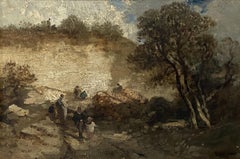
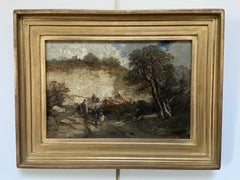
Barbizon School, Fontainebleau landscape with walkers, oil on canvas
Located in Paris, FR
Barbizon School, French circa 1850 Fontainebleau landscape with walkers Oil on canvas 21.5 x 31 cm Framed : 32 x 41.5 cm In good condition, some minor lacks of paintingsdue to a former frame abrasion mainly on the right border and in the lower border (see photographs please) This landscape is probably a view of the Fontainebleau forest. This type of scene was painted by the Barbizon painters and by Camille Corot. The village of Barbizon is very close to the forest of Fontainebleau and the painters who lived there, such as Camille Corot, painted the most picturesque views of the spectacular stone quarries. There were also many walkers and hikers in these places, as the artists had made them famous and fashionable. The author of this charming little painting wanted to depict the wildness of the place and, in contrast, the walkers who made it a pittoresque curiosity. Although it's difficult to identify or ascribe the work, as there's no signature or other indication, there's a great deal of sensitivity and self-confidence in a very lively touch that heralds Impressionism. The detail of the barely sketched silhouettes...
Category

Realist 1850s Art

Materials

Oil

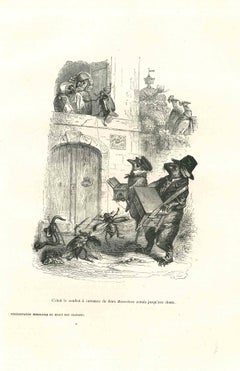
The Trading of Insects - Original Lithograph by J.J Grandville - 1852
Located in Roma, IT
The Trading of Insects is an original lithograph by J.J. Grandville from "Scènes de la vie privée et publique des animaux, 1852. Published by Manesq & Harvard, Paris. Good Conditio...
Category

Modern 1850s Art

Materials

Paper, Lithograph

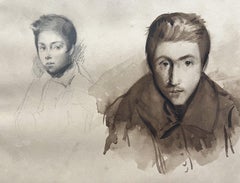
French Romantic school 19th Century The artist's inspiration Oil on canvas
Located in Paris, FR
French Romantic school of the 19th Century The artist's inspiration Oil on canvas transferred on wood It is in good condition, but the material has irregularities due to the canvas...
Category

Romantic 1850s Art
Materials

Oil

Kabukie - Woodcut by Utagawa Kuniyoshi - 1850
Located in Roma, IT
Kabukie is an original modern artwork realized by Utagawa Kuniyoshi (1798 – 1861) in the half of the 19th Century. Original woodcut from the series...
Category

Modern 1850s Art
Materials

Paper, Woodcut

Outlaw Hero Wolf and Rebellion - Original Lithograph by J.J Grandville - 1852
Located in Roma, IT
Outlaw Hero Wolf and Rebellion is an original lithographs on ivory-colored paper realized by J.J. Grandville from Scènes de la vie privée et publique des animaux, 1852. Published by ...
Category

Modern 1850s Art
Materials

Paper, Lithograph

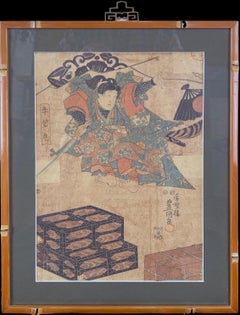
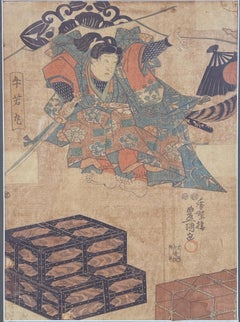
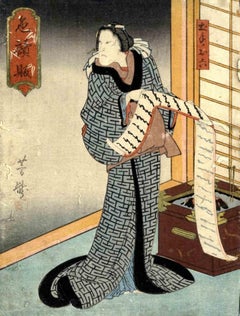
Nakamura Nanji II - Woodcut Print Triptych by Utagawa Hirosada - 1850s
Located in Roma, IT
Nakamura Nanji II as Otsuyu is an original modern artwork realized by Utagawa Hirosada (Japanese, active 1825–75) in 1851. Original Woodcut Chuban Tryptich, 1851. Nakamura Nanji II...
Category

Modern 1850s Art
Materials

Woodcut

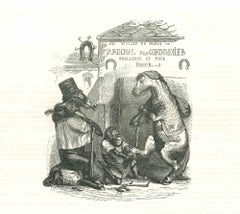
Le Doyen des Crapauds - Original Lithograph by J.J Grandville - 1852
Located in Roma, IT
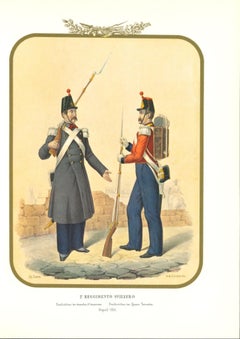
Le Doyen des Crapauds is an original lithographs by J.J. Grandville from "Scènes de la vie privée et publique des animaux", 1852. Published by Manesq & Harvard, Paris. Good Conditi...
Category

Modern 1850s Art
Materials

Paper, Engraving

The Propositions - Original Lithograph by J.J Grandville - 1852
Located in Roma, IT
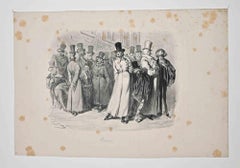
The Propositions is an original lithographs by J.J. Grandville from "Scènes de la vie privée et publique des animaux, 1852. Published by Manesq & Harva...
Category

Modern 1850s Art
Materials

Paper, Lithograph

The Conversations of Maids, Pleading Mrs. fox-Lithograph by J.J Grandville-1852
Located in Roma, IT
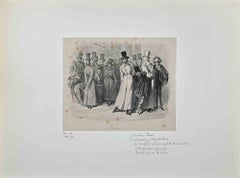
The Conversations of Maids, Pleading Mrs. Fox is an original lithograph on ivory-colored paper realized by J.J. Grandville from Scènes de la vie privée et publique des animaux, 1852...
Category

Modern 1850s Art
Materials

Paper, Lithograph

The Dog - Original Lithograph by Paul Gervais - 1854
Located in Roma, IT
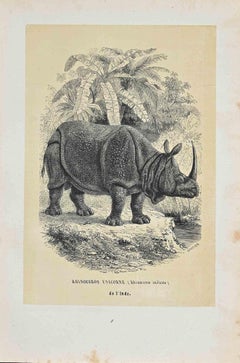
The Dog is an original lithograph on ivory-colored paper, realized by Paul Gervais (1816-1879). The artwork is from The Series of "Les Trois Règnes de la Nature", and was published i...
Category

Modern 1850s Art
Materials

Lithograph

19th century color lithograph seascape boat ship waves maritime landscape
Located in Milwaukee, WI
"Iron Steam Ship Great Britain" is an original hand-colored lithographed published by Currier & Ives. It depicts a large British steam ship on the water. The caption below says "3500 Tons. Engine 1000 Horse power. Weight of Iron used in the Ship and Engine is 1500 Tons. THE LARGEST IN THE WORLD. Length from Figurehead to Tafrail 322 Fe3et. Main breadth 50' 6" ... Depth 32' 6" Lieut. Jaf. Hosken R.N. Commander." 8" x 12 3/4" art 17 1/8" x 21 1/2" frame Currier & Ives produced their prints in a building at 33 Spruce Street where they occupied the third, fourth and fifth floors. The third floor was devoted to the hand operated printing presses that were built by Nat's cousin, Cyrus Currier, at his shop Cyrus Currier & Sons in Newark, NJ. The fourth floor found the artists, lithographers and the stone...
Category

1850s Art
Materials

Lithograph

Il Ne S'agit Pas D'Aboyer - Original Lithograph by J.J Grandville - 1852
Located in Roma, IT
Il ne s'agit pas d'aboyer, ici, mais de mordre is an original lithographs by J.J. Grandville from "Scènes de la vie privée et publique des animaux, 1852. Published by Manesq & Harvar...
Category

Modern 1850s Art
Materials

Paper, Engraving

The Solitary Reader - Original Lithograph by J.J Grandville - 1852
Located in Roma, IT
The Solitary Reader is an original lithographs by J.J. Grandville from "Scènes de la vie privée et publique des animaux, 1852. Published by Manesq & Harvard, Paris. Good Conditions...
Category

Modern 1850s Art

Materials

Paper, Lithograph

The Concert In The Wood With Grasshoppers Violinist And.. by J.J Grandville-1852
Located in Roma, IT
The Concert In The Wood With Grasshoppers Violinist And Fly Cellist is an original lithograph on ivory-colored paper realized by J.J. Grandville from Scènes de la vie privée et publ...
Category

Modern 1850s Art

Materials

Paper, Lithograph

Dog and Owner - Lithograph by J.J Grandville - 1852
Located in Roma, IT
Dog and Owner is an original lithographs by J.J. Grandville from "Scènes de la vie privée et publique des animaux", 1852. Published by Manesq & Harvard, Paris. Good Conditions. Th...
Category

Modern 1850s Art

Materials

Paper, Lithograph

The Victory - Original Lithograph by J.J Grandville - 1852
Located in Roma, IT
The Victory is an original lithographs by J.J. Grandville from "Scènes de la vie privée et publique des animaux, 1852. Published by Manesq & Harvard, Paris. Good Conditions but age...
Category

Modern 1850s Art

Materials

Paper, Lithograph

Renard Fennec - Lithograph by Paul Gervais - 1854
Located in Roma, IT
Renard Fennec is a lithograph on ivory-colored paper, realized by Paul Gervais (1816-1879). The artwork is from The Series of "Les Trois Règnes de la Nature", and was published in 18...
Category

Modern 1850s Art

Materials

Lithograph

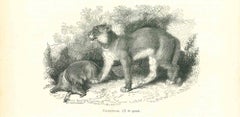
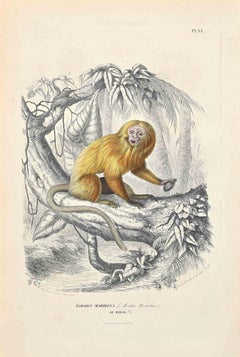
The Monkey - Original Lithograph by Paul Gervais - 1854
Located in Roma, IT
The Monkey is an original lithograph on ivory-colored paper, realized by Paul Gervais (1816-1879). The artwork is from The Series of "Les Trois Règnes de la Nature", and was publishe...
Category

Modern 1850s Art

Materials

Lithograph

The Postman Bird Carrying Letters - Lithograph by J.J. Grandville - 1852
Located in Roma, IT
J.J. Grandville from Scènes de la vie privée et publique des animaux, 1852. Published by Manesq & Harvard, Paris. Signed on the plate. With the description and notes in French. G...
Category

Modern 1850s Art

Materials

Lithograph

The Ferry boat at Neuville sur Ain near Lyon in France
Located in BELEYMAS, FR
Antoine-Claude PONTHUS-CINIER (Lyon, 1812 - Lyon, 1885) The Trailer Ferry at Neuville-sur-Ain Oil on canvas H. 54 cm; W. 81 cm Sale stamp lower left. Provenance: 1885, Studio Sale, No. 18 Ponthus-Cinier belongs to what could be defined as the third (and, so to speak, last) generation of neoclassical or historical landscape artists, born in the 1810s and 1820s, such as Félix Lanoüe, Achille Bénouville, Paul Flandrin, Eugène Ferdinand Buttura, and Alfred de Curzon. More specifically, he is considered the leading and most popular representative of the Lyon School of landscape artists around the mid-19th century. A generous, honest, and pleasant companion, Ponthus-Cinier came from a family of merchants on his mother's side and magistrates on his father's. Destined for commerce by his parents, he preferred the artistic path, and after enrolling at the École des Beaux-Arts in Lyon in 1829 and training in Paris with Paul Delaroche, he exhibited his first works at the Lyon Salon of 1839, before participating in the Paris Salon in 1841. That same year, he received the second Prix de Rome for historical landscapes (won by Buttura in 1837, and Bénouville in 1845), beaten by the Versailles artist Lanoüe. To perfect his skills, Ponthus-Cinier then decided to travel to Italy, alone and at his own expense, for a single stay between 1842 and 1844; He discovered the Ligurian coast, Tuscany, Naples, and, of course, Rome and its surroundings, and executed a considerable number of studies (painted sketches or pen and ink sketches) that he used to compose views of Italy throughout his career. Ponthus-Cinier's main qualities probably lie in "the art of illuminating a canvas," as A. Jouve wrote in the 19th century, and in his sense of perspective, sometimes truly extraordinary; however, he seems, most of the time, a little less brilliant in his figures and in the transcription of details. This unsigned canvas...
Category

French School 1850s Art

Materials

Oil, Canvas

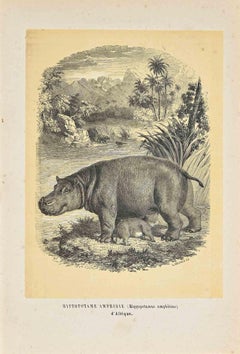
Hippopotamus Unicorn - Original Lithograph by Paul Gervais - 1854
Located in Roma, IT
Hippopotamus Unicorn is an original lithograph with stencil on ivory-colored paper, realized by Paul Gervais (1816-1879). The artwork is from The Series of "Les Trois Règnes de la Na...
Category

Modern 1850s Art

Materials

Lithograph

The Fishing - Original Lithograph by J.J Grandville - 1852
Located in Roma, IT
The Fishing is an original lithograph by J.J. Grandville from "Scènes de la vie privée et publique des animaux, 1852. Published by Manesq & Harvard, Paris. Good Conditions but aged...
Category

Modern 1850s Art

Materials

Paper, Lithograph

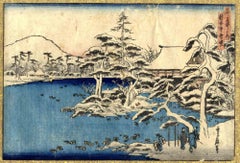
Ryoanji Temple in the Snow at Sunset- Woodcut by Hasegawa Sadanobu-1850
Located in Roma, IT
Ryoanji Temple in the Snow at Sunset is an original artwork realized in 1850 by Hasegawa Sadanobu (1809-1979). Chuban yokoe. From the series "Miyako meisho no uchi", Famous Viws o...
Category

Modern 1850s Art

Materials

Woodcut

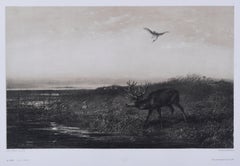
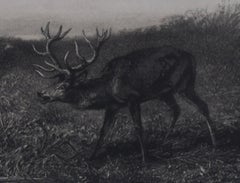
Red Deer - Original Lithograph by Paul Gervais - 1854
Located in Roma, IT
Red Deer is an original lithograph on ivory-colored paper, realized by Paul Gervais (1816-1879). The artwork is from the series of "Les Trois Règnes de la Nature", and was published...
Category

Modern 1850s Art

Materials

Lithograph

Les Invalides du Sentiment - Original Lithograph by Paul Gavarni - 1850s
Located in Roma, IT
Les Invalides du Sentiment is a lithograph on ivory-colored paper, realized by the French draftsman Paul Gavarni (alias Guillaume Sulpice Chevalier Gavarni, 1804-1866) in the mid-19t...
Category

Modern 1850s Art

Materials

Lithograph

The Winter Leaf - Woodcut Diptych by Kunikazu Utagawa - 1860s
Located in Roma, IT
The Winter Leaf is an original modern artwork realized by Kunikazu Utagawa in 1860. Original Woodcut Print Chuban Dyptich Format, 1860. From the series "Shiki no uchi" (Four Seaso...
Category

Modern 1850s Art

Materials

Woodcut

The Monkey - Original Lithograph by Paul Gervais - 1854
Located in Roma, IT
The Rat is an original lithograph on ivory-colored paper, realized by Paul Gervais (1816-1879). The artwork is from The Series of "Les Trois Règnes de la Nature", and was published i...
Category

Modern 1850s Art

Materials

Paper, Lithograph

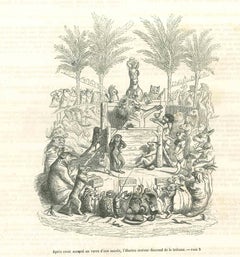
Scènes de la Vie [...] - Rare Book Illustrated by J. J. Grandville - 1852
Located in Roma, IT
Scènes de la Vie Privée et Publique des Animaux is an original modern rare book illustrated by Jean Jacques Grandville (Nancy, 1803 – Vanves, 1...
Category

Modern 1850s Art

Materials

Paper, Lithograph

The Portrait - Original Drawing - 1853
Located in Roma, IT
The Portrait is an original artwork, pencil and ink on paper. Is dated 1853 on the lower right. Passpartout cm 25x28,5 The artist represents an interior scene, under an intimate vie...
Category

Modern 1850s Art

Materials

Pencil

Hamster - Original Lithograph by Paul Gervais - 1854
Located in Roma, IT
Hamster is an original lithograph on ivory-colored paper, realized by Paul Gervais (1816-1879). The artwork is from The Series of "Les Trois Règnes de la Nature", and was published i...
Category

Modern 1850s Art

Materials

Lithograph