1890s Art

to
196
1,021
359
238
105
146
Overall Width
to
Overall Height
to
7,592
21,501
164,453
235,349
2,049
2,298
4,969
6,482
5,750
15,255
20,941
26,076
18,854
14,135
5,395
219
187
75
30
8
8
5
5
3
2
1,087
698
12
1,218
659
408
360
326
193
191
180
174
146
123
119
103
91
91
80
62
62
61
55
717
648
505
411
331
59
36
26
24
16
710
212
1,025
844
Period: 1890s
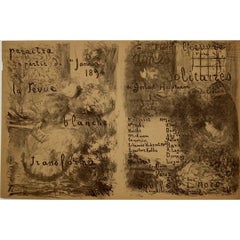
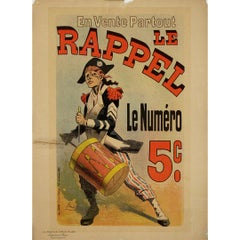
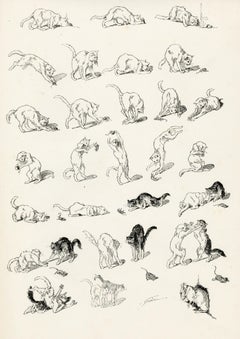
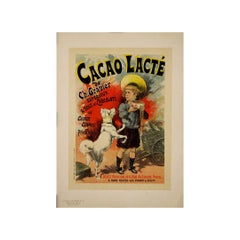
(after) Caran d'Ache - lithograph poster

(after) Caran d'Ache - lithograph poster

By Caran D'Ache

Located in Henderson, NV

Medium: lithograph (after the poster). Printed in 1897 on smooth wove paper and published in Paris by Librairie Nilsson. Sheet size: 9 x 12 1/4 inches (230 x 310 mm). Signed in the p...

Category

1890s Art

Materials

Lithograph

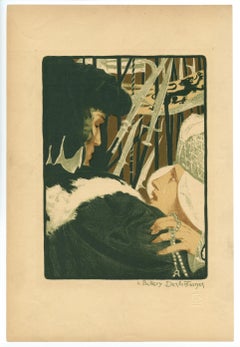
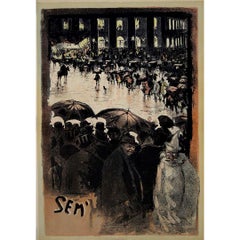
(after) Albert Depré - lithograph poster

(after) Albert Depré - lithograph poster

Located in Henderson, NV

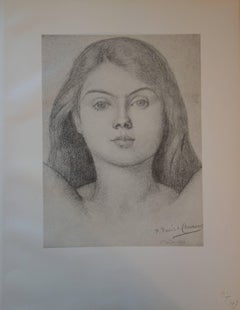
Medium: lithograph (after the poster). Printed in 1897 on smooth wove paper and published in Paris by Librairie Nilsson. Image size: 9 3/8 x 6 3/4 inches (238 x 173 mm). Sheet size: ...

Category

1890s Art

Materials

Lithograph

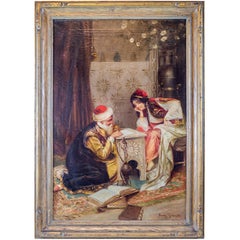
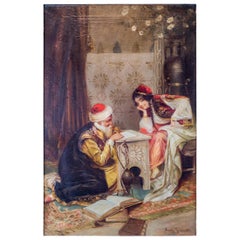
A Restful Moment in the Harem

A Restful Moment in the Harem

By William Gale (British)

Located in New York, NY

William Gale British 1823 - 1909 A Restful Moment signed with artist's monogram WG lower left oil on canvas Unframed: 30.6 by 41cm., 12 by 16¼in. Framed: 52 by 62cm., 20½ by 24½in. William Gale was a talented history and genre oil painter, born in London in 1823. He won many accolades as a student at Royal Academy Schools, and travelled to Italy in 1851 and the Middle East in 1862 and 1867. Due to his many influences , Gale's paintings are in an array of styles including sentimental, biblical, mythological subjects, portraits and orientalist pictures. Examples of his work are held by the Tate, Glasgow City Art Galleries and Museums and Art Gallery of New South Wales. William Gale was one of the many artists who, upon finishing his study at the Royal Academy Schools, set out to explore the east: namely North Africa, Algeria, Palestine and Syria. These remote countries at the crossroads of civilizations captivated his imagination, which he explored through his work. Following in the footsteps of the great Orientalists John Frederic Lewis and Jean Leon Gerome, William Gale evokes the Eastern Woman, the bright colors and delicate textures that can be found in the East. Using pure, rich glazes and extraordinary attention to detail, he renders the luxurious, beautifully embroidered headscarf. Eastern women kindled a curiosity in almost every Orientalist artist...

Category

1890s Art

Materials

Oil, Canvas

"Snow Ball" Pochior - Grasset

"Snow Ball" Pochior - Grasset

By Eugène Grasset

Located in Hinsdale, IL

Pochoir (French for stencil) is a fine art printing technique that was especially popular in France from the late 19th to the early 20th century. It involves applying layers of color...

Category

Art Nouveau 1890s Art

Materials

Lithograph

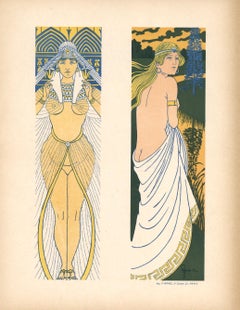
"Music Hall" French lithograph poster, printed in 1897

"Music Hall" French lithograph poster, printed in 1897

Located in Henderson, NV

Medium: lithograph (after the poster). Printed in 1897 on smooth wove paper and published in Paris by Librairie Nilsson. Image size: 9 1/4 x 4 3/4 inches (237 x 122 mm). Sheet size: ...

Category

1890s Art

Materials

Lithograph

Circa 1895 poster for Cacao Talmone from Turin - Gastronomy

Circa 1895 poster for Cacao Talmone from Turin - Gastronomy

Located in PARIS, FR

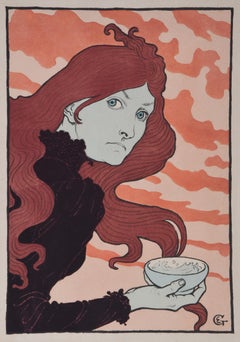
This charming circa 1895 poster for Cacao Talmone from Turin is a delightful example of late 19th-century advertising, blending narrative illustration with early brand identity. Root...

Category

Surrealist 1890s Art

Materials

Paper, Lithograph

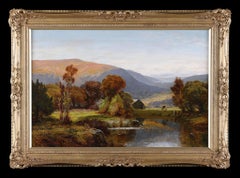
At Capel Curig, North Wales, Victorian Oil Painting, Framed, 1890s

At Capel Curig, North Wales, Victorian Oil Painting, Framed, 1890s

Located in St. Albans, GB

BENJAMIN WILLIAMS LEADER Benjamin W Leader is one of the most sought after Victorian landscape painters and a must for any collector. With some paintings realising over £100 000 in ...

Category

Victorian 1890s Art

Materials

Oil

19th century English oil of still life of fruit, German Stein with silver lid

19th century English oil of still life of fruit, German Stein with silver lid

By CHARLES THOMAS BALE

Located in Woodbury, CT

Outstanding English 19th century still life of fruit, a German Stein with silver top in an interior. Charles Thomas Bale was born in Soho, London in 1849, the son of Thomas Bale, a basket maker. His older brother Thomas Charles Bale (1831-1899) was an artist and picture restorer. He lived with his family in St James, Westminster and although little is known about his education, he would have undoubtedly received encouragement and drawing tuition from his brother. Bale started exhibiting in 1866 at the Institute of British Artists, Suffolk Street. He also exhibited at the Royal Academy in 1872, the same year he married Caroline Leathem. Together, they spent their married life in St Pancras. He specialized in still life paintings predominantly of fruit, but he frequently incorporated baskets, a homage to his family’s profession, as well as pottery, glass, and game. Bale’s work was influenced by the English still-life artists George Lance and William Duffield...

Category

Victorian 1890s Art

Materials

Canvas, Oil

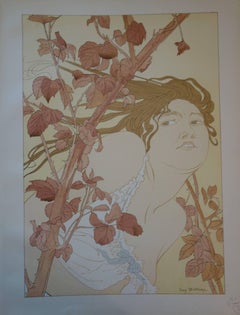
In the Brambles - Original lithograph - 1897

In the Brambles - Original lithograph - 1897

By Henry Detouche

Located in Paris, IDF

Henry DETOUCHE In the Brambles Original lithograph Printed signature in the plate 1897/98 Printed on paper Vélin Size 40 x 31 cm (c. 16 x 12") INFORMATION : Published by 'Estampe ...

Category

Art Nouveau 1890s Art

Materials

Lithograph

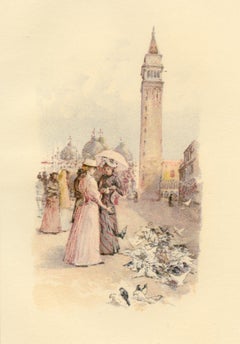
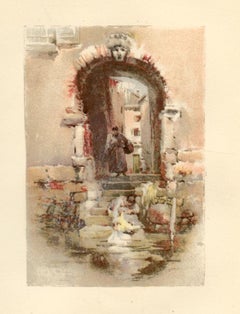
Chromolithograph after Childe Hassam - Venice

Chromolithograph after Childe Hassam - Venice

By Childe Hassam

Located in Henderson, NV

Medium: chromolithograph (after the watercolor). This delightful antique lithograph was published in a small edition in 1892 to illustrate a rare volume with scenes of Venetian life....

Category

1890s Art

Materials

Lithograph

Original Outing July 1895 magazine poster  Sailboat

Original Outing July 1895 magazine poster Sailboat

Located in Spokane, WA

Original Outing, July 1895 poster for the Outing magazine. Archivally linen backed in very fine condition. Ready to frame. Images are of the exact poster you will receive. A- ...

Category

Art Nouveau 1890s Art

Materials

Lithograph

Profile Portrait of a Woman, 19th Century Charcoal on Paper, Signed

Profile Portrait of a Woman, 19th Century Charcoal on Paper, Signed

Located in Stockholm, Stockholm

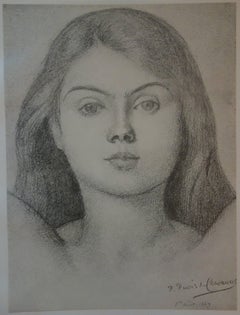
A graphite profile portrait drawing of a woman on paper by Johannes Collin (1873-1951), signed “Johannes Collin 98” and titled “Zigenerska”. This early and unusual work by Collin presents his interest in refined drawing and capturing character even at a modest scale. It dates from 1898, a formative moment for the artist when he was studying arts and stands out as a somewhat rare example of his graphic or drawing work rather than his better known small bronzes. Johannes Collin was born in 1873 in Skåne, south Sweden. After passing his matriculation at the Cathedral School in Lund in 1892, he studied at university in 1894–96 and then turned to art studies. From 1899 to 1901 he studied at the Royal Academy of Fine Arts in Stockholm, and from 1903 to 1905 he studied sculpture in Paris. Collin settled in Lund, Skåne and pursued a career as sculptor and poet. He died in 1951 in Lund. He was the son of a farmer and raised in the Skåne countryside. Early on he developed a sensitivity to form, figure, and expression, combining his sculptural ambitions with literary leanings (he later published a small volume of poetry). Collin appears to have had an individualistic personality: he moved in student and artistic circles in Lund, but also kept a modest, sometimes even eccentric public persona. In the mid-1930s, he increasingly turned to poetry and pared back his three-dimensional work. From his early years, he gradually developed into a sculptor working in bronze and patinated materials. Much of his work consists of small‐scale bronzes with an intensity of expression. One critic (in Kulturens yearbook) wrote of Collin that “the monumental is not in the work’s external dimensions but in the attitude … your small sculptures have an inner monumentality”. Collin exhibited his works in various venues: for example he took part in the Lund Exhibition (“Lundautställningen”) in 1907. Internationally, he showed works in Munich in 1909 and 1913, where his efforts were positively reviewed. A noteworthy retrospective or exhibition was held at the museum Kulturen in Lund, when a donation of Collin’s sculptures...

Category

Other Art Style 1890s Art

Materials

Paper, Graphite

On the Anglesea Coast - Welsh Coastal Beach Watercolour Antique Painting

On the Anglesea Coast - Welsh Coastal Beach Watercolour Antique Painting

Located in Sevenoaks, GB

A fine late 19th century watercolour depicting fishermen bringing in the days catch on the Anglesea Coast by James Aitken. The artist specialised in coastal scenes around the British Isles and is very well regarded. Signed lower right. Artist: James Aitken (British, active 1880-1935) Title: On the Anglesea Coast Medium: Watercolour on paper laid on card Size: 15 x 21.5 in (38 x 55 cm) unframed Condition: Very good original condition Provenance: Private collection, Kent James Aitken was born at Newburgh in Fifeshire, Scotland, in 1853/54. He is known to have been active as an artist from 1880 and exhibited at the Royal Academy from 1894-1918. He painted mainly maritime scenes in England and Scotland, and also made several visits to the continent, to paint in France, Italy and Switzerland. From 1894 he visited the Isle of Man, and liked it so much that he moved there permanently with his family in 1911. They took up residence in Port St. Mary. James Aitken exhibited works at the Royal Academy, the Royal Institute, the Royal Watercolour Society and the Royal Cambrian Society as well as in the provinces. He was a member of the Liverpool Academy of Arts. Today, he has works in the Warrington Museum, Walker Art Gallery, Liverpool and the Merseyside Maritime Museum. James Aitken was the father of John Ernest...

Category

1890s Art

Materials

Watercolor, Laid Paper

The Blacksmith of Solingen / - The Double-edged Sword -

The Blacksmith of Solingen / - The Double-edged Sword -

Located in Berlin, DE

Wilhelm Albermann (1835 Werden an der Ruhr - 1913 Cologne), The Blacksmith of Solingen, after 1895. Bronze-color patinated zinc cast on plinth, 47 cm (height) x 20 cm (width) x 16 cm (depth), weight 5.5 kg. Signed “Albermann.” on the plinth and identified as a cast by “AKT.[TIEN] GES.[ELLSCHAFT] GLADENBECK BERLIN”. Dedication on the front: “Mr. Ing. F. Kuhlmann to the wedding. Management and officials of the Hannoversche Waggonfabrik. Aircraft construction department". - The zinc showing through in spots, the patina somewhat stained, the right upper arm under the sleeve retouched in black. - The Double-edged Sword - The figure is a reduction of Wilhelm Albermann's 1895 fountain figure of the armourer of Solingen, who has always been identified with the historical blacksmith Peter Hahn. In 1839, Karl Simrock wrote the poem “The Blacksmith of Solingen" and thus coined the legendary figure. The first and penultimate verses read: A blacksmith spoke to Solingen With every bayonet, That came to his diligence: "Oh, that Fritz had it!" The war took its course, Many battles were fought, Which often made him fearful and anxious In his soul. The blacksmith had given up his trade to fight for Frederick the Great. Not least because of his strength and will to fight, the battles were won. With his fountain sculpture, Albermann has given the legendary blacksmith a figurative form and at the same time created a landmark for the city of Solingen, which was once famous for the art of sword forging and today still stands for the production of high-quality knives. During the bombing raid in November 1944, the fountain was destroyed along with the entire old town of Solingen. Only the head remained. The broad-shouldered blacksmith stands securely behind his anvil, his leather apron tied around him, and has just finished a sword blade with his own "weapon" - the blacksmith's hammer. His entire body shows the strength with which he wields the hammer, but also the strain of this activity, as evidenced by the wide open shirt, the somewhat 'untidy' apron, and especially the furrowed face. However, the blacksmith does not look at the finished work, but resolutely and at the same time thoughtfully into the distance, in line with the quoted verse from Simrock's poem that the battles "often made him fearful and anxious in his soul". There is certainly something melancholy in his gaze, fed by the knowledge of the necessity of forging swords and taking up arms and their deadly use - experiences Albermann had to make during his own war missions. The flowing full beard gives his gaze into the distance an almost prophetic character. In keeping with the craft of the perfectly formed art of blacksmithing, the detailed casting reproduces the respective materials depicted in perfect form: the leather apron convincingly conveys the impression of leather and lies - also in the back view - like a second formed layer over the body, while the shirt and trousers illustrate their own textile qualities. Due to its masterful execution and profound content, the “Blacksmith of Solingen”, which has survived in its cast reproductions, remains Albermann's most famous work to this day. About the artist The son of a carpenter, Wilhelm Albermann began an apprenticeship as a joiner, but then followed his artistic calling and trained as a sculptor in Elberfeld. In 1855, at the age of twenty, he was drafted into the army in Berlin, where he served until 1857. Albermann attended the Berlin Art Academy on the side and began regular studies after his service. While still a student, he completed commissioned works for his teachers August Fischer and Hugo Hagen. His first independent commissions followed, enabling him to establish a flourishing sculpture studio in Cologne in 1865. His artistic activities were repeatedly interrupted by military service, and he took part in the German-Danish War in 1864, the war against Austria in 1866, and the Franco-Prussian War in 1870/71. After his last war service, Albermann, already a respected artist, founded a commercial drawing school at the request of the city government, where he taught the modeling class and served as director until 1896. In 1890 he also worked for the "Society for the Promotion of Sculpture in the Rhineland and Westphalia". Albermann was one of the most prolific sculptors in Cologne in the second half of the 19th century. He created numerous monuments, fountains, tomb sculptures, architectural ornaments, and domestic statues. At its peak, his workshop employed up to thirty sculptors and stonemasons at a time. GERMAN VERSION Wilhelm Albermann (1835 Werden an der Ruhr - 1913 Köln), Der Schmied von Solingen, nach 1895. Bronzefarben patinierter Zinkguss auf gegossener Plinthe, 47 cm (Höhe) x 20 cm (Breite) x 16 cm (Tiefe), Gewicht 5,5 kg. Auf der Plinthe mit „Albermann.“ signiert und als Guss der „AKT.[TIEN] GES.[ELLSCHAFT] GLADENBECK BERLIN“ ausgewiesen. Schauseitige Widmung: „Herrn Ing. F. Kuhlmann zur Vermählung. Direktion und Beamte der Hannoverschen Waggonfabrik. Abt. Flugzeugbau“. - Punktuelles Durchscheinen des Zinks, Patina etwas fleckig, der rechte Oberarm unter dem Ärmel schwarz retuschiert. - Die Zweischneidigkeit des Schwertes - Die Figur ist eine Reduktion von Wilhelm Albermanns 1895 geschaffener Brunnenfigur des Waffenschmieds von Solingen, der seit jeher mit dem historischen Schmied Peter Hahn identifiziert wurde. 1839 hatte Karl Simrock das Gedicht „Der Schmied von Solingen“ verfasst und damit die legendäre Figur geprägt. Die erste und die vorletzte Strophe lauten: Zu Solingen sprach ein Schmied Bei jedem Bajonette, Das seinem Fleiß geriet: »Ach, daß der Fritz es hätte!« Der Krieg ging seinen Gang, Man schlug noch viele Schlachten, Die oft ihm angst und bang' In seiner Seele machten. Der Schmied hatte sein Handwerk ruhen lassen, um selbst für Friedrich den Großen zu kämpfen. Nicht zuletzt durch seine Kraft und seinen Kampfeswillen verliefen die Schlachten siegreich. Dem legendären Schmied verlieht Albermann mit seiner Brunnenskulptur eine bildliche Gestalt und schuf damit zugleich ein Wahrzeichen der Stadt Solingen, die einst für die Kunst des Schwerterschmiedens berühmt war und bis heute für die Herstellung qualitätvoller Messer einsteht. Beim Bombenangriff im November 1944 wurde mit der gesamten Solinger Altstadt auch der Brunnen zerstört. Einzig der Kopf blieb erhalten. Mit sicherem Stand und umgebundener Lederschürze steht der breitschultrige Schmied hinter seinem Amboss und hat gerade mit seiner eigenen ‚Waffe‘ – dem Schmiedehammer – eine Schwertklinge fertiggestellt. Seinem gesamten Körper ist die Kraft abzulesen, mit der er den Hammer führt, aber auch die Anstrengung dieser Tätigkeit, wovon das weit geöffnete Hemd, die etwas ‚unordentlich‘ arrangierte Schürze und vor allem das zerfurchte Gesicht zeugen. Der Schmied schaut aber nicht auf das vollendete Werk, sondern entschlossen und zugleich sinnierend in die Ferne, entsprechend der zitierten Zeile von Simrocks Gedicht, dass die Schlachten „oft ihm angst und bang‘ in seiner Seele machten“. Der Blick hat durchaus etwas Melancholisches, dass sich aus dem Wissen um die Notwendigkeit, Schwerter zu schmieden und zu den Waffen zu greifen und deren tödlichem Einsatz speist – Erfahrungen, die Albermann bei seinen eigenen Kriegseinsätze machen musste. Der wallende Vollbart verleiht dem in die Ferne schauenden Blick einen beinahe prophetischen Charakter. Dem Handwerk der formvollendenden Schmiedekunst entsprechend, gibt der detaillierte Guss die jeweils dargestellten Materialien in vollendeter Ausformung wieder: Die Lederschürze vermittelt überzeugend den Eindruck des Leders und liegt – auch in der Rückenansicht – wie eine zweite ausgeformte Schicht über dem Körper, während das Hemd und die Hose...

Category

Realist 1890s Art

Materials

Metal

Iris, Comic Opera - Original Lithograph (Les Maîtres de l'Affiche), 1899

Iris, Comic Opera - Original Lithograph (Les Maîtres de l'Affiche), 1899

By Adolfo Hohenstein

Located in Paris, IDF

HOHENSTEIN Iris, Comic Opera, 1899 Original Lithograph Printed signature in the plate On vellum Size 39 x 29 cm (c. 15.3 x 11.4") INFORMATION : Plate 180 of "Les Maîtres de l'Affiche", Paris, 1899, printed by l'Imprimerie Chaix. Bears the blind stamp of the editor in the lower right corner . This image was created for the italian comic...

Category

Art Nouveau 1890s Art

Materials

Lithograph

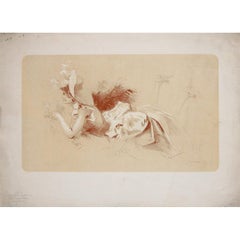
lithograph

lithograph

By (after) Jules Cheret

Located in Henderson, NV

Medium: lithograph (after the original menu illustration). Printed in 1897 on smooth wove paper and published in Paris by Librairie Nilsson. Sheet size: 12 1/4 x 9 inches (310 x 230 ...

Category

1890s Art

Materials

Lithograph

Théâtrophone by Jules Chéret, Belle Epoque lithograph, 1896

Théâtrophone by Jules Chéret, Belle Epoque lithograph, 1896

By Jules Chéret

Located in Chicago, IL

Belle Epoque lithographic poster of Jules Chéret’s Théâtrophone, published in 1896 by Imprimerie Chaix (Ateliers Chéret). This artwork is presented in an archival rag mat. “The fall of 1881 was a notable one in Paris: The City of Light was hosting the first International Exposition of Electricity off the Champs-Élysées. The expo created a buzz, with Europeans flocking to Paris to see the wonders of electricity, from Edison’s recently-invented light bulb to Alexander Graham Bell...

Category

Art Nouveau 1890s Art

Materials

Lithograph

“French Countryside at Dusk”

“French Countryside at Dusk”

By Raymond Jean Verdun

Located in Southampton, NY

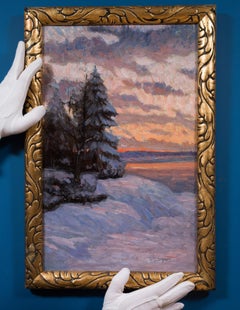
Oil on heavy card stock laid down on masonite by the French artist, Raymond Jean Verdun. Signed lower right. Circa 1895. Condition: Good. Overall framed 7 by 11 inches. The frame has been restored. Born 1873, in Nogent-le-Rotrou; died 1954...

Category

Barbizon School 1890s Art

Materials

Masonite, Paper, Oil

Circle of Fred MORGAN (1847-1927) c1890

Circle of Fred MORGAN (1847-1927) c1890

Located in Holywell, GB

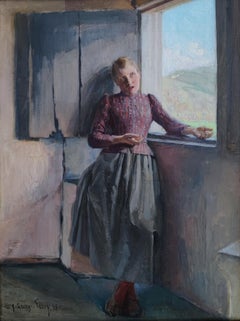
Circle of Fred MORGAN (1847-1927) c1890 A sensitively painted portrait, possibly a study for a larger work, of a young country girl. Indistinctly signed ** Morgan, possibly Fred. Unfortunately Fred signed in a number of different ways depending on the grandeur of his work. However, a consistent element was the colour, a reddish brown similar to the colour of the signature on this painting. I can offer no provenance with this painting, so I am selling at as circle of Morgan rather than actually by him. “Frederick Morgan ROI was an English painter of portraits, animals, domestic and country scenes. He became known for his idyllic genre scenes of childhood. Morgan was born in London to John Morgan and his wife, Henrietta Hester Clare. His father was a successful genre artist sometimes known as 'Jury Morgan' (after one of his paintings The Gentlemen of the Jury). At the age of 14, he was taken out of school by his father who then tutored him in art. At the age of 16, while still studying with his father, his first picture, The Rehearsal, was exhibited at the Royal Academy, and, after a hiatus of several years, his paintings were shown there regularly. For a while he worked as a portrait artist for an Aylesbury photographer; this training proved to be crucial as it "taught him how to observe closely and to give the greatest attention to detail." Eventually he turned to other subjects for his art, in particular idyllic genre scenes of country life and childhood. For many years, starting in 1874, Thomas Agnew & Sons' purchased all the work he produced. Although an excellent portrait artist, Morgan had problems in depicting pets and barnyard animals - he enlisted the aid of either Arthur John Elsley...

Category

English School 1890s Art

Materials

Oil

Night Fishing at Saint Maurice

Night Fishing at Saint Maurice

By Emile Noirot

Located in Dallas, TX

signed "Emile Noirot 1893" at lower right overall dimensions, including frame, are 19 3/4 x 23 5/8 inches

Category

Academic 1890s Art

Materials

Paper, Ink

Original "Cycles Omnium" turn of the century vintage bicycle poster

Original "Cycles Omnium" turn of the century vintage bicycle poster

Located in Spokane, WA

Original Cycles Omnium antique vintage French bicycle poster from the late 1880s-1890s. Printer: N. Weill, Paris, France. Archival linen backed and ready to frame. There was an area in the right-hand sky (creamish yellow) top area that had had some restoration. Touched up the border in the upper right corner. The poster was folded in half, with the fold mark restored during linen backing. Artist is: F. Capelli. Printer: Imp. N. Weill, Paris The image of a couple with their child on a bicycle ride out in the countryside of France, all in art nouveau clothing...

Category

Art Nouveau 1890s Art

Materials

Lithograph

Sleeping Diana - Original Woodcut by J.J. Weber - 1898

Sleeping Diana - Original Woodcut by J.J. Weber - 1898

By Arnold Bocklin (After)

Located in Roma, IT

Image dimensions: 34.2 x 45.5 cm. Sleeping Diana is an original print, realized in 1898. Black and white woodcut print on applied Japon paper. Good conditions except for yellowing of paper (especially along the margins), and very light folds on lower left side. The print was realized by Johann Jacob Weber and it's part of the series Meisterwerke der Holzschneidekunst (original title: SECHZEHN HOLZSCHNITTE NACH GEMÄLDEN ARNOLD BÖCKLIN...

Category

Symbolist 1890s Art

Materials

Woodcut

Original Vichy stone lithograph vintage French poster

Original Vichy stone lithograph vintage French poster

Located in Spokane, WA

Original vintage poster: Vichy travel poster. This is a stunning stone-lithographic turn-of-the-century poster. It advertises a train route to Vichy, France. The poster has been a...

Category

Art Nouveau 1890s Art

Materials

Lithograph

Marche aux Legumes a Pontoise

Marche aux Legumes a Pontoise

By Camille Pissarro

Located in Santa Monica, CA

CAMILLE PISSARRO (French 1830- 1903) MARCHE AUX LEGUMES A PONTOISE, 1891 (D. 97ii/ii) Etching and aquatint, Unsigned as published in Le Peintre-graveur Illlustre: Pissarro, Sisley,...

Category

Impressionist 1890s Art
Materials

Aquatint

lithograph

lithograph

By (after) Jules Cheret

Located in Henderson, NV

Medium: lithograph (after the original menu illustration). Printed in 1897 on smooth wove paper and published in Paris by Librairie Nilsson. Sheet size: 12 1/4 x 9 inches (310 x 230 ...

Category

1890s Art
Materials

Lithograph

J J A Lecomte du Nouÿ (1842-1923) A shoulder and back study, oil painting

J J A Lecomte du Nouÿ (1842-1923) A shoulder and back study, oil painting

Jean-Jules-Antoine Lecomte du Nouÿ (1842-1923) A shoulder and back study, oil study oil on canvas 34 x 19.5 cm In good condition, a few small inpaintings visible under UV lights Stamp of the Estate sale in Toulouse on the stretcher In a modern frame : 40 x 25 cm Provenance : Estate of the artist and family of the artist by descent Estate sale in Toulouse 22 June 1999 This very interesting oil study was part of a set kept by the artist. He had studied fragments of anatomy both to use them as models in large compositions but probably also because he represented so many fragments. It is clear that this fragment of anatomy has a power of suggestion and serves as a relay to the imagination of the viewer, who is led to imagine the rest of the body taken as a model. We can speak of metonymy in painting and it is clear that the artist had this in mind when he kept such studies with him. Jean-Jules-Antoine Lecomte du Nouÿ was born on 10 June 1842 in Paris. Originally of a Piedmontese origin, his family had been settled in France since the fourteenth century and by the time of his birth had reached the status of nobility He was an Orientalist French painter and sculptor. He was strongly influenced by the works and teachings of Charles Gleyre and Jean-Léon Gérôme. Lecomte du Nouÿ found inspiration for his art through extensive travels to Greece, Turkey, Egypt, Romania and Italy. The thematic content of Lecomte du Nouÿ's work was mainly figural, but also spanned over a vast range of imagery throughout his career, including classical, historical and religious. Lecomte du Nouÿ is known for remaining faithful to his detailed, realistic style throughout the extent of his career, despite the onset of the Impressionist, Fauvist and Constructivist artistic movements during his lifetime. His work is said to have contributed significantly to the establishment of an iconic repertoire representing the Orient in the nineteenth century.A Parisian street was named after him in 1932.  Lecomte du Nouÿ showed a strong attachment to visual art from a young age and was reported to have painted portraits of his father and uncle by the age of 6. In 1861, at 19 years of age, the artistic talents of young Jean-Jules-Antoine Lecomte du Nouÿ prompted him to become a pupil at the atelier of Swiss artist, Charles Gleyre. Under Gleyre's guidance Jean-Jules-Antoine learned the significance of individualistic style and gained the foundations of creative visual presentation. Later, Lecomte du Nouy further perfected his knowledge of the artistic form under the mentorship of Jean-Léon Gérôme, who was a renowned painter of the Academicism movement. It was at this time that Jean-Jules-Antoine learned the precision required to depict "la belle nature" —a style of illustration that aims to create the most beautiful representations of the natural form. This later became one of the main techniques employed in Lecomte du Nouÿ's signature artwork. In 1865, Du Nouÿ accompanied fellow artist, Félix Auguste Clément...

Category

Romantic 1890s Art
Materials

Oil

Bretagne
Bretagne

Bretagne

By Emile-Auguste Wery

Located in Fairlawn, OH

Bretagne Color lithograph, 1897 Signed in the stone lower right edge (see photo) Published in L’Estampe Moderne with their blindstamp lower right corner, Lugt 2790 (see photo) Editi...

Category

Art Nouveau 1890s Art
Materials

Lithograph