1910s Art

to
257
1,135
356
389
192
187
Overall Width
to
Overall Height
to
7,756
21,933
164,750
227,356
2,036
2,310
4,990
6,553
5,895
15,110
20,710
26,002
18,741
14,125
5,533
463
305
140
136
52
22
19
12
5
1
1,270
900
36
1,456
703
612
417
402
355
224
153
147
137
137
125
119
103
99
93
80
77
59
58
878
626
503
409
399
140
51
33
23
23
865
416
1,185
999
Period: 1910s
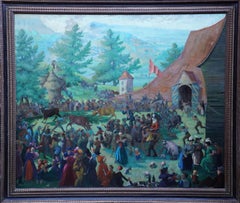
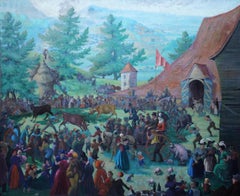
People in the Woods, Oil Painting by Ben Benn

People in the Woods, Oil Painting by Ben Benn

By Ben Benn

Located in Long Island City, NY

Artist: Ben Benn, Russian/American (1884 - 1983) Title: People in the Woods Year: 1917 Medium: Oil on Canvas, signed l.r. Size: 31 x 22 in. (78.74 x 55.88 cm) Frame Size: 39 x 30 i...

Category

American Impressionist 1910s Art

Materials

Oil

Moored Boats, 1915
Moored Boats, 1915

Moored Boats, 1915

Located in Houston, TX

Early century engraving on row boats by artist Fritz Lach, 1915. Signed and dated lower right. Original artwork on paper displayed on a white mat with a gold border. Mat fits a...

Category

1910s Art

Materials

Engraving

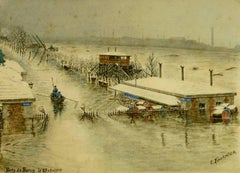
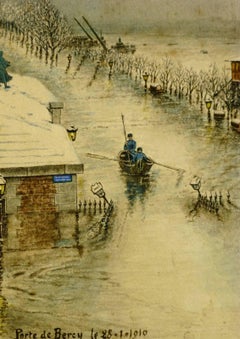
Paris, Porte de Bercy

Paris, Porte de Bercy

Located in Houston, TX

Stunning watercolor of the flood at the Porte de Bercy in Paris by French artist E. Fournier, 1910. Signed lower right. Original artwork on paper displayed on a white mat with a g...

Category

1910s Art

Materials

Watercolor

Vintage Italian Landscape - Ornate Courtyard

Vintage Italian Landscape - Ornate Courtyard

Located in Houston, TX

Exquisite and highly skilled watercolor of an elaborate Italian courtyard accented with radiant foliage and flowers by Flaromia, circa 1920. Signed lower left. Original one-of-a-ki...

Category

1910s Art

Materials

Paper, Watercolor

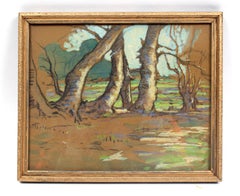
Lake Geneva with a view of the Jura

Lake Geneva with a view of the Jura

Located in Genève, GE

Work on canvas board Golden wooden frame 47 x 56.5 x 3.5 cm This captivating work depicts a bucolic landscape where nature spreads out in a gentle symphony of greens and blues. In ...

Category

1910s Art

Materials

Oil

"Love" Copper Plate Heliogravure

"Love" Copper Plate Heliogravure

By Ferdinand Hodler & R. Piper & Co.

Located in Palm Beach, FL

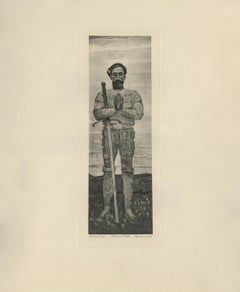
2018 marks the centenary anniversary of Ferdinand Hodler’s death. In that 100 years time, the art world’s esteem of this important artist has proved fickle. It has shifted from extolling his artistic merits during his lifetime to showing something of a feigned disdain- more reflective of the world political order than a true change of heart for Hodler’s work. After years of Hodler being all but a footnote in the annals of art history and generally ignored, finally, the pendulum has righted itself once again. Recent retrospective exhibitions in Europe and the United States have indicated not only a joyful rediscovery of Hodler’s art but a firm conviction that his work and world view hold particular relevance today. DAS WERK FERDINAND HODLERS is not only a collection of printed work reflecting the best of all of his painted work created up to 1914 just before the outbreak of World War I, the portfolio itself is an encapsulation of Hodler’s ethos, Parallelisme. Hodler developed his philosophy of Parallelisme as a unifying approach to art which strips away detail in search of harmony. By means of abstraction, symmetry and repetition, Hodler sought ways to depict Nature’s essence and her fundamental, universal order. He believed these universal laws governing the natural, observable world extend to the spiritual realm. Symbolist in nature with Romantic undertones, his works are equally portraits of these universal concepts and feelings governing all life as they are a visual portrait in the formal sense. Whether his subject is a solitary tree, a moment in battle, mortal fear, despair, the awe inspired by a vast mountain range, a tender moment or even the collective conviction in a belief, Hodler unveils this guiding principle of Parallelisme. Several aspects of Hodler’s portfolio reinforce his tenets of Parallelisme. The Table of Contents clearly preferences a harmonious design over detail. The two columns, consisting of twenty lines each, list the images by order of appearance using their German titles. The abbreviated titles are somewhat cryptic in that they obscure the identities of the sitters. Like the image Hodler presents, they are distillations of the sitter without any extraneous details. This shortening was also done in an effort to maintain a harmonious symmetry of the Table of Contents, themselves, and keep titles to a one-line limit. The twenty-fourth title: “Bildnis des Schweizerischen Gesandten C.” was so long, even with abbreviation, that it required two lines; so, for the sake of maintaining symmetry, the fortieth title: “Bauernmadchen” was omitted from the list. This explains why the images are not numbered. Hodler’s reasoning is not purely esoteric. Symmetry and pattern reach beyond mere formal design principles. Finding sameness and imposing it over disorder goes to the root of Hodler’s identity and his art. A Swiss native, Hodler was bi-lingual and spoke German and French. Each printed image, even number forty, have titles in both of Hodler’s languages. Certainly, there was a market for Hodler’s work among francophones and this inclusion may have been a polite gesture to that end; however, this is the only place in the portfolio which includes French. With German titles at the lower left of each image, Hodler’s name at bottom center and corresponding French titles at the lower right of each image, there is a harmony and symmetry woven into all aspects of the portfolio. This holds true for the page design, as it applies to each printed image and as it describes the Swiss artist himself. Seen in this light, Hodler’s portfolio of printed work is the epitome of Hodler’s Parallelisme. DAS WERK FERDINAND HODLERS is also one of the most significant documents to best tell the story of how Hodler, from Switzerland, became caught between political cross-hairs and how the changing tides of nations directly impacted the artist during his lifetime as well as the accessibility of his art for generations to come. The Munich-based publisher of the portfolio, R. Piper & Co., Verlag, plays a crucial role in this story. Publishing on a wide range of subjects from philosophy and world religion to music, literature and the visual arts; the publisher’s breadth of inquiry within any one genre was equal in scope. Their marketing strategy to publish multiple works on Hodler offers great insight as to what a hot commodity Hodler was at that time. R.Piper & Co.’s Almanach, which they published in 1914 in commemoration of their first ten years in business, clearly illustrates the rapid succession- strategically calculated for achieving the deepest and broadest impact - in which they released three works on Hodler to hit the market by the close of 1914. DAS WERK FERDINAND HODLERS was their premier publication. It preceded C.A. Loosli’s Die Zeichnungen Ferdinand Hodlers, a print portfolio after 50 drawings by Hodler which was released in Autumn of 1914 at the mid-level price-point of 75-150 Marks; and a third less expensive collection of prints after original works by Hodler, which had not been included in either of the first two portfolios, was released at the end of that year entitled Ferdinand Hodler by Dr. Ewald Bender. The title and timing of DAS WERK FERDINAND HODLERS' debut leaves little doubt as to the connection it has with another avant-garde portfolio of art prints, Das Werk Gustav Klimts, released in 5 installments from 1908 -1914 by Galerie Miethke in Vienna. Hodler, himself, was involved in Klimt’s ground-breaking project. As the owner of Klimt’s 1901 painting, “Judith with the Head of Holifernes” which appears as the ninth collotype print in the second installment of Das Werk Gustav Klimts, Hodler was obliged to grant access of the painting to the art printers in Vienna for them to create the collotype sometime before 1908. Hodler had been previously invited in 1904 to take part in what would be the last exhibition of the Vienna Secession before Klimt and others associated with Galerie Miethke broke away. In an interview that same year, Hodler indicated that he respected and was impressed by Klimt. Hodler’s esteem for Klimt went beyond the art itself; he emulated Klimt’s method aimed at increasing his market reach and appeal to a wider audience by creating a print portfolio of his painted work. By 1914, Hodler and his publisher had the benefit of hindsight to learn from Klimt’s Das Werk publication. Responding to the sluggish sales of Klimt’s expensive endeavor, Hodler’s publisher devised the same diversified 1-2-3 strategy for selling Hodler’s Das Werk portfolio as they did with regards to all three works on Hodler they published that year. For their premium tier of DAS WERKS FERDINAND HODLERS, R. Piper & Co. issued an exclusive Museum quality edition of 15 examples on which Hodler signed each page. At a cost of 600 Marks, this was generally on par with Klimt’s asking price of 600 Kronen for his Das Werk portfolio. A middle-tiered Preferred edition of 30, costing somewhat less and with Hodler’s signature only on the Title Page, was also available. The General edition, targeting the largest audience with its much more affordable price of 150 Marks, is distinguishable by its smaller size. Rather than use the subscription format Miethke had chosen for Klimt’s portfolios which proved to have had its challenges, R. Piper & Co. employed a different strategy. In addition to instantly gratifying the buyer with all 40 of the prints comprising DAS WERK FERDINAND HODLERS and the choice among three price points, they advertised in German journals a fourth possibility of ordering single prints from them directly. These printed images are easily discernible from the three complete folio editions. The paper size of the single purchased images is of the larger format like the Museum and Preferred editions, measuring 65 h x 50 w cm; however, the paper itself is the same copper print paper used in the General edition and then mounted on poster board. The publishing house positioned itself to be a direct retailer of Hodler’s art. They astutely recognized the potential for profitability and the importance, therefore, of having proprietary control over his graphic works. R. Piper & Co. owned the exclusive printing rights to Hodler’s best work found in their three publications dating from 1914. That same year, a competing publication out of Weimar entitled Ferdinand Hodler: Ein Deutungsversuch von Hans...

Category

Symbolist 1910s Art

Materials

Paper

MARSH GUNNER

MARSH GUNNER

By Frank Benson

Located in Portland, ME

Benson, Frank. MARSH GUNNER. Paff 149. Etching, 1918. Edition of 150. Signed in pencil, lower left, and numbered "93" in pencil, lower right. 10 7/8 x 8 7/8 inches (plate), 15 3/4 x ...

Category

1910s Art

Materials

Etching

Untitled
Untitled

Untitled

By Leone M. Bracker

Located in Fort Washington, PA

Medium: Charcoal Drawing Signature: Signed Lower Right Framed 40.00" x 32.00" Bad glare in photos taken. Piece is in perfect condition. Please let me know if you would like to see a...

Category

1910s Art

Materials

Charcoal

"Mlle Landsberg" (grade planche, pl. 16)

"Mlle Landsberg" (grade planche, pl. 16)

By Henri Matisse

Located in Missouri, MO

"Mlle Landsberg" (grade planche, pl. 16), 1914 Henri Matisse (French, 1869-1954) Signed and Numbered Lower Right Edition 12/15 Image size: 7 7/8 x 4 5/16 inches Sheet size: 17 11/16 x 12 1/2 inches With frame: 19 1/2 x 14 1/2 inches Henri Matisse came from a family who were of Flemish origin and lived near the Belgian border. At eight o'clock on the evening of December 31, 1869, he was born in his grandparents' home in the town of Le Cateau in the cheerless far north of France. His father was a self-made seed merchant who was a mixture of determination and tightly coiled tension. Henri had no clear idea of what he wanted to do with his life. He was a twenty-year-old law clerk convalescing from appendicitis when he first began to paint, using a box of colors given to him by his mother. Little more than a year later, in 1890, he had abandoned law and was studying art in Paris. The classes consisted of drawing from plaster casts and nude models and of copying paintings in the Louvre. He soon rebelled against the school's conservative atmosphere; he replaced the dark tones of his earliest works with brighter colors that reflected his awareness of Impressionism. Matisse was also a violinist; he took an odd pride in the notion that if his painting eye failed, he could support his family by fiddling on the streets of Paris. Henri found a girlfriend while studying art, and he fathered a daughter, Marguerite, by her in 1894. In 1898 he married another woman, Amelie Parayre. She adopted the beloved Marguerite; they eventually had two sons, Jean, a sculptor and Pierre who became an eminent art dealer. Relations between Matisse and his wife were often strained. He often dallied with other women, and they finally separated in 1939 over a model who had been hired as a companion for Mme. Matisse. She was Madame Lydia, and after Mme. Matisse left, she remained with Matisse until he died. Matisse spent the summer of 1905 working with Andre Derain in the small Mediterranean seaport of Collioure. They began using bright and dissonant colors. When they and their colleagues exhibited together, they caused a sensation. The critics and the public considered their paintings to be so crude and so roughly crafted that the group became known as Les Fauves (the wild beasts). By 1907, Matisse moved on from the concerns of Fauvism and turned his attention to studies of the human figure. He had begun to sculpt a few years earlier. In 1910, when he saw an exhibition of Islamic art, he was fascinated with the multiple patterned areas and adapted the decorative universe of the miniatures to his interiors. As a continuation of his interest in the "exotic", Matisse made extended trips to Morocco in 1912 and 1913. At the end of 1917, Matisse moved to Nice; he would spend part of each year there for the remainder of his life. A meticulous dandy, he wore a light tweed jacket amd a tie when he painted. He never used a palette, but instead squeezed his colors on to plain white kitchen dishes...

Category

Fauvist 1910s Art

Materials

Drypoint, Etching

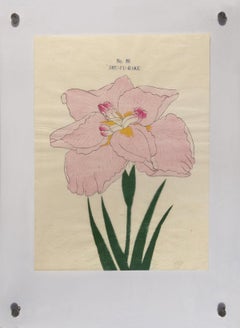
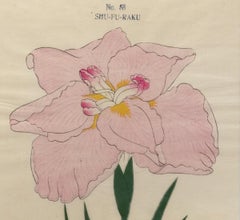
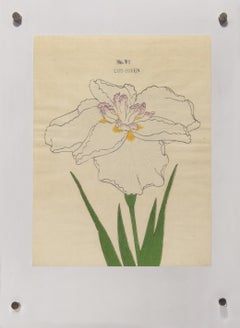
Iris Kaempferi: No.10 AKASHI-NO-UE

Iris Kaempferi: No.10 AKASHI-NO-UE

Located in London, London

Iris Kaempferi: No. 10 AKASHI-NO-UE Tokyo, Yoshinoen-Garden, circa 1910. Hand-coloured woodblock print on handmade rice paper, numbered and captioned at top, outlined in ink. Fram...

Category

Naturalistic 1910s Art

Materials

Wood, Watercolor, Rice Paper

"Cherry Tree in Bloom" Copper Plate Heliogravure

"Cherry Tree in Bloom" Copper Plate Heliogravure

By Ferdinand Hodler & R. Piper & Co.

Located in Palm Beach, FL

2018 marks the centenary anniversary of Ferdinand Hodler’s death. In that 100 years time, the art world’s esteem of this important artist has proved fickle. It has shifted from extolling his artistic merits during his lifetime to showing something of a feigned disdain- more reflective of the world political order than a true change of heart for Hodler’s work. After years of Hodler being all but a footnote in the annals of art history and generally ignored, finally, the pendulum has righted itself once again. Recent retrospective exhibitions in Europe and the United States have indicated not only a joyful rediscovery of Hodler’s art but a firm conviction that his work and world view hold particular relevance today. DAS WERK FERDINAND HODLERS is not only a collection of printed work reflecting the best of all of his painted work created up to 1914 just before the outbreak of World War I, the portfolio itself is an encapsulation of Hodler’s ethos, Parallelisme. Hodler developed his philosophy of Parallelisme as a unifying approach to art which strips away detail in search of harmony. By means of abstraction, symmetry and repetition, Hodler sought ways to depict Nature’s essence and her fundamental, universal order. He believed these universal laws governing the natural, observable world extend to the spiritual realm. Symbolist in nature with Romantic undertones, his works are equally portraits of these universal concepts and feelings governing all life as they are a visual portrait in the formal sense. Whether his subject is a solitary tree, a moment in battle, mortal fear, despair, the awe inspired by a vast mountain range, a tender moment or even the collective conviction in a belief, Hodler unveils this guiding principle of Parallelisme. Several aspects of Hodler’s portfolio reinforce his tenets of Parallelisme. The Table of Contents clearly preferences a harmonious design over detail. The two columns, consisting of twenty lines each, list the images by order of appearance using their German titles. The abbreviated titles are somewhat cryptic in that they obscure the identities of the sitters. Like the image Hodler presents, they are distillations of the sitter without any extraneous details. This shortening was also done in an effort to maintain a harmonious symmetry of the Table of Contents, themselves, and keep titles to a one-line limit. The twenty-fourth title: “Bildnis des Schweizerischen Gesandten C.” was so long, even with abbreviation, that it required two lines; so, for the sake of maintaining symmetry, the fortieth title: “Bauernmadchen” was omitted from the list. This explains why the images are not numbered. Hodler’s reasoning is not purely esoteric. Symmetry and pattern reach beyond mere formal design principles. Finding sameness and imposing it over disorder goes to the root of Hodler’s identity and his art. A Swiss native, Hodler was bi-lingual and spoke German and French. Each printed image, even number forty, have titles in both of Hodler’s languages. Certainly, there was a market for Hodler’s work among francophones and this inclusion may have been a polite gesture to that end; however, this is the only place in the portfolio which includes French. With German titles at the lower left of each image, Hodler’s name at bottom center and corresponding French titles at the lower right of each image, there is a harmony and symmetry woven into all aspects of the portfolio. This holds true for the page design, as it applies to each printed image and as it describes the Swiss artist himself. Seen in this light, Hodler’s portfolio of printed work is the epitome of Hodler’s Parallelisme. DAS WERK FERDINAND HODLERS is also one of the most significant documents to best tell the story of how Hodler, from Switzerland, became caught between political cross-hairs and how the changing tides of nations directly impacted the artist during his lifetime as well as the accessibility of his art for generations to come. The Munich-based publisher of the portfolio, R. Piper & Co., Verlag, plays a crucial role in this story. Publishing on a wide range of subjects from philosophy and world religion to music, literature and the visual arts; the publisher’s breadth of inquiry within any one genre was equal in scope. Their marketing strategy to publish multiple works on Hodler offers great insight as to what a hot commodity Hodler was at that time. R.Piper & Co.’s Almanach, which they published in 1914 in commemoration of their first ten years in business, clearly illustrates the rapid succession- strategically calculated for achieving the deepest and broadest impact - in which they released three works on Hodler to hit the market by the close of 1914. DAS WERK FERDINAND HODLERS was their premier publication. It preceded C.A. Loosli’s Die Zeichnungen Ferdinand Hodlers, a print portfolio after 50 drawings by Hodler which was released in Autumn of 1914 at the mid-level price-point of 75-150 Marks; and a third less expensive collection of prints after original works by Hodler, which had not been included in either of the first two portfolios, was released at the end of that year entitled Ferdinand Hodler by Dr. Ewald Bender. The title and timing of DAS WERK FERDINAND HODLERS' debut leaves little doubt as to the connection it has with another avant-garde portfolio of art prints, Das Werk Gustav Klimts, released in 5 installments from 1908 -1914 by Galerie Miethke in Vienna. Hodler, himself, was involved in Klimt’s ground-breaking project. As the owner of Klimt’s 1901 painting, “Judith with the Head of Holifernes” which appears as the ninth collotype print in the second installment of Das Werk Gustav Klimts, Hodler was obliged to grant access of the painting to the art printers in Vienna for them to create the collotype sometime before 1908. Hodler had been previously invited in 1904 to take part in what would be the last exhibition of the Vienna Secession before Klimt and others associated with Galerie Miethke broke away. In an interview that same year, Hodler indicated that he respected and was impressed by Klimt. Hodler’s esteem for Klimt went beyond the art itself; he emulated Klimt’s method aimed at increasing his market reach and appeal to a wider audience by creating a print portfolio of his painted work. By 1914, Hodler and his publisher had the benefit of hindsight to learn from Klimt’s Das Werk publication. Responding to the sluggish sales of Klimt’s expensive endeavor, Hodler’s publisher devised the same diversified 1-2-3 strategy for selling Hodler’s Das Werk portfolio as they did with regards to all three works on Hodler they published that year. For their premium tier of DAS WERKS FERDINAND HODLERS, R. Piper & Co. issued an exclusive Museum quality edition of 15 examples on which Hodler signed each page. At a cost of 600 Marks, this was generally on par with Klimt’s asking price of 600 Kronen for his Das Werk portfolio. A middle-tiered Preferred edition of 30, costing somewhat less and with Hodler’s signature only on the Title Page, was also available. The General edition, targeting the largest audience with its much more affordable price of 150 Marks, is distinguishable by its smaller size. Rather than use the subscription format Miethke had chosen for Klimt’s portfolios which proved to have had its challenges, R. Piper & Co. employed a different strategy. In addition to instantly gratifying the buyer with all 40 of the prints comprising DAS WERK FERDINAND HODLERS and the choice among three price points, they advertised in German journals a fourth possibility of ordering single prints from them directly. These printed images are easily discernible from the three complete folio editions. The paper size of the single purchased images is of the larger format like the Museum and Preferred editions, measuring 65 h x 50 w cm; however, the paper itself is the same copper print paper used in the General edition and then mounted on poster board. The publishing house positioned itself to be a direct retailer of Hodler’s art. They astutely recognized the potential for profitability and the importance, therefore, of having proprietary control over his graphic works. R. Piper & Co. owned the exclusive printing rights to Hodler’s best work found in their three publications dating from 1914. That same year, a competing publication out of Weimar entitled Ferdinand Hodler: Ein Deutungsversuch von Hans...

Category

Symbolist 1910s Art

Materials

Paper

Original "Proper Care Before Birth" means More Babies vintage poster

Original "Proper Care Before Birth" means More Babies vintage poster

Located in Spokane, WA

Original “Proper Care Before Birth” vintage poster. Archival linen backed in excellent condition, ready to frame. Size 20.5” x 27”; circa 1917. The Original "Proper Care Before Births" vintage poster is a rare find for collectors of World War 1 memorabilia...

Category

American Realist 1910s Art

Materials

Lithograph

Pierrot et Colombine

Pierrot et Colombine

By George Barbier

Located in Wilton, CT

Fabulous gouache on paper for the Comedie de Française. This painting depicts Pierrot, the servant, and Columbine, who was the love interest of Harlequin. It is signed G. Barbier a...

Category

Art Deco 1910s Art

Materials

Gouache

Two Women in Boat, Signed Impressionist Lithograph by Louis Marie Joseph Ridel

Two Women in Boat, Signed Impressionist Lithograph by Louis Marie Joseph Ridel

Located in Long Island City, NY

Louis Ridel, born February 12, 1866 in Vannes and died November 10, 1937 in Paris, is a painter, sculptor, medalist, French decorator. Louis Ridel studied at the Académie Julian then under the direction of Gustave Moreau at the Ecole des Beaux-Arts in Paris in 1889 (with Matisse, Camoin, Marquet and Rouault). He exhibited at the Salon des Artistes Français between 1893 and 1935, at the Salon des Tuileries between 1927 and 1934, the Universal Exhibition of Ghent in 1913 and the famous Georges Petit Gallery (1909-1910). The works of the artist are present in the museums of Nantes, Strasbourg, Pont-Aven but also Tokyo, Buenos Aires and Rio de Janeiro. This symbolist painter, friend of Aman-Jean, Maxence and Albert Besnard, represented essentially women of the bourgeoisie, ethereal and diaphanous or landscapes of his native region, Brittany. In 1896, he received an honorable mention from the Salon des artistes français, then a third class medal in 1898 and second class in 1900. In 1901, he was out of competition. In 1909, he was named Knight of the Legion of Honor. He receives official orders for the Senate, the Ministry of Public Works or the mayor of the 12th arrondissement of Paris. Two Women in Boat...

Category

Post-Impressionist 1910s Art

Materials

Lithograph

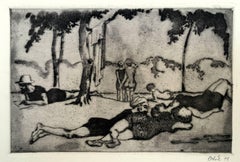
Am Gänsehäufel in Wien

Am Gänsehäufel in Wien

By Emil Orlik

Located in New York, NY

Emil Orlik (1870-1932), Am Gänsehäufel in Wien, 1911, soft-ground etching, signed and dated in pencil lower right. In very good condition, on firm laid paper with margins, 5 1/2 x 8...

Category

Expressionist 1910s Art

Materials

Etching

Mother's portrait. 1917, oil on canvas, 60x50 cm

Mother's portrait. 1917, oil on canvas, 60x50 cm

Located in Riga, LV

Mother's portrait. 1917, oil on canvas, 60x50 cm With certificate of authenticity Romans Suta Born on April 28, 1896 in the vicinity of Cesis (Latvia), died on July 14, 1944 in T...

Category

Expressionist 1910s Art

Materials

Canvas, Oil

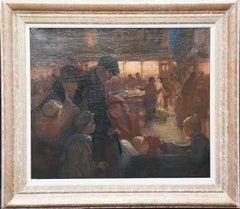
Horse dealers
Horse dealers

Horse dealers

Located in Genève, GE

Work on canvas Beige wooden frame 63 x 85.5 x 6.5 cm

Category

1910s Art

Materials

Oil

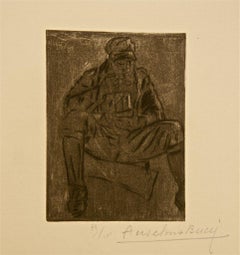
Otto Dill, "Deer", 1918, oil painting, two grazing fawns.

Otto Dill, "Deer", 1918, oil painting, two grazing fawns.

By Otto Dill

Located in Berlin, DE

Otto Dill, "Deer", 1918, oil painting, two grazing fawns. Beautiful and rare motif of the world famous artist Otto Dill. Outstanding painting and colors. Signed and dated. Dimensi...

Category

Impressionist 1910s Art
Materials

Oil, Cardboard

Original 'Cleveland War Fund, All for Victory' vintage lithograph poster

Original 'Cleveland War Fund, All for Victory' vintage lithograph poster

Located in Spokane, WA

Original CLEVELAND WAR FUND, ALL FOR VICTORY, vintage poster, museum linen backed. Presents in Good condition B+ due to restored tears. Printer: The Central Lithograph Co., Cleveland. Original World War One poster. Museum linen backed. Restored original fold lines. No paper loss, full lithograph. Please see the large images for the minor defects. Promoting the Salvation Army...

Category

American Realist 1910s Art

Materials

Lithograph

Kostume, Plakate, und Dekorationen, "The Blue Flame"

Kostume, Plakate, und Dekorationen, "The Blue Flame"

By Walter Schnackenberg

Located in Palm Beach, FL

Walter Schnackenberg’s style changed several times during his long and successful career. Having studied in Munich, the artist traveled often to Paris where he fell under the spell of the Henri de Toulouse-Lautrec’s colorful and sensuous posters depicting theatrical and decadent subjects. Schnackenberg became a regular contributor of similar compositions to the German magazines Jugend and Simplicissimus before devoting himself to the design of stage scenery and costumes. In the artist’s theatrical work, his mastery of form, ornamentation, and Orientalism became increasingly evident. He excelled at combining fluid Art Nouveau outlines, with spiky Expressionist passages, and the postures and patterns of the mysterious East. In his later years, Schnackenberg explored the unconscious, using surreal subject matter and paler colors that plainly portrayed dreams and visions, some imbued with political connotations. His drawings, illustrations, folio prints, and posters are highly sought today for their exceedingly imaginative qualities, enchanting subject matter, and arresting use of color. SCHNACKENBERG: KOSTUME, PLAKATE UND DEKORATIONEN, a cardboard bound art book consisting of 43 prints of work by Walter Schnackenberg, 30 of which are color lithographs that are signed and some are titled and dated in the plate, as well as black and white prints and photographs with accompanying text by Oskar Bie; lithographs printed at Kunstanstalt Oskar Consee in Munich, other images printed by Gesellschaft Pick & Co. in Munich, the text and cover with color images by Schnackenberg front and verso printed by R. Oldenbourg in Munich; published by Musarion Verlag, Munich, 1920. The majority of Walter Schnackenberg’s artistic output was destroyed by bomb attacks in Munich in 1944. The highly publicized 2013 auction in New York of the recovered pre-war poster collection once belonging to German poster aficionado, Hans Sachs has reintroduced the world to Walter Schnackenberg’s graphic genius and priceless ephemeral art from a lost era. Besides the museum world, designer Karl Lagerfeld is one of the most prodigious collectors of Schnackenberg. Flipping through the pages of Kostume, Plakate und Dekorationen, it becomes quite clear that Schnackenberg’s collection is ground zero at the crossroads of early modern fashion where the cult of celebrity meets up with dance, music, theater and cabaret, film and the graphic medium. Berlin and Munich under Germany’s Weimar Republic in the first quarter of the 20th century produced just the atmosphere to feed this burgeoning industry. Rising inflation sparked a recklessness to live large for the moment and heightened a desire for escapism. An influx of Indian and East Asian dancers and musicians added to the artsy bohemian cultural mix. A new decadence and tolerance resulted. Film boldly featured provocative subject matter. Cabarets became popular venues giving rise to the demi-monde in which people from all social stations mixed more freely in a thriving underground economy and culture where there was a blurring of boundaries and of social codes. Noted art historian and cultural doyen, Oskar Bie astutely observes in his introduction to Schnackenberg’s publication that what unites the images is fantasy and advertisement. Schnackenberg uses the eye as an instrument to brilliantly construct and convey this double message. His personages never directly confront the viewer. Their eyes gaze off in the distance like those of the screenplayer and film star Hedamaria Scholz in Schnackenberg’s “Die Rodelhexe” movie poster. Their eyes follow the path of a dance composition or become a transfixed and ogling male gaze such as the iconic 1911 Odeon Casino poster...

Category

Expressionist 1910s Art

Materials

Lithograph

SCHWANGERE FRAU.
SCHWANGERE FRAU.

SCHWANGERE FRAU.

By Käthe Kollwitz

Located in Portland, ME

Kollwitz, Kathe. SCHWANGERE FRAU. Etching and soft ground, 1910. Klipstein 108(V) 14 7/8 x 9 3/8 inches (377 x 236 mm.). Signed in pencil, and with the names of the publisher Richter...

Category

Expressionist 1910s Art

Materials

Etching

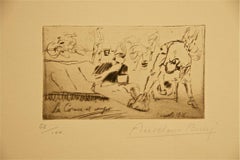
Les Bars

Almery Lobel-RicheLes Bars, 1912

$8,000Sale Price|20% Off

Les Bars

By Almery Lobel-Riche

Located in Wilton, CT

A very fine copy of "Les Bars," an album of ten original etchings by the master Lobel-Riche, representing fashionable women in various Parisian social settings. This album, part of a...

Category

Art Nouveau 1910s Art

Materials

Etching

Two Drawings
Two Drawings

Two Drawings

By Louis Valtat

Located in New York, NY

Group of two drawings. "Femme assise sur une Chaise," circa 1910. Brush and ink on wove paper, 8 1/2x8 inches. With the artist's initials ink stamp, lower right recto. "Femme avec ...

Category

Fauvist 1910s Art

Materials

Ink, Pen

Morning on the East Side

Morning on the East Side

By Jerome Myers

Located in New York, NY

Jerome Myers (1867-1940), Morning on the East Side, c. 1910, colored etching, signed in pencil lower right and annotated “imp.”; numbered and titled (twice) lower left. In very good ...

Category

1910s Art

Materials

Color, Etching

STEHENDE KNABE UND ZWEI MADCHEN

STEHENDE KNABE UND ZWEI MADCHEN

By Otto Mueller

Located in Portland, ME

Mueller, Otto. STEHENDE KNABE UND ZWEI MADCHEN. Karsch 67. Lithograph, 1917. 12 3/4 x 9 7/8 inches; 323 x 250 mm. Monogrammed in the stone. Edition of about 300. In excellent conditi...

Category

1910s Art

Materials

Lithograph

Portfolio L'Atelier - 10 Linocuts Russian

Portfolio L'Atelier - 10 Linocuts Russian

By Jean Pougny

Located in London, GB

The portfolio consists of 10 linocuts, each printed on a separate sheet and stamp signed with the artist's signature stamp "Pougny". These original prints were created by Pougny hims...

Category

1910s Art

Materials

Linocut, Stencil

Original The Liberty Bond You Buy It Backs Them All World War 1 vintage poster

Original The Liberty Bond You Buy It Backs Them All World War 1 vintage poster

By James Montgomery Flagg

Located in Spokane, WA

The Liberty Bond You Buy The Liberty Bond You Buy. Archival linen backed in very good condition; ready to frame. Printer: Liberty Loan Committee Second Federal Reserve District. O...

Category

American Realist 1910s Art

Materials

Lithograph

Quiet Contemplation: Rural Serenity in Hagborg's Watercolor

Quiet Contemplation: Rural Serenity in Hagborg's Watercolor

By August Hagborg

Located in Stockholm, SE

The artwork we present is a rare watercolor by the distinguished Swedish artist August Hagborg, painted in the later part of his career between 1910 and 1920. This watercolour is a departure from Hagborg's often-seen beach scenes with mussel pickers and instead offers a glimpse into a serene, pastoral moment. The scene is set against a timber house, with a man and a woman standing alongside, their gazes directed away from the viewer, which invites contemplation about the story behind their distant stares. Watercolors by Hagborg are rare, making this piece particularly special. Its fine details suggest a mastery of the medium, likely honed over the years of his extensive career. A written letter from Göteborgs Konstmuseum, dated to the 1940s, suggests a later date for this piece. August Hagborg, born on May 26, 1852, in Gothenburg and passed away on April 30, 1921, in Paris, was a renowned figure in the art world. His education at the Royal Swedish Academy of Arts in Stockholm from 1871 to 1874 placed him among peers who would rise to prominence, such as Carl Larsson and Anders Zorn. Moving to Paris in the fall of 1875, Hagborg initially painted within the costume genre before finding his niche in coastal landscapes that garnered him accolades and recognition. Hagborg's success was punctuated by his 1879 painting...

Category

Realist 1910s Art

Materials

Watercolor

New York Scene, Chatham Square

New York Scene, Chatham Square

By Colin Campbell Cooper

Located in Bryn Mawr, PA

Colin Campbell Cooper is perhaps best known for his marvelous urban depictions of New York and Philadelphia, which encapsulate the vibrant modernity of these street scenes and skyscr...

Category

Abstract Impressionist 1910s Art
Materials

Oil, Board

Kostume, Plakate, und Dekorationen, "Schlange (Snake)"

Kostume, Plakate, und Dekorationen, "Schlange (Snake)"

By Walter Schnackenberg

Located in Palm Beach, FL

Walter Schnackenberg’s style changed several times during his long and successful career. Having studied in Munich, the artist traveled often to Paris where he fell under the spell of the Henri de Toulouse-Lautrec’s colorful and sensuous posters depicting theatrical and decadent subjects. Schnackenberg became a regular contributor of similar compositions to the German magazines Jugend and Simplicissimus before devoting himself to the design of stage scenery and costumes. In the artist’s theatrical work, his mastery of form, ornamentation, and Orientalism became increasingly evident. He excelled at combining fluid Art Nouveau outlines, with spiky Expressionist passages, and the postures and patterns of the mysterious East. In his later years, Schnackenberg explored the unconscious, using surreal subject matter and paler colors that plainly portrayed dreams and visions, some imbued with political connotations. His drawings, illustrations, folio prints, and posters are highly sought today for their exceedingly imaginative qualities, enchanting subject matter, and arresting use of color. SCHNACKENBERG: KOSTUME, PLAKATE UND DEKORATIONEN, a cardboard bound art book consisting of 43 prints of work by Walter Schnackenberg, 30 of which are color lithographs that are signed and some are titled and dated in the plate, as well as black and white prints and photographs with accompanying text by Oskar Bie; lithographs printed at Kunstanstalt Oskar Consee in Munich, other images printed by Gesellschaft Pick & Co. in Munich, the text and cover with color images by Schnackenberg front and verso printed by R. Oldenbourg in Munich; published by Musarion Verlag, Munich, 1920. The majority of Walter Schnackenberg’s artistic output was destroyed by bomb attacks in Munich in 1944. The highly publicized 2013 auction in New York of the recovered pre-war poster collection once belonging to German poster aficionado, Hans Sachs has reintroduced the world to Walter Schnackenberg’s graphic genius and priceless ephemeral art from a lost era. Besides the museum world, designer Karl Lagerfeld is one of the most prodigious collectors of Schnackenberg. Flipping through the pages of Kostume, Plakate und Dekorationen, it becomes quite clear that Schnackenberg’s collection is ground zero at the crossroads of early modern fashion where the cult of celebrity meets up with dance, music, theater and cabaret, film and the graphic medium. Berlin and Munich under Germany’s Weimar Republic in the first quarter of the 20th century produced just the atmosphere to feed this burgeoning industry. Rising inflation sparked a recklessness to live large for the moment and heightened a desire for escapism. An influx of Indian and East Asian dancers and musicians added to the artsy bohemian cultural mix. A new decadence and tolerance resulted. Film boldly featured provocative subject matter. Cabarets became popular venues giving rise to the demi-monde in which people from all social stations mixed more freely in a thriving underground economy and culture where there was a blurring of boundaries and of social codes. Noted art historian and cultural doyen, Oskar Bie astutely observes in his introduction to Schnackenberg’s publication that what unites the images is fantasy and advertisement. Schnackenberg uses the eye as an instrument to brilliantly construct and convey this double message. His personages never directly confront the viewer. Their eyes gaze off in the distance like those of the screenplayer and film star Hedamaria Scholz in Schnackenberg’s “Die Rodelhexe” movie poster. Their eyes follow the path of a dance composition or become a transfixed and ogling male gaze such as the iconic 1911 Odeon Casino poster...

Category

Expressionist 1910s Art

Materials

Lithograph

Woman Pulling on a Slip

Woman Pulling on a Slip

By Everett Shinn

Located in Fairlawn, OH

Woman Pulling on a Slip Conte on paper, c. 1910 Signed lower right: "E. Shinn" (see photo of legs, signature on right) Provenance: Estate of the Artist (see label) Graham Gallery, N...

Category

Ashcan School 1910s Art

Materials

Conté

Preliminary Study for the painting Rose and Gold, 1913

Preliminary Study for the painting Rose and Gold, 1913

By William McGregor Paxton

Located in Fairlawn, OH

Preliminary Study for the painting Rose and Gold, 1913 Graphite on paper, 1913 Signed in pencil lower left (see photo) Titlted "Lizzy Young" in pencil upper left (see photo) Lizzy was a modle that Paxton depicts numerous times. The painting that this drawing is related to, is illustrated in Lee & Krause, William McGregor Paxton, 1869-1941, Plate 32, text on page 132. The painting was formerly in the collection of Victor Spark and the Honorable Paul Buchanan. It is currently in a Texas Collection. Provenance: Private Collection, Florida William McGregor Paxton (June 22, 1869 – 1941) was an American painter and instructor who embraced the Boston School paradigm and was a co-founder of The Guild of Boston Artists. He taught briefly while a student at Cowles Art School, where he met his wife Elizabeth Okie Paxton, and at the Museum of Fine Arts School in Boston. Paxton is known for his portraits, including those of two presidents—Grover Cleveland and Calvin Coolidge—and interior scenes with women, including his wife. His works are in many museums in the United States. Early life He was born on June 22, 1869, in Baltimore to James and Rose Doherty Paxton. William's father moved the Paxton family and established a catering business in Newton Corner, Massachusetts, in the mid-1870s. Education Paxton attended Cowles Art School on a scholarship he attained at the age of 18. He studied with Dennis Miller Bunker...

Category

American Impressionist 1910s Art
Materials

Graphite

"Looking at Infinity" Copper Plate Heliogravure

"Looking at Infinity" Copper Plate Heliogravure

By Ferdinand Hodler & R. Piper & Co.

Located in Palm Beach, FL

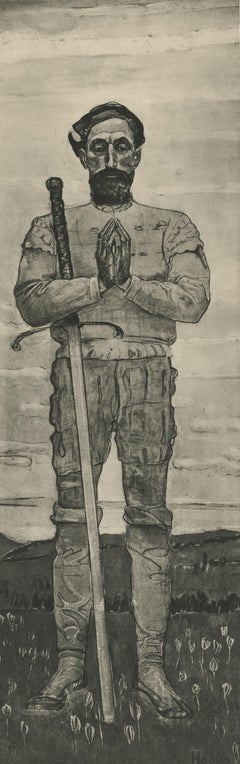
2018 marks the centenary anniversary of Ferdinand Hodler’s death. In that 100 years time, the art world’s esteem of this important artist has proved fickle. It has shifted from extolling his artistic merits during his lifetime to showing something of a feigned disdain- more reflective of the world political order than a true change of heart for Hodler’s work. After years of Hodler being all but a footnote in the annals of art history and generally ignored, finally, the pendulum has righted itself once again. Recent retrospective exhibitions in Europe and the United States have indicated not only a joyful rediscovery of Hodler’s art but a firm conviction that his work and world view hold particular relevance today. DAS WERK FERDINAND HODLERS is not only a collection of printed work reflecting the best of all of his painted work created up to 1914 just before the outbreak of World War I, the portfolio itself is an encapsulation of Hodler’s ethos, Parallelisme. Hodler developed his philosophy of Parallelisme as a unifying approach to art which strips away detail in search of harmony. By means of abstraction, symmetry and repetition, Hodler sought ways to depict Nature’s essence and her fundamental, universal order. He believed these universal laws governing the natural, observable world extend to the spiritual realm. Symbolist in nature with Romantic undertones, his works are equally portraits of these universal concepts and feelings governing all life as they are a visual portrait in the formal sense. Whether his subject is a solitary tree, a moment in battle, mortal fear, despair, the awe inspired by a vast mountain range, a tender moment or even the collective conviction in a belief, Hodler unveils this guiding principle of Parallelisme. Several aspects of Hodler’s portfolio reinforce his tenets of Parallelisme. The Table of Contents clearly preferences a harmonious design over detail. The two columns, consisting of twenty lines each, list the images by order of appearance using their German titles. The abbreviated titles are somewhat cryptic in that they obscure the identities of the sitters. Like the image Hodler presents, they are distillations of the sitter without any extraneous details. This shortening was also done in an effort to maintain a harmonious symmetry of the Table of Contents, themselves, and keep titles to a one-line limit. The twenty-fourth title: “Bildnis des Schweizerischen Gesandten C.” was so long, even with abbreviation, that it required two lines; so, for the sake of maintaining symmetry, the fortieth title: “Bauernmadchen” was omitted from the list. This explains why the images are not numbered. Hodler’s reasoning is not purely esoteric. Symmetry and pattern reach beyond mere formal design principles. Finding sameness and imposing it over disorder goes to the root of Hodler’s identity and his art. A Swiss native, Hodler was bi-lingual and spoke German and French. Each printed image, even number forty, have titles in both of Hodler’s languages. Certainly, there was a market for Hodler’s work among francophones and this inclusion may have been a polite gesture to that end; however, this is the only place in the portfolio which includes French. With German titles at the lower left of each image, Hodler’s name at bottom center and corresponding French titles at the lower right of each image, there is a harmony and symmetry woven into all aspects of the portfolio. This holds true for the page design, as it applies to each printed image and as it describes the Swiss artist himself. Seen in this light, Hodler’s portfolio of printed work is the epitome of Hodler’s Parallelisme. DAS WERK FERDINAND HODLERS is also one of the most significant documents to best tell the story of how Hodler, from Switzerland, became caught between political cross-hairs and how the changing tides of nations directly impacted the artist during his lifetime as well as the accessibility of his art for generations to come. The Munich-based publisher of the portfolio, R. Piper & Co., Verlag, plays a crucial role in this story. Publishing on a wide range of subjects from philosophy and world religion to music, literature and the visual arts; the publisher’s breadth of inquiry within any one genre was equal in scope. Their marketing strategy to publish multiple works on Hodler offers great insight as to what a hot commodity Hodler was at that time. R.Piper & Co.’s Almanach, which they published in 1914 in commemoration of their first ten years in business, clearly illustrates the rapid succession- strategically calculated for achieving the deepest and broadest impact - in which they released three works on Hodler to hit the market by the close of 1914. DAS WERK FERDINAND HODLERS was their premier publication. It preceded C.A. Loosli’s Die Zeichnungen Ferdinand Hodlers, a print portfolio after 50 drawings by Hodler which was released in Autumn of 1914 at the mid-level price-point of 75-150 Marks; and a third less expensive collection of prints after original works by Hodler, which had not been included in either of the first two portfolios, was released at the end of that year entitled Ferdinand Hodler by Dr. Ewald Bender. The title and timing of DAS WERK FERDINAND HODLERS' debut leaves little doubt as to the connection it has with another avant-garde portfolio of art prints, Das Werk Gustav Klimts, released in 5 installments from 1908 -1914 by Galerie Miethke in Vienna. Hodler, himself, was involved in Klimt’s ground-breaking project. As the owner of Klimt’s 1901 painting, “Judith with the Head of Holifernes” which appears as the ninth collotype print in the second installment of Das Werk Gustav Klimts, Hodler was obliged to grant access of the painting to the art printers in Vienna for them to create the collotype sometime before 1908. Hodler had been previously invited in 1904 to take part in what would be the last exhibition of the Vienna Secession before Klimt and others associated with Galerie Miethke broke away. In an interview that same year, Hodler indicated that he respected and was impressed by Klimt. Hodler’s esteem for Klimt went beyond the art itself; he emulated Klimt’s method aimed at increasing his market reach and appeal to a wider audience by creating a print portfolio of his painted work. By 1914, Hodler and his publisher had the benefit of hindsight to learn from Klimt’s Das Werk publication. Responding to the sluggish sales of Klimt’s expensive endeavor, Hodler’s publisher devised the same diversified 1-2-3 strategy for selling Hodler’s Das Werk portfolio as they did with regards to all three works on Hodler they published that year. For their premium tier of DAS WERKS FERDINAND HODLERS, R. Piper & Co. issued an exclusive Museum quality edition of 15 examples on which Hodler signed each page. At a cost of 600 Marks, this was generally on par with Klimt’s asking price of 600 Kronen for his Das Werk portfolio. A middle-tiered Preferred edition of 30, costing somewhat less and with Hodler’s signature only on the Title Page, was also available. The General edition, targeting the largest audience with its much more affordable price of 150 Marks, is distinguishable by its smaller size. Rather than use the subscription format Miethke had chosen for Klimt’s portfolios which proved to have had its challenges, R. Piper & Co. employed a different strategy. In addition to instantly gratifying the buyer with all 40 of the prints comprising DAS WERK FERDINAND HODLERS and the choice among three price points, they advertised in German journals a fourth possibility of ordering single prints from them directly. These printed images are easily discernible from the three complete folio editions. The paper size of the single purchased images is of the larger format like the Museum and Preferred editions, measuring 65 h x 50 w cm; however, the paper itself is the same copper print paper used in the General edition and then mounted on poster board. The publishing house positioned itself to be a direct retailer of Hodler’s art. They astutely recognized the potential for profitability and the importance, therefore, of having proprietary control over his graphic works. R. Piper & Co. owned the exclusive printing rights to Hodler’s best work found in their three publications dating from 1914. That same year, a competing publication out of Weimar entitled Ferdinand Hodler: Ein Deutungsversuch von Hans...

Category

Symbolist 1910s Art
Materials

Paper

George Washington Hand Studies, Mount Vernon

George Washington Hand Studies, Mount Vernon

By Francis Luis Mora

Located in New York, NY

This stunning study of George Washington's hands is a unique and remarkable drawing pair. Mora was noted as an exceptional draftsman and actually traveled america giving lectures ab...

Category

American Realist 1910s Art
Materials

Paper, Charcoal

Antique American Drawing Football Player Monogrammed Original Frame early 20th C

Antique American Drawing Football Player Monogrammed Original Frame early 20th C

Located in Buffalo, NY

An original charcoal drawing of a football player in his uniform circa 1910. This work is initialed what appears to be "e.w." with the phrase "1/2 hr" written below. We have not be...

Category

American Realist 1910s Art
Materials

Paper, Charcoal

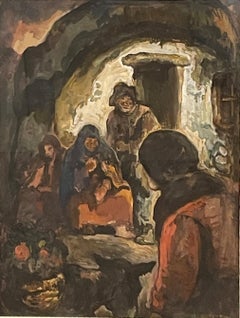
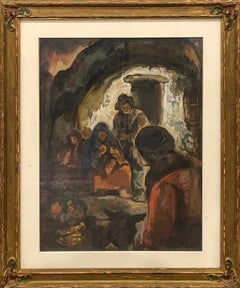
"In Foreign Parts" Eugene Higgins, Southwestern Pueblo, Modern Figurative

"In Foreign Parts" Eugene Higgins, Southwestern Pueblo, Modern Figurative

By Eugene Higgins

Located in New York, NY

Eugene Higgins In Foreign Parts, circa 1913 Signed lower right Watercolor on paper Sight 17 x 13 inches Born William Victor Higgins in 1884 to a Shelbyville, Indiana farm family where the only art Victor was aware of as a child was his father's love of flowers. "He loved their forms and their colors, and he tended his garden as a painter might work a canvas." At the age of nine, Victor met a young artist who traveled the Indiana countryside painting advertisements on the sides of barns. He purchased paints and brushes so the young Higgins could practice his own artwork on the inside of his father's barn. He also taught Victor about art museums and especially about the new Chicago Art Institute. This information never left the young artist, and he saved his allowance until his father allowed him at the age of fifteen to attend Chicago Art Institute. He worked a variety of jobs to finance his studies both there and at the Academy of Fine Arts. Victor Higgins traveled to New York in 1908, where he met Robert Henri, who became a significant influence by depicting every-day scenes and stressing the importance of the spirit and sense of place as important factors in painting. Higgins was also greatly affected by the New York Armory Modernism Show of Marsden Hartley in 1913. While Victor Higgins was in Chicago he met former mayor and avid collector Carter H. Harrison who was to prove instrumental in the growth of Higgins career for several years. Harrison agreed to support Higgins for four years to go to Paris and Munich and paint and study in the great museums in Europe. While at the Academie de la Grande Chaumier in Paris (1910-1914) he met Walter Ufer, who was another Chicago artist being sponsored by Carter Harrison. This meeting was not only a life-long friendship, but the beginning of a great change in the way Higgins looked at "American" art. He decided that America needed it's own authentic style rather than the 19th Century classic style he was taught in Europe. Very soon after returning to Chicago in 1914, Harrison sent him and Walter Ufer on a painting trip to Taos, New Mexico for a year in exchange for paintings. Higgins made other similar agreements and was able to support himself with his painting. This trip was a life-changing experience and introduced Higgins to the authentic America he had been looking for. In 1914 Taos was an isolated village about twelve hours from Santa Fe on an impossible dirt road. But the colorful life of the pueblo people and the natural beauty drew a collection of artists who became the Taos art colony, from which the Taos Society of Artists was founded in 1915. Victor Higgins became a permanent resident within a year of his arrival and a member of the society in 1917, exhibiting with Jane Peterson in 1925 and with Wayman Adams and Janet Scudder in 1927. The members would travel around the country introducing the Southwest scenes with great success. He remained a member until the Society's dissolution in 1927. Higgins was the youngest member of the group of seven. Other members were Joseph Henry Sharp, Bert Phillips...

Category

American Modern 1910s Art
Materials

Paper, Watercolor