1940s Art

to
1,192
2,963
1,181
1,046
413
265
Overall Width
to
Overall Height
to
7,751
21,927
164,686
227,308
2,037
2,310
5,000
6,558
5,892
15,109
20,706
25,969
18,735
14,112
5,528
2,193
430
326
220
155
117
84
78
46
20
9
2
2
3,395
2,238
156
3,032
1,469
1,174
924
899
574
398
364
361
359
280
266
265
256
223
194
164
158
146
146
2,070
1,480
1,299
1,050
715
114
114
111
57
45
1,613
954
3,786
1,913
Period: 1940s
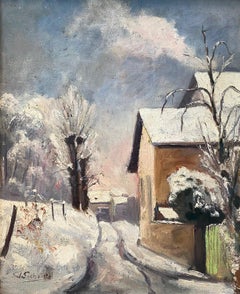
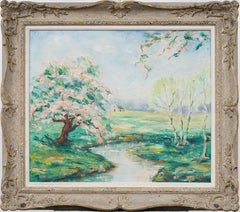
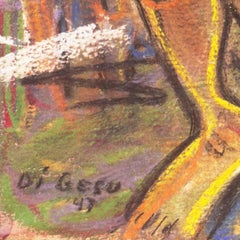
Mystery Signed Painting

Mystery Signed Painting

Located in San Francisco, CA

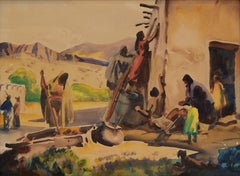
Beautiful mystery painting signed lower left. I can only make out the first initial L the middle initial O and the last two initials of the last name look like IN or possibly TH. Thi...

Category

Impressionist 1940s Art

Materials

Oil

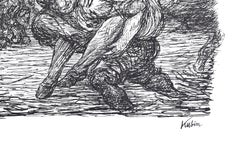
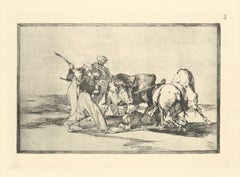
Tauromaquia - Plate 5

Tauromaquia - Plate 5

Located in Henderson, NV

Medium: heliogravure (after the etching from Goya's Tauromaquia series). Printed in 1947 in a limited edition of 500 on Guarro laid paper, and published in Barcelona by Ediciones Ome...

Category

1940s Art

Materials

Photogravure

"APRIL" TEXAS HILL COUNTRY BLUEBONNETS IMAGE: 25 X 30 FRAME: 33 X 38 CIRCA 1940S

"APRIL" TEXAS HILL COUNTRY BLUEBONNETS IMAGE: 25 X 30 FRAME: 33 X 38 CIRCA 1940S

Located in San Antonio, TX

Robert Wood (G. Day) (1889 -1979) San Antonio Artist Image Size: 25 x 30 Frame Size: 33 x 38 Medium: Oil "April" Texas Hill Country Bluebonnets Biography Robert Wood (G. Day) (1889 -1979) A painter of realistic landscapes reflecting a vanishing wilderness in America, Robert Wood (not to be confused with Robert E. Wood) is reportedly one of the most mass-produced artists in the United States. His painting became so popular he was unable to meet all of the demands, and many of his works were reproduced in lithographs and mass distributed as prints, place mats, and wall murals by companies including Sears, Roebuck. He was born in Sandgate, Kent on the south coast of England near Dover, the son of W.L. Wood, a famous home and church painter who recognized and supported his son's talent. In fact, he forced his son to paint by keeping him inside to paint rather than playing with his friends. At age 12, Wood entered the South Kensington School of Art. As a youth, he came to the United States in 1910, having served in the Royal Army, and he never returned to England. He traveled extensively all over the United States, especially in the West, often in freight cars, and also painted in Mexico and Canada. His itinerant existence took him to Illinois where he worked as a farmhand, to Pensacola, Florida where he married, briefly in Ohio, Seattle, Washington, and Portland, Oregon. In 1912, he was in Los Angeles, and in the late 1920s and early 1930s, in San Antonio, Texas, where he lived and in 1928 exhibited in the "Texas Wildflower Competition." From San Antonio, he gained a national reputation for his strong colored, dramatic paintings. Some of that prestige has been credited to his association with Jose Arpa, prominent Texas artist. Wood also gave art lessons, and one of his students was Porfirio Salinas. During this period, Wood sometimes signed his paintings G. Day or Trebor, which is Robert spelled backwards. In 1941 he went to California and painted numerous desert and mountain landscapes and coastal scenes. He lived in Carmel for seven years, and then moved to Woodstock, New York, but he soon returned to California, settling first in Laguna Beach, then San Diego, and finally in the High Sierras, where he and his wife built a home and studio near Bishop and lived until his death in 1979. Robert Wood was born March 4, 1889, in Sandgate, England, a small town on the Kentish coast not far from the white cliffs of Dover. His father, W. J. Wood, was a successful painter who recognized Robert's unusual talent. At the age of twelve, his father enrolled Wood in art school in the small town of Folkstone. He then attended the South Kensington School of Art. While attending art school, Wood won four first awards and three second awards, one each year, a record. In 1910 after service in the Royal Army, nineteen-year-old Wood and his friend, Claude Waters, immigrated to America. Initially, he settled in Illinois and worked as a hired hand on a farm belonging to Water's uncle. He would then strike out on his own, living the life of an itinerant painter. Wood traveled as a hobo, hopping freight trains and selling or bartering small paintings to support him along the way. When times were hard, he worked at whatever job was available. In this manner, he saw most of the United States and fell in love with rural America. By 1912, Wood visited Los Angeles for the first time, arriving on the day of the Titanic tragedy. Later that year, he had met, courted and married young Eyssel Del Wagoner in Florida. The couple moved to Ohio where a daughter, Florence, was born. During World War I, the family moved to Seattle where a son, John Robert Wood, was born in 1919. In the early 1920's, the young Wood family was almost constantly on the move. They stayed for short periods in Kansas, Missouri, California and for a longer time in Portland, Oregon, where Wood's friend Claude Waters had settled. Wood's seemingly endless wanderings disrupted his family life and delayed his development as a painter. However, through his travels he developed an appreciation for the American landscape that would inspire him for the rest of his career. Although aware of the current movement away from traditional realism in American art, he elected to travel that solitary path and remain true to his own vision of American’s grandeur and beauty poetically translated through his landscape and seascape paintings. In 1923, the Wood family discovered the beautiful city of San Antonio, Texas and it was there that he and his family would finally settle. He studied briefly at the San Antonio Art School with Spanish colorist Jose Arpa y Perea (1860-1952), who had arrived in San Antonio that same year. In the latter part of the 1920’s, Jose Arpa’s influence quickly became evident. Wood after several years of experimentation was becoming fine easel painter, capable of great subtlety with a new mature original style. Like Texas painters Robert Onderdonk (1853-1917) and his son Julian Onderdonk (1882-1922), Robert Wood concentrated on the distinctive Texas landscape with its Red Oak trees and wildflowers that covered the hill country landscape. He developed a reputation for his scenes of Blue Bluebonnets, the state flower. In the spring, the Texas prairie is covered with wildflowers, especially in the hill country surrounding San Antonio and Austin. Wood incorporated native stone barns and rough wood farmhouses that added authenticity and romance to his compositions. In 1925, Wood was divorced from his wife. In 1932, he moved to the famous scenic loop on San Antonio's outskirts. While still living in Texas, he took extensive western sketching...

Category

Impressionist 1940s Art

Materials

Oil

'Easter Sunday'  — Mid-century American Surrealism

'Easter Sunday' — Mid-century American Surrealism

By Robert Vale Faro

Located in Myrtle Beach, SC

Robert Vale Faro, 'Easter Sunday', color lithograph, 1946, edition 31. Signed, dated, titled and numbered '116' and '17/31' in pen. A fine impression, with fresh colors, on heavy, off-white wove paper; full margins (1 1/4 to 2 inches), in excellent condition. Image size 21 x 13 1/2 inches; sheet size 24 3/4 x 16 1/4 inches. Scarce. Matted to museum standards, unframed. ABOUT THE ARTIST Robert Vale Faro (1902-1988) was a well-known modernist architect and artist associated with the Chicago Bauhaus. He received his degree in architecture and design from the Armour Institute in Chicago and worked at L'Ecole des Beaux-Arts, Paris, from 1924-27, where he was influenced by Harry Kurt Bieg and Le Corbusier. Upon his return to Chicago, Faro worked with the important modernist Chicago architects George and William Keck under Louis Sullivan. Faro founded the avant-garde printmaking group Vanguard in 1945. The group counted Atelier 17 artists Stanley William Hayter, Sue Fuller...

Category

American Modern 1940s Art
Materials

Lithograph

Morris Rosenfeld "Venturer" Original Photograph

Morris Rosenfeld "Venturer" Original Photograph

Located in San Francisco, CA

Morris Rosenfeld: 1885-1968. Well listed American photographer. Famous for photos of sail boats, yachts and other seafaring vessels. He has an auction high of $5250 for a single phot...

Category

1940s Art

Materials

Silver Gelatin

Magritte, Composition, Les chants de Maldoror (after)

Magritte, Composition, Les chants de Maldoror (after)

By René Magritte

Located in Southampton, NY

Lithograph on vélin papier pur chiffon paper. Paper Size: 10 x 7.375 inches. Inscription: Unsigned and unnumbered, as issued. Notes: From the album, Les chants de Maldoror, illustrat...

Category

Surrealist 1940s Art

Materials

Lithograph

Landscape
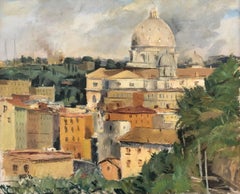
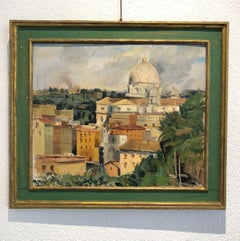
Landscape

Landscape

Located in Genève, GE

Work on canvas Golden wooden frame 62.5 x 72 x 4 cm

Category

1940s Art

Materials

Oil

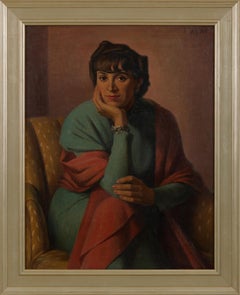
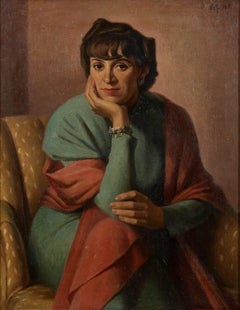
1945 WPA-Era American Modern Portrait, Hayes Lyon Mid-Century Oil Painting

1945 WPA-Era American Modern Portrait, Hayes Lyon Mid-Century Oil Painting

By Hayes Lyon

Located in Denver, CO

An intimate 1945 portrait by American Modern painter Hayes Lyon depicting the artist’s wife, Bessy Lyon. Executed in oil on canvas, the composition captures a quiet domestic moment w...

Category

American Modern 1940s Art
Materials

Canvas, Oil

'African Idol' — American Modernism, Chicago Avant-garde

'African Idol' — American Modernism, Chicago Avant-garde

By Robert Vale Faro

Located in Myrtle Beach, SC

Robert Vale Faro, untitled (African Idol), serigraph, c. 1940, edition 6. Signed in pencil. A fine impression, with fresh colors, on buff wove paper; the full sheet with margins(5/8 to 1 3/8 inches), in excellent condition. Very rare. Matted to museum standards, unframed. Image size 8 3/4 x 6 inches (222 x 152 mm); sheet size 11 x 7 1/2 inches (279 x 192 mm). ABOUT THE ARTIST Robert Vale Faro (1902-1988) was a well-known modernist architect and artist associated with the Chicago Bauhaus. He received his degree in architecture and design from the Armour Institute in Chicago and worked at L'Ecole des Beaux-Arts, Paris, from 1924-27, where he was influenced by Harry Kurt Bieg and Le Corbusier. Upon his return to Chicago, Faro worked with the important modernist Chicago architects George and William Keck under Louis Sullivan. Faro founded the avant-garde printmaking group Vanguard in 1945. The group counted Atelier 17 artists Stanley William Hayter, Sue Fuller, and Anne Ryan as New York members and Francine...

Category

American Modern 1940s Art
Materials

Screen

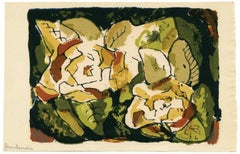
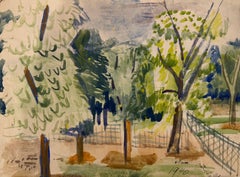
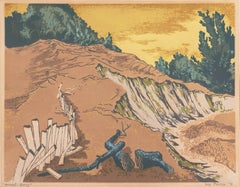
"Croton Park" Howard Daum, Modernist, Bright Landscape, Greens and Blues

"Croton Park" Howard Daum, Modernist, Bright Landscape, Greens and Blues

Located in New York, NY

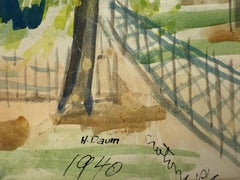
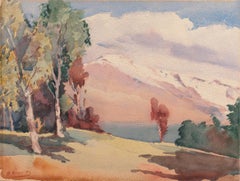
Howard Daum Croton Park, 1940 Signed, titled and dated lower right Watercolor on paper 8 1/2 x 11 1/2 inches Provenance The artist Ashby Gallery, New York Carl Ashby, New York Estat...

Category

American Modern 1940s Art
Materials

Paper, Watercolor

Edgar Degas, Dancer Touching Her Earring, 1945 (after)

Edgar Degas, Dancer Touching Her Earring, 1945 (after)

By Edgar Degas

Located in Southampton, NY

This exquisite lithograph after Edgar Degas (1834–1917), titled Danseuse touchant sa boucle d’oreille (Dancer Touching Her Earring), originates from the 1945 folio Degas, Ten Ballet Sketches. Published by The Studio Publications, Inc., New York, rendered and printed by Albert Carman, City Island, 1945, this work reflects Degas’s sensitive mastery of line, movement, and intimate observation, capturing the grace, poise, and psychological immediacy that define his iconic ballet imagery. In Danseuse touchant sa boucle d’oreille (Dancer Touching Her Earring), Degas reveals gesture and inner emotion through economical contour and lyrical nuance. Executed as a lithograph and pochoir on velin paper, this work measures 17 x 13 inches (43.18 x 33.02 cm). Signed in the plate and unnumbered as issued. Rendered and printed by Albert Carman, City Island, one of the notable American ateliers specializing in fine art lithography during the mid-20th century. Artwork Details: Artist: After Edgar Degas (1834–1917) Title: Danseuse touchant sa boucle d’oreille (Dancer Touching Her Earring), from Degas, Ten Ballet Sketches, 1945 Medium: Lithograph and pochoir on velin paper Dimensions: 17 x 13 inches (43.18 x 33.02 cm) Inscription: Signed in the plate and unnumbered as issued Date: 1945 Publisher: The Studio Publications, Inc., New York Printer: Albert Carman, City Island, 1945 Condition: Well preserved, consistent with age and medium Provenance: From the 1945 folio Degas, Ten Ballet Sketches, published by The Studio Publications, Inc., New York Notes: Excerpted from the album, Born in Paris in 1834, Edgar Degas lived, and surely loved the life of that city during most of his years. These continued somewhat sadly beyond those of most of his friends— into the debacle of the first World War, during which he died in 1917. Judging by the frequency with which he used them as models, he must have had an especial admiration for the ballet girls who followed a profession that at the time brought none of the glory and prosperity which attend it today. New aspects of the human body, revealed in movement, fascinated him. But his occupation with the simply anatomical side of his subjects never resulted in a cold interpretation. On the contrary there is a warmth and sympathy that pervades all of his work. The drawings here represent the painter in one important phase of his multi-sensitive view of life; and permit an insight which a more ambitious work might not do-into the operation of the creative process, the artist's transformation of reality as it passes through the mesh of his sensibilities. The Edition of this Portfolio is limited to MMMD examples. Rendered by Albert Carman. About the Publication: Degas, Ten Ballet Sketches, published in 1945 by The Studio Publications, Inc., New York, stands as one of the most elegant and scholarly mid-century American fine art folios devoted to the ballet imagery of Edgar Degas. Conceived as a high-quality interpretive portfolio, the album presents a series of lithograph-and-pochoir renderings based on Degas’s original drawings, executed with exceptional attention to tonal subtlety, contour fidelity, and the emotional interiority that defines the artist’s draftsmanship. Rendered and printed by Albert Carman on City Island, the publication embodies an American postwar effort to restore and celebrate European masterworks through meticulous handcraft and artisanal color application, honoring Degas’s distinctive line and the atmospheric delicacy of his studio-based studies. Produced in a substantial edition of MMMD examples, the portfolio offered audiences rare access to Degas’s private working drawings—images rarely seen outside institutional collections—while exemplifying the technical refinement and interpretive care characteristic of Carman’s workshop. Today, Degas, Ten Ballet Sketches remains a sought-after historical publication, valued for its craft, fidelity to Degas’s aesthetic, and its role in preserving and disseminating the artist’s intimate ballet imagery in a beautifully executed mid-century fine art format. About the Artist: Edgar Degas (1834–1917) was a French painter, draughtsman, printmaker, and sculptor whose groundbreaking fusion of classical draftsmanship, modern experimentation, and psychological depth helped define the trajectory of Western art, positioning him as one of the most influential figures of the nineteenth and early twentieth centuries; renowned for his depictions of ballet dancers, racehorses, theater scenes, cafe life, domestic interiors, milliners, laundresses, and women at their toilette, Degas reimagined observational realism through radical compositional innovation—employing extreme cropping, asymmetrical framing, oblique viewpoints, and dramatic lighting that anticipated photographic and cinematic language long before these technologies shaped visual culture, and although associated with Impressionism, he rejected plein-air spontaneity in favor of studio-based discipline rooted in the linear precision of Jean-Auguste-Dominique Ingres, the expressive chromaticism of Eugene Delacroix, and the modernity of Edouard Manet while also drawing inspiration from Japanese ukiyo-e prints, classical sculpture, and early photography; his independent artistic philosophy resonated with and helped shape the innovations of Pablo Picasso, Alexander Calder, Alberto Giacometti, Salvador Dali, Joan Miro, Wassily Kandinsky, Marcel Duchamp, and Man Ray, whose explorations of movement, form, dream logic, abstraction, and conceptualism all find antecedents in Degas’s investigations into seriality, temporality, and the fragmented figure, and his pioneering use of pastel, monotype, and wax sculpture fundamentally transformed each medium, influencing artists from Henri Matisse, Francis Bacon, Lucian Freud, and Giacomo Manzu to Paula Rego, contemporary realists, experimental photographers, and choreographers; his works are held in nearly every major museum collection worldwide—including the Musee dOrsay, the Louvre, the Metropolitan Museum of Art, the National Gallery of Art, the Art Institute of Chicago, the Courtauld Institute, and the National Gallery, London—affirming his central place in the history of art, and the highest auction record for Degas was achieved at Sothebys London on February 3, 2015, when Danseuses en Bleu sold for 37,033,000 GBP, cementing his status as one of the most sought-after and enduringly significant artists of the Western canon. Edgar Degas lithograph...

Category

Impressionist 1940s Art

Materials

Lithograph

Kathe Kollwitz, Call of Death, from Ten Lithographs, 1941 (after)

Kathe Kollwitz, Call of Death, from Ten Lithographs, 1941 (after)

By Käthe Kollwitz

Located in Southampton, NY

This exquisite lithograph after Kathe Kollwitz (1867–1945), titled Ruf des Todes (Call of Death), from the folio Kathe Kollwitz, Ten Lithographs, originates from the 1941 edition published by Henry C. Kleemann, New York, and Curt Valentin, New York; printed by Duenewald Printing Corporation, New York. The composition reflects Kollwitz’s profound engagement with themes of mortality, grief, and human suffering, rendered with stark emotional intensity and a powerful graphic economy that underscores her enduring social message. Executed as a lithograph on velin paper, this work measures 19 x 16 inches (48.26 x 40.64 cm), overall; 15 x 13 inches (38.10 x 33.02 cm), image. Unsigned and unnumbered as issued. Artwork Details: Artist: After Kathe Kollwitz (1867–1945) Title: Ruf des Todes (Call of Death), from Kathe Kollwitz, Ten Lithographs Medium: Lithograph on velin paper Dimensions: 19 x 16 inches (48.26 x 40.64 cm), overall; 15 x 13 inches (38.10 x 33.02 cm), image Inscription: Unsigned and unnumbered as issued Date: 1941 Publisher: Henry C. Kleemann, New York, and Curt Valentin, New York Printer: Duenewald Printing Corporation, New York Condition: Well preserved, consistent with age and medium Provenance: From the folio Kathe Kollwitz, Ten Lithographs, 1941 About the Publication: Kathe Kollwitz, Ten Lithographs, published in New York in 1941 by Henry C. Kleemann in collaboration with Curt Valentin, represents an important early American presentation of Kollwitz’s graphic work at a time when her reputation was expanding internationally. Issued during the turbulence of the Second World War and following the suppression of her work in Germany under the Nazi regime, the folio played a crucial role in introducing her imagery to a broader audience outside Europe. The publication gathers a selection of her most powerful lithographic compositions, emphasizing her mastery of tonal contrast, expressive line, and psychological depth. Produced with careful attention to print quality by Duenewald Printing Corporation, the edition reflects the continued transmission of European modernist printmaking traditions into the American context, serving both as a document of artistic excellence and as a vehicle for the preservation and dissemination of Kollwitz’s humanistic vision. About the Artist: Kathe Kollwitz (1867–1945) was a German draughtsman, printmaker, and sculptor whose profoundly moving imagery, exceptional technical mastery, and unwavering social conscience established her as one of the most important and influential artists of the twentieth century, widely recognized as a master of modern printmaking and one of the most powerful visual chroniclers of human suffering, war, and social injustice. Born in Konigsberg, East Prussia, into a progressive and intellectually engaged family, Kollwitz was encouraged from an early age to pursue art and developed a deep awareness of social inequality that would shape her entire career, studying in Berlin and Munich at a time when women were largely excluded from formal academies while mastering drawing and graphic techniques with extraordinary discipline. Her breakthrough came with the monumental graphic cycle A Weavers’ Revolt (1893–1897), followed by The Peasants’ War (1901–1908), works that combined complex narrative structure with extraordinary technical command in etching, aquatint, and lithography, establishing her reputation as one of Europe’s leading graphic artists. Throughout her career, Kollwitz remained committed to portraying the lives of workers, mothers, and victims of poverty and conflict with unflinching honesty, creating compositions defined by bold, sculptural line, dense shadow, and unparalleled psychological depth that conveyed grief, resilience, and dignity. Working during a period transformed by the radical innovations of Pablo Picasso, Alexander Calder, Alberto Giacometti, Salvador Dali, Joan Miro, Wassily Kandinsky, Marcel Duchamp, and Man Ray, Kollwitz maintained a resolutely figurative and human-centered approach, aligning more closely with German Expressionism and artists such as Ernst Barlach, Max Liebermann, and Edvard Munch, whose emotional intensity and symbolic treatment of the human figure profoundly shaped her artistic language. Her later work, particularly the woodcut cycle War (1922–1923), stands among the most powerful anti-war statements in the history of art, reflecting both personal tragedy, including the death of her son in World War I, and a universal condemnation of violence and loss. In addition to her prints, Kollwitz created deeply moving sculptures that extended her exploration of grief and maternal protection into three dimensions, reinforcing her status as a multidisciplinary artist of exceptional range. She achieved significant recognition during her lifetime, becoming the first woman elected to the Prussian Academy of Arts, though her work was later condemned by the Nazi regime as degenerate, leading to her forced resignation and the removal of her works from public collections, yet her reputation expanded internationally after World War II and she is now regarded as a central figure in modern art. Her influence has been profound and far-reaching, shaping later artists including Francis Bacon, Anselm Kiefer, Leon Golub, Kiki Smith, and numerous contemporary figurative and socially engaged artists who continue to explore themes of trauma, memory, and human vulnerability. Today her works are held in major museum collections worldwide, including the Kathe Kollwitz Museum in Berlin, the Museum of Modern Art in New York, the British Museum in London, and the Art Institute of Chicago, and remain highly sought after by collectors for their emotional intensity and historical significance. The highest auction record for a work by Kathe Kollwitz is held by her sculpture Mutter mit totem Sohn (Mother with Dead Son), which achieved approximately 1.2 million EUR at auction, confirming her enduring importance. Kathe Kollwitz Ruf des Todes 1941 lithograph German Expressionism social realism print.

Category

Expressionist 1940s Art

Materials

Lithograph

Lake Landscape
Lake Landscape

Lake Landscape

Located in Wilton Manors, FL

Gertrude A. Larter (1878-1954). Lake Landscape. ca. 1920-40 Pastel on sandpaper sheet. Measuring 9 x 11 inches Signed lower right. Unframed. Gertrude A. Larter was born in New...

Category

Abstract Impressionist 1940s Art

Materials

Paper, Pastel

Kathe Kollwitz, Fraternization, from Ten Lithographs, 1941 (after)

Kathe Kollwitz, Fraternization, from Ten Lithographs, 1941 (after)

By Käthe Kollwitz

Located in Southampton, NY

This exquisite lithograph after Kathe Kollwitz (1867–1945), titled Verbruderung (Fraternization), from the folio Kathe Kollwitz, Ten Lithographs, originates from the 1941 edition published by Henry C. Kleemann, New York, and Curt Valentin, New York; printed by Duenewald Printing Corporation, New York. The composition reflects Kollwitz’s profound engagement with themes of hardship, solidarity, and human suffering, rendered with stark emotional intensity and a powerful graphic economy that underscores her enduring social message. Executed as a lithograph on velin paper, this work measures 19 x 16 inches (48.26 x 40.64 cm), overall; 11 x 9.5 inches (27.94 x 24.13 cm), image. Unsigned and unnumbered as issued. Artwork Details: Artist: After Kathe Kollwitz (1867–1945) Title: Verbruderung (Fraternization), from Kathe Kollwitz, Ten Lithographs Medium: Lithograph on velin paper Dimensions: 19 x 16 inches (48.26 x 40.64 cm), overall; 11 x 9.5 inches (27.94 x 24.13 cm), image Inscription: Unsigned and unnumbered as issued Date: 1941 Publisher: Henry C. Kleemann, New York, and Curt Valentin, New York Printer: Duenewald Printing Corporation, New York Condition: Well preserved, consistent with age and medium Provenance: From the folio Kathe Kollwitz, Ten Lithographs, 1941 About the Publication: Kathe Kollwitz, Ten Lithographs, published in New York in 1941 by Henry C. Kleemann in collaboration with Curt Valentin, represents an important early American presentation of Kollwitz’s graphic work at a time when her reputation was expanding internationally. Issued during the turbulence of the Second World War and following the suppression of her work in Germany under the Nazi regime, the folio played a crucial role in introducing her imagery to a broader audience outside Europe. The publication gathers a selection of her most powerful lithographic compositions, emphasizing her mastery of tonal contrast, expressive line, and psychological depth. Produced with careful attention to print quality by Duenewald Printing Corporation, the edition reflects the continued transmission of European modernist printmaking traditions into the American context, serving both as a document of artistic excellence and as a vehicle for the preservation and dissemination of Kollwitz’s humanistic vision. About the Artist: Kathe Kollwitz (1867–1945) was a German draughtsman, printmaker, and sculptor whose profoundly moving imagery, exceptional technical mastery, and unwavering social conscience established her as one of the most important and influential artists of the twentieth century, widely recognized as a master of modern printmaking and one of the most powerful visual chroniclers of human suffering, war, and social injustice. Born in Konigsberg, East Prussia, into a progressive and intellectually engaged family, Kollwitz was encouraged from an early age to pursue art and developed a deep awareness of social inequality that would shape her entire career, studying in Berlin and Munich at a time when women were largely excluded from formal academies while mastering drawing and graphic techniques with extraordinary discipline. Her breakthrough came with the monumental graphic cycle A Weavers’ Revolt (1893–1897), followed by The Peasants’ War (1901–1908), works that combined complex narrative structure with extraordinary technical command in etching, aquatint, and lithography, establishing her reputation as one of Europe’s leading graphic artists. Throughout her career, Kollwitz remained committed to portraying the lives of workers, mothers, and victims of poverty and conflict with unflinching honesty, creating compositions defined by bold, sculptural line, dense shadow, and unparalleled psychological depth that conveyed grief, resilience, and dignity. Working during a period transformed by the radical innovations of Pablo Picasso, Alexander Calder, Alberto Giacometti, Salvador Dali, Joan Miro, Wassily Kandinsky, Marcel Duchamp, and Man Ray, Kollwitz maintained a resolutely figurative and human-centered approach, aligning more closely with German Expressionism and artists such as Ernst Barlach, Max Liebermann, and Edvard Munch, whose emotional intensity and symbolic treatment of the human figure profoundly shaped her artistic language. Her later work, particularly the woodcut cycle War (1922–1923), stands among the most powerful anti-war statements in the history of art, reflecting both personal tragedy, including the death of her son in World War I, and a universal condemnation of violence and loss. In addition to her prints, Kollwitz created deeply moving sculptures that extended her exploration of grief and maternal protection into three dimensions, reinforcing her status as a multidisciplinary artist of exceptional range. She achieved significant recognition during her lifetime, becoming the first woman elected to the Prussian Academy of Arts, though her work was later condemned by the Nazi regime as degenerate, leading to her forced resignation and the removal of her works from public collections, yet her reputation expanded internationally after World War II and she is now regarded as a central figure in modern art. Her influence has been profound and far-reaching, shaping later artists including Francis Bacon, Anselm Kiefer, Leon Golub, Kiki Smith, and numerous contemporary figurative and socially engaged artists who continue to explore themes of trauma, memory, and human vulnerability. Today her works are held in major museum collections worldwide, including the Kathe Kollwitz Museum in Berlin, the Museum of Modern Art in New York, the British Museum in London, and the Art Institute of Chicago, and remain highly sought after by collectors for their emotional intensity and historical significance. The highest auction record for a work by Kathe Kollwitz is held by her sculpture Mutter mit totem Sohn (Mother with Dead Son), which achieved approximately 1.2 million EUR at auction, confirming her enduring importance. Kathe Kollwitz Verbruderung 1941 lithograph German Expressionism social realism print.

Category

Expressionist 1940s Art

Materials

Lithograph

Kathe Kollwitz, Bread!, from Ten Lithographs, 1941 (after)

Kathe Kollwitz, Bread!, from Ten Lithographs, 1941 (after)

By Käthe Kollwitz

Located in Southampton, NY

This exquisite lithograph after Kathe Kollwitz (1867–1945), titled Brot! (Bread!), from the folio Kathe Kollwitz, Ten Lithographs, originates from the 1941 edition published by Henry C. Kleemann, New York, and Curt Valentin, New York; printed by Duenewald Printing Corporation, New York. The composition reflects Kollwitz’s profound engagement with themes of hardship, deprivation, and human suffering, rendered with stark emotional intensity and a powerful graphic economy that underscores her enduring social message. Executed as a lithograph on velin paper, this work measures 19 x 16 inches (48.26 x 40.64 cm), overall; 13.5 x 11 inches (34.29 x 27.94 cm), image. Unsigned and unnumbered as issued. Artwork Details: Artist: After Kathe Kollwitz (1867–1945) Title: Brot! (Bread!), from Kathe Kollwitz, Ten Lithographs Medium: Lithograph on velin paper Dimensions: 19 x 16 inches (48.26 x 40.64 cm), overall; 13.5 x 11 inches (34.29 x 27.94 cm), image Inscription: Unsigned and unnumbered as issued Date: 1941 Publisher: Henry C. Kleemann, New York, and Curt Valentin, New York Printer: Duenewald Printing Corporation, New York Condition: Well preserved, consistent with age and medium Provenance: From the folio Kathe Kollwitz, Ten Lithographs, 1941 About the Publication: Kathe Kollwitz, Ten Lithographs, published in New York in 1941 by Henry C. Kleemann in collaboration with Curt Valentin, represents an important early American presentation of Kollwitz’s graphic work at a time when her reputation was expanding internationally. Issued during the turbulence of the Second World War and following the suppression of her work in Germany under the Nazi regime, the folio played a crucial role in introducing her imagery to a broader audience outside Europe. The publication gathers a selection of her most powerful lithographic compositions, emphasizing her mastery of tonal contrast, expressive line, and psychological depth. Produced with careful attention to print quality by Duenewald Printing Corporation, the edition reflects the continued transmission of European modernist printmaking traditions into the American context, serving both as a document of artistic excellence and as a vehicle for the preservation and dissemination of Kollwitz’s humanistic vision. About the Artist: Kathe Kollwitz (1867–1945) was a German draughtsman, printmaker, and sculptor whose profoundly moving imagery, exceptional technical mastery, and unwavering social conscience established her as one of the most important and influential artists of the twentieth century, widely recognized as a master of modern printmaking and one of the most powerful visual chroniclers of human suffering, war, and social injustice. Born in Konigsberg, East Prussia, into a progressive and intellectually engaged family, Kollwitz was encouraged from an early age to pursue art and developed a deep awareness of social inequality that would shape her entire career, studying in Berlin and Munich at a time when women were largely excluded from formal academies while mastering drawing and graphic techniques with extraordinary discipline. Her breakthrough came with the monumental graphic cycle A Weavers’ Revolt (1893–1897), followed by The Peasants’ War (1901–1908), works that combined complex narrative structure with extraordinary technical command in etching, aquatint, and lithography, establishing her reputation as one of Europe’s leading graphic artists. Throughout her career, Kollwitz remained committed to portraying the lives of workers, mothers, and victims of poverty and conflict with unflinching honesty, creating compositions defined by bold, sculptural line, dense shadow, and unparalleled psychological depth that conveyed grief, resilience, and dignity. Working during a period transformed by the radical innovations of Pablo Picasso, Alexander Calder, Alberto Giacometti, Salvador Dali, Joan Miro, Wassily Kandinsky, Marcel Duchamp, and Man Ray, Kollwitz maintained a resolutely figurative and human-centered approach, aligning more closely with German Expressionism and artists such as Ernst Barlach, Max Liebermann, and Edvard Munch, whose emotional intensity and symbolic treatment of the human figure profoundly shaped her artistic language. Her later work, particularly the woodcut cycle War (1922–1923), stands among the most powerful anti-war statements in the history of art, reflecting both personal tragedy, including the death of her son in World War I, and a universal condemnation of violence and loss. In addition to her prints, Kollwitz created deeply moving sculptures that extended her exploration of grief and maternal protection into three dimensions, reinforcing her status as a multidisciplinary artist of exceptional range. She achieved significant recognition during her lifetime, becoming the first woman elected to the Prussian Academy of Arts, though her work was later condemned by the Nazi regime as degenerate, leading to her forced resignation and the removal of her works from public collections, yet her reputation expanded internationally after World War II and she is now regarded as a central figure in modern art. Her influence has been profound and far-reaching, shaping later artists including Francis Bacon, Anselm Kiefer, Leon Golub, Kiki Smith, and numerous contemporary figurative and socially engaged artists who continue to explore themes of trauma, memory, and human vulnerability. Today her works are held in major museum collections worldwide, including the Kathe Kollwitz Museum in Berlin, the Museum of Modern Art in New York, the British Museum in London, and the Art Institute of Chicago, and remain highly sought after by collectors for their emotional intensity and historical significance. The highest auction record for a work by Kathe Kollwitz is held by her sculpture Mutter mit totem Sohn (Mother with Dead Son), which achieved approximately 1.2 million EUR at auction, confirming her enduring importance. Kathe Kollwitz Brot 1941 lithograph German Expressionism social realism print.

Category

Expressionist 1940s Art

Materials

Lithograph

Expressionist Watercolor Landscape Painting Jewish Modernist

Expressionist Watercolor Landscape Painting Jewish Modernist

By Jennings Tofel

Located in Surfside, FL

signed and bears the artist's studio label verso. Genre: Impressionist Subject: Landscape Medium: watercolor Surface: paper Country: United States Dimensions: 11.5 X15.5 Jennings (...

Category

Expressionist 1940s Art

Materials

Paper, Watercolor

Kathe Kollwitz, Germany’s Children Are Starving, 1941 (after)

Kathe Kollwitz, Germany’s Children Are Starving, 1941 (after)

By Käthe Kollwitz

Located in Southampton, NY

This exquisite lithograph after Kathe Kollwitz (1867–1945), titled Deutschlands Kinder hungern (Germany’s Children Are Starving), from the folio Kathe Kollwitz, Ten Lithographs, originates from the 1941 edition published by Henry C. Kleemann, New York, and Curt Valentin, New York; printed by Duenewald Printing Corporation, New York. The composition reflects Kollwitz’s profound engagement with themes of hardship, deprivation, and human suffering, rendered with stark emotional intensity and a powerful graphic economy that underscores her enduring social message. Executed as a lithograph on velin paper, this work measures 19 x 16 inches (48.26 x 40.64 cm), overall; 15 x 13 inches (38.10 x 33.02 cm), image. Unsigned and unnumbered as issued. Artwork Details: Artist: After Kathe Kollwitz (1867–1945) Title: Deutschlands Kinder hungern (Germany’s Children Are Starving), from Kathe Kollwitz, Ten Lithographs Medium: Lithograph on velin paper Dimensions: 19 x 16 inches (48.26 x 40.64 cm), overall; 15 x 13 inches (38.10 x 33.02 cm), image Inscription: Unsigned and unnumbered as issued Date: 1941 Publisher: Henry C. Kleemann, New York, and Curt Valentin, New York Printer: Duenewald Printing Corporation, New York Condition: Well preserved, consistent with age and medium Provenance: From the folio Kathe Kollwitz, Ten Lithographs, 1941 About the Publication: Kathe Kollwitz, Ten Lithographs, published in New York in 1941 by Henry C. Kleemann in collaboration with Curt Valentin, represents an important early American presentation of Kollwitz’s graphic work at a time when her reputation was expanding internationally. Issued during the turbulence of the Second World War and following the suppression of her work in Germany under the Nazi regime, the folio played a crucial role in introducing her imagery to a broader audience outside Europe. The publication gathers a selection of her most powerful lithographic compositions, emphasizing her mastery of tonal contrast, expressive line, and psychological depth. Produced with careful attention to print quality by Duenewald Printing Corporation, the edition reflects the continued transmission of European modernist printmaking traditions into the American context, serving both as a document of artistic excellence and as a vehicle for the preservation and dissemination of Kollwitz’s humanistic vision. About the Artist: Kathe Kollwitz (1867–1945) was a German draughtsman, printmaker, and sculptor whose profoundly moving imagery, exceptional technical mastery, and unwavering social conscience established her as one of the most important and influential artists of the twentieth century, widely recognized as a master of modern printmaking and one of the most powerful visual chroniclers of human suffering, war, and social injustice. Born in Konigsberg, East Prussia, into a progressive and intellectually engaged family, Kollwitz was encouraged from an early age to pursue art and developed a deep awareness of social inequality that would shape her entire career, studying in Berlin and Munich at a time when women were largely excluded from formal academies while mastering drawing and graphic techniques with extraordinary discipline. Her breakthrough came with the monumental graphic cycle A Weavers’ Revolt (1893–1897), followed by The Peasants’ War (1901–1908), works that combined complex narrative structure with extraordinary technical command in etching, aquatint, and lithography, establishing her reputation as one of Europe’s leading graphic artists. Throughout her career, Kollwitz remained committed to portraying the lives of workers, mothers, and victims of poverty and conflict with unflinching honesty, creating compositions defined by bold, sculptural line, dense shadow, and unparalleled psychological depth that conveyed grief, resilience, and dignity. Working during a period transformed by the radical innovations of Pablo Picasso, Alexander Calder, Alberto Giacometti, Salvador Dali, Joan Miro, Wassily Kandinsky, Marcel Duchamp, and Man Ray, Kollwitz maintained a resolutely figurative and human-centered approach, aligning more closely with German Expressionism and artists such as Ernst Barlach, Max Liebermann, and Edvard Munch, whose emotional intensity and symbolic treatment of the human figure profoundly shaped her artistic language. Her later work, particularly the woodcut cycle War (1922–1923), stands among the most powerful anti-war statements in the history of art, reflecting both personal tragedy, including the death of her son in World War I, and a universal condemnation of violence and loss. In addition to her prints, Kollwitz created deeply moving sculptures that extended her exploration of grief and maternal protection into three dimensions, reinforcing her status as a multidisciplinary artist of exceptional range. She achieved significant recognition during her lifetime, becoming the first woman elected to the Prussian Academy of Arts, though her work was later condemned by the Nazi regime as degenerate, leading to her forced resignation and the removal of her works from public collections, yet her reputation expanded internationally after World War II and she is now regarded as a central figure in modern art. Her influence has been profound and far-reaching, shaping later artists including Francis Bacon, Anselm Kiefer, Leon Golub, Kiki Smith, and numerous contemporary figurative and socially engaged artists who continue to explore themes of trauma, memory, and human vulnerability. Today her works are held in major museum collections worldwide, including the Kathe Kollwitz Museum in Berlin, the Museum of Modern Art in New York, the British Museum in London, and the Art Institute of Chicago, and remain highly sought after by collectors for their emotional intensity and historical significance. The highest auction record for a work by Kathe Kollwitz is held by her sculpture Mutter mit totem Sohn (Mother with Dead Son), which achieved approximately 1.2 million EUR at auction, confirming her enduring importance. Kathe Kollwitz Deutschlands Kinder hungern 1941 lithograph German Expressionism social realism print.

Category

Expressionist 1940s Art

Materials

Lithograph

Ferry Passengers

Ferry Passengers

By Bert Hardy

Located in London, GB

French film actress Mila Parely amuses passengers onboard the ferry from Tower Bridge, London, to Southend, Essex. Original Publication: Picture Post – 4412 – Mila Goes To Southend –...

Category

Modern 1940s Art

Materials

Silver Gelatin

Careless Talk Costs Lives 'Fougasse' Cyril Kenneth Bird World War 2 Poster

Careless Talk Costs Lives 'Fougasse' Cyril Kenneth Bird World War 2 Poster

By Fougasse (Cyril Kenneth Bird)

Located in London, GB

We also have a full set of 8 available - just search: To see our other original vintage public information posters, scroll down to "More from this Seller" and below it click on "See all from this seller" - or send us a message if you cannot find the poster you want. We have a whole series referring to environmental issues on the theme of "Waste not want not" and caring for the environment and recycling. Cyril Kenneth Bird ‘Fougasse’ (British, 1887-1965) Careless Talk Costs Lives Lithographic poster c.1940 32 x 20 cm (12.5 x 8 in) The cartoonist Fougasse, was a British cartoonist who was art editor of Punch 1937-1949, and subsequently editor until 1953. He is best known for his ‘Careless Talk Costs Lives’ series of posters, and the other posters both for the Ministry of Information, London Underground and others. The Ministry of Information’s wartime poster...

Category

Modern 1940s Art

Materials

Lithograph

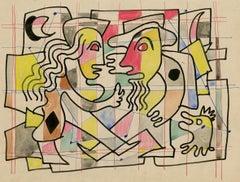
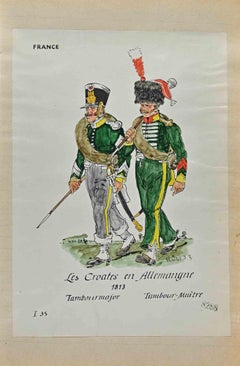
'Dialogue Erudite' — Mid-century American Surrealism

'Dialogue Erudite' — Mid-century American Surrealism

By Robert Vale Faro

Located in Myrtle Beach, SC

Robert Vale Faro, 'Dialogue Erudite', color lithograph, 1945, edition 16. Signed, dated, titled, and numbered '98' and '4/16' in pen. A fine, richly-inked impression with fresh colors, on heavy, off-white wove paper; full margins (1/2 to 1 1/4 inch), in excellent condition. Image size 20 1/2 x 14 3/8 inches; sheet size 22 1/2 x 17 inches. Scarce. Matted to museum standards, unframed. ABOUT THE ARTIST Robert Vale Faro (1902-1988) was a modernist architect and artist associated with the Chicago Bauhaus. He received his degree in architecture and design from the Armour Institute in Chicago and worked at L'Ecole des Beaux-Arts, Paris, from 1924-27, where he was influenced by Harry Kurt Bieg and Le Corbusier. Upon his return to Chicago, Faro worked with the important modernist Chicago architects George and William Keck under Louis Sullivan. Faro founded the avant-garde printmaking group Vanguard in 1945. The group counted Atelier 17 artists Stanley William Hayter, Sue Fuller...

Category

American Modern 1940s Art
Materials

Lithograph

Knight’s Lodging
Knight’s Lodging

Knight’s Lodging

Located in Los Angeles, CA

This painting is part of our exhibition American Coast to Coast: Artists of the 1930s Knight’s Lodging, 1941, oil on canvas panel, signed and dated lower left, 16 x 20 inches, exhi...

Category

American Realist 1940s Art

Materials

Oil

'Kindergarten' — Mid-century American Surrealism, Chicago Avant-garde

'Kindergarten' — Mid-century American Surrealism, Chicago Avant-garde

By Robert Vale Faro

Located in Myrtle Beach, SC

Robert Vale Faro, 'Kindergarten', color lithograph, 1945, edition 12. Signed, dated, titled, and numbered '99' and '5/12' in pen. A fine, richly-inked impression, with fresh colors, on heavy, coated off-white wove paper; the full sheet with margins (1/2 to 1 1/2 inch), in excellent condition. Scarce. Matted to museum standards, unframed. Image size 13 1/2 x 7 9/16 inches (343 x 192 mm); sheet size 17 x 12 1/4 inches (432 x 311 mm). ABOUT THE ARTIST Robert Vale Faro (1902-1988) was a well-known modernist architect and artist associated with the Chicago Bauhaus. He received his degree in architecture and design from the Armour Institute in Chicago and worked at L'Ecole des Beaux-Arts, Paris, from 1924-27, where he was influenced by Harry Kurt Bieg and Le Corbusier. Upon his return to Chicago, Faro worked with the important modernist Chicago architects George and William Keck under Louis Sullivan. Faro founded the avant-garde printmaking group Vanguard in 1945. The group counted Atelier 17 artists Stanley William Hayter, Sue Fuller, and Anne Ryan as New York members and Francine Felsenthal of Chicago. The Brooklyn Museum mounted a show of Vanguard artists' work in 1946, which subsequently toured several other institutions in the United States. Faro's visionary graphics from the 1940s are a sophisticated blend of Abstract Expressionism, Surrealism, and Indian Space...

Category

Surrealist 1940s Art

Materials

Lithograph

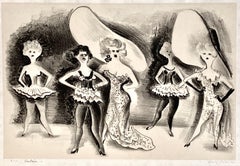
Does it FIT and is it RIGHT?  NRA original Gun Safety rare poster

Does it FIT and is it RIGHT? NRA original Gun Safety rare poster

Located in Spokane, WA

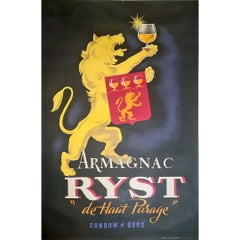
Original “Does It Fit and Is It Right?” vintage National Rifle Association of America vintage poster. There is some slight foxing on the top section of the poster, as well as a sm...

Category

American Modern 1940s Art
Materials

Lithograph

WESTERN GRANDEUR
WESTERN GRANDEUR

WESTERN GRANDEUR

By Harold Lukens Doolittle

Located in Santa Monica, CA

HAROLD LUKENS DOOLTTLE (1883 - 1974) WESTERN GRANDEUR c. 1945 Aquatint, signed titled and dedicated. Image 9 ¾ x 13 5/8 inches. Large full sheet with deckle edges 15 ½ x 19 inches...

Category

American Realist 1940s Art

Materials

Aquatint

View of Mt. Baker from The Old Charming Inn Victoria B.C. Canada

View of Mt. Baker from The Old Charming Inn Victoria B.C. Canada

Located in Wilton Manors, FL

Gertrude A. Larter (1878-1954). Looking Across Oak Bay in Puget Sound to Mt. Baker taker from our bedroom window at Old Charming Inn, Victoria B.C. Canada. August 8th 1946 Waterco...

Category

Abstract Impressionist 1940s Art

Materials

Paper, Watercolor

"Fill Her Up" by Bert Hardy

"Fill Her Up" by Bert Hardy

By Bert Hardy

Located in London, GB

"Fill Her Up" by Bert Hardy 24th May 1947: Pit staff filling up Louis Chiron's (1899 - 1979) Maserati. Original Publication: Picture Post - 4364 - Road Racing In Jersey - pub. 1947 ...

Category

Modern 1940s Art

Materials

Black and White

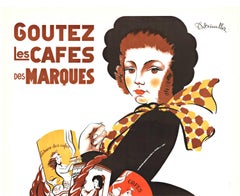
Original Orbea bicycle poster from 1947

Original Orbea bicycle poster from 1947

Located in PARIS, FR

Nice Orbea bicycle poster from 1947. Orbea is a bicycle manufacturer founded in 1840 and based in Mallabia, Spain. It is part of the Mondragón Cooperat...

Category

1940s Art

Materials

Paper, Lithograph

Carl Ashby, Pensive Lady, 1942, ink and watercolor

Carl Ashby, Pensive Lady, 1942, ink and watercolor

Located in New York, NY

Carl Ashby, Pensive Lady, 1942, ink and watercolor, retains fresh, clear color. A native of New Mexico, Carl Ashby (1914-2004) moved to New York City in 1938 following a stint with ...

Category

American Modern 1940s Art
Materials

Watercolor

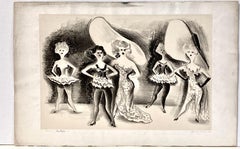
Tauromaquia - Plate 22

Tauromaquia - Plate 22

Located in Henderson, NV

Medium: heliogravure (after the etching from Goya's Tauromaquia series). Printed in 1947 in a limited edition of 500 on Guarro laid paper, and published in Barcelona by Ediciones Ome...

Category

1940s Art
Materials

Photogravure