1940s Art

to
1,248
2,963
1,157
1,042
418
261
Overall Width
to
Overall Height
to
7,582
21,307
165,020
236,803
2,078
2,324
4,986
6,471
5,865
15,325
21,070
26,274
19,035
14,139
5,370
2,127
450
421
234
154
112
76
74
46
21
7
2
2
3,342
2,266
158
2,943
1,418
1,117
917
841
545
400
361
359
350
271
264
260
242
214
189
164
157
145
144
2,015
1,449
1,288
1,056
731
110
108
107
57
47
1,628
900
3,789
2,059
Period: 1940s
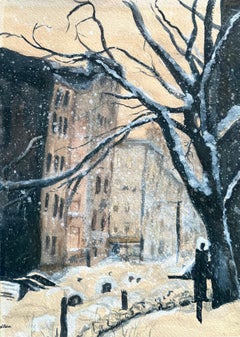
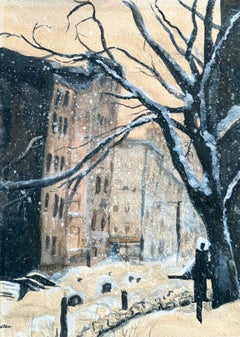
Snowy Roofs Gouache Landscape Drawing, Modern, Framed, Circa 1940

Snowy Roofs Gouache Landscape Drawing, Modern, Framed, Circa 1940

Located in Genève, GE

Work on cardboard signed Brown wooden frame with glass pane Dimension with frame : 40 x 46.5 x 1.5 cm This work depicts a snowy village with remarkable precision, capturing the essen...

Category

Modern 1940s Art

Materials

Gouache

Ricard Opisso, Large 1940s Figurative Oil Painting, Catalan Modernist Narrative

Ricard Opisso, Large 1940s Figurative Oil Painting, Catalan Modernist Narrative

By Ricard Opisso Sala

Located in Sitges, Barcelona

Ricard Opisso i Sala – “Soldiers Flirting in the Park” – Oil on Canvas, 75 × 101 cm (29.5 × 39.7 in) Artist: Ricard Opisso i Sala (1880–1966) Title: Soldiers Flirting in the Park Te...

Category

Modern 1940s Art

Materials

Oil

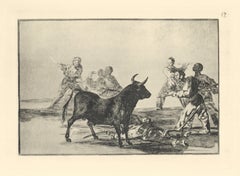
Tauromaquia - Plate F

Tauromaquia - Plate F

Located in Henderson, NV

Medium: heliogravure (after the etching from Goya's Tauromaquia series). Printed in 1947 in a limited edition of 500 on Guarro laid paper, and published in Barcelona by Ediciones Ome...

Category

1940s Art

Materials

Photogravure

1949 original travel poster by Jean Carlu for Pan American World Airways

1949 original travel poster by Jean Carlu for Pan American World Airways

By Jean Carlu

Located in PARIS, FR

The 1949 original travel poster by Jean Carlu for Pan American World Airways offers a captivating invitation to explore the stunning beauty and sophistication of the French Riviera. Jean Carlu, a renowned French graphic designer and poster artist, was celebrated for his distinctive style characterized by bold geometric forms and dynamic compositions. In this poster, Carlu skillfully captures the allure of the French Riviera as a premier destination for leisure and luxury travel. The poster features a stylized depiction of a glamorous couple disembarking from a Pan American airplane against the backdrop of the Mediterranean coastline. The azure waters, palm trees, and iconic architecture evoke the sun-kissed ambiance and cosmopolitan charm for which the Riviera is renowned. Carlu's use of vibrant colors, sleek lines, and streamlined shapes imbues the poster with a sense of modernity and sophistication, reflecting the glamour and excitement of jet-set travel in the mid-20th century. The bold typography and Pan Am logo...

Category

1940s Art

Materials

Paper, Lithograph, Linen

“Fleet Week”
“Fleet Week”

“Fleet Week”

Located in Southampton, NY

Original oil on masonite painting of Fleet Week with sailors flirting with young women on the dock by the American artist, Sarah Pace Carothers Rhode. ...

Category

Ashcan School 1940s Art

Materials

Oil, Masonite

Henri Matisse, The Sun, from Verve, Revue Artistique, 1948

Henri Matisse, The Sun, from Verve, Revue Artistique, 1948

By Henri Matisse

Located in Southampton, NY

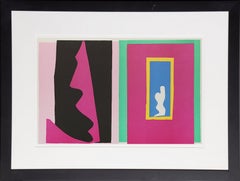
This exquisite lithograph by Henri Matisse (1869–1954), titled Le Soleil (The Sun), from Verve, Revue Artistique et Litteraire, Vol. VI, No. 21–22, originates from the 1948 issue pub...

Category

Fauvist 1940s Art

Materials

Lithograph

1940 Original poster by Robert Génicot - Morocco Land of Great Tourism

1940 Original poster by Robert Génicot - Morocco Land of Great Tourism

By Robert Genicot

Located in PARIS, FR

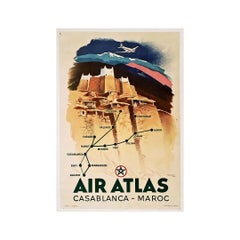
Original poster was made in 1940 by Robert Génicot 🇫🇷 (1890-1981) for the Moroccan Office of Tourism. He was notably an artist appreciated for his drawings of Morocco. The use of ...

Category

1940s Art

Materials

Linen, Paper, Lithograph

Henri Matisse, Series N Gc'S, Var. 6, 1943 (after)

Henri Matisse, Series N Gc'S, Var. 6, 1943 (after)

By Henri Matisse

Located in Southampton, NY

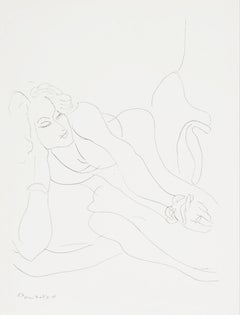
This exquisite lithograph after Henri Matisse (1869–1954), titled Serie N Gc’S, var. 6 (Series N Gc’S, Variation 6), from the album Henri Matisse, Dessins, Themes et Variations (Draw...

Category

Modern 1940s Art

Materials

Lithograph

Self Portrait

Self Portrait

By William Ashby McCloy

Located in Los Angeles, CA

Self-Portrait, c. 1940, oil and tempera on Masonite, artist’s name inscribed verso, 30 x 25 inches William Ashby McCloy was an American artist, educator, and clinical psychologist. ...

Category

American Modern 1940s Art

Materials

Masonite, Oil, Tempera

Pierre Bonnard, Untitled, from Correspondances, 1944

Pierre Bonnard, Untitled, from Correspondances, 1944

By Pierre Bonnard

Located in Southampton, NY

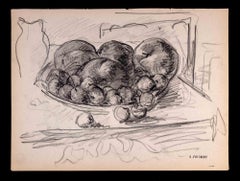
This exquisite lithograph by Pierre Bonnard (1867–1947), titled Sans titre (Untitled), from the album Pierre Bonnard, Correspondances, originates from the 1944 edition published by E...

Category

Post-Impressionist 1940s Art

Materials

Lithograph

Portrait of Wire Fox Terrier or Westie, English in a landscape in three images

Portrait of Wire Fox Terrier or Westie, English in a landscape in three images

By Florence Mabel Hollams

Located in Woodbury, CT

Francis Mabel Hollams (British, 1877–1963) Three Portraits of “Scrap,” a Wire-Haired Terrier Oil on wood panel, monogrammed lower left “FMH” Circa 1940–1950 A delightful and charac...

Category

Victorian 1940s Art

Materials

Oil, Wood Panel

Rider and Dancer - Original Etching

Rider and Dancer - Original Etching

By Marie Laurencin

Located in Paris, IDF

Marie LAURENCIN Rider and dancer, 1949 Color etching Printed signature in the plate On Arches vellum 38 x 28 cm (c. 15 x 11in) INFORMATION : Created by Laurencin and engraved by Lo...

Category

Modern 1940s Art

Materials

Etching, Aquatint

"Walt Disney's Pinocchio" Lobby Card, USA 1940

"Walt Disney's Pinocchio" Lobby Card, USA 1940

Located in Cologne, DE

Walt Disney's Pinocchio, USA 1940, Animation, Lobby Card, The lobby cards would have been displayed inside the cinemas at the time of the film's release. Pinocchio is a 1940 Americ...

Category

Modern 1940s Art

Materials

Color

Pablo Picasso, Untitled, from Carmen, 1949

Pablo Picasso, Untitled, from Carmen, 1949

By Pablo Picasso

Located in Southampton, NY

This exquisite engraving by Pablo Picasso (1881–1973), titled Sans titre (Untitled), from the folio Picasso, Carmen (Picasso, Carmen), originates from the 1949 edition published by L...

Category

Cubist 1940s Art

Materials

Engraving

'Fantasia Americana, 1880' — Mid-Century American Surrealism

'Fantasia Americana, 1880' — Mid-Century American Surrealism

By Lawrence Kupferman

Located in Myrtle Beach, SC

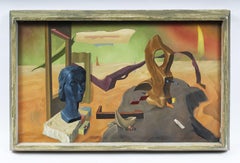
Lawrence Kupferman, 'Fantasia Americana – 1880', drypoint etching with sandground, 1943. Signed, titled, and annotated 'Series A, 1971 2/6' in pencil. A superb, richly-inked impression, on heavy, cream wove paper, with full margins (2 1/2 to 3 1/2 inches); the paper slightly lightened within the original mat opening, otherwise in excellent condition. One of only 6 impressions printed in 1971, with the added sandground grey background tint. Archivally matted to museum standards, unframed. Image size 11 13/16 x 14 3/4 inches; sheet size 18 x 20 1/4 inches. Collections: National Gallery of Art, Zimmerli Art Museum (Rutgers University). ABOUT THE ARTIST Lawrence Kupferman (1909 - 1982) was born in the Dorchester neighborhood of Boston and grew up in a working-class family. He attended the Boston Latin School and participated in the high school art program at the Museum of Fine Arts, Boston. In the late 1920s, he studied drawing under Philip Leslie Hale at the Museum School—an experience he called 'stultifying and repressive'. In 1932 he transferred to the Massachusetts College of Art, where he first met his wife, the artist Ruth Cobb. He returned briefly to the Museum School in 1946 to study with the influential expressionist German-American painter Karl Zerbe. Kupferman held various jobs while pursuing his artistic career, including two years as a security guard at the Museum of Fine Arts, Boston. During the 1930s he worked as a drypoint etcher for the Federal Art Project, creating architectural drawings in a formally realistic style—these works are held in the collections of the Fogg Museum and the Smithsonian American Art Museum. In the 1940s he began incorporating more expressionistic forms into his paintings as he became progressively more concerned with abstraction. In 1946 he began spending summers in Provincetown, Massachusetts, where he met and was influenced by Mark Rothko, Hans Hofmann, Jackson Pollock, and other abstract painters. At about the same time he began exhibiting his work at the Boris Mirski Gallery in Boston. In 1948, Kupferman was at the center of a controversy involving hundreds of Boston-area artists. In February of that year, the Boston Institute of Modern Art issued a manifesto titled 'Modern Art and the American Public' decrying 'the excesses of modern art,' and announced that it was changing its name to the Institute of Contemporary Art (ICA). The poorly conceived statement, intended to distinguish Boston's art scene from that of New York, was widely perceived as an attack on modernism. In protest, Boston artists such as Karl Zerbe, Jack Levine, and David Aronson formed the 'Modern Artists Group' and organized a mass meeting. On March 21, 300 artists, students, and other supporters met at the Old South Meeting House and demanded that the ICA retract its statement. Kupferman chaired the meeting and read this statement to the press: “The recent manifesto of the Institute is a fatuous declaration which misinforms and misleads the public concerning the integrity and intention of the modern artist. By arrogating to itself the privilege of telling the artists what art should be, the Institute runs counter to the original purposes of this organization whose function was to encourage and to assimilate contemporary innovation.” The other speakers were Karl Knaths...

Category

Surrealist 1940s Art

Materials

Drypoint, Etching

"Couverture de l'Album" lithograph

"Couverture de l'Album" lithograph

Located in Henderson, NV

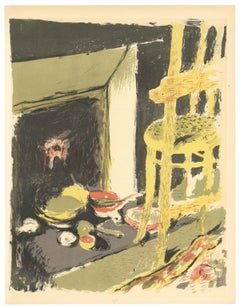
Medium: lithograph (after the original Edouard Vuillard lithograph). Printed on Renage wove paper in 1948 by the atelier Mourlot and published in an edition of 2500. Image size: 14 1...

Category

1940s Art

Materials

Lithograph

'European Landscape' —Mid-century American Surrealism

'European Landscape' —Mid-century American Surrealism

By Lawrence Kupferman

Located in Myrtle Beach, SC

Lawrence Kupferman, 'European Landscape', drypoint, edition 50, 1942. Signed, dated, titled, and numbered '7/50' in pencil. A superb, finely nuanced impression, on cream wove paper; the full sheet with margins (1 to 1 3/4 inches); in excellent condition. Image size 10 7/8 x 13 3/8 inches; sheet size 13 1/8 x 16 1/2 inches. Archivally matted to museum standards, unframed. An impression of this work is included in the permanent collection of the Syracuse University Art Museum. ABOUT THE ARTIST Lawrence Kupferman (1909 - 1982) was born in the Dorchester neighborhood of Boston and grew up in a working-class family. He attended the Boston Latin School and participated in the high school art program at the Museum of Fine Arts, Boston. In the late 1920s, he studied drawing under Philip Leslie Hale at the Museum School—an experience he called 'stultifying and repressive'. In 1932 he transferred to the Massachusetts College of Art, where he first met his wife, the artist Ruth Cobb. He returned briefly to the Museum School in 1946 to study with the influential expressionist German-American painter Karl Zerbe. Kupferman held various jobs while pursuing his artistic career, including two years as a security guard at the Museum of Fine Arts, Boston. During the 1930s he worked as a drypoint etcher for the Federal Art Project, creating architectural drawings in a formally realistic style—these works are held in the collections of the Fogg Museum and the Smithsonian American Art Museum. In the 1940s he began incorporating more expressionistic forms into his paintings as he became progressively more concerned with abstraction. In 1946 he began spending summers in Provincetown, Massachusetts, where he met and was influenced by Mark Rothko, Hans Hofmann, Jackson Pollock, and other abstract painters. At about the same time he began exhibiting his work at the Boris Mirski Gallery in Boston. In 1948, Kupferman was at the center of a controversy involving hundreds of Boston-area artists. In February of that year, the Boston Institute of Modern Art issued a manifesto titled 'Modern Art and the American Public' decrying 'the excesses of modern art,' and announced that it was changing its name to the Institute of Contemporary Art (ICA). The poorly conceived statement, intended to distinguish Boston's art scene from that of New York, was widely perceived as an attack on modernism. In protest, Boston artists such as Karl Zerbe, Jack Levine, and David Aronson formed the 'Modern Artists Group' and organized a mass meeting. On March 21, 300 artists, students, and other supporters met at the Old South Meeting House and demanded that the ICA retract its statement. Kupferman chaired the meeting and read this statement to the press: “The recent manifesto of the Institute is a fatuous declaration which misinforms and misleads the public concerning the integrity and intention of the modern artist. By arrogating to itself the privilege of telling the artists what art should be, the Institute runs counter to the original purposes of this organization whose function was to encourage and to assimilate contemporary innovation.” The other speakers were Karl Knaths...

Category

Surrealist 1940s Art

Materials

Drypoint

Untitled (House in the Hills)

Untitled (House in the Hills)

By Dorothy Sklar

Located in Los Angeles, CA

Untitled (Houses in the Hills), 1946, watercolor on paper, signed and dated lower right, 14 x 20 inches (image), 24 x 30 inches (frame) Dorothy Sklar was a popular and prolific Los ...

Category

American Modern 1940s Art

Materials

Paper, Watercolor

Edgar Degas, Dancer Standing in Profile, 1945 (after)

Edgar Degas, Dancer Standing in Profile, 1945 (after)

By Edgar Degas

Located in Southampton, NY

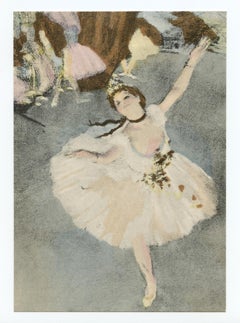
This exquisite lithograph after Edgar Degas (1834–1917), titled Danseur debout de profil (Dancer Standing in Profile), originates from the 1945 folio Degas, Ten Ballet Sketches. Published by The Studio Publications, Inc., New York, rendered and printed by Albert Carman, City Island, 1945, this work reflects Degas’s sensitive mastery of line, movement, and intimate observation, capturing the grace, poise, and psychological immediacy that define his iconic ballet imagery. In Danseur debout de profil (Dancer Standing in Profile), Degas reveals gesture and inner emotion through economical contour and lyrical nuance. Executed as a lithograph and pochoir on velin paper, this work measures 17 x 13 inches (43.18 x 33.02 cm). Signed in the plate and unnumbered as issued. Rendered and printed by Albert Carman, City Island, one of the notable American ateliers specializing in fine art lithography during the mid-20th century. Artwork Details: Artist: After Edgar Degas (1834–1917) Title: Danseur debout de profil (Dancer Standing in Profile), from Degas, Ten Ballet Sketches, 1945 Medium: Lithograph and pochoir on velin paper Dimensions: 17 x 13 inches (43.18 x 33.02 cm) Inscription: Signed in the plate and unnumbered as issued Date: 1945 Publisher: The Studio Publications, Inc., New York Printer: Albert Carman, City Island, 1945 Condition: Well preserved, consistent with age and medium Provenance: From the 1945 folio Degas, Ten Ballet Sketches, published by The Studio Publications, Inc., New York Notes: Excerpted from the album, Born in Paris in 1834, Edgar Degas lived, and surely loved the life of that city during most of his years. These continued somewhat sadly beyond those of most of his friends— into the debacle of the first World War, during which he died in 1917. Judging by the frequency with which he used them as models, he must have had an especial admiration for the ballet girls who followed a profession that at the time brought none of the glory and prosperity which attend it today. New aspects of the human body, revealed in movement, fascinated him. But his occupation with the simply anatomical side of his subjects never resulted in a cold interpretation. On the contrary there is a warmth and sympathy that pervades all of his work. The drawings here represent the painter in one important phase of his multi-sensitive view of life; and permit an insight which a more ambitious work might not do-into the operation of the creative process, the artist's transformation of reality as it passes through the mesh of his sensibilities. The Edition of this Portfolio is limited to MMMD examples. Rendered by Albert Carman. About the Publication: Degas, Ten Ballet Sketches, published in 1945 by The Studio Publications, Inc., New York, stands as one of the most elegant and scholarly mid-century American fine art folios devoted to the ballet imagery of Edgar Degas. Conceived as a high-quality interpretive portfolio, the album presents a series of lithograph-and-pochoir renderings based on Degas’s original drawings, executed with exceptional attention to tonal subtlety, contour fidelity, and the emotional interiority that defines the artist’s draftsmanship. Rendered and printed by Albert Carman on City Island, the publication embodies an American postwar effort to restore and celebrate European masterworks through meticulous handcraft and artisanal color application, honoring Degas’s distinctive line and the atmospheric delicacy of his studio-based studies. Produced in a substantial edition of MMMD examples, the portfolio offered audiences rare access to Degas’s private working drawings—images rarely seen outside institutional collections—while exemplifying the technical refinement and interpretive care characteristic of Carman’s workshop. Today, Degas, Ten Ballet Sketches remains a sought-after historical publication, valued for its craft, fidelity to Degas’s aesthetic, and its role in preserving and disseminating the artist’s intimate ballet imagery in a beautifully executed mid-century fine art format. About the Artist: Edgar Degas (1834–1917) was a French painter, draughtsman, printmaker, and sculptor whose groundbreaking fusion of classical draftsmanship, modern experimentation, and psychological depth helped define the trajectory of Western art, positioning him as one of the most influential figures of the nineteenth and early twentieth centuries; renowned for his depictions of ballet dancers, racehorses, theater scenes, cafe life, domestic interiors, milliners, laundresses, and women at their toilette, Degas reimagined observational realism through radical compositional innovation—employing extreme cropping, asymmetrical framing, oblique viewpoints, and dramatic lighting that anticipated photographic and cinematic language long before these technologies shaped visual culture, and although associated with Impressionism, he rejected plein-air spontaneity in favor of studio-based discipline rooted in the linear precision of Jean-Auguste-Dominique Ingres, the expressive chromaticism of Eugene Delacroix, and the modernity of Edouard Manet while also drawing inspiration from Japanese ukiyo-e prints, classical sculpture, and early photography; his independent artistic philosophy resonated with and helped shape the innovations of Pablo Picasso, Alexander Calder, Alberto Giacometti, Salvador Dali, Joan Miro, Wassily Kandinsky, Marcel Duchamp, and Man Ray, whose explorations of movement, form, dream logic, abstraction, and conceptualism all find antecedents in Degas’s investigations into seriality, temporality, and the fragmented figure, and his pioneering use of pastel, monotype, and wax sculpture fundamentally transformed each medium, influencing artists from Henri Matisse, Francis Bacon, Lucian Freud, and Giacomo Manzu to Paula Rego, contemporary realists, experimental photographers, and choreographers; his works are held in nearly every major museum collection worldwide—including the Musee dOrsay, the Louvre, the Metropolitan Museum of Art, the National Gallery of Art, the Art Institute of Chicago, the Courtauld Institute, and the National Gallery, London—affirming his central place in the history of art, and the highest auction record for Degas was achieved at Sothebys London on February 3, 2015, when Danseuses en Bleu sold for 37,033,000 GBP, cementing his status as one of the most sought-after and enduringly significant artists of the Western canon. Edgar Degas lithograph...

Category

Impressionist 1940s Art

Materials

Lithograph

Original 1942 Linen-Backed One-Sheet Movie Poster for "Ghost Town Law"

Original 1942 Linen-Backed One-Sheet Movie Poster for "Ghost Town Law"

Located in Spokane, WA

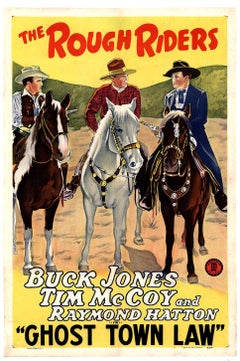
Original 1942 Linen-Backed One-Sheet Movie Poster for "Ghost Town Law" The Rough Riders Series Starring Buck Jones, Tim McCoy, and Raymond Hatton. This striking original one-sheet movie poster from 1942 promotes "Ghost Town Law," the fifth entry in Monogram Pictures' popular "Rough Riders" Western film series. Measuring approximately 27 x 41 inches (standard one-sheet size), the poster features vibrant lithography on a bold yellow background, dramatic red title lettering for "The Rough Riders," and an illustrated scene of the three stars—Buck Jones, Tim McCoy, and Raymond Hatton—standing with their horses in a rugged desert landscape, guns at the ready. The artwork captures the essence of classic B-Western adventure, with the film's subtitle prominently displayed in quotes: "Ghost Town Law." Produced by Monogram Pictures and directed by Howard Bretherton, this film follows the Rough Riders trio as U.S. Marshals investigating murders in a haunted mining town overrun by outlaws, blending action, mystery, and frontier justice. Professionally linen-backed for preservation, this poster is in very good vintage condition, with minor fold restorations, light edge wear, and rich color retention, underscoring its archival quality. No major tears, pinholes, or fading are present, making it a desirable collector's piece for fans of early Hollywood Westerns or Buck Jones memorabilia. Buck Jones, a silent-era star who transitioned to talkies, tragically died in the Cocoanut Grove fire later in 1942, adding historical poignancy to posters from his final films. This example originates from the U.S. release and bears the classic Monogram logo, evoking the era of Saturday matinee serials and the golden age of cowboy cinema. History of the Origins of the Rough Riders The "Rough Riders" name draws on the legendary 1st United States Volunteer Cavalry Regiment, formed in 1898 during the Spanish-American War. Recruited by Theodore Roosevelt (then Assistant Secretary of the Navy) and initially commanded by Colonel Leonard Wood...

Category

American Realist 1940s Art
Materials

Lithograph

" Luna dietro alle nuvole" cm. 37 x 26  1940 ca

" Luna dietro alle nuvole" cm. 37 x 26 1940 ca

Located in Torino, IT

Opera onirica ,luna piena sul mare L'opera non è firmata ma è stata esposta al Museo d'arte Contemporanea di Rovereto il MART per una mostra monografica -Thayaht Futurista irregolar...

Category

Symbolist 1940s Art
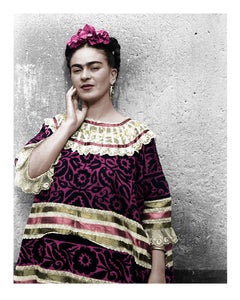
Materials

Oil, Board

An Irish Rogue
An Irish Rogue

An Irish Rogue

Located in London, GB

Oil on board, signed and dated '44 lower right Image size: 15 x 19 inches (38 x 48.25 cm) Contemporary style hand made frame This portrait of an unknown man certainly captures the personality of the chosen sitter. With hat tilted to the side, eyebrow lifted and a half smile of the man's face, one gets the impression that he is finding the whole process of having his portrait painted rather amusing. Still in Ireland at this time, the sitter is likely to have been a friend of the artist, from Belfast. In 1944 there was a group exhibition in Belfast held at the textile business of William Ewart & Sons on Bedford Street. Here Smith showed his works alongside the artists Colin Middleton...

Category

Modern 1940s Art

Materials

Oil, Board

Pablo Picasso, Untitled, from Carmen, 1949

Pablo Picasso, Untitled, from Carmen, 1949

By Pablo Picasso

Located in Southampton, NY

This exquisite engraving by Pablo Picasso (1881–1973), titled Sans titre (Untitled), from the folio Picasso, Carmen (Picasso, Carmen), originates from the 1949 edition published by L...

Category

Cubist 1940s Art
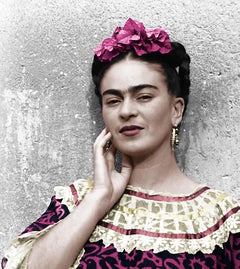
Materials

Engraving

John Tunnard, Holiday, S.P.18., from School Prints Ltd., 1947 (after)

John Tunnard, Holiday, S.P.18., from School Prints Ltd., 1947 (after)

By John Tunnard

Located in Southampton, NY

This exquisite lithograph after John Tunnard (1900–1971), titled Holiday, S.P.18., originates from the School Prints Ltd. series, published by School Prints Ltd., London, under the d...

Category

Modern 1940s Art

Materials

Lithograph

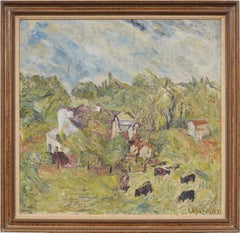
Mid 20th Century Impressionist Original Oil Landscape of Shongum, New Jersey

Mid 20th Century Impressionist Original Oil Landscape of Shongum, New Jersey

Located in Soquel, CA

Beautiful impressionistic landscape of Shongum Lake, New Jersey countryside in Spring with Stream and blossoms by Rudolph J. Eicher (1884 - 1958), Circa 1940s. Bright springtime fo...

Category

American Impressionist 1940s Art
Materials

Linen, Oil, Panel