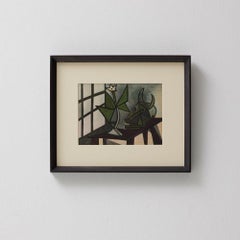
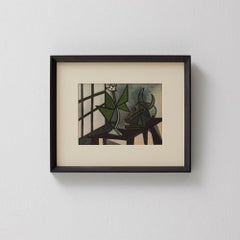
1940s Art

to
1,186
2,900
1,161
1,040
413
263
Overall Width
to
Overall Height
to
7,456
21,377
163,663
232,375
2,021
2,274
4,928
6,488
5,801
15,005
20,715
25,765
18,678
14,128
5,308
2,127
429
324
227
154
113
84
77
46
20
9
2
2
3,332
2,212
155
2,975
1,427
1,153
912
862
549
400
358
356
355
269
266
264
250
211
193
165
158
146
144
2,043
1,444
1,304
1,044
722
111
110
108
57
44
1,617
897
3,778
1,859
Period: 1940s
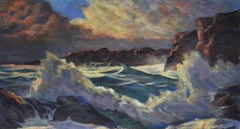
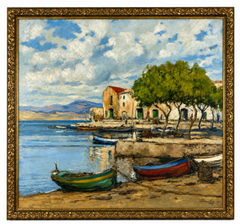
Hermosa Beach Coastline - Watercolor On Paper

Hermosa Beach Coastline - Watercolor On Paper

Located in Soquel, CA

Hermosa Beach Coastline - Watercolor On Paper Watercolor painting depicting the Hermosa Beach coastline by California artist F.J. Whitlock (American, B- 1923 ). Vibrant hues of blue...

Category

American Impressionist 1940s Art

Materials

Paper, Watercolor

Pablo Picasso, Faun Flutist, from Two Tales, 1947

Pablo Picasso, Faun Flutist, from Two Tales, 1947

By Pablo Picasso

Located in Southampton, NY

This exquisite engraving by Pablo Picasso (1881–1973), titled Flutiste faune (Faun Flutist), from Dos Contes, El centaure, picador, El capvespre d'un faune (Two Tales, The Centaur, P...

Category

Cubist 1940s Art

Materials

Engraving

Gauguin, The Long Night (Te Po), Gauguin (after)

Gauguin, The Long Night (Te Po), Gauguin (after)

By Paul Gauguin

Located in Southampton, NY

Woodcut on vélin Utopian paper. Unsigned and unnumbered, as issued. Good Condition. Notes: From the folio, Gauguin, A portfolio of 12 color woodblocks, Paul Gauguin, French, 1848-1903 from the collection of the Museum Of Fine Arts, Boston, 1946. Rendered by Albert Carman (1899-1949); published the Museum Of Fine Arts, Boston and The Studio Publications, Inc., New York and London; printed by Holme Press Inc., New York, in an edition of MMMD. Excerpted from the folio, Paul Gauguin and Emil Bernard at Pont-Aven, Brittany, in 1888, each made a bas-relief, wooden panel to decorate a piece of furniture for a friend. In order to keep a record of their designs, a few inked impressions were made on paper. The illustration at left is a reproduction of a print which is possibly one of the above mentioned. It is further possible that this experiment later gave Gauguin the idea of making woodcuts. Just as his work in painting expressed a revolt against the overemphasis on factual representation of the nineteenth century in favor of decorative pattern and color, so also his woodcuts leaned strongly to the same side of the balance. Ten of the cuts reproduced (all excepting Soyez Amoureuses and Changement de Residence), which constitute the whole of his best known series, were made at Pont-Aven beginning in the fall of 1894, after Gauguin's return from his first trip to Tahiti and after he broke his ankle. They were at first roughly cut with a common carpenter's gouge, and the flat surfaces sandpapered and engraved with a sharp in-strument, perhaps an engraver's burin. A few trial proofs were printed in black ink only. Then the hollows were deepened with a woodcutter's gouge and highlights were added. An edition of thirty to fifty impressions of each subject, with the addition of color blocks (one, two or three), was made by Louis Roy...

Category

Post-Impressionist 1940s Art

Materials

Woodcut

Marc Chagall Four tales from the Arabian Nights- Plate 3

Marc Chagall Four tales from the Arabian Nights- Plate 3

By Marc Chagall

Located in Los Angeles, CA

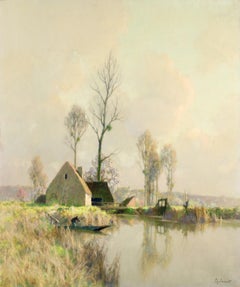
Marc Chagall (Russia/France 1887‑1985). Four tales from the Arabian Nights- Plate 3, "Then He spent the night with her embracing and clipping". Color Lithograph. 1948. Edition number 49 of 90 Framed 28"H x 24"W x 1.5"D. Signed in pencil, Inscribed Pl. 3 and numbered 49 of 90 Literature: “Marc Chagall The Lithograph LA COLLECTION SORLIER”, Distributed Art Pub Inc, 1999, p.64, No.38 Plate 3 from the series Four Tales from the Arabian Nights (1948), created after Chagall was commissioned to produce illustrations inspired by the classic Middle Eastern stories commonly known as Arabian Nights. The title itself comes directly from the story text and reflects Chagall’s characteristic lyrical, intimate, and floating composition style. In the 1940s–1950s, Chagall was commissioned to create illustrations for One Thousand and One Nights (often called Arabian Nights). The stories—filled with magic, romance, fantasy, and transformation—perfectly matched Chagall’s imaginative visual language. Chagall’s Arabian Nights...

Category

Surrealist 1940s Art
Materials

Lithograph

Pierre Bonnard, Untitled, from Correspondances, 1944

Pierre Bonnard, Untitled, from Correspondances, 1944

By Pierre Bonnard

Located in Southampton, NY

This exquisite lithograph by Pierre Bonnard (1867–1947), titled Sans titre (Untitled), from the album Pierre Bonnard, Correspondances, originates from the 1944 edition published by E...

Category

Post-Impressionist 1940s Art

Materials

Lithograph

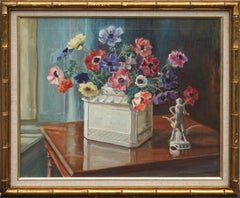
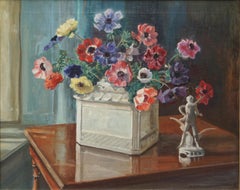
A Summer Bouquet in a Green Vase

A Summer Bouquet in a Green Vase

By Irene Stry

Located in San Francisco, CA

Somewhere there is a room filled with polished mahogany and yards of immaculate warm white linen slipcovering the furnishings and framing the windows. The French doors open wide to f...

Category

Impressionist 1940s Art

Materials

Canvas, Oil

Edgar Degas, Dancer Standing in Profile, 1945 (after)

Edgar Degas, Dancer Standing in Profile, 1945 (after)

By Edgar Degas

Located in Southampton, NY

This exquisite lithograph after Edgar Degas (1834–1917), titled Danseur debout de profil (Dancer Standing in Profile), originates from the 1945 folio Degas, Ten Ballet Sketches. Published by The Studio Publications, Inc., New York, rendered and printed by Albert Carman, City Island, 1945, this work reflects Degas’s sensitive mastery of line, movement, and intimate observation, capturing the grace, poise, and psychological immediacy that define his iconic ballet imagery. In Danseur debout de profil (Dancer Standing in Profile), Degas reveals gesture and inner emotion through economical contour and lyrical nuance. Executed as a lithograph and pochoir on velin paper, this work measures 17 x 13 inches (43.18 x 33.02 cm). Signed in the plate and unnumbered as issued. Rendered and printed by Albert Carman, City Island, one of the notable American ateliers specializing in fine art lithography during the mid-20th century. Artwork Details: Artist: After Edgar Degas (1834–1917) Title: Danseur debout de profil (Dancer Standing in Profile), from Degas, Ten Ballet Sketches, 1945 Medium: Lithograph and pochoir on velin paper Dimensions: 17 x 13 inches (43.18 x 33.02 cm) Inscription: Signed in the plate and unnumbered as issued Date: 1945 Publisher: The Studio Publications, Inc., New York Printer: Albert Carman, City Island, 1945 Condition: Well preserved, consistent with age and medium Provenance: From the 1945 folio Degas, Ten Ballet Sketches, published by The Studio Publications, Inc., New York Notes: Excerpted from the album, Born in Paris in 1834, Edgar Degas lived, and surely loved the life of that city during most of his years. These continued somewhat sadly beyond those of most of his friends— into the debacle of the first World War, during which he died in 1917. Judging by the frequency with which he used them as models, he must have had an especial admiration for the ballet girls who followed a profession that at the time brought none of the glory and prosperity which attend it today. New aspects of the human body, revealed in movement, fascinated him. But his occupation with the simply anatomical side of his subjects never resulted in a cold interpretation. On the contrary there is a warmth and sympathy that pervades all of his work. The drawings here represent the painter in one important phase of his multi-sensitive view of life; and permit an insight which a more ambitious work might not do-into the operation of the creative process, the artist's transformation of reality as it passes through the mesh of his sensibilities. The Edition of this Portfolio is limited to MMMD examples. Rendered by Albert Carman. About the Publication: Degas, Ten Ballet Sketches, published in 1945 by The Studio Publications, Inc., New York, stands as one of the most elegant and scholarly mid-century American fine art folios devoted to the ballet imagery of Edgar Degas. Conceived as a high-quality interpretive portfolio, the album presents a series of lithograph-and-pochoir renderings based on Degas’s original drawings, executed with exceptional attention to tonal subtlety, contour fidelity, and the emotional interiority that defines the artist’s draftsmanship. Rendered and printed by Albert Carman on City Island, the publication embodies an American postwar effort to restore and celebrate European masterworks through meticulous handcraft and artisanal color application, honoring Degas’s distinctive line and the atmospheric delicacy of his studio-based studies. Produced in a substantial edition of MMMD examples, the portfolio offered audiences rare access to Degas’s private working drawings—images rarely seen outside institutional collections—while exemplifying the technical refinement and interpretive care characteristic of Carman’s workshop. Today, Degas, Ten Ballet Sketches remains a sought-after historical publication, valued for its craft, fidelity to Degas’s aesthetic, and its role in preserving and disseminating the artist’s intimate ballet imagery in a beautifully executed mid-century fine art format. About the Artist: Edgar Degas (1834–1917) was a French painter, draughtsman, printmaker, and sculptor whose groundbreaking fusion of classical draftsmanship, modern experimentation, and psychological depth helped define the trajectory of Western art, positioning him as one of the most influential figures of the nineteenth and early twentieth centuries; renowned for his depictions of ballet dancers, racehorses, theater scenes, cafe life, domestic interiors, milliners, laundresses, and women at their toilette, Degas reimagined observational realism through radical compositional innovation—employing extreme cropping, asymmetrical framing, oblique viewpoints, and dramatic lighting that anticipated photographic and cinematic language long before these technologies shaped visual culture, and although associated with Impressionism, he rejected plein-air spontaneity in favor of studio-based discipline rooted in the linear precision of Jean-Auguste-Dominique Ingres, the expressive chromaticism of Eugene Delacroix, and the modernity of Edouard Manet while also drawing inspiration from Japanese ukiyo-e prints, classical sculpture, and early photography; his independent artistic philosophy resonated with and helped shape the innovations of Pablo Picasso, Alexander Calder, Alberto Giacometti, Salvador Dali, Joan Miro, Wassily Kandinsky, Marcel Duchamp, and Man Ray, whose explorations of movement, form, dream logic, abstraction, and conceptualism all find antecedents in Degas’s investigations into seriality, temporality, and the fragmented figure, and his pioneering use of pastel, monotype, and wax sculpture fundamentally transformed each medium, influencing artists from Henri Matisse, Francis Bacon, Lucian Freud, and Giacomo Manzu to Paula Rego, contemporary realists, experimental photographers, and choreographers; his works are held in nearly every major museum collection worldwide—including the Musee dOrsay, the Louvre, the Metropolitan Museum of Art, the National Gallery of Art, the Art Institute of Chicago, the Courtauld Institute, and the National Gallery, London—affirming his central place in the history of art, and the highest auction record for Degas was achieved at Sothebys London on February 3, 2015, when Danseuses en Bleu sold for 37,033,000 GBP, cementing his status as one of the most sought-after and enduringly significant artists of the Western canon. Edgar Degas lithograph...

Category

Impressionist 1940s Art

Materials

Lithograph

Pablo Picasso, Untitled, from Carmen, 1949

Pablo Picasso, Untitled, from Carmen, 1949

By Pablo Picasso

Located in Southampton, NY

This exquisite engraving by Pablo Picasso (1881–1973), titled Sans titre (Untitled), from the folio Picasso, Carmen (Picasso, Carmen), originates from the 1949 edition published by L...

Category

Cubist 1940s Art

Materials

Engraving

Young Velvets, Young Prices

Young Velvets, Young Prices

By Norman Parkinson

Located in New York, NY

Norman Parkinson's iconic image of models wear a variety of hats on the roof of the Condé Nast building on Lexington Avenue, New York City. Published in American Vogue on 15th Octobe...

Category

Modern 1940s Art

Materials

C Print

Speckled Black Face, 1948

Speckled Black Face, 1948

By Pablo Picasso

Located in Palo Alto, CA

Pablo Picasso, Speckled Black Face, 1948 A.R. 49, is a beautiful and early example from Picasso’s groundbreaking ceramic collaboration with the renowned Madoura Pottery in Vallauris,...

Category

Modern 1940s Art

Materials

Clay, Ceramic

Fishing by the Sea

Fishing by the Sea

By Milton Avery

Located in London, GB

Milton Avery Fishing By The Sea, 1944 Gouache on stout paper 55.9 x 78.8 cm 22 x 31 inches Born in Altmar, New York, in 1885, Milton Avery moved with his family to Hartford, Connect...

Category

Contemporary 1940s Art

Materials

Paper, Gouache

"Coney Island" Brooklyn NYC Amusement Park Mid-century American Scene WPA Modern

"Coney Island" Brooklyn NYC Amusement Park Mid-century American Scene WPA Modern

By Ludwig Bemelmans, 1898-1962

Located in New York, NY

"Coney Island" Brooklyn NYC Amusement Park Mid-century American Scene WPA Modern Ludwig Bemelmans (1898 – 1962), “Coney Island" 35 x 27 inches Oil on board Signed lower right Origi...

Category

American Modern 1940s Art

Materials

Oil, Board

"High School Dance" WPA Mid-20th Century Modern American Scene Social Realism

"High School Dance" WPA Mid-20th Century Modern American Scene Social Realism

Located in New York, NY

"High School Dance" WPA Mid-20th Century Modern American Scene Social Realism Heusing (20th Century) "High School Dance" 27 x 32 inches Oil on canvas Signed and dated '47 Lower Righ...

Category

American Realist 1940s Art

Materials

Canvas, Oil

Portrait of Young Man

Portrait of Young Man

By Vito Tomasello

Located in Wilton Manors, FL

Outstanding male portrait by 20th-century American artist, Vito Tomasello. Portrait of a young man, c.1950. Pencil on paper, sheet measures 14 x 17 inches. Excellent condition. S...

Category

Realist 1940s Art

Materials

Paper, Pencil

Colour Television, c.1940 painting

Colour Television, c.1940 painting

Located in London, GB

Colour Television Gouache 51 x 31 cm Provenance: The family of A. E. Halliwell. Little is known about the artist other than the fact that he studied under the celebrated artist A...

Category

Abstract 1940s Art

Materials

Gouache

Howard Schleeter 1949 Abstract Painting, Southwest Modernist Art

Howard Schleeter 1949 Abstract Painting, Southwest Modernist Art

By Howard Schleeter

Located in Denver, CO

This striking 1949 gouache and wax painting by Howard Schleeter is a powerful example of mid-century American modernism rooted in the visual language of the Southwest. Titled Fetishe...

Category

American Modern 1940s Art

Materials

Wax, Gouache

GREEN AND BLACK
GREEN AND BLACK

GREEN AND BLACK

By Louis Schanker

Located in Portland, ME

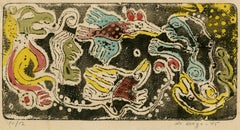
Schanker, Louis (American, 1903-1981). GREEN & BLACK. Color Woodcut, 1941 Brooklyn Museum Booklet 53. Edition of 55 plus 20 trial Proofs. Signed, titled, and numbered 10/55 and inscr...

Category

1940s Art

Materials

Woodcut

“Americana”
“Americana”

Ralph Fabri“Americana”, 1947

$675Sale Price|30% Off

“Americana”

By Ralph Fabri

Located in Southampton, NY

Here for your consideration is a wonderful original etching on archival paper by the well known American artist, Ralph Fabri. Strong impression; signed in pencil by the artist lower right margin. Titled and dated bottom left of the sheet “1947-Americana”. Condition of the etching is excellent. Top corner of sheet and bottom right corner of sheet have tiny creases. Not visible, under the mat. Sheet size is 12 by 15 inches. Image size is 8 by 9.75 inches. Matted but not framed. Provenance: A Long Island, New York collector. Painter and printmaker, commercial artist, writer, and teacher, Ralph Fabri was born Fabri Reszo in Hungary in 1894. He was educated in Budapest, first studying architecture at the Royal Institute of Technology from 1912 to 1914. He then enrolled in the Royal Academy of Fine Arts, from which he graduated in 1918 with a Professor's Diploma (M.A.) "for teaching drawing, painting and geometry – including descriptive and projective geometry – in schools of higher education." Fabri arrived in New York City in 1921 and soon adopted the anglicized version of his name, Ralph Fabri. He began doing commercial design work and during the academic year of 1923/24 was enrolled as an evening student at the National Academy of Design. After becoming an American citizen in 1927, he traveled extensively in Europe. Upon returning to New York that same year, Fabri decided his financial situation was stable enough to allow him to focus his attention on fine art. During the Great Depression, Fabri's already inadequate portrait commissions and art sales further declined and he returned to commercial work. He established a workshop known as the Ralph Fabri Studios, that designed theatrical and movie sets, window displays, and retail interiors. But Fabri found the workshop dirty and distasteful, and eventually was able to concentrate on advertising work which could be done from home. The largest clients for his pen and ink drawings were The Stamp and Album Co. of America, Inc. (for which he designed covers for stamp albums and produced illustrations for envelopes housing sets of stamps sold to collectors), Geographica Map Co., and Joseph H. Cohen & Sons (for whom he designed and illustrated mail order catalogs). Another source of income during this period was the design and construction of an addition to "Iroki," Theodore Dreiser...

Category

American Modern 1940s Art

Materials

Archival Paper, Etching

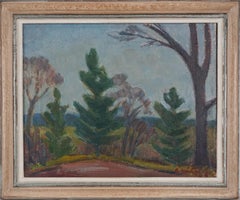
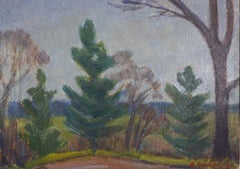
The Racken Group, A Värmland Lake View, 1945

The Racken Group, A Värmland Lake View, 1945

Located in Stockholm, SE

This landscape painting by Ture Ander, completed in 1945, captures the serene beauty of a Värmland lake. The composition is dominated by soft, blue hues that give a tranquil feel, suggesting a calm day by the water. The trees in the foreground, depicted with a delicate blend of pink and earthy tones, add depth and contrast to the expansive lake and distant hills. Ture Ander was born on September 17, 1880, in Askers socken, Örebro. At the age of 13, he moved to Stockholm to apprentice as a painter. While working during the day, he pursued evening courses at the Technical School, now known as Konstfack, where he graduated in 1903 with high honors in painting. In 1905, Ander was accepted into the prestigious Artist Association School, studying alongside prominent artists such as Leander Engström, Isaac Grünewald, and Einar Nerman...

Category

1940s Art

Materials

Oil, Board

Life Magazine Satirical Society Cartoon Illustration

Life Magazine Satirical Society Cartoon Illustration

Located in Wilton Manors, FL

Barbara Shermund (1899-1978). Society Satirical Cartoon, ca. 1940s. Gouache on heavy illustration paper, image measures 17 x 14 inches; 23 x 20 inches in matting. Signed lower left. Very good condition but matting panel should be replaced. Unframed. Provenance: Ethel Maud Mott Herman, artist (1883-1984), West Orange NJ. For two decades, she drew almost 600 cartoons for The New Yorker with female characters that commented on life with wit, intelligence and irony. In the mid-1920s, Harold Ross, the founder of a new magazine called The New Yorker, was looking for cartoonists who could create sardonic, highbrow illustrations accompanied by witty captions that would function as social critiques. He found that talent in Barbara Shermund. For about two decades, until the 1940s, Shermund helped Ross and his first art editor, Rea Irvin, realize their vision by contributing almost 600 cartoons and sassy captions with a fresh, feminist voice. Her cartoons commented on life with wit, intelligence and irony, using female characters who critiqued the patriarchy and celebrated speakeasies, cafes, spunky women and leisure. They spoke directly to flapper women of the era who defied convention with a new sense of political, social and economic independence. “Shermund’s women spoke their minds about sex, marriage and society; smoked cigarettes and drank; and poked fun at everything in an era when it was not common to see young women doing so,” Caitlin A. McGurk wrote in 2020 for the Art Students League. In one Shermund cartoon, published in The New Yorker in 1928, two forlorn women sit and chat on couches. “Yeah,” one says, “I guess the best thing to do is to just get married and forget about love.” “While for many, the idea of a New Yorker cartoon conjures a highbrow, dry non sequitur — often more alienating than familiar — Shermund’s cartoons are the antithesis,” wrote McGurk, who is an associate curator and assistant professor at Ohio State University’s Billy Ireland Cartoon Library & Museum. “They are about human nature, relationships, youth and age.” (McGurk is writing a book about Shermund. And yet by the 1940s and ’50s, as America’s postwar focus shifted to domestic life, Shermund’s feminist voice and cool critique of society fell out of vogue. Her last cartoon appeared in The New Yorker in 1944, and much of her life and career after that remains unclear. No major newspaper wrote about her death in 1978 — The New York Times was on strike then, along with The Daily News and The New York Post — and her ashes sat in a New Jersey funeral...

Category

Realist 1940s Art

Materials

Gouache

Latin American Post War Abstract

Latin American Post War Abstract

Located in Soquel, CA

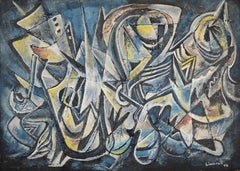
Double-sided Latin American Post War Geometric Abstract Dynamic abstract pieces by Ernesto Butterlin, aka Linares, (Mexican, German b. 1917 d. 1964.), 1946.The use of shape and lig...

Category

Modern 1940s Art

Materials

Masonite, Oil

original lithograph

original lithograph

By Yves Tanguy

Located in Henderson, NV

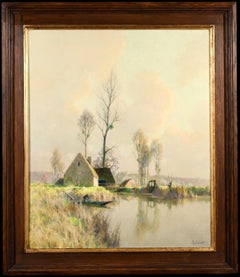
Medium: original lithograph. Printed in Paris by Mourlot and published by Pierre à Feu and Maeght Editeur for the Marcel Duchamp / André Breton project "Surréalisme en 1947". Issued ...

Category

Surrealist 1940s Art
Materials

Lithograph

Tauromaquia - Plate F

Tauromaquia - Plate F

Located in Henderson, NV

Medium: heliogravure (after the etching from Goya's Tauromaquia series). Printed in 1947 in a limited edition of 500 on Guarro laid paper, and published in Barcelona by Ediciones Ome...

Category

1940s Art

Materials

Photogravure

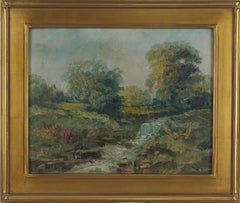
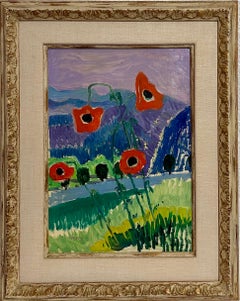
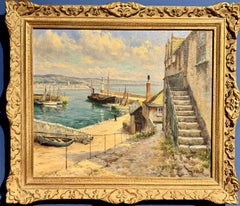
Vintage American Impressionist Landscape Giltwood Framed Original Oil Painting

Vintage American Impressionist Landscape Giltwood Framed Original Oil Painting

Located in Buffalo, NY

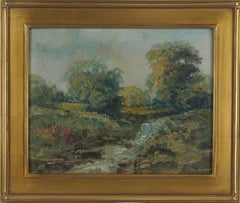
Vintage American modernist abstract landscape oil painting. Oil on board. Framed. Measuring: 20 by 24 inches overall, and 16 by 20 painting alone.. In excellent original condition. ...

Category

Impressionist 1940s Art

Materials

Canvas, Oil

Manning de Villenueve Lee Early 20th Century India

Manning de Villenueve Lee Early 20th Century India

Located in San Francisco, CA

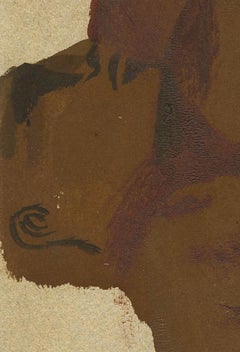
Manning de Villenueve Lee:1894-1980. Well listed American painter and illustrator with Auction records up to $22,500. This spectacular painting is one of our favorites. Probably pain...

Category

American Realist 1940s Art
Materials

Oil

lithograph

lithograph

By (after) Pierre Bonnard

Located in Henderson, NV

Medium: lithograph (after the drawing). This impression in violet ink was printed in France in 1944 for the rare "Correspondances" portfolio, published by Teriade in a limited editio...

Category

1940s Art

Materials

Lithograph

A Schooner off of the Coast

A Schooner off of the Coast

By Gordon Grant

Located in Wiscasett, ME

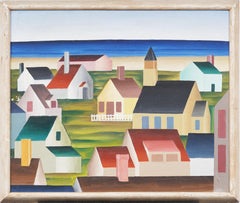
An oil on canvas by American artist Gordon Hope Grant featuring a schooner off of the coast. This painting is signed and dated i1945 n the lower left and measures 33.5" x 33.5" inclu...

Category

Post-Impressionist 1940s Art
Materials

Oil

Kathe Kollwitz, Working Woman with Sleeping Boy, 1941 (after)

Kathe Kollwitz, Working Woman with Sleeping Boy, 1941 (after)

By Käthe Kollwitz

Located in Southampton, NY

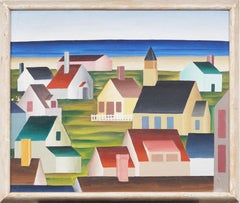
This exquisite lithograph after Kathe Kollwitz (1867–1945), titled Arbeiterfrau mit schlafendem Jungen (Working Woman with Sleeping Boy), from the folio Kathe Kollwitz, Ten Lithographs, originates from the 1941 edition published by Henry C. Kleemann, New York, and Curt Valentin, New York; printed by Duenewald Printing Corporation, New York. The composition reflects Kollwitz’s profound engagement with themes of maternal care, hardship, and human resilience, rendered with stark emotional intensity and a powerful graphic economy that underscores her enduring social message. Executed as a lithograph on velin paper, this work measures 19 x 16 inches (48.26 x 40.64 cm), overall; 15 x 13 inches (38.10 x 33.02 cm), image. Unsigned and unnumbered as issued. Artwork Details: Artist: After Kathe Kollwitz (1867–1945) Title: Arbeiterfrau mit schlafendem Jungen (Working Woman with Sleeping Boy), from Kathe Kollwitz, Ten Lithographs Medium: Lithograph on velin paper Dimensions: 19 x 16 inches (48.26 x 40.64 cm), overall; 15 x 13 inches (38.10 x 33.02 cm), image Inscription: Unsigned and unnumbered as issued Date: 1941 Publisher: Henry C. Kleemann, New York, and Curt Valentin, New York Printer: Duenewald Printing Corporation, New York Condition: Well preserved, consistent with age and medium Provenance: From the folio Kathe Kollwitz, Ten Lithographs, 1941 About the Publication: Kathe Kollwitz, Ten Lithographs, published in New York in 1941 by Henry C. Kleemann in collaboration with Curt Valentin, represents an important early American presentation of Kollwitz’s graphic work at a time when her reputation was expanding internationally. Issued during the turbulence of the Second World War and following the suppression of her work in Germany under the Nazi regime, the folio played a crucial role in introducing her imagery to a broader audience outside Europe. The publication gathers a selection of her most powerful lithographic compositions, emphasizing her mastery of tonal contrast, expressive line, and psychological depth. Produced with careful attention to print quality by Duenewald Printing Corporation, the edition reflects the continued transmission of European modernist printmaking traditions into the American context, serving both as a document of artistic excellence and as a vehicle for the preservation and dissemination of Kollwitz’s humanistic vision. About the Artist: Kathe Kollwitz (1867–1945) was a German draughtsman, printmaker, and sculptor whose profoundly moving imagery, exceptional technical mastery, and unwavering social conscience established her as one of the most important and influential artists of the twentieth century, widely recognized as a master of modern printmaking and one of the most powerful visual chroniclers of human suffering, war, and social injustice. Born in Konigsberg, East Prussia, into a progressive and intellectually engaged family, Kollwitz was encouraged from an early age to pursue art and developed a deep awareness of social inequality that would shape her entire career, studying in Berlin and Munich at a time when women were largely excluded from formal academies while mastering drawing and graphic techniques with extraordinary discipline. Her breakthrough came with the monumental graphic cycle A Weavers’ Revolt (1893–1897), followed by The Peasants’ War (1901–1908), works that combined complex narrative structure with extraordinary technical command in etching, aquatint, and lithography, establishing her reputation as one of Europe’s leading graphic artists. Throughout her career, Kollwitz remained committed to portraying the lives of workers, mothers, and victims of poverty and conflict with unflinching honesty, creating compositions defined by bold, sculptural line, dense shadow, and unparalleled psychological depth that conveyed grief, resilience, and dignity. Working during a period transformed by the radical innovations of Pablo Picasso, Alexander Calder, Alberto Giacometti, Salvador Dali, Joan Miro, Wassily Kandinsky, Marcel Duchamp, and Man Ray, Kollwitz maintained a resolutely figurative and human-centered approach, aligning more closely with German Expressionism and artists such as Ernst Barlach, Max Liebermann, and Edvard Munch, whose emotional intensity and symbolic treatment of the human figure profoundly shaped her artistic language. Her later work, particularly the woodcut cycle War (1922–1923), stands among the most powerful anti-war statements in the history of art, reflecting both personal tragedy, including the death of her son in World War I, and a universal condemnation of violence and loss. In addition to her prints, Kollwitz created deeply moving sculptures that extended her exploration of grief and maternal protection into three dimensions, reinforcing her status as a multidisciplinary artist of exceptional range. She achieved significant recognition during her lifetime, becoming the first woman elected to the Prussian Academy of Arts, though her work was later condemned by the Nazi regime as degenerate, leading to her forced resignation and the removal of her works from public collections, yet her reputation expanded internationally after World War II and she is now regarded as a central figure in modern art. Her influence has been profound and far-reaching, shaping later artists including Francis Bacon, Anselm Kiefer, Leon Golub, Kiki Smith, and numerous contemporary figurative and socially engaged artists who continue to explore themes of trauma, memory, and human vulnerability. Today her works are held in major museum collections worldwide, including the Kathe Kollwitz Museum in Berlin, the Museum of Modern Art in New York, the British Museum in London, and the Art Institute of Chicago, and remain highly sought after by collectors for their emotional intensity and historical significance. The highest auction record for a work by Kathe Kollwitz is held by her sculpture Mutter mit totem Sohn (Mother with Dead Son), which achieved approximately 1.2 million EUR at auction, confirming her enduring importance. Kathe Kollwitz Arbeiterfrau mit schlafendem Jungen 1941 lithograph German Expressionism social realism print.

Category

Expressionist 1940s Art
Materials

Lithograph

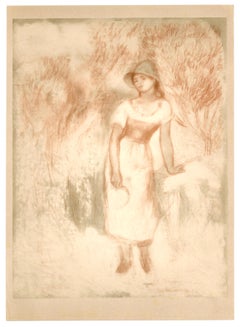
Pierre Bonnard, Untitled, from Correspondances, 1944

Pierre Bonnard, Untitled, from Correspondances, 1944

By Pierre Bonnard

Located in Southampton, NY

This exquisite lithograph by Pierre Bonnard (1867–1947), titled Sans titre (Untitled), from the album Pierre Bonnard, Correspondances, originates from the 1944 edition published by E...

Category

Post-Impressionist 1940s Art

Materials

Lithograph

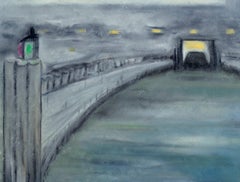
Port, 1949
Port, 1949

Port, 1949

Located in Pasadena, CA

Provenance Consigned to the gallery by private collectors Signed "Phil Paradise" on lower left Description A prominent watercolorist during the Depress...

Category

Impressionist 1940s Art

Materials

Watercolor, Paper