1950s Art

to
2,316
6,665
3,339
2,163
1,949
1,098
Overall Width
to
Overall Height
to
7,589
21,496
164,399
235,300
2,050
2,299
4,969
6,481
5,748
15,246
20,919
26,068
18,843
14,131
5,392
6,791
928
597
544
522
443
174
128
66
61
61
8
6
8,890
4,113
2,024
8,422
4,619
3,118
2,074
1,746
1,621
1,614
1,586
973
866
785
726
707
695
564
553
534
497
496
488
3,512
3,123
2,835
2,314
1,774
2,486
1,765
343
186
180
2,231
4,321
9,559
5,607
Period: 1950s
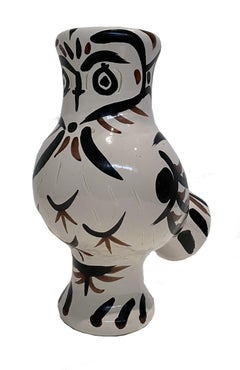
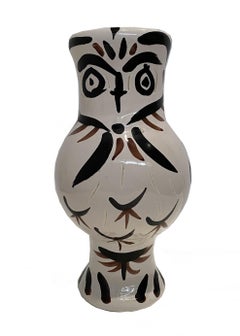
Visage (A.R. 288)
Visage (A.R. 288)

Visage (A.R. 288)

By Pablo Picasso

Located in Östermalm, Stockholms län

Visage (A.R. 288), 1955 White earthenware ceramic pitcher with colored engobe and glaze Edition of 500 Stamped “Picasso” and “Madoura Plein Feu” (underneath) The piece is in excelle...

Category

Modern 1950s Art

Materials

Ceramic

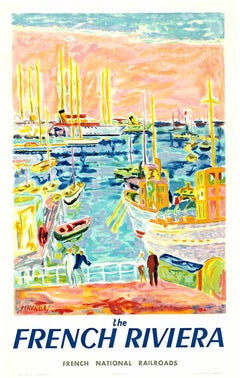
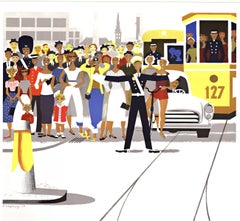
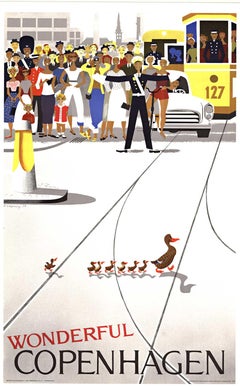
Original "Wonderful Copenhagen" vintage travel poster

Original "Wonderful Copenhagen" vintage travel poster

Located in Spokane, WA

Original vintage poster: WONDERFUL COPENHAGEN created by the artist Viggo Vagnby. This antique poster is archival linen-backed, in excellent condition, and ready to frame. No da...

Category

American Modern 1950s Art

Materials

Lithograph

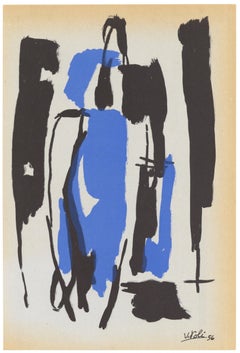
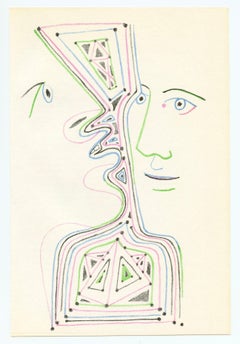
original lithograph

original lithograph

Located in Henderson, NV

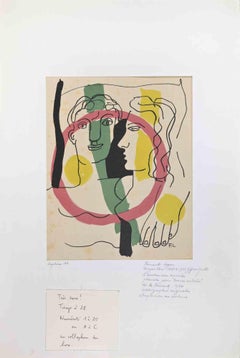
Medium: original lithograph. Printed in 1956 for the rare Documenti d'Arte d'Oggi, published in Milan by Groupe Espace. Size: 12 3/4 x 8 3/4 inches (320 x 222 mm). Signed in the plat...

Category

1950s Art

Materials

Lithograph

Modern Abstract Painting

Modern Abstract Painting

Located in Houston, TX

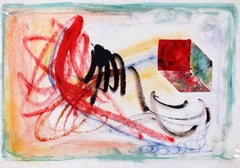
Lively abstract painting with primary tones of yellows, reds and greens with accents of blue and black on white background, 1952. Signed lower right. Original artwork on paper dis...

Category

1950s Art

Materials

Acrylic

'Partners' — Mid-Century Modernist Regionalism

'Partners' — Mid-Century Modernist Regionalism

By Dale Nichols

Located in Myrtle Beach, SC

Dale Nichols, 'Partners', lithograph, edition 250, 1950. Signed in pencil. A fine, richly-inked impression, on cream wove paper; the full sheet with margins (7/8 to 1 5/8 inches); tw...

Category

American Modern 1950s Art

Materials

Lithograph

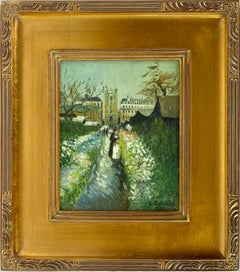
"Café de la Paix, Opéra" Post-Impressionist Parisian Street Scene Oil Painting

"Café de la Paix, Opéra" Post-Impressionist Parisian Street Scene Oil Painting

By Jean Salabet

Located in New York, NY

A beautiful oil on canvas painting by the French artist, Jean Salabet. Salabet was a Parisian painter known for his colorful cityscapes depicting the times of his generation. His wor...

Category

Post-Impressionist 1950s Art
Materials

Canvas, Oil, Board

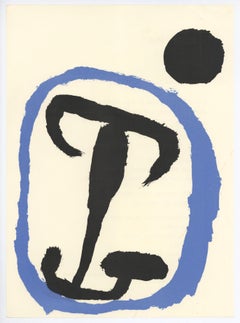
Joan Miro, Untitled, from Joan Miro, 1956

Joan Miro, Untitled, from Joan Miro, 1956

By Joan Miró

Located in Southampton, NY

This exquisite lithograph by Joan Miro (1893–1983), titled Sans titre (Untitled), originates from the 1956 publication Joan Miro. Published by Maeght Editeur, Paris, and printed by M...

Category

Surrealist 1950s Art

Materials

Lithograph

EVENING

EVENING

By Ruth Leaf

Located in Portland, ME

Leaf, Ruth. EVENING. Etching in colors, not dated. Signed, titled and numbered 17/100 in pencil. Edition of 100. 17 3/4 x 35 1/4 inches, 451 x 895 mm. (image), 25 3/4 x 42 inches, 65...

Category

1950s Art

Materials

Etching

original lithograph

original lithograph

By Elias Newman

Located in Henderson, NV

Medium: original lithograph. This lithograph is from the rare 1952 "Improvisations" portfolio, published by the Artists Equity Association of New York on the occasion of the 1952 Spr...

Category

1950s Art

Materials

Lithograph

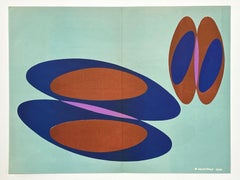
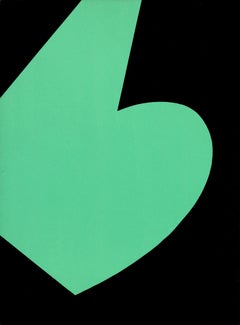
Lucio Fontana, Concetto Spaziale, from XXe siecle, 1959

Lucio Fontana, Concetto Spaziale, from XXe siecle, 1959

By Lucio Fontana

Located in Southampton, NY

This exquisite lithograph and pochoir by Lucio Fontana (1899–1968), titled Concetto Spaziale (Spatial Concept), from the album XXe siecle, Nouvelle serie, XXIe Annee, No. 12, Mai-Jui...

Category

Modern 1950s Art

Materials

Lithograph

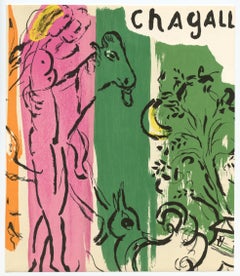
Marc Chagall, Flower Quay, from Derriere le miroir, 1954

Marc Chagall, Flower Quay, from Derriere le miroir, 1954

By Marc Chagall

Located in Southampton, NY

This exquisite lithograph by Marc Chagall (1887–1985), titled Quai de fleurs (Flower Quay), from the folio Derriere le miroir, No. 67–68, originates from the 1954 edition published b...

Category

Expressionist 1950s Art
Materials

Lithograph

Lovers Over Paris, Modern Giclee after Marc Chagall

Lovers Over Paris, Modern Giclee after Marc Chagall

By Marc Chagall

Located in Long Island City, NY

Marc Chagall, After, Russian (1887 - 1985) - Lovers Over Paris, Medium: Giclee, fascimille signed and numbered in pencil, Edition: 375, Image Size: 13 x 17 inches, Size: 16 x 24 ...

Category

Modern 1950s Art

Materials

Giclée

original lithograph

original lithograph

By Julio de Diego

Located in Henderson, NV

Medium: original lithograph. This lithograph was printed in 1950 for the "Improvisations" portfolio, published by the Artists Equity Association of New York on the occasion of the 19...

Category

Surrealist 1950s Art

Materials

Lithograph

Relining Nude (WG6)
Relining Nude (WG6)

Relining Nude (WG6)

By Waylande Gregory

Located in Wilton Manors, FL

Waylande Gregory (1905-1971). Nude Reclining, ca. 1950's. Painted composite cast from original sculpted in 1930's. Casting sanctioned and approved by the artist during his lifetime in partnership with MPI, Museum Pieces Incorporated. Very few examples were produced and even fewer survive. Waylande Gregory was considered a major American sculptor during the 1930's, although he worked in ceramics, rather than in the more traditional bronze or marble. Exhibiting his ceramic works at such significant American venues for sculpture as the Whitney Museum of American Art in New York City and at the venerable Pennsylvania Academy of the Fine Arts in Philadelphia, he also showed his ceramic sculptures at leading New York City galleries. Gregory was the first modern ceramist to create large scale ceramic sculptures, some measuring more than 70 inches in height. Similar to the technique developed by the ancient Etruscans, he fired his monumental ceramic sculptures only once. Gregory was born in 1905 in Baxter Springs, Kansas and was something of a prodigy. Growing up on a ranch near a Cherokee reservation, Gregory first became interested in ceramics as a child during a native American burial that he had witnessed. He was also musically inclined. In fact, his mother had been a concert pianist and had given her son lessons. At eleven, he was enrolled as a student at the Kansas State Teacher's College, where he studied carpentry and crafts, including ceramics. Gregory's early development as a sculptor was shaped by the encouragement and instruction of Lorado Taft, who was considered both a major American sculptor as well as a leading American sculpture instructor. In fact, Taft's earlier students included such significant sculptors as Bessie Potter Vonnoh and Janet Scudder. But, Taft and his students had primarily worked in bronze or stone, not in clay; and, Gregory's earliest sculptural works were also not in ceramics. In 1924, Gregory moved to Chicago where he caught the attention of Taft. Gregory was invited by Taft to study with him privately for 18 months and to live and work with him at his famed "Midway Studios." The elegant studio was a complex of 13 rooms that overlooked a courtyard. Taft may have been responsible for getting the young man interested in creating large scale sculpture. However, by the 1920's, Taft's brand of academic sculpture was no longer considered progressive. Instead, Gregory was attracted to the latest trends appearing in the United States and Europe. In 1928 he visited Europe with Taft and other students. "Kid Gregory," as he was called, was soon hired by Guy Cowan, the founder of the Cowan Pottery in Cleveland, Ohio, to become the company's only full time employee. From 1928 to 1932, Gregory served as the chief designer and sculptor at the Cowan Pottery. Just as Gregory learned about the process of creating sculpture from Taft, he literally learned about ceramics from Cowan. Cowan was one of the first graduates of Alfred, the New York School of Clayworking and Ceramics. Alfred had one of the first programs in production pottery. Cowan may have known about pottery production, but he had limited sculptural skills, as he was lacking training in sculpture. The focus of the Cowan Pottery would be on limited edition, table top or mantle sculptures. Two of the most successful of these were Gregory's Nautch Dancer, and his Burlesque Dancer. He based both sculptures on the dancing of Gilda Gray, a Ziegfield Follies girl. Gilda Gray was of Polish origin and came to the United States as a child. By 1922, she would become one of the most popular stars in the Follies. After losing her assets in the stock market crash of 1929, she accepted other bookings outside of New York, including Cleveland, which was where Gregory first saw her onstage. She allowed Gregory to make sketches of her performances from the wings of the theatre. She explained to Gregory, "I'm too restless to pose." Gray became noted for her nautch dance, an East Indian folk dance. A nautch is a tight, fitted dress that would curl at the bottom and act like a hoop. This sculpture does not focus on Gray's face at all, but is more of a portrait of her nautch dance. It is very curvilinear, really made of a series of arches that connect in a most feminine way. Gregory created his Burlesque Dancer at about the same time as Nautch Dancer. As with the Nautch Dancer, he focused on the movements of the body rather than on a facial portrait of Gray. Although Gregory never revealed the identity of his model for Burlesque Dancer, a clue to her identity is revealed in the sculpture's earlier title, Shimmy Dance. The dancer who was credited for creating the shimmy dance was also Gilda Gray. According to dance legend, Gray introduced the shimmy when she sang the Star Spangled Banner and forgot some of the lyrics, so, in her embarrassment, started shaking her shoulders and hips but she did not move her legs. Such movement seems to relate to the Burlesque Dancer sculpture, where repeated triangular forms extend from the upper torso and hips. This rapid movement suggests the influence of Italian Futurism, as well as the planar motion of Alexander Archipenko, a sculptor whom Gregory much admired. The Cowan Pottery was a victim of the great depression, and in 1932, Gregory changed careers as a sculptor in the ceramics industry to that of an instructor at the Cranbrook Academy in Bloomfield Hills, Michigan. Cranbrook was perhaps the most prestigious place to study modern design in America. Its faculty included the architect Eliel Saarinen and sculptor Carl Milles. Although Gregory was only at Cranbrook for one and one half years, he created some of his finest works there, including his Kansas Madonna. But, after arriving at Cranbrook, the Gregory's had to face emerging financial pressures. Although Gregory and his wife were provided with complimentary lodgings, all other income had to stem from the sale of artworks and tuition from students that he, himself, had to solicit. Gregory had many people assisting him with production methods at the Cowan Pottery, but now worked largely by himself. And although he still used molds, especially in creating porcelain works, many of his major new sculptures would be unique and sculpted by hand, as is true of Kansas Madonna. The scale of Gregory's works were getting notably larger at Cranbrook than at Cowan. Gregory left the surface of Kansas Madonna totally unglazed. Although some might object to using a religious title to depict a horse nursing its colt, it was considered one of Gregory's most successful works. In fact, it had a whole color page illustration in an article about ceramic sculpture titled, "The Art with the Inferiority Complex," Fortune Magazine, December, 1937. The article notes the sculpture was romantic and expressive and the sculpture was priced at $1,500.00; the most expensive sculpture...

Category

Art Deco 1950s Art

Materials

Plaster

Joan Miro, The Three Blues, from Derriere le miroir, 1951

Joan Miro, The Three Blues, from Derriere le miroir, 1951

By Joan Miró

Located in Southampton, NY

This exquisite lithograph by Joan Miro (1893–1983), titled Les Trois Bleus (The Three Blues), from the folio Derriere le miroir, Sur Quatre Murs (Behind the Mirror, On Four Walls), N...

Category

Surrealist 1950s Art

Materials

Lithograph

Femme Bleue
Femme Bleue

Femme Bleue

By Henri Matisse

Located in OPOLE, PL

Henri Matisse (1869-1954) - Femme Bleue Lithograph from 1958. Dimensions of work: 35.5 x 26.4 cm. Publisher: Tériade, Paris. First, original edition. The work is in Excellent co...

Category

Surrealist 1950s Art

Materials

Lithograph

Reclined Female Nude

Reclined Female Nude

By Esther Meyer

Located in Houston, TX

Striking female nude in reclined back seated position on red blanket in ink and watercolor by English artist Esther Meyer, circa 1950. Original artwork on paper displayed on a whit...

Category

1950s Art

Materials

Ink, Watercolor

'Woman in Blue', Danish Royal Academy, Brooklyn Museum, Kolding

'Woman in Blue', Danish Royal Academy, Brooklyn Museum, Kolding

Located in Santa Cruz, CA

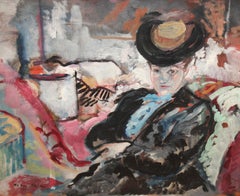
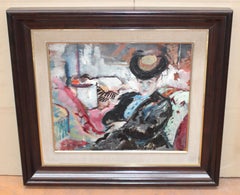
Initialed lower left, 'A.S.' for Anton Schroder (Danish, 1893-1965) and dated 1953. A substantial, modernist oil painting of a young woman, shown seated and gazing to her left with ...

Category

Modern 1950s Art

Materials

Canvas, Oil

Personnages et tetes (Figures and heads), 1954

Personnages et tetes (Figures and heads), 1954

By Pablo Picasso

Located in Palo Alto, CA

Pablo Picasso Ceramic Personnages et tetes (Figures and heads), 1954 Though Picasso never traveled to Greece, he was endlessly fascinated with the Greek vases of antiquity. As a res...

Category

1950s Art

Materials

Earthenware

Marino Marini, Untitled, from XXe Siecle, 1955

Marino Marini, Untitled, from XXe Siecle, 1955

By Marino Marini

Located in Southampton, NY

This exquisite lithograph by Marino Marini (1901–1980), titled Sans titre (Untitled), from the album XXe Siecle, Nouvelle serie, No. 5 (double), Juin 1955, originates from the 1955 e...

Category

Modern 1950s Art

Materials

Lithograph

Funfair - 1950's French Expressionist Mid Century Oil on Canvas Painting

Funfair - 1950's French Expressionist Mid Century Oil on Canvas Painting

By André Beaucé

Located in Sevenoaks, GB

A wonderful 1950's French expressionist oil on canvas depicting figures at a busy funfair, by Parisian artist André Beaucé. Excellent quality work painted with thick impasto brush work. Signed lower centre. Artist: André Beaucé (French, 1911-1974) Title: Funfair Medium: Oil on canvas Size: 25.5 x 21 inches (65 x 54 cm) André Beaucé was a French painter born on May 23, 1911 in Rennes and died on January 2, 1974 in Paris . A pupil of the School of Fine Arts in Rennes, a graduate of the National School of Decorative Arts where he was admitted in 1932, André Beaucé was a pupil in the workshops of André Lhote and Simon, with Yves Brayer . He won the Abd-el-Tif prize in 1946 and was a regular at the Salon d'Automne. After having lived for several years in Algeria, and in particular at Villa Abd El Tif where he was a scholarship holder from 1946 to 1948, André Beaucé returned to France in 1949 and resumed his teaching at the Schools of Paris. His painting is then powerfully expressionist, free from any system. In the 1950s, we notice vigorous, uncompromising, intense portraits, captured in an almost caricatural way. The tones, always very mounted, are opposed with force in a composition cut with vigor. After the dark years of the war, Beaucé’s art reflects a violent vision of a certain reality that is always brutal and yet magnificent. Exhibitions Paris, 1936 to 1945, Salon of the National Society of Fine Arts . Tunis, 1946, Exhibition of French Africa. Algiers, 1947, Abd-el-Tif. Paris, 1948, Letourneur gallery. Paris, from 1950 to 1960, Salon d'Automne and Salon Comparaisons . Paris, 1962, Roy's gallery. Paris, May 1963, Exhibition organized on the occasion of the Estates General on Disarmament , Cercle Volney. First Salon Biarritz - San Sebastian: School of Paris - Painting, sculpture: André Beauce, Georges-André Klein , Adrienne Jouclard , Jean Joyet , Robert Lotiron , Roland Bierge , Andrée Bordeaux-Le Pecq , Henri Hayden , Franck Innocent , Germaine Lacaze...

Category

Expressionist 1950s Art
Materials

Canvas, Oil

Normandy Countryside - Original Lithograph

Normandy Countryside - Original Lithograph

By Raoul Dufy

Located in Paris, IDF

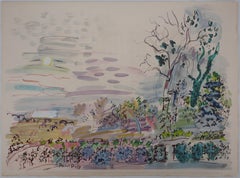
Raoul DUFY Normandy Countryside , 1953 Original Lithograph with stencil watercolor On Arches vellum 28 x 38 cm (c. 11 x 15 inch) Excellent condition

Category

Modern 1950s Art
Materials

Lithograph

original lithograph

original lithograph

Located in Henderson, NV

Medium: original lithograph. This lithograph is from the rare 1950 "Improvisations" portfolio, published by the Artists Equity Association of New York on the occasion of the 1950 Spr...

Category

1950s Art
Materials

Lithograph