1950s Art

to
2,681
6,659
3,300
2,177
1,873
1,076
Overall Width
to
Overall Height
to
7,752
21,945
164,825
229,598
2,032
2,306
4,989
6,554
5,897
15,117
20,733
26,002
18,754
14,132
5,531
6,766
899
602
528
500
454
171
128
68
61
60
8
7
8,800
4,122
1,970
8,353
4,560
3,089
2,097
1,725
1,632
1,591
1,566
948
866
780
721
709
691
552
541
536
498
490
478
3,517
3,139
2,774
2,289
1,776
2,411
1,766
306
218
196
2,170
4,258
9,490
5,170
Period: 1950s
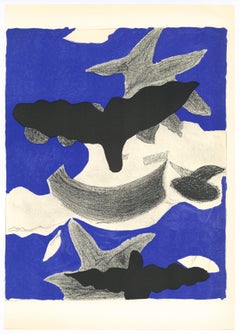
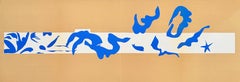
Joan Miro, The Three Blues, from Derriere le miroir, 1951

Joan Miro, The Three Blues, from Derriere le miroir, 1951

By Joan Miró

Located in Southampton, NY

This exquisite lithograph by Joan Miro (1893–1983), titled Les Trois Bleus (The Three Blues), from the folio Derriere le miroir, Sur Quatre Murs (Behind the Mirror, On Four Walls), N...

Category

Surrealist 1950s Art

Materials

Lithograph

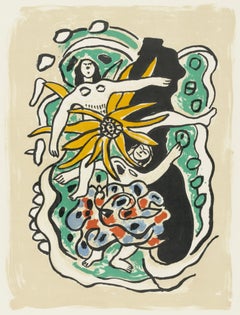
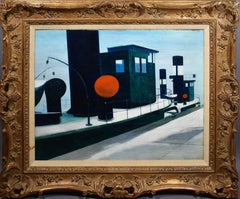
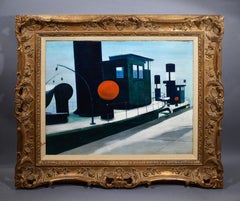
Alexander Calder, Orange Sun, from Derriere le miroir, 1954

Alexander Calder, Orange Sun, from Derriere le miroir, 1954

By Alexander Calder

Located in Southampton, NY

This exquisite lithograph by Alexander Calder (1898–1976), titled Soleil orange (Orange Sun), from the folio Derriere le miroir, No. 69–70, originates from the 1954 edition published by Maeght Editeur, Paris, and printed by Mourlot Freres, Paris, 1954. This work captures Calder’s mastery of motion, balance, and vibrant color through the spontaneous energy of his abstract forms, embodying the rhythmic harmony and visual poetry that defined his art. Executed as a lithograph on velin paper, this work measures 15 x 11 inches. Unsigned and unnumbered as issued. The edition exemplifies the superb craftsmanship of Mourlot Freres, Paris. Artwork Details: Artist: Alexander Calder (1898–1976) Title: Soleil orange (Orange Sun), from the folio Derriere le miroir, No. 69–70 Medium: Lithograph on velin paper Dimensions: 15 x 11 inches (38.1 x 27.9 cm) Inscription: Unsigned and unnumbered as issued Date: 1954 Publisher: Maeght Editeur, Paris Printer: Mourlot Freres, Paris Condition: Well preserved, consistent with age and medium Provenance: From the folio Derriere le miroir, No. 69–70, published by Maeght Editeur, Paris; printed by Mourlot Freres, Paris, 1954 About the Publication: Derriere le miroir (Behind the Mirror) was one of the most important art publications of the 20th century, created and published by Maeght Editeur in Paris from 1946 to 1982. Founded by the visionary art dealer and publisher Aime Maeght, the series served as both an exhibition catalogue and a work of art in its own right, uniting original lithographs by leading modern and contemporary artists with critical essays, poetry, and design of the highest quality. Printed by master lithographers such as Mourlot Freres and Arte, Derriere le miroir became synonymous with the artistic vanguard of postwar Europe. Each issue was devoted to a single artist or theme and published to accompany exhibitions at the Galerie Maeght in Paris, featuring works by Pablo Picasso, Henri Matisse, Georges Braque, Joan Miro, Marc Chagall, Alexander Calder, Fernand Leger, and Alberto Giacometti, among others. The publication reflected Maeght’s belief that art should be both accessible and elevated—an ideal realized through its luxurious production values, meticulous printing, and collaboration with the greatest creative minds of its time. About the Artist: Alexander Calder (1898–1976) was an American sculptor, painter, and printmaker whose pioneering innovations in kinetic art revolutionized 20th-century sculpture and transformed modern visual language. Born in Lawnton, Pennsylvania, into a family of artists, Calder initially trained as a mechanical engineer at the Stevens Institute of Technology before turning to art at the Art Students League in New York—a combination of technical precision and creative imagination that defined his career. Moving to Paris in 1926, he immersed himself in the avant-garde and formed friendships with Pablo Picasso, Alberto Giacometti, Joan Miro, Wassily Kandinsky, Salvador Dali, Marcel Duchamp, and Man Ray, whose ideas profoundly shaped his artistic philosophy. From Picasso, he absorbed structural invention; from Miro, lyrical abstraction; from Kandinsky, spiritual geometry; and from Duchamp and Man Ray, the courage to merge intellect and play. In Paris, Calder created his famous Cirque Calder, a miniature mechanical circus that introduced motion and performance as central components of sculpture, and by the early 1930s, he invented the mobile—a term coined by Duchamp—to describe his delicately balanced, moving sculptures that responded to air currents. Later, Jean Arp would name his stationary counterparts stabiles. These two inventions—sculptures that could either float and spin gracefully or stand monumentally still—transformed art into a dynamic dialogue between movement, balance, and space. Calder’s signature forms, painted in vivid reds, blacks, blues, and yellows, embodied both joy and precision, creating an art that was at once abstract, organic, and deeply human. Like Kandinsky and Miro, he viewed art as a form of rhythm and emotion; like Duchamp, he embraced innovation and humor; and like Giacometti and Dali, he was fascinated by perception, structure, and the unseen forces of motion. His monumental public sculptures—such as La Grande Vitesse (1969) in Grand Rapids and Flamingo (1973) in Chicago—redefined public art as a symbol of civic optimism and modern progress. A key bridge between European modernism and American abstraction, Calder’s influence extended to artists including Jean Tinguely, George Rickey, Donald Judd, Ellsworth Kelly, Richard Serra, and Olafur Eliasson, whose works in kinetic and spatial art continue to echo his vision. His gouaches, prints, and jewelry carried the same balance and movement as his sculptures, revealing a unified language of rhythm across media. Represented in every major modern museum—including MoMA, the Guggenheim, the Tate, and the Centre Pompidou—Calder remains celebrated for merging engineering, color, and poetry into an art of pure equilibrium. Standing alongside Pablo Picasso, Alexander Calder, Alberto Giacometti, Salvador Dali, Joan Miro, Wassily Kandinsky, Marcel Duchamp, and Man Ray, he remains one of the cornerstones of modern art—a visionary whose works breathe with motion, grace, and joy. His highest auction record was achieved by Poisson Volant (Flying Fish) (1957), which sold for $25.9 million at Christie’s, New York, on May 15, 2014, reaffirming Alexander Calder’s enduring legacy as one of the most inventive, dynamic, and collectible artists in the history of modern art. Alexander Calder Soleil...

Category

Modern 1950s Art

Materials

Lithograph

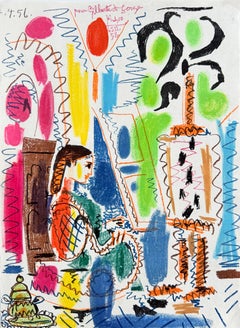
original lithograph

original lithograph

Located in Henderson, NV

Medium: original lithograph. This lithograph was printed in 1956 for the "Improvisations" portfolio, published by the Artists Equity Association of New York on the occasion of the 19...

Category

1950s Art

Materials

Lithograph

Mid Century Original Oil Plein Air Landscape of Western Nevada

Mid Century Original Oil Plein Air Landscape of Western Nevada

Located in Soquel, CA

Original Antique Western Nevada Desert Oil Landscape by Phoebe K. Higgins A mid-century desert oil landscape of Western Nevada by Phoebe K. Higgins (American, 1895 - c 1960), circa ...

Category

American Realist 1950s Art

Materials

Linen, Oil, Board

'Reclining Nude', Paris, Louvre, Salon d'Automne, Acad. Chaumière, LACMA, SFAA

'Reclining Nude', Paris, Louvre, Salon d'Automne, Acad. Chaumière, LACMA, SFAA

By Victor Di Gesu

Located in Santa Cruz, CA

'Reclining Nude', Paris, Louvre, Salon d'Automne, Acad. Chaumière, LACMA, SFAA ------ Painted circa 1955 by Victor Di Gesu (American, 1914-1988) and stamped verso with Victor di Ges...

Category

Post-Impressionist 1950s Art

Materials

Paper, Oil

'Woman in Blue', Danish Royal Academy, Brooklyn Museum, Kolding

'Woman in Blue', Danish Royal Academy, Brooklyn Museum, Kolding

Located in Santa Cruz, CA

Initialed lower left, 'A.S.' for Anton Schroder (Danish, 1893-1965) and dated 1953. A substantial, modernist oil painting of a young woman, shown seated and gazing to her left with ...

Category

Modern 1950s Art

Materials

Canvas, Oil

Bunch of Flowers - Original Lithograph

Bunch of Flowers - Original Lithograph

By Raoul Dufy

Located in Paris, IDF

Raoul DUFY Bunch of Flowers, 1953 Original Lithograph with stencil watercolor With printed signature in the plate On Arches vellum 28 x 37.5 cm (c. 11 x 14.8 inch) Very good condition

Category

Modern 1950s Art

Materials

Lithograph

"Autumn" Colorful Mid-20th Century American Oil Painting Landscape with Tress

"Autumn" Colorful Mid-20th Century American Oil Painting Landscape with Tress

Located in New York, NY

A wonderful depiction of an Autumn landscape in Kent, Connecticut from the Mid-20th Century with puffed trees by the country side. For this beautiful depiction, we find distinct elements that are unique to the earlier works of George Lawrence...

Category

American Impressionist 1950s Art

Materials

Oil, Board, Canvas

"Bluebonnets Texas Hill Country"

"Bluebonnets Texas Hill Country"

Located in San Antonio, TX

Robert Wood (G. Day) (1889 -1979) San Antonio Artist Image Size: 20 x 24 Frame Size: 29 x 33 Medium: Oil Signed Lower left "Bluebonnet" Biography Robert Wood (G. Day) (1889 -1979) A painter of realistic landscapes reflecting a vanishing wilderness in America, Robert Wood (not to be confused with Robert E. Wood) is reportedly one of the most mass-produced artists in the United States. His painting became so popular he was unable to meet all of the demands, and many of his works were reproduced in lithographs and mass distributed as prints, place mats, and wall murals by companies including Sears, Roebuck. He was born in Sandgate, Kent on the south coast of England near Dover, the son of W.L. Wood, a famous home and church painter who recognized and supported his son's talent. In fact, he forced his son to paint by keeping him inside to paint rather than playing with his friends. At age 12, Wood entered the South Kensington School of Art. As a youth, he came to the United States in 1910, having served in the Royal Army, and he never returned to England. He traveled extensively all over the United States, especially in the West, often in freight cars, and also painted in Mexico and Canada. His itinerant existence took him to Illinois where he worked as a farmhand, to Pensacola, Florida where he married, briefly in Ohio, Seattle, Washington, and Portland, Oregon. In 1912, he was in Los Angeles, and in the late 1920s and early 1930s, in San Antonio, Texas, where he lived and in 1928 exhibited in the "Texas Wildflower Competition." From San Antonio, he gained a national reputation for his strong colored, dramatic paintings. Some of that prestige has been credited to his association with Jose Arpa, prominent Texas artist. Wood also gave art lessons, and one of his students was Porfirio Salinas. During this period, Wood sometimes signed his paintings G. Day or Trebor, which is Robert spelled backwards. In 1941 he went to California and painted numerous desert and mountain landscapes and coastal scenes. He lived in Carmel for seven years, and then moved to Woodstock, New York, but he soon returned to California, settling first in Laguna Beach, then San Diego, and finally in the High Sierras, where he and his wife built a home and studio near Bishop and lived until his death in 1979. Robert Wood was born March 4, 1889, in Sandgate, England, a small town on the Kentish coast not far from the white cliffs of Dover. His father, W. J. Wood, was a successful painter who recognized Robert's unusual talent. At the age of twelve, his father enrolled Wood in art school in the small town of Folkstone. He then attended the South Kensington School of Art. While attending art school, Wood won four first awards and three second awards, one each year, a record. In 1910 after service in the Royal Army, nineteen-year-old Wood and his friend, Claude Waters, immigrated to America. Initially, he settled in Illinois and worked as a hired hand on a farm belonging to Water's uncle. He would then strike out on his own, living the life of an itinerant painter. Wood traveled as a hobo, hopping freight trains and selling or bartering small paintings to support him along the way. When times were hard, he worked at whatever job was available. In this manner, he saw most of the United States and fell in love with rural America. By 1912, Wood visited Los Angeles for the first time, arriving on the day of the Titanic tragedy. Later that year, he had met, courted and married young Eyssel Del Wagoner in Florida. The couple moved to Ohio where a daughter, Florence, was born. During World War I, the family moved to Seattle where a son, John Robert Wood, was born in 1919. In the early 1920's, the young Wood family was almost constantly on the move. They stayed for short periods in Kansas, Missouri, California and for a longer time in Portland, Oregon, where Wood's friend Claude Waters had settled. Wood's seemingly endless wanderings disrupted his family life and delayed his development as a painter. However, through his travels he developed an appreciation for the American landscape that would inspire him for the rest of his career. Although aware of the current movement away from traditional realism in American art, he elected to travel that solitary path and remain true to his own vision of American’s grandeur and beauty poetically translated through his landscape and seascape paintings. In 1923, the Wood family discovered the beautiful city of San Antonio, Texas and it was there that he and his family would finally settle. He studied briefly at the San Antonio Art School with Spanish colorist Jose Arpa y Perea (1860-1952), who had arrived in San Antonio that same year. In the latter part of the 1920’s, Jose Arpa’s influence quickly became evident. Wood after several years of experimentation was becoming fine easel painter, capable of great subtlety with a new mature original style. Like Texas painters Robert Onderdonk (1853-1917) and his son Julian Onderdonk (1882-1922), Robert Wood concentrated on the distinctive Texas landscape with its Red Oak trees and wildflowers that covered the hill country landscape. He developed a reputation for his scenes of Blue Bluebonnets, the state flower. In the spring, the Texas prairie is covered with wildflowers, especially in the hill country surrounding San Antonio and Austin. Wood incorporated native stone barns and rough wood farmhouses that added authenticity and romance to his compositions. In 1925, Wood was divorced from his wife. In 1932, he moved to the famous scenic loop on San Antonio's outskirts. While still living in Texas, he took extensive western sketching trips that brought him to California. It is evident that his 1930’s California...

Category

Impressionist 1950s Art

Materials

Oil

Five mid 20th century Italian oil landscapes with figures, castles, Churchs

Five mid 20th century Italian oil landscapes with figures, castles, Churchs

Located in Woodbury, CT

A very interesting set of five mid-20th-century Italian oils on copper. All five are classical landscape subjects and are signed Roger, though we don't know which artist with the n...

Category

Old Masters 1950s Art

Materials

Copper

Large Vintage American Modernist Abstract Naturescape Lake View  Oil Painting

Large Vintage American Modernist Abstract Naturescape Lake View Oil Painting

Located in Buffalo, NY

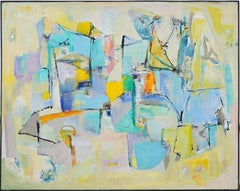
Vintage American modernist abstract oil painting. Oil on canvas. Framed. Measuring: 26 by 30 inches overall, and 22 by 25 painting alone.. In excellent original condition. Handsomel...

Category

Abstract Expressionist 1950s Art
Materials

Canvas, Oil

Chrysanthemums. 1954. Oil on canvas. 72x57 cm

Chrysanthemums. 1954. Oil on canvas. 72x57 cm

Located in Riga, LV

Valnere Rita 1929 - 2015 Rita Valnere was born on September 21, 1929, was a Latvian painter and art teacher. In 1949, she graduated from the Janis Rozentals Riga Art Secondary Scho...

Category

Realist 1950s Art

Materials

Canvas, Oil

Vintage American Modernist Abstract Expressionist Framed Large Oil Painting

Vintage American Modernist Abstract Expressionist Framed Large Oil Painting

Located in Buffalo, NY

Vintage American modernist abstract oil painting. Oil on canvas. Framed. Unsigned. Measuring: 46 by 58 inches overall, and 45 by 57 painting alone.. In excellent original condition...

Category

Abstract Expressionist 1950s Art
Materials

Oil, Canvas

Mission Wall, San Ildefonso, NM

Mission Wall, San Ildefonso, NM

By Morley Baer

Located in Pacific Grove, CA

This print is signed in pencil on the front of the mount and stamped on the back of the mount. Despite Morley Baer’s adherence to the West Coast landscape tradition, his interests i...

Category

Modern 1950s Art

Materials

Silver Gelatin

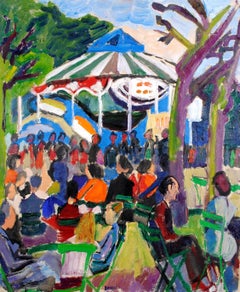
'Still Life with Fruit and Flowers', Paris, Tokyo, London, Copenhagen Academy

'Still Life with Fruit and Flowers', Paris, Tokyo, London, Copenhagen Academy

By Ib Eisner

Located in Santa Cruz, CA

Signed lower left, 'Ib Eisner' (Danish, 1925-2003) and dated, lower right, 1953. Displayed in a period, carved gilt-wood frame. Framed dimensions: 19 x 21.5 x 1.5 inches. A lyrica...

Category

Post-Impressionist 1950s Art
Materials

Canvas, Oil, Board

Marino Marini, Untitled, from XXe Siecle, 1955

Marino Marini, Untitled, from XXe Siecle, 1955

By Marino Marini

Located in Southampton, NY

This exquisite lithograph by Marino Marini (1901–1980), titled Sans titre (Untitled), from the album XXe Siecle, Nouvelle serie, No. 5 (double), Juin 1955, originates from the 1955 e...

Category

Modern 1950s Art

Materials

Lithograph

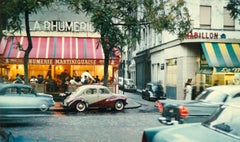
Paris 1952, Place de la Concorde

Paris 1952, Place de la Concorde

By Erich Andres

Located in Cologne, DE

This photograph, taken in 1952, depicts the Place de la Concorde in Paris, France. The scene captures a busy urban atmosphere with classic cars typical of the mid-20th century lining...

Category

Modern 1950s Art

Materials

Silver Gelatin

"Marilyn Candid Moment" by Ed Feingersh

"Marilyn Candid Moment" by Ed Feingersh

By Ed Feingersh

Located in London, GB

"Marilyn Candid Moment" by Ed Feingersh NEW YORK - MARCH 1955: Actress Marilyn Monroe reads the book "To the Actor: On the Technique of Acting" by Michael Chekhov in a quiet moment at the Ambassador...

Category

Modern 1950s Art

Materials

Black and White

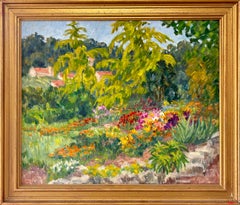
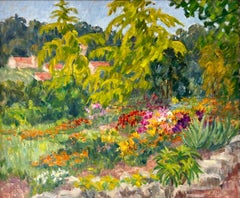
Bassin et fleurs - Post Impressionist Landscape Oil by Jacques Martin-Ferrieres

Bassin et fleurs - Post Impressionist Landscape Oil by Jacques Martin-Ferrieres

By Jacques Martin-Ferrières

Located in Marlow, Buckinghamshire

Signed oil on canvas circa 1950 by French post-impressionist painter Jacques Martin-Ferrieres. The work depicts a summer garden full of flowers in bloom. The focal point of the piece...

Category

Post-Impressionist 1950s Art
Materials

Canvas, Oil

'Philippines Landscape', Paris, Académie Chaumière, NY, ASL, Sao Paulo Biennal

'Philippines Landscape', Paris, Académie Chaumière, NY, ASL, Sao Paulo Biennal

By Romeo Tabuena

Located in Santa Cruz, CA

A fine and delicate, watercolor landscape showing a view of the rural Philippines by this celebrated Philippine Modernist. Signed, lower right, in graphite, 'Romeo V Tabuena' for Rom...

Category

1950s Art
Materials

Watercolor, Gouache, Laid Paper

Fleurs
Fleurs

Fleurs

By Pablo Picasso

Located in PARIS, FR

• An authenticated work This work is authenticated by Paloma Ruiz Picasso and Diana Widmaier Ruiz Picasso, who issued a certificate of authenticity on October 7, 2024. • A dated wor...

Category

Modern 1950s Art
Materials

Ceramic