By Pablo Picasso
Located in PARIS, FR
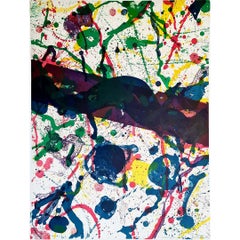
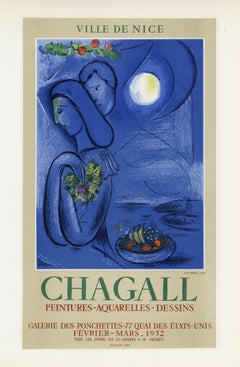
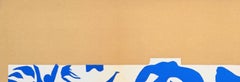
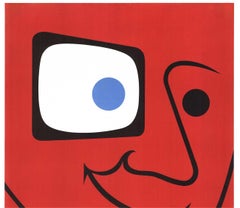
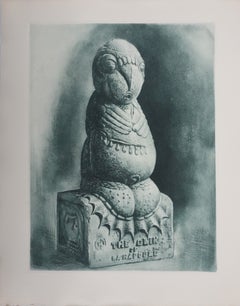
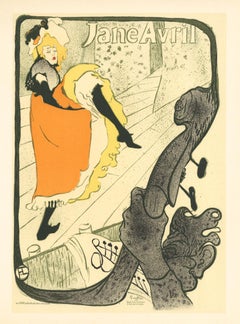
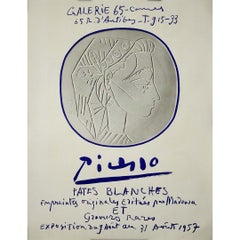
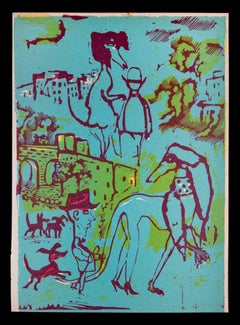
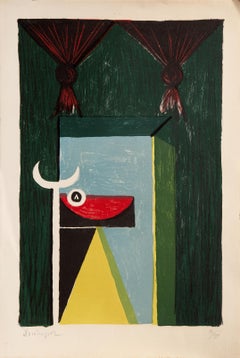
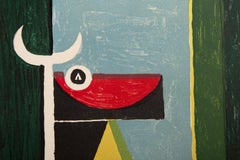
The 1957 original exhibition poster titled Pâtes Blanches: Empreintes Originales éditées par Madoura et Gravures Rares by Pablo Picasso is a significant piece that reflects the artist's deep involvement with ceramic art and printmaking during that period. The poster was created to promote an exhibition at Galerie 65 in Cannes, France, showcasing Picasso’s ceramics and rare engravings, with a particular focus on his work with pâtes blanches, or white clay.
By the late 1940s, Picasso had become increasingly involved with ceramics, producing a vast number of pieces at the Madoura pottery studio in Vallauris, France. The studio, owned by Georges and Suzanne Ramié, became a creative haven for Picasso, where he could explore new forms of expression beyond painting and sculpture. His work with ceramics brought forth a unique blend of classical forms and modernist abstraction, often infusing traditional pottery with his distinctive artistic style.
The term pâtes blanches refers to the white earthenware clay that Picasso used for creating his ceramic pieces. This material allowed him to experiment with various textures and finishes, which he combined with his characteristic line work and engraving techniques. The poster advertises this innovative work, highlighting the original prints and rare engravings that were part of the exhibition.
The exhibition at Galerie 65 in Cannes ran throughout the summer of 1957 and offered art lovers and collectors the opportunity to view and acquire some of Picasso's rarest ceramic works and prints. It was a testament to Picasso's versatility as an artist, showcasing his ability to transcend different mediums while maintaining the boldness and originality that defined his career.
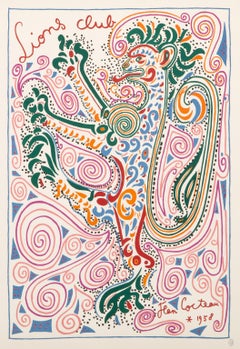
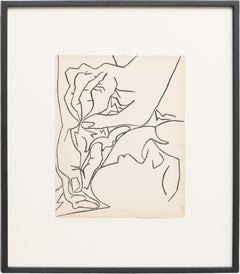
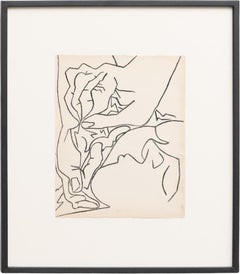
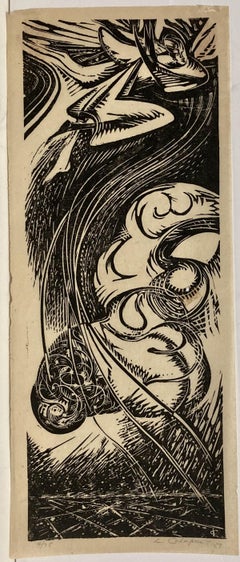
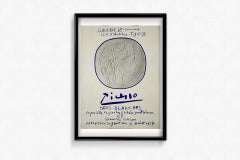
The poster itself, with Picasso's handwritten details and a depiction of one of his engravings, serves as both a promotional tool and a work of art in its own right. It reflects Picasso's personal touch and his deep connection to the work he produced during this period.
Today, this exhibition poster remains a coveted item for collectors of Picasso’s works and 20th-century art, representing a unique moment in Picasso's extensive and varied artistic journey.
Exhibition - Galerie 65 Cannes...
Category
1950s Art
MaterialsPaper, Lithograph