1960s Art

to
2,686
8,249
4,807
3,521
2,348
1,735
Overall Width
to
Overall Height
to
7,555
21,447
164,307
233,918
2,038
2,268
4,964
6,526
5,812
15,134
20,822
25,971
18,750
14,142
5,361
7,420
2,165
1,728
1,539
784
652
403
315
115
89
55
26
3
1
11,418
7,077
1,759
10,179
5,392
4,140
2,766
1,879
1,878
1,758
1,601
1,492
1,437
1,201
1,180
902
644
641
613
609
576
522
501
4,983
3,815
3,396
2,300
2,173
3,464
602
569
340
291
2,989
7,732
12,461
7,505
Period: 1960s
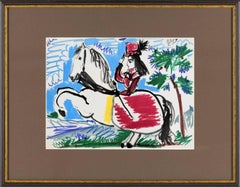
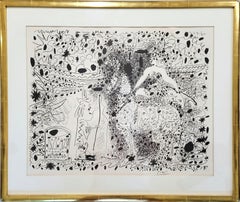
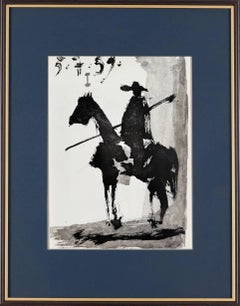
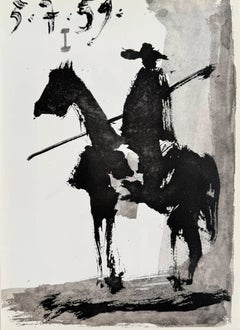
Picador

Picador

By Pablo Picasso

Located in OPOLE, PL

Pablo Picasso (1881-1973) - Picador Lithograph from 1964. The edition of 6/245 on Arches paper. Dimensions of work: 35 x 26 cm. Publisher: Éditions Français Réunis, Paris. Refer...

Category

Modern 1960s Art

Materials

Lithograph

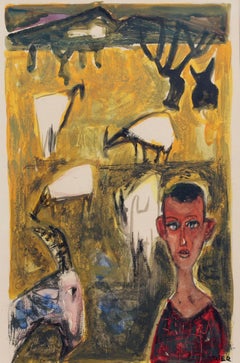
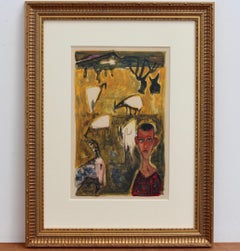
Landscape with Man and Goats

Landscape with Man and Goats

Located in London, GB

'Landscape with Man and Goats', gouache on paper, by Raymond Guerrier (circa 1960s). After the artist moved from Paris to the South of France, he started painting landscapes illumina...

Category

Modern 1960s Art

Materials

Paper, Gouache

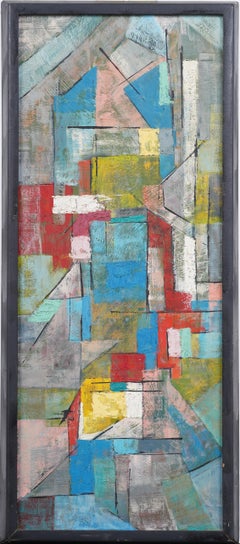
Vintage American Modernist Interior Architectural Framed Original Oil Painting

Vintage American Modernist Interior Architectural Framed Original Oil Painting

Located in Buffalo, NY

Vintage American oil painting. Oil on canvas. Framed. Measuring: 14 by 11 inches overall, and 12 by 8.75 painting alone. Unsigned. Excellent condition, ready to hang and enjoy.

Category

Modern 1960s Art

Materials

Oil, Canvas

Echoes of Picasso Oil on Board Painting, Surrealist, Spain, 1960s

Echoes of Picasso Oil on Board Painting, Surrealist, Spain, 1960s

Located in Sitges, Barcelona

Artist: Gustavo Úbeda (Herencia, Ciudad Real, 1930 – São Paulo, 1994) Title: Ecos de Picasso (Echoes of Picasso) Medium: Oil on board Dimensions: 81 x 100 cm (31.9 x 39.4 in) Signatu...

Category

Surrealist 1960s Art

Materials

Oil, Board

"Maui Shores" Hawaiian Islands Splendor in Koa Wood Frame 1965 William Blackman

"Maui Shores" Hawaiian Islands Splendor in Koa Wood Frame 1965 William Blackman

Located in Soquel, CA

"Maui Shores" Hawaiian Islands Splendor in Koa Wood Frame circa 1965 Exceptional painting of the Maui Shores Beach by William Henry Blackman (American, b. 1930) he was born in San Diego, CA in 1930. He spent most of his early years in West Los Angeles. Blackman began painting at age 12. In high school he majored in art so he could experiment with various mediums to find ways to interpret his ideas. In December of 1948 he joined the Navy and was stationed in Hawaii. He studied at Woodbury College where he learned advertising and graphic arts. Framed in Hawaiian Koa wood frame. Exhibited City Art Galleries Honolulu. Image 24" x 36" Frame, 27.5 x 36" x 2"D In 1960 he bought a home with his wife Shirley in the San Fernando Valley and worked as an advertising manager. His position put him in contact with art directors and they would lunch together and then visit various art galleries in the area. He began oil painting again as a hobby. In 1964 he made an important contact through an associate at his agency. This person was a vice-president at Aaron Brothers Galleries and purchased paintings for them. They had showrooms in various major cities and sold original framed paintings to art galleries and furniture stores. He said they could possibly sell some of his seascapes so Bill began painting in his spare time. Gradually, they sold more than he could produce so Bill made the decision to leave the advertising business and devote his time to painting. Note: the original Aaron Brothers Art Galleries Certificate included with the painting. In 1965 the Blackman's moved to Thousand Oaks, California. He began his career as a fine artist and to this day resides in Thousand Oaks. He contracted with Aaron Brothers to be his exclusive agents and began specializing in seascapes. After a few years he added landscapes and some other subjects. Bluebonnet landscapes and Padre Island seascapes were popular in the Dallas showroom. He was also represented by the Davis Gallery in Honolulu. A good relationship with "Barney" Davis continued after the closing of the Aaron Brothers Wholesale Division in 1980. He painted for the Davis Gallery for about 8 years until they closed due to illness. Afterwards, he was contacted by Kobayashi Art Enterprises and has been represented by them. In 1980 he began teaching in private studios around the country, demonstrating his method of painting. During the latter part of the 80's he was approached by Susan Scheewe Publishing to author and illustrate a book showing his way of painting. The first was published in 1990 and he has authored four other books since then. He provided demonstrates for six different instructional video tapes that were produced by his artist friend Gary Jenkins. William Blackman...

Category

American Impressionist 1960s Art

Materials

Canvas, Oil

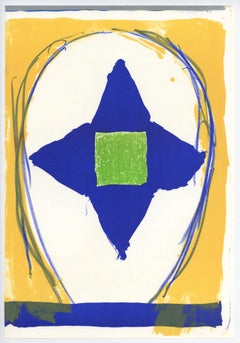
original lithograph

original lithograph

By Kimber Smith

Located in Henderson, NV

Medium: original lithograph. Printed in 1964 and published by Eberhard Kornfeld for the 1 Cent Life portfolio in an edition of 2000. Size: 16 x 11 1/8 inches (408 x 283 mm). There is...

Category

1960s Art

Materials

Lithograph

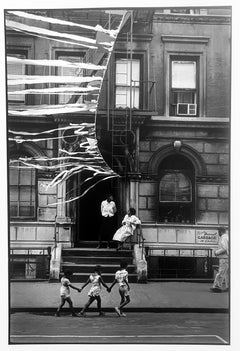
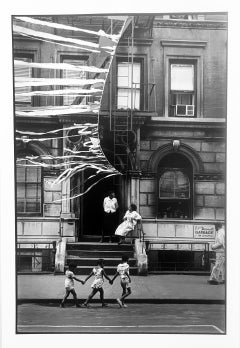
Children in Harlem, New York, Signed Archival Pigment Print, 19x13, Edition 7/10

Children in Harlem, New York, Signed Archival Pigment Print, 19x13, Edition 7/10

By Leonard Freed

Located in New york, NY

Children, Harlem, New York, USA 1963 by Leonard Freed is a 19" x 13" signed archival pigment print in an edition of 10. Signed by the estate on back of photograph by Freed's widow Brigitte Freed. Available: 7/10. Provenance: Freed estate *** Artist’s Bio: Leonard Freed (1929-2006) was an American photographer from Brooklyn, New York. His "Black in White America" series made him known as a documentarian. Freed worked as a freelance photographer from 1961 onwards and as a Magnum photographer Freed traveled widely abroad and, in the US, photographing African Americans (1964-65), events in Israel (1967-68, 1973), and the New York City police department...

Category

Contemporary 1960s Art

Materials

Photographic Film, Archival Ink, Archival Paper, Digital, Archival Pigme...

original lithograph

original lithograph

By Jean-Paul Riopelle

Located in Henderson, NV

Medium: original lithograph. Executed for Derriere le Miroir (issue number 171) in 1968, and published in Paris by Maeght. Sheet size: 15 x 10 1/2 inches (378 x 267 mm). There is pri...

Category

1960s Art

Materials

Lithograph

Muscle Boy Photograph, Limited Edition 11/15, Harlem, New York City 1963, Signed

Muscle Boy Photograph, Limited Edition 11/15, Harlem, New York City 1963, Signed

By Leonard Freed

Located in New york, NY

Muscle Boy is an iconic image by Leonard Freed who was a pioneer in documentary photography. In this photo a boy flexes his muscles for the camera perhaps making a statement about...

Category

Contemporary 1960s Art

Materials

Photographic Film, Archival Ink, Archival Paper, Digital, Archival Pigme...

Rene Magritte, My Mother Goose, 1968 (after)

Rene Magritte, My Mother Goose, 1968 (after)

By René Magritte

Located in Southampton, NY

This exquisite lithograph after Rene Magritte (1898–1967), titled Ma Mere lOye (My Mother Goose), from the folio Les Enfants Trouves de Magritte (The Found Children of Magritte), 1968, originates from the edition published by A.C. Mazo et Cie, Paris, and printed by Mourlot Freres, Paris, on November 20, 1968. The work embodies Magrittes sustained inquiry into semiotics and visual epistemology, translating his characteristic strategies of displacement, symbolic inversion, and conceptual ambiguity into an image that operates as both a poetic metaphor and a philosophical proposition concerning the instability of meaning. Executed as a lithograph on grand velin dArches paper, this work measures 17.5 x 23.5 inches (44.5 x 59.7 cm). Signed in the plate by the artist; hand signed by Fernand Mourlot, Editeur. The edition exemplifies the technical mastery of the Mourlot atelier. Artwork Details: Artist: After Rene Magritte (1898–1967) Title: Ma Mere lOye (My Mother Goose), from the folio Les Enfants Trouves de Magritte (The Found Children of Magritte) Medium: Lithograph on grand velin dArches paper Dimensions: 17.5 x 23.5 inches (44.5 x 59.7 cm) Inscription: Signed in the plate by the artist; hand signed by Fernand Mourlot, Editeur Date: 1968 Publisher: A.C. Mazo et Cie, Paris Printer: Mourlot Freres, Paris Catalogue Raisonne: Magritte, Rene, et al. Rene Magritte: Catalogue Raisonne, Vol. 3. Menil Foundation; Philip Wilson Publishers; Distributed in the USA and Canada by Rizzoli International, 1992, nos. 791–792 and 1056; vol. 5, p. 218, Bibliography entry 68.28. Condition: Well preserved, consistent with age and medium Provenance: From the folio Les Enfants Trouves de Magritte, 1968 Notes: Excerpted from the folio (translated from French), Finished printing in Paris on November 20, 1968, on the presses of Mourlot, for the lithographs. The unpublished text by Louis Scutenaire was composed in Elzevir Casion corps 28 and printed by Fequet et Baudier, typographers. The unpublished compositions numbered from I to IV were specially made by Rene Magritte for this album. The compositions of the Enchanted Domain, are the renderings of the eight paintings of the mural of the Casino de Knokke. They were printed with the benevolent authorization of Mr. Gustave J. Nellens. Justification of the draw, this album was taken from CCCL examples on grand velin dArches numbered from I to CCCL, plus a few examples for collaborators and assistants. About the Publication: Les Enfants Trouves de Magritte (The Found Children of Magritte), published in 1968 by A.C. Mazo et Cie, Paris, represents one of the most significant late life print projects devoted to Rene Magrittes work. Conceived as both a literary and visual tribute, the folio pairs texts by the Belgian writer Louis Scutenaire, Magrittes close friend and fellow Surrealist, with lithographic interpretations produced at the Mourlot atelier, the premier lithographic workshop of twentieth century France. The album includes compositions by Magritte alongside lithographic renderings of the celebrated Enchanted Domain mural from the Casino de Knokke, printed with the authorization of Gustave J. Nellens, who commissioned the original mural. Issued in a single edition of CCCL examples on grand velin dArches, the folio stands as a testament to the collaboration between artist, writer, publisher, and master printer, and remains one of the most culturally important Surrealist print albums of the post war era. About the Artist: Rene Magritte (1898–1967) was a Belgian Surrealist painter whose visionary, intellectual, and poetic imagery redefined twentieth century art and forever changed how the world perceives reality and illusion. Celebrated for his calm precision and thought provoking juxtapositions of ordinary objects in extraordinary contexts, Magritte used painting as a philosophical tool, transforming the everyday into visual paradoxes that challenged the boundaries between what is seen and what is known. Born in Lessines, Belgium, and trained at the Academie Royale des Beaux Arts in Brussels, he absorbed early influences from Cubism, Futurism, and Symbolism before embracing Surrealism, where he found his true voice. In Paris, he became part of the avant garde circle that included Pablo Picasso, Alexander Calder, Alberto Giacometti, Salvador Dali, Joan Miro, Wassily Kandinsky, Marcel Duchamp, and Man Ray—all artists whose radical ideas helped him forge his distinctive synthesis of logic and mystery. Unlike Dalis dream...

Category

Surrealist 1960s Art

Materials

Lithograph

Andrew Wyeth, May Day, from The Four Seasons (after)

Andrew Wyeth, May Day, from The Four Seasons (after)

By Andrew Wyeth

Located in Southampton, NY

This exquisite lithograph after Andrew Wyeth (1917–2009), titled May Day, originates from the distinguished 1962 folio The Four Seasons: Paintings and Drawings by Andrew Wyeth. Published and printed by Art in America Company, Inc., New York, the edition embodies Wyeth’s lyrical study of springtime renewal and human connection to the land. May Day captures a tender seasonal moment—nature reawakening beneath soft light—rendered with Wyeth’s quiet precision and emotional restraint that elevate the ordinary into the timeless. Executed on velin paper, this lithograph measures 17 x 13 inches (43.2 x 33 cm). As issued, it is unsigned and unnumbered, representing the folio’s authentic format. The Four Seasons series was conceived by the editors of Art in America in collaboration with Andrew and Betsy Wyeth, who selected drawings from the artist’s studio and private collection to express the cyclical harmony between nature and spirit. Each image reflects Wyeth’s devotion to atmosphere and the fragile poetry of the passing year. Artwork Details: Artist: After Andrew Wyeth (1917–2009) Title: May Day, from The Four Seasons, Paintings and Drawings by Andrew Wyeth, 1962 Medium: Lithograph on velin paper Dimensions: 17 x 13 inches (43.2 x 33 cm) Inscription: Unsigned and unnumbered, as issued Date: 1962 Publisher: Art in America Company, Inc., New York Printer: Art in America Company, Inc., New York Condition: Well preserved, consistent with age and medium Provenance: From the 1962 folio The Four Seasons, Paintings and Drawings by Andrew Wyeth, published and printed by Art in America Company, Inc., New York Notes: Excerpted from the 1962 folio: "In 1962 the editors of Art in America proposed to Wyeth a portfolio of images of his recent dry-brush drawings. The artist and his wife suggested the theme, 'The Four Seasons,' because of the essential role played in his work by the cycle of the seasons. The drawings were selected by Andrew and Betsy Wyeth from works in the house and studio at Chadds Ford, supplemented by some owned by friends. With a few exceptions they had never been exhibited or reproduced. The plates were made directly from the originals. In these drawings Wyeth's loving concentration on the object is fully revealed. But as always in his work, this concern with the tangible is balanced by sensibility to mood, to the emotion arising from the actual. They are pervaded with a sense of the season—the exact time of year, the hour of the day, the quality of the light. To the truth and subtlety with which he captures these intangible factors, these drawings owe their poignant poetry." About the Artist: Andrew Wyeth (1917–2009) was an American visual artist and one of the best-known painters of the mid-20th century. Although he considered himself an abstractionist, Wyeth’s work is characterized by a meticulous realism imbued with psychological depth and atmosphere. He often painted the landscapes and people surrounding his homes in Chadds Ford, Pennsylvania, and Cushing, Maine, creating an intimate record of American rural life. The son of the celebrated illustrator N. C. Wyeth, Andrew trained under his father before developing his own deeply personal visual language inspired by Winslow Homer, Henry David Thoreau, and King Vidor. His wife, Betsy Wyeth, was both his muse and career manager, while his son Jamie Wyeth continued the family’s artistic legacy. Among Wyeth’s best-known works is Christina’s World (1948), housed in the Museum of Modern Art, New York—a quintessential image of 20th-century American art. His other notable series include The Helga Pictures and his window studies, each reflecting a profound meditation on solitude, memory, and perception. Wyeth was the first painter to receive both the Presidential Medal of Freedom and the Congressional Gold Medal, and was elected to the French Académie des Beaux-Arts in 1980. In 2022, Andrew Wyeth's painting Day Dream sold for USD 23.29 million at Christie’s New York, setting a world record for the artist. Andrew Wyeth lithograph...

Category

American Realist 1960s Art

Materials

Lithograph

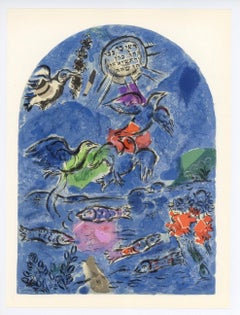
Marc Chagall, The Creation, from Drawings for the Bible, 1960

Marc Chagall, The Creation, from Drawings for the Bible, 1960

By Marc Chagall

Located in Southampton, NY

This exquisite lithograph by Marc Chagall (1887–1985), titled Creation (The Creation), from Marc Chagall, Dessins Pour La Bible (Drawings for the Bible), Verve: Revue Artistique et Litteraire, Vol. X, No. 37-38, originates from the July 29, 1960 issue published by Editions de la revue Verve, Paris, under the direction of Teriade, Editeur, Paris, and printed by Mourlot Freres, Paris, 1960. This visionary composition depicts the divine act of creation, evoking the genesis of light, life, and spirit through Chagall’s radiant imagination and poetic symbolism. The flowing forms and luminous harmonies reflect the unity between the divine and the natural world, a theme central to Chagall’s lifelong spiritual vision. Infused with movement and transcendence, the work transforms the biblical narrative into a lyrical meditation on the origin of existence and the creative essence of faith. The piece forms part of Chagall’s celebrated series of lithographs and drawings created for Dessins Pour La Bible, a monumental project uniting art, scripture, and mysticism in one of the artist’s most important achievements. Executed as a lithograph on velin du Marais paper, this work measures 14 x 10.5 inches (35.56 x 26.67 cm). Unsigned and unnumbered as issued. The edition exemplifies the superb craftsmanship of the Mourlot Freres atelier, renowned for its collaborations with the greatest modern masters of the 20th century. Artwork Details: Artist: Marc Chagall (1887–1985) Title: Creation (The Creation), from Marc Chagall, Dessins Pour La Bible (Drawings for the Bible), Verve: Revue Artistique et Litteraire, Vol. X, No. 37-38, July 29, 1960 Medium: Lithograph on velin du Marais paper Dimensions: 14 x 10.5 inches (35.56 x 26.67 cm) Inscription: Unsigned and unnumbered as issued Date: 1960 Publisher: Editions de la revue Verve, Paris, under the direction of Teriade, Editeur, Paris Printer: Mourlot Freres, Paris Catalogue raisonne references: Chagall, Marc, et al. Chagall Lithographe. Andre Sauret, 1960-1986, illustration 230-276. Cramer, Patrick, and Meret Meyer. Marc Chagall: Catalogue Raisonne des Livres Illustres. P. Cramer ed., 1995, illustration 42. Condition: Well preserved, consistent with age and medium Provenance: From Marc Chagall, Dessins Pour La Bible (Drawings for the Bible), Verve: Revue Artistique et Litteraire, Vol. X, No. 37-38, published by Editions de la revue Verve, Paris, 1960 Notes: Excerpted from the folio (translated from French), This double issue of Verve includes the drawings that Marc Chagall executed in 1958 and 1959 on biblical themes that he had not generally dealt with in his illustration for the Bible, engraved with etching and which were included in issue 33/34 of Verve. This album has 96 renderings in black and 24 color litbographies as well as the cover that were specially made for this album. It was completed printing on July 29, 1960 by Draeger Freres for black gravures and by Mourlot Freres for color lithography. About the Publication: Marc Chagall, Dessins Pour La Bible (Drawings for the Bible), published as Verve Vol. X, No. 37-38 on July 29, 1960, represents a significant continuation and expansion of Chagall’s profound engagement with biblical imagery and spiritual narrative. Conceived and directed by the visionary publisher Teriade, the publication builds upon the earlier Verve issue devoted to Chagall’s Bible illustrations by presenting a new body of work executed in 1958 and 1959, exploring themes and episodes that had not been fully addressed in the initial series. Printed in Paris by Draeger Freres for heliogravure and Mourlot Freres for lithography, the edition demonstrates an exceptional level of technical refinement and artistic collaboration. The publication includes an extensive suite of ninety six black reproductions and twenty four color lithographs, as well as specially created cover imagery, reflecting Chagall’s continued innovation in translating sacred themes into graphic form. As part of the broader tradition of Verve, one of the most important artistic and literary publications of the twentieth century, this issue exemplifies the fusion of text, image, and craftsmanship at the highest level. Today, Verve Vol. X, No. 37-38 stands as a major achievement within Chagall’s graphic oeuvre, reaffirming his role as one of the foremost interpreters of biblical narrative in modern art. About the Artist: Marc Chagall (1887–1985) was a Belarus-born French painter, printmaker, and designer whose visionary imagination, radiant color, and deeply poetic symbolism made him one of the most beloved and influential artists of the 20th century. Rooted in the imagery of his Jewish heritage and the memories of his childhood in Vitebsk, Chagall’s art wove together themes of faith, love, folklore, and fantasy with a dreamlike modern sensibility. His unique style merging elements of Cubism, Fauvism, Expressionism, and Surrealism defied categorization, transforming ordinary scenes into lyrical meditations on memory and emotion. Influenced by Russian icon painting, medieval religious art, and the modern innovations of artists such as Pablo Picasso, Henri Matisse, and Georges Braque, Chagall developed a profoundly personal visual language filled with floating figures, vibrant animals, musicians, and lovers that symbolized the transcendent power of imagination and love. During his early years in Paris, he became an integral part of the Ecole de Paris circle, forming friendships with Amedeo Modigliani, Fernand Leger, and Sonia Delaunay, and his creative spirit resonated with that of his peers and successors Alexander Calder, Alberto Giacometti, Salvador Dali, Joan Miro, Wassily Kandinsky, Marcel Duchamp, and Man Ray, artists who sought to push the boundaries of perception, emotion, and form. Over a prolific career that spanned painting, printmaking, stained glass, ceramics, and stage design, Chagall brought an unparalleled poetic sensibility to modern art, infusing even the most abstract subjects with human warmth and spiritual depth. His works are held in the most prestigious museums around the world, including the Museum of Modern Art, the Centre Pompidou, the Tate, and the Guggenheim, where they continue to inspire generations of artists and collectors. The highest price ever paid for a Marc Chagall artwork is approximately 28.5 million USD, achieved in 2017 at Sotheby’s New York for Les Amoureux (1928). Marc Chagall Creation...

Category

Expressionist 1960s Art

Materials

Lithograph

19th Century Torero and Bull Oil Painting, Figurative Expressionism

19th Century Torero and Bull Oil Painting, Figurative Expressionism

Located in Sitges, Barcelona

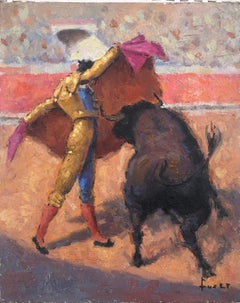
Title: Torero and Bull Artist: José María Tuser Vázquez (1919-1986) Technique: Oil on canvas mounted on board Dimensions: 18.9 x 15 inches Framing: Unframed Art Movement: Costumbrismo, Figurative Expressionism Theme: Bullfighting Date of Creation: Second half of the 20th century DESCRIPTION The painting Torero and Bull depicts a classic bullfighting scene, where a matador, elegantly dressed in a golden and violet traje de luces, performs a pass with the cape while the bull, wounded with banderillas, bows toward the ground. The composition conveys dynamism and tension, emphasizing the drama of the moment with loose and expressive brushstrokes. The background is rendered in warm, diffused tones, contrasting with the deep black of the bull and the vivid hues of the cape. The thick brushwork and vibrant oil application enhance the sense of movement and emotion in the scene, a distinctive feature of Tuser Vázquez’s bullfighting paintings. ARTIST'S BIOGRAPHY José María Tuser Vázquez (Barcelona, 1919 - 1986) was a Spanish painter specializing in bullfighting themes. He trained at the School of Arts and Crafts in Barcelona, where he developed a strong foundation in drawing and painting. From 1947 onwards, he dedicated his artistic production to tauromaquia, creating posters, illustrations, and paintings that captured the intensity of the bullfighting spectacle. He was a regular contributor to the magazine El Ruedo and designed a series of postcards featuring traditional Spanish costumes for Editorial Artigas in the 1940s. His work has been auctioned numerous times and is highly valued by collectors of bullfighting art...

Category

Expressionist 1960s Art

Materials

Board, Oil, Canvas

Andrew Wyeth, Burning Off, from The Four Seasons (after)

Andrew Wyeth, Burning Off, from The Four Seasons (after)

By Andrew Wyeth

Located in Southampton, NY

This exquisite lithograph after Andrew Wyeth (1917–2009), titled Burning Off, originates from the distinguished 1962 folio The Four Seasons: Paintings and Drawings by Andrew Wyeth. Published and printed by Art in America Company, Inc., New York, the edition captures Wyeth’s poetic meditation on atmosphere and transformation. Burning Off depicts a summer morning’s sea fog gradually lifting from the landscape, revealing the tranquil geometry of field and horizon. Through restrained tonal contrasts and delicate textural nuance, Wyeth conveys both the mystery and stillness of the natural world in transition. Executed on velin paper, this lithograph measures 17 x 13 inches (43.2 x 33 cm). As issued, it is signed in the plate and unnumbered, representing the folio’s authentic format. The Four Seasons series was conceived by the editors of Art in America in collaboration with Andrew and Betsy Wyeth, who selected drawings from the artist’s studio and personal collection to embody the cyclical poetry of the seasons. Each image reflects Wyeth’s profound sensitivity to light, time, and emotion—his ability to evoke the spiritual essence of landscape through quiet realism. Artwork Details: Artist: After Andrew Wyeth (1917–2009) Title: Burning Off, from The Four Seasons, Paintings and Drawings by Andrew Wyeth, 1962 Medium: Lithograph on velin paper Dimensions: 17 x 13 inches (43.2 x 33 cm) Inscription: Signed in the plate and unnumbered, as issued Date: 1962 Publisher: Art in America Company, Inc., New York Printer: Art in America Company, Inc., New York Condition: Well preserved, consistent with age and medium Provenance: From the 1962 folio The Four Seasons, Paintings and Drawings by Andrew Wyeth, published and printed by Art in America Company, Inc., New York Notes: Excerpted from the 1962 folio: "In 1962 the editors of Art in America proposed to Wyeth a portfolio of images of his recent dry-brush drawings. The artist and his wife suggested the theme, 'The Four Seasons,' because of the essential role played in his work by the cycle of the seasons. The drawings were selected by Andrew and Betsy Wyeth from works in the house and studio at Chadds Ford, supplemented by some owned by friends. With a few exceptions they had never been exhibited or reproduced. The plates were made directly from the originals. In these drawings Wyeth's loving concentration on the object is fully revealed. But as always in his work, this concern with the tangible is balanced by sensibility to mood, to the emotion arising from the actual. They are pervaded with a sense of the season—the exact time of year, the hour of the day, the quality of the light. To the truth and subtlety with which he captures these intangible factors, these drawings owe their poignant poetry." About the Artist: Andrew Wyeth (1917–2009) was an American visual artist and one of the best-known painters of the mid-20th century. Although he considered himself an abstractionist, Wyeth’s work is characterized by a meticulous realism imbued with psychological depth and atmosphere. He often painted the landscapes and people surrounding his homes in Chadds Ford, Pennsylvania, and Cushing, Maine, creating an intimate record of American rural life. The son of the celebrated illustrator N. C. Wyeth, Andrew trained under his father before developing his own deeply personal visual language inspired by Winslow Homer, Henry David Thoreau, and King Vidor. His wife, Betsy Wyeth, was both his muse and career manager, while his son Jamie Wyeth continued the family’s artistic legacy. Among Wyeth’s best-known works is Christina’s World (1948), housed in the Museum of Modern Art, New York—a quintessential image of 20th-century American art. His other notable series include The Helga Pictures and his window studies, each reflecting a profound meditation on solitude, memory, and perception. Wyeth was the first painter to receive both the Presidential Medal of Freedom and the Congressional Gold Medal, and was elected to the French Académie des Beaux-Arts in 1980. In 2022, Andrew Wyeth's painting Day Dream sold for USD 23.29 million at Christie’s New York, setting a world record for the artist. Andrew Wyeth lithograph...

Category

American Realist 1960s Art

Materials

Lithograph

"Picador" 1966 Experimental Surrealist Composition

"Picador" 1966 Experimental Surrealist Composition

Located in Soquel, CA

"Picador" 1966 Experimental Surrealist Composition Intriguing mixed-media piece by prominent California artist Morris Broderson (b. 1928 d. 2011.) A picador sits upon his horse, hol...

Category

Surrealist 1960s Art

Materials

Paper, Watercolor, Graphite, Pinhole, Color Pencil

original lithograph

original lithograph

By Paul Jenkins

Located in Henderson, NV

Medium: original lithograph. Printed in Paris in 1964 by Mourlot Freres and issued in an edition of 2000 on Arches wove paper. Size: 10 x 7 1/2 inches (255 x 188 mm). Not signed.

Category

1960s Art

Materials

Lithograph

Original Air France Greece (Grece) vintage travel poster

Original Air France Greece (Grece) vintage travel poster

By Georges Mathieu

Located in Spokane, WA

Original Air France Grece vintage travel poster. Linen-backed original travel poster by Air France to Greece. Stylized Greek columns and the Parthenon in Athens, Greece sit on a mediterranean blue background. Very good condition, A- Ready to frame. Edges were trimmed at the time of linen backing. The creation of this poster was part of a larger series initiated by Pierre Sautet, the Deputy Commercial Director of Air France. Mathieu began working on these posters a year earlier and completed the series in 1967. Air France is France's flag carrier airline, one of the world's largest and most well-known airlines. Established in 1933, the airline has a rich history and has played a significant role in the development of international air travel. Air France often featured a distinctive style that reflected the cultural and artistic trends of the time. From the Art Deco elegance of the 1930s to the vibrant colors and bold designs of the 1960s, these posters represent the changing aesthetics over the decades. Due to their artistic quality and historical significance, Air France vintage posters...

Category

Abstract 1960s Art

Materials

Offset

Marc Chagall, Eve Cursed by God, from Drawings for the Bible, 1960

Marc Chagall, Eve Cursed by God, from Drawings for the Bible, 1960

By Marc Chagall

Located in Southampton, NY

This exquisite lithograph by Marc Chagall (1887–1985), titled Eve maudite par Dieu (Eve Cursed by God), from Marc Chagall, Dessins Pour La Bible (Drawings for the Bible), Verve: Revue Artistique et Litteraire, Vol. X, No. 37-38, originates from the July 29, 1960 issue published by Editions de la revue Verve, Paris, under the direction of Teriade, Editeur, Paris, and printed by Mourlot Freres, Paris, 1960. This visionary composition reflects Chagall’s poetic interpretation of the biblical moment of divine judgment following the Fall, evoking themes of transgression, consequence, and spiritual awakening through his luminous color and dreamlike symbolism. The flowing forms and expressive imagery convey a sense of tension and emotional gravity, capturing Eve’s moment of reckoning and its enduring resonance within Chagall’s distinctive visual language. Infused with movement and lyricism, the work transforms sacred narrative into a meditative vision of loss, accountability, and the origins of human suffering. The piece forms part of Chagall’s celebrated series of lithographs and drawings created for Dessins Pour La Bible, a monumental project uniting art, scripture, and mysticism in one of the artist’s most important achievements. Executed as a lithograph on velin du Marais paper, this work measures 14 x 10.5 inches (35.56 x 26.67 cm). Unsigned and unnumbered as issued. The edition exemplifies the superb craftsmanship of the Mourlot Freres atelier, renowned for its collaborations with the greatest modern masters of the 20th century. Artwork Details: Artist: Marc Chagall (1887–1985) Title: Eve maudite par Dieu (Eve Cursed by God), from Marc Chagall, Dessins Pour La Bible (Drawings for the Bible), Verve: Revue Artistique et Litteraire, Vol. X, No. 37-38, July 29, 1960 Medium: Lithograph on velin du Marais paper Dimensions: 14 x 10.5 inches (35.56 x 26.67 cm) Inscription: Unsigned and unnumbered as issued Date: 1960 Publisher: Editions de la revue Verve, Paris, under the direction of Teriade, Editeur, Paris Printer: Mourlot Freres, Paris Catalogue raisonne references: Chagall, Marc, et al. Chagall Lithographe. Andre Sauret, 1960-1986, illustration 230-276. Cramer, Patrick, and Meret Meyer. Marc Chagall: Catalogue Raisonne des Livres Illustres. P. Cramer ed., 1995, illustration 42. Condition: Well preserved, consistent with age and medium Provenance: From Marc Chagall, Dessins Pour La Bible (Drawings for the Bible), Verve: Revue Artistique et Litteraire, Vol. X, No. 37-38, published by Editions de la revue Verve, Paris, 1960 Notes: Excerpted from the folio (translated from French), This double issue of Verve includes the drawings that Marc Chagall executed in 1958 and 1959 on biblical themes that he had not generally dealt with in his illustration for the Bible, engraved with etching and which were included in issue 33/34 of Verve. This album has 96 renderings in black and 24 color litbographies as well as the cover that were specially made for this album. It was completed printing on July 29, 1960 by Draeger Freres for black gravures and by Mourlot Freres for color lithography. About the Publication: Marc Chagall, Dessins Pour La Bible (Drawings for the Bible), published as Verve Vol. X, No. 37-38 on July 29, 1960, represents a significant continuation and expansion of Chagall’s profound engagement with biblical imagery and spiritual narrative. Conceived and directed by the visionary publisher Teriade, the publication builds upon the earlier Verve issue devoted to Chagall’s Bible illustrations by presenting a new body of work executed in 1958 and 1959, exploring themes and episodes that had not been fully addressed in the initial series. Printed in Paris by Draeger Freres for black gravures and Mourlot Freres for color lithography, the edition demonstrates an exceptional level of technical refinement and artistic collaboration. The publication includes an extensive suite of ninety six black reproductions and twenty four color lithographs, as well as specially created cover imagery, reflecting Chagall’s continued innovation in translating sacred themes into graphic form. As part of the broader tradition of Verve, one of the most important artistic and literary publications of the twentieth century, this issue exemplifies the fusion of text, image, and craftsmanship at the highest level. Today, Verve Vol. X, No. 37-38 stands as a major achievement within Chagall’s graphic oeuvre, reaffirming his role as one of the foremost interpreters of biblical narrative in modern art. About the Artist: Marc Chagall (1887–1985) was a Belarus-born French painter, printmaker, and designer whose visionary imagination, radiant color, and deeply poetic symbolism made him one of the most beloved and influential artists of the 20th century. Rooted in the imagery of his Jewish heritage and the memories of his childhood in Vitebsk, Chagall’s art wove together themes of faith, love, folklore, and fantasy with a dreamlike modern sensibility. His unique style merging elements of Cubism, Fauvism, Expressionism, and Surrealism defied categorization, transforming ordinary scenes into lyrical meditations on memory and emotion. Influenced by Russian icon painting, medieval religious art, and the modern innovations of artists such as Pablo Picasso, Henri Matisse, and Georges Braque, Chagall developed a profoundly personal visual language filled with floating figures, vibrant animals, musicians, and lovers that symbolized the transcendent power of imagination and love. During his early years in Paris, he became an integral part of the Ecole de Paris circle, forming friendships with Amedeo Modigliani, Fernand Leger, and Sonia Delaunay, and his creative spirit resonated with that of his peers and successors Alexander Calder, Alberto Giacometti, Salvador Dali, Joan Miro, Wassily Kandinsky, Marcel Duchamp, and Man Ray, artists who sought to push the boundaries of perception, emotion, and form. Over a prolific career that spanned painting, printmaking, stained glass, ceramics, and stage design, Chagall brought an unparalleled poetic sensibility to modern art, infusing even the most abstract subjects with human warmth and spiritual depth. His works are held in the most prestigious museums around the world, including the Museum of Modern Art, the Centre Pompidou, the Tate, and the Guggenheim, where they continue to inspire generations of artists and collectors. The highest price ever paid for a Marc Chagall artwork is approximately 28.5 million USD, achieved in 2017 at Sotheby’s New York for Les Amoureux (1928). Marc Chagall Eve...

Category

Expressionist 1960s Art

Materials

Lithograph

Lithographier Originale (Abstract Expressionism)

Lithographier Originale (Abstract Expressionism)

By Joan Miró

Located in Kansas City, MO

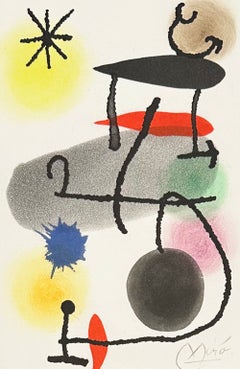
Joan Miro Lithographier Originale Original Color Lithograph Year: 1961 Size: 14.5x10.5in Edition: 1,500 Portfolio: DLM 125-126 Publisher: Maeght Editeur, Paris 1961 Additional text...

Category

Modern 1960s Art

Materials

Lithograph

original lithograph

original lithograph

By Joan Miró

Located in Henderson, NV

Medium: original lithograph. Catalogue reference: Mourlot 508. Printed in 1967 for the art revue Derriere le Miroir (issue number 164-165 -- L'Oiseau Solaire, L'Oiseau Lunaire, Etinc...

Category

Abstract 1960s Art

Materials

Lithograph

'Green Shade' — Mid-century Modernism, Abstract Expressionism, Atelier 17

'Green Shade' — Mid-century Modernism, Abstract Expressionism, Atelier 17

By Stanley William Hayter

Located in Myrtle Beach, SC

Stanley William Hayter, 'Green Shade', color etching and scraper, 1963, edition 50, (only 39 printed), B&M 278. Signed, titled, dated, and numbered '1/50' in pencil. A superb, richly-inked, luminous impression, with fresh, vivid colors, on Barcham Green textured cream wove paper; the full sheet with margins (2 3/16 to 3 1/4 inches), in excellent condition. Printed: intaglio black-green, contact lumogen yellow, soft roller phthalo green. Scarce. Image size 15 7/16 x 11 5/8 inches (392 x 295 mm); sheet size 21 1/8 x 16 inches (537 x 406 mm). Matted to museum standards (unframed). Collection: The British Museum ABOUT THE ARTIST Stanley William Hayter (1901-1988) was a British painter and printmaker associated in the 1930s with Surrealism and from 1940 onward with Abstract Expressionism. Regarded as one of the most significant printmakers of the 20th century, Hayter founded the legendary Atelier 17...

Category

Abstract Expressionist 1960s Art

Materials

Etching

Sitges Spain oil on canvas painting mediterranean art spanish seascape

Sitges Spain oil on canvas painting mediterranean art spanish seascape

By Rafael Durancamps

Located in Sitges, Barcelona

Title: Sitges Artist: Rafael Durancamps i Folguera (1891–1979) Technique: Oil on canvas Dimensions: 38 x 61 cm (14.96 x 24.01 in) Support: Canvas stretched over wooden stretcher Framing: Unframed Signature: Signed lower left: Durancamps Period: 1960s (estimated based on style, technique, and materials) Work Description The painting Sitges depicts an evocative scene of the iconic Catalan coastal town. At the center stands the unmistakable silhouette of the Church of Sant Bartomeu i Santa Tecla, surrounded by cascading white houses that descend toward the shore. A solitary fisherman in the foreground casts his rod from the sand, adding a human and melancholic dimension to the landscape. The composition reflects Rafael Durancamps’s mastery in atmospheric construction: the balance between sky, architecture, and figure is achieved through loose yet controlled brushstrokes, and a sober palette dominated by earthy tones, ochres, blues, and greys. The scene conveys stillness, everyday life, and a sense of belonging to the landscape—recurring qualities in the artist’s work. Artist Biography: Rafael Durancamps i Folguera (1891–1979) Born in Sabadell, Rafael Durancamps was one of the leading Catalan figurative painters of the 20th century. Initially trained under Joan Vila Cinca and a friend of Joaquim Mir, he chose a personal path that distanced him from avant-garde movements. In 1926, he moved to Paris, where he founded La Fenêtre Ouverte gallery, bringing together artists such as Salvador Dalí, André Derain, Joan Miró, and Pablo Picasso. After permanently returning to Barcelona in 1939, he exhibited regularly at Sala Parés and established a distinctive style rooted in lyrical light, intimate observation of everyday life, and a refined technique—particularly in still lifes, landscapes, and solitary figures. His work is held in major collections, including the Museu Nacional d’Art de Catalunya (MNAC), the Montserrat Museum, the Sabadell Art Museum, and the BBVA Collection. Comparable Artists Rafael Durancamps can be linked stylistically or spiritually to several major names in modern figurative art: Joaquim Mir – for his lyrical treatment of the Catalan landscape and vibrant light Santiago Rusiñol – for his poetic approach to architecture and the Mediterranean environment Maurice Utrillo – in his sober and nostalgic depictions of towns and vernacular architecture Edward Hopper – for the silent presence of solitary figures in open spaces Darío de Regoyos...

Category

Post-Impressionist 1960s Art

Materials

Canvas, Oil

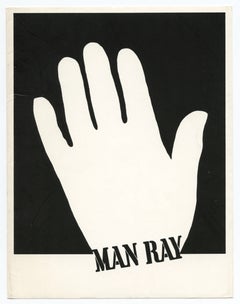
After Man Ray 'Lips' 1966 Original Poster, Vintage

After Man Ray 'Lips' 1966 Original Poster, Vintage

By Man Ray

Located in Brooklyn, NY

First edition exhibition poster designed and created by Man Ray for the opening of the Los Angeles County Museum of Art in 1966. It is unsigned and not numbered. An undetermined amou...

Category

Contemporary 1960s Art

Materials

Offset

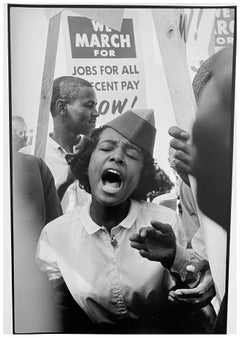
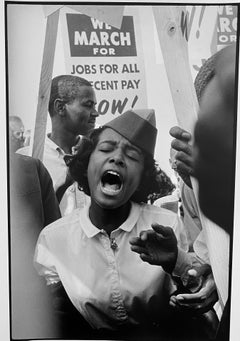
Woman Protestor, 1960s, Washington, Signed Gelatin Silver Photograph, 14x11


Woman Protestor, 1960s, Washington, Signed Gelatin Silver Photograph, 14x11
By Leonard Freed

Located in New york, NY

American photographer Leonard Freed enjoyed documentary storytelling and as a "concerned photographer" his photography demonstrated humanitarian concerns. Woman Protestor, March on Washington, 1963 by Leonard Freed, is a 14" x 11" gelatin silver photograph, signed and stamped on verso (back of photo) by the estate, Brigitte Freed (wife of the photographer). The photo is in Leonard Freed's book “This Is the Day: The March on Washington'' (p. 50). The photographer travelled to New York, Washington, D.C., and throughout the South, capturing the daily lives of African-Americans. Documenting the 1960s Civil Rights Movement from the East Coast to the Deep South, Freed’s photo essay culminated in the book Black in White America, which contributed to Freed's becoming a well-known documentary photographer of 20th Century America. After Freed’s death in 2006 his widow, Brigitte Freed was inspired to compile a book on the March on Washington from her late husband’s archive because she heard then-Senator former President Barack Obama remark to an audience of civil rights activists, “I stand here because you walked.” The March on Washington series is a powerful visual testimony, capturing protests that culminated in Dr. Martin Luther King Jr.’s “I Have a Dream'' speech, delivered at the base of the Lincoln Memorial. Provenance: Freed estate *** Artist’s Bio: Leonard Freed (1929-2006) was an American photographer from Brooklyn, New York. His "Black in White America" series made him known as a documentarian, a social documentary photographer. Freed worked as a freelance photographer from 1961 onwards and as a Magnum photographer Freed traveled widely abroad and, in the US, photographing African Americans (1964-65), events in Israel (1967-68, 1973), and the New York City police department (1972-79). Freed's coverage of the American civil rights...
Category

Contemporary 1960s Art

Materials

Photographic Film, Photographic Paper, Silver Gelatin