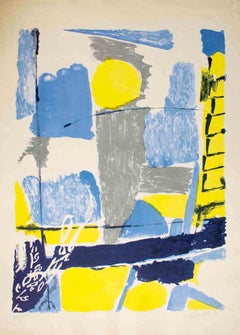
Composition Lithograph, Abstract Style, Signed, Edition of 150, 1961
Located in Roma, IT
Hand signed and numbered by artist with pencil. Edition of 150 prints. Very good conditions.
Category
Abstract 1960s Art
Materials
Lithograph
Composition Lithograph, Abstract Style, Signed, Edition of 150, 1961
Located in Roma, IT
Hand signed and numbered by artist with pencil. Edition of 150 prints. Very good conditions.
Lithograph
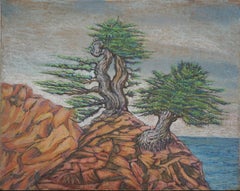
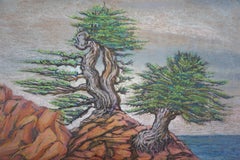
Mid Century Carmel-by-the Sea Cypress on the Bluff Coastal Plein Air Landscape
Located in Soquel, CA
Mid Century Carmel Cypress Plein Air Landscape in Oil Pastel by Genevieve Rogers Two wind-sculpted Monterey cypress trees cling to rugged coastal bluff...
Oil Pastel, Board, Cardboard
$864Sale Price|20% Off
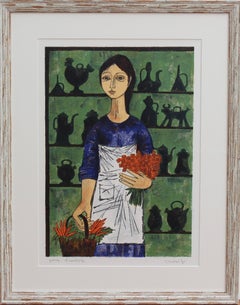
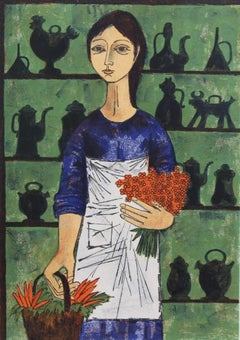
Melancholic Muses V Lithograph, Signed Artist Proof, Modern, 1960s
Located in London, GB
'Melancholic Muses V', one of a poignant set of six signed artist proof lithographs by the celebrated Spanish artist from Barcelona, Vicenç Caraltó (circa 1960s). This collection of ...
Lithograph
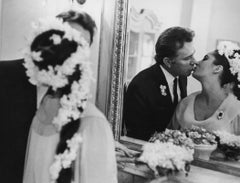
"Burton And Taylor" by Express
Located in London, GB
"Burton And Taylor" by Express 15th March 1964: Actress Elizabeth Taylor marries her fifth husband Richard Burton (1925-1984) in Montreal. Unframed Paper Size: 12" x 16'' (inches) ...
Black and White
$869
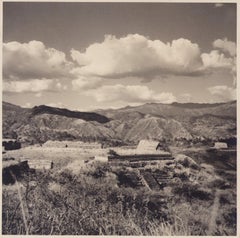
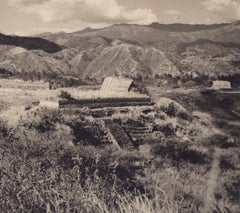
Guatemala, Landscape, Black and White Photography, ca. 1960s, 24, 1 x 24 cm
By Hanna Seidel
Located in Cologne, DE
Hanna Seidel (1925 to 2005) lived and worked in Argentina for many years. She was a world traveller, journeying to South America in the 1950s and to Central America, Japan, India, an...
Black and White, Silver Gelatin
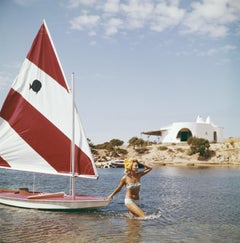
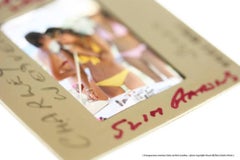
Bettina Graziani Slim Aarons Estate Stamped Print
By Slim Aarons
Located in London, GB
Bettina Graziani French fashion model Bettina Graziani wading in the shallow waters of Costa Smeralda, pulling a small yacht behind her, in Sardinia, Italy, 1964. 20 x 20" - pape...
Archival Pigment, Color
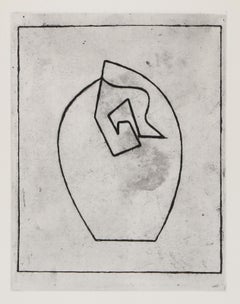
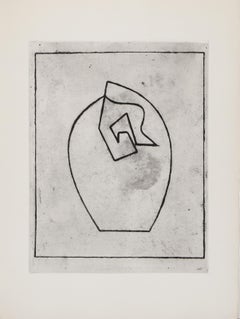
La Cathedrale est Un Coeur, Minimalist Etching by Jean Arp
By Jean Arp
Located in Long Island City, NY
Jean Arp, French (1886 - 1966) - La Cathedrale est Un Coeur, Portfolio: Vers Le Blanc Infini, Year: 1960, Medium: Etching on BFK Rives, Edition: 349/499, Image Size: 10.5 x 8.25...
Etching
$1,100Sale Price|44% Off
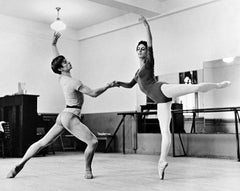
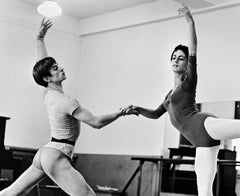
ABT Dancer Lupe Serrano & Rudolph Nureyev Rehearsing for Television, Signed
Located in Senoia, GA
11 x 14" vintage silver gelatin photograph of American Ballet Theater ballerina Lupe Serrano and Rudolf Nureyev rehearsing at ABT for a television appearance, 1962. Signed by Jack Mitchell. Comes directly from the Jack Mitchell Archives with a certificate of authenticity. Jack Mitchell, (1925-2013) bulging photographic portfolio of actors, writers, painters, musicians and especially dancers describes a pictorial history of the arts in the late 20th century. Mr. Mitchell, who took hundreds of pictures for The New York Times, was both a portraitist and a capturer of complex motion. An expert in lighting, he worked mostly, though not entirely, in black and white, and he was known — by his subjects, by the magazine and newspaper editors he worked for, and by critics — as someone who could make a photograph reveal character. Jack Mitchell was the official photographer for the American Ballet Theater, and he chronicled the work of the Alvin Ailey American Dance Theater for more than thirty years. When he retired in 1995, he had fulfilled more than 5,000 assignments in black and white, and nearly a thousand in color. He photographed more than 160 covers for Dance magazine, and his photos have appeared in Time, Life, Newsweek, Rolling Stone, Vanity Fair, Vogue and many other publications. Mitchell’s photographs are in the collections of the National Portrait Gallery, the Museum of African American History and Culture, and the Smithsonian Archives of American Art, among others. The 2019 USPS Black Heritage postage stamp honoring American performer Gregory Hines was made from a Jack Mitchell photograph, and a Jack Mitchell photograph of Audre Lorde...
Silver Gelatin
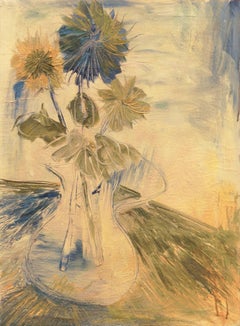
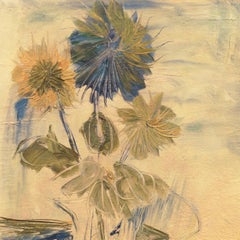
'Still Life of Flowers in a Jug', School of Paris, French Post-Impressionist oil
By Frank Gebhart
Located in Santa Cruz, CA
A substantial, mid-century oil showing sunflowers informally arranged in a glass vase. An accomplished tonalist work with delicate color and animated, calligraphic brush-work showing...
Canvas, Oil
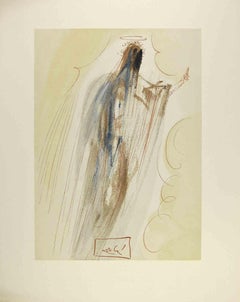
Arrival in the Empyrean - Woodcut - 1963
Located in Roma, IT
Arrival in the Empyrean - "The Divine Comedy" - Song 30 - Paradise is a woodcut print realized in 1963 for a series illustrating the Medieval poem of the "Divine Comedy" by Dante A...
Woodcut
$2,280Sale Price|20% Off
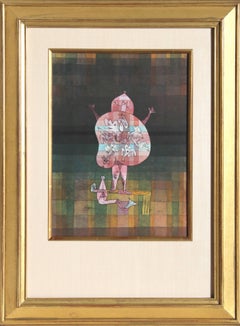
Bauchredner und Rufer im Moor, Cubist Pochoir Print on Rice Paper by Paul Klee
By Paul Klee
Located in Long Island City, NY
Artist: Paul Klee, After, Swiss (1879 - 1940) Title: Bauchredner und Rufer im Moor (Ventiloque criant dans le marais) Year: 1964 after 1920 Drawing Medium: Pochoir on Rice Paper, Sig...
Rice Paper, Stencil
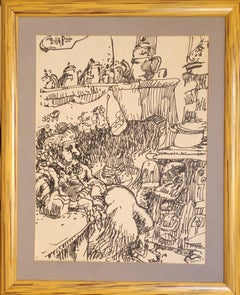
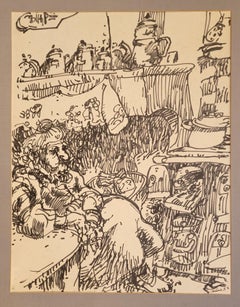
Mid-Century French Feutre on Paper. Tea time In the Kitchen.
By Jean Arène
Located in Cotignac, FR
Late Mid Century French feutre drawing on paper of a Provençal lady sitting in her kitchen by Jean Arène. Signed and dated bottom left. This artwork is a striking pen-and-ink drawing that vividly captures a cluttered interior scene filled with an assortment of teapots and household objects. The central figure, an elderly lady with an expressive face, sits at a table surrounded by an overwhelming array of details. The artist uses bold, dynamic lines to convey a sense of chaos and charm, creating an atmosphere of cozy clutter. The composition’s intricacy draws the viewer's eye around the room, showcasing...
Paper, Felt Pen

$2,650
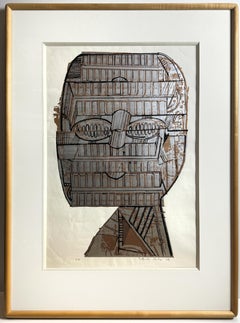
Hero as a Riddle by Eduardo Paolozzi gold silver pop art with Basquiat style
Located in New York, NY
Hero as a Riddle (1963) depicts a smiling head printed in gold, silver, and black. The shapes and lines composing the figure’s face are architectural and geometric: the eyes are comp...
Screen
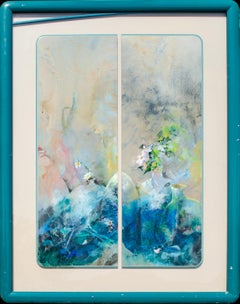
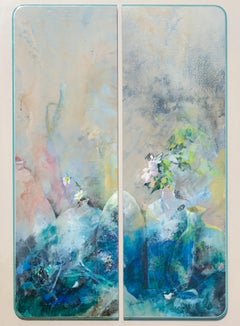
Lovely Watercolor Panels by Japanese Woman Artist Eiko Kahn
Located in New York, NY
Eiko Taniguchi Kahn (b. 1929) Untitled, c. 1960s Watercolor on board Each panel: 33 x 11 in. Framed: 45 1/2 x 32 x 1 in. Each panel signed bottom These stunning watercolor panels are beautifully mounted in a period frame. The frame needs some minor restoration but this would be a worthy repair, as it matches the artwork so nicely. Eiko Taniguchi Kahn was Japanese Artist who was born on January 24, 1929 in Fukuoka, Kyushu, Japan, to Tosuke Yamashita and Masano Taniguchi. She came to the United States in 1955, and was naturalized in 1958. She was the recipient of the President's award at the National Arts...
Watercolor, Board
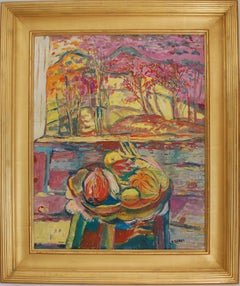
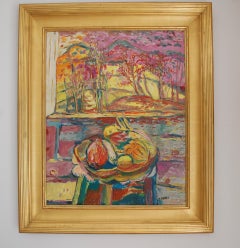
Still Life With Fruit On The Table
Located in Lake Worth Beach, FL
Fruit On The Table Artist signed lower right, 22K Gold Motyka custom made frame, canvas size 30x24 frame 38x32. Judith Sobel was born in Lwow Poland in 1924. After World War II, she attended the Academy of Fine Arts in Lodz, Poland. There she studied with the famous abstract constructionists, Wladyslaw Strzeminski and Stefan Wegner from whom she learned the principles of Modern Art as laid down by the European Cubists. Sobel’s work was selected for the First Exhibit of Modern Art Museum Krakow in 1948-49. Judith Sobel emigrated to the newly found Israel where she lived for five years, becoming very active in Israel’s emerging art world. Her work was collected and exhibited by the major art museums of Israel including the Museum of Modern Art at Haifa; her art was regularly shown in the Israeli galleries. In 1956, Sobel came to New York on a scholarship, and before that she lived in France for two years. The same year she received the First Prize at the Exhibition in the Saks...
Cotton Canvas, Oil
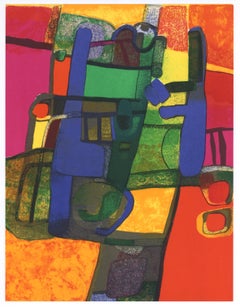
original lithograph
Located in Henderson, NV
Medium: original lithograph. Printed in 1969 for the art revue XXe Siecle (issue number 33) and published in Paris by San Lazzaro. Size: 12 1/4 x 9 3/8 inches (310 x 238 mm). Not si...
Lithograph
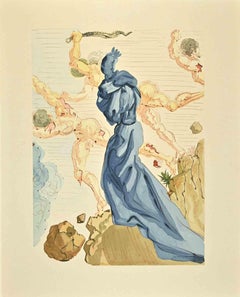
Hard Margins - Lithograph - 1964
Located in Roma, IT
La divina Commedia - Hard Margins is a Color Wood-cut on heavy rag paper realized in 1964. It is part of Biblia Sacra vulgatæ edition is published by Rizzoli-Mediolani between 1967 a...
Lithograph
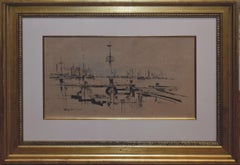
"SHRIMP BASIN" GALVESTON TEXAS INK AND WATERCOLOR DATED 1962
Located in San Antonio, TX
Buck Schiwetz (1898-1984) Houston Artist Image Size: 12.5 x 22 Frame Size: 25.5 x 34.5 Medium: Ink & watercolor on board Dated 1962 "Shrimp Basin, Galveston" Buck Schiwetz (1898-...
Ink, Watercolor
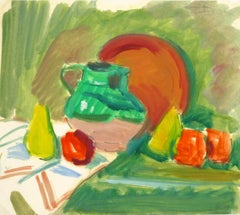
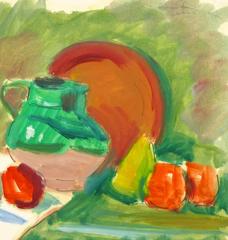
Vintage French Still Life Painting
Located in Houston, TX
Still life painting by French artist Madeleine Scali (1911-2000), circa 1960. Original one-of-a-kind vintage work of art on paper displayed on a white mat with a gold border and fi...
Paper, Acrylic
$60Sale Price|20% Off
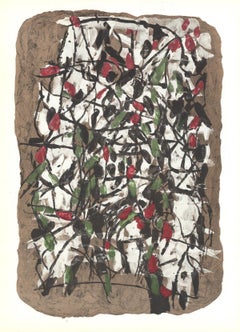
Jean-Paul Riopelle 'Composition XVIII-160' 1966- Lithograph
Located in Brooklyn, NY
Paper Size: 15 x 11 inches ( 38.1 x 27.94 cm ) Image Size: 15 x 11 inches ( 38.1 x 27.94 cm ) Framed: No Condition: A-: Near Mint, very light signs of handling Additional Details: C...
Lithograph
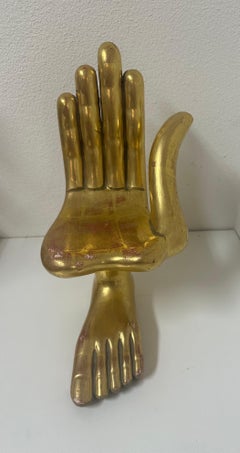
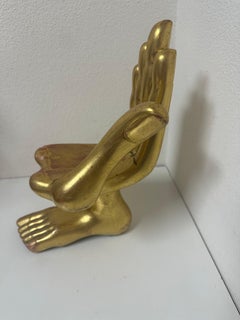
Pedro Friedeberg, "Hand Foot", unique sculpture
Located in Chatsworth, CA
Pedro Friedeberg Unique Hand Foot Sculpture Gilt finished wood Signed PEDRO FRIEDEBERG on bottom of the foot 12 inches tall, 6 inches wide (base of hand), 3 inches wide (base of foot...
Wood
$680Sale Price|54% Off
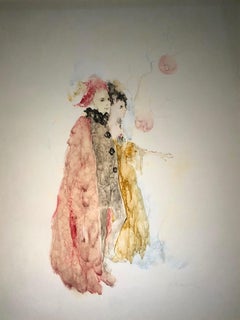
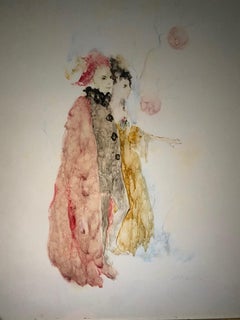
Les Pierrots by André Braunecker - Oil on paper 50x65 cm
Located in Geneva, CH
Oil paint on paper with glass and frame. Signed and certified by the artist.
Oil
$4,200
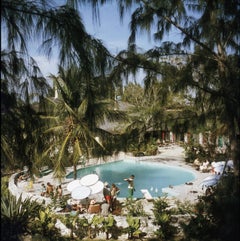
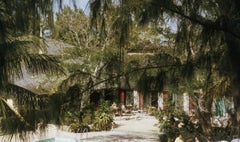
Eleuthera Pool Party - Slim Aarons - Bahamas - color photography 20th century
By Slim Aarons
Located in London, GB
'Eleuthera Pool Party' by Slim Aarons LIMITED EDITION ESTATE STAMPED PRINT Numbered in ink to 150 only and emboss stamped on front. Guests at the French Leave...
C Print
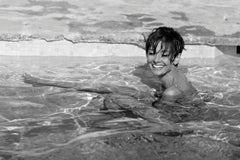

Audrey Hepburn in Pool, 1966 by Terry O'Neill
Located in Chicago, IL
Audrey Hepburn having a swim during a break from filming Stanley Donen’s 1967 work ‘Two for the Road’ in St Tropez. Limited edition silver gelatin print Paper size: 16 H x 20 W inc...
Silver Gelatin
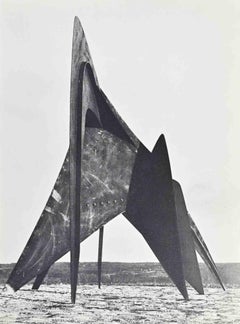
Calder's Stabiles - Photolithograph - 1963
Located in Roma, IT
Photolithograph on paper, realized in 1963 for the french Art Review Derrière le Miroir. Not signed. Very good condition.
Lithograph
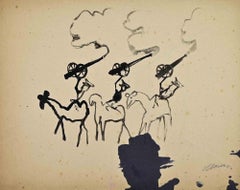
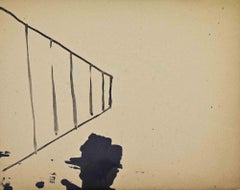
Cannons and War Watercolor on Paper, Modern Style, Signed, 1960s
By Mino Maccari
Located in Roma, IT
Watercolor on paper realized by Mino Maccari in the mid-20th Century. Hand signed lower right. Very good condition.
Paper, Watercolor
$540Sale Price|20% Off
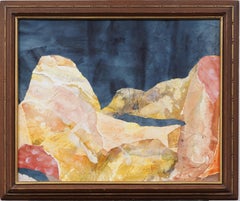
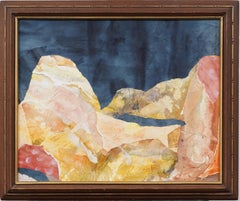
Antique American Modernist Abstract Expressionist Southwest Framed Oil Painting
Located in Buffalo, NY
Impressive early American modernist abstract painting. Framed. Oil on board. Image size, 16H by 20L.
Canvas, Oil
$1,500
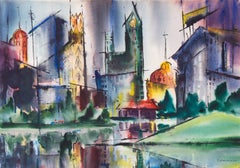
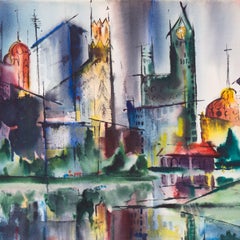
'Lakeshore Drive, Chicago', Modernist Cityscape, Woman Artist, Crocker Museum
Located in Santa Cruz, CA
A mid-century, Modernist view of Chicago, seen in the evening with the lights of numerous buildings reflected in the still waters of Lake Michigan. Signed lower right "M. Backman" f...
Watercolor, Handmade Paper
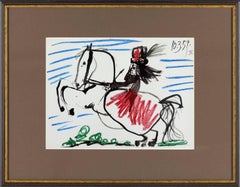
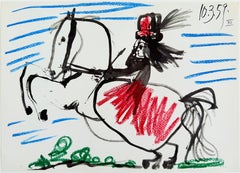
Jacqueline, Lithograph, Modern, 1961, Framed, Excellent
Located in OPOLE, PL
Pablo Picasso (1881-1973) - Jacqueline Lithograph with quadrochromy from 1961. Dimensions of sheet: 27 x 37.9 cm Dimensions in frame: 43.2 x 53.2 cm Publisher: Éditions Cercle d'...
Lithograph
$2,360Sale Price|20% Off
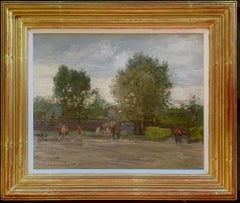
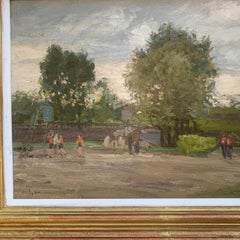
French Impressionist landscape the South of France, with children playing
Located in Woodbury, CT
A wonderful French impressionist landscape of children playing in a playground somewhere in the South of France. The earliest work by the artist is from the late 1960s and this piece...
Oil
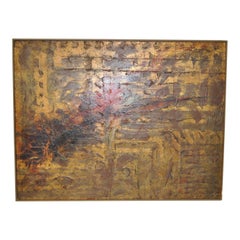
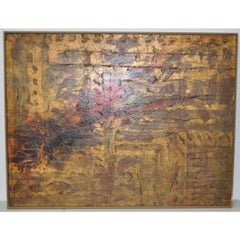
Large Mid-Century Abstract Oil Painting By E. Costello
Located in San Francisco, CA
Mid Modern Abstract Oil Painting By E. Costello Large and impressive abstract oil painting created with oils on Masonite. This painting can hang vertical, or horizontal. Dimension...
Oil
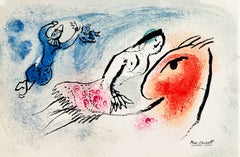
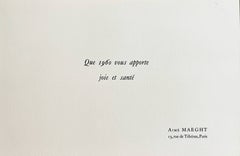
New Year's Card, Original Lithograph, Modern, 1960, Framed
By Marc Chagall
Located in OPOLE, PL
Marc Chagall (1887-1985) - New Year's Card Lithograph from 1960. Dimensions of sheet: 26.5 x 34 cm Dimensions in frame: 53.2 x 43.2 cm Printer: F. Mourlot, Paris. Reference: Cha...
Lithograph
$1,050Sale Price|40% Off
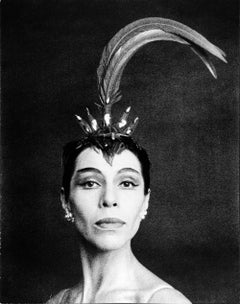
Native American Prima Ballerina Maria Tallchief in 'Firebird' at the NYC Ballet
Located in Senoia, GA
11 x 14" vintage silver gelatin photograph of Native American Prima Ballerina Maria Tallchief in 'Firebird' at the NYC Ballet in 1963. Comes directly from t...
Silver Gelatin
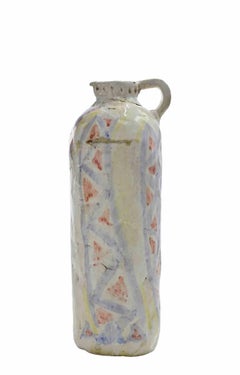
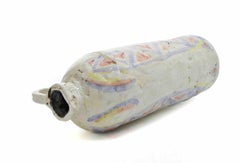
Jug Sculpture in Painted Terracotta, Modern Style, 1960s, Unframed
Located in Roma, IT
Painted Terracotta sculpture realized by Sirio Pellegrini in 1960s. Good condition. Sirio Pellegrini, born in Rome on March 1, 1922, of Abruzzo origins (Capestrano), spent his chil...
Terracotta
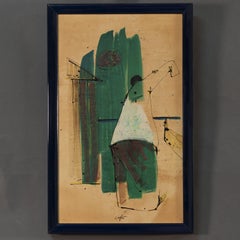
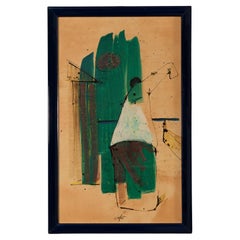
1960s Italian Signed Abstract Painting
By Nino Caffè
Located in Roma, IT
Important signed Nino Caffè, painting on paper, mixed media. “Vestizione di un pretino” (Vestments of a Young Priest) Signed bottom center: Caffè. Young ...
Paper, Watercolor
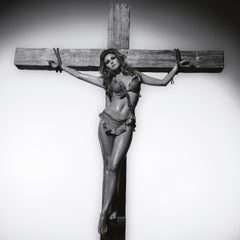
Raquel Welch on the cross signed Lifetime Edition
Located in Austin, TX
Lifetime prints are the last remaining prints available, signed by Terry O’Neill and obtained from the Terry O’Neill Archive in London. American actress Raquel Welch being crucified in an oddly anachronistic publicity still for the Hammer Films production 'One Million Years BC...
C Print

$780Sale Price|20% Off
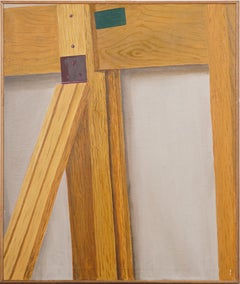
Vintage American School Trompe L'Oeil Modernist Still Life Framed Oil Painting
Located in Buffalo, NY
Very nicely painted American school Trompe L'oeil still life painting. Finely executed with great detail. Signed. Framed. Ready to hang!
Canvas, Oil
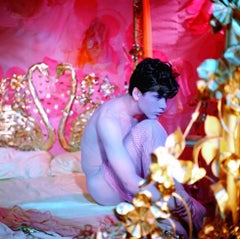
Blue Boy
Located in New York, NY
Digital C-print Signed, dated, and numbered, verso 15 x 15 inches, image (Edition of 25) 22 x 22 inches, image (Edition of 15) 31 x 31 inches, image (Edition of 15) This artwork is offered by ClampArt, located in New York City. A stylistic precursor of such artists as Pierre et Gilles and David LaChapelle, James Bidgood revolutionized gay male...
C Print
$5,000
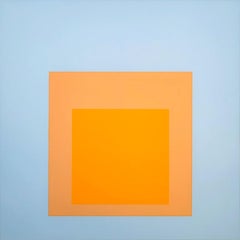
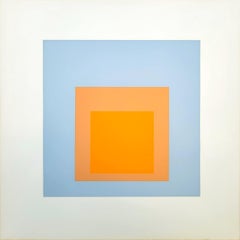
Arctic Bloom /// Josef Albers Blue Orange Screenprint Homage to the Square Print
By Josef Albers
Located in Saint Augustine, FL
Artist: Josef Albers (German-American, 1888-1976) Title: "Arctic Bloom" Portfolio: Soft Edge - Hard Edge *Unsigned edition Year: 1965 Medium: Original Screenprint on Mohawk Superfine...
Screen
$35,000
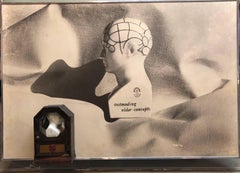
Dennis Hopper Wilhold Up the Mirror Photograph, Mixed Media Assemblage Art 1961
Located in Surfside, FL
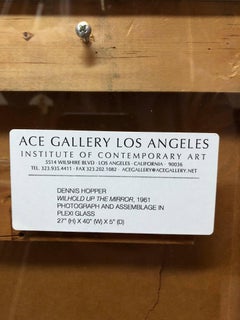
Dennis Hopper, (American, 1936-2010) Mixed media sculpture "Outmolding Older Concepts (Wilhold Up the Mirror)", 1961, photo and assemblage, Ace Gallery and Easy Rider Production labels verso 27"h x 40"w x 5"d. This does not appear to be hand signed recto. possibly verso. There is broken mirror glued into the wooden collage box with the ceramic head that is attached to the front. I assume that is how it was made. Provenance: Estate of Pentti Kouri, NYC; Ace Gallery, Los Angeles; Exhibited MOCA, Los Angeles, 2010 From a 1997 interview with Hopper where he references this piece "Right now it's very intense. I had a show that travelled Germany, about 15 different museums. Sunday we go to Denmark; I'm showing the early assemblage I did in 1961 which was the signal for conceptual art. I'm just two days there, then I'm going to Venice to meet Julian Schnabel - Count Volpe's given us a place to paint in Giudecca. Then I'm going to Documenta in Germany to hang another show, then I go back to LA on the 21st and start a film on the 23rd." Notes/Literature: Dr. Pentti Kouri(1949-2009) was a Finnish economist and venture capitalist with partner George Soros. He built his prestigious art collection with the goal of opening a private art foundation focused on his interests in Minimalism, Arte Povera, Conceptual and Text-based art. He was a member of the Board of Trustees of Dia Art Foundation, and on the boards of Tate, London and the Guggenheim Museum, New York. In addition, a portion of his collection forms the core of the Kiasma Museum of Contemporary Art in Helsinki, Finland Hopper made his film debut alongside James Dean in 1955's Rebel Without a Cause. Both lost souls from dysfunctional households, they gravitated to each other, smoked dope and took joy rides. When Dean died, Hopper saw himself as the natural inheritor of his rebellious mantle and, revelling in his nickname of "Dennis the Menace", gave it to Hollywood with both barrels; so they dropped him. Dennis didn't make another Hollywood movie for seven years. Frustrated by the deliberate stifling of his film career, Dennis turned to art and photography for creative stimulus, beginning with abstract subjects such as landscapes. His cutting-edge conceptual art became established round the world, with exhibitions in major cities. At home in the dining room stood one particularly interesting work, a white plastic box, eight feet long, that had an aluminium shaft sticking out of it, and two very large balls. It was called The Perpetual Erection Machine. Before Tracy Emin and Damien Hirst, there was Dennis. In 1961, Hopper took part in an international photography competition in Australia with a contribution of five abstract photos, which he called Pieces. He won first place. Soon after, Hopper married Hayward, daughter of the film producer Leland Hayward, whose credits include The Sound of Music and South Pacific. The wedding party of Hopper and Hayward was held in August at the apartment of actress Jane Fonda, a childhood friend of Hayward, who introduced Hopper to her younger brother Peter Fonda. Their daughter Marin was born in 1961, and they moved to Bel Air, California. Soon afterward the famous Bel Air fire destroyed their home, including approximately three-hundred Abstract Expressionist works and hundreds of pages of poetry that Hopper had begun in the mid-1950s. Hopper and his actor friends Dean Stockwell and Russ Tamblyn were close to many artists in California, especially assemblage artists Edward Kienholz, Wallace Berman, and George Herms, and artist/filmmaker Bruce Conner. As Hopper was denied work in film, he turned increasingly to his own artistic investigations. He started assembling objects with photographs (photo-assemblages) and conceptually questioning the relationships between “reality,” “illusion,” and “representation,” sometimes working under the guidance of Kienholz. “I was recording objects -in a photograph- and using the object the way it functioned, and then affixing the object itself to the record of the object, and using light and recreating the light of the real object, recreating the light in the gallery and having the record of the way it looked using natural light and raw canvas.” Hopper became a key figure in the L.A. art scene in the early 1960s, and his black-and-white photographs of artist friends were used occasionally for posters and announcements for the Ferus Gallery or for the covers of the magazine Artforum. In 1963, Henry Geldzahler, curator of twentieth-century art at the Museum of Modern Art, New York, introduced Hopper to Andy Warhol. Coincidentally, the meeting occurred on the very day Warhol introduced the young British artist David Hockney to Geldzahler. A few months later, Warhol mounted An Exhibition by Andy Warhol at Ferus Gallery in L.A., showing his silkscreen paintings of Elvis...
Ceramic, Wood, Mixed Media
$1,150
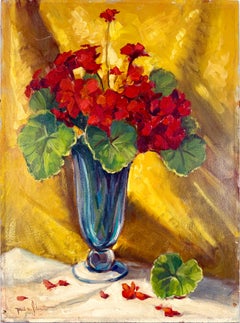
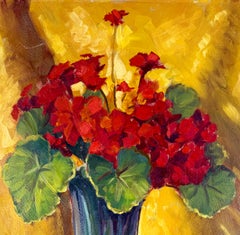
Red Geraniums and Yellow Curtain Original Paul Schmitt California Impressionist
Located in Soquel, CA
Red Geraniums and Yellow Curtain Original Paul Schmitt California Impressionist Geraniums in an interior setting with a yellow curtain or drape behind by Paul A. Schmitt (American, 18983-1983). Oakland, California artist. Size 23.5"H x 16.5"W Signed lower left "Paul A. Schmitt" Exhibition label on verso, "Alameda Art Association, Paul A. Schmitt Oil Still Life No 10" Painter, watercolorist, illustrator and teacher, Paul Schmitt was born in Philadelphia, in 1893 and moved to San Francisco in 1898 where he lived until the 1906 earthquake took his family home. He then moved to the Fruitvale district of Oakland. He died of natural causes at the age of 90 in San Leandro, California. Paul Schmitt studied under Perham Wilhelm Nahl, at the California College of Arts and Crafts. He also learned various crafts, woodworking and carving skills from his father, Herman Schmitt, a German wood carver working in San Francisco. Herman's works are still found in various San Francisco public buildings including the city hall chambers and the garden court of the Palace Hotel. Schmitt joined twelve other local San Francisco artists to form the group called "The Thirteen Watercolorists", a group that eventually evolved into the Society of Western Artists. Their early members included Alfred Owles, Will Cameron, Maurice Logan, Maynard Dixon and many others. Paul worked with engineers and architects doing models of many projects. He was versatile in that he also did illustrations for various publications and advertisers. He fathered thirteen children. In the late 1930's he decided to accept a teaching position in the local adult schools where he retired in his eighties. Paul was very fond of the Sierra Nevada Mountains and yearly took his large family there on camping /sketching trips. He did a series of oils of the California missions. He also traveled extensively on sketching trips including Mexico where he did a series of Mexican churches...
Masonite, Oil
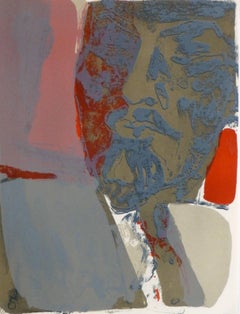
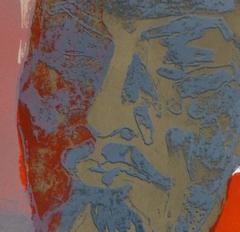
French Abstract - Lenin
Located in Houston, TX
French lithograph of the abstracted iconic face of Lenin set in bold blocks of color by artist Paul Guiramand, circa 1965. Original artwork on paper displayed on a white mat with a ...
Ink, Paper
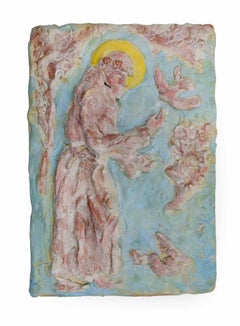
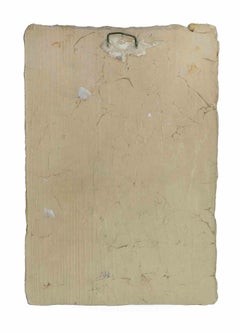
Saint Francis - Sculpture by Sirio Pellegrini - 1960s
Located in Roma, IT
Painted Terracotta sculture realized by Sirio Pellegrini in 1960s. Good condition. Sirio Pellegrini, born in Rome on March 1, 1922, of Abruzzo origins (Capestrano), spent his child...
Terracotta
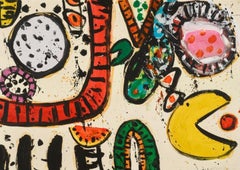
Untitled
By Alan Davie
Located in London, GB
Alan Davie Untitled , 1960 -1962 Signed Alan Davie lower right of Painting Oil on Paper 40.0 x 57.0 x 3.0 cm Alan Davie was one of Britain’s most internationally acclaimed artists i...
Paper, Oil
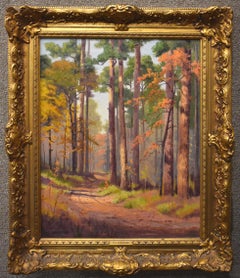
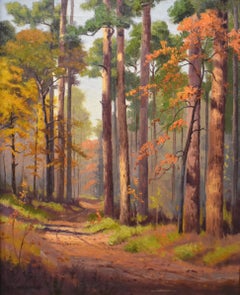
"LONG LEAF PINE" EAST TEXAS DOLLIE NABINGER (1905-1988)
Located in San Antonio, TX
Dollie Nabinger (1905-1988) Victoria, Harlingen, Nacogdoches, Fredericksburg, Carrollton, Painter Dollie Nabinger (1905-1988) Victoria, Harlingen, Nacogdoches, Fredericksburg, Carrol...
Oil
$1,800Sale Price|20% Off
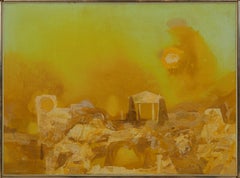
Aegean Temple, Dystopian Surrealist Landscape, Cleveland School Artist
By John Teyral
Located in Beachwood, OH
John Teyral (American, 1912-1999) Aegean Temple, 1966 Oil on canvas Signed and dated lower left 25 x 34 inches John Teyral was one of Cleveland's most acclaimed artists. He exhibite...
Oil
$45,000
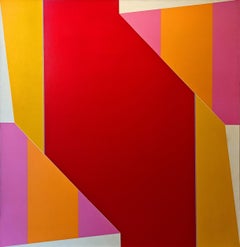
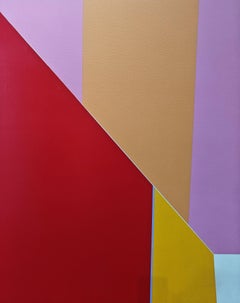
"Untitled" Larry Zox, Hard-edge, Color Field, Red, Orange, Pink, Large Abstract
By Larry Zox
Located in New York, NY
Larry Zox Untitled, circa 1965 Signed on the stretcher Acrylic on canvas 66 x 72 inches Provenance Hokin Gallery, West Palm Beach Dorothy Blau Gallery, Bay Harbor Islands, Florida ...
Canvas, Acrylic
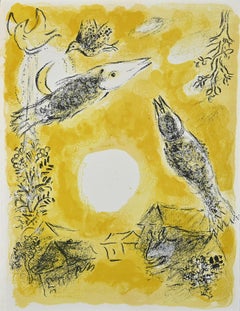
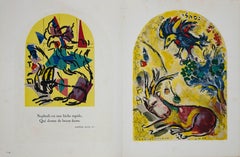
Vitraux pour Jérusalem - Illustrated Book by M. Chagall, 1962
By Marc Chagall
Located in Roma, IT
"Vitraux pour Jerusalem" is one of the most important books illustrated by Marc Chagall and considered as one of his editorial masterpieces. Th...
Paper, Lithograph
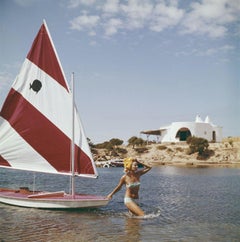
Bettina Graziani (1964) Limited Estate Stamped
By Slim Aarons
Located in London, GB
Bettina Graziani (1964) Limited Estate Stamped (Photo By Slim Aarons) French fashion model Bettina Graziani wading in the shallow waters of Costa Smeralda, pulling a small yacht...
Color, Archival Pigment
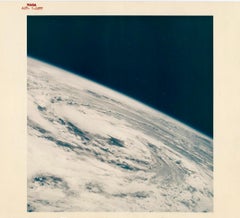
Hurricane Gladys, Vintage NASA Space Photography, Chromogenic C-Print, 1968
By Nasa
Located in New york, NY
In October 1968 as seen from the Apollo 7 spacecraft during its 91st revolution of the earth from an altitude of 99 nautical miles, photographed is Hurricane Gladys in the Gulf of Mexico...
Photographic Film, Photographic Paper
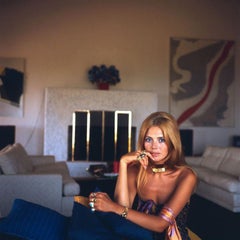
Britt Ekland (1969) Limited Estate Stamped - Grande XL
By Slim Aarons
Located in London, GB
Britt Ekland (1969) Limited Estate Stamped (Photo By Slim Aarons) Film star Britt Ekland (Britt-Marie Eklund) in Porto Ercole, Italy. 1969. .About this Image: Britt Ekland is ...
Color, Archival Pigment
$825Sale Price|51% Off
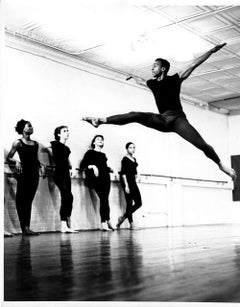
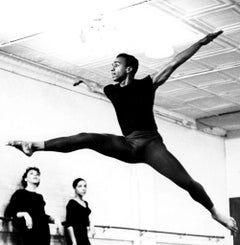
African American Dancer/Founder Donald McKayle leading his company in class
Located in Senoia, GA
11 x 14" vintage silver gelatin photograph of African American Dancer/ Company Founder Donald McKayle leading his company in class, 1962. Comes ...
Silver Gelatin
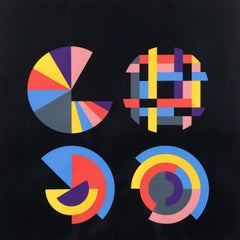

Free Arrangements of Equal Parts Geometric Abstract Screenprint by Herbert Bayer
Located in Long Island City, NY
Free Arrangements of Equal Parts by Herbert Bayer, Austrian (1900–1985) Date: circa 1968 Screenprint, signed and numbered in pencil Edition of 12/75 Size: 29.75 x 29.5 in. (75.57 x 7...
Screen
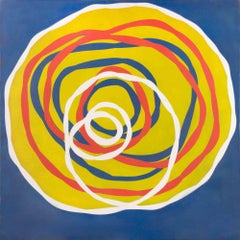
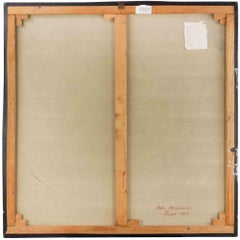
Abstraction Oil on Canvas, Abstract Style, Signed, 100x100 cm, 1967
Located in Roma, IT
Abstraction is a beautiful and colored oil on canvas realized by the artist Aldo Moriconi in 1967. Hand signed and dated lower margin. 100 x 100 cm. Very good condition.
Oil
$18,000
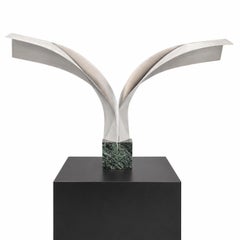
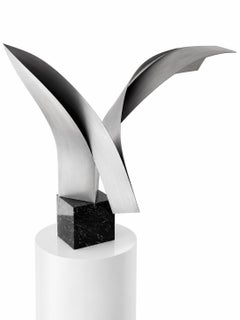
Bird Sculpture, Mid-Century Modern Aluminum on Marble Base, Signed
By Herbert Brooks Walker
Located in Palm Beach, FL
An important and exceptionally rare mid-century modern sculpture by American artist Herbert Brooks Walker, titled Bird, executed in formed aluminum sheet metal and mounted on a richl...
Other Medium
$2,800
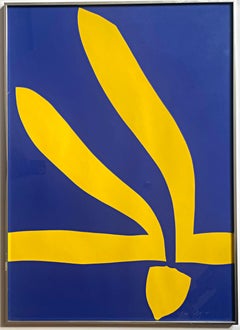
Blue/Yellow, SIlkscreen, for New York City Center of Music & Drama, Signed/N
Located in New York, NY
Jack Youngerman Blue/Yellow from New York City Center of Music & Drama Portfolio, 1968 Silkscreen on wove paper Hand signed, dated and numbered 75/144, in graphite by Jack Youngerman...
Screen
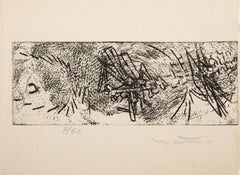
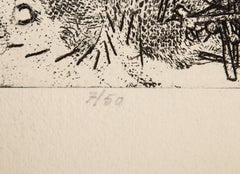
Max Clarac-Serou vous presente ses meilleurs voeux, Etching by Roberto Matta
Located in Long Island City, NY
Roberto Matta, Chilean (1911 - 2002) - Max Clarac-Serou vous presente ses meilleurs voeux, Year: 1960, Medium: Etching on laid paper, signed and numbered in pencil, Edition: 7/50, ...
Etching
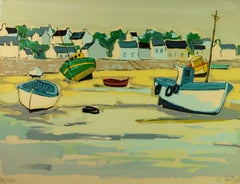
$395Sale Price|21% Off
Beached Sailboats
Located in Houston, TX
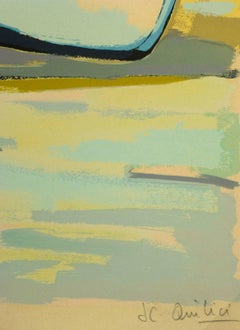
French lithograph of boats at low tide by artist Jean Claude Quilici, circa 1960. Signed lower right. 37/175 Original artwork on paper displayed ...
Lithograph
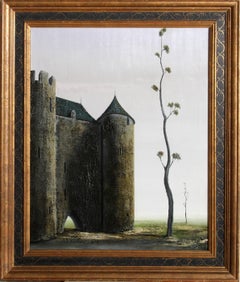
Castle, Modern Oil Painting on Canvas by Alvaro Guillot
Located in Long Island City, NY
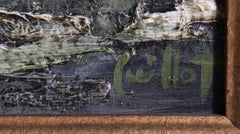
Artist: Alvaro Guillot, Uruguayan/American (1931 - 2010) Title: Castle Year: circa 1963 Medium: Oil on Canvas, signed Size: 30 x 24 inches Frame: 37 x 31 inches
Canvas, Oil
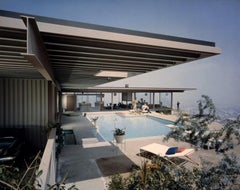
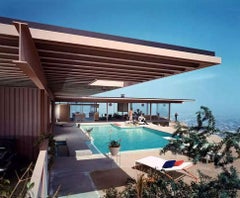
Case Study House 22, Pool, 1960
Located in New York, NY
Julius Shulman Case Study House #22. Pool. C print 16 x 20 inches Shulman's studio stamp and signature on verso. Signed by Julius Shulman with Certificate of Authenticity authoriz...
C Print