Early 1900s Art

2,068 Results
to
284
969
502
332
184
157
Overall Width
to
Overall Height
to
7,646
21,591
166,381
236,377
2,350
4,726
6,516
6,001
15,869
21,301
26,653
19,314
14,107
5,459
325
287
116
98
10
8
8
5
5
4
1
1,109
870
45
1,219
681
441
379
349
198
122
121
101
98
95
94
92
91
85
81
79
78
74
64
948
658
572
398
392
100
45
27
23
18
906
292
1,098
1,035
Period: Early 1900s
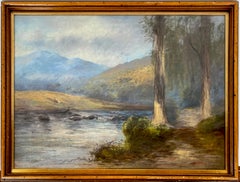
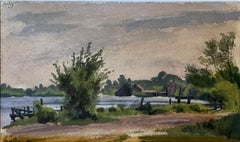
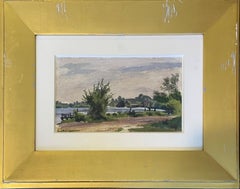
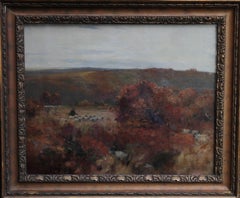
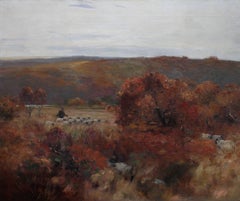
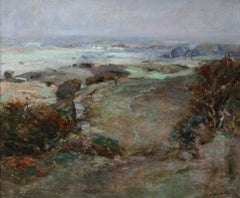
Mt. Tamalpais in Spring, American Impressionist, Circa 1900, Framed

Mt. Tamalpais in Spring, American Impressionist, Circa 1900, Framed

Located in Soquel, CA

Mt. Tamalpais and Stream in the Spring circa 1900 Stream above Lake Bon Tempe with Mt. Tamalpais in the background. A warm spring day in Northern California and the Bay Area. Excell...

Category

American Impressionist Early 1900s Art

Materials

Illustration Board, Oil Pastel

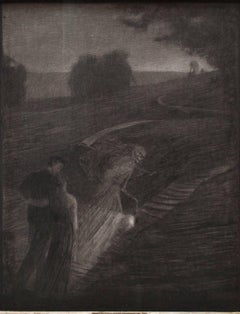
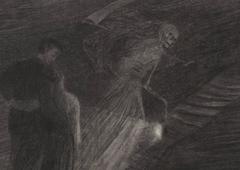
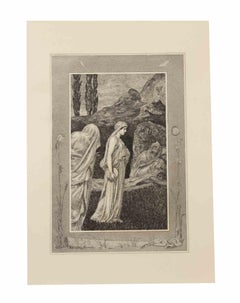
Towards the Peace - Charcoal Drawing by Carlo Fornara - 1904

Towards the Peace - Charcoal Drawing by Carlo Fornara - 1904

By Carlo Fornara

Located in Roma, IT

Charcoal drawing,1904. Dimensions: 62 x 50 cm Provenance: Galleria d’Arte Moderna Alberto Grubicy, Milan. A number of symbolist drawings done by Fornara in 1902 are known, includin...

Category

Symbolist Early 1900s Art

Materials

Charcoal

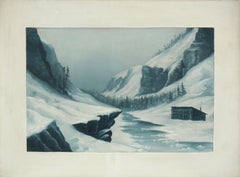
Early 20th Century Winter Snowy Cabin Oil Painting Signed Landscape

Early 20th Century Winter Snowy Cabin Oil Painting Signed Landscape

Located in Soquel, CA

Wonderful snowy landscape with footprints leading to cabin in valley circa 1940. Signed lower left "Gruber." Image has painted "mat" effect. Inside image is 12.50"H x 18.38"W. Unfram...

Category

Realist Early 1900s Art

Materials

Oil, Board

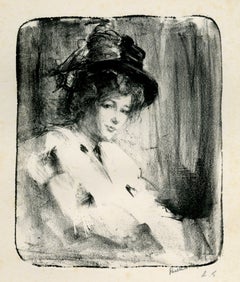
The Ermine Scarf

The Ermine Scarf

By Albert de Belleroche

Located in Fairlawn, OH

The Ermine Scarf Lithograph, 1905 Signed in pencil Belleroche and initialed A.B. lower right Edition: 30 Reference: Belleroche K447 Albert Belleroche log of llithographs, AB164 Condition: Excellent Image size: 6 5/16 x 5 1/4 inches Frame size: 18 3/4 x 17 inches Provenance: Estate of the Artist Richard Reed...

Category

Impressionist Early 1900s Art

Materials

Lithograph

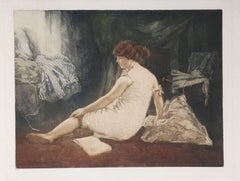
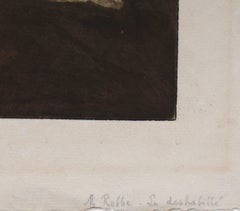
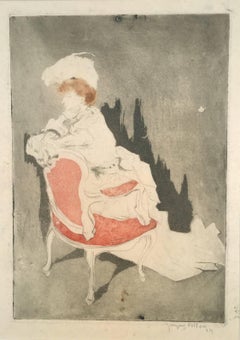
La Déshabille, Impressionist Etching with Aquatint by Manuel Robbe, circa 1907

La Déshabille, Impressionist Etching with Aquatint by Manuel Robbe, circa 1907

By Manuel Robbe

Located in Long Island City, NY

This etching with aquatint was created by French printmaker Manuel Robbe. Robbe’s innovative techniques, along with his sense of color harmony and his choice of subjects: stylish wom...

Category

Impressionist Early 1900s Art

Materials

Etching, Aquatint

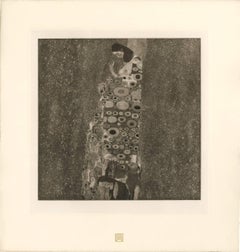
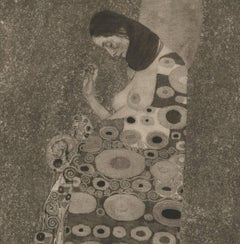
H.O. Miethke Das Werk folio "The Hope II" collotype print

H.O. Miethke Das Werk folio "The Hope II" collotype print

DAS WERK GUSTAV KLIMTS, a portfolio of 50 prints, ten of which are multicolor collotypes on chine colle paper laid down on hand-made heavy cream wove paper with deckled edges; under ...

Category

Vienna Secession Early 1900s Art

Materials

Paper

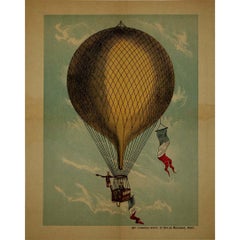
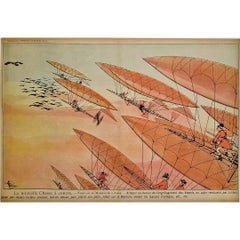
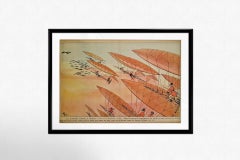
Circa 1900 poster for Montgolfière Française - hot air ballooning

Circa 1900 poster for Montgolfière Française - hot air ballooning

Located in PARIS, FR

The circa 1900 poster for Montgolfière Française, produced by the Parisian printing house Clamaron-Graff at 57 Rue de Vaugirard, is a striking example of early aviation art that captures the wonder and excitement surrounding hot air ballooning in the late 19th and early 20th centuries. This poster, promoting a French hot air balloon...

Category

Early 1900s Art

Materials

Linen, Paper, Lithograph

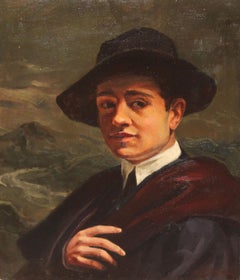
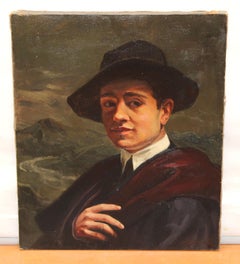
Óleo sobre tela - Retrato de caballero con sombrero

Óleo sobre tela - Retrato de caballero con sombrero

Located in Sant Celoni, ES

Firmado en la parte inferior (desconozco el artista) Se presenta sin enmarcar la pintura El estado de la pintura es aceptable Medidas obra: 58 x 48 cm.

Category

Academic Early 1900s Art

Materials

Oil

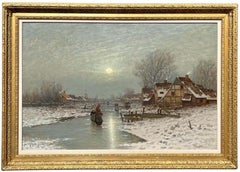
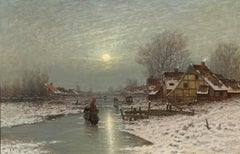
The Frozen Canal
The Frozen Canal

The Frozen Canal

By Johann Jungblut

Located in Wiscasett, ME

Oil on canvas, signed in the lower left and presented in a magnificent carved and gilt frame. This painting has a wonderful atmosphere to it and measures 40" x 56" including the fram...

Category

Dutch School Early 1900s Art

Materials

Oil

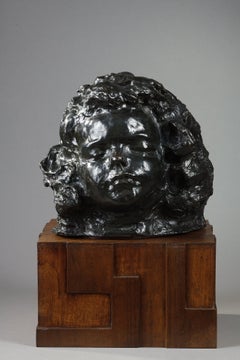
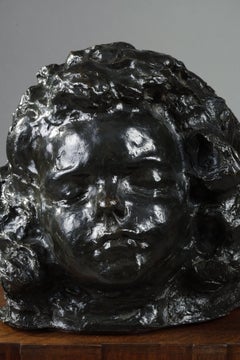
Child asleep
Child asleep

Child asleep

By Émile Antoine Bourdelle

Located in PARIS, FR

"Child asleep" - Head by Antoine BOURDELLE (1861-1929) A black and dark brown patina bronze sculpture Signed on the side " E.A. Bourdelle " A very fine cast by " A.A. Hébrard " (wit...

Category

French School Early 1900s Art

Materials

Bronze

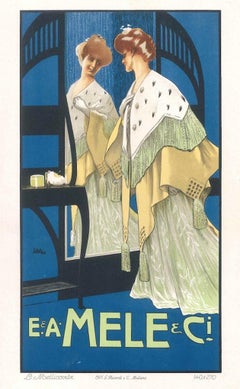
Mele - Vintage Advertising Lithograph by L. Metlicovitz - 1900 ca.

Mele - Vintage Advertising Lithograph by L. Metlicovitz - 1900 ca.

By Leopoldo Metlicovitz

Located in Roma, IT

Vintage Poster is a beautiful colored lithograph on cardboard, realized by the Italian artist Leopoldo Metlicovitz (Trieste, 1868 - Ponte Lambro, 1944) and printed around 1900 by G. Ricordi and C. Milano, Milan. Monogrammed on plate on the left at the center. A wonderful and fashionable vintage Art Nouveau advertising poster of the Neapolitan tailoring company "Mele" in excellent condition except for three visible abrasions of the paper on the right margin do not affect the image. This Modern and colorful poster shows the Metlicovitz's full mastery of the artistic medium, has the dignity of an object of art to collect and could be a sophisticated piece of your home furniture. Leopoldo Metlicovitz (Trieste, 1868 - Ponte Lambro, 1944) The Italian painter, illustrator, theatrical and advertising scenographer is considered one of the precursors of Futurism and, together with Leonetto Cappiello, Adolf Hohenstein, Giovanni Maria Mataloni and Marcello Dudovich, one of the fathers of modern Italian poster art. He began his artistic career at the age of fourteen working as an apprentice in a typography in Udine, where he learned the technique of lithography. Here he is noticed by Giulio Ricordi, owner of the namesake Officine Grafiche, who invites him to Milan to work as a lithographer. In 1892, after collaborating with Tensi, a photographic product company, he returned to Ricordi as technical director. At the same time, he entered the theatrical environment and began his career as a set designer and costume designer at La Scala. The Mele di Napoli tailoring company entrusted him with the task of advertising his clothes and in 1906, on the occasion of the great Universal Exposition in Milan, he won the competition for the fair poster, establishing himself also as a poster artist and then collaborating with several magazines as an illustrator. For Ricordi he takes care of the illustrations of calendars, opera librettos, postcards. Other famous images created by him are those for the poster of the film Cabiria, a blockbuster of the silent film scripted by Gabriele D'Annunzio, and the trademark that is still used today by the Brothers Branca Distilleries, producers of Fernet Branca...

Category

Early 1900s Art

Materials

Lithograph

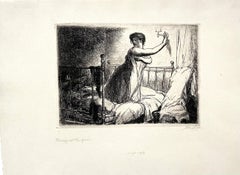
TURNING OUT THE LIGHT

TURNING OUT THE LIGHT

By John Sloan

Located in Portland, ME

Sloan, John. TURNING OUT THE LIGHT. M. 134. Etching, 1905. 5 x 7 inches; 127 x 178 mm. (plate), 9 1/2 x 11 1/2 (sheet). Titled, inscribed "100 Proofs" and signed, all in pencil. Whi...

Category

Early 1900s Art

Materials

Etching

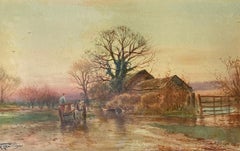
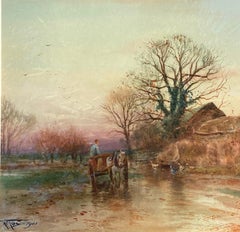
“End of the Day”
“End of the Day”

“End of the Day”

By Henry Charles Fox

Located in Southampton, NY

Wonderful original watercolor of a bucolic scene with a farm with geese and a man on his horse driven wagon as the sun sets in the English countryside. Signed lower left by the British artist, Henry Charles Fox...

Category

Post-Impressionist Early 1900s Art

Materials

Watercolor, Archival Paper

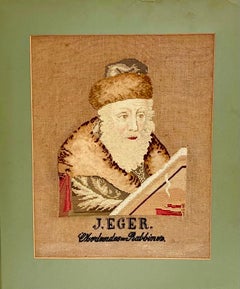
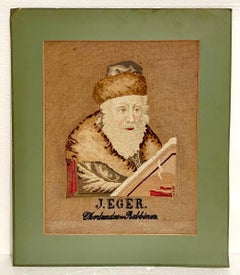
Hungarian Rabbi Akiba Eger 19thC Judaica Folk Art Tapestry Needlepoint Sampler

Hungarian Rabbi Akiba Eger 19thC Judaica Folk Art Tapestry Needlepoint Sampler

Located in Surfside, FL

Dimensions board backing is 2 X 18.5 board opening is 16.5 X 13 inches 19th Century framed tapestry of a Rabbi, embroidered sampler, with beaded script below. (it reads J. Eger Ober...

Category

Folk Art Early 1900s Art

Materials

Wool, Thread, Mixed Media

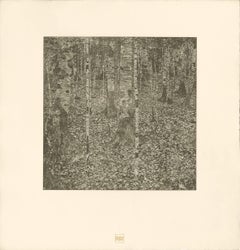
H.O. Miethke Das Werk folio "Birch Forest I" collotype print

H.O. Miethke Das Werk folio "Birch Forest I" collotype print

DAS WERK GUSTAV KLIMTS, a portfolio of 50 prints, ten of which are multicolor collotypes on chine colle paper laid down on hand-made heavy cream wove paper with deckled edges; under each of the 50 prints is a gold signet intaglio...

Category

Vienna Secession Early 1900s Art

Materials

Paper

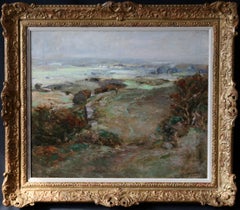
Galloway Hills Landscape - Scottish Edwardian Impressionist art oil painting

Galloway Hills Landscape - Scottish Edwardian Impressionist art oil painting

By John Campbell Mitchell

Located in Hagley, England

This stunning Scottish Edwardian exhibited landscape oil painting is by noted Scottish artist John Campbell Mitchell RSA. The location is the Galloway hills and it was painted in 190...

Category

Impressionist Early 1900s Art

Materials

Oil

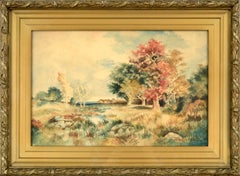
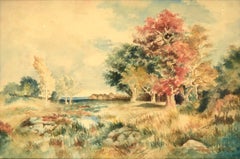
Early 20th Century Autumn Landscape Watercolor

Early 20th Century Autumn Landscape Watercolor

Located in Soquel, CA

Beautiful early 20th century landscape watercolor by E. Camren (American, 19th-20th Century). This 1908 landscape features a grassy meadow dotted with autumn trees and small houses i...

Category

American Impressionist Early 1900s Art

Materials

Paper, Watercolor

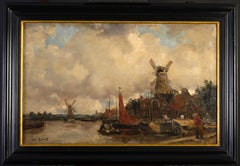
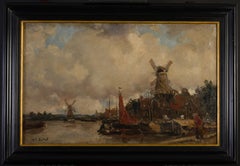
Dutch canal landscape with windmills.

Dutch canal landscape with windmills.

Located in Douglas, Isle of Man

Joanna Bauer-Stumpff 1873-1964, known as Jo was a Dutch painter and art teacher, she was also a Founding member of the ' Amsterdamse Joffers' which was the equivalent of the female D...

Category

Early 1900s Art

Materials

Canvas, Oil

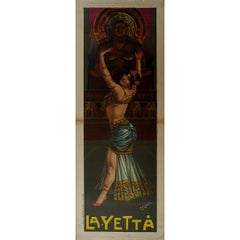
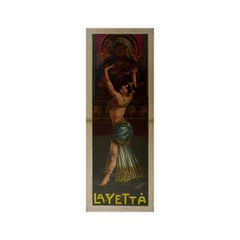
Belle Époque poster by the artist F. Garric - La Yetta

Belle Époque poster by the artist F. Garric - La Yetta

Located in PARIS, FR

This captivating Belle Époque poster by the artist F. Garric presents an alluring image of the dancer La Yetta, captured mid-performance in an exotic and theatrical pose. Dressed in ...

Category

Early 1900s Art

Materials

Paper, Lithograph

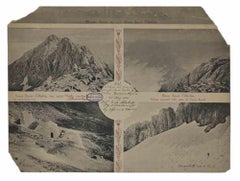
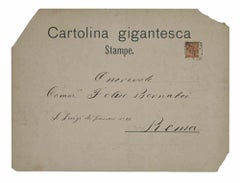
View of Gran Sasso - Vintage Postcard - 1904

View of Gran Sasso - Vintage Postcard - 1904

Located in Roma, IT

Gran Sasso view is a postcard realized in may 25th, 1904. The photo depicts the Gran Sasso mountain pass, for the railway studies Teramo- l'Aquila. It s adressed to the deputy, Mr. ...

Category

Modern Early 1900s Art

Materials

Paper, Postcard

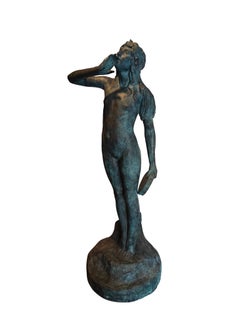
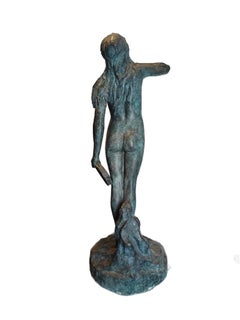
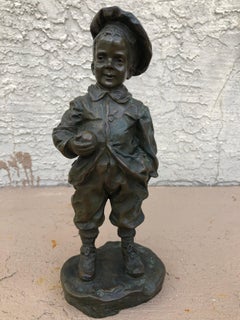
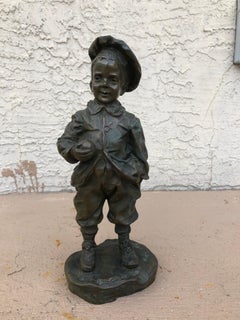
Jose Cardona Ferro Bronze Sculpture

Jose Cardona Ferro Bronze Sculpture

Located in San Francisco, CA

Jose Cardona Ferro: 1878-1923. Well listed Spanish artist also known as just Jose Cardona. He has had auction prices over $4000. This charming bronze of a...

Category

Early 1900s Art

Materials

Bronze

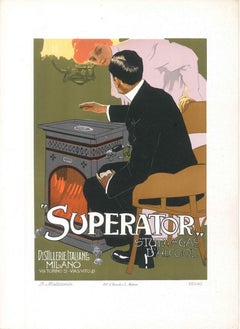
Superato - Vintage Adv Lithograph by L. Metlicovitz - 1914

Superato - Vintage Adv Lithograph by L. Metlicovitz - 1914

By Leopoldo Metlicovitz

Located in Roma, IT

Image dimensions: 26x18.8 cm. Superator is an amazing colored lithograph on cardboard, realized by the Italian artist and one of the fathers of the modern Italian poster art, Leopoldo Metlicovitz (Trieste, 1868 - Ponte Lambro, 1944) and printed in 1914 by G. Ricordi and C. Milano, Milan. This is a wonderful vintage Art Nouveau advertising poster for the "Superator, stufa a gas d'alcool, Distillerie italiane Milano, Via Torino 51 - Via S. Vito 41", representing the gas stove to published. inscriptions printed on lower margin, under the image: "L. Metlicovitz / Off. G. Ricordi and C. Milano / 100 x 140". In excellent conditions, as good as new. This modern original poster shows the vintage Art Nouveau taste and Metlicovitz's full mastery of the artistic medium, has the dignity of an object of art to collect and could be a colorful and fashionable piece for your sophisticated home furniture. Leopoldo Metlicovitz (Trieste, 1868 - Ponte Lambro, 1944) The Italian painter, illustrator, theatrical and advertising scenographer is considered one of the precursors of Futurism and, together with Leonetto Cappiello, Adolf Hohenstein, Giovanni Maria Mataloni and Marcello Dudovich, one of the fathers of modern Italian poster art. He began his artistic career at the age of fourteen working as an apprentice in a typography in Udine, where he learned the technique of lithography. Here he is noticed by Giulio Ricordi, owner of the namesake Officine Grafiche, who invites him to Milan to work as a lithographer. In 1892, after collaborating with Tensi, a photographic product company, he returned to Ricordi as technical director. At the same time, he entered the theatrical environment and began his career as a set designer and costume designer at La Scala. The Mele di Napoli tailoring company entrusted him with the task of advertising his clothes and in 1906, on the occasion of the great Universal Exposition in Milan, he won the competition for the fair poster, establishing himself also as a poster artist and then collaborating with several magazines as an illustrator. For Ricordi he takes care of the illustrations of calendars, opera librettos, postcards. Other famous images created by him are those for the poster of the film Cabiria, a blockbuster of the silent film scripted by Gabriele D'Annunzio, and the trademark that is still used today by the Brothers Branca Distilleries, producers of Fernet Branca...

Category

Early 1900s Art

Materials

Lithograph

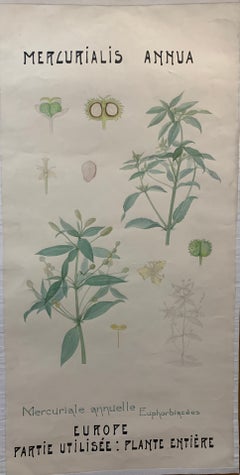
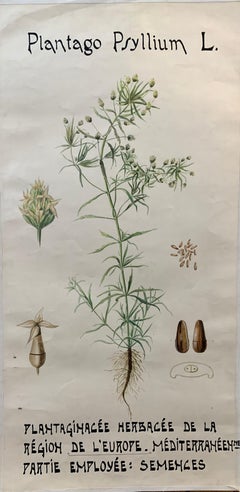
Early 20th C French Watercolor, botanical flowers from an University collection

Early 20th C French Watercolor, botanical flowers from an University collection

Located in Woodbury, CT

Wonderful watercolor depicting a plant/flower. These were used at a Belgium University to teach the students about botany. Dating from the early 20th century. They are watercolor on ...

Category

Art Nouveau Early 1900s Art

Materials

Watercolor

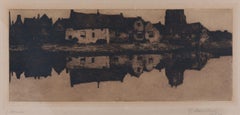
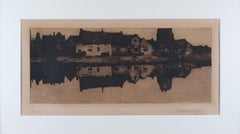
Evening - The depth of the visible -

Evening - The depth of the visible -

Located in Berlin, DE

Max Clarenbach (1880 Neuss - Cologne 1952), Evening. Etching, 18 x 41 cm (platemark), 33.5 x 57 cm (frame), inscribed "Abend" in pencil at lower left, signed and dated "M. Clarenbach. 28.III.[19]09". Framed and mounted under glass. - Somewhat browned and slightly foxed. About the artwork The horizontally elongated etching depicts the panoramic view of a small town as seen from the other side of the river. There are gabled houses on the left and a mighty church spire on the right. The bourgeois houses and the large religious building indicate the urban character. These buildings are rendered in dark tones to emphasise the lighter row of houses in the centre of the picture, closer to the water. The chiaroscuro contrast creates two parallel planes that open up a space for the imagination of what the city could be. The imagination is stimulated by the almost entirely dark, barely recognisable buildings, while the arm of the river leading into the city further stimulates the imagination. However, as the silhouette of the city as a whole is reflected in the water, the parallel planes are perceived as a band of houses that stretches across the entire horizontality of the etching and seems to continue beyond the borders of the picture. The reflection has almost the same intensity as the houses themselves, so that the band of buildings merges with their reflection to form the dominant formal unit of the picture. Only the parallel horizontal hatching creates the convincing impression of seeing water, demonstrating Max Clarenbach's mastery of the etching needle. The water is completely motionless, the reflection unclouded by the slightest movement of the waves, creating a symmetry within the formal unity of the cityscape and its reflection that goes beyond the motif of a mere cityscape. A pictorial order is established that integrates everything in the picture and has a metaphysical character as a structure of order that transcends the individual things. This pictorial order is not only relevant in the pictorial world, but the picture itself reveals the order of the reality it depicts. Revealing the metaphysical order of reality in the structures of its visibility is what drives Clarenbach as an artist and motivates him to return to the same circle of motifs. The symmetry described is at the same time inherent an asymmetry that is a reflection on art: While the real cityscape is cut off at the top of the picture, two chimneys and above all the church tower are not visible, the reflection illustrates reality in its entirety. The reflection occupies a much larger space in the picture than reality itself. Since antiquity, art has been understood primarily as a reflection of reality, but here Clarenbach makes it clear that art is not a mere appearance, which can at best be a reflection of reality, but that art has the potential to reveal reality itself. The revealed structure of order is by no means purely formalistic; it appears at the same time as the mood of the landscape. The picture is filled with an almost sacred silence. Nothing in the picture evokes a sound, and there is complete stillness. There are no people in Clarenbach's landscape paintings to bring action into the picture. Not even we ourselves are assigned a viewing position in the picture, so that we do not become thematic subjects of action. Clarenbach also refrains from depicting technical achievements. The absence of man and technology creates an atmosphere of timelessness. Even if the specific date proves that Clarenbach is depicting something that happened before his eyes, without the date we would not be able to say which decade, or even which century, we are in. The motionless stillness, then, does not result in time being frozen in the picture, but rather in a timeless eternity that is nevertheless, as the title "Abend" (evening), added by Clarenbach himself, makes clear, a phenomenon of transition. The landscape of the stalls is about to be completely plunged into darkness, the buildings behind it only faintly discernible. The slightly darkened state of the sheet is in keeping with this transitional quality, which also lends the scene a sepia quality that underlines its timelessness. And yet the depiction is tied to a very specific time. Clarenbach dates the picture to the evening of 28 March 1909, which does not refer to the making of the etching, but to the capture of the landscape's essence in the landscape itself. If the real landscape is thus in a state of transition, and therefore something ephemeral, art reveals its true nature in that reality, subject to the flow of phenomena, is transferred to an eternal moment, subject to a supra-temporal structure of order - revealed by art. Despite this supratemporality, the picture also shows the harbingers of night as the coming darkening of the world, which gives the picture a deeply melancholy quality, enhanced by the browning of the leaf. It is the philosophical content and the lyrical-melancholic effect of the graphic that give it its enchanting power. Once we are immersed in the image, it literally takes a jerk to disengage from it. This etching, so characteristic of Max Clarenbach's art, is - not least because of its dimensions - a major work in his graphic oeuvre. About the artist Born into poverty and orphaned at an early age, the artistically gifted young Max Clarenbach was discovered by Andreas Achenbach and admitted to the Düsseldorf Art Academy at the age of 13. "Completely penniless, I worked for an uncle in a cardboard factory in the evenings to pay for my studies.” - Max Clarenbach At the academy he studied under Arthur Kampf, among others, and in 1897 was accepted into Eugen Dücker...

Category

Realist Early 1900s Art
Materials

Etching

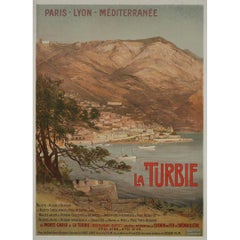
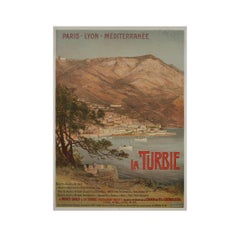
Belle Époque poster by Bourgeois Paris-Lyon-Méditerranée (PLM) railway La Turbie

Belle Époque poster by Bourgeois Paris-Lyon-Méditerranée (PLM) railway La Turbie

By Eugene V. Bourgeois

Located in PARIS, FR

This exquisite Belle Époque poster by artist Bourgeois, created around 1900, is a celebration of the French Riviera's scenic allure and the transformative power of rail travel. Publi...

Category

Early 1900s Art
Materials

Linen, Paper, Lithograph